1982 CHEVROLET CAMARO light
[x] Cancel search: lightPage 695 of 875
GM – CAMARO 1982-1992 – Repair Guide (Checked by WxMax) 695
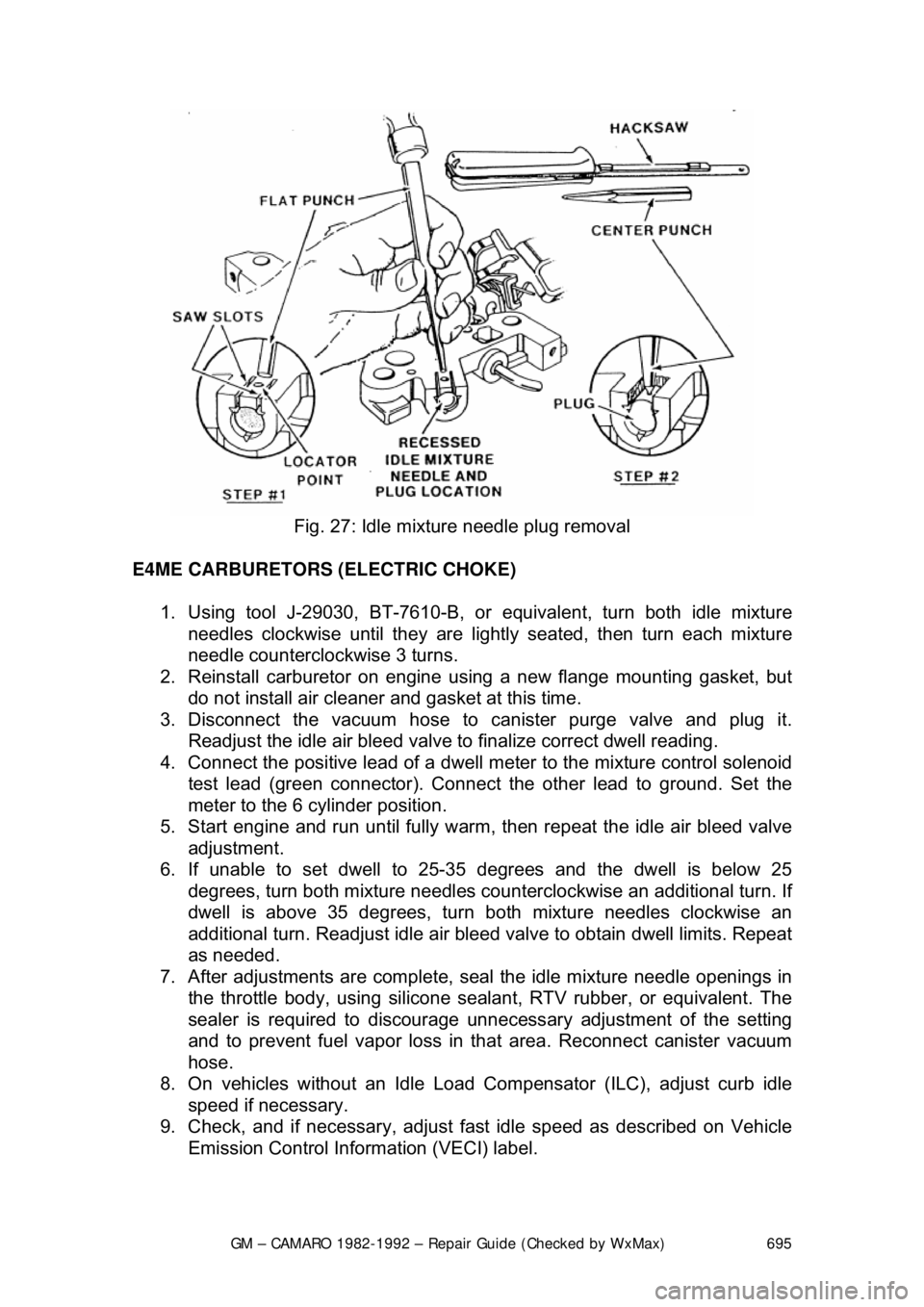
Fig. 27: Idle mixture needle plug removal
E4ME CARBURETORS (ELECTRIC CHOKE) 1. Using tool J-29030, BT-7610-B, or equivalent, turn both idle mixture
needles clockwise until they are lightly seated, then turn each mixture
needle counterclockwise 3 turns.
2. Reinstall carburetor on engine using a new flange mounting gasket, but
do not install air cleaner and gasket at this time.
3. Disconnect the vacuum hose to canister purge valve and plug it.
Readjust the idle air bleed valve to finalize correct dwell reading.
4. Connect the positive lead of a dwell me ter to the mixture control solenoid
test lead (green connector). Connect the other lead to ground. Set the
meter to the 6 cylinder position.
5. Start engine and run unt il fully warm, then repeat the idle air bleed valve
adjustment.
6. If unable to set dwell to 25-35 degrees and the dwell is below 25
degrees, turn both mixture needles counter clockwise an additional turn. If
dwell is above 35 degrees, turn both mixture needles clockwise an
additional turn. Readjust idle air bleed valve to obtain dwell limits. Repeat
as needed.
7. After adjustments are complete, seal the idle mixture needle openings in
the throttle body, using silicone sealant, RTV rubber, or equivalent. The
sealer is required to discourage unnecessary adjus tment of the setting
and to prevent fuel vapor loss in that area. Reconnect canister vacuum
hose.
8. On vehicles without an Idle Load Co mpensator (ILC), adjust curb idle
speed if necessary.
9. Check, and if necessary, adjust fa st idle speed as described on Vehicle
Emission Control Information (VECI) label.
Page 696 of 875

GM – CAMARO 1982-1992 – Repair Guide (Checked by WxMax) 696
Fig. 28: Lean mixture and idle mixture screw adjustment
E4MC CARBURETOR (HOT AIR CHOKE) 1. Using tool J-29030-B, BT-7610-B, or equivalent, turn each idle mixture
needle clockwise until lightly seated, then turn each mixture needle
counterclockwise 3 turns.
2. Reinstall carburetor on engine, using a new flange mounting gasket, but
do not install air cleaner or gasket at this time.
3. Disconnect vacuum hose to c anister purge valve and plug it.
4. Connect the positive lead of a dwell me ter to the mixture control solenoid
test lead (green connector). Connect the other lead to ground. Set the
meter to the 6 cylinder position.
5. Start engine and allow it to reac h normal operating temperature.
6. While idling in D ( N for manual transmission), adjust both mixture
needles equally, in
1/8 turn increments, until dwell reading varies within
the 25-35 degree range, attempting to be as close to 30 degrees as
possible.
7. If reading is too low, turn mixtur e needles counterclockwise. If reading is
too high, turn mixture needl es clockwise. Allow time for dwell reading to
stabilize after each adjustment.
After adjustments are complete, seal t he idle mixture needle openings in the
throttle body, using silicone sealant, RTV rubber, or equivalent. The sealer is
required to discourage unnece ssary readjustment of the setting and prevent fuel
vapor loss in that area.
8. On vehicles without a carburetor -mounted Idle Load Compensator (ILC) ,
adjust curb idle speed if necessary.
Page 739 of 875

GM – CAMARO 1982-1992 – Repair Guide (Checked by WxMax) 739
3. Make sure the ignition switch has
been in the OFF position for at least 10
seconds and that all accessories are OFF.
4. Turn the ignition switch ON and the pump will run for about 2 seconds.
Note the system pressure with t he pump running, it should be between
40-47 psi.
The ignition switch may have to be cycled to the ON position more than once to
obtain maximum pressure. It is also norma l for the pressure to drop slightly
when the pump first stops, but it should then hold steady.
5. If the pressure is not as specified, verify that fuel pump operation is
heard in the tank.
6. If fuel pump operation is not heard, inspect the fuel pump relay and
wiring.
7. If fuel pump operation is heard, inspect the filter and lines for restriction.
8. Start the engine and make sure the pr essure decreases about 3-10 psi at
idle.
9. If fuel pressure does not decrease, inspect the fuel pressure regulator
and hose.
10. Disconnect the fuel pressure gauge.
THROTTLE BODY
REMOVAL & INSTALLATION 1. Disconnect the negative (-) battery c able and partially drain the radiator.
2. Remove the air inlet duct and unplug the IAC and TPS electrical connectors.
3. Label and disconnect the vacuum and coolant lines.
4. Disconnect the accelerator, thro ttle valve (transmission control) and
cruise control cables, as applicable.
5. Remove the throttle body attaching bolts, then separate the throttle body from the plenum.
6. Discard the gasket.
To install: 7. Install the throttle body to the plenum using a new gasket. Tighten the \
bolts to specification.
8. Engage the accelerator, throttle valve and cruise control cables, as
necessary. Make sure that the link ages do not hold the throttle open.
9. Connect the vacuum and coolant lines.
10. Install the air inlet duct and plug the IAC and TPS electrical connectors
into their sockets.
11. Connect the negative (-) battery cable and refill the radiator.
12. With the engine OFF, check to s ee that the accelerator pedal is free.
Depress the pedal to the floor and release.
Page 743 of 875

GM – CAMARO 1982-1992 – Repair Guide (Checked by WxMax) 743
MINIMUM IDLE SPEED
The minimum idle speed should onl
y be adjusted under two conditions:
If the throttle body has been replaced.
After every other possible cause for the in correct idle speed has been explored.
There are many possible causes for incorre ct idle speed, most of which require
a high level of diagnostic skill as well as expensive testing equipment. Check
the vehicle for vacuum leaks, incorrect valve or ignition timing, deposit
accumulation in the throttle bore or valve, sticking throttle linkage or bent throttle
valves. If the vehicle will still not idle pr operly after checking these areas, it
should be diagnosed by a professional.
1. Pierce the idle stop screw with an awl. Apply leverage to remove it.
2. Make sure the IAC valve is connect ed. Short the A and B terminals of the
ALDL connector together with a length of wire.
3. Turn the ignition to the ON positi on, but do not start the engine. Wait at
least 30 seconds before proceeding.
4. With the ignition ON, disconnect the IAC valve connector.
5. Separate the set-timing connector. Th is eliminates the possibility of
changes in engine speed due to variations of engine timing.
6. Start the engine and remove t he wire shorting the A and B terminals
together. It may be necessary to hold the throttle open slightly to prevent
the engine from stalling.
7. Allow the engine to reach no rmal operating temperature.
8. Adjust the idle speed to the following: a. 2.8L Engines - 450-550 rp m A/T or 550-650 rpm M/T
b. 3.1L Engines - Refer to the underhood emissions sticker
c. 5.0L and 5.7L TPI engines - 400-450 rpm.
If these figures differ from t hose on the underhood emissions
sticker, always follow the specifications on the emissions sticker.
9. Turn the ignition OFF and connect the IAC valve harness. On models up
to 1989, adjust the Throttle Position Sensor.
THROTTLE POSITION SENSOR (TPS) 1. Install three jumper wires betw een the TPS and the harness connector.
2. Use a digital voltmeter connected to terminals A and B of the TPS.
3. Turn the ignition switch ON , but do not start the engine.
4. Loosen the TPS attaching screws and adj ust the sensor to the following:
a. 2.8L Engines - 0.50-0.60 volts
b. 5.0L and 5.7L TPI Engines - 0.47-0.61 volts
5. Tighten the attaching screws, then check that the reading has not been
disturbed.
6. With the ignition OFF, remove the jumper wires. Reconnect the TPS
harness.
Page 761 of 875

GM – CAMARO 1982-1992 – Repair Guide (Checked by WxMax) 761
MAINTENANCE OR REPAIR?
Maintenance includes routine inspecti
ons, adjustments, and replacement of
parts which show signs of normal wear . Maintenance compensates for wear or
deterioration. Repair implies that someth ing has broken or is not working. A
need for a repair is often caused by lack of maintenance. for example: draining
and refilling automatic transmission fl uid is maintenance recommended at
specific intervals. Failure to do this can shorten the life of the
transmission/transaxle, requiring very expen sive repairs. While no maintenance
program can prevent items from eventually breaking or wearing out, a general
rule is true: MAINTENANCE IS CHEAPER THAN REPAIR.
Two basic mechanic's rules should be mentioned here. First, whenever the left
side of the vehicle or engine is refe rred to, it means the driver's side.
Conversely, the right side of the vehi cle means the passenger's side. Second,
screws and bolts are removed by turn ing counterclockwise, and tightened by
turning clockwise unless specifically noted.
Safety is always the most important rule. Constantly be aware of the dangers
involved in working on an automobile and take the proper precautions. Please
refer to the information in this se ction regarding SERVICING YOUR VEHICLE
SAFELY and the SAFETY NOTICE on the acknowledgment page.
AVOIDING THE MOST COMMON MISTAKES
Pay attention to the instructions prov ided. There are 3 common mistakes in
mechanical work:
1. Incorrect order of assembly, di sassembly or adjustment. When taking
something apart or putting it toget her, performing steps in the wrong
order usually just costs you ex tra time; however, it CAN break
something. Read the entire proc edure before beginning. Perform
everything in the order in which the instructions say you should, even if
you can't see a reason for it. When you' re taking apart something that is
very intricate, you might want to draw a picture of how it looks when
assembled in order to make sure you get everything back in its proper
position. When making adjustments, per form them in the proper order.
One adjustment possibly will affect another.
2. Overtorquing (or undertorquing). While it is more common for overtorquing to cause damage, undertorquing may allow a fastener to
vibrate loose causing serious dam age. Especially when dealing with
aluminum parts, pay attention to tor que specifications and utilize a torque
wrench in assembly. If a torque figure is not available, remember that if
you are using the right tool to perfo rm the job, you will probably not have
to strain yourself to get a fast ener tight enough. The pitch of most
threads is so slight that the te nsion you put on the wrench will be
multiplied many times in actual fo rce on what you are tightening.
There are many commercial products avai lable for ensuring that fasteners won't
come loose, even if they are not torqued just right (a very common brand is
Page 768 of 875

GM – CAMARO 1982-1992 – Repair Guide (Checked by WxMax) 768
Fig. 10: A variety of tools and gauges should be used for spark plug gapping
and installation
Fig. 11: Inductive type timing light
Page 771 of 875

GM – CAMARO 1982-1992 – Repair Guide (Checked by WxMax) 771
A more advanced set of tools, suit
able for tune-up work, can be drawn up
easily. While the tools are slightly more sophisticated, they need not be
outrageously expensive. There are severa l inexpensive tach/dwell meters on
the market that are every bit as good for the average mechanic as a
professional model. Just be sure that it goes to a least 1200-1500 rpm on the
tach scale and that it works on 4, 6 and 8-cylinder engines. The key to these
purchases is to make them with an eye towards adaptability and wide range. A
basic list of tune-up tools could include:
• Tach/dwell meter.
• Spark plug wrench and gapping tool.
• Feeler gauges for valve adjustment.
• Timing light.
The choice of a timing light should be made carefully. A light which works on the
DC current supplied by the vehicle's battery is the best choice; it should have a
xenon tube for brightness. On any vehi cle with an electronic ignition system, a
timing light with an inductive pickup that clamps around the No. 1 spark plug
cable is preferred.
In addition to these basic tools, ther e are several other tools and gauges you
may find useful. These include:
• Compression gauge. The screw-in type is slower to use, but eliminates
the possibility of a faulty r eading due to escaping pressure.
• Manifold vacuum gauge.
• 12V test light.
• A combination volt/ohmmeter
• Induction Ammeter. This is used for determining whether or not there is
current in a wire. These are handy fo r use if a wire is broken somewhere
in a wiring harness.
As a final note, you will probably find a torque wrench necessary for all but the
most basic work. The beam type models are perfectly adequate, although the
newer click types (breakaway) are eas ier to use. The click type torque
wrenches tend to be more expensive. Also keep in mind that all types of torque
wrenches should be periodically checked a nd/or recalibrated. You will have to
decide for yourself which better fits your pocketbook, and purpose.
SPECIAL TOOLS
Normally, the use of special factory tool s is avoided for repair procedures, since
these are not readily available for the do-it-yourself mechanic. When it is
possible to perform the job with more co mmonly available tools, it will be
pointed out, but occasionally, a special t ool was designed to perform a specific
function and should be used. Before s ubstituting another tool, you should be
convinced that neither your safety nor the performance of the vehicle will be
compromised.
Page 781 of 875
GM – CAMARO 1982-1992 – Repair Guide (Checked by WxMax) 781
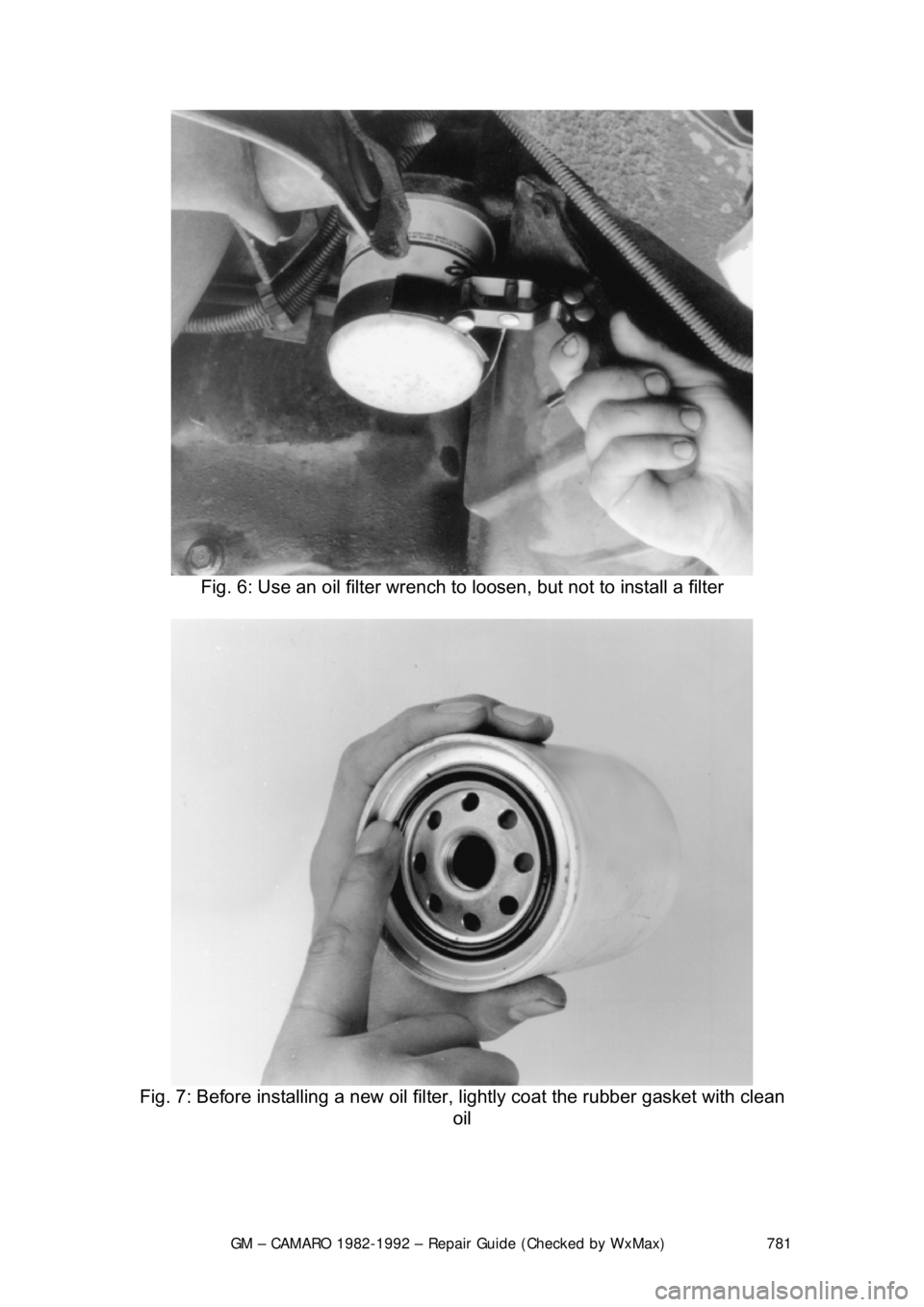
Fig. 6: Use an oil filter wrench to loosen, but not to install a filter
Fig. 7: Before installing a new oil filt er, lightly coat the rubber gasket with clean
oil