2000 DODGE NEON differential
[x] Cancel search: differentialPage 68 of 1285
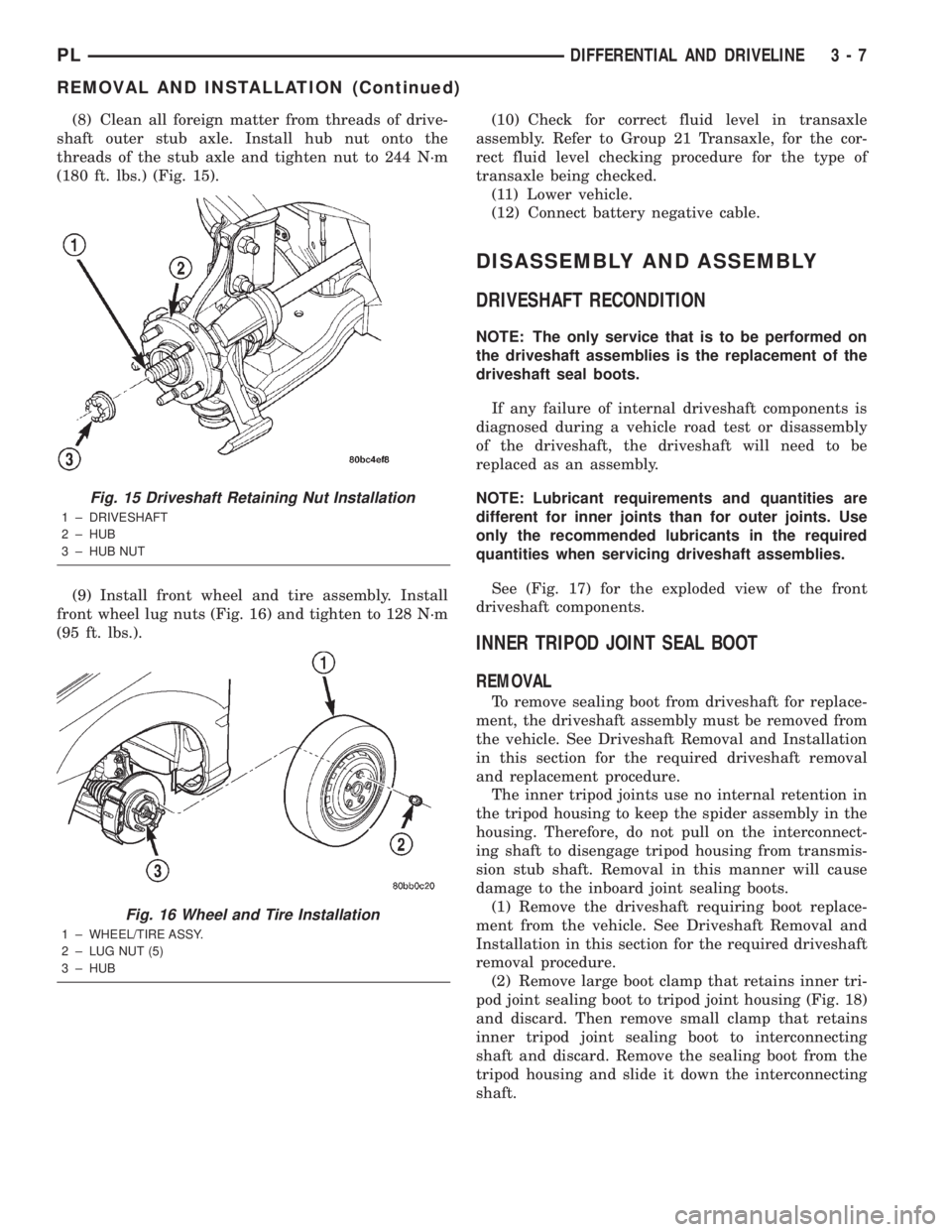
(8) Clean all foreign matter from threads of drive-
shaft outer stub axle. Install hub nut onto the
threads of the stub axle and tighten nut to 244 N´m
(180 ft. lbs.) (Fig. 15).
(9) Install front wheel and tire assembly. Install
front wheel lug nuts (Fig. 16) and tighten to 128 N´m
(95 ft. lbs.).(10) Check for correct fluid level in transaxle
assembly. Refer to Group 21 Transaxle, for the cor-
rect fluid level checking procedure for the type of
transaxle being checked.
(11) Lower vehicle.
(12) Connect battery negative cable.
DISASSEMBLY AND ASSEMBLY
DRIVESHAFT RECONDITION
NOTE: The only service that is to be performed on
the driveshaft assemblies is the replacement of the
driveshaft seal boots.
If any failure of internal driveshaft components is
diagnosed during a vehicle road test or disassembly
of the driveshaft, the driveshaft will need to be
replaced as an assembly.
NOTE: Lubricant requirements and quantities are
different for inner joints than for outer joints. Use
only the recommended lubricants in the required
quantities when servicing driveshaft assemblies.
See (Fig. 17) for the exploded view of the front
driveshaft components.
INNER TRIPOD JOINT SEAL BOOT
REMOVAL
To remove sealing boot from driveshaft for replace-
ment, the driveshaft assembly must be removed from
the vehicle. See Driveshaft Removal and Installation
in this section for the required driveshaft removal
and replacement procedure.
The inner tripod joints use no internal retention in
the tripod housing to keep the spider assembly in the
housing. Therefore, do not pull on the interconnect-
ing shaft to disengage tripod housing from transmis-
sion stub shaft. Removal in this manner will cause
damage to the inboard joint sealing boots.
(1) Remove the driveshaft requiring boot replace-
ment from the vehicle. See Driveshaft Removal and
Installation in this section for the required driveshaft
removal procedure.
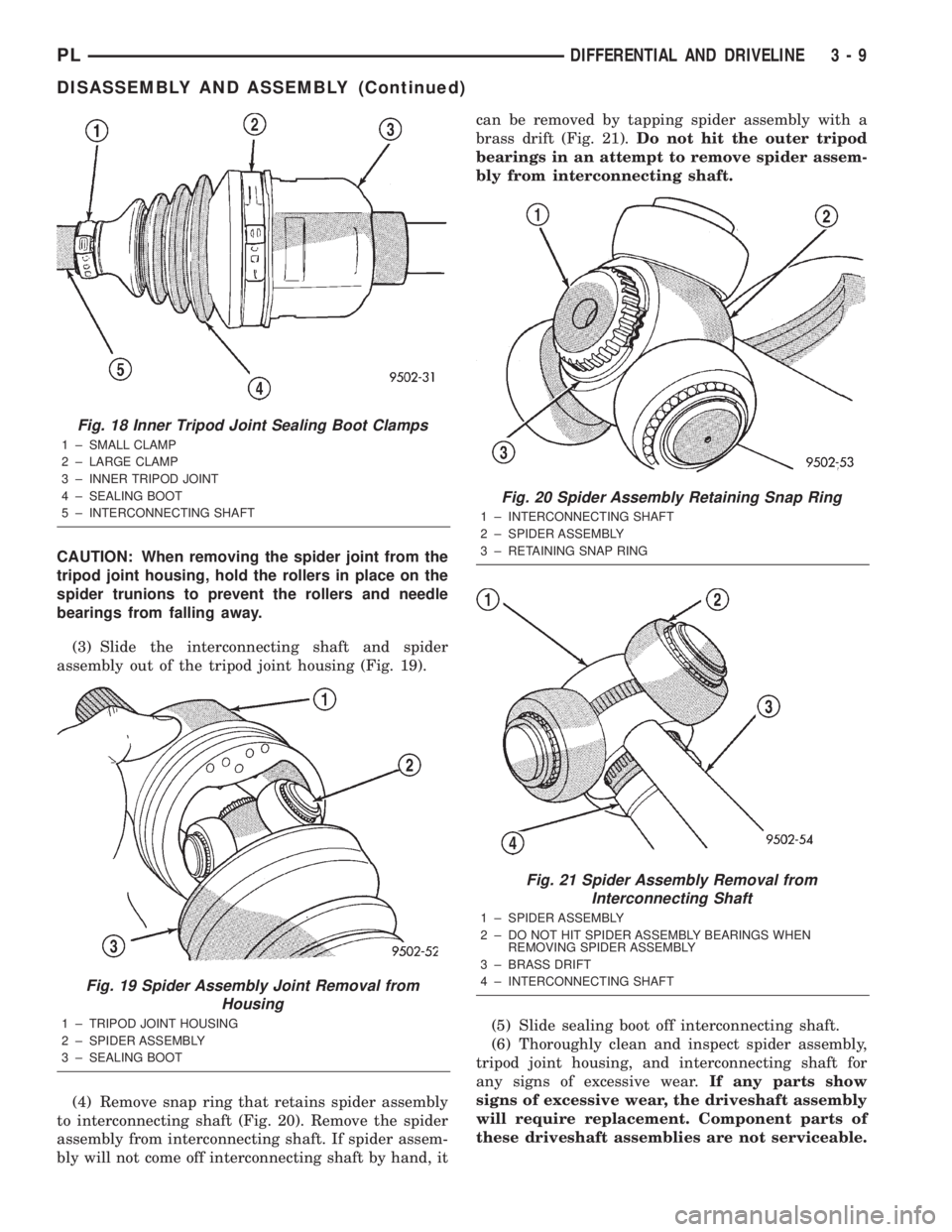
(2) Remove large boot clamp that retains inner tri-
pod joint sealing boot to tripod joint housing (Fig. 18)
and discard. Then remove small clamp that retains
inner tripod joint sealing boot to interconnecting
shaft and discard. Remove the sealing boot from the
tripod housing and slide it down the interconnecting
shaft.
Fig. 15 Driveshaft Retaining Nut Installation
1 ± DRIVESHAFT
2 ± HUB
3 ± HUB NUT
Fig. 16 Wheel and Tire Installation
1 ± WHEEL/TIRE ASSY.
2 ± LUG NUT (5)
3 ± HUB
PLDIFFERENTIAL AND DRIVELINE 3 - 7
REMOVAL AND INSTALLATION (Continued)
Page 69 of 1285
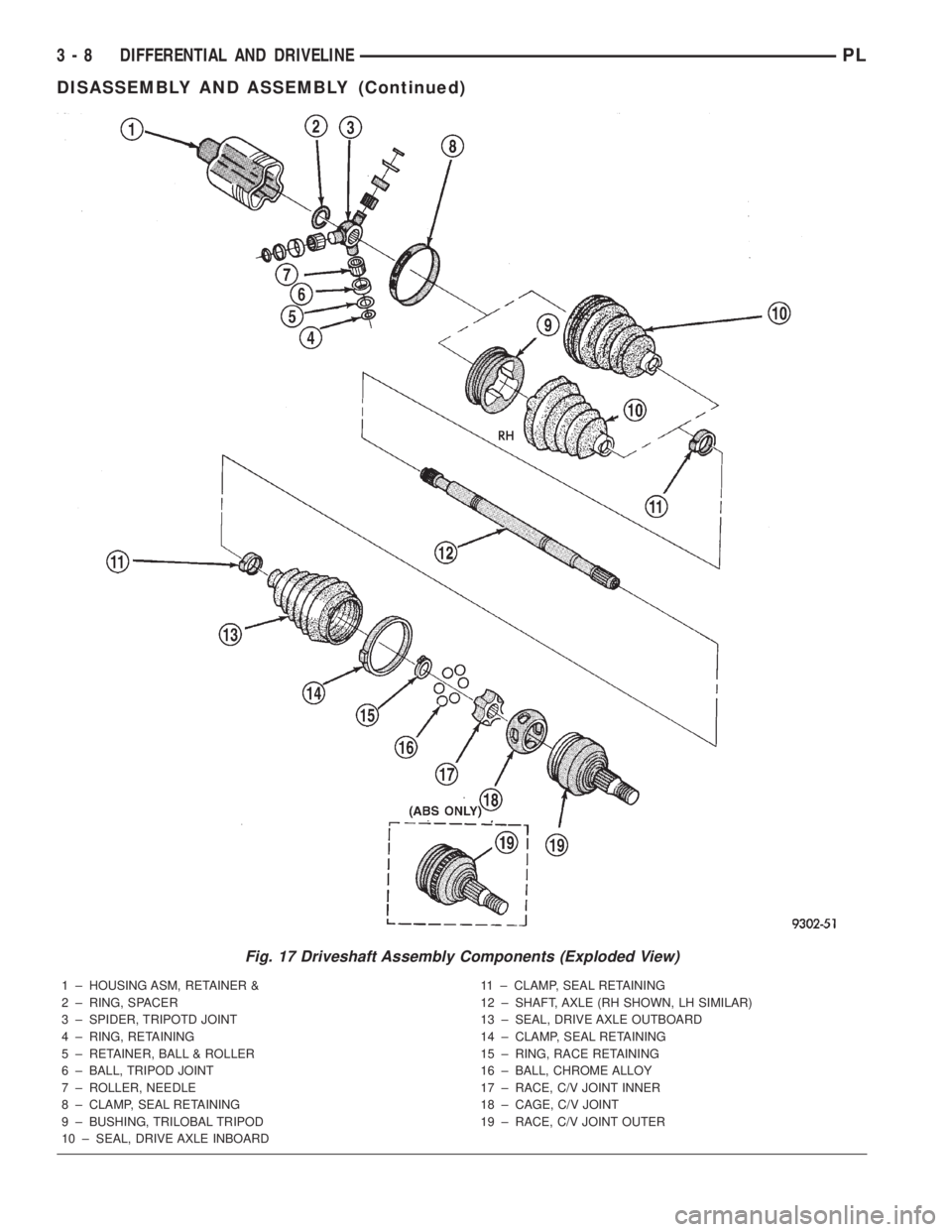
Fig. 17 Driveshaft Assembly Components (Exploded View)
1 ± HOUSING ASM, RETAINER &
2 ± RING, SPACER
3 ± SPIDER, TRIPOTD JOINT
4 ± RING, RETAINING
5 ± RETAINER, BALL & ROLLER
6 ± BALL, TRIPOD JOINT
7 ± ROLLER, NEEDLE
8 ± CLAMP, SEAL RETAINING
9 ± BUSHING, TRILOBAL TRIPOD
10 ± SEAL, DRIVE AXLE INBOARD11 ± CLAMP, SEAL RETAINING
12 ± SHAFT, AXLE (RH SHOWN, LH SIMILAR)
13 ± SEAL, DRIVE AXLE OUTBOARD
14 ± CLAMP, SEAL RETAINING
15 ± RING, RACE RETAINING
16 ± BALL, CHROME ALLOY
17 ± RACE, C/V JOINT INNER
18 ± CAGE, C/V JOINT
19 ± RACE, C/V JOINT OUTER
3 - 8 DIFFERENTIAL AND DRIVELINEPL
DISASSEMBLY AND ASSEMBLY (Continued)
Page 70 of 1285
CAUTION: When removing the spider joint from the
tripod joint housing, hold the rollers in place on the
spider trunions to prevent the rollers and needle
bearings from falling away.
(3) Slide the interconnecting shaft and spider
assembly out of the tripod joint housing (Fig. 19).
(4) Remove snap ring that retains spider assembly
to interconnecting shaft (Fig. 20). Remove the spider
assembly from interconnecting shaft. If spider assem-
bly will not come off interconnecting shaft by hand, itcan be removed by tapping spider assembly with a
brass drift (Fig. 21).Do not hit the outer tripod
bearings in an attempt to remove spider assem-
bly from interconnecting shaft.
(5) Slide sealing boot off interconnecting shaft.
(6) Thoroughly clean and inspect spider assembly,
tripod joint housing, and interconnecting shaft for
any signs of excessive wear.If any parts show
signs of excessive wear, the driveshaft assembly
will require replacement. Component parts of
these driveshaft assemblies are not serviceable.
Fig. 18 Inner Tripod Joint Sealing Boot Clamps
1 ± SMALL CLAMP
2 ± LARGE CLAMP
3 ± INNER TRIPOD JOINT
4 ± SEALING BOOT
5 ± INTERCONNECTING SHAFT
Fig. 19 Spider Assembly Joint Removal from
Housing
1 ± TRIPOD JOINT HOUSING
2 ± SPIDER ASSEMBLY
3 ± SEALING BOOT
Fig. 20 Spider Assembly Retaining Snap Ring
1 ± INTERCONNECTING SHAFT
2 ± SPIDER ASSEMBLY
3 ± RETAINING SNAP RING
Fig. 21 Spider Assembly Removal from
Interconnecting Shaft
1 ± SPIDER ASSEMBLY
2 ± DO NOT HIT SPIDER ASSEMBLY BEARINGS WHEN
REMOVING SPIDER ASSEMBLY
3 ± BRASS DRIFT
4 ± INTERCONNECTING SHAFT
PLDIFFERENTIAL AND DRIVELINE 3 - 9
DISASSEMBLY AND ASSEMBLY (Continued)
Page 71 of 1285
INSTALLATION
NOTE: The inner tripod joint sealing boots are
made from two different types of material. High±
temperature applications use silicone rubber
whereas standard temperature applications use
Hytrel plastic. The silicone sealing boots are soft
and pliable. The Hytrel sealing boots are stiff and
rigid. The replacement sealing boot MUST BE the
same type of material as the sealing boot that was
removed.
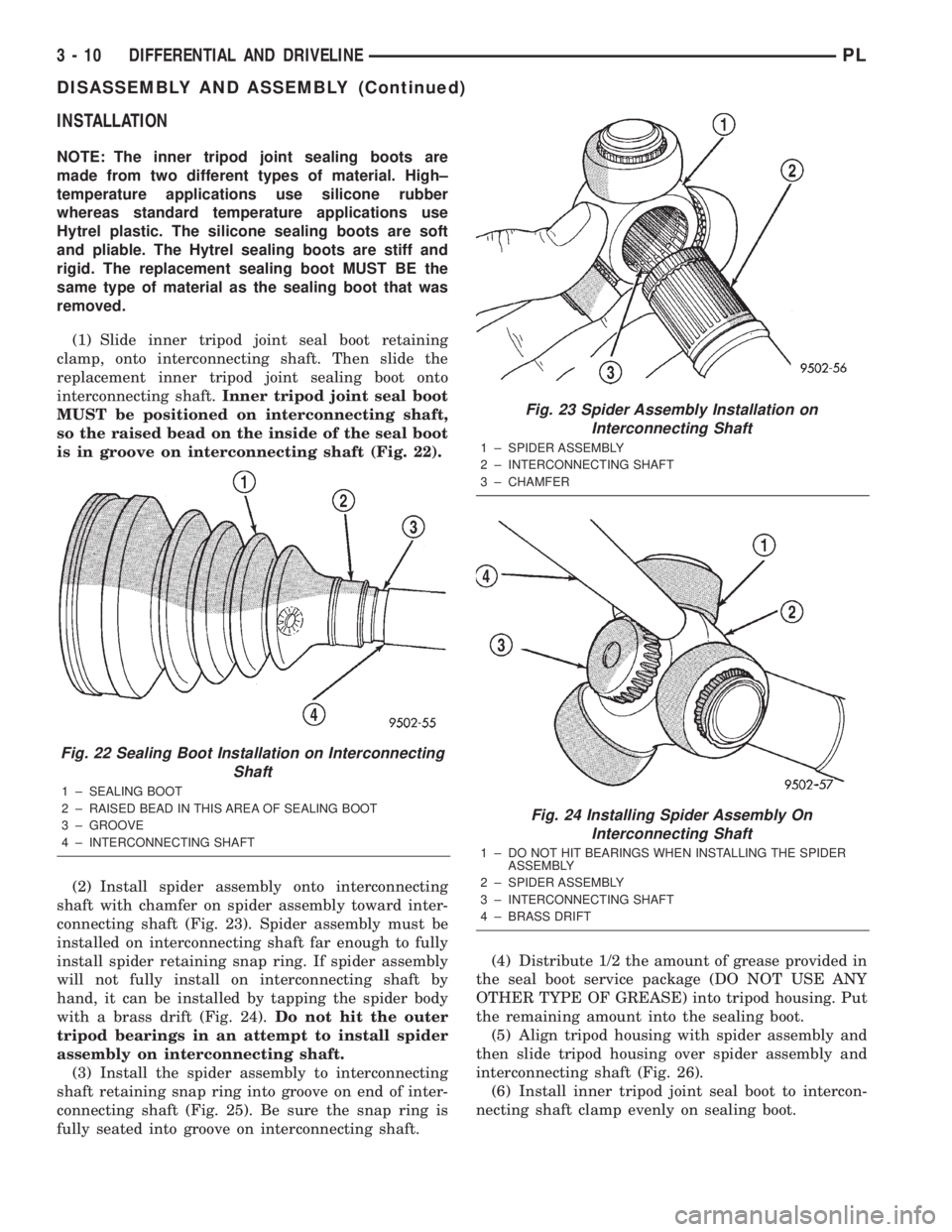
(1) Slide inner tripod joint seal boot retaining
clamp, onto interconnecting shaft. Then slide the
replacement inner tripod joint sealing boot onto
interconnecting shaft.Inner tripod joint seal boot
MUST be positioned on interconnecting shaft,
so the raised bead on the inside of the seal boot
is in groove on interconnecting shaft (Fig. 22).
(2) Install spider assembly onto interconnecting
shaft with chamfer on spider assembly toward inter-
connecting shaft (Fig. 23). Spider assembly must be
installed on interconnecting shaft far enough to fully
install spider retaining snap ring. If spider assembly
will not fully install on interconnecting shaft by
hand, it can be installed by tapping the spider body
with a brass drift (Fig. 24).Do not hit the outer
tripod bearings in an attempt to install spider
assembly on interconnecting shaft.
(3) Install the spider assembly to interconnecting
shaft retaining snap ring into groove on end of inter-
connecting shaft (Fig. 25). Be sure the snap ring is
fully seated into groove on interconnecting shaft.(4) Distribute 1/2 the amount of grease provided in
the seal boot service package (DO NOT USE ANY
OTHER TYPE OF GREASE) into tripod housing. Put
the remaining amount into the sealing boot.
(5) Align tripod housing with spider assembly and
then slide tripod housing over spider assembly and
interconnecting shaft (Fig. 26).
(6) Install inner tripod joint seal boot to intercon-
necting shaft clamp evenly on sealing boot.
Fig. 22 Sealing Boot Installation on Interconnecting
Shaft
1 ± SEALING BOOT
2 ± RAISED BEAD IN THIS AREA OF SEALING BOOT
3 ± GROOVE
4 ± INTERCONNECTING SHAFT
Fig. 23 Spider Assembly Installation on
Interconnecting Shaft
1 ± SPIDER ASSEMBLY
2 ± INTERCONNECTING SHAFT
3 ± CHAMFER
Fig. 24 Installing Spider Assembly On
Interconnecting Shaft
1 ± DO NOT HIT BEARINGS WHEN INSTALLING THE SPIDER
ASSEMBLY
2 ± SPIDER ASSEMBLY
3 ± INTERCONNECTING SHAFT
4 ± BRASS DRIFT
3 - 10 DIFFERENTIAL AND DRIVELINEPL
DISASSEMBLY AND ASSEMBLY (Continued)
Page 72 of 1285
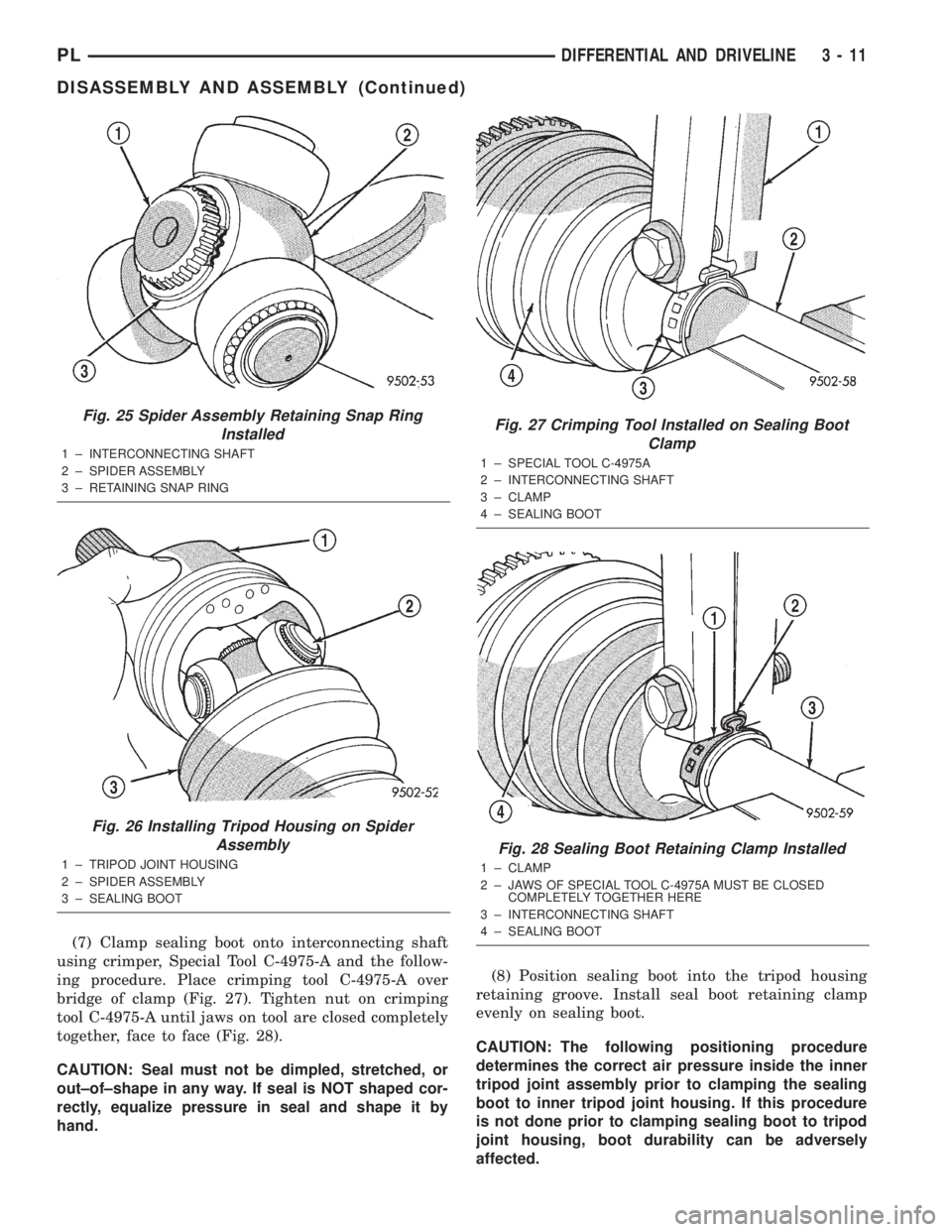
(7) Clamp sealing boot onto interconnecting shaft
using crimper, Special Tool C-4975-A and the follow-
ing procedure. Place crimping tool C-4975-A over
bridge of clamp (Fig. 27). Tighten nut on crimping
tool C-4975-A until jaws on tool are closed completely
together, face to face (Fig. 28).
CAUTION: Seal must not be dimpled, stretched, or
out±of±shape in any way. If seal is NOT shaped cor-
rectly, equalize pressure in seal and shape it by
hand.(8) Position sealing boot into the tripod housing
retaining groove. Install seal boot retaining clamp
evenly on sealing boot.
CAUTION: The following positioning procedure
determines the correct air pressure inside the inner
tripod joint assembly prior to clamping the sealing
boot to inner tripod joint housing. If this procedure
is not done prior to clamping sealing boot to tripod
joint housing, boot durability can be adversely
affected.
Fig. 25 Spider Assembly Retaining Snap Ring
Installed
1 ± INTERCONNECTING SHAFT
2 ± SPIDER ASSEMBLY
3 ± RETAINING SNAP RING
Fig. 26 Installing Tripod Housing on Spider
Assembly
1 ± TRIPOD JOINT HOUSING
2 ± SPIDER ASSEMBLY
3 ± SEALING BOOT
Fig. 27 Crimping Tool Installed on Sealing Boot
Clamp
1 ± SPECIAL TOOL C-4975A
2 ± INTERCONNECTING SHAFT
3 ± CLAMP
4 ± SEALING BOOT
Fig. 28 Sealing Boot Retaining Clamp Installed
1 ± CLAMP
2 ± JAWS OF SPECIAL TOOL C-4975A MUST BE CLOSED
COMPLETELY TOGETHER HERE
3 ± INTERCONNECTING SHAFT
4 ± SEALING BOOT
PLDIFFERENTIAL AND DRIVELINE 3 - 11
DISASSEMBLY AND ASSEMBLY (Continued)
Page 73 of 1285
CAUTION: When venting the inner tripod joint
assembly, use care so inner tripod sealing boot
does not get punctured or, in any other way, dam-
aged. If sealing boot is punctured or damaged while
being vented, the sealing boot can not be used.
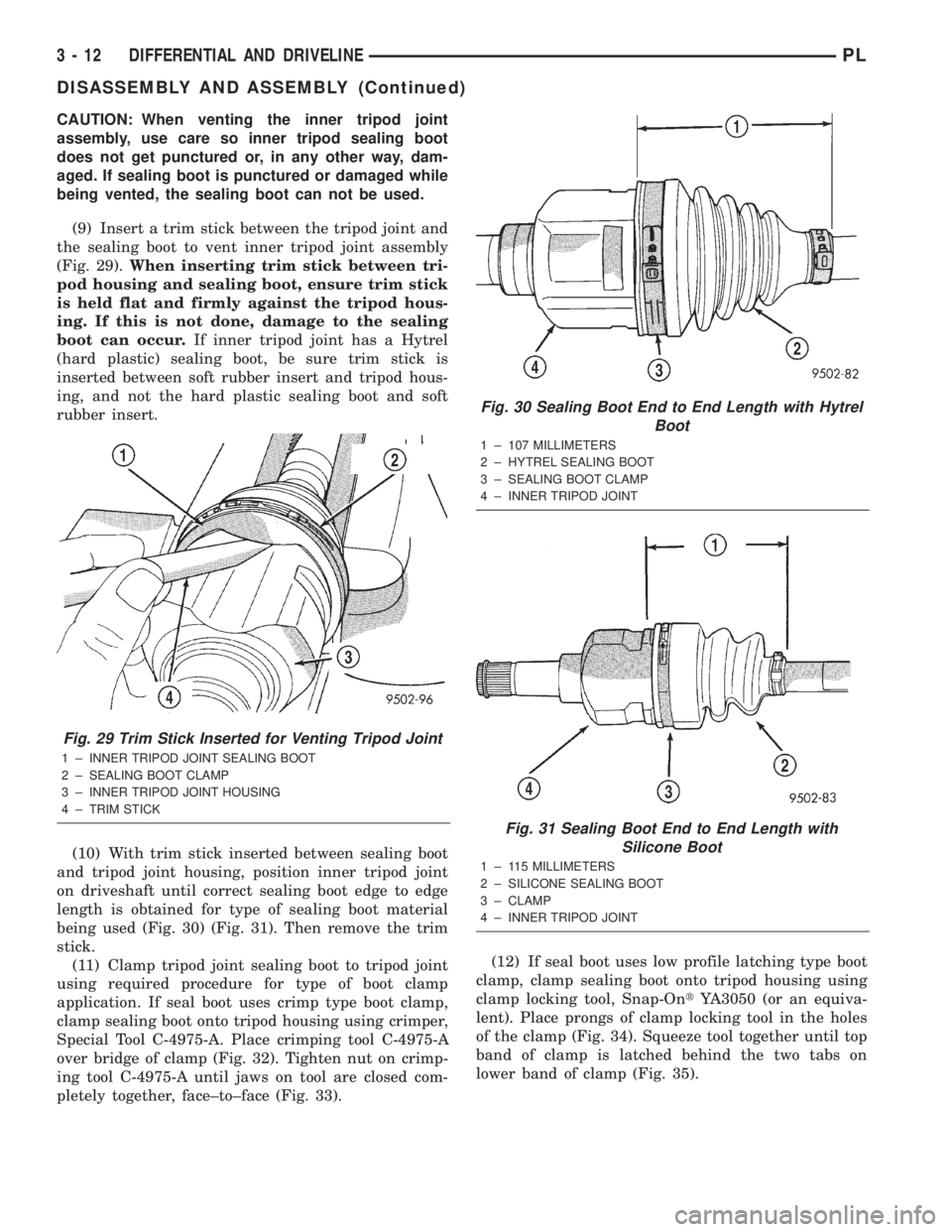
(9) Insert a trim stick between the tripod joint and
the sealing boot to vent inner tripod joint assembly
(Fig. 29).When inserting trim stick between tri-
pod housing and sealing boot, ensure trim stick
is held flat and firmly against the tripod hous-
ing. If this is not done, damage to the sealing
boot can occur.If inner tripod joint has a Hytrel
(hard plastic) sealing boot, be sure trim stick is
inserted between soft rubber insert and tripod hous-
ing, and not the hard plastic sealing boot and soft
rubber insert.
(10) With trim stick inserted between sealing boot
and tripod joint housing, position inner tripod joint
on driveshaft until correct sealing boot edge to edge
length is obtained for type of sealing boot material
being used (Fig. 30) (Fig. 31). Then remove the trim
stick.
(11) Clamp tripod joint sealing boot to tripod joint
using required procedure for type of boot clamp
application. If seal boot uses crimp type boot clamp,
clamp sealing boot onto tripod housing using crimper,
Special Tool C-4975-A. Place crimping tool C-4975-A
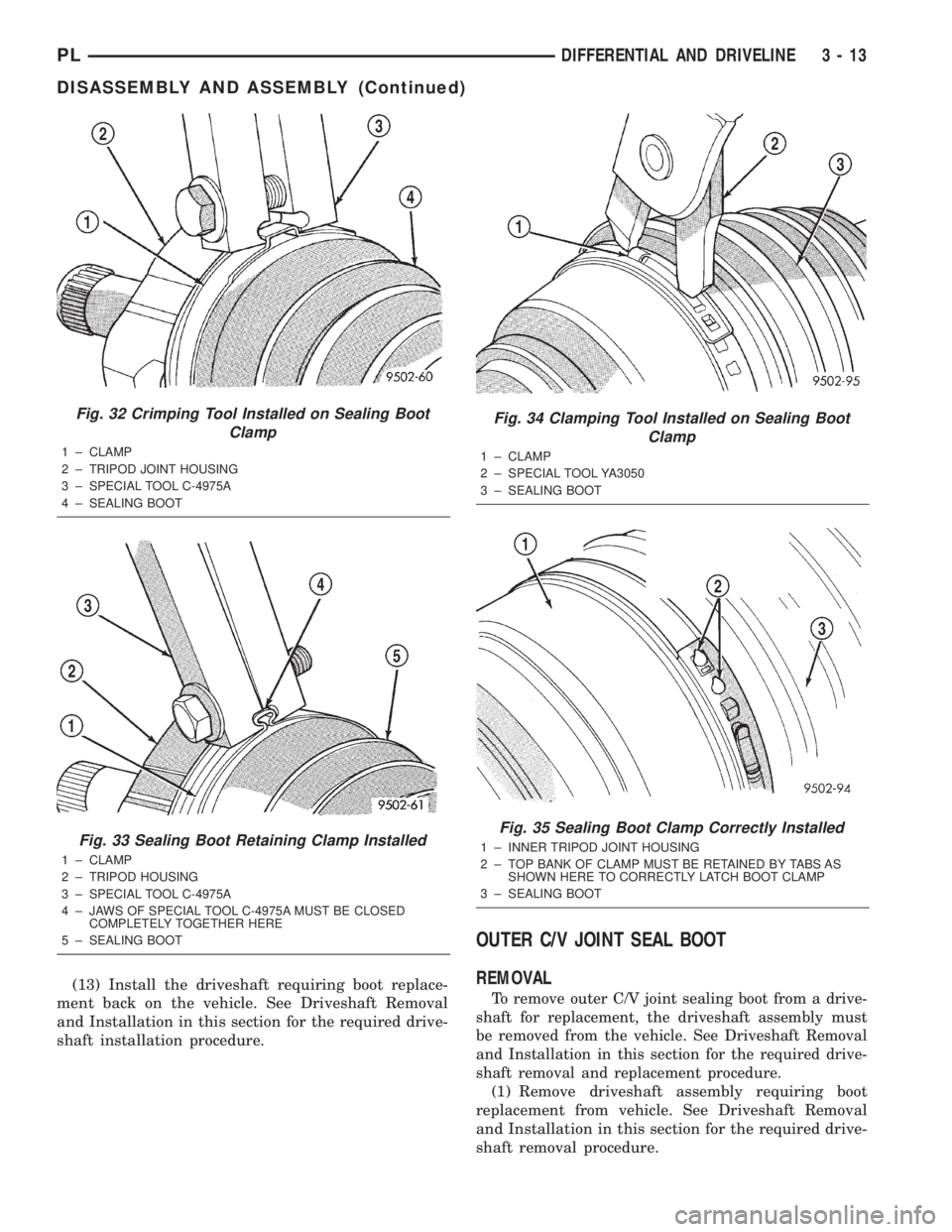
over bridge of clamp (Fig. 32). Tighten nut on crimp-
ing tool C-4975-A until jaws on tool are closed com-
pletely together, face±to±face (Fig. 33).(12) If seal boot uses low profile latching type boot
clamp, clamp sealing boot onto tripod housing using
clamp locking tool, Snap-OntYA3050 (or an equiva-
lent). Place prongs of clamp locking tool in the holes
of the clamp (Fig. 34). Squeeze tool together until top
band of clamp is latched behind the two tabs on
lower band of clamp (Fig. 35).
Fig. 29 Trim Stick Inserted for Venting Tripod Joint
1 ± INNER TRIPOD JOINT SEALING BOOT
2 ± SEALING BOOT CLAMP
3 ± INNER TRIPOD JOINT HOUSING
4 ± TRIM STICK
Fig. 30 Sealing Boot End to End Length with Hytrel
Boot
1 ± 107 MILLIMETERS
2 ± HYTREL SEALING BOOT
3 ± SEALING BOOT CLAMP
4 ± INNER TRIPOD JOINT
Fig. 31 Sealing Boot End to End Length with
Silicone Boot
1 ± 115 MILLIMETERS
2 ± SILICONE SEALING BOOT
3 ± CLAMP
4 ± INNER TRIPOD JOINT
3 - 12 DIFFERENTIAL AND DRIVELINEPL
DISASSEMBLY AND ASSEMBLY (Continued)
Page 74 of 1285
(13) Install the driveshaft requiring boot replace-
ment back on the vehicle. See Driveshaft Removal
and Installation in this section for the required drive-
shaft installation procedure.
OUTER C/V JOINT SEAL BOOT
REMOVAL
To remove outer C/V joint sealing boot from a drive-
shaft for replacement, the driveshaft assembly must
be removed from the vehicle. See Driveshaft Removal
and Installation in this section for the required drive-
shaft removal and replacement procedure.
(1) Remove driveshaft assembly requiring boot
replacement from vehicle. See Driveshaft Removal
and Installation in this section for the required drive-
shaft removal procedure.
Fig. 32 Crimping Tool Installed on Sealing Boot
Clamp
1 ± CLAMP
2 ± TRIPOD JOINT HOUSING
3 ± SPECIAL TOOL C-4975A
4 ± SEALING BOOT
Fig. 33 Sealing Boot Retaining Clamp Installed
1 ± CLAMP
2 ± TRIPOD HOUSING
3 ± SPECIAL TOOL C-4975A
4 ± JAWS OF SPECIAL TOOL C-4975A MUST BE CLOSED
COMPLETELY TOGETHER HERE
5 ± SEALING BOOT
Fig. 34 Clamping Tool Installed on Sealing Boot
Clamp
1 ± CLAMP
2 ± SPECIAL TOOL YA3050
3 ± SEALING BOOT
Fig. 35 Sealing Boot Clamp Correctly Installed
1 ± INNER TRIPOD JOINT HOUSING
2 ± TOP BANK OF CLAMP MUST BE RETAINED BY TABS AS
SHOWN HERE TO CORRECTLY LATCH BOOT CLAMP
3 ± SEALING BOOT
PLDIFFERENTIAL AND DRIVELINE 3 - 13
DISASSEMBLY AND ASSEMBLY (Continued)
Page 75 of 1285
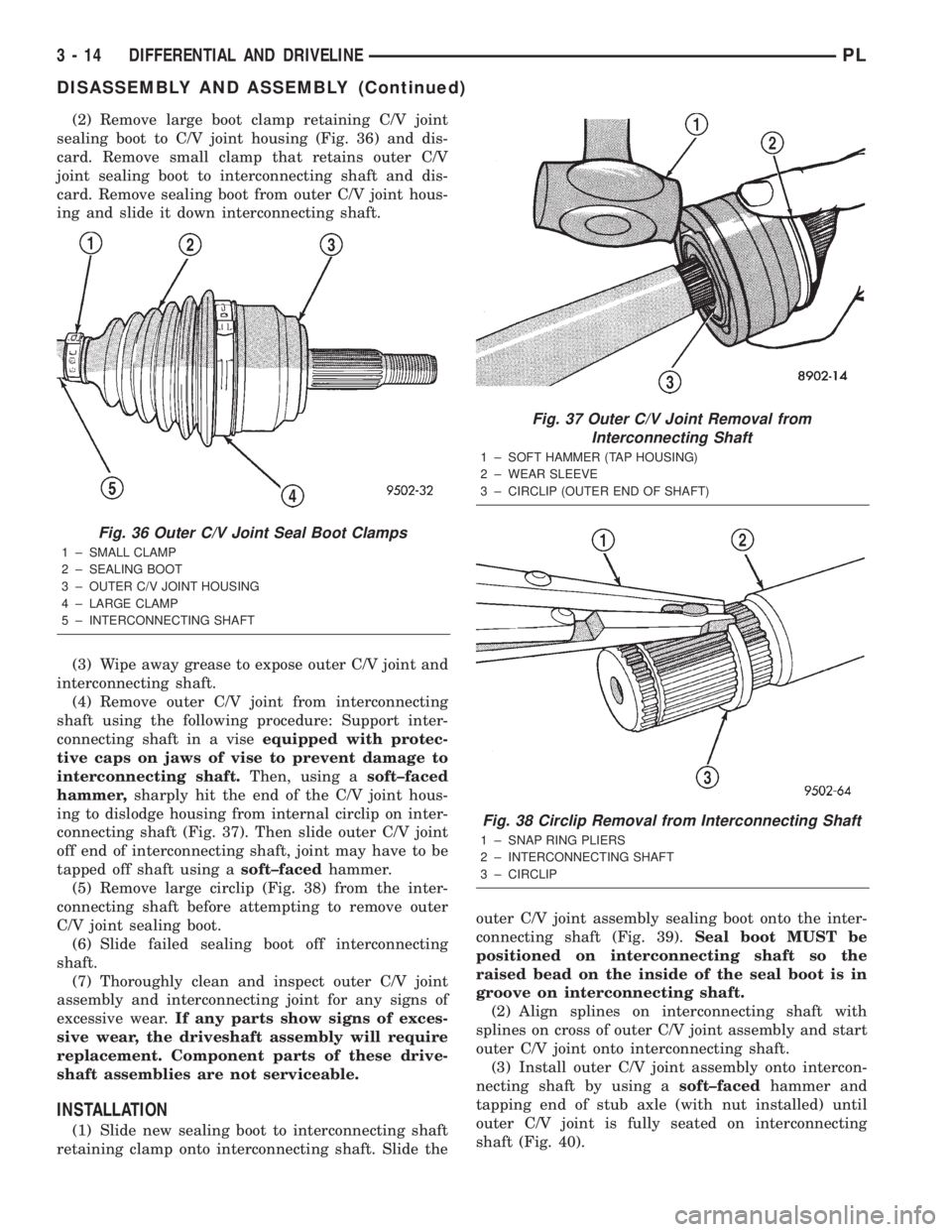
(2) Remove large boot clamp retaining C/V joint
sealing boot to C/V joint housing (Fig. 36) and dis-
card. Remove small clamp that retains outer C/V
joint sealing boot to interconnecting shaft and dis-
card. Remove sealing boot from outer C/V joint hous-
ing and slide it down interconnecting shaft.
(3) Wipe away grease to expose outer C/V joint and
interconnecting shaft.
(4) Remove outer C/V joint from interconnecting
shaft using the following procedure: Support inter-
connecting shaft in a viseequipped with protec-
tive caps on jaws of vise to prevent damage to
interconnecting shaft.Then, using asoft±faced
hammer,sharply hit the end of the C/V joint hous-
ing to dislodge housing from internal circlip on inter-
connecting shaft (Fig. 37). Then slide outer C/V joint
off end of interconnecting shaft, joint may have to be
tapped off shaft using asoft±facedhammer.
(5) Remove large circlip (Fig. 38) from the inter-
connecting shaft before attempting to remove outer
C/V joint sealing boot.
(6) Slide failed sealing boot off interconnecting
shaft.
(7) Thoroughly clean and inspect outer C/V joint
assembly and interconnecting joint for any signs of
excessive wear.If any parts show signs of exces-
sive wear, the driveshaft assembly will require
replacement. Component parts of these drive-
shaft assemblies are not serviceable.
INSTALLATION
(1) Slide new sealing boot to interconnecting shaft
retaining clamp onto interconnecting shaft. Slide theouter C/V joint assembly sealing boot onto the inter-
connecting shaft (Fig. 39).Seal boot MUST be
positioned on interconnecting shaft so the
raised bead on the inside of the seal boot is in
groove on interconnecting shaft.
(2) Align splines on interconnecting shaft with
splines on cross of outer C/V joint assembly and start
outer C/V joint onto interconnecting shaft.
(3) Install outer C/V joint assembly onto intercon-
necting shaft by using asoft±facedhammer and
tapping end of stub axle (with nut installed) until
outer C/V joint is fully seated on interconnecting
shaft (Fig. 40).
Fig. 36 Outer C/V Joint Seal Boot Clamps
1 ± SMALL CLAMP
2 ± SEALING BOOT
3 ± OUTER C/V JOINT HOUSING
4 ± LARGE CLAMP
5 ± INTERCONNECTING SHAFT
Fig. 37 Outer C/V Joint Removal from
Interconnecting Shaft
1 ± SOFT HAMMER (TAP HOUSING)
2 ± WEAR SLEEVE
3 ± CIRCLIP (OUTER END OF SHAFT)
Fig. 38 Circlip Removal from Interconnecting Shaft
1 ± SNAP RING PLIERS
2 ± INTERCONNECTING SHAFT
3 ± CIRCLIP
3 - 14 DIFFERENTIAL AND DRIVELINEPL
DISASSEMBLY AND ASSEMBLY (Continued)