Page 31 of 343
Protecting Children
Protecting Infants
Child Seat Type
Only a rear-facing child seat provides
proper support for a baby's head,
neck, and back. Infants up to about
one year of age must be restrained in
a rear-facing child seat.
Two types of seats may be used: a seat designed exclusively for infants,
or a convertible seat used in the rear-facing, reclining mode. We recommend that an infant be
restrained in a rear-facing child seat
until the infant reaches the seat maker's weight or height limit and is
able to sit up without support.
Rear-Facing Child Seat Placement
In this vehicle, a rear-facing child
seat can be placed in any seating
position in a back seat, but not in the
front seat.
Never put a rear-facing child seat in
the front seat. If the passenger's
airbag inflates, it can hit the back of
the child seat with enough force to
kill or seriously injure an infant. If an infant must be closely watched, we
recommend that another adult sit in
a back seat with the baby.
Do not put a rear-facing child seat in
a forward-facing position. If placed
facing forward, an infant could be
very seriously injured during a frontal collision.
Driver and Passenger Safety
Placing a rear-facing child seat
in the front seat can result in
serious injury or death if the
airbags inflate.
Always place a rear-facing child seat in the back seat, not the
front.ProCarManuals.comMain Menu Table of Contents s t
Page 33 of 343
Protecting Children
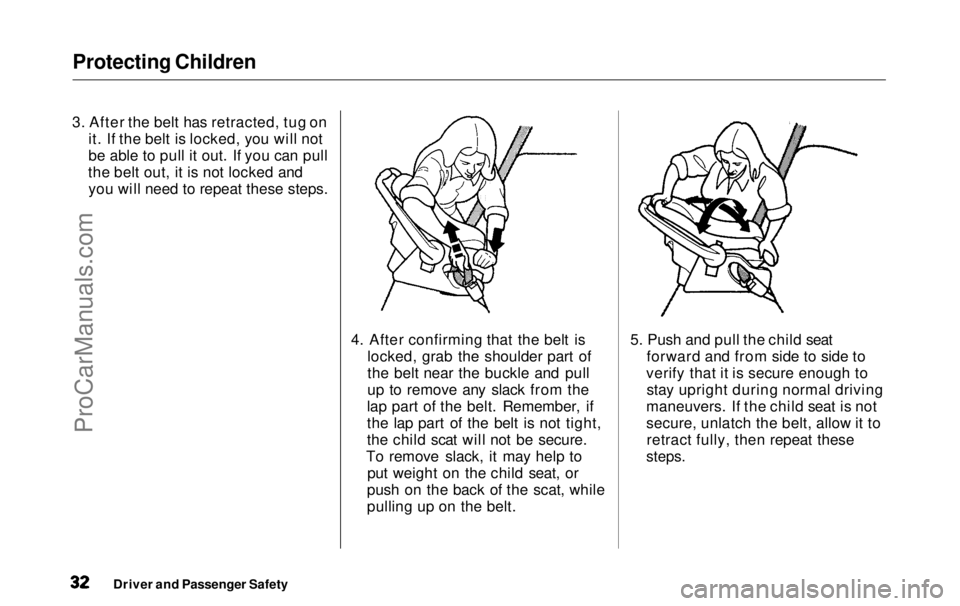
3. After the belt has retracted, tug on it. If the belt is locked, you will not
be able to pull it out. If you can pull
the belt out, it is not locked and you will need to repeat these steps.
4. After confirming that the belt islocked, grab the shoulder part of
the belt near the buckle and pull
up to remove any slack from the
lap part of the belt. Remember, if
the lap part of the belt is not tight,
the child scat will not be secure.
To remove slack, it may help to put weight on the child seat, or
push on the back of the scat, while
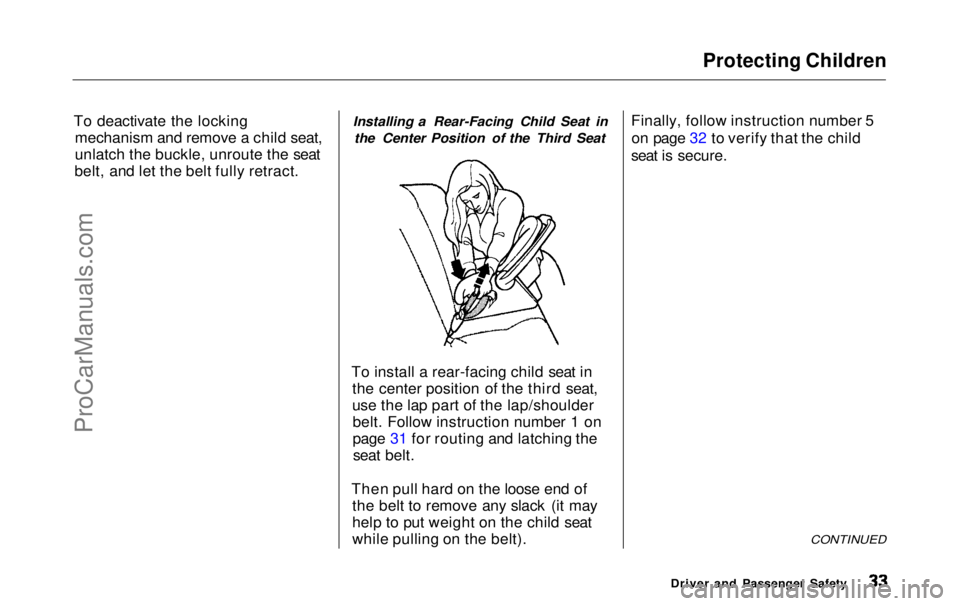
pulling up on the belt. 5. Push and pull the child seat
forward and from side to side to
verify that it is secure enough to stay upright during normal driving
maneuvers. If the child seat is not
secure, unlatch the belt, allow it to retract fully, then repeat these
steps.
Driver and Passenger SafetyProCarManuals.comMain Menu Table of Contents s t
Page 34 of 343
Protecting Children
To deactivate the locking mechanism and remove a child seat,
unlatch the buckle, unroute the seat
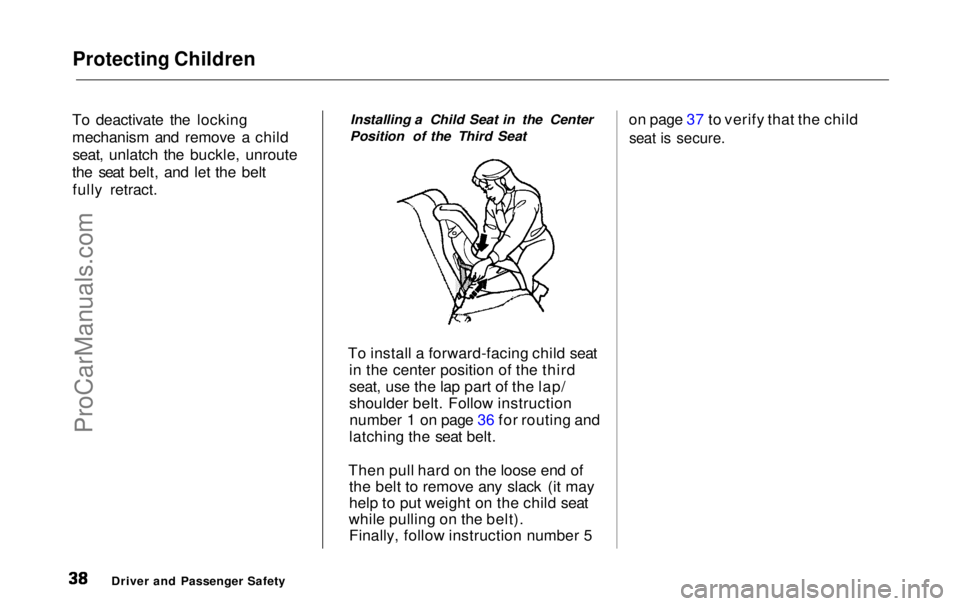
belt, and let the belt fully retract. Installing a Rear-Facing Child Seat in
the Center Position of the Third Seat
To install a rear-facing child seat in the center position of the third seat,
use the lap part of the lap/shoulderbelt. Follow instruction number 1 on
page 31 for routing and latching theseat belt.
Then pull hard on the loose end of the belt to remove any slack (it may
help to put weight on the child seat
while pulling on the belt). Finally, follow instruction number 5
on page 32 to verify that the child
seat is secure.
CONTINUED
Driver and Passenger SafetyProCarManuals.comMain Menu Table of Contents s t
Page 36 of 343
Protecting Children
Protecting Small Children
Child Seat Type
A child who can sit up without support, and who fits within the child
seat maker's weight and height
limits, should be restrained in a
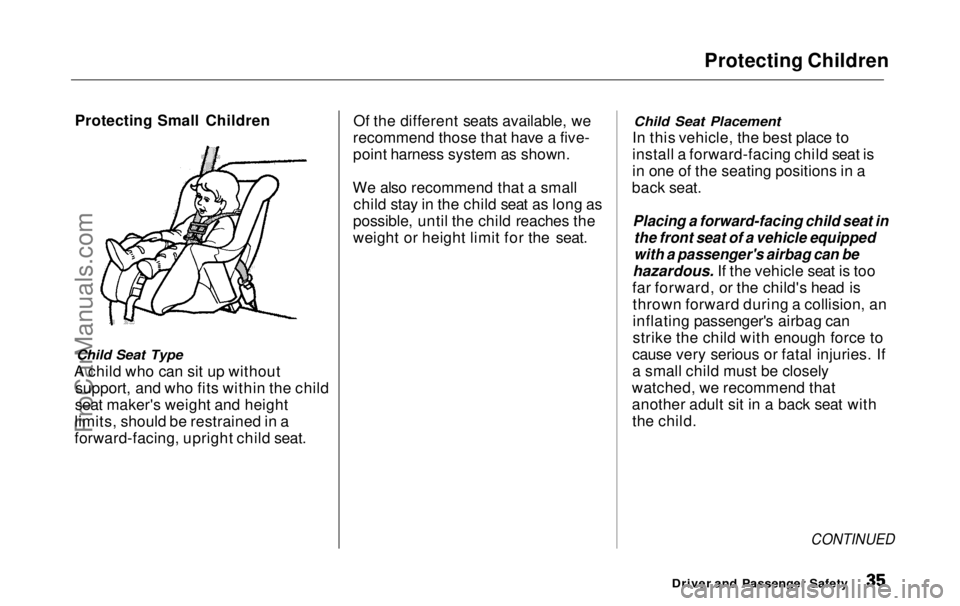
forward-facing, upright child seat. Of the different seats available, we
recommend those that have a five-
point harness system as shown.
We also recommend that a small child stay in the child seat as long as
possible, until the child reaches the
weight or height limit for the seat.
Child Seat Placement
In this vehicle, the best place to
install a forward-facing child seat is
in one of the seating positions in a
back seat.
Placing a forward-facing child seat in
the front seat of a vehicle equipped
with a passenger's airbag can be
hazardous. If the vehicle seat is too
far forward, or the child's head is thrown forward during a collision, an
inflating passenger's airbag can
strike the child with enough force to
cause very serious or fatal injuries. If
a small child must be closely
watched, we recommend that
another adult sit in a back seat with the child.
CONTINUED
Driver and Passenger SafetyProCarManuals.comMain Menu Table of Contents s t
Page 38 of 343
Protecting Children
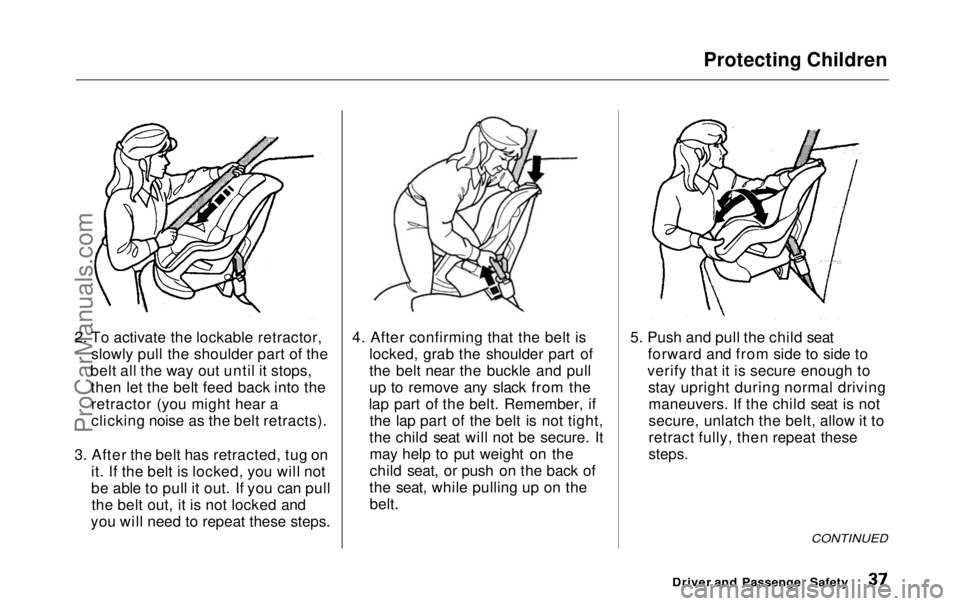
2. To activate the lockable retractor, slowly pull the shoulder part of the
belt all the way out until it stops, then let the belt feed back into theretractor (you might hear a
clicking noise as the belt retracts).
3. After the belt has retracted, tug on it. If the belt is locked, you will not
be able to pull it out. If you can pullthe belt out, it is not locked and
you will need to repeat these steps. 4. After confirming that the belt is
locked, grab the shoulder part of
the belt near the buckle and pull
up to remove any slack from the
lap part of the belt. Remember, if the lap part of the belt is not tight,
the child seat will not be secure. It may help to put weight on the
child seat, or push on the back of
the seat, while pulling up on the belt. 5. Push and pull the child seat
forward and from side to side to
verify that it is secure enough to stay upright during normal drivingmaneuvers. If the child seat is not
secure, unlatch the belt, allow it to
retract fully, then repeat these
steps.
CONTINUED
Driver and Passenger SafetyProCarManuals.comMain Menu Table of Contents s t
Page 39 of 343
Protecting Children
To deactivate the locking
mechanism and remove a child seat, unlatch the buckle, unroute
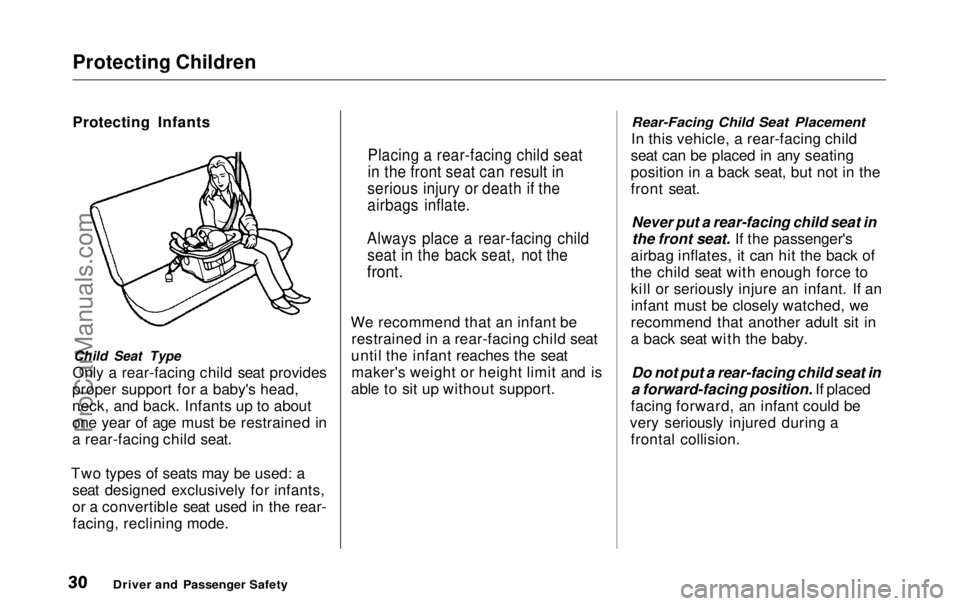
the seat belt, and let the belt fully retract. Installing a Child Seat in the Center
Position of the Third Seat
To install a forward-facing child seat in the center position of the third
seat, use the lap part of the lap/
shoulder belt. Follow instructionnumber 1 on page 36 for routing and
latching the seat belt.
Then pull hard on the loose end of the belt to remove any slack (it may
help to put weight on the child seat
while pulling on the belt). Finally, follow instruction number 5 on page 37 to verify that the child
seat is secure.
Driver and Passenger SafetyProCarManuals.comMain Menu Table of Contents s t
Page 40 of 343
Protecting Children
Additional Precautions for Small
Children
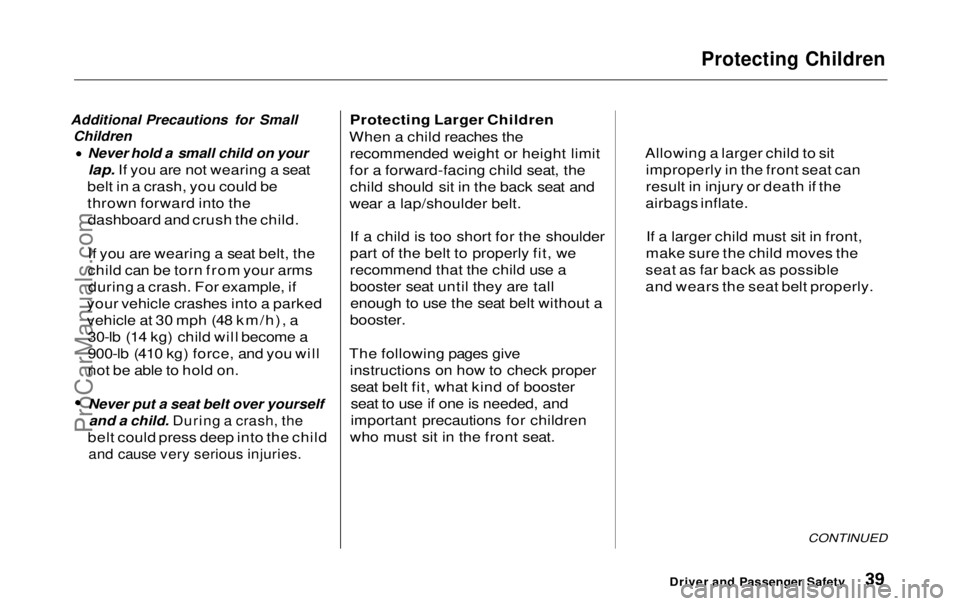
Never hold a small child on your
lap. If you are not wearing a seat
belt in a crash, you could be
thrown forward into the dashboard and crush the child.
If you are wearing a seat belt, the
child can be torn from your armsduring a crash. For example, if
your vehicle crashes into a parked
vehicle at 30 mph (48 km/h), a 30-lb (14 kg) child will become a
900-lb (410 kg) force, and you will
not be able to hold on.
Never put a seat belt over yourself
and a child. During a crash, the
belt could press deep into the child
and cause very serious injuries.
Protecting Larger Children
When a child reaches the recommended weight or height limit
for a forward-facing child seat, the child should sit in the back seat and
wear a lap/shoulder belt.
If a child is too short for the shoulder
part of the belt to properly fit, we
recommend that the child use a
booster seat until they are tallenough to use the seat belt without a
booster.
The following pages give instructions on how to check properseat belt fit, what kind of boosterseat to use if one is needed, and
important precautions for children
who must sit in the front seat.
CONTINUED
Driver and Passenger Safety
Allowing a larger child to sit
improperly in the front seat can
result in injury or death if the
airbags inflate.
If a larger child must sit in front,
make sure the child moves the
seat as far back as possible
and wears the seat belt properly.ProCarManuals.comMain Menu Table of Contents s t
Page 110 of 343
Seats
Removing the Bench Seat in the
Second Row
SEAT-BACK ANGLE
ADJUSTMENT LEVER
The bench seat in the second row can be removed to give more cargo
space.
Because of the bench seat's size and
weight, you may want to have someone assist you when removing
it.
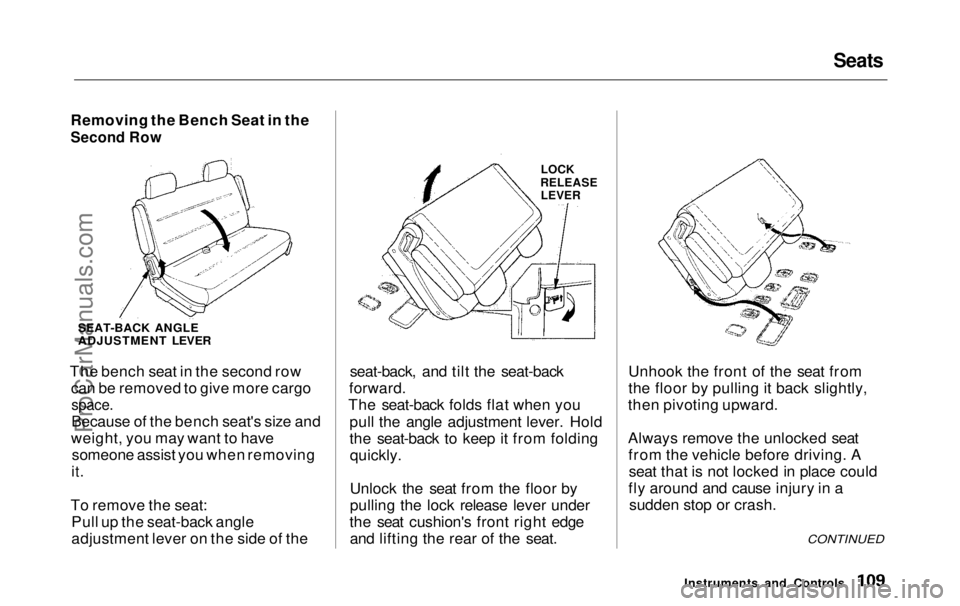
To remove the seat: Pull up the seat-back angle
adjustment lever on the side of the
LOCK
RELEASE LEVER
seat-back, and tilt the seat-back
forward.
The seat-back folds flat when you
pull the angle adjustment lever. Hold
the seat-back to keep it from foldingquickly.
Unlock the seat from the floor by
pulling the lock release lever under
the seat cushion's front right edge and lifting the rear of the seat. Unhook the front of the seat from
the floor by pulling it back slightly,
then pivoting upward.
Always remove the unlocked seat from the vehicle before driving. Aseat that is not locked in place could
fly around and cause injury in a sudden stop or crash.
Instruments and Controls
CONTINUEDProCarManuals.comMain Menu Table of Contents s t