Page 774 of 875

GM – CAMARO 1982-1992 – Repair Guide (Checked by WxMax) 774
FLUIDS AND LUBRICANTS
FLUID DISPOSAL
Used fluids such as engine
oil, transmission fluid, antifreeze and brake fluid are
hazardous wastes and must be disposed of properly. Befo re draining any fluids,
consult with your local authorities; in many areas waste oil, etc. is being
accepted as a part of recycling programs. A number of service stations and auto
parts stores are also accepti ng waste fluids for recycling.
Be sure of the recycling cent er's policies before draining any fluids, as many will
not accept different fluids that have been mixed together.
FUEL RECOMMENDATIONS
The engine is designed to operate on unleaded gasoline ONLY and is essential
for the proper operation of the emissi on control system. The use of unleaded
fuel will reduce spark plug fouling, exhaust system corrosion and engine oil
deterioration.
In most parts of the United States, f uel with an octane rating of 87 should be
used; in high altitude areas, fuel wit h an octane rating as low as 85 may be
used.
In some areas, fuel consisting of a blen d of alcohol may be used; this blend of
gasoline and alcohol is known as gaso hol. When using gasohol, never use
blends exceeding 10% ethanol (e thyl or grain alcohol) or 5% methanol (methyl
or wood alcohol).
The use of fuel with excessive amounts of alcohol may jeopardize the new car
and emission control system warranties.
Page 783 of 875

GM – CAMARO 1982-1992 – Repair Guide (Checked by WxMax) 783
AUTOMATIC TRANSMISSION
FLUID RECOMMENDATIONS
Use only Dexron®II Automati
c Transmission Fluid.
LEVEL CHECK
Fig. 1: Read automatic transmission flui d level on dipstick and add, as required
Check the automatic transmission fluid le vel at each oil change. Driving with too
much or too little transmission fluid ca n damage the transmission. The dipstick
can be found in the rear of the engine compartment. The fluid level should be
checked only when the transmission is at normal operating temperature. If your
Camaro has been driven at highway speeds fo r a long time, in city traffic in hot
weather, or pulling a trailer, wait for about 30 minutes for the fluid to cool down
so a correct reading can be read.
1. Park the car on a level surface, with the parking brake on. Start the
engine and let it idle for about 15 minutes. Move the transmission
through all the gears and then back to P.
2. Remove the dipstick and carefully touch the wet end of the dipstick to see if the fluid is cool, warm, or ho t. Wipe it clean and then reinsert it
firmly. Be sure that it has been pushed all the way in. Remove the
dipstick again and check the fluid leve l while holding it horizontally.
a. If fluid is cool (room temper ature), the level should be about
1/8-3/8
in. (3-10mm) below the ADD mark.
Page 790 of 875

GM – CAMARO 1982-1992 – Repair Guide (Checked by WxMax) 790
LEVEL CHECK
Fig. 1: Removing filler plug to check rear axle lubricant
The gear lubricant in the drive axle should be checked every 12 months or
15,000 miles (24,000km).
1. Raise the car and support on jackstands as close to level as possible. \
2. Remove the filler plug from the side of the drive axle housing.
3. If lubricant begins to trickle out of the hole, there is enough and you need
not go any further. Otherwise, carefully insert your finger (watch out for
sharp threads) and check to see if the lubricant is up to the edge of the
hole.
4. If not, add oil through the hole until the level is at the edge of the hole.
Most gear lubricants come in a pl astic squeeze bottle with a nozzle;
making additions simple.
5. Install and tighten the filler plug.
DRAIN AND REFILL
The rear axle should have the gear lubricant changed every 7,500 miles
(12,000km). If equipped with a limited slip differential, be sure to add 4 oz.
(118mL) of GM lim ited slip additive part No. 1052358.
1. Raise the car and support on jackst ands. Place a container under the
differential to catch the fluid.
2. Remove the bolts retaining the par king brake cable guides and position
aside.
Page 791 of 875

GM – CAMARO 1982-1992 – Repair Guide (Checked by WxMax) 791
3. Clean all dirt from
the area around the cover. Re move the bolts retaining
the cover to the housing. Pry the co ver from the differential housing and
allow the fluid to drain into the catch pan.
To install: 4. With the cover and housing washed free of oil and gasket material, apply sealer to the mating surfaces.
5. Using a new gasket, install the cove r and torque the bolts to 20 ft. lbs.
(27 Nm) in a clockwise pattern to in sure uniform draw on the gasket. Fill
the differential with fluid through the fi ll plug and add limited slip additive,
as required.
6. Install the parking brake cable guides, if removed.
7. The fluid level shou ld reached a level within
3/8 in. (10mm) of the filler
plug hole. Replace the filler plug. Low er the car and inspect for leaks.
COOLING SYSTEM
CAUTION - When draining the c oolant, keep in mind that cats and dogs are
attracted by the ethylene gl ycol antifreeze, and are quite likely to drink any that
is left in an uncovered container or in puddles on the ground. This will prove
fatal in sufficient quantity. Always drai n the coolant into a sealable container.
Coolant should be reused unless it is c ontaminated or several years old (in
which case it should be taken to a recycli ng facility such as a service station).
FLUID RECOMMENDATIONS
When adding or changing the fluid in the system, create a 50/50 mixture of high
quality ethylene glycol antifreeze and water.
LEVEL CHECK
Fig. 1: Fluid level marks on the cool ant recovery tank. With a warm system,
coolant level should be just below the FULL HOT mark on tank.
Page 795 of 875
GM – CAMARO 1982-1992 – Repair Guide (Checked by WxMax) 795
Fill the cooling system wit
h a 50/50 mixture of water and Ethylene Glycol
antifreeze. Freezing protection should be appropriate for temperatures of -34°F
(-37°C). When filling the coolant system, add two cooling system sealer pellets
(GM part no. 3634621 or equivalent).
9. Firmly set the parking brake. Run t he engine with the radiator cap OFF,
until normal operating tem perature is reached.
CAUTION - Under some conditions, ethylene glycol is flammable. To avoid
being burned when adding engine coolant, do not spill it on the exhaust system
or on hot engine parts.
10. With the engine idlin g, add engine coolant to t he radiator until the level
reaches the bottom of t he radiator fill neck. Install the cap assembly.
When installing the cap, make sure t hat the arrows on the cap line up
with the overflow tube.
Never add cold water to an overheated engine.
11. Add coolant to the recovery tank, as necessary.
12. After filling the radiator and recovery tank, run the engine until it reaches
normal operating temperature, to ma ke sure that the thermostat has
opened and all the air is bled from the system.
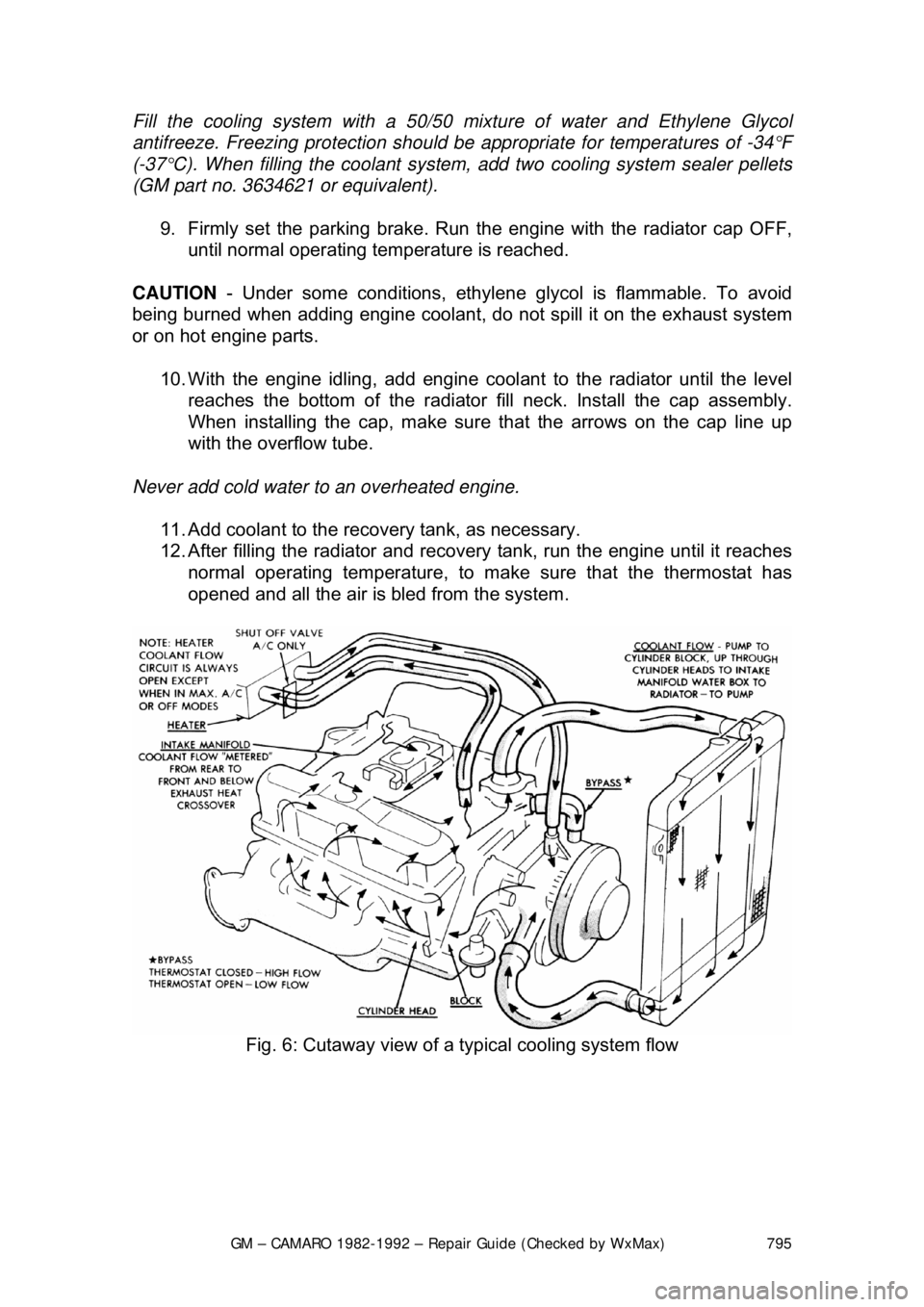
Fig. 6: Cutaway view of a typical cooling system flow
Page 797 of 875

GM – CAMARO 1982-1992 – Repair Guide (Checked by WxMax) 797
The cooling system should be drained, th
oroughly flushed and refilled at least
every 30,000 miles or 24 months. This operation should be done with the \
engine cold.
1. Drain the cooling system as de scribed earlier in this section.
2. Fill the cooling system with warm water and start the engine. Run the
engine until normal operating temperature is reached.
3. At this point, turn the engine o ff and again drain the cooling system.
4. Repeat this procedure until the flui d draining from the system is nearly
colorless.
5. Remove, empty and reinstall the coolant recovery reservoir assembly.
6. Fill the cooling system with a 50/50 mixture of ethylene glycol antifreeze,
as outlined in the prev ious procedure.
BRAKE MASTER CYLINDER
FLUID RECOMMENDATIONS
When adding or replacing the brake fluid, always use a top quality fluid, such as
Delco Supreme II or equivalent DOT-3 flui d. DO NOT allow the master cylinder
reservoir to remain open for long periods of time; brake fluid absorbs moisture
from the air, reducing it s effectiveness and causing corrosion in the lines.
Avoid spilling brake fluid on any of the vehicle's painted surfaces, wiring cables
or electrical connections. Brake fl uid will damage paint and electrical
connections. If any fluid is spilled on t he vehicle, flush with water to lessen
damage.
LEVEL CHECK
Fig. 1: Check master cylinder fluid leve l against indicator on side of reservoir.
Fluid level should not be below MIN marking on reservoir.
Page 798 of 875
GM – CAMARO 1982-1992 – Repair Guide (Checked by WxMax) 798
Fig. 2: Remove the reservoir cover, inspect condition of brake fluid and\
reservoir diaphragm
Fig. 3: Add clean brake fluid meeting DOT- 3 requirements to fill reservoir to the
proper level
Page 799 of 875

GM – CAMARO 1982-1992 – Repair Guide (Checked by WxMax) 799
The master cylinder is located in
the left rear section of the engine
compartment. The brake master cylinder consists of an aluminum body and a
translucent nylon reservoir with minimum fill indicators.
1. Check the master cylinder body for cracks. Inspect the area around the
master cylinder for brake fluid. Leaks are indicated if there is at least a
drop of fluid. A damp condition is not normal.
2. Inspect the level of the brake fluid to assure it is at the correct height.
Clean the top of the reservoir cap so t hat all dirt is removed. Remove the
cap(s) or reservoir cover and the reservoir diaphragm.
3. Inspect the brake fluid level. Add clean DOT-3 brake fluid as required to
bring the fluid level to the line located inside the neck of the reservoir fill
opening.
4. Install the reservoir cap.
WARNING - Any sudden decrease in the fluid level indicates a possible leak in
the system and should be check ed out immediately. Do not allow brake fluid to
spill on the vehicle's finish; it will remove the paint. In case of a spill, flush the
area with water and mild soap.
HYDRAULIC CLUTCH SYSTEM
FLUID RECOMMENDATIONS
• 1982-1991 - Delco Supreme II Brake fl uid or an equivalent fluid that
meets DOT-3 specifications
• 1992 - Hydraulic clutch fluid, GM part number 12345347 or equivalent
LEVEL CHECK
The clutch master cylinder is normally lo cated below the brake master cylinder.
The reservoir for it is located right bes ide the brake master cylinder and is made
of translucent nylon. The fl uid level of the reservoir sh ould be kept near the top
of the observation window. Before removing the cap to the reservoir, clean all
dirt from the area. This will prevent syst em contamination due to particles falling
into the reservoir when the caps are removed.
POWER STEERING PUMP
FLUID RECOMMENDATIONS
• GM power steering fluid, or equivalent.
 798
Fig. 2: Remove the reservoir cover, inspect condition of brake fluid and\
reservoir diaphragm
Fig. 3: Add clean brake fluid meet")