1982 CHEVROLET CAMARO brake
[x] Cancel search: brakePage 802 of 875

GM – CAMARO 1982-1992 – Repair Guide (Checked by WxMax) 802
BODY LUBRICATION
HOOD LATCH AND HINGES
Clean the latch surfaces and
apply clean engine oil to the latch pilot bolts and
the spring anchor. Use the engine oil to l ubricate the hood hinges as well. Use a
chassis grease to lubricate all the pivot points in the latch release mechanism.
DOOR HINGES
The gas tank filler door, car door, and rear hatch or trunk lid hinges should be
wiped clean and lubricated with clean engi ne oil. Silicone spray also works well
on seals, but must be applied more often. Use engine oil to lubricate the trunk
or hatch lock mechanism and the lock bo lt and striker. The door lock cylinders
can be lubricated easily with a shot of silicone spray or one of the many dry
penetrating lubricants commercially available.
PARKING BRAKE LINKAGE
Use chassis grease on the parking brake c able where it contacts the guides,
links, levers, and pulleys. The grease s hould be water resistant for durability.
ACCELERATOR LINKAGE
Lubricate the throttle lever, and the accele rator pedal lever at the support inside
the car with clean engine oil.
TRANSMISSION SHIFT LINKAGE
Lubricate the shift linkage with water re sistant chassis grease which meets GM
Specification 6031M or its equal.
FRONT WHEEL BEARINGS
Once every 30,000 miles, clean and repack wheel bearings with a wheel
bearing packer. Remove any excess grea se from the exposed surface of the
hub and seal.
REMOVAL, REPACKING, INSTA LLATION AND ADJUSTMENT
WARNING - It is important that wheel b earings be properly adjusted after
installation. Improperly adj usted wheel bearings can c ause steering instability,
front end shimmy and wander, and increased tire wear.
1. Raise the car and support it at the lower arm. Remove the tire and wheel
assembly.
2. Remove the brake caliper and support it on a wire.
3. Remove the dust cap, cotter pin, ca stle nut, thrust washer and outside
wheel bearing.
4. Pull the disc/hub assembly from the steering knuckle.
Page 811 of 875

GM – CAMARO 1982-1992 – Repair Guide (Checked by WxMax) 811
CAUTION
- NEVER hook the batteries up in a series circuit or the entire
electrical system will go up in smoke, including the starter!
Vehicles equipped with a diesel engine may utilize two 12 volt batteries. If so,
the batteries are connected in a parallel circuit (positive terminal to positive
terminal, negative terminal to negative te rminal). Hooking the batteries up in
parallel circuit increases battery cranki ng power without increasing total battery
voltage output. Output remains at 12 vo lts. On the other hand, hooking two 12
volt batteries up in a series circuit (positive terminal to negative terminal,
positive terminal to negative terminal) incr eases total battery output to 24 volts
(12 volts plus 12 volts).
JUMP STARTING PRECAUTIONS
• Be sure that both batteries are of t he same voltage. Vehicles covered by
this information and most vehicles on the road today utilize a 12 volt
charging system.
• Be sure that both batteries are of the same polarity (have the same
terminal, in most cases NEGATIVE grounded).
• Be sure that the vehicles are not touching or a short could occur.
• On serviceable batteries, be sure the v ent cap holes are not obstructed.
• Do not smoke or allow sparks anywhere near the batteries.
• In cold weather, make sure the battery electrolyte is not frozen. This can
occur more readily in a battery that has been in a state of discharge.
• Do not allow electrolyte to c ontact your skin or clothing.
JUMP STARTING PROCEDURE 1. Make sure that the voltages of the 2 batteries are the same. Most
batteries and charging systems are of the 12 volt variety.
2. Pull the jumping vehicle (with t he good battery) into a position so the
jumper cables can reach the dead battery and that vehicle's engine.
Make sure that the ve hicles do NOT touch.
3. Place the transmissions of both vehicles in Neutral (MT) or P (AT), as
applicable, then firmly set their parking brakes.
If necessary for safety reasons, the hazard lights on both vehicles may be
operated throughout the entir e procedure without significantly increasing the
difficulty of jumping the dead battery.
4. Turn all lights and accessories OFF on both vehicles. Make sure the ignition switches on both vehicles are turned to the OFF position.
5. Cover the battery cell caps with a rag, but do not cover the terminals.
6. Make sure the terminals on both batte ries are clean and free of corrosion
or proper electrical connection wil l be impeded. If necessary, clean the
battery terminals before proceeding.
7. Identify the positive (+) and negat ive (-) terminals on both batteries.
8. Connect the first jumper cable to the positive (+) terminal of the dead
battery, then connect the other end of that cable to the positive (+)
terminal of the booster (good) battery.
Page 813 of 875
GM – CAMARO 1982-1992 – Repair Guide (Checked by WxMax) 813
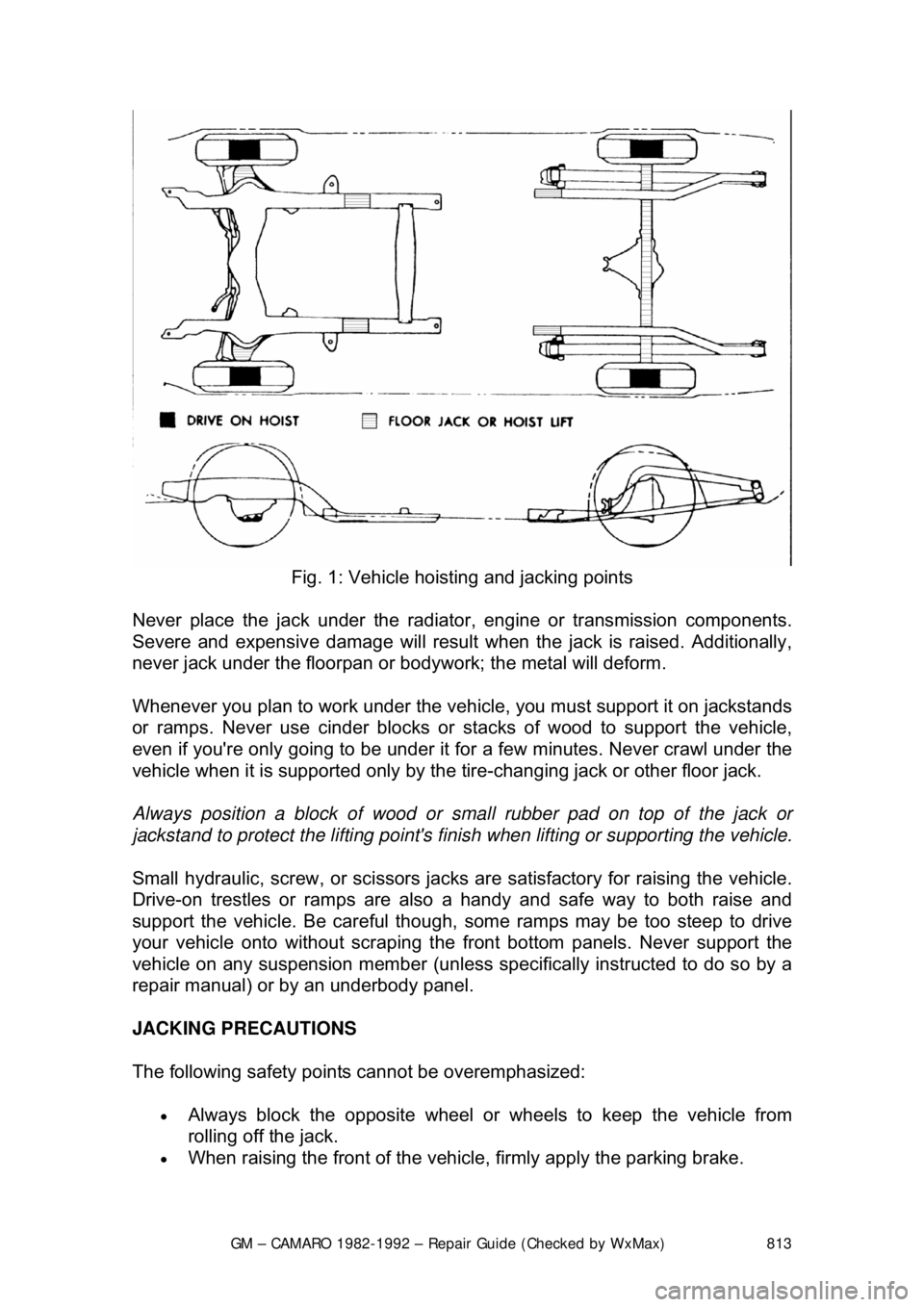
Fig. 1: Vehicle hoisting and jacking points
Never place the jack under the radiator , engine or transmission components.
Severe and expensive damage wil l result when the jack is raised. Additionally,
never jack under the floorpan or body work; the metal will deform.
Whenever you plan to work under the v ehicle, you must support it on jackstands
or ramps. Never use cinder blocks or st acks of wood to support the vehicle,
even if you're only going to be under it for a few minutes. Never crawl under the
vehicle when it is supported only by the tire-changing jack or other floor jack.
Always position a block of wood or smal l rubber pad on top of the jack or
jackstand to protect the lifting point's finish when lifting or supporting the vehicle.
Small hydraulic, screw, or sci ssors jacks are satisfactory for raising the vehicle.
Drive-on trestles or ramps are also a handy and safe way to both raise and
support the vehicle. Be careful though, some ramps may be too steep to drive
your vehicle onto without scraping t he front bottom panels. Never support the
vehicle on any suspension member (unless specifically instructed to do so by a
repair manual) or by an underbody panel.
JACKING PRECAUTIONS
The following safety points cannot be overemphasized:
• Always block the opposite wheel or wheels to keep the vehicle from
rolling off the jack.
• When raising the front of the vehicle, firmly apply the parking brake.
Page 817 of 875

GM – CAMARO 1982-1992 – Repair Guide (Checked by WxMax) 817
SUSPENSION & STEERING
SUSPENSION AND STEERING WHEELS
REMOVAL & INSTALLATION
• Park the vehicle on a level surface.
• Remove the jack, tire iron and, if nec essary, the spare tire from their
storage compartments.
• Check the owner's manual or refer to General Information & Maintenance
of this repair guide for the jacking poi nts on your vehicle. Then, place the
jack in the proper position.
• If equipped with lug nut trim caps, remo ve them by either unscrewing or
pulling them off the lug nuts, as appr opriate. Consult the owner's manual,
if necessary.
• If equipped with a wheel cover or hub c ap, insert the tapered end of the
tire iron in the groove and pry off the cover.
1. Apply the parking brake and block the diagonally opposite wheel with a
wheel chock or two.
Wheel chocks may be purchased at your lo cal auto parts store, or a block of
wood cut into wedges may be used. If possi ble, keep one or two of the chocks
in your tire storage compartment, in case any of the tires has to be removed on
the side of the road.
2. If equipped with an automatic transmi ssion, place the selector lever in P
or Park; with a manual transmission, place the shifter in Reverse.
3. With the tires still on the ground, use the tire iron/wrench to break the lug
nuts loose.
If a nut is stuck, never use heat to loosen it or damage to the wheel and
bearings may occur. If the nuts are seized, one or two heavy hammer blows
directly on the end of the bol t usually loosens the rust. Be careful, as continued
pounding will likely damage the brake drum or rotor.
3. Using the jack, raise the vehicle unt il the tire is clear of the ground.
Support the vehicle safely using jackstands.
4. Remove the lug nuts, then remove the tire and wheel assembly.
To install:
5. Make sure the wheel and hub mating su rfaces, as well as the wheel lug
studs, are clean and free of all foreign material. Always remove rust from
the wheel mounting surfac e and the brake rotor or drum. Failure to do so
may cause the lug nuts to loosen in service.
6. Install the tire and wheel asse mbly and hand-tighten the lug nuts.
7. Using the tire wrench, tighten all the lug nuts, in a crisscross pattern, until
they are snug.
8. Raise the vehicle and withdraw the jackstand, then lower the vehicle.
Page 818 of 875
GM – CAMARO 1982-1992 – Repair Guide (Checked by WxMax) 818
•
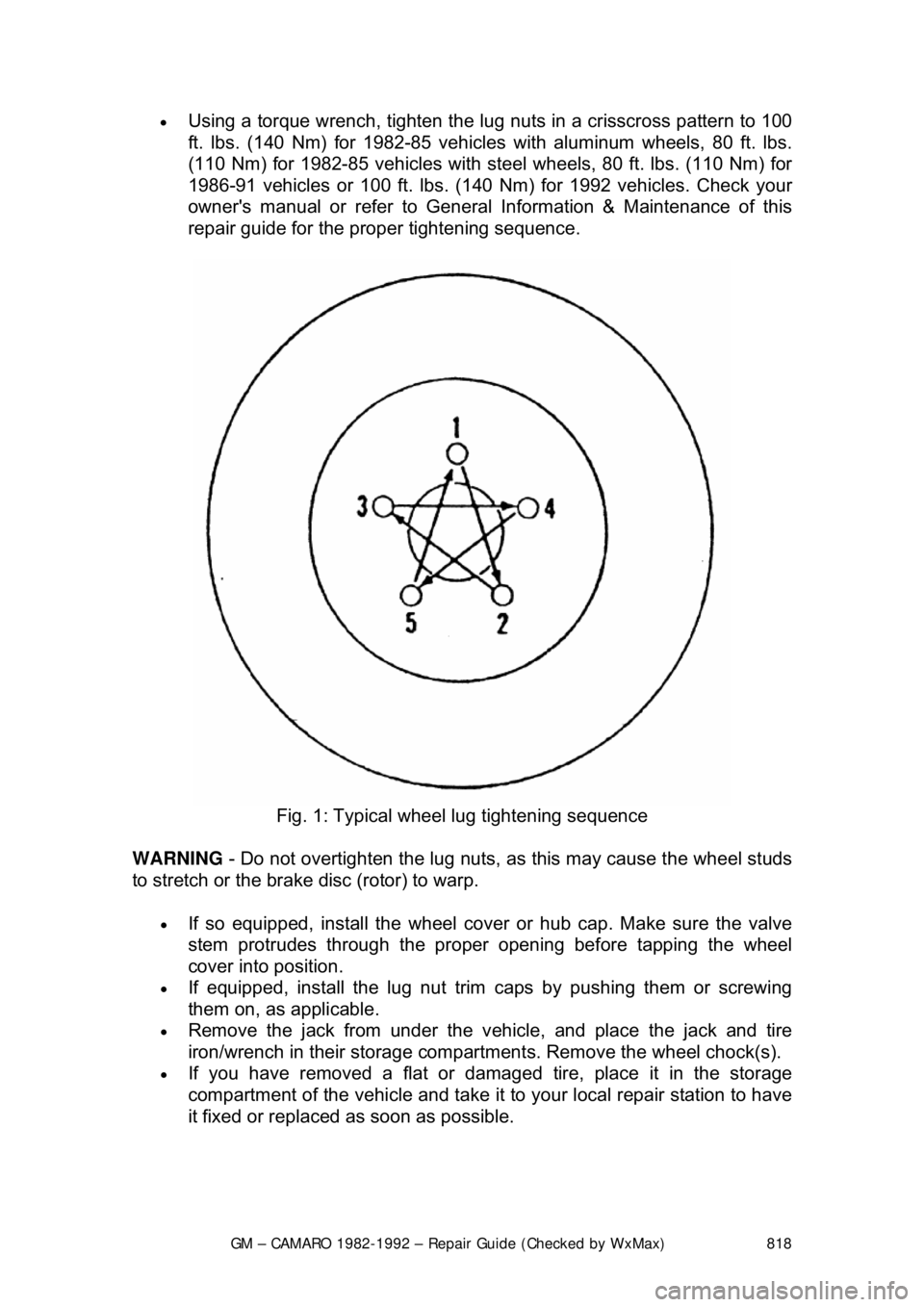
Using a torque wrench, tighten the lug nuts in a crisscross pattern to 100
ft. lbs. (140 Nm) for 1982-85 vehicles with aluminum wheels, 80 ft. lbs.
(110 Nm) for 1982-85 vehicles with st eel wheels, 80 ft. lbs. (110 Nm) for
1986-91 vehicles or 100 ft. lbs. (140 Nm) for 1992 vehicles. Check your
owner's manual or refer to General Information & Maintenance of this
repair guide for the proper tightening sequence.
Fig. 1: Typical wheel lug tightening sequence
WARNING - Do not overtighten the lug nuts, as this may cause the wheel studs
to stretch or the brake disc (rotor) to warp.
• If so equipped, install the wheel cover or hub cap. Make sure the valve
stem protrudes throu gh the proper opening bef ore tapping the wheel
cover into position.
• If equipped, install the lug nut trim caps by pushing them or screwing
them on, as applicable.
• Remove the jack from under the v ehicle, and place the jack and tire
iron/wrench in their storage compartment s. Remove the wheel chock(s).
• If you have removed a flat or damaged tire, place it in the storage
compartment of the vehicle and take it to your local repair station to have
it fixed or replaced as soon as possible.
Page 819 of 875

GM – CAMARO 1982-1992 – Repair Guide (Checked by WxMax) 819
INSPECTION
Inspect the tires for lacerations, puncture
marks, nails and other sharp objects.
Repair or replace as necessary. Also check the tires for treadwear and air
pressure as outlined in General Information & Maintenance of this repair guide.
Check the wheel assemblies for dents, crac ks, rust and metal fatigue. Repair or
replace as necessary.
WHEEL LUG STUDS
REMOVAL & INSTALLATION
WITH DISC BRAKES
1. Raise and support the appropriate end of the vehicle safely using
jackstands, then remove the wheel.
2. Remove the brake pads and caliper. Support the caliper aside using wire
or a coat hanger. For details, please re fer to Brakes of this repair guide.
3. Remove the outer w heel bearing and lift off the rotor. For details on
wheel bearing removal, installation and adjustment, please refer to
General Information & Maintenan ce of this repair guide.
4. Properly support the rotor using pre ss bars, then drive the stud out using
an arbor press.
If a press is not available, CAREFULLY drive the old stud out using a blunt drift.
MAKE SURE the rotor is properly and ev enly supported or it may be damaged.
Fig. 1: View of the rotor and stud assembly
Page 821 of 875

GM – CAMARO 1982-1992 – Repair Guide (Checked by WxMax) 821
If a press is not availabl
e, start the lug stud through the bore in the hub, then
position about 4 flat washers over t he stud and thread the lug nut. Hold the
hub/rotor while tightening the lug nut, and the stud should be drawn into
position. MAKE SURE THE STUD IS FU LLY SEATED, then remove the lug nut
and washers.
7. Install the rotor and adjust the wheel bearings.
8. Install the brake caliper and pads.
9. Install the wheel, then remove the jackstands and carefully lower the
vehicle.
10. Tighten the lug nuts to the proper torque.
WITH DRUM BRAKES 1. Raise the vehicle and safely su pport it with jackstands, then remove the
wheel.
2. Remove the brake drum.
3. If necessary to provide clearance, re move the brake shoes, as outlined in
Brakes of this repair guide.
Fig. 4: Exploded view of t he drum, axle flange and stud
Page 822 of 875
GM – CAMARO 1982-1992 – Repair Guide (Checked by WxMax) 822
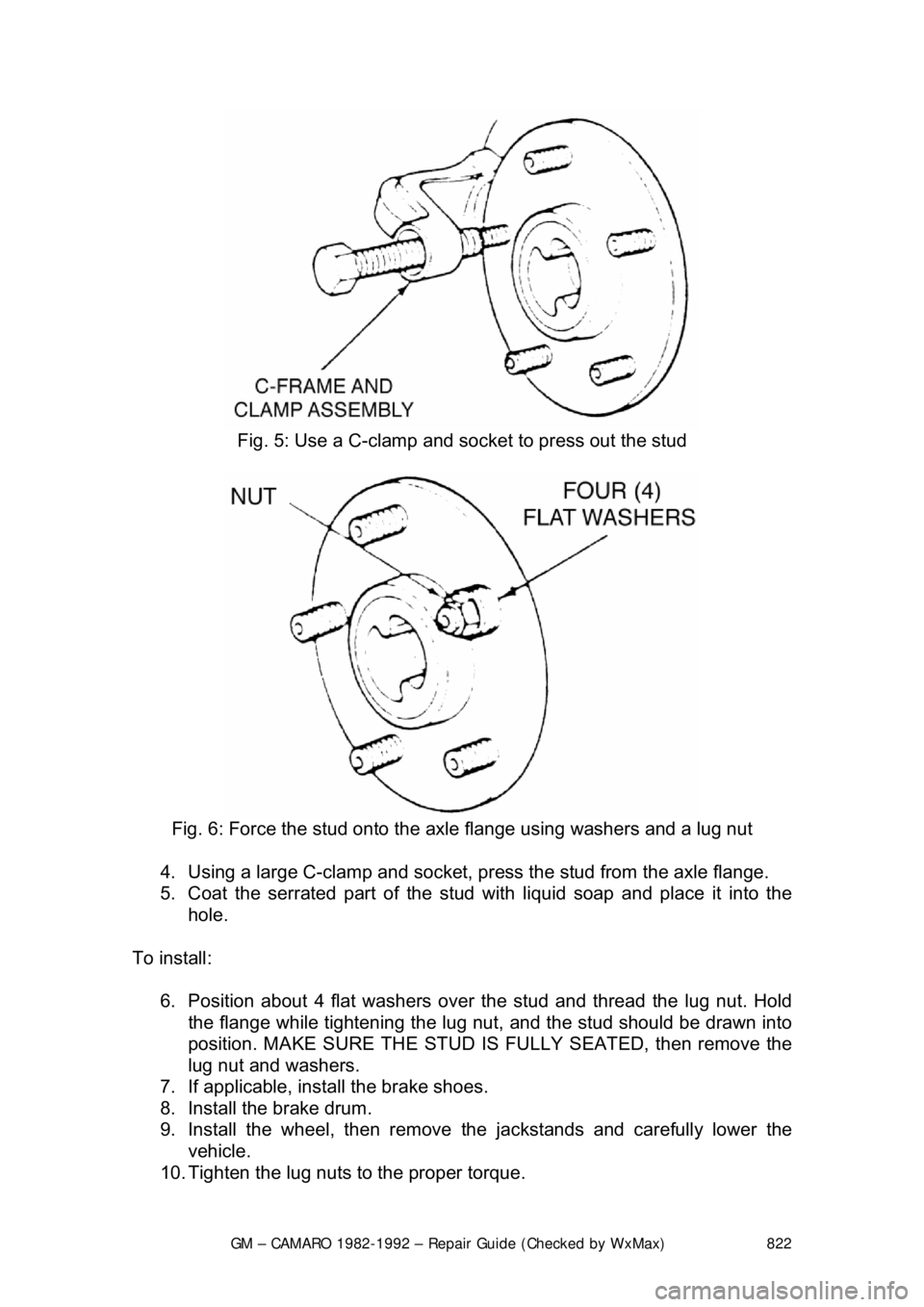
Fig. 5: Use a C-clamp and socket to press out the stud
Fig. 6: Force the stud onto the axle flange using washers and a lug nut
4. Using a large C-clamp and socket, pre ss the stud from the axle flange.
5. Coat the serrated part of the stud with liquid soap and place it into the
hole.
To install: 6. Position about 4 flat washers over the stud and thread the lug nut. Hold
the flange while tightening the lug nut, and the stud should be drawn into
position. MAKE SURE THE STUD IS FULLY SEATED, then remove the
lug nut and washers.
7. If applicable, install the brake shoes.
8. Install the brake drum.
9. Install the wheel, then remove the jackstands and carefully lower the
vehicle.
10. Tighten the lug nuts to the proper torque.