2015 AUDI Q5 warning
[x] Cancel search: warningPage 147 of 302
M N
co ~ co
rl I.O
"' N
"' rl
- Failure to pay attention to the warning light
that come on, could lead to personal injury.
Why use safety belts?
Frontal collisions and the law of physics
Frontal crashes create very strong forces for peo
ple riding in vehicles .
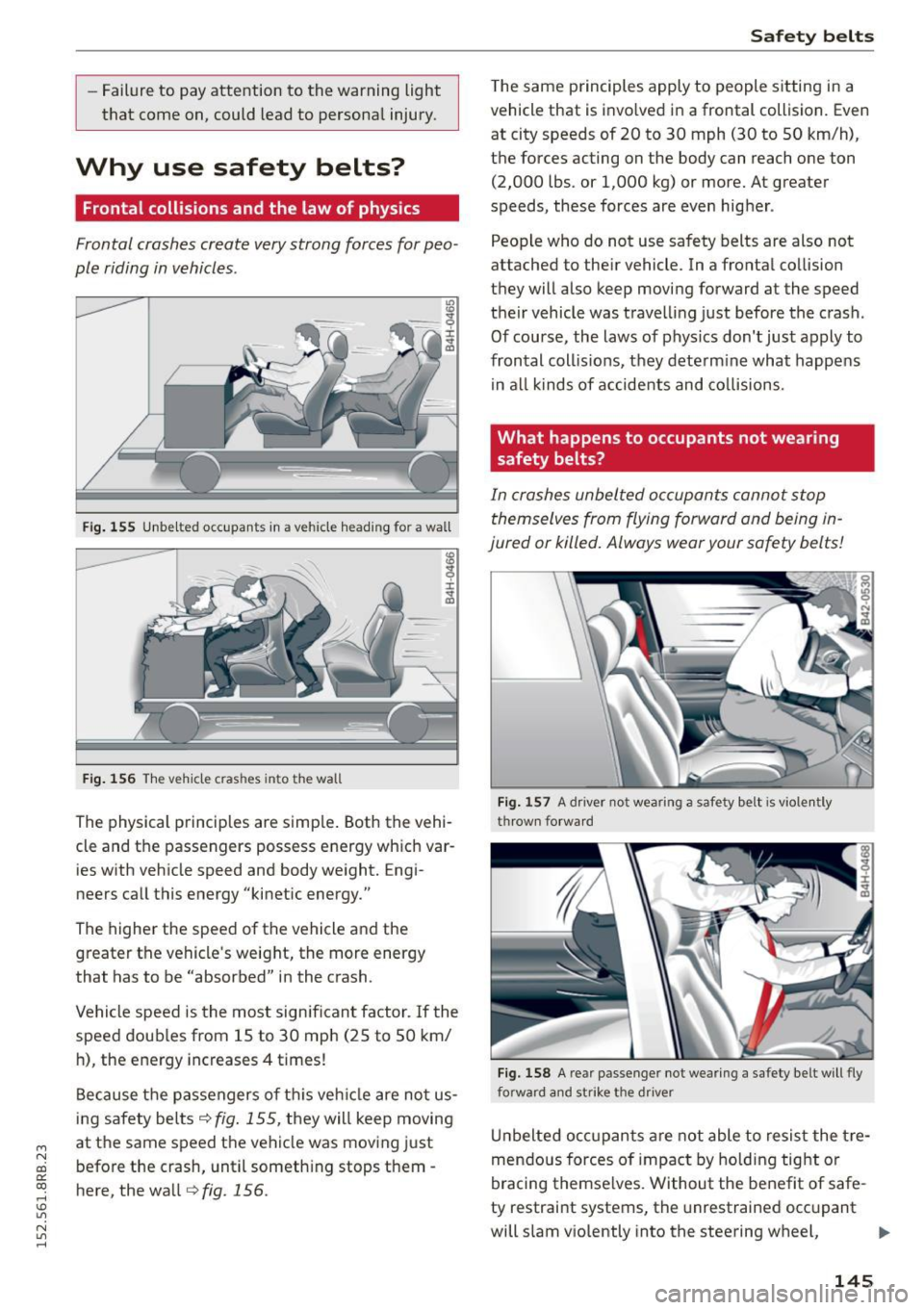
Fig. 155 Unbelted occupants in a vehicle heading for a wall
Fig. 156 The vehicle crashes into the wall
The physical principles are simp le. Both the vehi
cle and the passengers possess energy wh ich var
ies with vehicle speed and body weight. Engi
neers call this energy "kinetic energy."
The higher the speed of the vehicle and the
greater the vehicle's weight, the more energy
that has to be "absorbed" in the crash.
Vehicle speed is the most signif icant factor. If the
speed doubles from 15 to 30 mph (25 to SO km/
h), the energy increases 4 times!
Because the passengers of this vehicle are not us
ing safety belts¢
fig. 155, they will keep moving
at the same speed the vehicle was moving just
before the crash, until something stops them -
here, the wall¢
fig. 156.
Safety belts
The same principles apply to people sitting in a
vehicle that is invo lved in a frontal collision. Even
at city speeds of 20 to 30 mph (30 to 50 km/h),
the forces acting on the body can reach one ton
(2,000 lbs. or 1,000 kg) or more. At greater
speeds, these forces are even higher .
People who do not use safety belts are also not
attached to their vehicle. In a frontal collision
they will also keep moving forward at the speed
their vehicle was travelling just before the crash .
Of course, the laws of physics don't just apply to
frontal collisions, they determine what happens
in all kinds of accidents and co llisions.
What happens to occupants not wea ring
safety belts?
In crashes unbelted occupants cannot stop
themselves from flying forward and being in
jured or killed. Always wear your safety belts!
Fig. 157 A driver no t wearing a safety belt is violen tly
thrown forward
Fig. 158 A rear passenger not wearing a safety belt will fly
forward and strike the dr iver
Unbelted occupants are not able to resist the tre
mendous forces of impact by holding tight or
bracing themselves. Without the benefit of safe
ty restraint systems, the unrestrained occupant
will slam violently into the steering wheel, ..,_
145
Page 149 of 302

M N
co ~ ex:, rl I.O
"' N
"' rl
A WARNING
Not wearing safety belts or wearing them im
properly increases the risk of serious personal
injury and death. Safety belts can work only
when used correctly .
- Always fasten your safety belts correctly be
fore driving off and make sure al l passen
gers are correctly restrained.
- For maximum protection, safety belts must
always be pos itioned properly on the body.
- Never strap more than one person, includ
ing small ch ildren, into any belt.
- Never place a safety belt over a child sitting
on your lap.
- Always keep feet in the footwell in front of
the seat while the vehicle is being driven.
- Never let any person ride with their feet on
the instrument panel or sticking out the
window or on the seat.
- Never remove a safety belt while the vehicle
is moving . Doing so will increase your risk of
being injured or killed.
- Never wear belts twisted.
- Never wear belts over rigid or breakable ob-
jects in or on your clothing, such as eye
glasses, pens, keys, etc., as these may cause
injury.
- Never allow safety belts to become dam
aged by being caught in door or seat hard
ware.
- Do not wear the shoulder part of the belt
under your arm or otherwise out of position.
- Several layers of heavy clothing may inter
fere with correct positioning of belts and re duce the overall effectiveness of the system.
- Always keep belt buckles free of anything
that may prevent the buckle from latching
securely.
- Never use comfort clips or devices that cre
ate slack in the shoulder be lt. However, spe
cial clips may be required for the proper use
of some child restraint systems.
- Torn or frayed safety belts can tear, and
damaged belt hardware can break in an acc i
dent. Inspect belts regularly. If webb ing,
bind ings, buckles, or retracto rs are dam-
Safety belts
aged, have belts replaced by an authorized
Audi dealer or qualified workshop.
- Safety belts that have been worn and loaded
in an accident must be replaced with the
correct replacement safety belt by an au
thorized Audi dealer. Replacement may be
necessary even if damage cannot be clearly
seen. Anchorages that were loaded must al
so be inspected.
- Never remove, modify, d isassemble, o r try
to repair the safety belts yourself.
-Always keep the belts clean. Dirty belts may not work properly and can impair the func
tion of the inertia reel~
table Internal
cleaning on page 210.
Safety belts
Fastening safety belts
Safety first -everybody buckle up!
Fig. 160 Belt buck le and tongue on the d rive r's seat
To provide maximum protection, safety belts
must always be positioned correctly on the wear
er's body.
.. Adjust the front seat and head restraint proper
ly
q page 63, General information.
.. Make sure the seatback of the rear seat bench is
in an upright position and securely latched in
place before using the belt
q .&, .
.. Ho ld the belt by the tongue and pull it even ly
across the chest and pelvis ¢.&_ .
.. Insert the tongue into the correct buckle of
your seat until you hear it latch securely
q fig. 160.
.. Pull on the belt to make sure that it is securely
latched in the buckle.
Ill>
147
Page 150 of 302

Safety belts
Autom atic safet y belt retractors
Every safety belt is eq uipped w ith an automatic
be lt retractor on the shou lder belt. This feature
locks the belt when the be lt is pulled o ut fast,
during hard brak ing and in an accident . The belt
may also lock when you drive up or down a steep
hill or through a sharp curve. During normal driv
ing the belt lets you move freely.
S afety belt pre te n sioners
The safety be lts are equipped with a belt preten
sioner that helps to t ighten the safety belt and
remove s lack when the pretensioner is activated .
The function of the pretensioner is monitored by
a warning light
r:::') page 16.
Swi tchable lo cking feature
Every safety belt except the one on the driver
seat is equipped w ith a switchable locking fea
ture that
must be used when the safety belt is
used to attach a child safety seat. Be sure to read
the important informat ion about th is feature
r=;, page 181 .
.&_ WARNING
Improperly positioned safety belts can cause
ser ious injury in an accident¢
page 148,
Safe ty belt position.
- Safety belts offer optimum protection only
when the seatback is upright and belts are
properly positioned on the body.
- Always make sure that the rea r seat back
rest to which t he center rear safety belt is
attached is securely latched whenever the
rear center safety belt is being used . If the
backrest is not securely latched, the passen
ger will move forward with the backrest dur
ing sudden braking, in a sudden maneuver
and especially in a crash.
- Never attach the safety belt to the buck le
for another seat. Attaching the belt to the
wrong buckle will reduce safety be lt effec
t iveness and can cause serious persona l in
jury .
- A passenger who is not properly restrained
can be se riously in ju red by the safety belt it
self when it moves from the stronger parts
148
of the body into critical areas like the abdo
men.
- Always lock the convertible locking retractor
when you are secur ing a child safety seat in
the vehicle
r=;, page 183.
Safety belt position
Correct belt position is the key to getting maxi
mum protection from safety belts .
Fig. 161 Safety belt posit ion
-"' .... 9 I ... a,
Standard features o n your veh icle help you adjust
the position of the safety belt to match your body
s ize .
- belt he ight adjustment fo r the front seats,
- height-adjustable front seats.
.&_ WARNING
Imp roperly posit ioned safety be lts can cause
serious pe rsonal injury i n an accident.
- The shou lder belt should lie as close to the
center of the collar bone as possib le and
should fit well on the body . Ho ld the belt
above the latch to ngue and pull it evenly
across the chest so that it sit s as low as pos
sib le on the pe lvis and there is no pressure
on the abdomen . The belt should always fit
snug ly ¢
fig. 161. Pull on the belt to tighten
if necessary.
- The lap be lt po rtion of the safety belt must
be positioned as low as possi ble across pel
vis and never over the abdomen. Make sure
the belt lies flat and snug
¢fig. 161. Pull on
the belt to tighten if necessary.
- A loose-fitting safety belt can ca use serious
in juries by sh ifting its position on your body
~
Page 151 of 302
M N
co ~ co
rl I.O
"' N
"' rl
from the strong bones to more vulnerable,
soft tissue and cause serious injury.
- Always read and heed all WARNINGS and
other important information
i::> page 146 .
Pregnant women must also be correctly
restrained
The best way to protect the fetus is to make sure
that expectant mothers always wear safety belts
correctly -throughout the pregnancy .
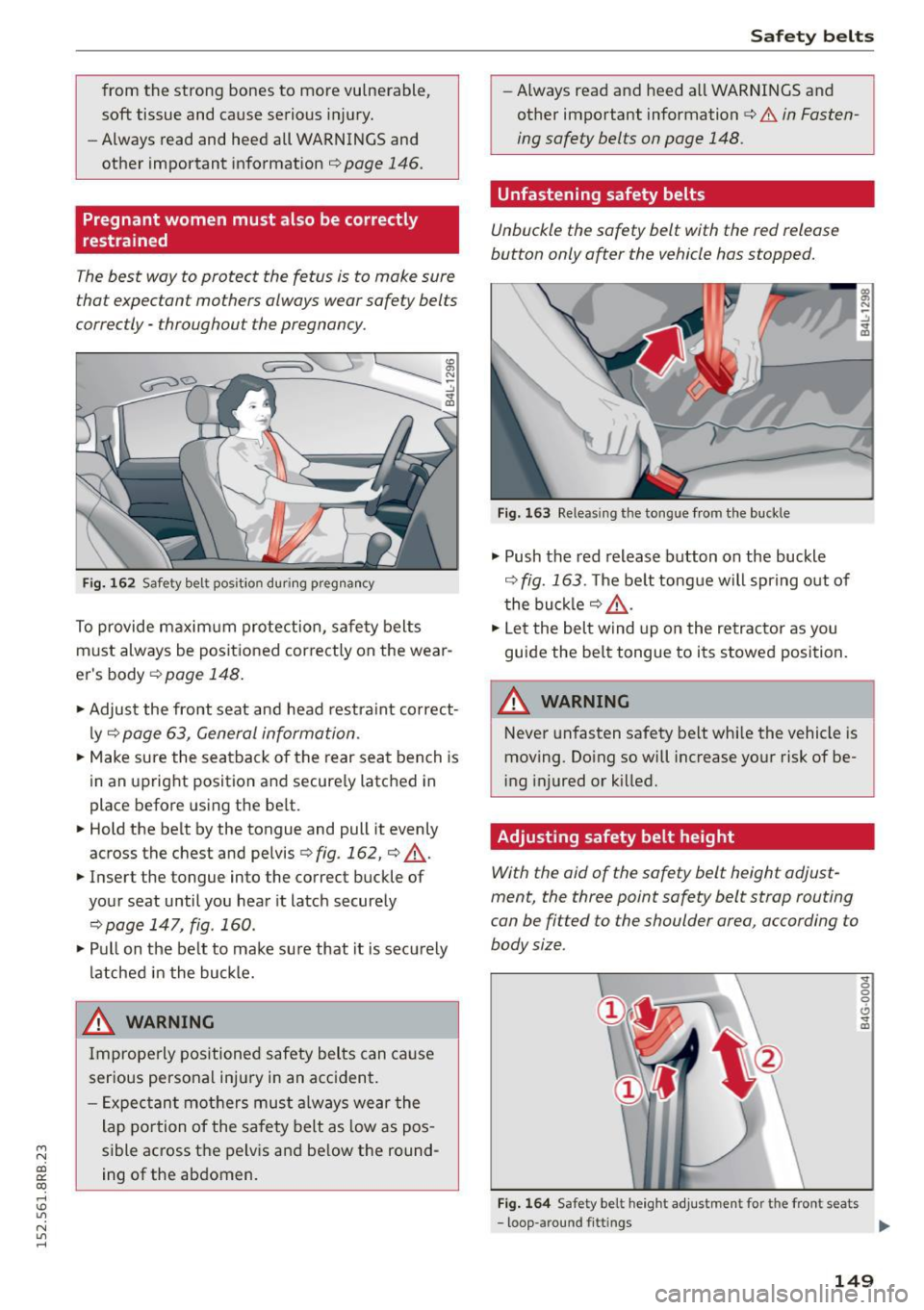
Fig. 162 Safety belt position during preg nancy
To provide maximum protection, safety belts
must always be positioned correct ly on the wear
er's body
i::> page 148.
• Adjust the front seat and head restraint correct
ly
c:> page 63, General information .
• Make sure the seatback of the rear seat bench is
in an upright position and secure ly latched in
place before using the be lt.
• Hold the belt by the tongue and pull it evenly
across the chest and pelvis
c:> fig . 162, c:> &_ .
• Insert the tongue into the correct buckle of
your seat until you hear it latch securely
i=:>page 147 , fig . 160 .
•Pullon the belt to make sure that it is securely
latched in the buckle.
_& WARNING ,..__
Improperly positioned safety belts can cause
serious personal injury in an accident.
- Expectant mothers must always wear the
lap portion of the safety belt as low as pos
sible across the pelvis and below the round
ing of the abdomen.
Safety belts
-Always read and heed all WARNINGS and
other important information
c:> & in Fasten
ing safety belts on page 148 .
Unfastening safety belts
Unbuckle the safety belt with the red release
button only a~er the vehicle has stopped.
Fig. 163 Releas ing the tongue from the buck le
.,. Push the red release button on the buckle
i=:> fig. 163. The belt tongue will spring out of
the buckle
i::> &_.
• Let the belt wind up on the retractor as you
guide the belt tongue to its stowed position.
_& WARNING
Never unfasten safety belt while the vehicle is
moving . Do ing so will increase your risk of be
i ng injured or killed.
Adjusting safety belt height
With the aid of the safety belt height adjust
ment, the three point safety belt strap routing
can be fitted to the shoulder area, according to
body size .
Fig. 164 Safety belt height adjustmen t fo r the front seats
... 0 0
0
6 ... a,
- loop-around fittings ..,.
149
Page 152 of 302

Safe ty belt s
The shou lder belt should lie as close to the center
of the collar bone as possib le and should fit well
on the body
c::> A in Safety belt position on
page 148.
"' Push
the loop -around fittings up c::> fig. 164 @,
or
"'squeeze together the (D button, and push the
loop-around fittings
do wn @.
"'Pull the belt to make sure that the upper at
tachment is properly engaged.
A WARNING
Always read and heed all WARNINGS and oth
er important information
c::> page 146.
(D Tips
With the front seats, the height adjustment of the seat can also be used to adjust the po
sition of the safety belts .
Improperly worn safety belts
Incorrectly positioned safety belts can cause se
vere injuries.
Wearing safety belts improperly can cause seri
ous injury or death. Safety belts can only work
when they are correctly posit ioned on the body .
Improper seating pos it ions reduce the effective
ness of safety be lts and will even increase t he risk
of injury and death by moving the safety be lt to
cr itical areas of the body. Improper seating posi
tions a lso increase the risk of serious injury and
death when an airbag deploys and strikes an oc
cupant who is not in the correct seating posit ion.
A dr iver is responsible for the safety of all vehicle
occupants and espec ially for children. Therefore :
"' Never permit anyone to assume an incorrect sit -
ting position in the vehicle while traveling
c> _& .
A WARNING
Improperly worn safety belts increase the risk
of serious personal injury and death whenever
a vehicle is being used.
- Always make sure that all vehicle occupants
are correctly restrained and stay in a correct
150
seating position whenever the vehicle is being used.
- Always read and heed a ll WARNINGS and
other important information
c> page 146.
Belt tensioners
· How safety belt pretensioners work
In front, side and rear-end collisions above a
particular severity and in a rollover, safety belts
are tensioned automatically.
The safety belts are equipped with safety belt
pretensioners . The system is act ivated by sensors
i n front, side and rear-end coll is ions of great se
verity and in a rollover . This tightens the belt and
takes up belt s lack
c::> .&. in Service and disposal of
safety belt pretensioner on page 151.
T aking up
the slack helps to reduce forward occupant
movement during a collision.
(D Note
Neve r let the belt remain ove r a rear seatback
that has been folded forward .
(D Tips
The safety belt pretensioner can only be acti
vated once.
- In minor frontal and s ide collisions, in rear
end co llisions and in acc idents involving
very little impac t fo rce, the safety belt pre
tensioner are not activated.
- When the safety belt pretensione rs are acti
vated, a f ine dust is released. This is normal
and is not caused by a fi re in the vehicle.
- T he re levant safety requirements mus t be
observed when the vehicle or components
of the system are scrapped . An authorized
Audi dealer or qua lified wor kshop is familia r
with these regulations and will be pleased
to pass on the information to you.
- Be sure to observe all safety, env ironmental
and other regu lations if the veh icle or indi
vidual parts of the system, part icu larly the
safety belt or airbag, are to be disposed. We
recommend yo u have your author ized Audi
dea ler perform this service for you.
Page 153 of 302
M N
co
a:
co
,...., \!) ..,.,
N ..,., ,....,
Service and disposal of safety belt preten
sioner
The safety belt pretensioners are parts of the
safety belts on your Audi. Installing, removing,
servicing or repairing of belt pretensioners can
damage the safety belt system and prevent it
from working correctly in a collision.
There are some important things you have to
know to make sure that the effectiveness of the
system will not be impaired and that discarded
components do not cause injury or pollute the
environment.
A WARNING
-
Improper care, servicing and repair proce
dures can increase the risk of personal injury
and death by preventing a safety belt preten
sioner from activating when needed or acti
vating it unexpectedly:
- The belt pretensioner system can be activat
ed only once.
If belt pretensioners have
been activated, the system must be re
placed.
- Never repair, adjust, or change any parts of
the safety belt system.
- Safety belt systems including safety belt
pretensioners cannot be repaired. Special
procedures are required for removal, instal
lation and disposal of this system.
- For any work on the safety belt system, we
strongly recommend that you see your au
thorized Audi dealer or qualified technician
who has an Audi approved repair manual,
training and special equipment necessary.
@ For the sake of the environment
Undeployed airbag modules and pretension
ers might be classified as Perchlorate Material
-special handling may apply, see
www.dtsc.ca.gov/hazardouswaste/perchlo rate. When the vehicle or parts of the re
straint system including airbag modules safe
ty belts with pretensioners are scrapped, all
applicable laws and regulations must be ob
served. Your authorized Audi dealer is familiar
with these requirements and we recommend
Safety belts
that you have your dealer perform this service
for you.
151
Page 155 of 302
M N
co
a:
co
,...., \!) 1.1'1
N 1.1'1 ,....,
also not inflate in side or rear co llisions, or in roll
overs .
Alwa ys rememb er: Airbag s wi ll deploy on ly once,
and on ly in cer tain kinds of collisions. Your safety
b e lts a re a lways there to offer protection in those
situations in which airbags are not supposed to
deploy, or when they have already deployed; for
examp le, when your vehicle str ikes or is struck by
another after the first collision .
This is just one of the reasons why an airbag is a
supp lementary restraint and is not a substitute
for a safety belt. The airbag system works most
effectively when used w ith the safety belts.
Therefore, always properly wear your safety belts
c::>page 144.
A WARNING
Sitting too close to the steer ing whee l o r in
strument panel will decrease the effect ive
ness of the airbags and will increase the risk
o f persona l injury in a coll is ion .
- Never sit closer than 10 inches (25 cm) to
the steering wheel or instrument panel.
- If you cannot sit more than 10 inches
(25 cm) from the steer ing whee l, investi
gate whethe r adaptive equipment may be
available to help yo u reach the peda ls and
increase your seating distance from the
steering wheel.
- If you are unrestrained, lean ing forward, sit
ting s ideways or out of position in any way,
your risk of in jury is much higher.
- You will also receive serio us injuries and
cou ld even be killed if you are up against the
airbag or too close to it when it inflates -
even with an Advanced Airbag.
- To reduce the r isk of injury when an airbag
inflates, always wear safety belts properly
¢ page 147, Safety belts .
- Always make certain that children age 12 or
younger always r ide in the rear seat. If chil
dren are not properly restrained, they may
be severely injured or killed when an airbag
inflates .
- Never let children ride unrestrained or im
properly restrained in the veh icle. Adjust the
front seats properly.
-
Airbag syste m
- Never ride with the back rest reclined .
- Always sit as far as possible from the steer -
ing wheel o r the instrument panel
c::> page 136.
- Always sit up right with your back against
the backrest of your seat.
- Never p lace your feet on the instrument
panel or on the seat. Always keep both feet
on the floor in front of the seat to help pre
vent serious injur ies to the legs and hips if
the airbag inflates.
- Never recline the front passenger's seat to transport objects. Items can also move into
the area of the side airbag or the front air
bag d uring braking or in a sudden maneu
ver. Objects near the airbags can become
p rojectiles and ca use in jury when an airbag
inflates.
A WARNING
A irbags tha t have deployed i n a crash mus t be
r eplaced.
- Use o nly orig inal equipment airbags ap
p rove d by Aud i an d in stalled by a trained
technici an who has the ne cessary too ls and
diagnostic equipment to properly rep lace
any airbag in yo ur vehicle and assu re system
effectiveness in a crash.
- Never permit salvaged or recycled airbags to
be installed in you r vehicle .
Child restraints on the front seat - some
important things to know
.,. Be su re to read the important information and
head the WARNI NGS for important details
about ch ild ren and Advanced Airbags
c::> page 172.
Even though your veh icle is equipped wit h an Ad
vanced Airbag System, make certain that a ll chil
dren, especially those 12 years a nd you nger, a l
ways ride in the bac k seat properly restrained fo r
the ir age and size. The airbag on the passenger
s ide makes the front seat a potent ia lly dangerous
place for a child to ride. The front seat is not the
sa fest p lace for a child in a forward-facing ch ild ..,.
153
Page 157 of 302

M N
co
a:
co
,...., \!) 1.1'1
N 1.1'1 ,....,
A WARNING ,~
A child in a rearward-facing child safety seat
installed on the front passenger seat will be
seriously injured and can be killed if the front
airbag inflates - even with an Advanced Airbag
System.
- The inflating airbag will hit the child safety
seat or infant carrier with great force and
will smash the child safety seat and child
against the backrest, center armrest, door
or roof.
- Always install rear-facing child safety seats
on the rear seat.
- If you must install a rearward facing child
safety seat on the front passenger seat be
cause of exceptional circumstances and the
PASSENGER AIR BAG OFF light does not
come on and stay on, immediately install
the rear-facing child safety seat in a rear
seating position and have the airbag system inspected by your authorized Audi dealer.
- Forward-facing child safety seats installed
on the front passenger's seat may interfere
with the deployment of the airbag and cause serious personal injury to the child .
A WARNING
If, in exceptional circumstances, you must in
stall a forward-facing child restraint on the
front passenger's seat:
-Always make sure the forward-facing seat
has been designed and certified by its man
ufacturer for use on a front seat with a pas
senger front and side airbag.
- Never put the forward-facing child restraint
up against or very near the instrument pan
el.
- Always move the passenger seat into its
rearmost position in the seat's fore and aft
adjustment range, as far away from the air
bag as possible before installing the for
ward-facing child restraint. The backrest must be adjusted to an upright position.
- Make sure that the
PASSENGER AIR BAG
OFF
light comes on and stays on all the time
whenever the ignition is switched on.
Airbag system
A WARNING
To reduce the risk of serious injury, make sure
that the
PASSENGER AIR BAG OFF light will
be displayed whenever a child restraint is in
stalled on the front passenger seat and the ignition is switched on .
- If the
PASSENGER AIR BAG OFF light does
not stay on, perform the checks described
~ page 162, Monitoring the Advanced Air
bag System.
- Take the child restraint off the front passen
ger seat and install it properly at one of the
rear seat positions if the
PASSENGER AIR
BAG OFF
light does not stay on.
- Have the airbag system inspected by your
authorized Audi dealer immediately.
-Always carefully follow instructions from
child restraint manufacturers when instal
ling child restraints.
A WARNING
If, in exceptional circumstances, you must in
stall a forward or rearward-facing child re
straint on the front passenger's seat:
- Improper installation of child restraints can
reduce their effectiveness or even prevent
them from providing any protection.
- An improperly installed child restraint can
interfere with the airbag as it deploys and
seriously injure or even kill the child -even
with an Advanced Airbag System.
-Always carefully follow the manufacturer's
instructions provided with the child safety
seat or carrier.
- Never place additional items on the seat that can increase the total weight registered by the weight-sensing mat and can cause in
jury in a crash.
155