1982 CHEVROLET CAMARO head
[x] Cancel search: headPage 762 of 875

GM – CAMARO 1982-1992 – Repair Guide (Checked by WxMax) 762
Loctite). If you're worried about getting so
mething together tight enough to hold,
but loose enough to avoid mechanical damage during assembly, one of these
products might offer substantial insurance. Before choosing a threadlocking
compound, read the label on the pa ckage and make sure the product is
compatible with the materials, fluids, etc. involved.
3. Crossthreading. This occu rs when a part such as a bolt is screwed into a
nut or casting at the wrong angle and forced. Cr ossthreading is more
likely to occur if access is diffic ult. It helps to clean and lubricate
fasteners, then to start threading the bolt, spark pl ug, etc. with your
fingers. If you encounter resistance, unscrew the part and start over
again at a different angle until it can be inserted and turned several t\
imes
without much effort. Keep in mind t hat many parts have tapered threads,
so that gentle turning will automatica lly bring the part you're threading to
the proper angle. Don't put a wrench on the part until it's been tightened
a couple of turns by hand. If you s uddenly encounter resistance, and the
part has not seated fully, don't force it. Pull it back out to make sure it's
clean and threading properly.
Be sure to take your time and be pati ent, and always plan ahead. Allow yourself
ample time to perform r epairs and maintenance.
TOOLS AND EQUIPMENT
Without the proper tools and equipment it is impossible to properly service your
vehicle. It would be virtually impossible to catalog every tool that you would
need to perform all of the oper ations in this repair guide. It would be unwise for
the amateur to rush out and buy an expens ive set of tools on the theory that
he/she may need one or more of them at some time.
The best approach is to proceed slowly, gathering a good quality set of those
tools that are used most frequently. Don't be misled by the low cost of bargain
tools. It is far better to spend a little more for better quality. Forged wrenches, 6
or 12-point sockets and fine tooth ratc hets are by far preferable to their less
expensive counterparts. As any good me chanic can tell you, there are few
worse experiences than trying to work on a vehicle with bad tools. Your
monetary savings will be far outweighed by frustration and mangled knuckles.
Begin accumulating those tools that are used most frequently: those associated
with routine maintenance and tune-up. In addition to the normal assortment of
screwdrivers and pliers, you should have the following tools:
• Wrenches/sockets and combination o pen end/box end wrenches in sizes 1/83/4 in. and/or 3mm-19mm 13/16 in. or 5/8 in. spark plug socket
(depending on plug type).
If possible, buy various length socket drive extensions. Universal-joint\
and
wobble extensions can be extremely usef ul, but be careful when using them, as
they can change the amount of torque applied to the socket.
Page 764 of 875
GM – CAMARO 1982-1992 – Repair Guide (Checked by WxMax) 764
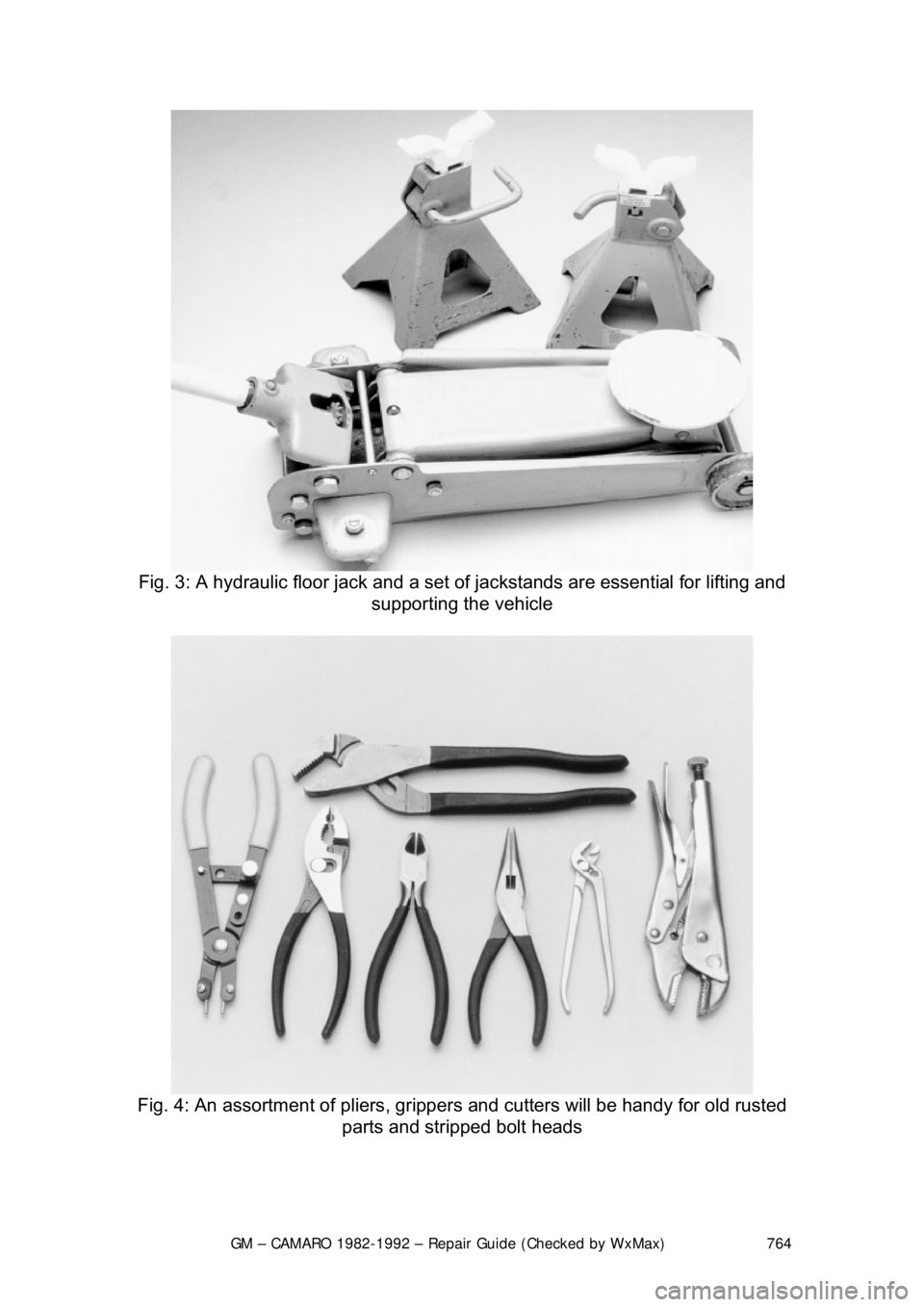
Fig. 3: A hydraulic floor jack and a set of jackstands are essential for lifting and
supporting the vehicle
Fig. 4: An assortment of pliers, gr ippers and cutters will be handy for old rusted
parts and stripped bolt heads
Page 778 of 875

GM – CAMARO 1982-1992 – Repair Guide (Checked by WxMax) 778
Fig. 4: Add clean oil to the engine to ac hieve the correct level, indicated on
dipstick. Do not overfill
Your engine oil should be checked at regular intervals (such as every fuel stop).
Check the engine oil as follows:
1. Make sure the car is parked on level ground.
2. When checking the oil le vel it is best for the engine to be at normal
operating temperature, although checking the oil immediately after
stopping will lead to a false reading. Wa it a few minutes after turning off
the engine to allow the oil to drain back into the crankcase.
3. Open the hood and locate the dipsti ck which should be on either the
passenger's side for the V8 engine or driver's side for the L4 and V6
engines. Pull the dipstick fr om its tube, wipe it clean and then reinsert it.
4. Pull the dipstick out agai n and, holding it horizontally, read the oil level.
The oil should be between the FULL and ADD marks on the dipstick. If
the oil is below the ADD mark, add oil of the prop er viscosity through the
capped opening in the top of the cylinder head cover.
5. Replace the dipstick and check the o il level again after adding any oil. Be
careful not to overfill the crankcase. Approximately 1 quart (0.9L) of oil
will raise the level from the ADD mark to the FULL mark. Excess oil will
generally be consumed at an accelerated rate.
Page 801 of 875
GM – CAMARO 1982-1992 – Repair Guide (Checked by WxMax) 801
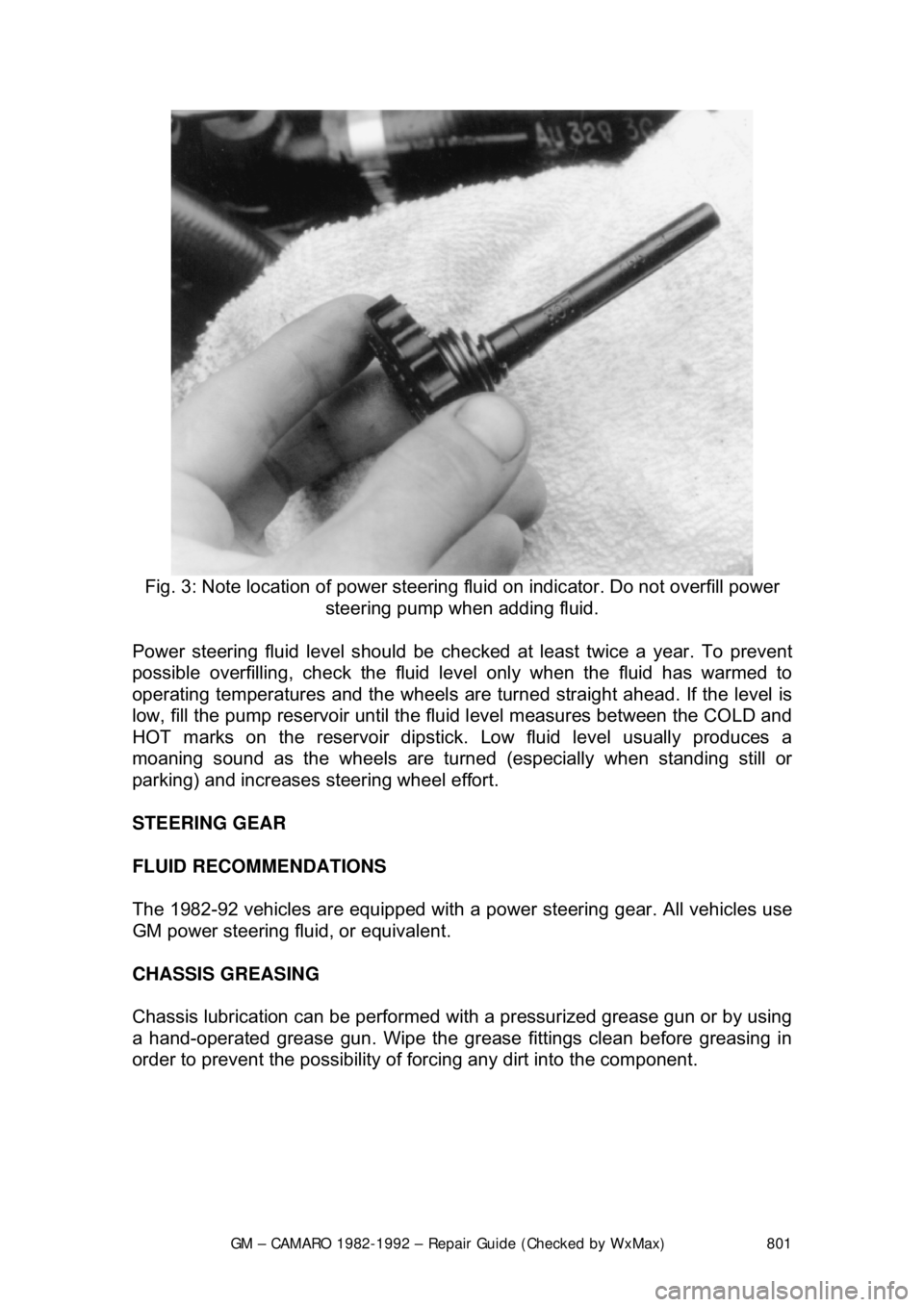
Fig. 3: Note location of power steering fluid on indicator. Do not overfill power
steering pump when adding fluid.
Power steering fluid level s hould be checked at least twice a year. To prevent
possible overfilling, check the fluid le vel only when the fluid has warmed to
operating temperatures and the wheels are turned straight ahead. If the level is
low, fill the pump reservoir until the flui d level measures between the COLD and
HOT marks on the reservoir dipstick. Low fluid level usually produces a
moaning sound as the wheels are turned (especially when standing still or
parking) and increases st eering wheel effort.
STEERING GEAR
FLUID RECOMMENDATIONS
The 1982-92 vehicles are equipped with a pow er steering gear. All vehicles use
GM power steering fluid, or equivalent.
CHASSIS GREASING
Chassis lubrication can be performed with a pressurized grease gun or by using
a hand-operated grease gun. Wipe the grease fittings clean before greasing in
order to prevent the possibility of fo rcing any dirt into the component.
Page 812 of 875

GM – CAMARO 1982-1992 – Repair Guide (Checked by WxMax) 812
9. Connect one end of the other jumper
cable to the negative (-) terminal on
the booster battery and the final cable clamp to an engine bolt head,
alternator bracket or ot her solid, metallic point on the engine with the
dead battery. Try to pick a ground on the engine that is positioned away
from the battery in order to minimi ze the possibility of the 2 clamps
touching should one l oosen during the procedure. DO NOT connect this
clamp to the negative (-) term inal of the bad battery.
CAUTION - Be very careful to keep the jum per cables away from moving parts
(cooling fan, belts, etc.) on both engines.
10. Check to make sure that the c ables are routed away from any moving
parts, then start the d onor vehicle's engine. Run the engine at moderate
speed for several minutes to allow the dead battery a chance to receive
some initial charge.
11. With the donor vehicle's engine still r unning slightly above idle, try to start
the vehicle with the dead battery. Crank the engine for no more than 10 \
seconds at a time and let the starter cool for at least 20 seconds between
tries. If the vehicl e does not start in 3 tries, it is likely that something else
is also wrong or that the battery needs additional time to charge.
12. Once the vehicle is star ted, allow it to run at idle for a few seconds to
make sure that it is operating properly.
13. Turn ON the headlight s, heater blower and, if equipped, the rear
defroster of both vehicles in order to reduce the severity of voltage spikes
and subsequent risk of dam age to the vehicles' electrical systems when
the cables are disconnected. This st ep is especially important to any
vehicle equipped with computer control modules.
14. Carefully disconnect the cables in the reverse order of connection. Star\
t with the negative cable that is attached to the engine ground, then the
negative cable on the donor battery. Di sconnect the positive cable from
the donor battery and finally, disconnect the positive cable from the
formerly dead battery. Be careful when disconnecting the cables from the
positive terminals not to allow the alli gator clips to touch any metal on
either vehicle or a short and sparks will occur.
JACKING
Your vehicle was supplied with a jack for emergency road repairs. This jack is
fine for changing a flat tire or other s hort term procedures not requiring you to
go beneath the vehicle. If it is used in an emergency situation, carefully follow
the instructions provided eit her with the jack or in your owner's manual. Do not
attempt to use the jack on any portions of the vehicle other than specified by the
vehicle manufacturer. Always block the diagonally opposite wheel when using a
jack.
A more convenient way of jacking is the use of a garage or floor jack. You may
use the floor jack to raise the vehicle in the areas shown in the illustration .
Page 837 of 875

GM – CAMARO 1982-1992 – Repair Guide (Checked by WxMax) 837
1. Loosen the clamp bolts at each end
of the steering tie rod adjustable
sleeves.
2. With the steering wheel set strai ght ahead, turn the adjusting sleeves to
obtain the proper adjustment.
3. When the adjustment has been completed, check to see that the number
of threads showing on each end of the sleeve are equal. Also check that
tie rod end housings are at the right angles to the steering arm.
Page 847 of 875

GM – CAMARO 1982-1992 – Repair Guide (Checked by WxMax) 847
DISARMING
1. Turn the steering wheel to align the w heels in the straight-ahead position.
2. Turn the ignition switch to the LOCK position.
3. Remove the SIR air bag fuse from the fuse block.
4. Remove the left side trim panel and disconnect the yellow 2-way SIR
harness wire connector at the bas e of the steering column.
To enable system: 5. Turn the ignition switch to the LOCK position.
6. Reconnect the yello w 2-way connector at the base of the steering
column.
7. Reinstall the SIR fuse and the left side trim panel.
8. Turn the ignition switch to the RUN position.
9. Verify the SIR indicator light flashes 7-9 times, if not as specified, inspect
system for malfunction or c ontact the manufacturer.
For more details on the SIR system - including disarming instructions for
passenger bags - please refer to Chassis Electrical in this repair guide.
SUPPLEMENTAL INFLATABLE REST RAINT (SIR) COIL ASSEMBLY
After performing repairs on the inter nals of the steering column the coil
assembly must be centered in order to avoid damaging the coil or accidental
deployment of the air bag. There are 2 different styles of coils, one rotates
clockwise and the other rotates counterclockwise.
ADJUSTMENT (CENTERING THE COIL) 1. With the system properly disarmed, hold the coil assembly with the clear
bottom up to see the coil ribbon.
2. While holding the coil assembly, depr ess the lock spring and rotate the
hub in the direction of the arrow until it stops. The coil should now be
wound up snug against the center hub.
3. Rotate the coil assembly in the opposite direction approximately 2
1/2
turns and release the lock spring between the locking tabs in front of the
arrow.
4. Install the coil assembly onto the steering shaft.
STEERING WHEEL
WARNING - Before attempting any repairs involving the steering wheel or
disassembly of it, ensure that the Supple mental Inflatable Restraint (Air Bag)
system is properly disarmed.
REMOVAL & INSTALLATION
If the vehicle is equipped with a SIR (A ir Bag) system, ensure that the proper
disarming procedure is followed.
Page 848 of 875
GM – CAMARO 1982-1992 – Repair Guide (Checked by WxMax) 848
1982-89 VEHICLES
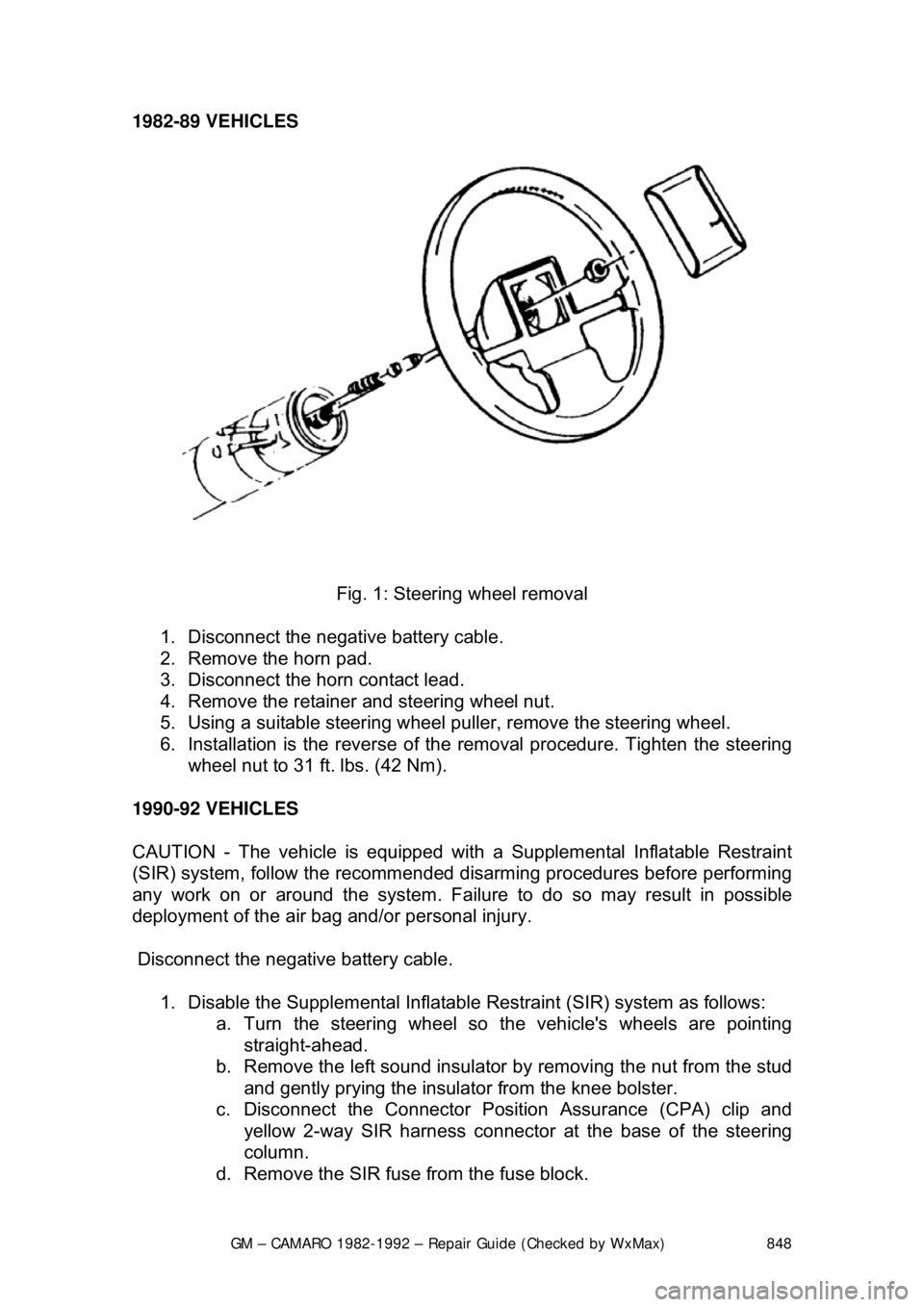
Fig. 1: Steering wheel removal
1. Disconnect the negative battery cable.
2. Remove the horn pad.
3. Disconnect the horn contact lead.
4. Remove the retainer and steering wheel nut.
5. Using a suitable steering wheel pu ller, remove the steering wheel.
6. Installation is the reverse of the removal procedure. Tighten the steering
wheel nut to 31 ft. lbs. (42 Nm).
1990-92 VEHICLES
CAUTION - The vehicle is equipped with a Supplemental Inflatable Restraint
(SIR) system, follow the recommended disarming procedures before performing
any work on or around the system. Failure to do so may result in possibl\
e
deployment of the air bag and/or personal injury.
Disconnect the negative battery cable.
1. Disable the Supplemental Inflatable Restraint (SIR) system as follows:
a. Turn the steering wheel so th e vehicle's wheels are pointing
straight-ahead.
b. Remove the left sound insulator by removing the nut from the stud
and gently prying the insulator from the knee bolster.
c. Disconnect the Connector Position Assurance (CPA) clip and yellow 2-way SIR harness connecto r at the base of the steering
column.
d. Remove the SIR fuse from the fuse block.