2016 AUDI RS7 SPORTBACK lock
[x] Cancel search: lockPage 176 of 282

Child safety
Please remember that the lower anchorage
points are only intended for installation and at
tachment of child restraints specifically certified
for use with
LATCH lower anchorages. Child re
straints that are not equipped with the lower an
chorage attachments can still be installed in
compliance with the child restraint manufactur
er's instructions on using vehicle safety belts .
A WARNING
Improper use of LATCH lower anchorages can
cause serious personal injury in an accident.
- Always carefully follow the child restraints
manufacturer's instructions for proper in
stallation of the child restraint and proper
use of the lower anchorages or safety belts
in your vehicle.
- Never secure or attach any luggage or other
items to the
LATCH lower anchorages.
- Always read and heed the important infor
mation about child restraints in this chapter
and WARNINGS
¢ page 159, Child safety.
Installing a child restraint with LATCH
lower anchorages
Whenever you install a child restraint always fol
low the child restraint manufacturer 's instruc
tions.
Fig. 172 Lowe r an ch orages : proper mou nting
Mounting
.,. Make sure the seatback of the rear seat bench
is in the upright position and securely latched
in place .
.. Attach both hook-on connectors with the spring
catch release on the child safety seat onto the
174
LATCH lower anchorage so that the connectors
lock into place
¢ fig. 172.
.. Pull on the connector attachments to make
sure they are properly attached to the LATCH
lower anchorage.
.. Pull straps tight following the child restraint
manufacturer's instructions.
Releasing
.. Loosen the tension on the straps following the
child restraint manufacturer's instructions.
.. Depress the spring catches to release the an
chorage hooks from the lower anchorages .
Remember: Use tether straps to help keep the
child restraint firmly in place.
A WARNING
-
Improper use of the LATCH system can in
crease the risk of serious personal injury and
death in an accident .
- These anchors were developed only for child safety seats using the "LATCH" system.
- Never attach other child safety seats, belts
or other objects to these anchors .
- Always make sure that you hear a click when
latching the seat in place. If you do not hear
a click the seat is not secure and could fly
forward and hit the interior of the vehicle,
or be ejected from the vehicle.
A WARNING
Improper installation of child restraints will
increase the risk of injury in an accident.
- Always follow the child restraint system
manufacturer's instructions for proper in
stallation of the child restraint system and
proper use of tether straps as well as the lower anchorages or safety belts in your ve
hicle.
- Always read and heed the important infor
mation and WARNINGS about child safety
and the installation of child restraint sys
tems
¢ page 159, Child safety.
-
Page 182 of 282

Intelligent Technology
shared, please see your contract with the
wireless te lecommunications provider and the
"About Aud i connect" tab in your vehicle's
MMI:
! MENUI button> Audi connect > About
Audi connect .
Electronic Stabilization
Control (ESC)
Description
E SC helps to imp rove ro ad hold ing and vehicle
dynamics to help reduce the probab ility of skid
d ing and loss of veh icle control. It works only
when the engine is runn ing . ESC detects certain
d iffic ult dr iving situat io ns, including when the
ve hicl e is begin ning to spin (yaw) o ut of contro l
and h elps you to ge t the veh icle b ack u nde r con
trol by se lectively bra king the wheels, and/or re
ducing engine powe r and providing steering as
sistance to help hold the vehicle on the driver's
intended course. The indicator light
GI in the in
strument cluster blinks when ESC is tak ing action
t o he lp you contro l the vehicle.
ESC has lim itations. It is important to remembe r
that ESC cannot overcome the laws o f physics. It
will not a lways be able to help out under all con
d itions you may come up aga inst . For example,
ESC may not always be ab le to help you master
situations where there is a sudde n change in the
coeff ic ie nt of fr iction of the road surface. W hen
there is a se ction of dry roa d that is sudde nly cov
e red with w ater, slush o r sn ow , ESC c annot pe r
form the same way i t wou ld on the dry s urface. If
the vehicle hydrop lanes (rides on a cushion of wa
ter instead of t he road su rface), ESC w ill not be
ab le to he lp you stee r the veh icle because contact
with the pavement has been inte rru pted and the
ve hicle cannot be b raked or steered . Dur ing fast
cor nering, part icu la rly on w inding roads, ESC
can not always deal as effect ive ly w it h difficult
d riving situat ions than a t lowe r speeds .
Always ad just yo ur speed and driving sty le to
road, traffic and weath er cond itions . ESC canno t
over ride the vehicle's phys ical lim its, increase the
ava ilab le traction, o r keep a ve hicle on t he road if
roa d depa rture is a re su lt of driver in attention .
I nstead, ESC imp roves the possibili ty of keep ing
180
t h e veh icle unde r contro l and on t he road d uring
extreme mane uvers by using the driver's steer ing
i nputs to help keep the veh icle go ing in the in
tended direction. If you are traveling at a speed
that causes you to run off the road before ESC
can p rovide any assistance, you may not exper i
ence the be nefits of ESC.
ESC is switc hed on all the time. In certa in s itua
tions when you need less tract ion, you can sw itch
off ASR by press ing the button
[g] c:> page 181,
fig . 175 . Be sure to switc h ASR on aga in whe n
you no longer nee d less tract ion.
The following systems are integrated in the ESC:
Anti-lock braking system (ABS)
A BS prevents the w heels from locking w hen bra k
i ng . The veh icle can still be steered even dur ing
hard braking. App ly steady p ressure to the brake
pedal. Do not pump the pedal. A pulsing in the
brake peda l ind icates that the system is act ing to
stab ilize the veh icle.
Brake a ssist system
The brake assist system can decrease b raking dis
tance. It increases b raking powe r whe n the dr iver
presses the b rake peda l quickly in emergency sit
uat ions. You must press a nd hold the brake peda l
u nt il the dange rous situation is over . In vehicles
with adaptive cruise co ntrol*, the brake ass ist
syste m is more se nsitive if the distance detected
t o t he veh icle ah ead is too sm all. On vehicle s wi th
a ctiv ate d a nd fun ctioni ng nigh t vis ion assi st*, the
brake assis t sys tem can respond more sensit ively
i f there is a warning .
Anti-slip regulation (ASR )
ASR reduces e ngine powe r whe n the d rive whee ls
begin s pin nin g and ad apts the force to the ro ad
con ditions. This m akes i t easier to s tar t, a cce ler
ate and drive up incl ines .
Electronic differential lock (EDL)
E DL applies t he b rakes to a whee l th at s tarts
sp inning a nd transfers the dr ive power to the
othe r drivi ng whee ls . This fu nction is n ot a vail a-
b le at hig he r sp eeds . .,..
Page 188 of 282

Intelligent Technology
Audi dealer immediately to have the malfunction
corrected. The color of the indicator light depends on the vehicle speed.
_& WARNING
-
Driving at higher speeds without the rear
spoiler deployed can impair handling charac
teristics, making the vehicle harder to con
trol.
- Always make sure that the spoiler is de
ployed when driving at speeds over 85 mph
(140 km/h) . If the rear spoiler warning/indi
cator light in the instrument cluster comes
on, the rear spoiler may not have deployed.
- Never drive at speeds higher than 85 mph
(140 km/h) if the spoiler is not deployed .
Have the spoiler inspected as soon as possi
ble by an authorized Audi dealer or qualified
workshop.
- Always obey speed limits and other traffic
laws.
_& WARNING
Improper operation of the rear spoiler can
cause crushing injuries.
- Always make sure that nobody, especially
children, is in the way when the rear spoiler
is deployed or retracted.
@) Note
- Never push on the vehicle on the rear spoil
er . This could cause damage.
- To prevent damage to the rear spoiler do
not lean or place anything on it.
-
- Only operate the rear spoiler manually when
the luggage compartment lid is close and
the rear spoiler moving parts are not
blocked. Otherwise, damage could occur.
(D Tips
Clean the rear spoiler compartment every 2 to
3 months. To function correctly, the rear
spoiler must be free of ice, snow and leaves.
186
Energy management
' The starting ability is optimized
The energy management system manages the
electrical energy distribution and optimizes the
availability of electrical energy for starting the
engine.
When a vehicle with a conventional energy sys
tem is not driven for a long time, the battery is
drained by equipment (for example the immobil
izer). In certain circumstances , there could may
not be enough energy to start the engine .
Your vehicle is equipped with an intelligent ener
gy management system for distributing electrici
ty. This significantly improves the starting ability
and increases the battery life.
The energy management system Is made up of
battery diagnosis , idling current management
and dynamic energy management.
Battery diagnosis
The battery diagnosis determines the battery charge level. The sensors detect the battery, the
battery current, and the battery temperature .
The current charge level and the performance of
the battery are determined based on this.
Idling current management
The idling current management decreases the
energy used while parked . With the engine
switched off, it manages the energy distribution
to the different electrical components. Date from
battery diagnosis is taken into account for this.
Depending on the battery charge level, electrical
equipment is switched off one item after the oth
er, to prevent the battery from draining and to
retain the starting ability.
Dynamic energy management
While driving, dynamic energy management dis
tributes the appropriate amount of energy to the
electrical equipment .
It controls the battery
charge level so that more energy is not used then
is being generated in order to maintain an opti-
mal battery charge level.
ll>
Page 197 of 282

Care and cleaning
Component Situation Solution
Decorati ve parts/
Deposits Mild
soap solution al, a cleaning so lution suitable for stain-
Trim less stee l, if necessary
Paint Pain t damage Refer to the paint number on the veh icle data label, repair
with touch up paint
q page 259
Spilled fuel Rinse with water immediately
Surface rust Rust remover,
then protect with hard wax; for questions,
consult an authorized Audi dealer or authorized Audi Serv- ice Facility.
Corrosion Have it removed by an authorized Aud i dealer or author-
ized Audi Se rvice Fac ility.
Water no longer Protect with hard wax (at least twice per year) beads on the surface
of clean paint
No shine even though Treat with suitable
polish; then apply paint protectant if
paint has been pro -the polish that was used does not contain any protectant
tected/paint looks
poor
Deposits such as in-Dampen with wate r immediately and remove wit h a m icro -
sects, bird droppings, fiber cloth
tree sap and road salt
Grease -based con- Remove immediately with a mild soap solution al and a
taminants such as soft cloth
cosmetics or sunb lock
Carbon parts Deposits clean the same way as painted parts q page 193
a) M ild soap so lu tio n: maxim um two ta blespoons of ne utra l s oap in 1 quar t (l li te rl of water
Internal cleaning
Component Situation Solution
Windows
Deposits Glass cleaner, then wipe dry
Decorative parts/ Deposits Mild
soap solution al
Trim
Plastic part .s
Deposits Damp cloth
Heavier deposits Mild soap solution al, detergent-free p lastic clean ing solu-
tion, if necessary
Displays Deposits Soft cloth with LCD cleaner
Controls Deposits Soft brush, then a soft cloth with a mild soap solutional
Safety belts Deposits Mild
soap solution al, allow to dry before letting them re-
tract
195
Page 201 of 282
fill up at busy gas st ations where the season al
adjustm ent is mor e likely to be made in time .
(D Note
-Me thanol f uels which do not mee t these re
quirements may ca use corros ion and dam
age to plastic and rubber components in the
fuel system .
- Do not use fuels that fai l to meet the speci
fied criter ia in this chapter.
- If you are unable to determine whether or not a particular fuel blend meets the speci
ficat ions, ask your service station or its fuel
supplier.
- Do not use fuel for which the contents can
not be identif ied.
- Fuel system damage and performance prob
lems resulting from the use of fue ls differ
ent from those specified are not the respon
s ibility of Audi and are not covered under
the New Veh icle or the Emiss ion Control
System Wa rrant ies.
- If you experience a loss of fue l economy or
driveability and performance prob lems due
to the use of one of these fuel b lends , we
recommend that you switch to unblended
fuel.
Gasoline additives
A ma jo r concern among many au to manufactur
e rs is carbon deposit build-up caused by the type
of gasoline you use.
A lthough gasoline gr ades d iffer from one manu
facturer to ano ther, they have cer tain things in
common . All gasoline grades contain substances
that can cause deposits to coll ect on v ita l eng ine
parts, such as f uel injectors and intake valves. Al
though most gasoline brands include additives to
keep engine and fuel systems clean, they are not
equally effective.
Aud i recommends using TOP TIER Detergent Gas
oline. For more informat ion on TOP TIER Deter -
,... gent Gasoline, please go to the official website
N
t3 (www .toptiergas .com) .
'SI: ....
After an extended period o f using inadeq uate
fuels, carbon deposit bui ld-ups can rob your en
gine o f peak performance.
(D Note
Damage or ma lf u nction due to poor fuel qual
ity is not covered by the A udi New Vehicle
Limited Warranty .
Refueling
Fuel filler neck
The fue l filler neck is located on the rig ht rea r
s ide panel behind the fuel filler flap .
If the power lock ing system shou ld fai l, yo u can
still open the flap manually -fo r detailed inst ruc
t io ns see c:>
page 201.
You can find the fuel tank capacity of your vehicle
i n c:>
page 260 .
The label on the inside of the fuel f iller flap tells
you the correct fuel for your vehicle. For more in
format ion about fuel spec ificat ions, see
c=> page 198 .
Your vehicle fuel tank has an on board refuelling
vapor recovery system. T his feature helps to pre
vent fuel vapors from escaping from the tank and polluting the environme nt wh ile you refuel your
vehicle . In o rder to fill the tank p roper ly w hile
pro tect ing t he e nvir onment, p lease follow th is
ref ue ling pro cedure ca re fully.
A WARNING
Under normal opera ting cond itions, neve r ca r
ry additional f uel containers in your car . Gas
canisters and other containers used to trans
port fue l can be dange rous. Such containe rs,
full or empty, may leak and could cause a fire
i n a co llision. If you must transport fuel to
use for your lawn mower, snow blower, etc .,
be ve ry ca reful and always observe local and
state laws rega rding the use, transportation
a nd stor age of su ch f uel con tainers. Make cer
t ai n t he cont ainer meets industry stand ards
(A NSI/AS TM F852 -86).
199
Page 202 of 282
Fuel and Refueling
(D Note
Never drive your vehicle until the fuel tank is
completely empty. The irregular supply of
fuel can cause misfiring. Gasoline could enter
the exhaust system and damage the catalytic
converter .
Refuelling
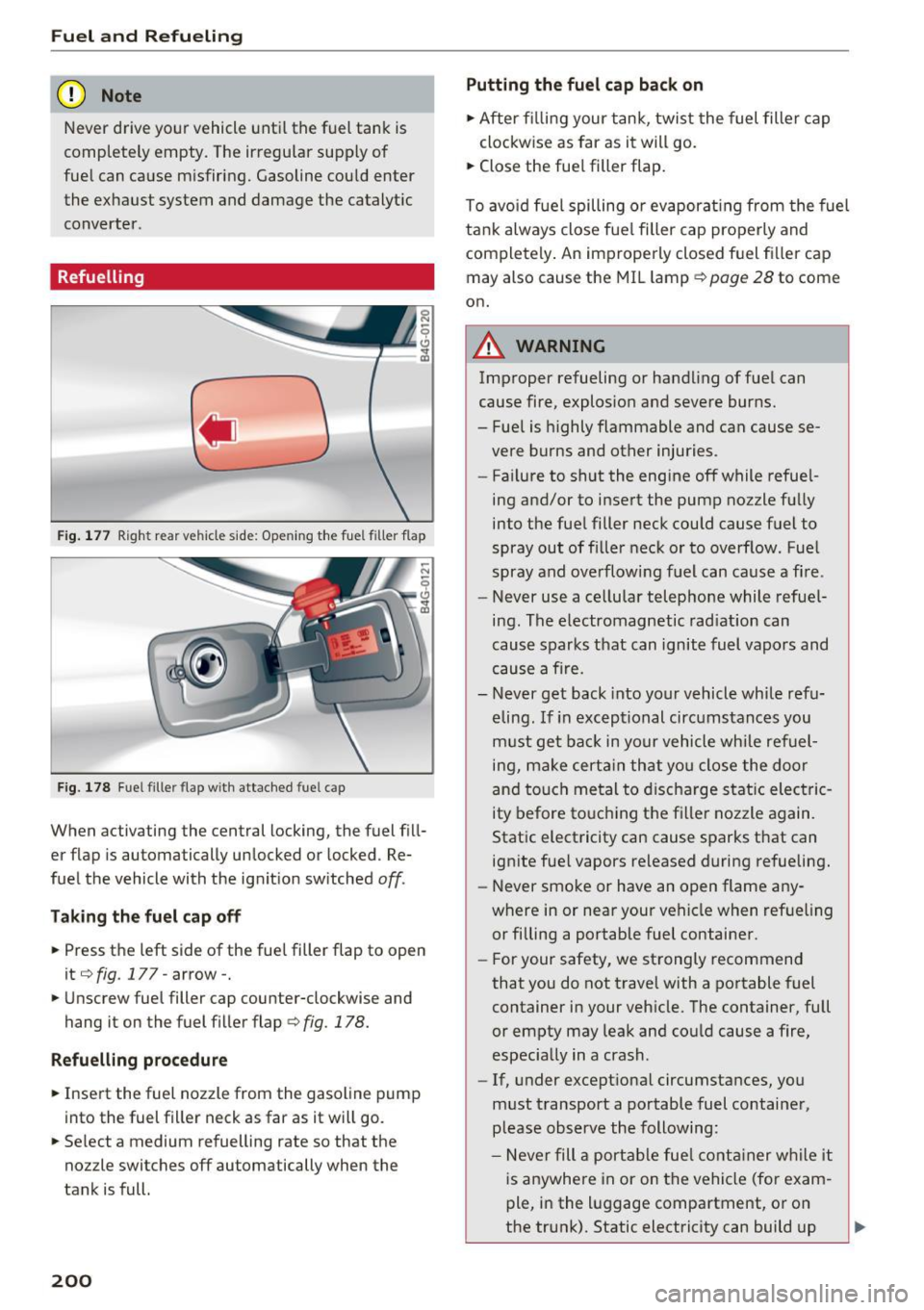
Fig. 177 Right rear vehicle side: Opening the fuel filler flap
Fig. 178 Fuel filler flap w ith attached fuel cap
When activating the central locking, the fuel fill
er flap is automatically unlocked or locked. Re
fuel the vehicle with the ignition switched
off.
Taking the fuel cap off
.. Press the left side of the fuel filler flap to open
it
9 fig. 177-arrow- .
.. Unscrew fuel filler cap counter-clockwise and
hang it on the fuel filler flap¢
fig. 178.
Refuelling procedure
.. Insert the fuel nozzle from the gasoline pump
into the fuel filler neck as far as it will go.
.. Select a medium refuelling rate so that the
nozzle switches off automatically when the
tank is full.
200
Putting the fuel cap back on
.. After filling your tank, twist the fuel filler cap
clockwise as far as it will go.
.. Close the fuel filler flap.
To avoid fuel spilling or evaporating from the fuel
tank always close fuel filler cap properly and
completely. An improperly closed fuel filler cap
may also cause the MIL lamp ¢
page 28 to come
on.
A WARNING
Improper refueling or handling of fuel can
cause fire, explosion and severe burns. -
- Fuel is highly flammable and can cause se
vere burns and other injuries .
- Failure to shut the engine off while refuel
ing and/or to insert the pump nozzle fully
into the fuel filler neck could cause fuel to
spray out of filler neck or to overflow. Fuel
spray and overflowing fuel can cause a fire.
- Never use a cellular telephone while refuel
ing. The electromagnetic radiation can
cause sparks that can ignite fuel vapors and
cause a fire.
- Never get back into your vehicle while refu
eling.
If in exceptional circumstances you
must get back in your vehicle while refuel
ing, make certain that you close the door
and touch metal to discharge static electric
ity before touching the filler nozzle again.
Static electricity can cause sparks that can
ignite fuel vapors released during refueling.
- Never smoke or have an open flame any
where in or near your vehicle when refueling
or filling a portable fuel container .
- For your safety, we strongly recommend
that you do not travel with a portable fuel
container in your vehicle. The container, full
or empty may leak and could cause a fire,
especially in a crash .
- If, under exceptional circumstances, you
must transport a portable fuel container,
please observe the following:
- Never fill a portable fuel container while it
is anywhere in or on the vehicle (for exam
ple, in the luggage compartment, or on
the trunk). Static electricity can build up
Ii>-
Page 203 of 282
while filling and can ignite fuel vapors causing a fire.
- Always place a portable fuel conta iner on
the ground before filling.
- Always keep the filler nozz le completely
inside the portab le container before and
during filling.
- If fill ing a portable container made of
metal, the filler nozzle must always be in
contact with the container . This will help
prevent static electricity from discharging
and cause a fire.
- Never spi ll fuel inside the vehicle or lug
gage compartment. Fuel vapors are h ighly
flammable.
- Always observe local and state/provincia l
laws regarding the use, storage and trans
portation of fuel containers.
- Make certa in the fuel conta iner meets in
dustry standards (ANSI/ ASTM F852-86).
CD Note
If any fuel has spilled onto the car, it should
be removed immediately to prevent damage
to the paint .
@ For the sake of the environment
As soon as the correctly operated nozzle
switches off automatically for the first t ime,
the tank is full. Do not try to add more fuel
because fuel may spill out. In addition, the
expansion space in the fuel tank will be filled -
causing the fuel to overflow when it becomes
warm and pollu te the environment.
@ Tips
- Running your engine while refuelling may
cause vapors to escape or even cause fuel to
spill out of the tank. This would then shut
off the fuel nozzle before the tank is full.
- Do not refuel your vehicle with the ignition
switched on. The fuel ga uge may otherwise
not indicate the correct fue l level after refu
elling.
- The fuel filler flap of your vehicle is not
l ocked when you lock the vehicle from the
i nside.
Fuel and Refueling
Fuel filler door emergency release
If the central locking system is faulty, the fuel
filler door can be unlocked manually.
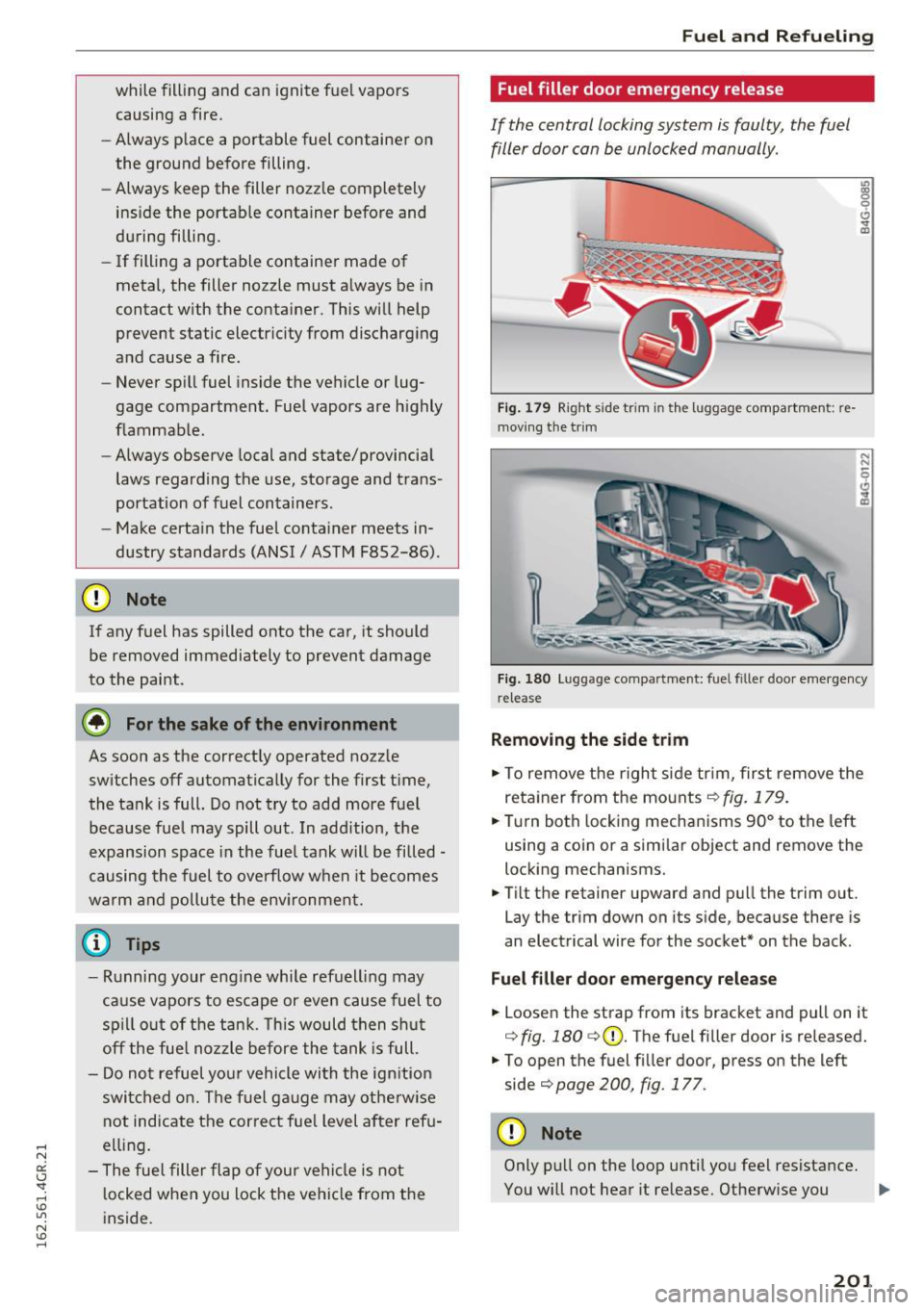
Fig. 179 Right s ide t rim in t he lu ggage compartm en t: re
moving the t rim
Fig. 180 Lu ggage compa rtment: fuel fill er door emergency
release
Removing the side trim
.,. To remove the right side tr im, first remove the
reta iner from the mounts
c:> fig. 179.
... Turn both locking mechanisms 90° to the left
using a coin or a similar object and remove the
locking mechanisms.
• Tilt the retainer upward and pull the trim out.
Lay the trim down on its side, because there is
an electrical wire for the socket* on the back .
Fuel filler door emergency release
... Loosen the strap from its bracket and pull on it
c:> fig. 180 c:>(D. The fuel filler door is released.
.,. To open the fuel filler door, press on the left
side
c:> page 200, fig. 177.
CD Note
Only pull on the loop until you feel resistance.
You w ill not hear it re lease. Otherwise you ..,.
201
Page 206 of 282

Checking and Filling
-Do not remove the engine cover under any
circumstances . This increases the risk of
burns.
- If work on the fuel system or the electrical
system is necessary:
- Always disconnect the battery.
- Never smoke or work near heaters or open
flames . Fluids in the engine compartment
could start a fire.
- Keep an approved fire extinguisher imme
diately available .
- To avoid electrical shock and personal injury
while the engine is running or being started,
never touch:
- Ignition cables
- Other components of the high voltage
electronic ignition system.
- If you must perform a check or repair with
the engine running:
- First, fully apply the parking brake, move
selector lever to P (Park) .
- Always use extreme caution to prevent
clothing, jewelry, or long hair from get
ting caught in the radiator fan, V -belts or
other moving parts, or from contacting
hot parts. Tie back hair before starting,
and do not wear clothing that will hang or
droop into the engine.
- Minimize exposure to emission and chemi
cal hazards
,=:, .&. -
A WARNING
California Proposition 65 Warning:
- Engine exhaust, some of its constituents,
and certain vehicle components contain or
emit chemicals known to the State of Cali
fornia to cause cancer and birth defects and
reproductive harm. In addition, certain flu
ids contained in vehicles and certain prod
ucts of component wear contain or emit
204
chemicals known to the State of California
to cause cancer and birth defects or other
reproductive harm .
- Battery posts, terminals and related acces
sories contain lead and lead compounds,
chemicals known to the State of California
to cause cancer and reproductive harms .
Wash hands after handling.
(D Note
When adding fluids, always make sure that
they are poured into the proper container or
filler opening, otherwise serious damage to
vehicle systems will occur.
@ For the sake of the environment
To detect leaks in time, inspect the vehicle
floor pan from underneath regularly . If you
see spots from oil or other vehicle fluids, have
your vehicle inspected by an authorized Audi
dealer.
Closing the engine hood
.,. Pull the hood down until the pressure from the
struts is reduced.
.,. Let the hood
drop down and latch in place. Do
not try to push it shut;
it may fail to engage
¢ _& .
A WARNING
A hood that is not completely latched could
fly up and block your view while driving .
- When you close the engine hood, check it to
make sure the safety catch has properly en
gaged . The hood should be flush with the
surrounding vehicle body parts.
- If you notice while driving that the hood is
not secured properly, stop at once and close it .
-