1995 CHEVROLET ASTRO CARGO VAN low oil pressure
[x] Cancel search: low oil pressurePage 113 of 342
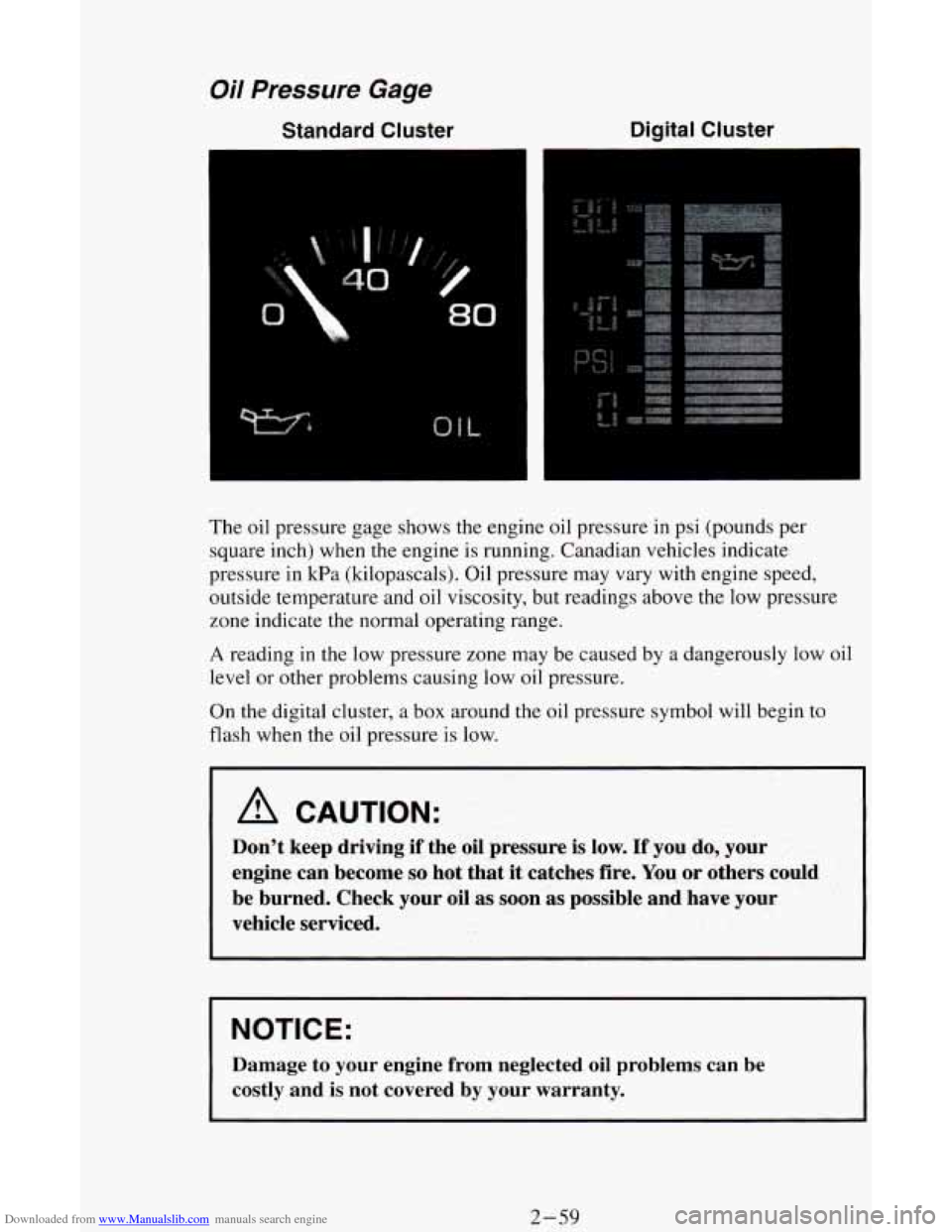
Downloaded from www.Manualslib.com manuals search engine Oil Pressure Gage
Standard Cluster Digital Cluster
The
oil pressure gage shows the engine oil pressure in psi (pounds per
square inch) when the engine is running. Canadian vehicles indicate
pressure in kPa (kilopascals). Oil pressure may vary with engine speed,
outside temperature and oil viscosity, but readings above the low pressure
zone indicate the normal operating range.
A reading in the low pressure zone may be caused by a dangerously low oil
level or other problems causing low
oil pressure.
On the digital cluster, a box around the oil pressure symbol will begin to
flash when the oil pressure
is low.
A CAUTION:
Don’t keep driving if the oil pressure is low. If you do, your
engine can become
so hot that it catches fire. You or others could
be burned. Check your oil
as soon as possible and have your
vehicle serviced.
NOTICE:
Damage to your engine from neglected oil problems can be
costly and
is not covered by your warranty.
2-59
Page 258 of 342
Downloaded from www.Manualslib.com manuals search engine Rinse the section with a clean, wet sponge.
Wipe off what’s left with a slightly damp paper towel or cloth.
Then dry it immediately with a blow dryer or a heat lamp.
NOTICE:
Be careful. A blow dryer may scorch the fabric.
Wipe with a clean cloth.
Using Solvent-Type Cleaner on Fabric
First, see if you have to use solvent-type cleaner at all. Some spots and
stains will clean off better
with just water and mild soap.
If you need to
use a solvent:
Gently scrape excess soil from the trim material with a clean, dull knife or
scraper. Use
very little cleaner, light pressure and clean cloths (preferably
cheesecloth). Cleaning should start at the outside
of the stain, “feathering”
toward the center. Keep changing
to a clean section of the cloth.
blow dryer to help prevent a cleaning ring. (See the previous NOTICE.)
0 When you clean a stain from fabric, immediately dry the area with a
Fabric Protection
Your vehicle has upholstery that has been treated with Scotchgard” Fabric
Protector,
a 3M product. Scotchgard“ protects fabrics by repelling oil and
water, which are the carriers of most stains. Even with this protection, you
still need to clean your upholstery often to keep it looking new.
Further information on cleaning is available by calling 1-800-433-3296
(in
Minnesota, 1-800-642-6 167).
Special Cleaning Problems
Greasy or Oily Stains
Stains caused by grease, oil, butter, margarine, shoe polish, coffee with
cream, chewing gum, cosmetic creams, vegetable oils, wax crayon, tar and
asphalt can be removed as follows:
Carefully scrape off excess stain.
Follow the solvent-type instructions described earlier.
Shoe polish, wax crayon, tar and asphalt will stain if left on a vehicle
seat fabric. They should be removed as soon
as possible. Be careful,
because the cleaner will dissolve them and may cause them to spread.
4-50
Page 261 of 342
Downloaded from www.Manualslib.com manuals search engine Cleaning the Outside of Your Vehicle
The paint finish on your vehicle provides beauty, depth of color, gloss
retention and durability.
Washing Your Vehicle
The best way to preserve your vehicle’s finish is to keep it clean by washing
it often with lukewarm or cold water.
Don’t wash your vehicle in the direct rays of
the sun. Don’t use strong soaps
or chemical detergents. Use liquid hand, dish or car washing (mild
detergent) soaps. Don’t use cleaning agents that are petroleum based, or that
contain acid or abrasives. All cleaning agents should be flushed promptly
and not allowed to dry on the surface,
or they could stain. Dry the finish
with a soft, clean chamois or a 100% cotton towel to avoid surface scratches
and water spotting.
High pressure vehicle washes may cause water
t0 eater your vehicle.
Finish Care
Occasional waxing or mild polishing of your vehicle by hand may be
necessary to remove residue from the paint finish.
You can get GM
approved cleaning products from your dealer. (See “Appearance Care and
Materials’’ in the Index.)
Your vehicle has a “basecoatjclearcoat” paint finish. The clearcoat gives
more depth and gloss to the colored basecoat. Always use waxes and
polishes that are non-abrasive and made for
a basecoat/clearcoat paint
finish.
NOTICE:
Machine compounding or aggressive polishing on a
basecoatklearcoat paint finish may dull the finish or leave swirl
marks.
Foreign materials such as calcium chloride and other salts, ice melting
agents, road oil and tar, tree sap, bird droppings, chemicals from industrial
chimneys, etc. can damage your vehicle’s finish if
they remain on painted
surfaces. Wash the vehicle as soon as possible. If necessary, use
non-abrasive cleaners that are marked safe for painted surfaces to remove
foreign matter.
Exterior painted surfaces are subject to aging, weather and chemical fallout
that can take their toll over a period
of years. You can help to keep the paint
finish looking new by keeping your vehicle garaged or covered whenever
possible.
6-53
Page 336 of 342
Downloaded from www.Manualslib.com manuals search engine Engine (continued) Oil (See “Oil”)
Overheating
.................................................. 5-13
RunningWhileParked
......................................... 2-26
Starting
..................................................... 2-15
Exhaustsystem
................................................. 6-40
Filter Replacement Chart (See “Service-Replacement Parts and Filter
Recommendations”)
Fluid Capacities (See “Capacities and Specification”)
FluidLeakCheck
................................................ 6-33
Fluids (See “Scheduled Maintenance Services”)
Fuel FillingYourTmk
.............................................. 6-4
Foreign Countries .............................................. 64
Gage (See “Gages”)
Cholines for Cleaner Air
........................................ 6-3
Tank Capacity
................................................ 6-62
Fuses and Circuit Breakers
................................... 6-60. 6-65
FuseBlock
.................................................. 6-61
G
Gages Engine Coolant Temperature Gage
................... ........ 2-58
Odometer
................................................... 2-50
Speedometer
................................................. 2-50
FuelGage ................................................. 2-60
Oil Pressure Gage
............................................. 2-59
Tamper Resistant Odometer
..................................... 2-50
Trip Odometer
................................................ 2-51
Voltlneter .................................................... 2-61
Halogen Bulbs (See “Bulb Replacement”)
Head Restraints (See “Seats”)
Headlamps
Hazard Warning Flashers
........................................... 5- . 1
High Beam Indicator Light (See
“Lights”)
High-Low Beamchanger
...................................... 2-31
Reminder
.................................................... 2-42
Replacement (See “Bulb Replacement”)
Heatercontrols
.................................................. 3-1
Rear Heater (Option)
............................................ 3-3
HeatedAir Conditioning Controls
............................... 3-2, 6-40
Rear Air Conditioning (Option)
................................... 3-4
Refrigerant Capacity
........................................... 6-68
Highway Hypnosis (See “Driving-Highway Hypnosis”)
Hitches (See “Towing-Hitches”)
4