1991 FORD FESTIVA length
[x] Cancel search: lengthPage 410 of 454
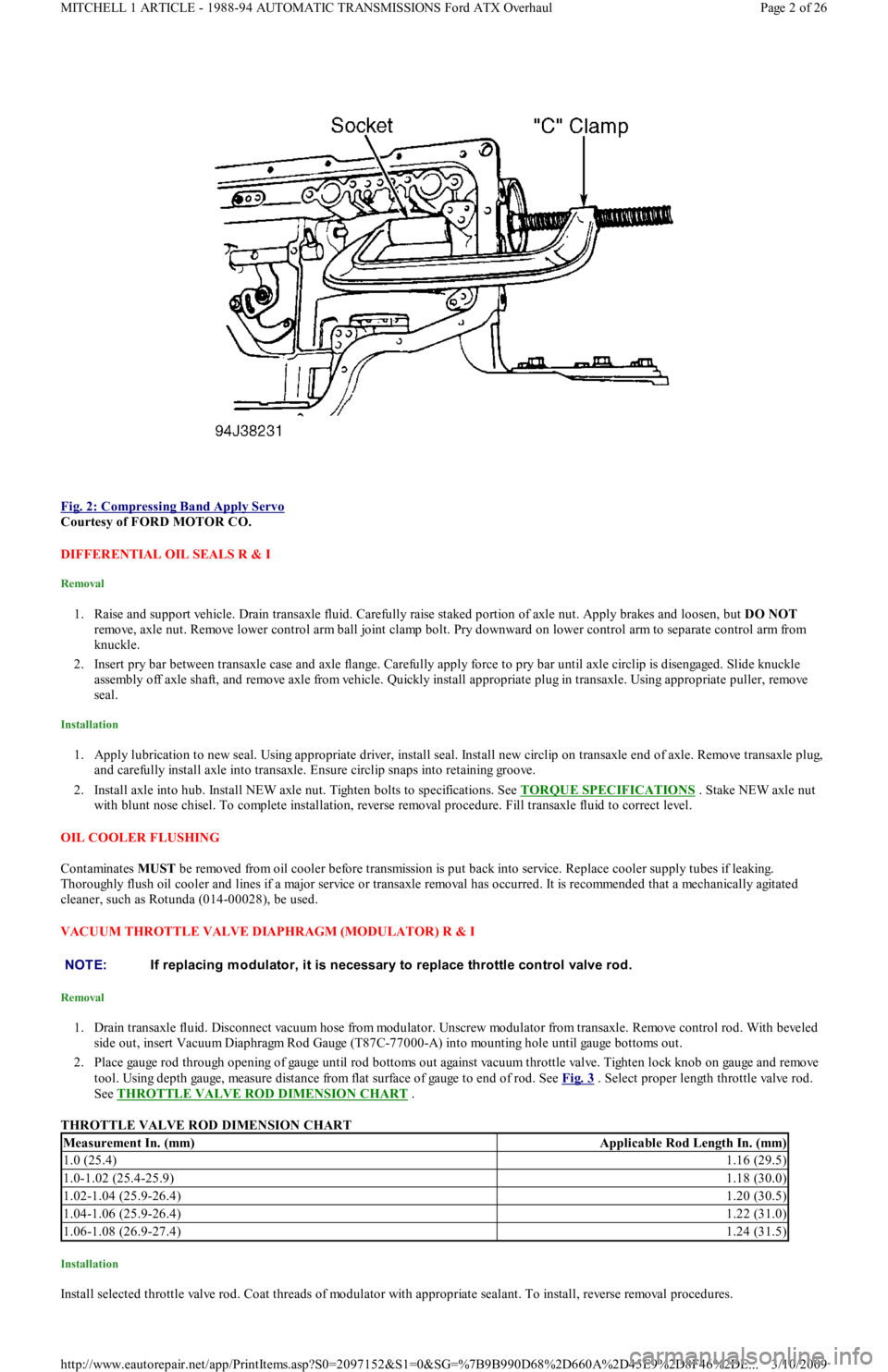
Fig. 2: Compressing Band Apply Servo
Courtesy of FORD MOTOR CO.
DIFFERENTIAL OIL SEALS R & I
Removal
1. Raise and support vehicle. Drain transaxle fluid. Carefully raise staked portion of axle nut. Apply brakes and loosen, but DO NOT
remove, axle nut. Remove lower control arm ball joint clamp bolt. Pry downward on lower control arm to separate control arm from
knuckle.
2. Insert pry bar between transaxle case and axle flange. Carefully apply force to pry bar until axle circlip is disengaged. Slide knuckle
assembly off axle shaft, and remove axle from vehicle. Quickly install appropriate plug in transaxle. Using appropriate puller, remove
seal.
Installation
1. Apply lubrication to new seal. Using appropriate driver, install seal. Install new circlip on transaxle end of axle. Remove transaxle plug,
and carefully install axle into transaxle. Ensure circlip snaps into retaining groove.
2. Install axle into hub. Install NEW axle nut. Tighten bolts to specifications. See TORQUE SPECIFICATIONS
. Stake NEW axle nut
with blunt nose chisel. To complete installation, reverse removal procedure. Fill transaxle fluid to correct level.
OIL COOLER FLUSHING
Contaminates MUST be removed from oil cooler before transmission is put back into service. Replace cooler supply tubes if leaking.
Thoroughly flush oil cooler and lines if a major service or transaxle removal has occurred. It is recommended that a mechanically agitated
cleaner, such as Rotunda (014-00028), be used.
VACUUM THROTTLE VALVE DIAPHRAGM (MODULATOR) R & I
Removal
1. Drain transaxle fluid. Disconnect vacuum hose from modulator. Unscrew modulator from transaxle. Remove control rod. With beveled
side out, insert Vacuum Diaphragm Rod Gauge (T87C-77000-A) into mounting hole until gauge bottoms out.
2. Place gauge rod through opening of gauge until rod bottoms out against vacuum throttle valve. Tighten lock knob on gauge and remove
tool. Using depth gauge, measure distance from flat surface of gauge to end of rod. See Fig. 3
. Select proper length throttle valve rod.
See THROTTLE VALVE ROD DIMENSION CHART
.
THROTTLE VALVE ROD DIMENSION CHART
Installation
Install selected throttle valve rod. Coat threads of modulator with appropriate sealant. To install, reverse removal procedures.
NOTE:If replacing m odulator, it is necessary to replace throttle control valve rod.
Measurement In. (mm)Applicable Rod Length In. (mm)
1.0 (25.4)1.16 (29.5)
1.0-1.02 (25.4-25.9)1.18 (30.0)
1.02-1.04 (25.9-26.4)1.20 (30.5)
1.04-1.06 (25.9-26.4)1.22 (31.0)
1.06-1.08 (26.9-27.4)1.24 (31.5)
Page 2 of 26 MITCHELL 1 ARTICLE - 1988-94 AUTOMATIC TRANSMISSIONS Ford ATX Overhaul
3/10/2009 http://www.eautorepair.net/app/PrintItems.asp?S0=2097152&S1=0&SG=%7B9B990D68%2D660A%2D45E9%2D8F46%2DE
...
Page 415 of 454
inspect and repair circuit between switch harness connector and fuse panel.
5.Check Kickdown Switch
Turn ignition off. Check continuity between kickdown switch terminals. Continuity should only exist with accelerator fully depressed. I
f
switch is functioning correctly, go to next step. Replace switch if it failed testing. Road test vehicle to verify repair.
6.Check Circuit Between Kickdown Switch & Kickdown Solenoid
Ensure ignition is off. Disconnect kickdown switch harness connector. Disconnect kickdown solenoid harness connector. Check
continuity of White/Black wire between switch harness connector and solenoid harness connector. If continuity does not exist, inspect
and repair open circuit as needed. If continuity exists, check continuity between White/Black wire terminal at solenoid harness
connector and ground. If continuity exists, inspect and repair short circuit as needed. If continuity does not exist, replace kickdown
solenoid.
VACUUM THROTTLE VALVE DIAPHRAGM (MODULATOR) TEST
1.Check System Integrity
Inspect all vacuum hoses and connections for leaks or damage. Disconnect vacuum hose at diaphragm connection and inspect for
leaking ATF. Repair as needed. Go to next step.
2.Check Vacuum At Modulator
Ensure ignition is off. Disconnect vacuum hose at modulator valve and connect vacuum gauge to hose. Start and run engine at idle.
Vacuum should be 15-22 In. Hg. If vacuum is not within specification, inspect and repair vacuum hose. If vacuum is within specification,
go to next step.
3.Check Modulator Valve Function
Turn ignition off. Remove modulator valve from transaxle. Connect hand-held vacuum pump to valve. Apply 16-20 In. Hg of vacuum.
Ensure vacuum is held by valve. Release vacuum and verify that valve moves freely. If valve is functioning correctly, go to next step.
Replace valve if it fails testing.
4.Check Vacuum Diaphragm Rod
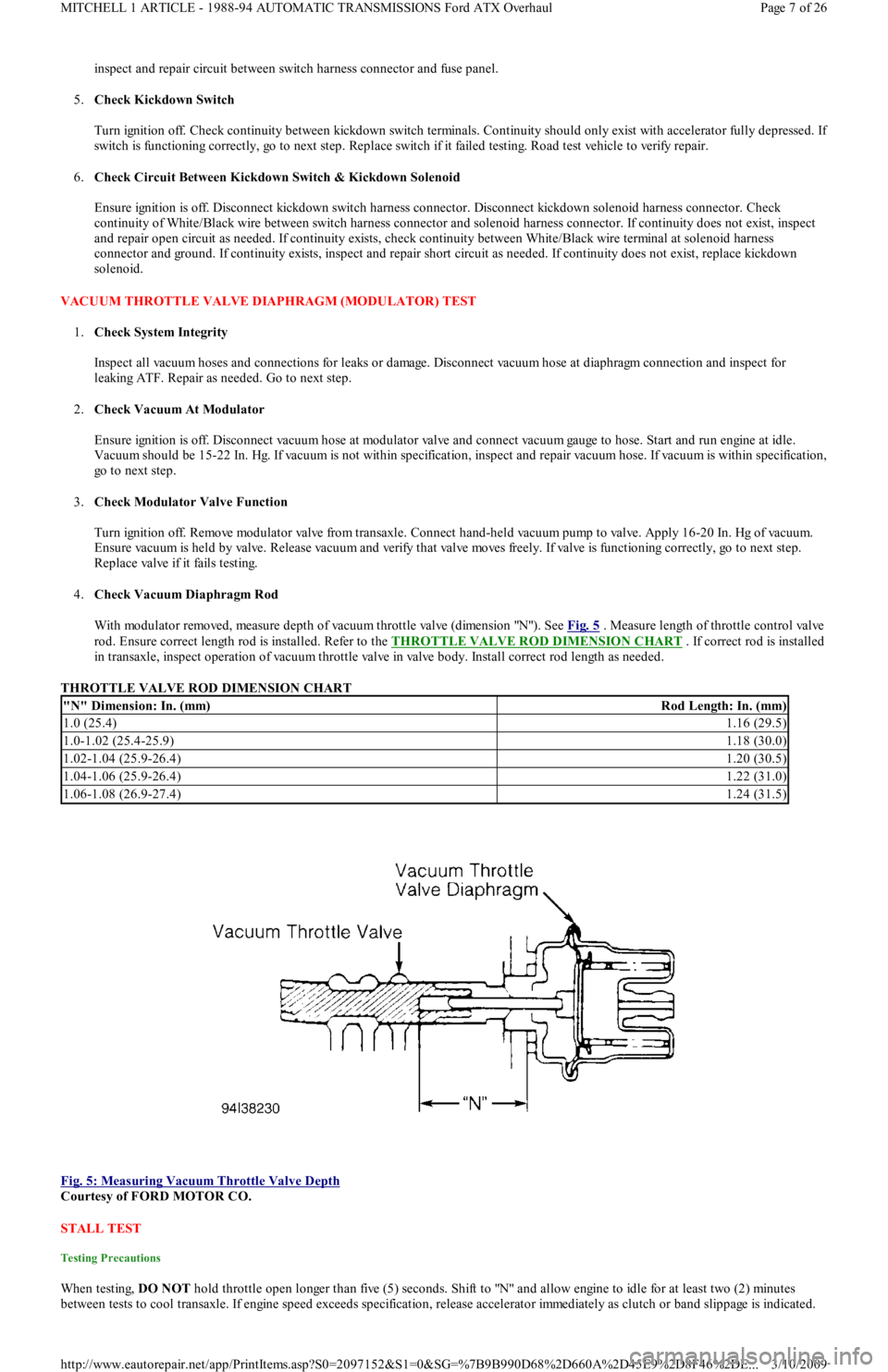
With modulator removed, measure depth of vacuum throttle valve (dimension "N"). See Fig. 5
. Measure length of throttle control valve
rod. Ensure correct length rod is installed. Refer to the THROTTLE VALVE ROD DIMENSION CHART
. If correct rod is installed
in transaxle, inspect operation of vacuum throttle valve in valve body. Install correct rod length as needed.
THROTTLE VALVE ROD DIMENSION CHART
Fig. 5: Measuring Vacuum Throttle Valve Depth
Courtesy of FORD MOTOR CO.
STALL TEST
Testing Precautions
When testing, DO NOT hold throttle open longer than five (5) seconds. Shift to "N" and allow engine to idle for at least two (2) minutes
between tests to cool transaxle. If engine speed exceeds specification, release accelerator immediately as clutch or band slippage is indicated.
"N" Dimension: In. (mm)Rod Length: In. (mm)
1.0 (25.4)1.16 (29.5)
1.0-1.02 (25.4-25.9)1.18 (30.0)
1.02-1.04 (25.9-26.4)1.20 (30.5)
1.04-1.06 (25.9-26.4)1.22 (31.0)
1.06-1.08 (26.9-27.4)1.24 (31.5)
Page 7 of 26 MITCHELL 1 ARTICLE - 1988-94 AUTOMATIC TRANSMISSIONS Ford ATX Overhaul
3/10/2009 http://www.eautorepair.net/app/PrintItems.asp?S0=2097152&S1=0&SG=%7B9B990D68%2D660A%2D45E9%2D8F46%2DE
...
Page 418 of 454
LINE PRESSURE TEST SPECIFICATIONS (ASPIRE)
LINE PRESSURE TEST SPECIFICATIONS (ALL EXCEPT ASPIRE)
LINE PRESSURE CUT-BACK TEST
1. Connect oil pressure gauges to line pressure and governor pressure ports. See Fig. 6
. Position gauges so they can be seen from driver's
seat.
2. Connect a hand-held vacuum pump to vacuum modulator. See Fig. 6
. Position vacuum pump so it can be operated from driver's seat.
With shift lever in "D", gradually increase engine RPM and observe pressure gauge readings. Record results.
3. With shift lever in "D", gradually increase engine RPM, and apply 8 in. Hg to vacuum modulator. When line pressure reading suddenly
decreases, observe the governor pressure gauge. Refer to LINE PRESSURE CUT
-BACK TEST SPECIFICATIONS .
4. If governor pressure gauge readings are not within specifications, ensure rod in vacuum modulator is installed. If a rod is installed, rod
length may be incorrect or vacuum throttle valve is sticking. See VACUUM THROTTLE VALVE DIAPHRAGM (MODULATOR)
under TESTING.
LINE PRESSURE CUT-BACK TEST SPECIFICATIONS
GOVERNOR PRESSURE TEST
1. Attach oil pressure gauge to governor pressure check port. See Fig. 6
. Position gauge so that it may be seen from driver's seat. Shift
transaxle into "D" and road test vehicle.
2. Accelerate vehicle smoothly and record governor pressure readings at 20, 35 and 55 MPH. See GOVERNOR PRESSURE
SPECIFICATIONS . If pressure gauge readings are not within specifications, check for fluid leakage in line pressure hydraulic circuit
and/or governor pressure hydraulic circuit. Also check for a faulty governor.
GOVERNOR PRESSURE SPECIFICATIONS
REMOVAL & INSTALLATION
See the appropriate TRANSMISSION REMOVAL & INSTALLATION - A/T article in this section. Refer to the following menu:
TORQUE CONVERTER
The torque converter is a sealed unit and cannot be serviced. Check for cracked or worn ring in seal area. Measure bushing in converter boss.
If I.D. is larger than 2.090" (53.08 mm) on Aspire, 1.302" (33.075 mm) on Festiva and Tracer, replace torque converter. If metal particles are
found in ATF, replace torque converter. To clean torque converter, flush with solvent, drain and flush with ATF and drain ATF.
TRANSAXLE DISASSEMBLY
1. Remove torque converter. Attach transaxle to appropriate holding fixture. Remove park/neutral switch, kickdown solenoid and vacuum
modulator with rod. Remove oil dipstick and tube. Remove speedometer driven gear retaining bolt and lift out gear assembly. Remove
oil pump drive shaft and turbine shaft.
2. Remove oil pan. Remove valve body. DO NOT lose check ball and spring. Position transaxle with oil pump facing downward. With
flat-blade screwdriver inserted in wide slot between front clutch drum and sun shell, pry down on front clutch drum. Do this seve r a l
times as you rotate assembly 2 complete revolutions.
3. Using a feeler gauge, measure front clutch drum end play. See Fig. 7
. Check clearance of small slot between front clutch drum tabs and
Applicationpsi (kg/cm2 )
At Idle
"D"46-54 (3.2-3.8)
"2 "150-166 (10.5-11.7)
"R"76-95 (5.3-6.7)
At Stall Speed
"D"141-157 (9.9-11.0)
"2 "150-166 (10.5-11.7)
"R"251-262 (17.6-18.4)
Applicationpsi (kg/cm2 )
At Idle
"D"43-57 (3.0-4.0)
"2 "114-171 (8.0-12.0)
"R"57-110 (4.0-7.0)
At Stall Speed
"D"128-156 (9.0-11.0)
"2 "114-171 (8.0-12.0)
"R"228-270 (16.0-19.0)
Vacuum Pump ReadingGovernor Pressure psi (kg/cm2 )
0 in. Hg (Atmosphere)14-23 (.98-1.6)
8 in. Hg6-14 (.42-.98)
Applicationpsi (kg/cm2 )
Aspire & Festiva
20 MPH13-21 (.9-1.5)
35 MPH25-35 (1.8-2.5)
55 MPH58-70 (4.0-4.8)
Page 10 of 26 MITCHELL 1 ARTICLE - 1988-94 AUTOMATIC TRANSMISSIONS Ford ATX Overhaul
3/10/2009 http://www.eautorepair.net/app/PrintItems.asp?S0=2097152&S1=0&SG=%7B9B990D68%2D660A%2D45E9%2D8F46%2DE
...
Page 421 of 454
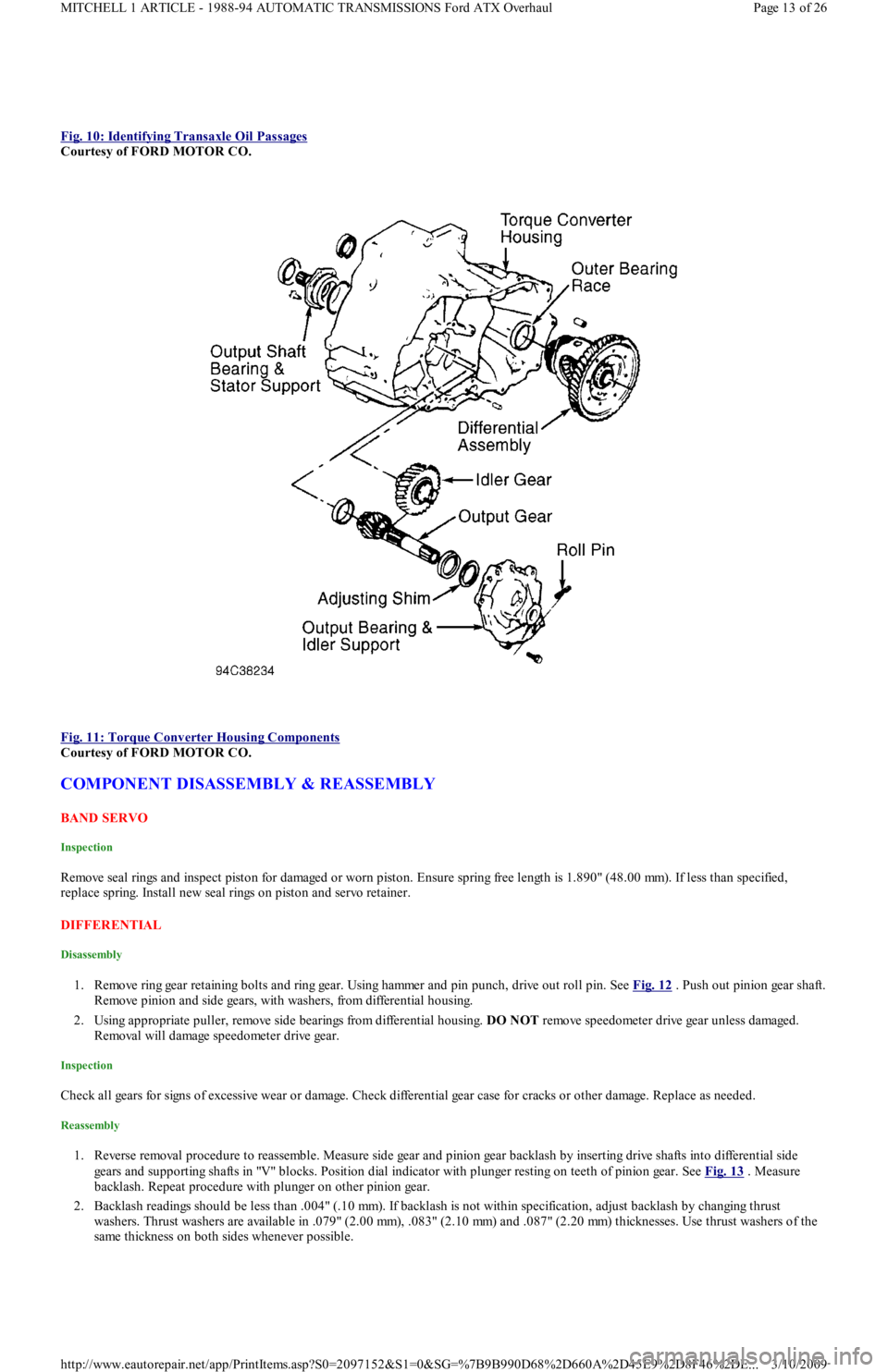
Fig. 10: Identifying Transaxle Oil Passages
Courtesy of FORD MOTOR CO.
Fig. 11: Torque Converter Housing Components
Courtesy of FORD MOTOR CO.
COMPONENT DISASSEMBLY & REASSEMBLY
BAND SERVO
Inspection
Remove seal rings and inspect piston for damaged or worn piston. Ensure spring free length is 1.890" (48.00 mm). If less than specified,
replace spring. Install new seal rings on piston and servo retainer.
DIFFERENTIAL
Disassembly
1. Remove ring gear retaining bolts and ring gear. Using hammer and pin punch, drive out roll pin. See Fig. 12. Push out pinion gear shaft.
Remove pinion and side gears, with washers, from differential housing.
2. Using appropriate puller, remove side bearings from differential housing. DO NOT remove speedometer drive gear unless damaged.
Removal will damage speedometer drive gear.
Inspection
Check all gears for signs of excessive wear or damage. Check differential gear case for cracks or other damage. Replace as needed.
Reassembly
1. Reverse removal procedure to reassemble. Measure side gear and pinion gear backlash by inserting drive shafts into differential side
gears and supporting shafts in "V" blocks. Position dial indicator with plunger resting on teeth of pinion gear. See Fig. 13
. Measure
backlash. Repeat procedure with plunger on other pinion gear.
2. Backlash readings should be less than .004" (.10 mm). If backlash is not within specification, adjust backlash by changing thrust
washers. Thrust washers are available in .079" (2.00 mm), .083" (2.10 mm) and .087" (2.20 mm) thicknesses. Use thrust washers of t h e
same thickness on both sides whenever possible.
Page 13 of 26 MITCHELL 1 ARTICLE - 1988-94 AUTOMATIC TRANSMISSIONS Ford ATX Overhaul
3/10/2009 http://www.eautorepair.net/app/PrintItems.asp?S0=2097152&S1=0&SG=%7B9B990D68%2D660A%2D45E9%2D8F46%2DE
...
Page 423 of 454
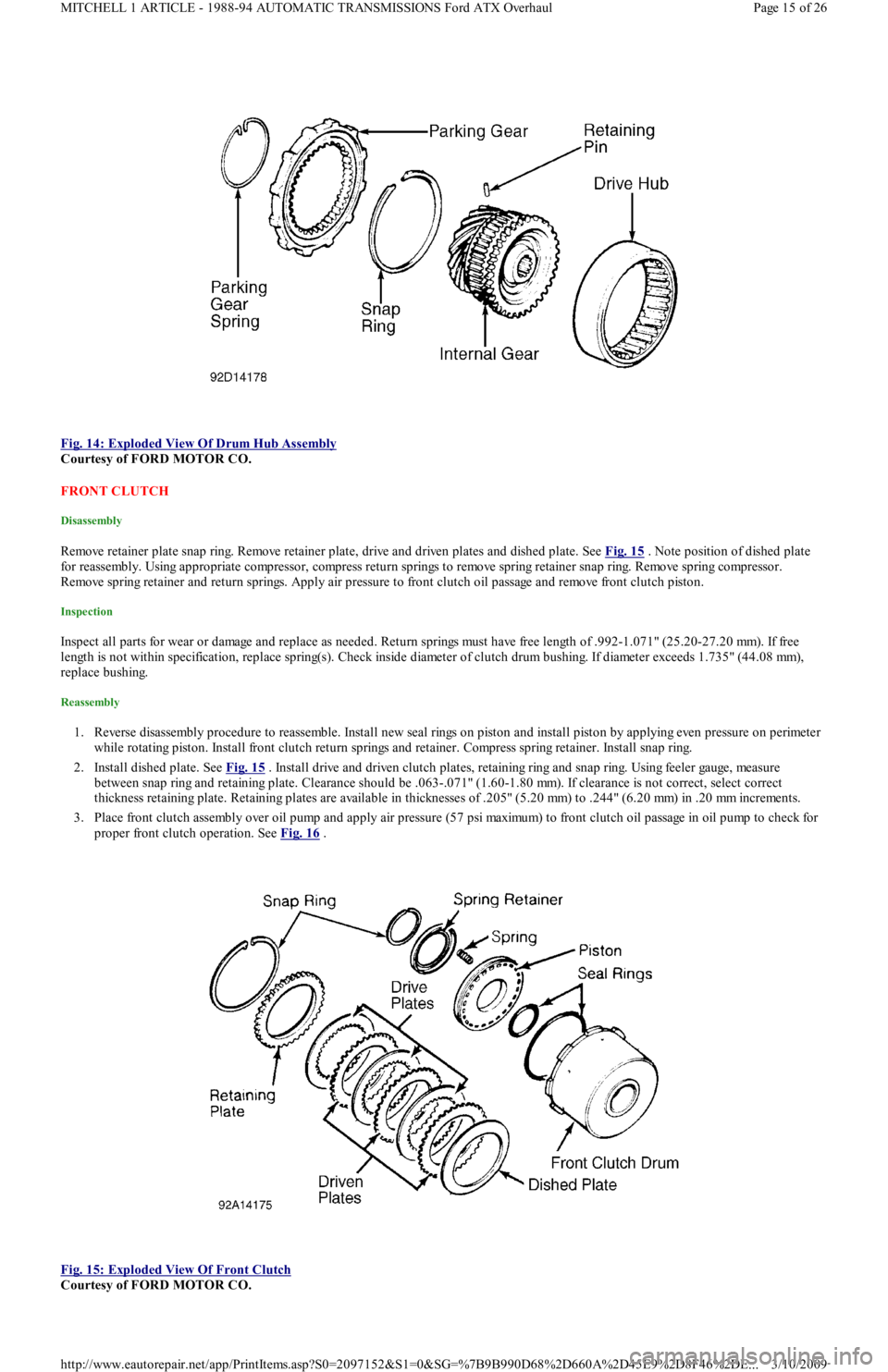
Fig. 14: Exploded View Of Drum Hub Assembly
Courtesy of FORD MOTOR CO.
FRONT CLUTCH
Disassembly
Remove retainer plate snap ring. Remove retainer plate, drive and driven plates and dished plate. See Fig. 15 . Note position of dished plate
for reassembly. Using appropriate compressor, compress return springs to remove spring retainer snap ring. Remove spring compressor.
Remove spring retainer and return springs. Apply air pressure to front clutch oil passage and remove front clutch piston.
Inspection
Inspect all parts for wear or damage and replace as needed. Return springs must have free length of .992-1.071" (25.20-27.20 mm). If free
length is not within specification, replace spring(s). Check inside diameter of clutch drum bushing. If diameter exceeds 1.735" (44.08 mm),
replace bushing.
Reassembly
1. Reverse disassembly procedure to reassemble. Install new seal rings on piston and install piston by applying even pressure on perimeter
while rotating piston. Install front clutch return springs and retainer. Compress spring retainer. Install snap ring.
2. Install dished plate. See Fig. 15
. Install drive and driven clutch plates, retaining ring and snap ring. Using feeler gauge, measure
between snap ring and retaining plate. Clearance should be .063-.071" (1.60-1.80 mm). If clearance is not correct, select correct
thickness retaining plate. Retaining plates are available in thicknesses of .205" (5.20 mm) to .244" (6.20 mm) in .20 mm increments.
3. Place front clutch assembly over oil pump and apply air pressure (57 psi maximum) to front clutch oil passage in oil pump to check for
proper front clutch operation. See Fig. 16
.
Fig. 15: Exploded View Of Front Clutch
Courtesy of FORD MOTOR CO.
Page 15 of 26 MITCHELL 1 ARTICLE - 1988-94 AUTOMATIC TRANSMISSIONS Ford ATX Overhaul
3/10/2009 http://www.eautorepair.net/app/PrintItems.asp?S0=2097152&S1=0&SG=%7B9B990D68%2D660A%2D45E9%2D8F46%2DE
...
Page 425 of 454
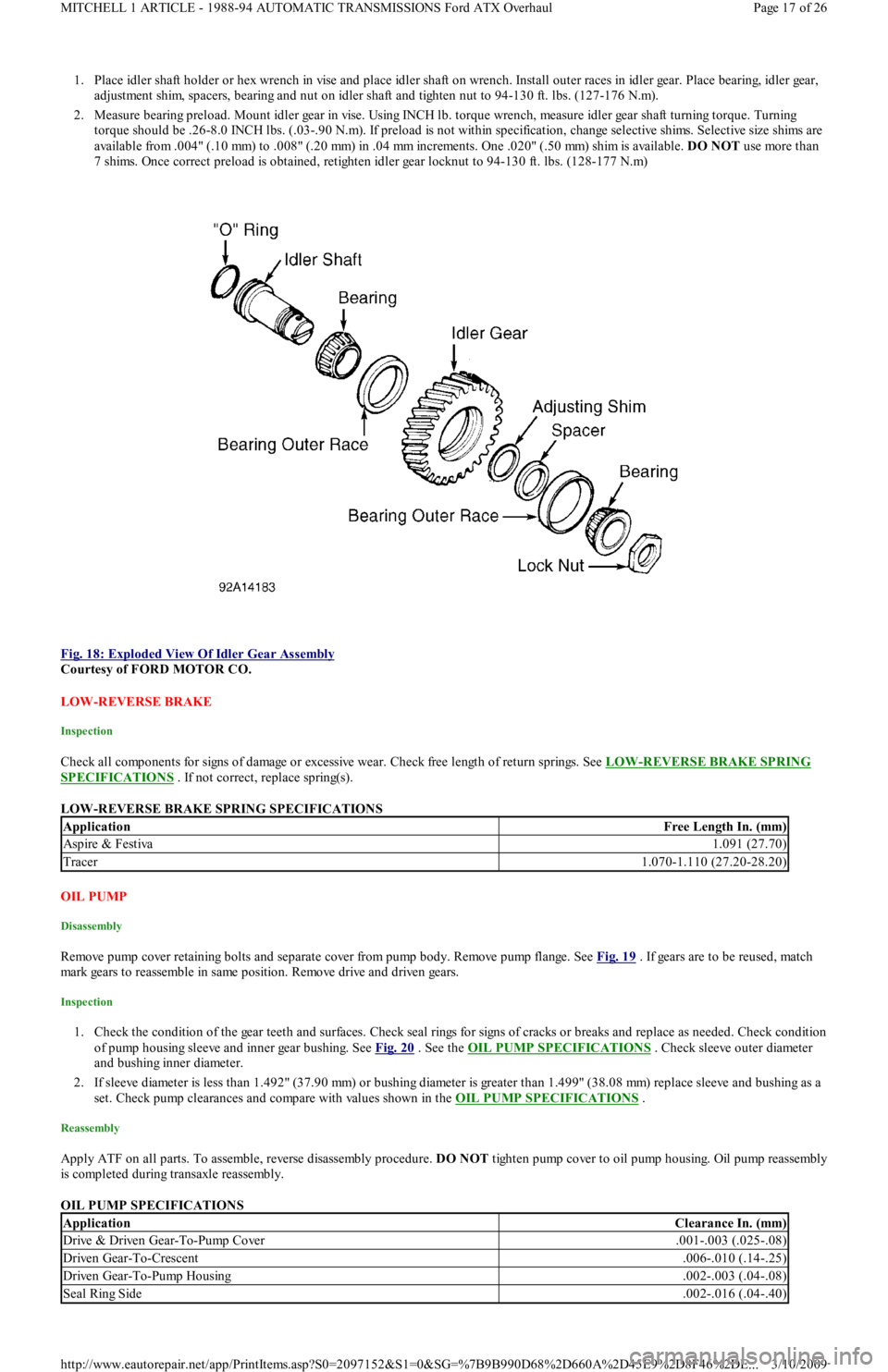
1. Place idler shaft holder or hex wrench in vise and place idler shaft on wrench. Install outer races in idler gear. Place bearing, idler gear,
adjustment shim, spacers, bearing and nut on idler shaft and tighten nut to 94-130 ft. lbs. (127-176 N.m).
2. Measure bearing preload. Mount idler gear in vise. Using INCH lb. torque wrench, measure idler gear shaft turning torque. Turning
torque should be .26-8.0 INCH lbs. (.03-.90 N.m). If preload is not within specification, change selective shims. Selective size shims are
available from .004" (.10 mm) to .008" (.20 mm) in .04 mm increments. One .020" (.50 mm) shim is available. DO NOT use more than
7 shims. Once correct preload is obtained, retighten idler gear locknut to 94-130 ft. lbs. (128-177 N.m)
Fig. 18: Exploded View Of Idler Gear Assembly
Courtesy of FORD MOTOR CO.
LOW-REVERSE BRAKE
Inspection
Check all components for signs of damage or excessive wear. Check free length of return springs. See LOW-REVERSE BRAKE SPRING
SPECIFICATIONS . If not correct, replace spring(s).
LOW-REVERSE BRAKE SPRING SPECIFICATIONS
OIL PUMP
Disassembly
Remove pump cover retaining bolts and separate cover from pump body. Remove pump flange. See Fig. 19 . If gears are to be reused, match
mark gears to reassemble in same position. Remove drive and driven gears.
Inspection
1. Check the condition of the gear teeth and surfaces. Check seal rings for signs of cracks or breaks and replace as needed. Check condition
of pump housing sleeve and inner gear bushing. See Fig. 20
. See the OIL PUMP SPECIFICATIONS . Check sleeve outer diameter
and bushing inner diameter.
2. If sleeve diameter is less than 1.492" (37.90 mm) or bushing diameter is greater than 1.499" (38.08 mm) replace sleeve and bushing as a
set. Check pump clearances and compare with values shown in the OIL PUMP SPECIFICATIONS
.
Reassembly
Apply ATF on all parts. To assemble, reverse disassembly procedure. DO NOTtighten pump cover to oil pump housing. Oil pump reassembly
is completed during transaxle reassembly.
OIL PUMP SPECIFICATIONS
ApplicationFree Length In. (mm)
Aspire & Festiva1.091 (27.70)
Tracer1.070-1.110 (27.20-28.20)
ApplicationClearance In. (mm)
Drive & Driven Gear-To-Pump Cover.001-.003 (.025-.08)
Driven Gear-To-Crescent.006-.010 (.14-.25)
Driven Gear-To-Pump Housing.002-.003 (.04-.08)
Seal Ring Side.002-.016 (.04-.40)
Page 17 of 26 MITCHELL 1 ARTICLE - 1988-94 AUTOMATIC TRANSMISSIONS Ford ATX Overhaul
3/10/2009 http://www.eautorepair.net/app/PrintItems.asp?S0=2097152&S1=0&SG=%7B9B990D68%2D660A%2D45E9%2D8F46%2DE
...
Page 427 of 454
1. Record direction of rotation one-way clutch locks and turns. Remove snap ring and pull out planetary carrier from one-way clutch inner
race. See Fig. 8
. Check for worn or damaged parts. Bushing wear on one-way clutch must not exceed 5.120" (130.06 mm).
2. Check clearance between pinion gears and washers in planetary carrier. If clearance exceeds .031" (.80 mm), replace planetary carrier.
Reverse disassembly procedure to reassemble. Install one-way clutch in inner race and ensure that it will turn in one direction
(clockwise) only.
REAR CLUTCH
Disassembly
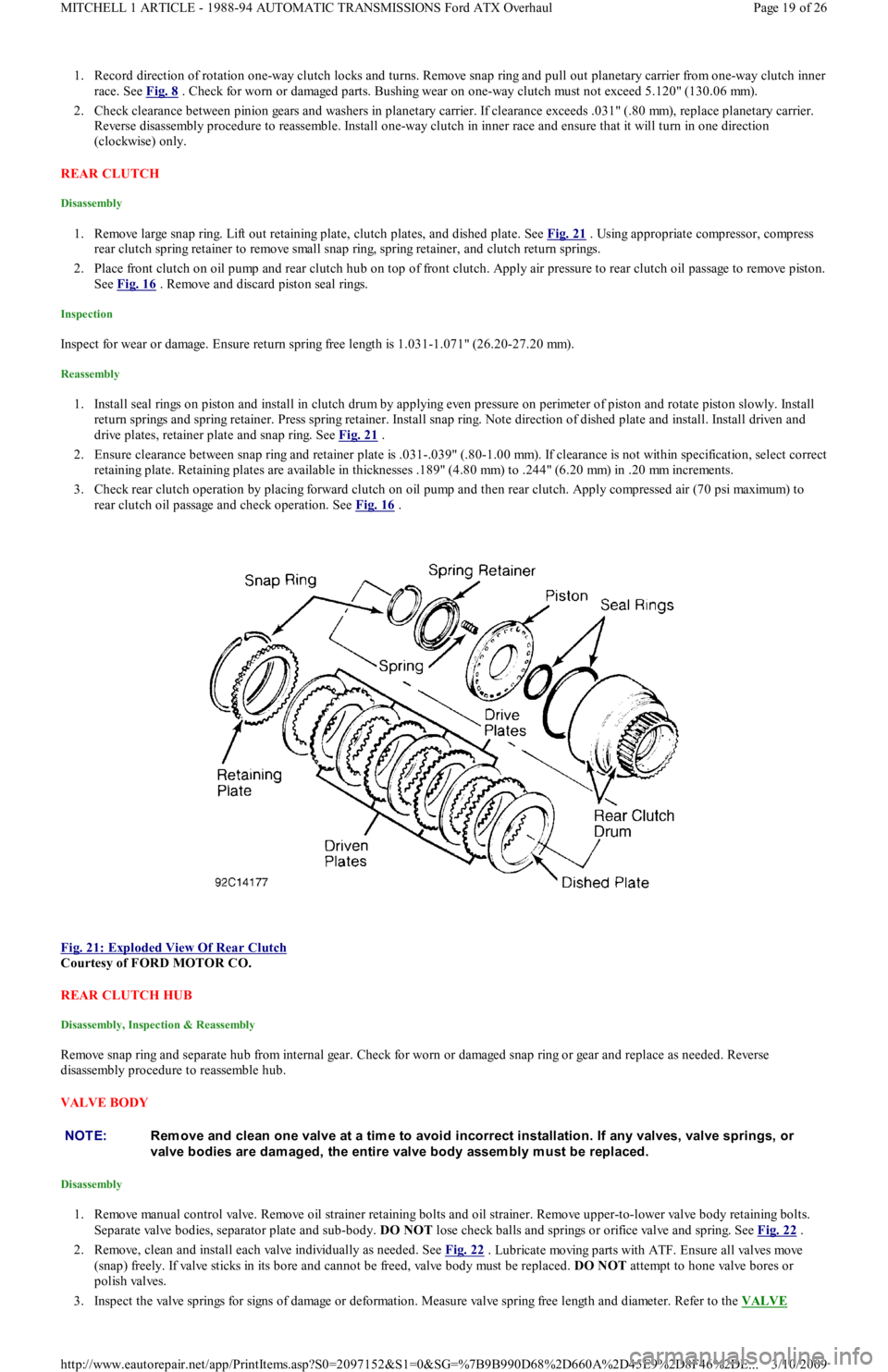
1. Remove large snap ring. Lift out retaining plate, clutch plates, and dished plate. See Fig. 21 . Using appropriate compressor, compress
rear clutch spring retainer to remove small snap ring, spring retainer, and clutch return springs.
2. Place front clutch on oil pump and rear clutch hub on top of front clutch. Apply air pressure to rear clutch oil passage to remove piston.
See Fig. 16
. Remove and discard piston seal rings.
Inspection
Inspect for wear or damage. Ensure return spring free length is 1.031-1.071" (26.20-27.20 mm).
Reassembly
1. Install seal rings on piston and install in clutch drum by applying even pressure on perimeter of piston and rotate piston slowly. Install
return springs and spring retainer. Press spring retainer. Install snap ring. Note direction of dished plate and install. Install driven and
drive plates, retainer plate and snap ring. See Fig. 21
.
2. Ensure clearance between snap ring and retainer plate is .031-.039" (.80-1.00 mm). If clearance is not within specification, select correct
retaining plate. Retaining plates are available in thicknesses .189" (4.80 mm) to .244" (6.20 mm) in .20 mm increments.
3. Check rear clutch operation by placing forward clutch on oil pump and then rear clutch. Apply compressed air (70 psi maximum) to
rear clutch oil passage and check operation. See Fig. 16
.
Fig. 21: Exploded View Of Rear Clutch
Courtesy of FORD MOTOR CO.
REAR CLUTCH HUB
Disassembly, Inspection & Reassembly
Remove snap ring and separate hub from internal gear. Check for worn or damaged snap ring or gear and replace as needed. Reverse
disassembly procedure to reassemble hub.
VALVE BODY
Disassembly
1. Remove manual control valve. Remove oil strainer retaining bolts and oil strainer. Remove upper-to-lower valve body retaining bolts.
Separate valve bodies, separator plate and sub-body. DO NOT lose check balls and springs or orifice valve and spring. See Fig. 22
.
2. Remove, clean and install each valve individually as needed. See Fig. 22
. Lubricate moving parts with ATF. Ensure all valves move
(snap) freely. If valve sticks in its bore and cannot be freed, valve body must be replaced. DO NOT attempt to hone valve bores or
polish valves.
3. Inspect the valve springs for signs of damage or deformation. Measure valve spring free length and diameter. Refer to the VALVE
NOTE:Rem ove and clean one valve at a tim e to avoid incorrect installation. If any valves, valve springs, or
valve bodies are dam aged, the entire valve body assem bly m ust be replaced.
Page 19 of 26 MITCHELL 1 ARTICLE - 1988-94 AUTOMATIC TRANSMISSIONS Ford ATX Overhaul
3/10/2009 http://www.eautorepair.net/app/PrintItems.asp?S0=2097152&S1=0&SG=%7B9B990D68%2D660A%2D45E9%2D8F46%2DE
...
Page 428 of 454
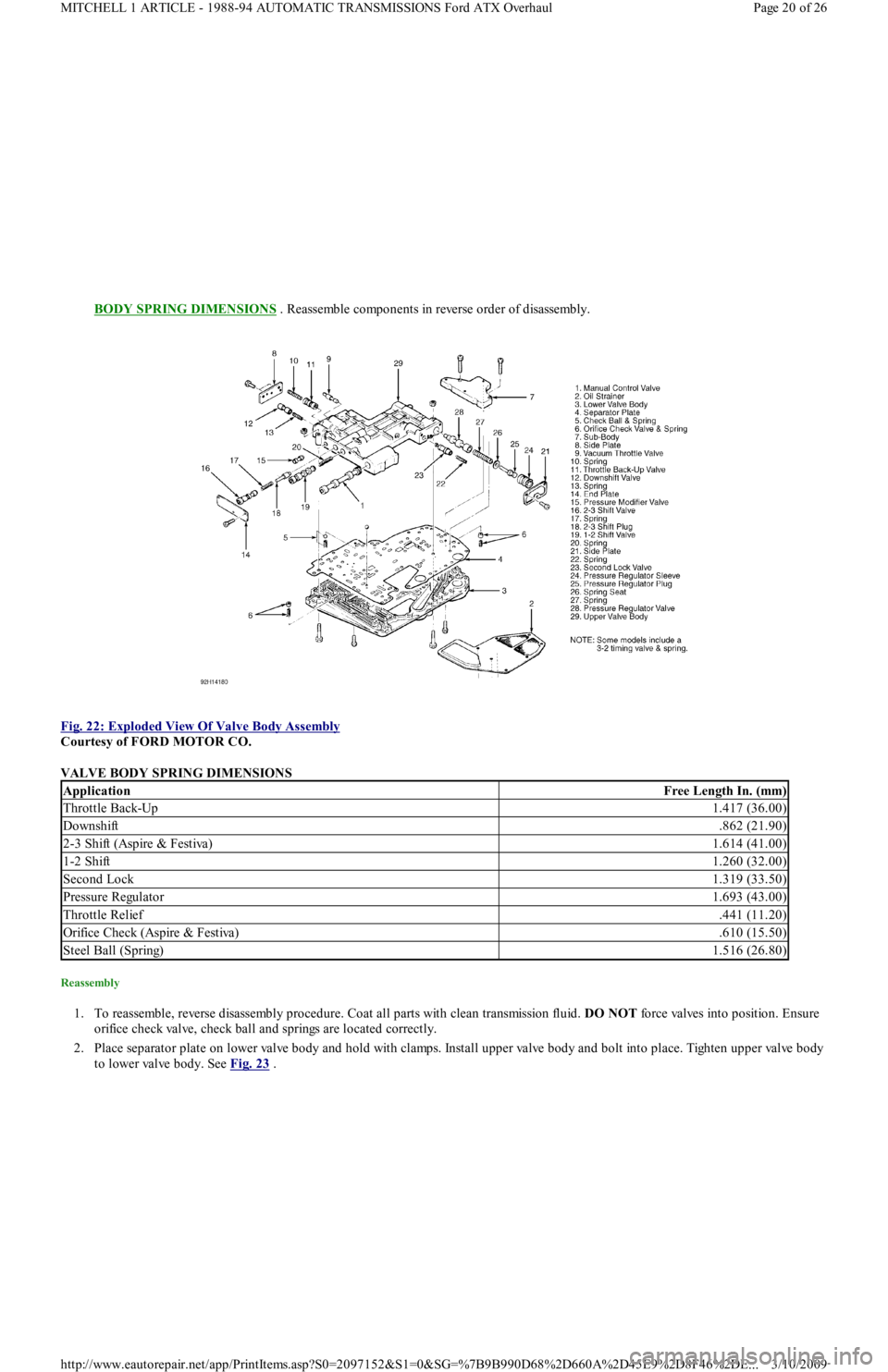
BODY SPRING DIMENSIONS . Reassemble components in reverse order of disassembly.
Fig. 22: Exploded View Of Valve Body Assembly
Courtesy of FORD MOTOR CO.
VALVE BODY SPRING DIMENSIONS
Reassembly
1. To reassemble, reverse disassembly procedure. Coat all parts with clean transmission fluid. DO NOT force valves into position. Ensure
orifice check valve, check ball and springs are located correctly.
2. Place separator plate on lower valve body and hold with clamps. Install upper valve body and bolt into place. Tighten upper valve body
to lower valve body. See Fig. 23
.
ApplicationFree Length In. (mm)
Throttle Back-Up1.417 (36.00)
Downshift.862 (21.90)
2-3 Shift (Aspire & Festiva)1.614 (41.00)
1-2 Shift1.260 (32.00)
Second Lock1.319 (33.50)
Pressure Regulator1.693 (43.00)
Throttle Relief.441 (11.20)
Orifice Check (Aspire & Festiva).610 (15.50)
Steel Ball (Spring)1.516 (26.80)
Page 20 of 26 MITCHELL 1 ARTICLE - 1988-94 AUTOMATIC TRANSMISSIONS Ford ATX Overhaul
3/10/2009 http://www.eautorepair.net/app/PrintItems.asp?S0=2097152&S1=0&SG=%7B9B990D68%2D660A%2D45E9%2D8F46%2DE
...