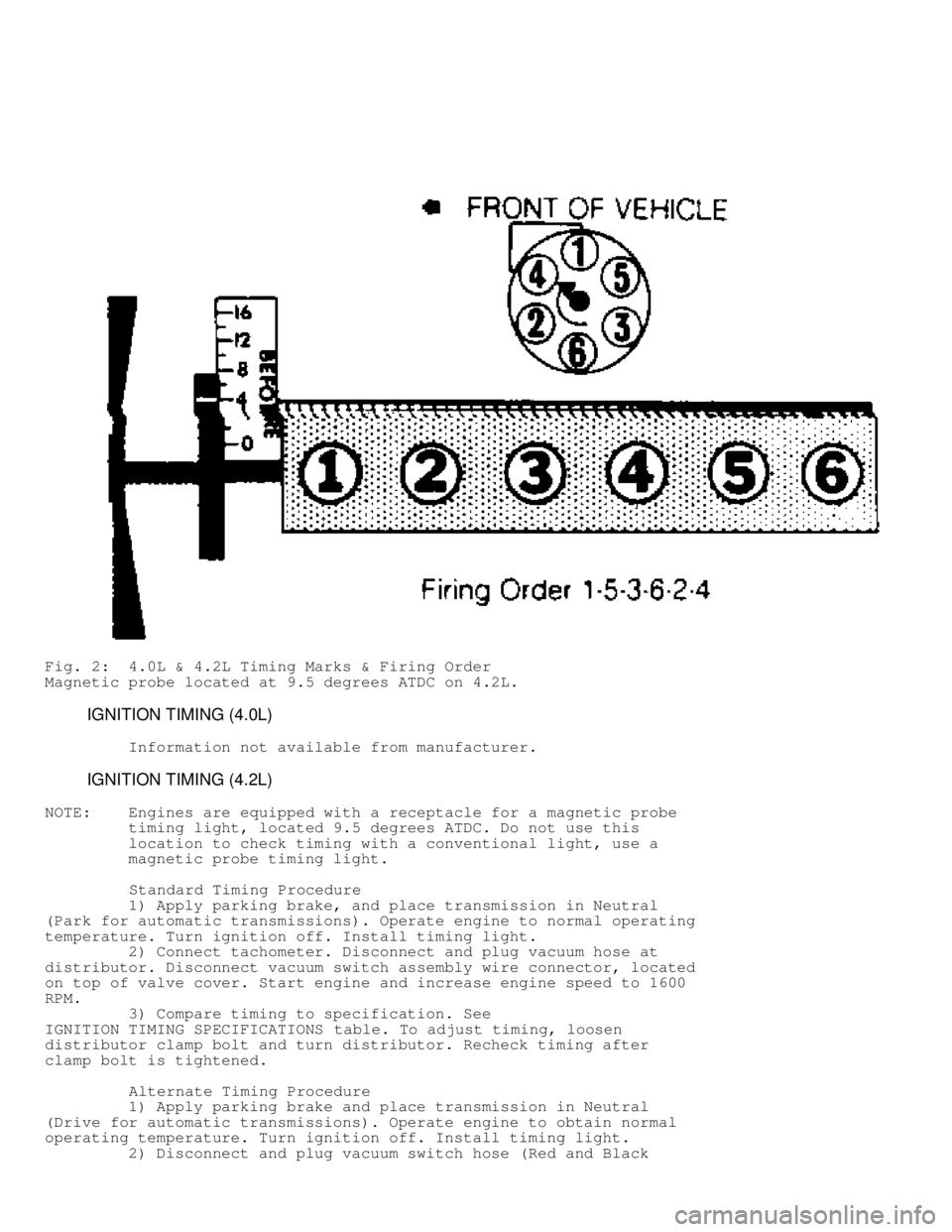
Fig. 2: 4.0L & 4.2L Timing Marks & Firing Order
Magnetic probe located at 9.5 degrees ATDC on 4.2L.
IGNITION TIMING (4.0L)
Information not available from manufacturer.
IGNITION TIMING (4.2L)
NOTE: Engines are equipped with a receptacle for a magnetic probe
timing light, located 9.5 degrees ATDC. Do not use this
location to check timing with a conventional light, use a
magnetic probe timing light.
Standard Timing Procedure
1) Apply parking brake, and place transmission in Neutral
(Park for automatic transmissions). Operate engine to normal operating\
temperature. Turn ignition off. Install timing light.
2) Connect tachometer. Disconnect and plug vacuum hose at
distributor. Disconnect vacuum switch assembly wire connector, located
on top of valve cover. Start engine and increase engine speed to 1600
RPM.
3) Compare timing to specification. See
IGNITION TIMING SPECIFICATIONS table. To adjust timing, loosen
distributor clamp bolt and turn distributor. Recheck timing after
clamp bolt is tightened.
Alternate Timing Procedure
1) Apply parking brake and place transmission in Neutral
(Drive for automatic transmissions). Operate engine to obtain normal
operating temperature. Turn ignition off. Install timing light.
2) Disconnect and plug vacuum switch hose (Red and Black
\003
WIP ER /W ASH ER S YSTE M
�
1988 J e ep C hero ke e
1988 Wiper/Washer Systems
JEEP
All Models
DESCRIPTION
Jeep vehicles use a 2-speed electric motor, which is a
compound wound (series and shunt) type. A crank arm, attached
externally to gear shaft, operates linkage which activates wiper
blades.
All models have an optional intermittent feature. All models
use an electric washer system consisting of a motor, reservoir, and
necessary hoses and nozzles.
Some Cherokee and Wagoneer models are equipped with rear
wipers. The rear motor is a single-speed motor with an automatic park
feature. The circuit is protected by a separate 4.5-amp circuit
breaker attached to brake pedal support.
TROUBLE SHOOTING
WIPER INOPERATIVE OR OPERATES AT ONE SPEED ONLY
1) If wiper does not operate on either speed, check for
binding or interference of linkage. If okay, place wiper switch on
"LO" and then on "HI" setting. Connect a test light between terminals
of wiring harness plug that connects to motor.
2) Check for power at White wire with tracer and Black
(ground) wire terminal for low speed. Check between Dk. Blue with
tracer and Black wire terminal for high speed.
3) If light does not glow, check ignition switch, wiper
switch, harness or terminals for open circuits. If light glows, check
for loose or misaligned connection between wiring harness plug and
motor plug. If okay, replace wiper motor.
WIPERS DO NOT PARK
1) Disconnect motor and connect Gray lead to White lead.
Apply 12 volts to Blue lead. Replace motor if it fails to park. If it
parks, turn ignition switch on, and wiper switch to "PARK".
2) Connect a test light to Lt. Green wire with tracer and to
ground at motor plug.
3) Check continuity between Tan wire with tracer and White
wire with tracer.
4) If test light does not glow, check harness connections
between motor and instrument panel switch. If okay, replace panel
switch. If not okay, repair harness connection.
WIPER MOTOR QUITS WHILE WIPING
1) With engine idling and blower motor on high, operate
wipers at high speed setting for 5 cycles consisting of 3 seconds of
water and 57 seconds of drying.
2) If motor struggles to a complete stop, clean glass and
replace blades. Repeat test. If motor stops, test circuit breaker in
panel switch. If motor stopped suddenly in original test, check
circuit breaker. Repeat test. If motor stops, replace motor.