Page 485 of 2389
11. (A540H) . . . .
INSPECT VEHICLE SPEED SENSOR AND REAR
WHEEL SPEED SENSOR
(a) Disconnect the connector from ECT ECU.
(b) Measure the resistance between FR± and FR* (ve-
hicle speed sensor, and between RR± and RR* (rear
wheel speed sensor). .
Resistance: 620 � 60
�
12. (A540E, A540H)
INSPECT PATTERN SELECTION SWITCH
Inspect that there is continuity between 5 and each terminal.
HINT: As there are diodes inside, be careful of the tester probe
polarity.
14. (A540H)
INSPECT CENTER DIFFERENTIAL CONTROL SWITCH
(a) Disconnect the connector from center differential control
switch.
(b) Inspect that there is continuity between terminals 1
and 4. 13. (A540E, A540H)
INSPECT O/D MAIN SWITCH
Inspect that there is continuity between terminals 1 and 3.
S/W
position . S/W
positionTerminal
TerminalTerminal NORM Pattern
AUTOPWR
OFFOFF
± AUTOMATIC TRANSAXLETroubleshooting (Electronic Control System) (A540E and
A540H)AT±221
Page 585 of 2389
4. REMOVE EXTENSION HOUSING
(a) Remove the dust deflector from the extension housing.
(b) Remove the four bolts and extension housing.
(c) Remove the O±ring from the extension housing. 3. REMOVE DYNAMIC DAMPER
Remove the four bolts and dynamic damper.
REMOVAL OF COMPONENT PARTS
7. REMOVE TRANSFER MODE SELECT LEVER AND ROD
2: REMOVE REAR WHEEL SPEED SENSOR
(a) Remove the bolt and pull out the speed sensor.
(b) Remove the O±ring from speed sensor.
(d) Using SST, remove the oil seal.
SST 09308±00010
± AUTOMATIC TRANSAXLEComponent Parts (Transfer A540M)AT±344
Page 635 of 2389
(c) Coat a new O±ring with gear oil and install it to the
extension housing.
(d) Install the extension housing to the driven pinion
bearing cage.
(e) Install and torque the four bolts.
Torque: 260 kg±cm (19 ft±Ib, 25 N±m)
(f) Using a plastic hammer, install the dust deflector. 20. INSTALL EXTENSION HOUSING
(a) Using SST and a hammer, drive in a new oil seal as shown.
SST 09325±20010
(b) Coat the lip of the oil seal with MP grease.
22. INSTALL REAR WHEEL SPEED SENSOR
(a) Install a new O±ring to the speed sensor.
(b) Install the speed sensor to the transfer left case.
(c) Install and torque a bolt.
Torque: 55 kg±cm (48 in.±Ib, 5.4 N±m)
(b) Install the right case retainer to the transfer right
case.
(c) Install and torque the five bolts.
Torque: 300 kg±cm (22 ft±lb, 29 N±m)
21. INSTALL DYNAMIC DAMPER
Install and torque the four bolts.
Torque: 260 kg±cm (19 ft±lb, 25 N±m)
± AUTOMATIC TRANSAXLEComponent Parts (Transfer Transfer Lower Valve Body
A540H)AT±379
Page 730 of 2389
REMOVAL OF SAFETY PAD
(See pages BO±62, 63)
1. DISCONNECT BATTERY CABLE FROM NEGATIVE
TERMINAL
2. REMOVE STEERING WHEEL
3. REMOVE FRONT PILLAR GARNISH
Pry out the clips and pull the front pillar garnish upward
to remove it by the hand.
4. REMOVE NO. 1 UNDER COVER
5. REMOVE LOWER FINISH PANEL
(a) Remove the two screws and the engine. hood re-
lease lever. HINT: Screw sizes in the previous illustration are indi-
cated by following the code below for removal and
installation of safety pad.
mm (in.)
Shape
ShapeShapeCode
CodeCodeSizeSizeSize
± BODYSafety PadBO±64
Page 852 of 2389
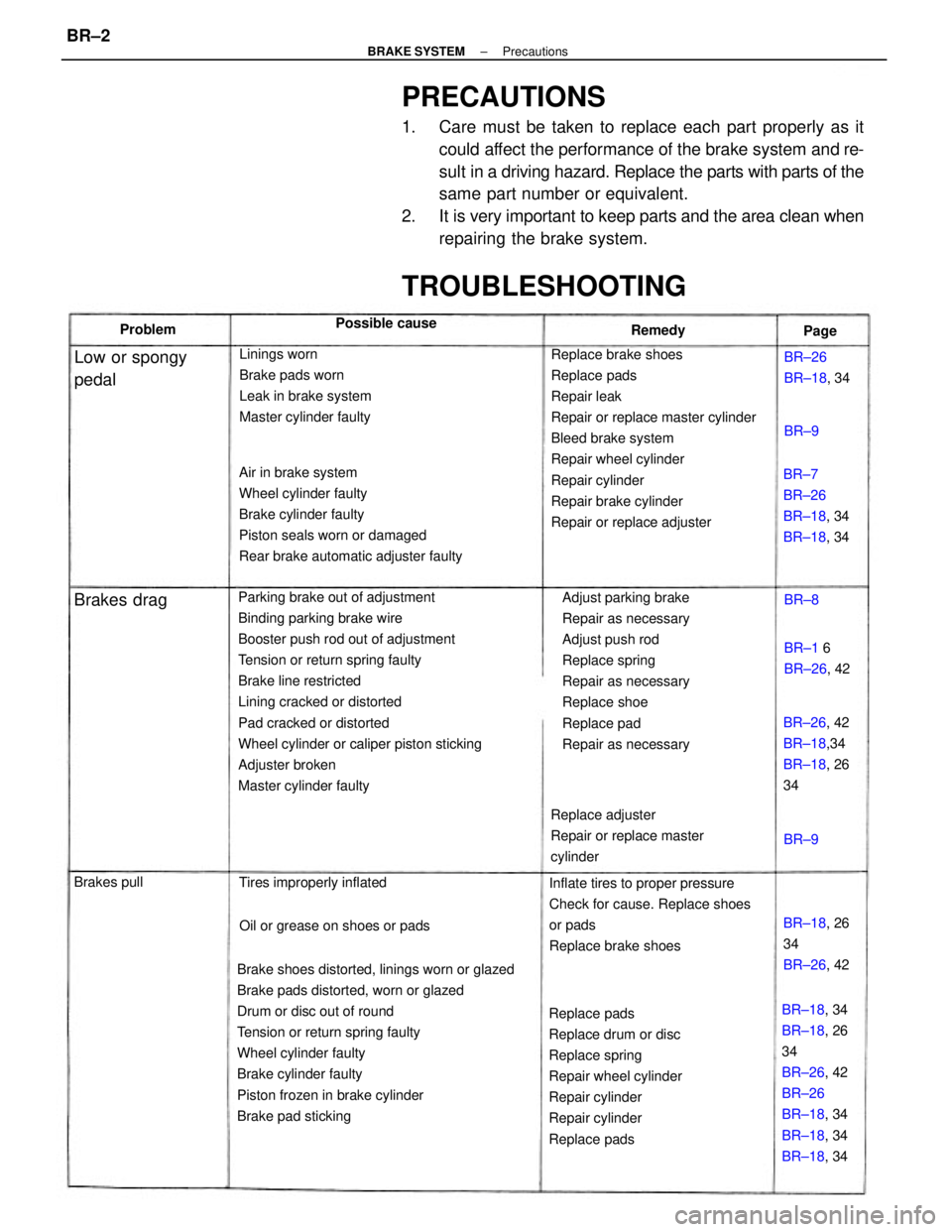
PRECAUTIONS
1. Care must be taken to replace each part properly as it
could affect the performance of the brake system and re-
sult in a driving hazard. Replace the parts with parts of the
same part number or equivalent.
2. It is very important to keep parts and the area clean when
repairing the brake system.
Parking brake out of adjustment
Binding parking brake wire
Booster push rod out of adjustment
Tension or return spring faulty
Brake line restricted
Lining cracked or distorted
Pad cracked or distorted
Wheel cylinder or caliper piston sticking
Adjuster broken
Master cylinder faulty
Brake shoes distorted, linings worn or glazed
Brake pads distorted, worn or glazed
Drum or disc out of round
Tension or return spring faulty
Wheel cylinder faulty
Brake cylinder faulty
Piston frozen in brake cylinder
Brake pad stickingReplace brake shoes
Replace pads
Repair leak
Repair or replace master cylinder
Bleed brake system
Repair wheel cylinder
Repair cylinder
Repair brake cylinder
Repair or replace adjuster Air in brake system
Wheel cylinder faulty
Brake cylinder faulty
Piston seals worn or damaged
Rear brake automatic adjuster faulty
Adjust parking brake
Repair as necessary
Adjust push rod
Replace spring
Repair as necessary
Replace shoe
Replace pad
Repair as necessary
Replace pads
Replace drum or disc
Replace spring
Repair wheel cylinder
Repair cylinder
Repair cylinder
Replace padsInflate tires to proper pressure
Check for cause. Replace shoes
or pads
Replace brake shoes Linings worn
Brake pads worn
Leak in brake system
Master cylinder faulty
BR±18, 34
BR±18, 26
34
BR±26, 42
BR±26
BR±18, 34
BR±18, 34
BR±18, 34 Replace adjuster
Repair or replace master
cylinder
TROUBLESHOOTING
BR±7
BR±26
BR±18, 34
BR±18, 34
BR±26, 42
BR±18,34
BR±18, 26
34
Oil or grease on shoes or pads Tires improperly inflated
BR±18, 26
34
BR±26, 42
Low or spongy
pedalBR±26
BR±18, 34
BR±1 6
BR±26, 42 Possible cause
Brakes drag
Brakes pullRemedy Problem
Page
BR±8
BR±9BR±9
± BRAKE SYSTEMPrecautionsBR±2
Page 853 of 2389
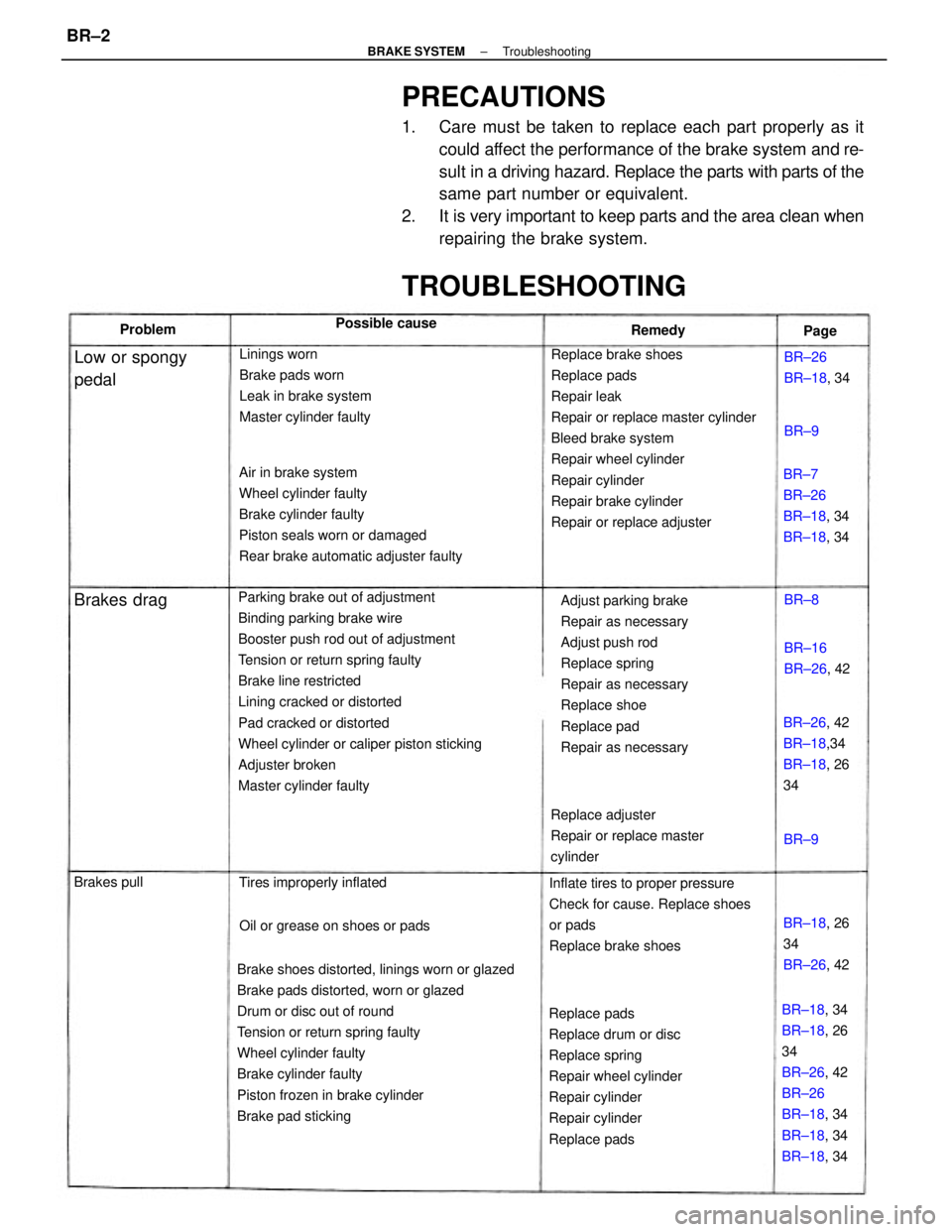
PRECAUTIONS
1. Care must be taken to replace each part properly as it
could affect the performance of the brake system and re-
sult in a driving hazard. Replace the parts with parts of the
same part number or equivalent.
2. It is very important to keep parts and the area clean when
repairing the brake system.
Parking brake out of adjustment
Binding parking brake wire
Booster push rod out of adjustment
Tension or return spring faulty
Brake line restricted
Lining cracked or distorted
Pad cracked or distorted
Wheel cylinder or caliper piston sticking
Adjuster broken
Master cylinder faulty
Brake shoes distorted, linings worn or glazed
Brake pads distorted, worn or glazed
Drum or disc out of round
Tension or return spring faulty
Wheel cylinder faulty
Brake cylinder faulty
Piston frozen in brake cylinder
Brake pad stickingReplace brake shoes
Replace pads
Repair leak
Repair or replace master cylinder
Bleed brake system
Repair wheel cylinder
Repair cylinder
Repair brake cylinder
Repair or replace adjuster Air in brake system
Wheel cylinder faulty
Brake cylinder faulty
Piston seals worn or damaged
Rear brake automatic adjuster faulty
Adjust parking brake
Repair as necessary
Adjust push rod
Replace spring
Repair as necessary
Replace shoe
Replace pad
Repair as necessary
Replace pads
Replace drum or disc
Replace spring
Repair wheel cylinder
Repair cylinder
Repair cylinder
Replace padsInflate tires to proper pressure
Check for cause. Replace shoes
or pads
Replace brake shoes Linings worn
Brake pads worn
Leak in brake system
Master cylinder faulty
BR±18, 34
BR±18, 26
34
BR±26, 42
BR±26
BR±18, 34
BR±18, 34
BR±18, 34 Replace adjuster
Repair or replace master
cylinder
TROUBLESHOOTING
BR±7
BR±26
BR±18, 34
BR±18, 34
BR±26, 42
BR±18,34
BR±18, 26
34
Oil or grease on shoes or pads Tires improperly inflated
BR±18, 26
34
BR±26, 42
Low or spongy
pedalBR±26
BR±18, 34
BR±16
BR±26, 42 Possible cause
Brakes drag
Brakes pullRemedy Problem
Page
BR±8
BR±9BR±9
± BRAKE SYSTEMTroubleshootingBR±2
Page 854 of 2389
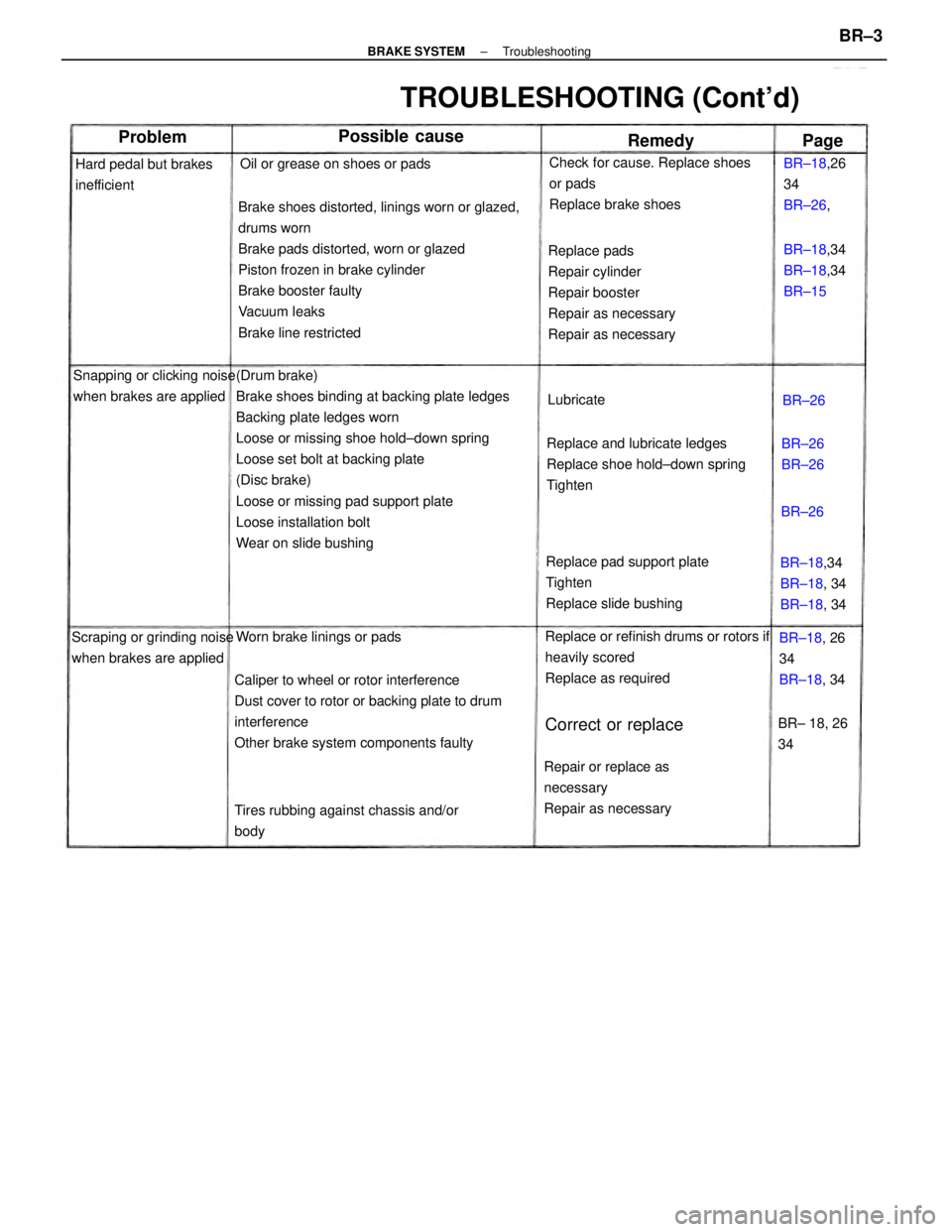
(Drum brake)
Brake shoes binding at backing plate ledges
Backing plate ledges worn
Loose or missing shoe hold±down spring
Loose set bolt at backing plate
(Disc brake)
Loose or missing pad support plate
Loose installation bolt
Wear on slide bushingBrake shoes distorted, linings worn or glazed,
drums worn
Brake pads distorted, worn or glazed
Piston frozen in brake cylinder
Brake booster faulty
Vacuum leaks
Brake line restricted
Caliper to wheel or rotor interference
Dust cover to rotor or backing plate to drum
interference
Other brake system components faultyReplace and lubricate ledges
Replace shoe hold±down spring
TightenReplace pads
Repair cylinder
Repair booster
Repair as necessary
Repair as necessary
Replace pad support plate
Tighten
Replace slide bushing
Replace or refinish drums or rotors if
heavily scored
Replace as required
TROUBLESHOOTING (Cont'd)
Check for cause. Replace shoes
or pads
Replace brake shoes
Repair or replace as
necessary
Repair as necessary
Tires rubbing against chassis and/or
body Snapping or clicking noise
when brakes are applied
Scraping or grinding noise
when brakes are appliedOil or grease on shoes or pads
Hard pedal but brakes
inefficient
Worn brake linings or padsBR±18,34
BR±18, 34
BR±18, 34 BR±18,34
BR±18,34
BR±15 BR±18,26
34
BR±26,
BR±18, 26
34
BR±18, 34
Correct or replaceBR± 18, 26
34
Possible cause
BR±26
BR±26 Lubricate
Problem
Remedy
BR±26
Page
BR±26
± BRAKE SYSTEMTroubleshootingBR±3
Page 855 of 2389

Maladjustment of brake pedal or booster push
rod
Poor return of brake booster or master cylinder or
wheel cylinder
(Disc brake)
Rusted or stuck piston
Improper positioning of pad in caliper
Rotor rubbing against caliper housing
Improper installation of disc brake pad support
plate
Pad wear and pad wear indicator making contact
with the rotor
(Drum brake)
Weak, damaged or incorrect shoe hold±down
springs
Grooved backing plate ledges
Bent or warped backing plate causing
interference with drum
Improper machining of drum causing interference
with backing plate or shoe
Other brake system components:
Loose or extra parts in brakes
Rear drum adjustment too tight causing lining to
glaze
Worn, damaged or insufficiently lubricated wheel
bearings Brake drums and linings, rotors and pads
worn or scored
Dirty, greased, contaminated or glazed
linings or pads
Improper linings or pads using
Maladjustment of brake pedal or booster
push rod
(Disc brake)
Missing or damaged brake pad
anti±squeal shim
Pad wear and pad wear indicator making
contact with the rotor
Burred or rusted calipers
(Drum brake)
Weak damaged or incorrect shoe
hold±down springs, loose or damaged
shoe hold±down spring pins and springs
and grooved backing plate ledges Squeaking, squealing
groaning or chattering
noise when brakes are
applied
Note: Brake friction
materials inherently
generate noise and heat in
order to dissipate eniergy.
As a result, occasional
squeal is normal and is
aggravated by severe
environmental conditions
such as cold,' heat,
wetness, snow, salt, mud,
etc. This occasional squeal
is not a functional problem
and does not indicate any
loss of brake effectivenessInspect, repair or replace
Clean or replace
Inspect for correct usage or
replace
Inspect and adjust
Inspect and lubricate as
necessary
Repair or replace
Repair or replace
Repair or replace
Replace
Replace
Repair or replace
Repair or replace
Replace drum
TROUBLESHOOTING (Cont'd)
Replace
Replace
Clean or deburr
Inspect and adjust
Inspect, repair or replace Squealing and
squeaking noise when
brakes are not applied
BR±26, 42
BR±26, 42
BR±26, 42
BR±26, 42 BR±18,34
BR±18, 34
BR±18, 34
BR±18, 34
Inspect, repair or replace as
necessaryBR±18, 34
BR±18, 34
BR±18, 34 BR±18, 26,
34
BR±18, 26
34
±Inspect, repair or replace
BR±9,15
26 Possible cause
BR± 18, 34 BR±6,16 . Page Remedy
BR±6, 16 Problem
BR±26
± BRAKE SYSTEMTroubleshootingBR±4


