1982 CHEVROLET CAMARO brake pads
[x] Cancel search: brake padsPage 48 of 875

GM – CAMARO 1982-1992 – Repair Guide (Checked by WxMax) 48
BRAKES
BASIC OPERATING PRINCIPLES
Hydraulic systems are used to actuate t he brakes of all modern automobiles.
The system transports the power required to force the frictional surfaces of the
braking system together from the pedal to the individual brake units at each
wheel. A hydraulic system is used for two reasons.
First, fluid under pressure can be carried to all parts of an automobile by small
pipes and flexible hoses without taking up a significant amount of room or
posing routing problems.
Second, a great mechanical advantage can be given to the brake pedal end of
the system, and the foot pressure requi red to actuate the brakes can be
reduced by making the surface area of t he master cylinder pistons smaller than
that of any of the pistons in t he wheel cylinders or calipers.
The master cylinder consists of a flui d reservoir along with a double cylinder
and piston assembly. Double type master cylinders are designed to separate
the front and rear braking systems hydraulic ally in case of a leak. The master
cylinder coverts mechanical motion from t he pedal into hydraulic pressure within
the lines. This pressure is translated back into mechanical motion at th\
e wheels
by either the wheel cylinder (drum brak es) or the caliper (disc brakes).
Steel lines carry the brake fluid to a po int on the vehicle's frame near each of
the vehicle's wheels. The fluid is then ca rried to the calipers and wheel cylinders
by flexible tubes in order to allow for suspension and steering movements.
In drum brake systems, each wheel cylinde r contains two pistons, one at either
end, which push outward in opposite direct ions and force the brake shoe into
contact with the drum.
In disc brake systems, the cylinders ar e part of the calipers. At least one
cylinder in each caliper is used to fo rce the brake pads against the disc.
All pistons employ some type of seal, us ually made of rubber, to minimize fluid
leakage. A rubber dust boot seals the outer end of the cylinder against dust and
dirt. The boot fits around the outer end of the piston on disc brake calipers, and
around the brake actuating rod on wheel cylinders.
The hydraulic system operates as follows : When at rest, the entire system, from
the piston(s) in the master cylinder to t hose in the wheel cylinders or calipers, is
full of brake fluid. Upon app lication of the brake pedal, fluid trapped in front of
the master cylinder piston(s) is forced through the lines to the wheel cylinders.
Here, it forces the pistons outward, in the case of drum brakes, and inward
toward the disc, in the case of disc brakes. The motion of the pistons is
opposed by return springs mounted outside the cylinders in drum brakes, and
by spring seals, in disc brakes.
Page 49 of 875

GM – CAMARO 1982-1992 – Repair Guide (Checked by WxMax) 49
Upon release of the brake pedal, a spri
ng located inside the master cylinder
immediately returns the master cylinder pistons to the normal position. The
pistons contain check valv es and the master cylinder has compensating ports
drilled in it. These are uncovered as the pistons reach their normal position. The
piston check valves allow fluid to flow to ward the wheel cylinders or calipers as
the pistons withdraw. Then, as the return springs force the brake pads or shoes
into the released position, the excess fluid reservoir through the compensating
ports. It is during the time the pedal is in the released position that any fluid that
has leaked out of the syst em will be replaced through the compensating ports.
Dual circuit master cylinders employ tw o pistons, located one behind the other,
in the same cylinder. The primary pist on is actuated directly by mechanical
linkage from the brake peda l through the power booster. The secondary piston
is actuated by fluid tra pped between the two pistons. If a leak develops in front
of the secondary piston, it moves forward until it bottoms against the front of the
master cylinder, and the fluid trapped betw een the pistons will operate the rear
brakes. If the rear brakes develop a l eak, the primary piston will move forward
until direct contact with the secondary pi ston takes place, and it will force the
secondary piston to actuate the front brakes. In either case, the brake pedal
moves farther when the brakes are applied, and less braking power is available.
All dual circuit systems use a switch to wa rn the driver when only half of the
brake system is operational. This switch is usually located in a valve body which
is mounted on the firewall or the frame below the master cylinder. A hydraulic
piston receives pressure from both circui ts, each circuit's pressure being applied
to one end of the piston. When the pressures are in balance, the piston remains
stationary. When one circuit has a leak, however, the greater pressure in that
circuit during application of the brakes will push the piston to one side, closing
the switch and activating the brake warning light.
In disc brake systems, this valve body also contains a metering valve and, in
some cases, a proportioning valve. The metering valve keeps pressure fro\
m
traveling to the disc brakes on the front wheels until the brake shoes on the rear
wheels have contacted the drums, ensuri ng that the front brakes will never be
used alone. The proportioning va lve controls the pressure to the rear brakes to
lessen the chance of rear wheel lo ck-up during very hard braking.
Warning lights may be tested by depressi ng the brake pedal and holding it while
opening one of the wheel cyli nder bleeder screws. If this does not cause the
light to go on, substitute a new lamp , make continuity checks, and, finally,
replace the switch as necessary.
The hydraulic system may be checked for leaks by applying pressure to the
pedal gradually and steadily. If the pedal sinks very slowly to the floor, the
system has a leak. This is not to be conf used with a springy or spongy feel due
to the compression of air within the lin es. If the system leaks, there will be a
gradual change in the position of the pedal with a constant pressure.
Check for leaks along all lines and at wheel cylinders. If no external leaks are
apparent, the problem is inside the master cylinder.
Page 50 of 875

GM – CAMARO 1982-1992 – Repair Guide (Checked by WxMax) 50
DISC BRAKES
Instead of the traditional ex
panding brakes that press out ward against a circular
drum, disc brake systems utilize a disc (rotor) with brake pads positioned on
either side of it. An easily-seen analog y is the hand brake arrangement on a
bicycle. The pads squeeze onto the rim of the bike wheel, slowing its motion.
Automobile disc brakes use the identical principle but apply the braking effort to
a separate disc instead of the wheel.
The disc (rotor) is a casting, usually eq uipped with cooling fins between the two
braking surfaces. This enables air to ci rculate between the braking surfaces
making them less sensitive to heat bui ldup and more resistant to fade. Dirt and
water do not drastically affect braking ac tion since contaminants are thrown off
by the centrifugal action of the rotor or scraped off the by the pads. Also, the
equal clamping action of the two brake pad s tends to ensure uniform, straight
line stops. Disc brakes are inherently se lf-adjusting. There are three general
types of disc brake:
1. A fixed caliper.
2. A floating caliper.
3. A sliding caliper.
The fixed caliper design uses two pistons mounted on either side of the rotor (in
each side of the caliper). The caliper is mounted rigidly and does not move.
The sliding and floating designs are quite similar. In fact, these two types are
often lumped together. In both designs, the pad on the inside of the rotor is
moved into contact with the rotor by hy draulic force. The caliper, which is not
held in a fixed position, moves slightly, bringing the outside pad into contact with
the rotor. There are various methods of attaching floating calipers. Some pivot
at the bottom or top, and some slide on mounting bolts. In any event, the end
result is the same.
DRUM BRAKES
Drum brakes employ two brake shoes mounted on a st ationary backing plate.
These shoes are positioned inside a circul ar drum which rotates with the wheel
assembly. The shoes are held in place by springs. This allows them to slide
toward the drums (when they are applied) while keeping the linings and drums
in alignment. The shoes are actuated by a wheel cylinder which is mounted at
the top of the backing plat e. When the brakes are app lied, hydraulic pressure
forces the wheel cylinder's actuating links outward. Since these links bear
directly against the top of the brake s hoes, the tops of the shoes are then forced
against the inner side of the drum. This action forces the bottoms of the two
shoes to contact the brake drum by rotati ng the entire assembly slightly (known
as servo action). When pressure within the wheel cylinder is relaxed, return
springs pull the shoes back away from the drum.
Most modern drum brakes are designed to self-adjust themselves during
application when the vehicle is moving in reverse. This motion causes both
Page 52 of 875

GM – CAMARO 1982-1992 – Repair Guide (Checked by WxMax) 52
Power brake systems may be tested for hy
draulic leaks just as ordinary
systems are tested.
BRAKE SYSTEMS
ADJUSTMENT
DISC BRAKES
Disc brakes are self-adjusting. No adjus tment is possible or necessary. Check
fluid level of reservoir, for as brak e pads wear, the piston moves out and the
piston void must be replac ed with brake fluid.
Page 75 of 875

GM – CAMARO 1982-1992 – Repair Guide (Checked by WxMax) 75
5. Have your assistant sl
owly depress the brake pedal. As this is done, open
the bleeder screw 3/4 of a turn and allow the flui d to run through the tube.
Then close the bleeder screw before the pedal reaches the end of its travel.
Have your assistant slo wly release the pedal. Rep eat this process until no
air bubbles appear in the expelled fluid.
6. Repeat the procedure on the other three br akes, checking the level of fluid in
the master cylinder reservoir often.
7. Upon completion, check the brak e pedal for sponginess and the brake
warning light for unbalanced pressure . If necessary, repeat the entire
bleeding procedure.
FRONT DISC BRAKES
CAUTION - Some brake pads contain asbest os, which has been determined to
be a cancer causing agent. Never clean the brake surfaces with compressed
air! Avoid inhaling any dust from any brake surface! When cleaning brake
surfaces, use a commercially available brake cleaning fluid.
BRAKE PADS
CAUTION - Some brake pads contain asbest os, which has been determined to
be a cancer causing agent. Never clean the brake surfaces with compressed
air! Avoid inhaling any dust from any brake surface! When cleaning brake
surfaces, use a commercially available brake cleaning fluid.
INSPECTION
The pad thickness should be inspected ever y time that the tires are removed for
rotation. The outer pad can be checked by looking in each end, which is the
point at which the highest rate of wear occurs. The inner pad can be checked by
looking down through the inspection hole in the top of the caliper. If the
thickness of the pad is worn to within 0.030 in. (0.8mm) of the rivet at either end
of the pad, all the pads should be replaced.
Always replace all pads on both front wheel s at the same time. Failure to do so
will result in uneven braking action and premature wear.
REMOVAL & INSTALLATION
Page 79 of 875
GM – CAMARO 1982-1992 – Repair Guide (Checked by WxMax) 79
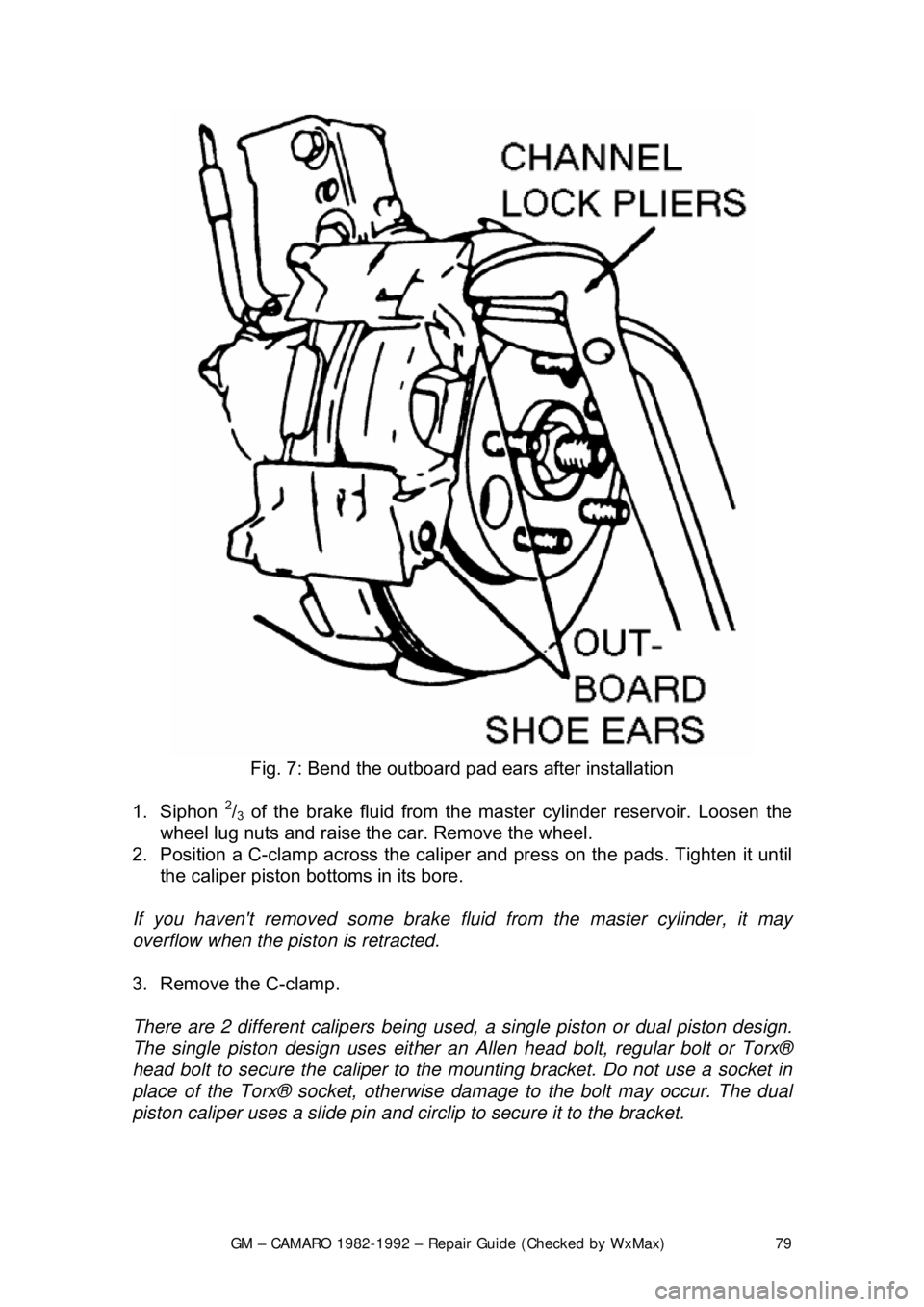
Fig. 7: Bend the outboard pad ears after installation
1. Siphon
2/3 of the brake fluid from the ma ster cylinder reservoir. Loosen the
wheel lug nuts and raise the car. Remove the wheel.
2. Position a C-clamp across the caliper and press on the pads. Tighten it until
the caliper piston bottoms in its bore.
If you haven't removed some brake fluid from the master cylinder, it may
overflow when the piston is retracted.
3. Remove the C-clamp.
There are 2 different calip ers being used, a single pist on or dual piston design.
The single piston design uses either an Allen head bolt, regular bolt or Torx®
head bolt to secure the caliper to the mounting bracket. Do not use a socket in
place of the Torx® socket, otherwise damage to the bolt may occur. The dual
piston caliper uses a slide pin and ci rclip to secure it to the bracket.
Page 80 of 875

GM – CAMARO 1982-1992 – Repair Guide (Checked by WxMax) 80
4. Remove the mounting bo
lts, if equipped with single piston caliper or the
circlip and pin, if equipped with dual piston ca liper. Inspect the bolts for
corrosion and replace as necessary.
5. Remove the caliper fr om the steering knuckle an d suspend it from the body
of the car with a length of wire. Do not allow the caliper to hang by its hose.
6. Remove the pad retaining springs and remove the pads from the caliper.
7. Remove the plastic sleeves and the rubber bushings from the mounting bolt
holes.
8. Obtain a pad replacem ent kit. Lubricate and install the new sleeves and
bushings with a light coat of silicone grease.
9. Install the retainer spring on the i nboard pad, if equipped with single piston
caliper.
A new spring should be included in the pad replacement kit.
10. Install the new inboard pad into the caliper with the wear sensor at the
leading end of the shoe duri ng forward wheel rotation.
11. Install the outboard pad into the caliper.
12. Use a large pair of slip joint plie rs to bend the outer pad ears down over the
caliper, if equipped with t he single piston caliper.
13. Install the calip er onto the steering knuckle. Tighten the mounting bolts to
21-35 ft. lbs. (28-47 Nm), if equipped. In stall the wheel and lower the car. Fill
the master cylinder to its proper le vel with a good quality brake fluid.
14. Pump the brake pedal slowly a nd firmly 3 times with the engine running
before attempting to move the vehicle; bleed the brakes as required.
BRAKE CALIPER
CAUTION - Some brake pads contain asbest os, which has been determined to
be a cancer causing agent. Never clean the brake surfaces with compressed
air! Avoid inhaling any dust from any brake surface! When cleaning brake
surfaces, use a commercially available brake cleaning fluid.
REMOVAL & INSTALATION
Page 81 of 875
GM – CAMARO 1982-1992 – Repair Guide (Checked by WxMax) 81
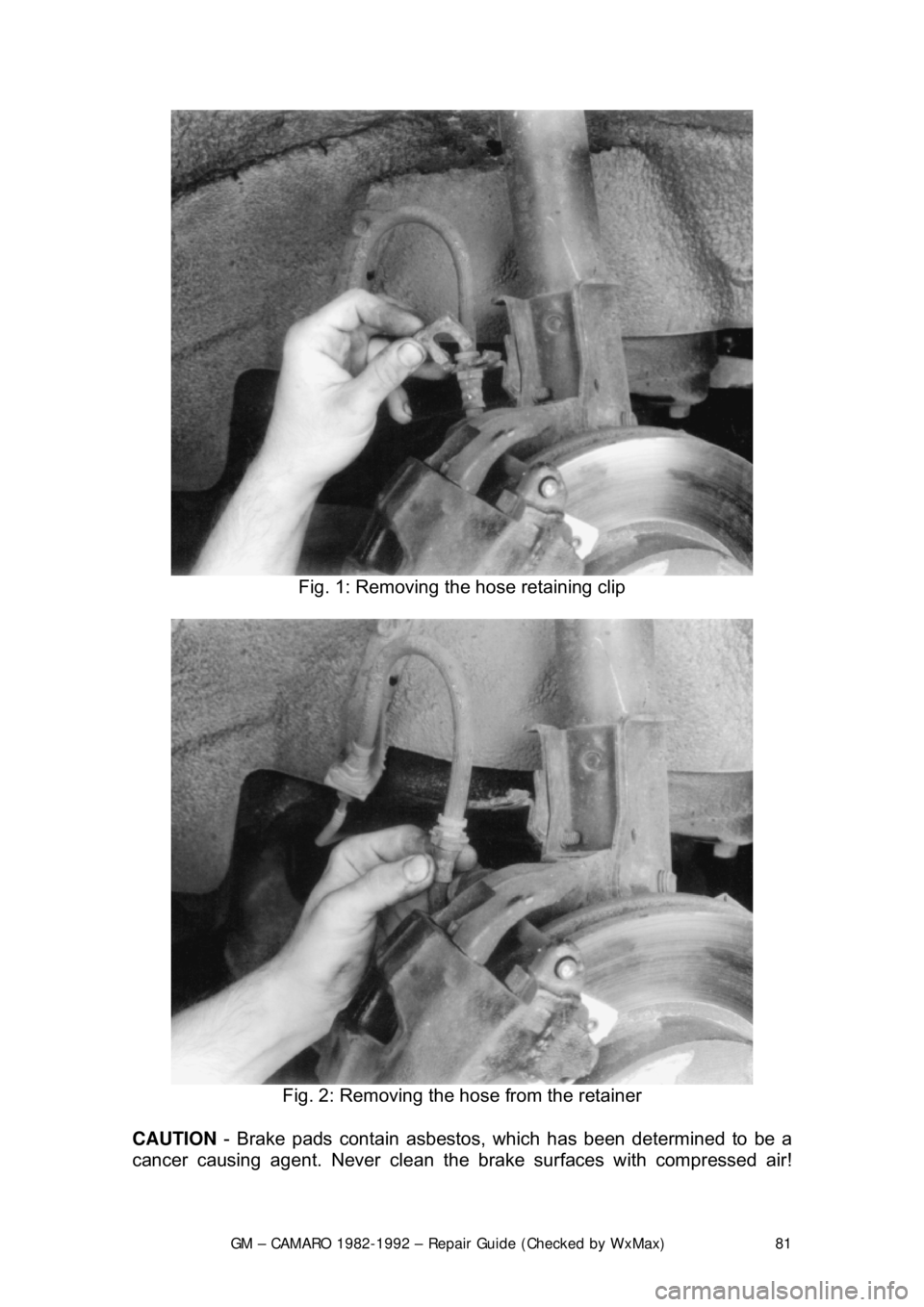
Fig. 1: Removing the hose retaining clip
Fig. 2: Removing the hose from the retainer
CAUTION - Brake pads contain asbestos, which has been determined to be a
cancer causing agent. Never clean the brake surfaces with compressed air!