1982 CHEVROLET CAMARO jackstand
[x] Cancel search: jackstandPage 773 of 875
GM – CAMARO 1982-1992 – Repair Guide (Checked by WxMax) 773
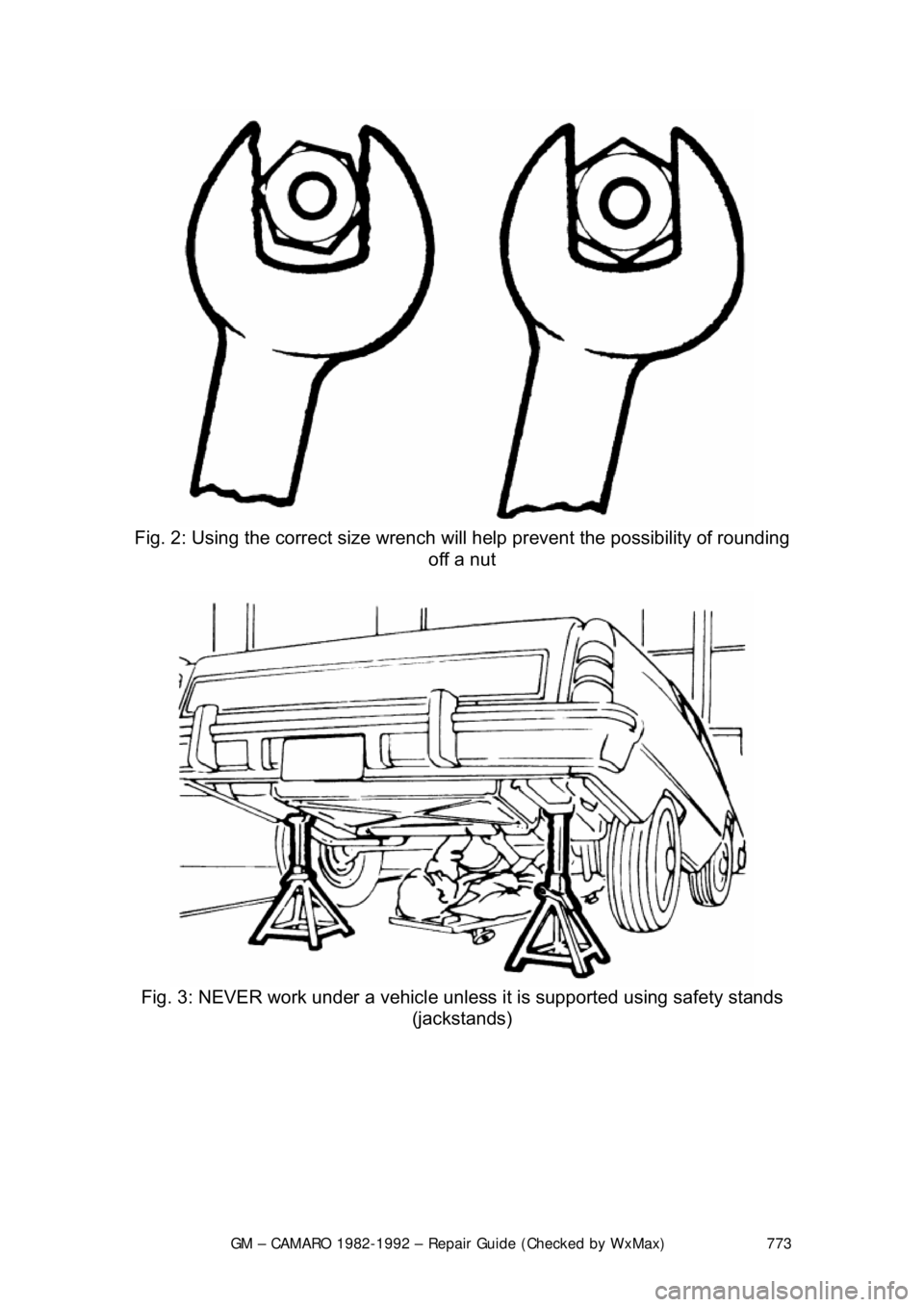
Fig. 2: Using the correct size wrench wil l help prevent the possibility of rounding
off a nut
Fig. 3: NEVER work under a vehicle unle ss it is supported using safety stands
(jackstands)
Page 779 of 875

GM – CAMARO 1982-1992 – Repair Guide (Checked by WxMax) 779
ENGINE OIL AND FILTER CHANGE
Under normal operating conditions, the oi
l is to be changed every 7,500 miles
(12,000km) or 12 months, whichever occurs first.
Although the manufacturer recommends changing the f ilter at the first oil
change and then at every other oil c hange, (unless 12 months pass between
changes), The editors of this informat ion recommend changing the filter with
each service. It is a small price to pay for extra protection.
When driving conditions frequently include dusty or polluted areas, trailer
towing, idling for long periods of ti me, or low speed operation, or when
operating at temperatures below freezing or driving short distances (under 4
miles or 6.4km), change t he oil and filter more frequently. Under these
circumstances, oil has a greater chance of building up sludge and contaminants
which could damage your engine. If your v ehicle use fits into one or more of
these categories, (as it does for most vehicles), it is suggested that the oil and
filter be changed every 3, 000 miles (1361km) or 3 months, whichever comes
first.
The oil should be disposed of properly after it is drained from the vehicle. Store
the oil in a suitable container and take the container to an official oil recycling
station. Most gas stations or oil and lube facilities will take the used oil at little or
no expense to you.
Oil should always be changed after the engine has been running long enough to
bring it up to normal operating temperature. Hot oil will flow more easily and will
carry more contaminants than will cold oi l. The oil drain plug is located on the
bottom of the oil pan (bottom of the engi ne, underneath the car). The oil filter is
located on the left side of most engines covered by this information. To change
the oil and filter:
1. Run the engine until it reaches normal operating temperature.
2. Raise the front of the vehicle and s upport it safely using a suitable pair of
jackstands.
3. Slide a drain pan of a least 6 quar ts capacity under the oil pan. Wipe the
drain plug and surrounding area clean using an old rag.
CAUTION - The EPA warns that prolonged contact with used engine oil may
cause a number of skin disorders, incl uding cancer! You should make every
effort to minimize your exposure to used engine oil. Pr otective gloves should be
worn when changing the oil. Wash y our hands and any other exposed skin
areas as soon as possible after exposure to used engine oil. Soap and water, or
waterless hand cleaner should be used.
4. Loosen the drain plug using a ratc het, short extension and socket or a
box-wrench. Turn the plug out by hand, using a rag to shield your fingers
from the hot oil. By keeping an in ward pressure on the plug as you
unscrew it, oil won't escape past the threads and you can remove it
without being burned by hot oil.
Page 782 of 875

GM – CAMARO 1982-1992 – Repair Guide (Checked by WxMax) 782
10. Refill the engine with the correct amount
of fresh oil. Please refer to the
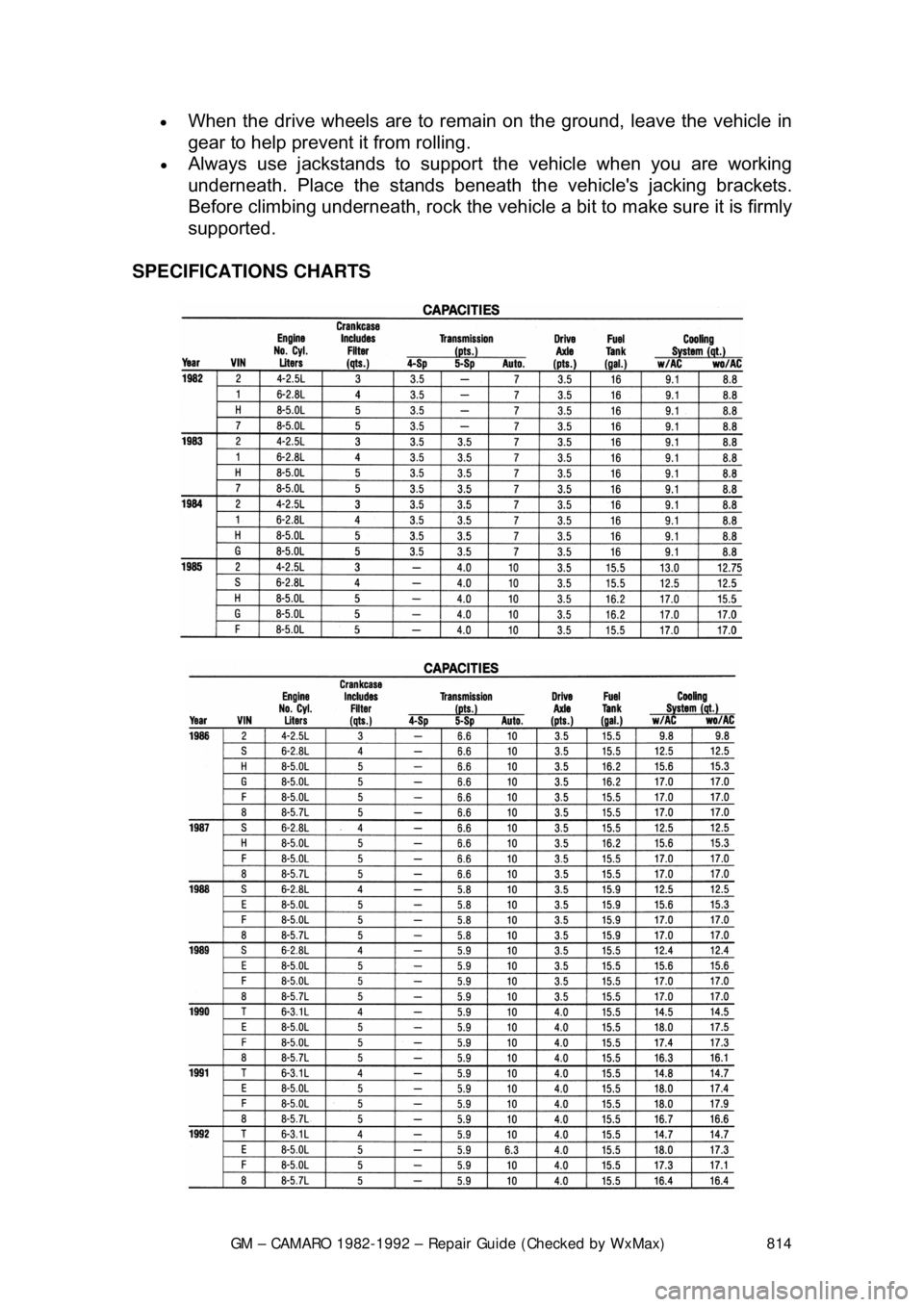
Capacities chart at the end of this section.
11. Check the oil level on the dipstick. It is normal for the level to be a bit
above the full mark. Start the engine and allow it to idle for a few
minutes.
CAUTION - Do not run the engi ne above idle speed until it has built up oil
pressure, as indicated w hen the oil light goes out
12. Shut off the engine and allow the oil to flow back to the crankcase for a
minute, then recheck the oil level. C heck around the filter and drain plug
for any leaks, and correct as necessary.
MANUAL TRANSMISSIONS
FLUID RECOMMENDATIONS
• 1982-85 4-speed manual transmissi ons - SAE 80W/90 GL-5 gear
lubricant
• 1986-87 4-speed manual transmission - Dexron®®II automatic
transmission fluid
• 1982-84 5-speed manual transmissions - use SAE 80W/90 GL-5 gear
lubricant (SAE 80W GL-5 in Canada)
• 1985-92 5-speed manual transmissi ons - Dexron®II automatic
transmission fluid
LEVEL CHECK
The oil in the manual tr ansmission should be check ed every 12 months or
15,000 miles.
1. Raise the car and support on jackstands as close to level as possible. \
2. Remove the filler plug from the side of the transmission housing.
3. If lubricant begins to trickle out of the hole, there is enough and you need
not go any further. Otherwise, carefully insert your finger (watch out for
sharp threads) and check to see if the oil is up to the edge of the hol\
e.
4. If not, add oil through the hole until the level is at the edge of the hole.
Most lubricants come in a plasti c squeeze bottle with a nozzle; making
additions simple.
5. Install and tighten the filler plug.
DRAIN AND REFILL
The fluid in the manual transmission do es not require changing. If you do
choose to change the transmission fluid, the fluid can be drained out through
the lower drain plug hole on the side of the transmission. Fill the transmission
with the recommended lubricant to the bottom of the filler plug hole and install
the filler plug.
Page 790 of 875

GM – CAMARO 1982-1992 – Repair Guide (Checked by WxMax) 790
LEVEL CHECK
Fig. 1: Removing filler plug to check rear axle lubricant
The gear lubricant in the drive axle should be checked every 12 months or
15,000 miles (24,000km).
1. Raise the car and support on jackstands as close to level as possible. \
2. Remove the filler plug from the side of the drive axle housing.
3. If lubricant begins to trickle out of the hole, there is enough and you need
not go any further. Otherwise, carefully insert your finger (watch out for
sharp threads) and check to see if the lubricant is up to the edge of the
hole.
4. If not, add oil through the hole until the level is at the edge of the hole.
Most gear lubricants come in a pl astic squeeze bottle with a nozzle;
making additions simple.
5. Install and tighten the filler plug.
DRAIN AND REFILL
The rear axle should have the gear lubricant changed every 7,500 miles
(12,000km). If equipped with a limited slip differential, be sure to add 4 oz.
(118mL) of GM lim ited slip additive part No. 1052358.
1. Raise the car and support on jackst ands. Place a container under the
differential to catch the fluid.
2. Remove the bolts retaining the par king brake cable guides and position
aside.
Page 813 of 875
GM – CAMARO 1982-1992 – Repair Guide (Checked by WxMax) 813
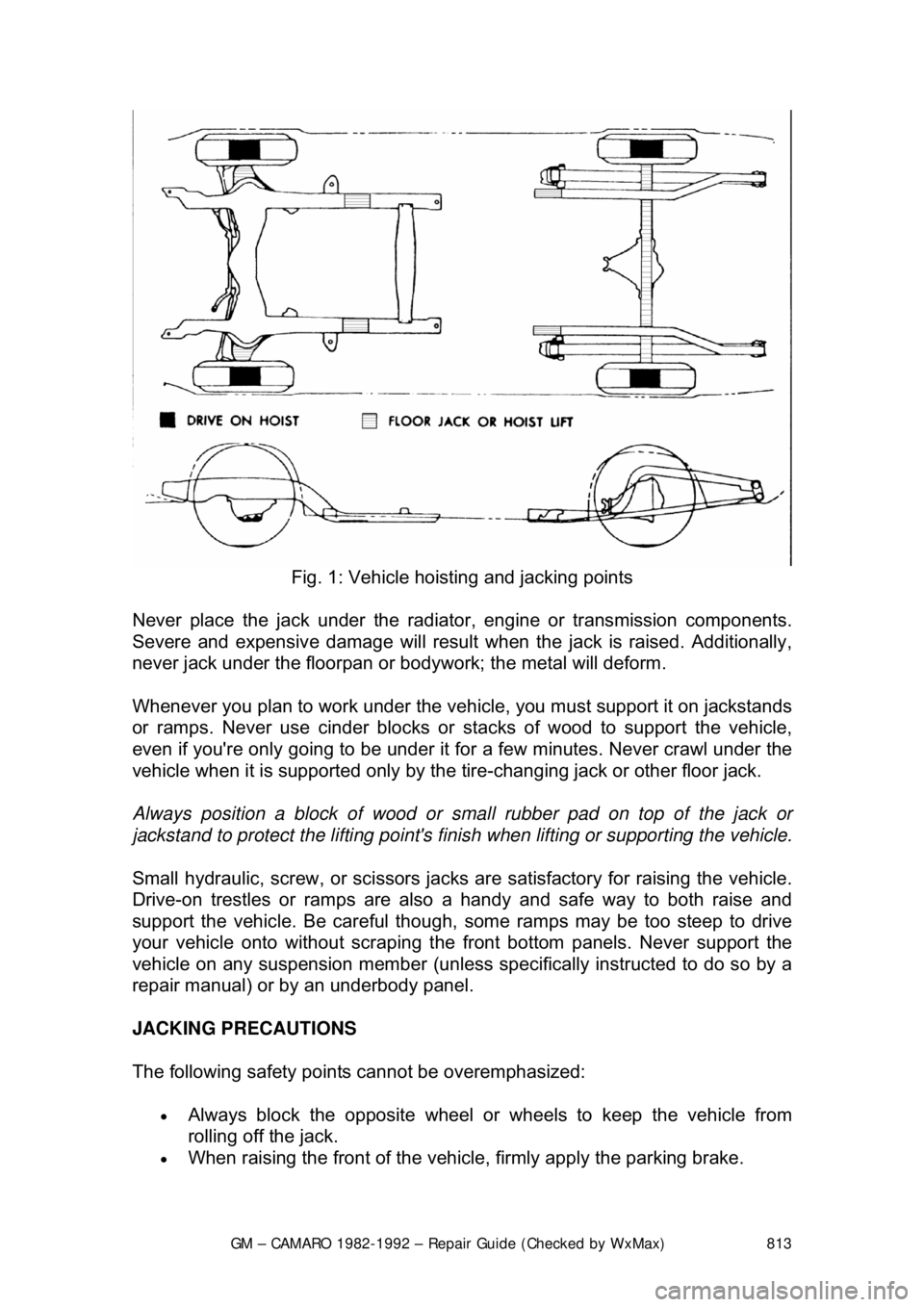
Fig. 1: Vehicle hoisting and jacking points
Never place the jack under the radiator , engine or transmission components.
Severe and expensive damage wil l result when the jack is raised. Additionally,
never jack under the floorpan or body work; the metal will deform.
Whenever you plan to work under the v ehicle, you must support it on jackstands
or ramps. Never use cinder blocks or st acks of wood to support the vehicle,
even if you're only going to be under it for a few minutes. Never crawl under the
vehicle when it is supported only by the tire-changing jack or other floor jack.
Always position a block of wood or smal l rubber pad on top of the jack or
jackstand to protect the lifting point's finish when lifting or supporting the vehicle.
Small hydraulic, screw, or sci ssors jacks are satisfactory for raising the vehicle.
Drive-on trestles or ramps are also a handy and safe way to both raise and
support the vehicle. Be careful though, some ramps may be too steep to drive
your vehicle onto without scraping t he front bottom panels. Never support the
vehicle on any suspension member (unless specifically instructed to do so by a
repair manual) or by an underbody panel.
JACKING PRECAUTIONS
The following safety points cannot be overemphasized:
• Always block the opposite wheel or wheels to keep the vehicle from
rolling off the jack.
• When raising the front of the vehicle, firmly apply the parking brake.
Page 814 of 875
GM – CAMARO 1982-1992 – Repair Guide (Checked by WxMax) 814
•
When the drive wheels are to remain on the ground, leave the vehicle in
gear to help prevent it from rolling.
• Always use jackstands to support the vehicle when you are working
underneath. Place the stands beneath th e vehicle's jacking brackets.
Before climbing underneath, rock the vehicl e a bit to make sure it is firmly
supported.
SPECIFICATIONS CHARTS
Page 817 of 875

GM – CAMARO 1982-1992 – Repair Guide (Checked by WxMax) 817
SUSPENSION & STEERING
SUSPENSION AND STEERING WHEELS
REMOVAL & INSTALLATION
• Park the vehicle on a level surface.
• Remove the jack, tire iron and, if nec essary, the spare tire from their
storage compartments.
• Check the owner's manual or refer to General Information & Maintenance
of this repair guide for the jacking poi nts on your vehicle. Then, place the
jack in the proper position.
• If equipped with lug nut trim caps, remo ve them by either unscrewing or
pulling them off the lug nuts, as appr opriate. Consult the owner's manual,
if necessary.
• If equipped with a wheel cover or hub c ap, insert the tapered end of the
tire iron in the groove and pry off the cover.
1. Apply the parking brake and block the diagonally opposite wheel with a
wheel chock or two.
Wheel chocks may be purchased at your lo cal auto parts store, or a block of
wood cut into wedges may be used. If possi ble, keep one or two of the chocks
in your tire storage compartment, in case any of the tires has to be removed on
the side of the road.
2. If equipped with an automatic transmi ssion, place the selector lever in P
or Park; with a manual transmission, place the shifter in Reverse.
3. With the tires still on the ground, use the tire iron/wrench to break the lug
nuts loose.
If a nut is stuck, never use heat to loosen it or damage to the wheel and
bearings may occur. If the nuts are seized, one or two heavy hammer blows
directly on the end of the bol t usually loosens the rust. Be careful, as continued
pounding will likely damage the brake drum or rotor.
3. Using the jack, raise the vehicle unt il the tire is clear of the ground.
Support the vehicle safely using jackstands.
4. Remove the lug nuts, then remove the tire and wheel assembly.
To install:
5. Make sure the wheel and hub mating su rfaces, as well as the wheel lug
studs, are clean and free of all foreign material. Always remove rust from
the wheel mounting surfac e and the brake rotor or drum. Failure to do so
may cause the lug nuts to loosen in service.
6. Install the tire and wheel asse mbly and hand-tighten the lug nuts.
7. Using the tire wrench, tighten all the lug nuts, in a crisscross pattern, until
they are snug.
8. Raise the vehicle and withdraw the jackstand, then lower the vehicle.
Page 819 of 875

GM – CAMARO 1982-1992 – Repair Guide (Checked by WxMax) 819
INSPECTION
Inspect the tires for lacerations, puncture
marks, nails and other sharp objects.
Repair or replace as necessary. Also check the tires for treadwear and air
pressure as outlined in General Information & Maintenance of this repair guide.
Check the wheel assemblies for dents, crac ks, rust and metal fatigue. Repair or
replace as necessary.
WHEEL LUG STUDS
REMOVAL & INSTALLATION
WITH DISC BRAKES
1. Raise and support the appropriate end of the vehicle safely using
jackstands, then remove the wheel.
2. Remove the brake pads and caliper. Support the caliper aside using wire
or a coat hanger. For details, please re fer to Brakes of this repair guide.
3. Remove the outer w heel bearing and lift off the rotor. For details on
wheel bearing removal, installation and adjustment, please refer to
General Information & Maintenan ce of this repair guide.
4. Properly support the rotor using pre ss bars, then drive the stud out using
an arbor press.
If a press is not available, CAREFULLY drive the old stud out using a blunt drift.
MAKE SURE the rotor is properly and ev enly supported or it may be damaged.
Fig. 1: View of the rotor and stud assembly