Page 449 of 875

GM – CAMARO 1982-1992 – Repair Guide (Checked by WxMax) 449
1. Remove the intake manifold, valve
cover and pushrod cover (4-cylinder).
Disassemble the rocker arms and remove the pushrods.
2. Remove the lifters. If they are coat ed with varnish, clean with carburetor
cleaning solvent.
3. If installing new lifters or you have disassembled the lifters, they must be
primed before installation. Submer ge the lifters in SAE 10 oil and
carefully push down on the plunger with a
1/8 in. (3mm) drift. Hold the
plunger down (DO NOT pum p), then release the plunger slowly. The lifter
is now primed.
4. Coat the bottoms of the lifters wit h Molykote® before installation. Install
the lifters and pushrods into the e ngine in their original position.
5. Install the rocker arms and adjust the valves. Complete the installation by
reversing the removal procedure.
FREEZE PLUGS
REMOVAL & INSTALLATION
CAUTION - When draining the coolant, keep in mind that cats and dogs are
attracted by the ethylene gl ycol antifreeze, and are quite likely to drink any that
is left in an uncovered container or in puddles on the ground. This will prove
fatal in sufficient quantity. Always drai n the coolant into a sealable container.
Coolant should be reused unless it is contaminated or several years old.
1. Disconnect the negative battery cable.
2. Drain the cooling system.
3. Raise and support the vehicle safely.
4. Remove the coolant drain plug on t he side of the block, if equipped. If not
you can use a punch to put a small ho le in the center of the freeze plug
that is being replaced.
5. Remove all components in order to gain access to the freeze plug(s).
6. Using a punch, tap the bottom corner of the freeze plug to cock it in the
bore. Remove the plug using pliers.
7. Clean the freeze plug hole and c oat the new plug with sealer.
8. Using a suitable tool, install the freeze plug into the block.
9. Connect the negative battery cable, fill the cooling system, start the
engine and check for leaks.
REAR MAIN OIL SEAL
REMOVAL & INSTALLATION
CAUTION - The EPA warns that prol onged contact with used engine oil may
cause a number of skin disorders, incl uding cancer! You should make every
effort to minimize your exposure to used engine oil. Pr otective gloves should be
worn when changing the oil. Wash y our hands and any other exposed skin
areas as soon as possible after exposure to used engine oil. Soap and water, or
waterless hand cleaner should be used.
1-PIECE NEOPRENE SEAL
Page 470 of 875

GM – CAMARO 1982-1992 – Repair Guide (Checked by WxMax) 470
•
Never hot tank aluminum parts (the c austic hot tank solution will eat the
aluminum.
• Remove all aluminum parts (identif ication tag, etc.) from engine parts
prior to the tanking.
• Always coat threads lightly with engine oil or anti-seize compounds
before installation, to prevent seizure.
• Never overtighten bolts or spark plugs especially in aluminum threads.
When assembling the engine, any parts that will be exposed to frictional contact
must be prelubed to provide lubricatio n at initial start-up. Any product
specifically formulated for this purpos e can be used, but engine oil is not
recommended as a prelube in most cases.
When semi-permanent (locked, but removabl e) installation of bolts or nuts is
desired, threads should be cleaned and coat ed with Loctite® or another similar,
commercial non-hardening sealant.
CLEANING
Before the engine and its components ar e inspected, they must be thoroughly
cleaned. You will need to remove any eng ine varnish, oil sludge and/or carbon
deposits from all of the com ponents to insure an accurate inspection. A crack in
the engine block or cylinder head can eas ily become overlooked if hidden by a
layer of sludge or carbon.
Fig. 1: Use a gasket scraper to remove t he old gasket material from the mating
surfaces
Page 471 of 875

GM – CAMARO 1982-1992 – Repair Guide (Checked by WxMax) 471
Most of the cleaning process can
be carried out with common hand tools and
readily available solvents or soluti ons. Carbon deposits can be chipped away
using a hammer and a hard wooden chisel. Old gasket material and varnish or
sludge can usually be re moved using a scraper and/ or cleaning solvent.
Extremely stubborn deposits may require the use of a power drill with a wire
brush. If using a wire brush, use extrem e care around any critical machined
surfaces (such as the gasket surfaces, bearing saddles, cylinder bores, etc.).
Use of a wire brush is NOT RECO MMENDED on any aluminum components.
Always follow any safety recommendations given by the manufacturer of the
tool and/or solvent. You s hould always wear eye prot ection during any cleaning
process involving scraping, chipping or spraying of solvents.
An alternative to the mess and hassle of cl eaning the parts yourself is to drop
them off at a local garage or machine shop. They will, more than likely, have the
necessary equipment to properly clean all of the parts for a nominal fee.
CAUTION - Always wear eye protection duri ng any cleaning process involving
scraping, chipping or spraying of solvents.
Fig. 2: Use a ring expander tool to remove the piston rings
Remove any oil galley plugs, freeze pl ugs and/or pressed-in bearings and
carefully wash and degrease all of the engine components including the
fasteners and bolts. Small par ts such as the valves, springs, etc., should be
placed in a metal basket and allowed to soak. Use pipe cleaner type brushes,
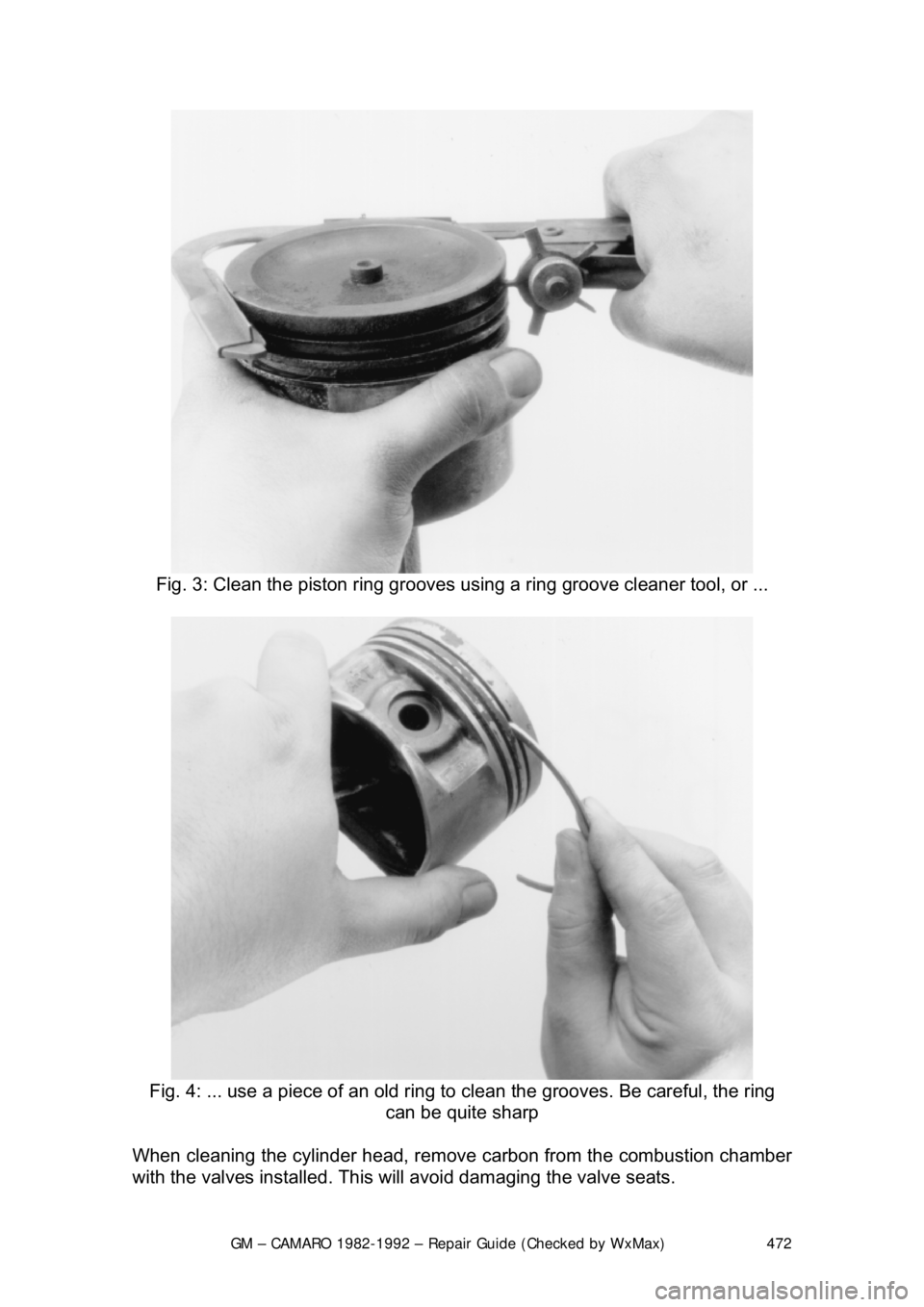
and clean all passageways in the co mponents. Use a ring expander and
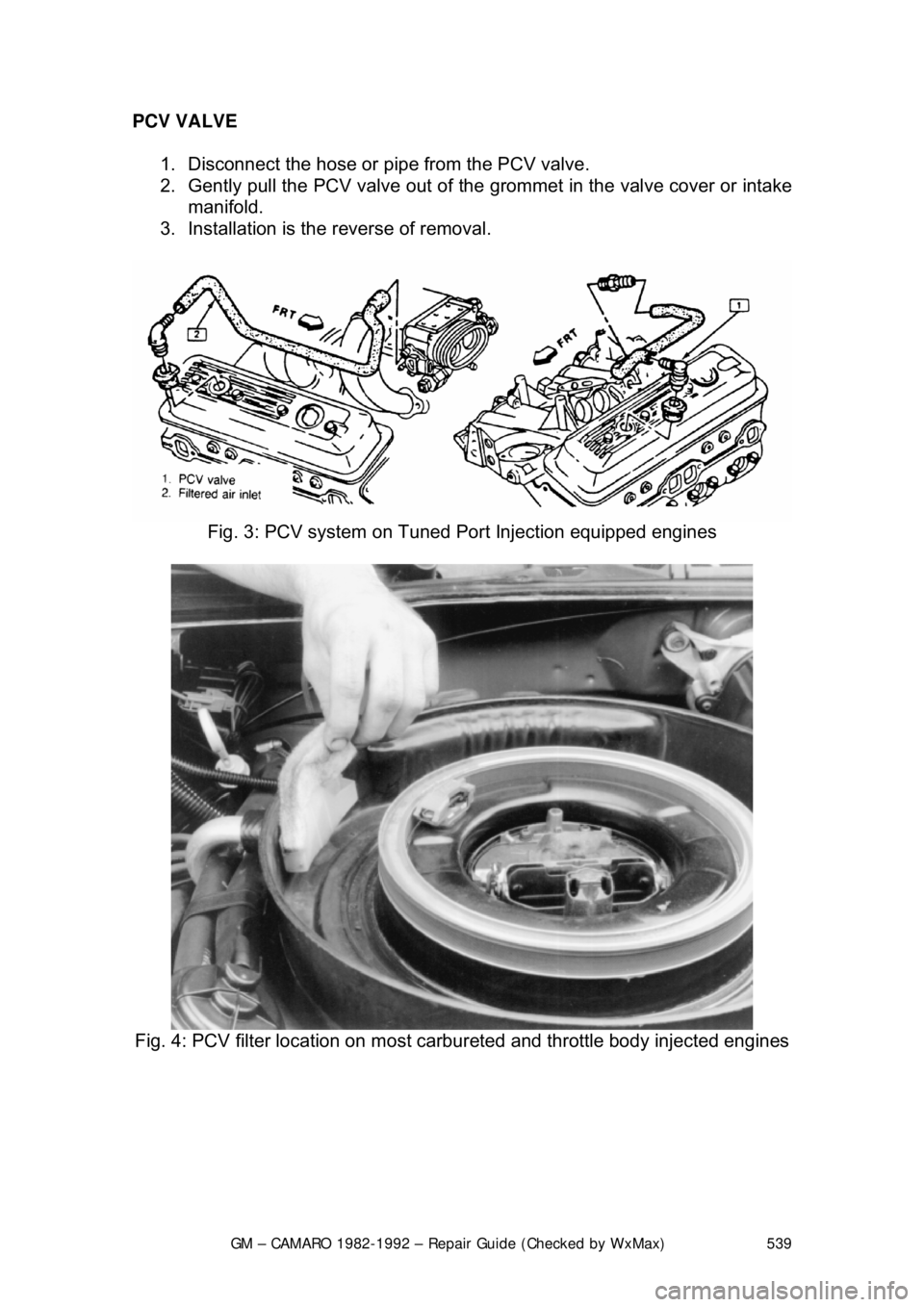
remove the rings from the pistons. Cl ean the piston ring grooves with a special
tool or a piece of broken ri ng. Scrape the carbon off of the top of the piston. You
should never use a wire brush on the pist ons. After preparing all of the piston
assemblies in this manner, wash and degrease them again.
Page 472 of 875
GM – CAMARO 1982-1992 – Repair Guide (Checked by WxMax) 472
Fig. 3: Clean the piston ring grooves using a ring groove cleaner tool, or ...
Fig. 4: ... use a piece of an old ring to clean the grooves. Be careful,\
the ring
can be quite sharp
When cleaning the cylinder head, remove carbon from the combustion chamber
with the valves installed. This will avoid damaging the valve seats.
Page 496 of 875

GM – CAMARO 1982-1992 – Repair Guide (Checked by WxMax) 496
ENGINE BLOCK
ENGINE BLOCK BEARING ALIGNMENT
Remove the main bearing caps and, if sti
ll installed, the main bearing inserts.
Inspect all of the main bearing saddles and caps for damage, burrs or high
spots. If damage is found, and it is caused from a spun main bearing, the block
will need to be align-bored or, if severe enough, replacement. Any burrs or high
spots should be carefully removed with a metal file.
Place a straightedge on the bearing saddles, in the engine block, along the
centerline of the crankshaft. If any cl earance exists between the straightedge
and the saddles, the block must be align-bored.
Align-boring consists of machining th e main bearing saddles and caps by
means of a flycutter that runs through the bearing saddles.
DECK FLATNESS
The top of the engine blo ck where the cylinder head m ounts is called the deck.
Insure that the deck surface is clean of dirt, carbon deposits and old gasket
material. Place a straightedge across the surface of the deck along its
centerline and, using feeler gauges, check the clearance along several points.
Repeat the checking procedure with th e straightedge placed along both
diagonals of the deck surface. If the reading exceeds 0.003 in. (0.076mm)
within a 6.0 in. (15.2cm) span, or 0.006 in . (0.152mm) over the total length of
the deck, it must be machined.
CYLINDER BORES
The cylinder bores house the pistons and are slightly larger than the pistons
themselves. A common piston-to-bor e clearance is 0.0015-0.0025 in.
(0.0381mm-0.0635mm). Inspect and measur e the cylinder bores. The bore
should be checked for out-of-roundness, t aper and size. The results of this
inspection will determine w hether the cylinder can be us ed in its existing size
and condition, or a rebore to the next oversize is required (or in the case of
removable sleeves, have replacements installed).
Page 539 of 875
GM – CAMARO 1982-1992 – Repair Guide (Checked by WxMax) 539
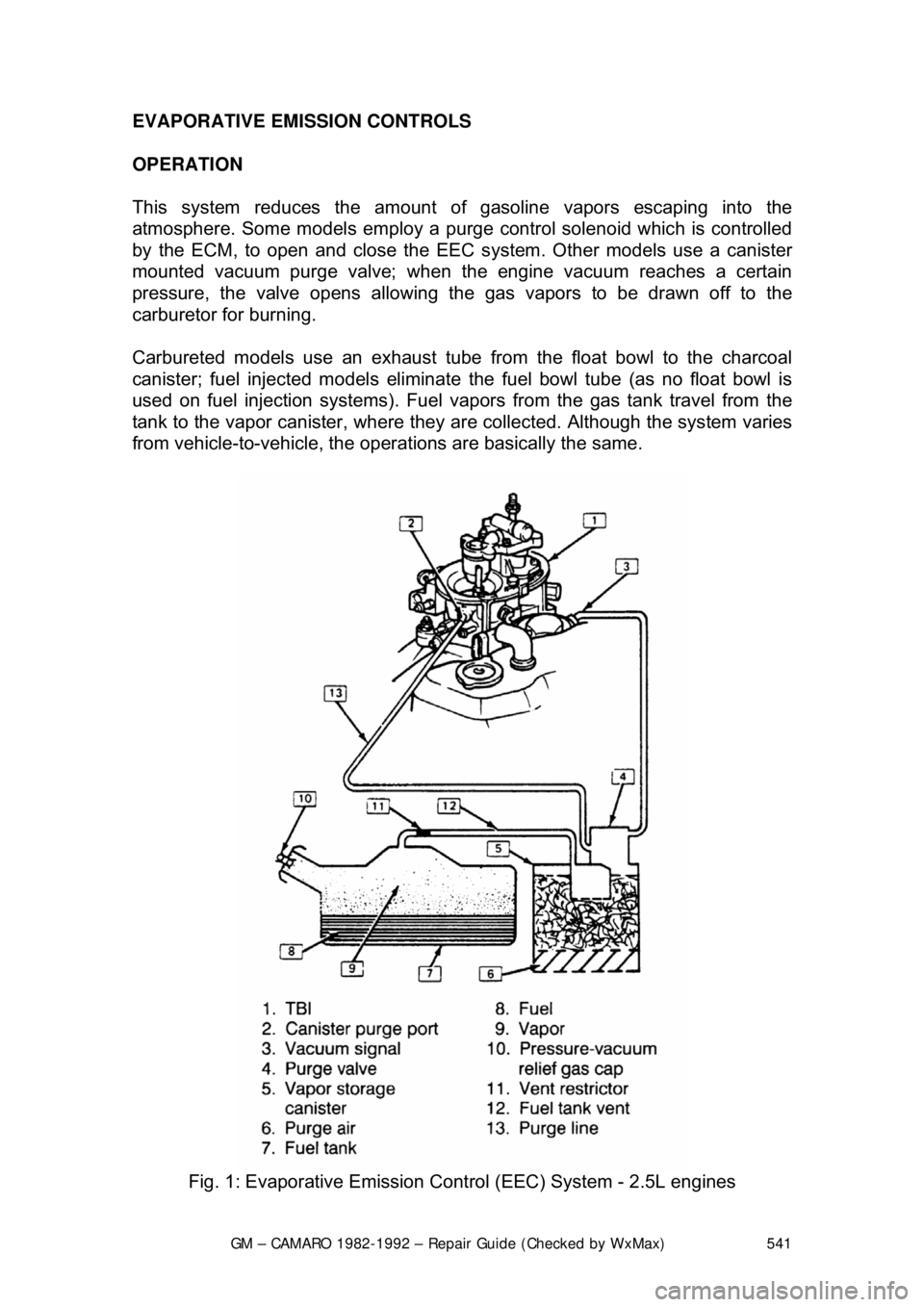
PCV VALVE
1. Disconnect the hose or pi pe from the PCV valve.
2. Gently pull the PCV valv e out of the grommet in the valve cover or intake
manifold.
3. Installation is the reverse of removal.
Fig. 3: PCV system on Tuned Port Injection equipped engines
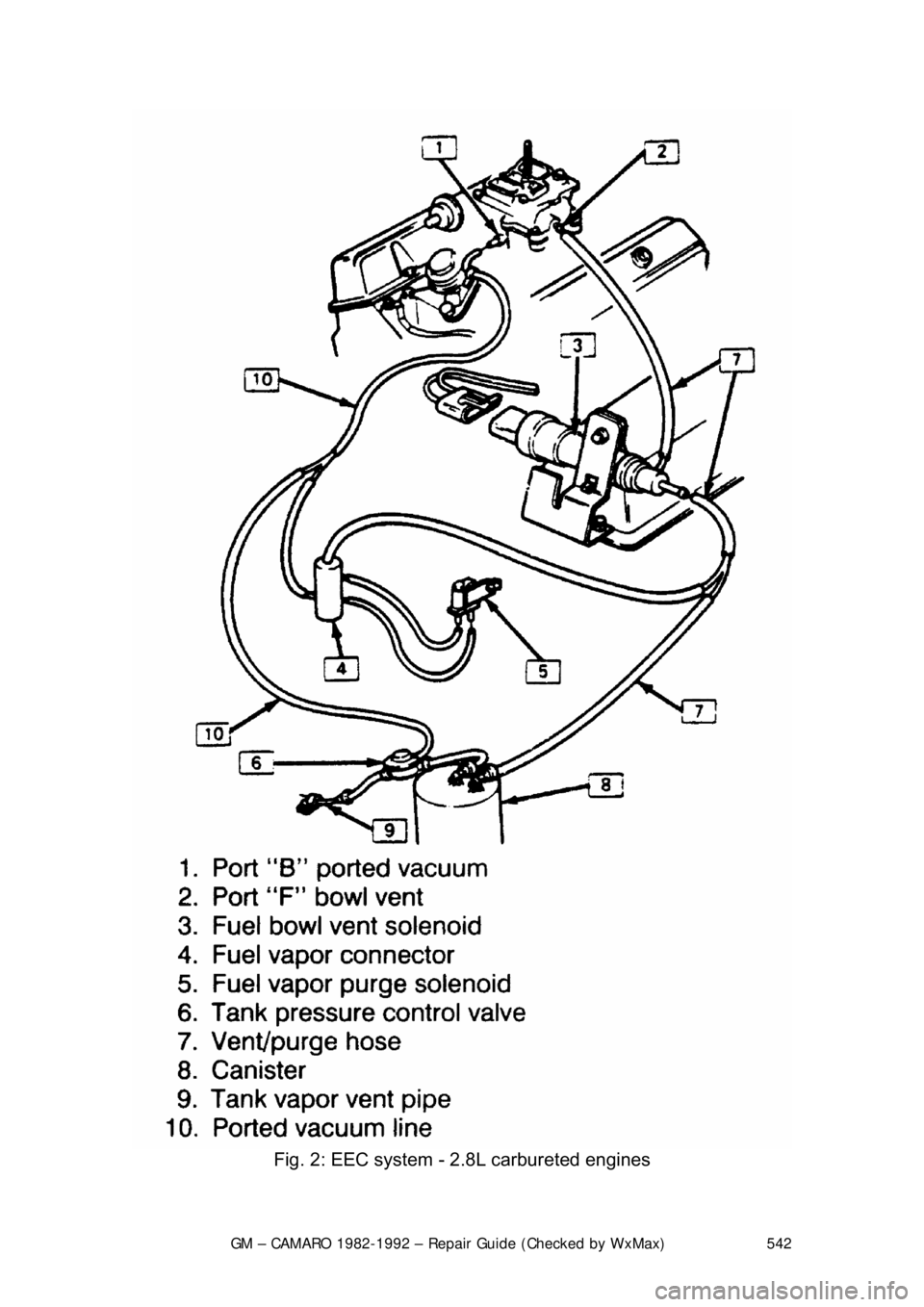
Fig. 4: PCV filter location on most carbureted and throttle body injected engines
Page 541 of 875
GM – CAMARO 1982-1992 – Repair Guide (Checked by WxMax) 541
EVAPORATIVE EMISS
ION CONTROLS
OPERATION
This system reduces the amount of gasoline vapors escaping into the
atmosphere. Some models em ploy a purge control solenoid which is controlled
by the ECM, to open and close the EE C system. Other models use a canister
mounted vacuum purge valve; when the engine vacuum reaches a certain
pressure, the valve opens allowing the gas vapors to be drawn off to the
carburetor for burning.
Carbureted models use an exhaust tube fr om the float bowl to the charcoal
canister; fuel injected models eliminate the fuel bowl tube (as no float bowl is
used on fuel injection systems). Fuel vapor s from the gas tank travel from the
tank to the vapor canister , where they are collected. Although the system varies
from vehicle-to-vehicle, the operat ions are basically the same.
Fig. 1: Evaporative Emission Cont rol (EEC) System - 2.5L engines
Page 542 of 875
GM – CAMARO 1982-1992 – Repair Guide (Checked by WxMax) 542
Fig. 2: EEC system - 2.8L carbureted engines