Page 207 of 875
GM – CAMARO 1982-1992 – Repair Guide (Checked by WxMax) 207
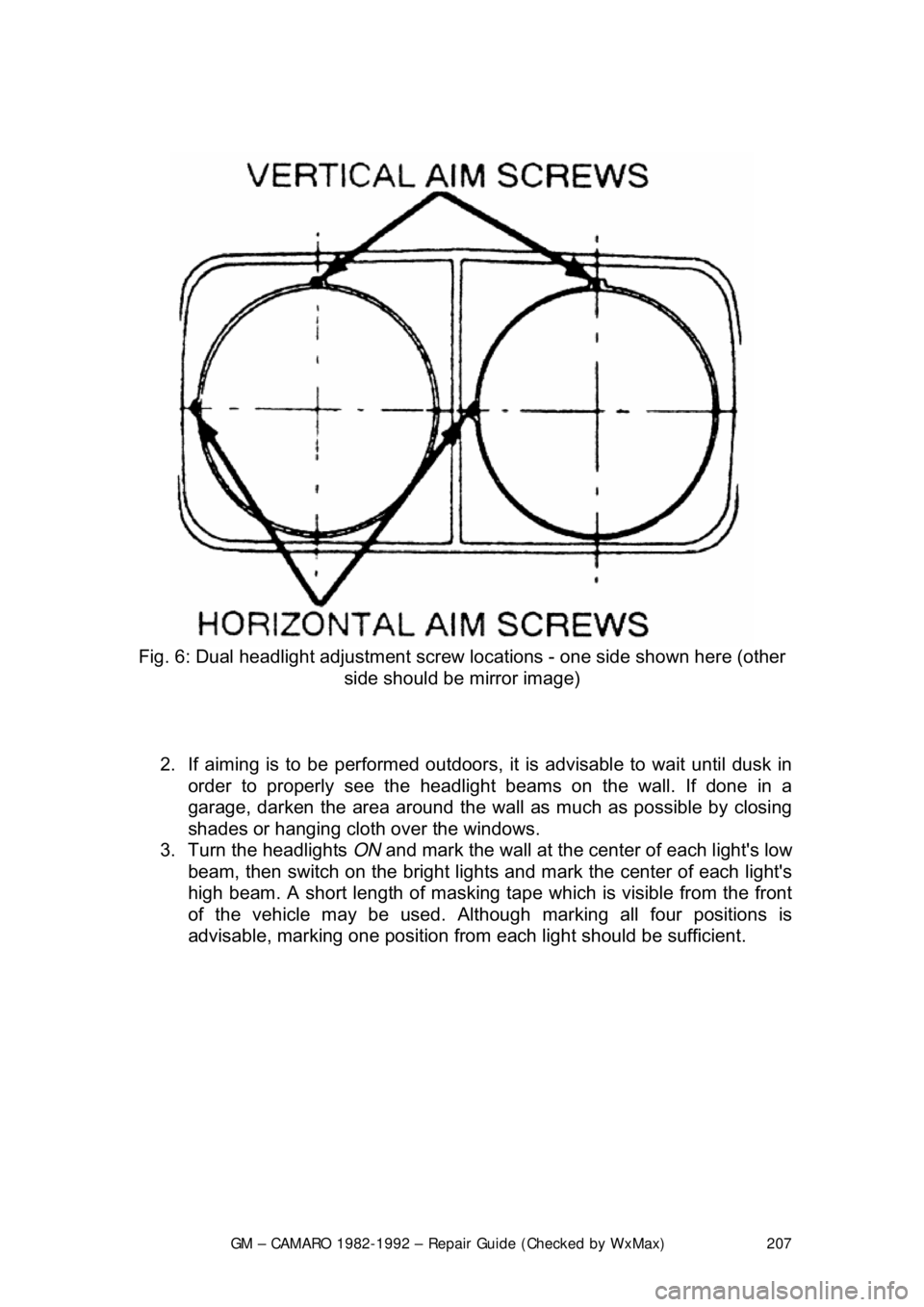
Fig. 6: Dual headlight adjustment screw locations - one side shown here (other
side should be mirror image)
2. If aiming is to be performed outdoors, it is advisable to wait until dusk in
order to properly see t he headlight beams on the wall. If done in a
garage, darken the area around the wall as much as possible by closing
shades or hanging cloth over the windows.
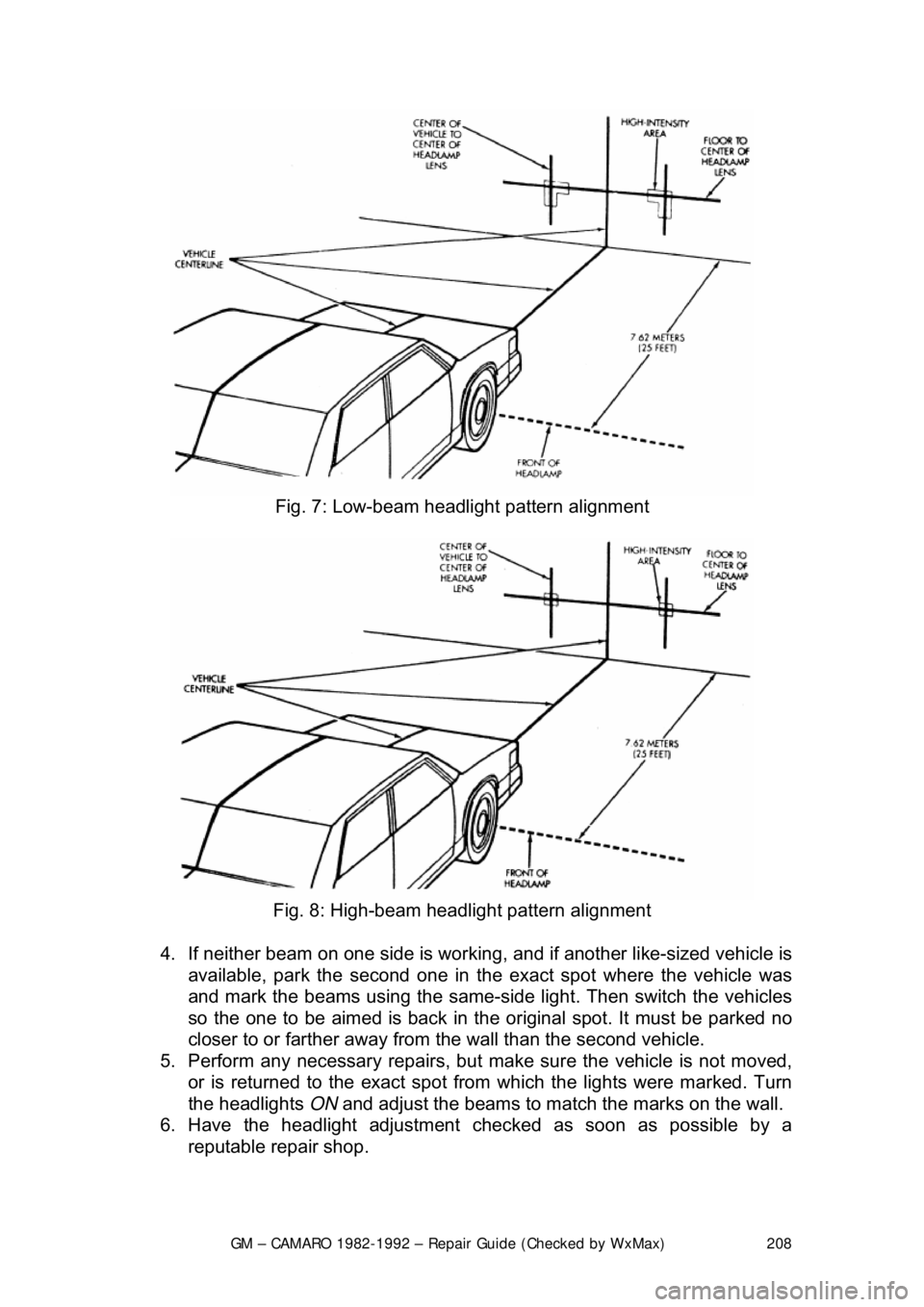
3. Turn the headlights ON and mark the wall at the center of each light's low
beam, then switch on the bright lights and mark the center of each light's
high beam. A short length of masking tape which is visible from the front
of the vehicle may be used. Althoug h marking all four positions is
advisable, marking one position from each light should be sufficient.
Page 208 of 875
GM – CAMARO 1982-1992 – Repair Guide (Checked by WxMax) 208
Fig. 7: Low-beam headlight pattern alignment
Fig. 8: High-beam headlight pattern alignment
4. If neither beam on one side is working, and if another like-sized vehicle is
available, park the sec ond one in the exact spot where the vehicle was
and mark the beams using the same-si de light. Then switch the vehicles
so the one to be aimed is back in the or iginal spot. It must be parked no
closer to or farther away from the wall than the second vehicle.
5. Perform any necessary repairs, but ma ke sure the vehicle is not moved,
or is returned to the exact spot from which the lights were marked. Turn
the headlights ON and adjust the beams to matc h the marks on the wall.
6. Have the headlight adjustment c hecked as soon as possible by a
reputable repair shop.
Page 209 of 875
GM – CAMARO 1982-1992 – Repair Guide (Checked by WxMax) 209
SIGNAL AND MARKER LIGHTS
REMOVAL & INSTALLATION
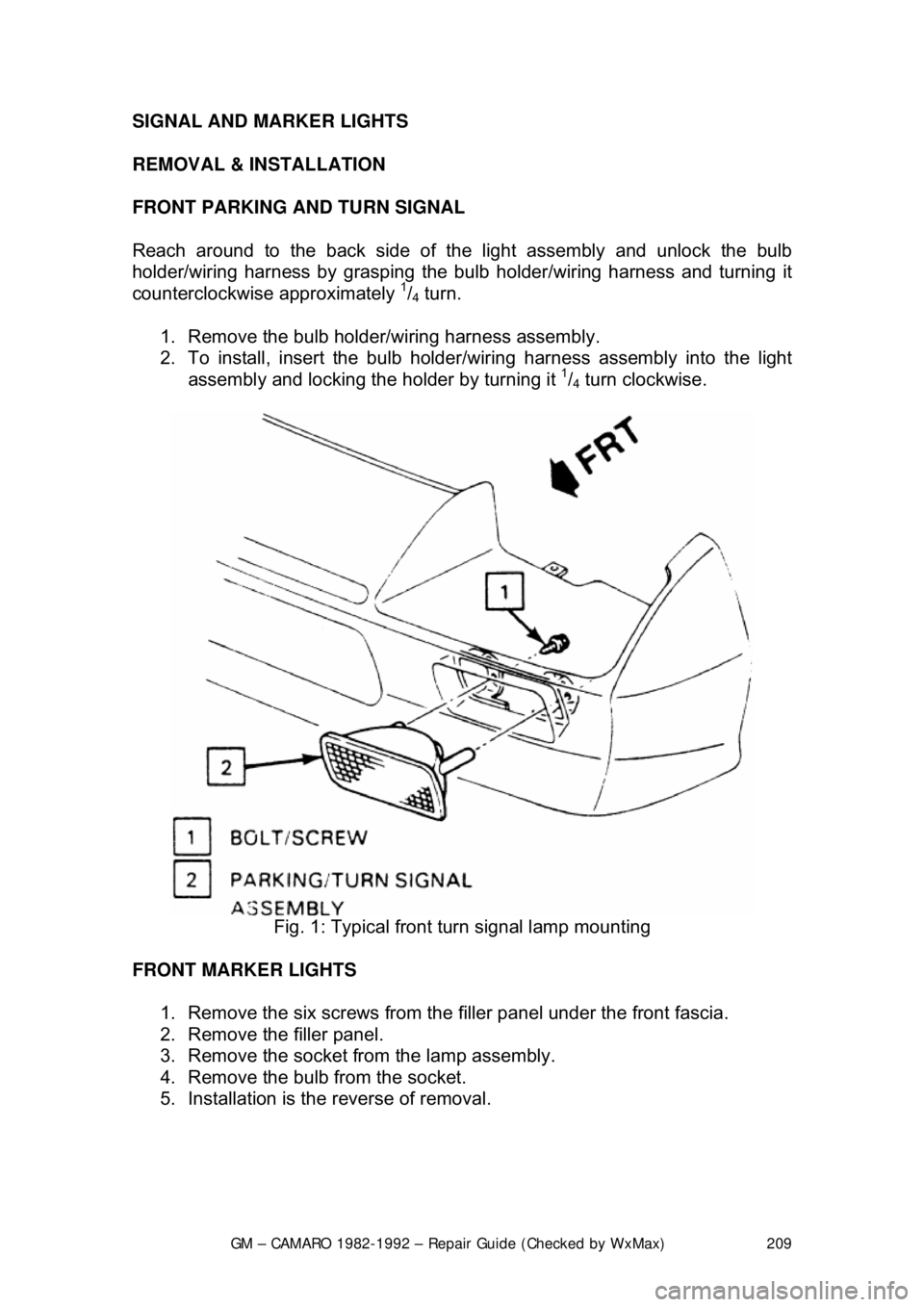
FRONT PARKING AND TURN SIGNAL
Reach around to the back side of t
he light assembly and unlock the bulb
holder/wiring harness by grasping the bul b holder/wiring harness and turning it
counterclockwise approximately
1/4 turn.
1. Remove the bulb holder/wiring harness assembly.
2. To install, insert the bulb holder /wiring harness assembly into the light
assembly and locking the holder by turning it
1/4 turn clockwise.
Fig. 1: Typical front turn signal lamp mounting
FRONT MARKER LIGHTS 1. Remove the six screws from the filler panel under the front fascia.
2. Remove the filler panel.
3. Remove the socket from the lamp assembly.
4. Remove the bulb from the socket.
5. Installation is the reverse of removal.
Page 211 of 875
GM – CAMARO 1982-1992 – Repair Guide (Checked by WxMax) 211
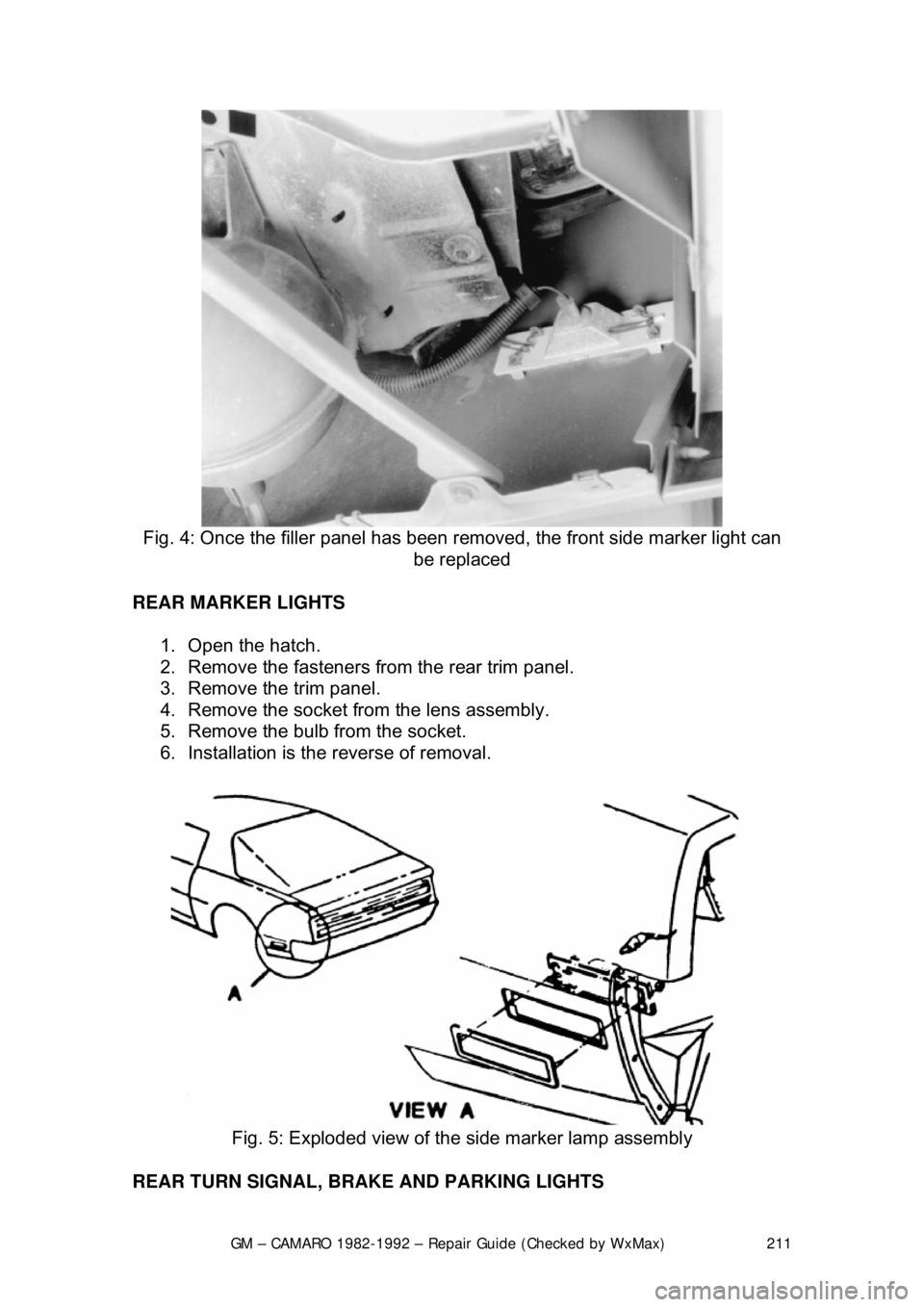
Fig. 4: Once the filler panel has been remo ved, the front side marker light can
be replaced
REAR MARKER LIGHTS 1. Open the hatch.
2. Remove the fasteners from the rear trim panel.
3. Remove the trim panel.
4. Remove the socket from the lens assembly.
5. Remove the bulb from the socket.
6. Installation is the reverse of removal.
Fig. 5: Exploded view of the side marker lamp assembly
REAR TURN SIGNAL, BRAKE AND PARKING LIGHTS
Page 216 of 875
GM – CAMARO 1982-1992 – Repair Guide (Checked by WxMax) 216
PASSENGER AREA LAMPS
The passenger area courtesy lamps can
be replaced by first removing the
appropriate trim panel, then removing the bulb from the socket. Most panels are
fastened by screws or snap-fasteners. Be careful not to force the trim panel off,
as you may damage it. Do not pry with tools which may damage the panel, use
tools designed for panel removal only.
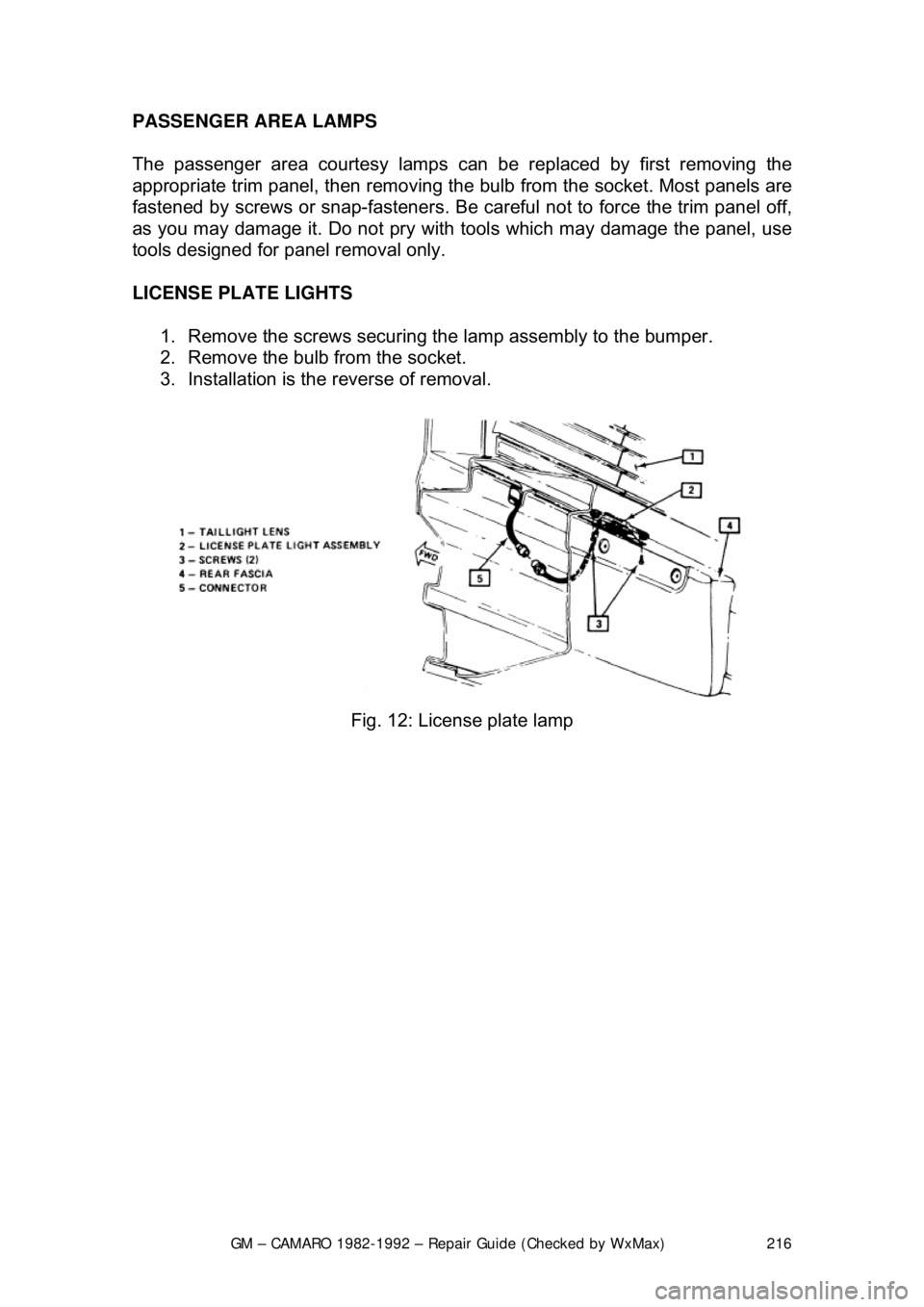
LICENSE PLATE LIGHTS
1. Remove the screws securing the lamp assembly to the bumper.
2. Remove the bulb from the socket.
3. Installation is the reverse of removal.
Fig. 12: License plate lamp
Page 217 of 875
GM – CAMARO 1982-1992 – Repair Guide (Checked by WxMax) 217
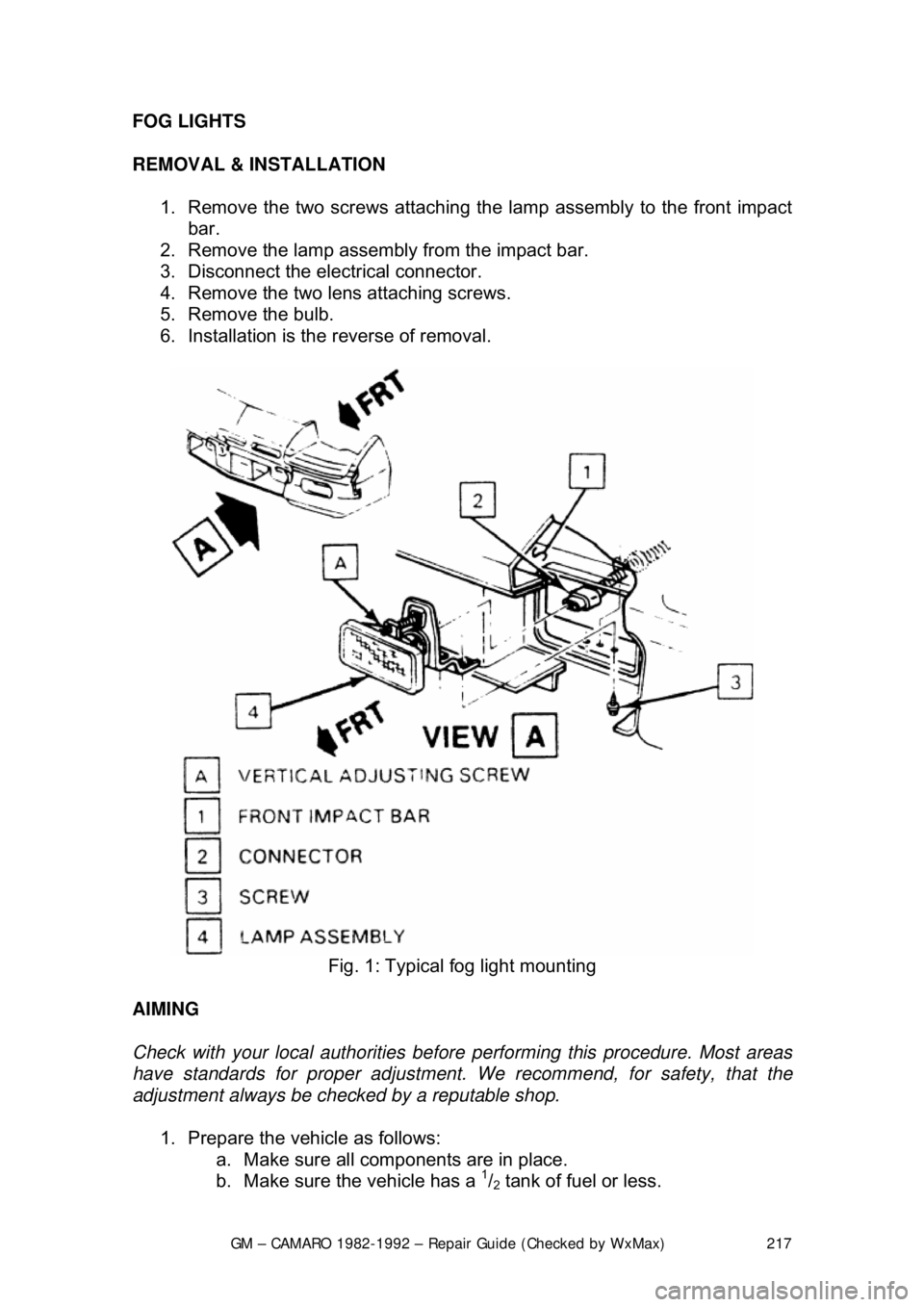
FOG LIGHTS
REMOVAL & INSTALLATION
1. Remove the two screws attaching the lamp assembly to the front impact
bar.
2. Remove the lamp assembly from the impact bar.
3. Disconnect the electrical connector.
4. Remove the two lens attaching screws.
5. Remove the bulb.
6. Installation is the reverse of removal.
Fig. 1: Typical fog light mounting
AIMING
Check with your local authorities before performing this procedure. Most areas
have standards for proper adjustment. We recommend, for safety, that the
adjustment always be checked by a reputable shop.
1. Prepare the vehicle as follows: a. Make sure all com ponents are in place.
b. Make sure the vehicle has a
1/2 tank of fuel or less.
Page 291 of 875

GM – CAMARO 1982-1992 – Repair Guide (Checked by WxMax) 291
6. Remove the console cover.
7. Remove the shifter boot.
8. Remove the shifter mounting bolt
s and remove the shifter assembly.
9. Installation is the reverse of the removal procedure. Adjust the linkage as
detailed earlier.
BACK-UP LIGHT SWITCH
REMOVAL & INSTALLATION 1. Disconnect the negative battery terminal from the battery.
2. At the left-rear of the transmission, the back-up light switch is threaded
into the transmission case. The speed sensor is held in with a separate
bracket. Disconnect the electrical co nnector from the back-up light
switch.
3. Remove the back-up light swit ch from the transmission.
4. To install, reverse the remova l procedures. Coat the threads with
Teflon® tape. Please refer to the to rque chart for specifications. Place
the gear shift lever in the revers e position and check that the back-up
lights work.
EXTENSION HOUSING SEAL
REMOVAL & INSTALLATION
This seal controls transmission oil leakage around the driveshaft. Continued
failure of this seal usually indicates a worn output shaft bushing. If so, there will
be signs of the same wear on the driveshaft where it contacts the seal and
bushing. The seal is available and is fairly simple to install, with the proper tool.
1. Raise and safely support the rear of the vehicle to minimize transmission
oil loss when the driveshaft is removed.
2. Unbolt the driveshaft fr om the differential and center support bearing, if
equipped. Wrap tape around the bearing cu ps to keep them in place on
the universal joint and slide the sh aft out of the transmission.
3. Use an small pry tool to carefully pry out the old seal. Be careful not to
insert the tool too far into the hous ing or the bushing will be damaged.
Page 639 of 875

GM – CAMARO 1982-1992 – Repair Guide (Checked by WxMax) 639
In the HEI system, as in other electr
onic ignition systems, the breaker points
have been replaced wit h an electronic switch - a tr ansistor - which is located
within the ignition module. This switching transistor pe rforms the same function
the points did in a conventi onal ignition system; it simply turns the coil's primary
current on and off at the correct time. Essentially, electronic and conventional
ignition systems operate on t he same principle.
The module which houses the switching transistor is controlled (turned on and
off) by a magnetically gener ated impulse induced in the pickup coil. When the
teeth of the rotating timer align with t he teeth of the pole piece, the induced
voltage in the pickup coil signals the elec tronic module to open the coil primary
circuit. The primary current then decreases, and a high voltage is induced in the
ignition coil secondary windings, which is then directed through the rotor and
high voltage leads (spark plug wires) to fire the spark plugs.
In essence, the pickup coil module system simply replaces the conventional
breaker points and condenser. The condenser found within the distributor is for
radio suppression purposes only and has nothing to do with the ignition
process. The ignition module automatically controls the dwell period, increasing
it with increasing en gine speed. Since dwell is co ntrolled in this manner, it
cannot be adjusted. The module itse lf is non-adjustable/non-repairable and
must be replaced if found defective.
SYSTEM PRECAUTIONS
Before proceeding with troubleshooting, ta ke note of the following precautions:
TIMING LIGHT USE
Care should be exercised when connec ting a timing light or other pick-up
equipment. Do not force anything between the boots and wiring, or through the
silicone jacket. Connections should be made in parallel using an adapter.
Inductive pickup timing lights are the bes t kind to use with the ignition systems
covered by this information.
SPARK PLUG WIRES
The plug wires used with these systems are of a different construction than
conventional wires. When replacing them, make sure you get the correct wires,
since conventional wires will not carry the voltage. Also, handle the wires
carefully to avoid cracking or splitti ng them, and NEVER pierce the wires.
TACHOMETER USE
Not all tachometers will operate or indi cate correctly when used on an HEI or
C
3I system. While some tachometers ma y give a reading, this does not
necessarily mean the reading is correct. In addition, some tachometers hook up
differently from others. If you cannot fi gure out whether or not your tachometer
will work on your car, check with the tachometer manufacturer.