Page 477 of 875

GM – CAMARO 1982-1992 – Repair Guide (Checked by WxMax) 477
Most cylinder heads these days are made of
an aluminum alloy due to its light
weight, durability and heat transfer qualit ies. However, cast iron was the
material of choice in the past, and is st ill used on many vehicles today. Whether
made from aluminum or iron, all cylinder heads hav e valves and seats. Some
use two valves per cylinder, while the more hi-tech engines will utilize a multi-
valve configuration using 3, 4 and
even 5 valves per cylinder. When the va lve contacts the seat, it does so on
precision machined surfaces, which seal s the combustion chamber. All cylinder
heads have a valve guide for each valve. The guide centers the valve to the
seat and allows it to move up and down within it. The clearance between the
valve and guide can be critical. Too much clearance and the engine may
consume oil, lose vacuum and/or damage the seat. Too little, and the valve can
stick in the guide causing t he engine to run poorly if at all, and possibly causing
severe damage. The last component all cylinder heads have are valve springs.
The spring holds the valve against its s eat. It also returns the valve to this
position when the valve has been opened by the valve train or camshaft. The
spring is fastened to the valve by a retainer and valve locks (sometime\
s called
keepers). Aluminum heads will also have a valve spring shim to keep the spring
from wearing away the aluminum.
An ideal method of rebuilding the cylin der head would involve replacing all of
the valves, guides, seats, springs, et c. with new ones. However, depending on
how the engine was maintained, often this is not necessary. A major cause of
valve, guide and seat wear is an improperly tuned engine. An engine that is
running too rich, will often wash the lubric ating oil out of the guide with gasoline,
causing it to wear rapidly. Conversely, an engine which is running too lean will
place higher combustion temperatures on the valves and seats allowing them to
wear or even burn. Springs fall victim to the driving habits of the individual. A
driver who often runs the engine rpm to the redline will wear out or break the
springs faster then one that stays well below it. Unfortunately, mileage takes it
toll on all of the parts. G enerally, the valves, guides, springs and seats in a
cylinder head can be machined and re-used, saving you money. However, if a
valve is burnt, it may be wise to replace all of the valves, since they were all
operating in the same environment. The same goes for any other component\
on
the cylinder head. Think of it as an insurance policy against future problems
related to that component.
Unfortunately, the only way to find out wh ich components need replacing, is to
disassemble and carefully check each piece. After the cylinder head(s) are
disassembled, thoroughly clean all of the components.
DISASSEMBLY
Before disassembling the cylinder head, you may want to fabricate some
containers to hold the various parts, as some of them can be quite small (such
as keepers) and easily lost. Also keeping yourself and the components
organized will aid in assembly and reduce confusion. Where possible, try to
maintain a components original location; th is is especially important if there is
not going to be any machine work performed on the components.
Page 478 of 875
GM – CAMARO 1982-1992 – Repair Guide (Checked by WxMax) 478
1. If you haven’t already removed t
he rocker arms and/or shafts, do so
now.
2. Position the head so that the springs are easily accessed.
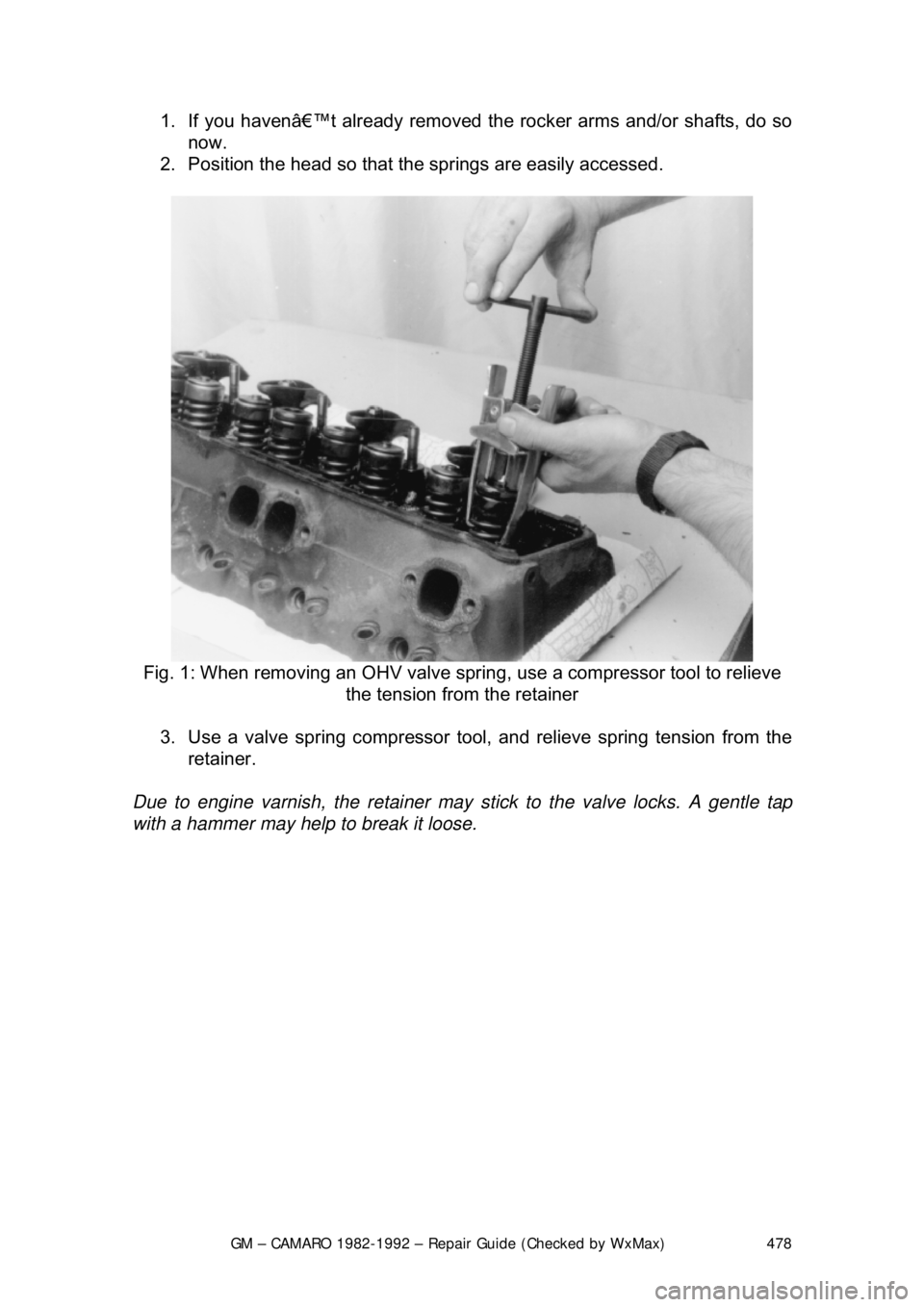
Fig. 1: When removing an OHV valve spring, use a compressor tool to relieve
the tension from the retainer
3. Use a valve spring compressor tool, and relieve spring tension from the retainer.
Due to engine varnish, the retainer may stick to the valve locks. A gentle tap
with a hammer may help to break it loose.
Page 479 of 875
GM – CAMARO 1982-1992 – Repair Guide (Checked by WxMax) 479
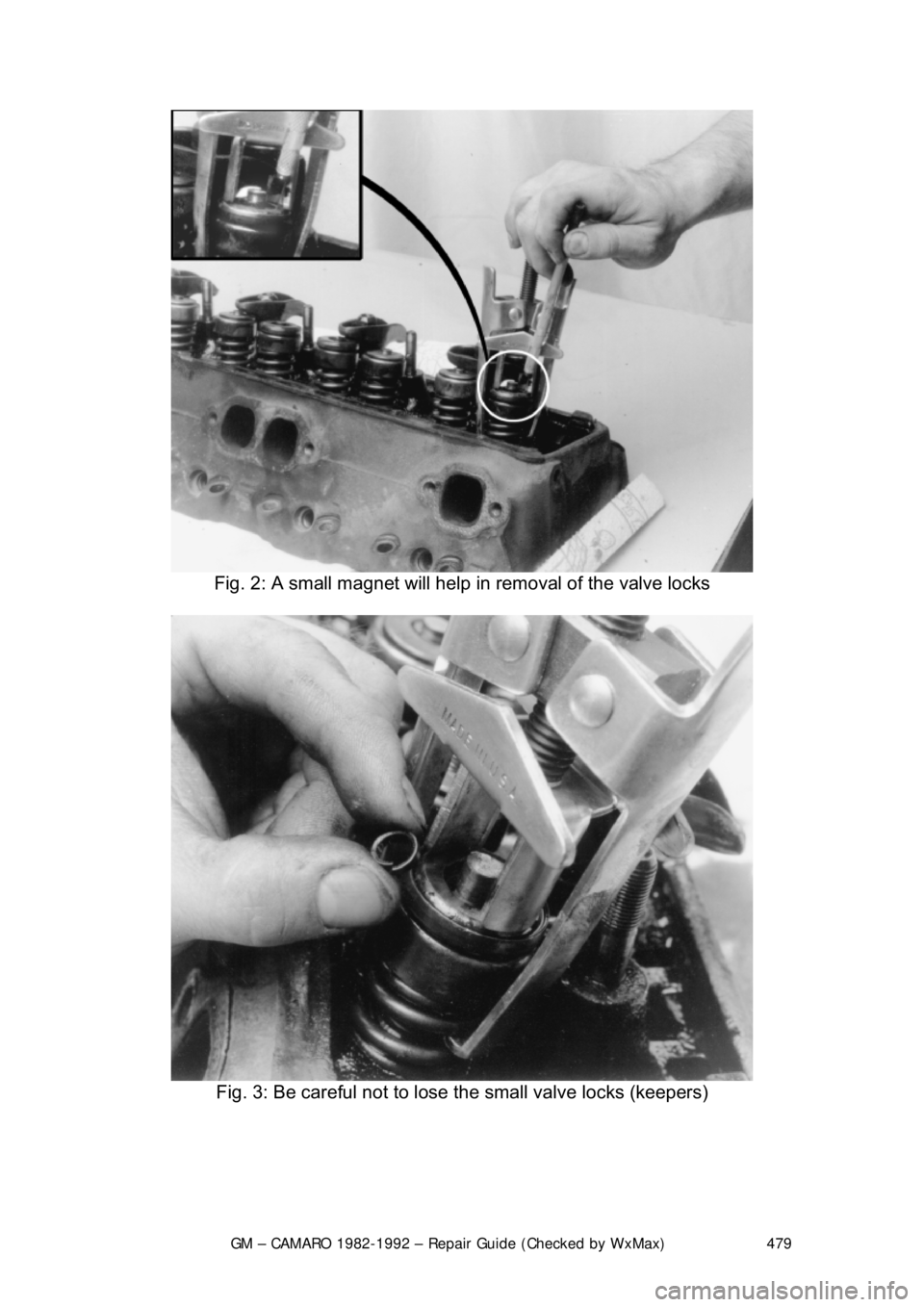
Fig. 2: A small magn et will help in removal of the valve locks
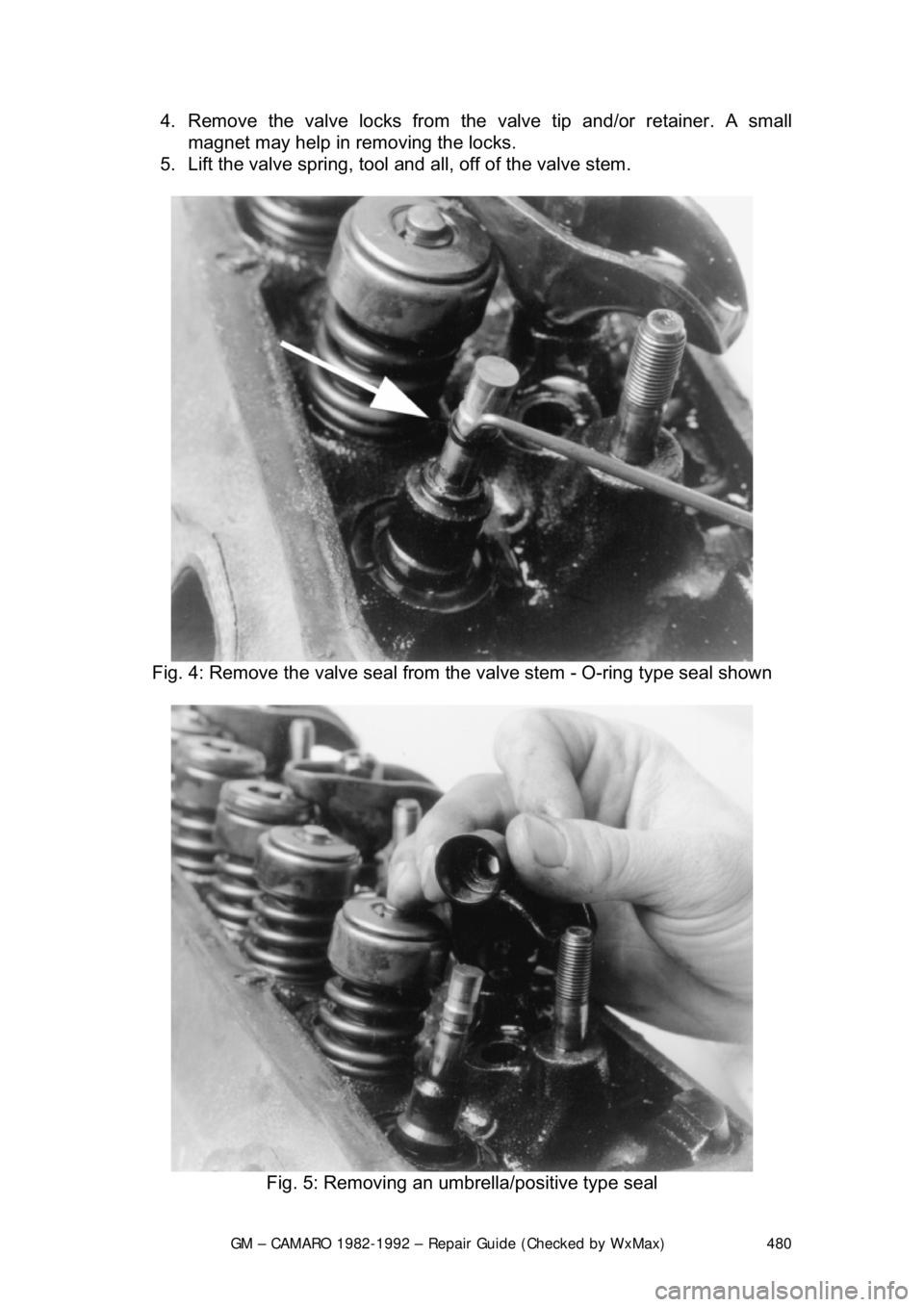
Fig. 3: Be careful not to lose the small valve locks (keepers)
Page 480 of 875
GM – CAMARO 1982-1992 – Repair Guide (Checked by WxMax) 480
4. Remove the valve locks from the
valve tip and/or retainer. A small
magnet may help in removing the locks.
5. Lift the valve spring, tool and all, off of the valve stem.
Fig. 4: Remove the valve seal from the valve stem - O-ring type seal shown
Fig. 5: Removing an umbrella/positive type seal
Page 481 of 875

GM – CAMARO 1982-1992 – Repair Guide (Checked by WxMax) 481
6. If equipped, remove the valve seal. If t
he seal is difficult to remove with
the valve in place, try removing the valve first, then the seal. Follow the
steps below for valve removal.
Fig. 6: Invert the cylinder head and wit hdraw the valve from the valve guide
bore
7. Position the head to allow acce ss for withdrawing the valve.
Cylinder heads that hav e seen a lot of miles and/or abuse may have
mushroomed the valve lock grove and/or tip, causing difficulty in removal of the
valve. If this has happened, use a metal f ile to carefully remove the high spots
around the lock grooves and/or tip. On ly file it enough to allow removal.
8. Remove the valve from the cylinder head.
9. If equipped, remove the valve spri ng shim. A small magnetic tool or
screwdriver will aid in removal.
10. Repeat Steps 3 though 9 until all of the valves have been removed.
INSPECTION
Now that all of the cyli nder head components are clean, it’s time to inspect
them for wear and/or damage. To accura tely inspect them, you will need some
specialized tools:
• A 0-1 inch micrometer for the valves
• A dial indicator or inside diam eter gauge for the valve guides
• A spring pressure test gauge
Page 482 of 875

GM – CAMARO 1982-1992 – Repair Guide (Checked by WxMax) 482
If you do not have access to the proper
tools, you may want to bring the
components to a shop that does.
VALVES
The first thing to inspect are the valve heads. Look closely at the head, margin
and face for any cracks, excessive wear or burning. The margin is the best
place to look for burning. It should have a squared edge with an even width all
around the diameter. When a valve burns, the margin will look melted and the
edges rounded. Also inspect the valve head for any signs of tulipping. This will
show as a lifting of the edges or dishi ng in the center of the head and will
usually not occur to all of the valves. All of the heads should look the same, any
that seem dished more t han others are probably bad. Next, inspect the valve
lock grooves and valve tips. Check fo r any burrs around the lock grooves,
especially if you had to file them to remove the valve. Valve tips should appear
flat, although slight rounding with high mile age engines is normal. Slightly worn
valve tips will need to be machined flat. Last, measure the valve stem diameter
with the micrometer. Measure the area that rides within the guide, especially
towards the tip where most of the wear occurs. Take several measurements
along its length and compare them to each other. Wear should be even along
the length with little to no taper. If no minimum diameter is given in the
specifications, then the stem should not read more than 0.001 in. (0.025mm)
below the specification. Any valves that fail these inspections should be
replaced.
Fig. 7: Valve stems may be rolled on a flat surface to check for bends
Page 483 of 875

GM – CAMARO 1982-1992 – Repair Guide (Checked by WxMax) 483
Fig. 8: Use a micrometer to check the valve stem diameter
SPRINGS, RETAINERS AND VALVE LOCKS
The first thing to check is the most obv ious, broken springs. Next check the free
length and squareness of each spring. If applicable, insure to distinguish
between intake and exhaust springs. Use a ruler and/or carpenters square to
measure the length. A car penters square should be used to check the springs
for squareness. If a spring pressure test gauge is available, check each springs
rating and compare to the specifications chart. Check the readings against the
specifications given. Any springs that fa il these inspections should be replaced.
The spring retainers rarely need replacing, however they should still be checked
as a precaution. Inspect the spring mating surface and the valve lock re\
tention
area for any signs of excessive wear. Also check for any signs of cracking.
Replace any retainers t hat are questionable.
Valve locks should be inspected for exce ssive wear on the outside contact area
as well as on the inner notched surface. Any locks which appear worn or broken
and its respective valve should be replaced.
Page 488 of 875

GM – CAMARO 1982-1992 – Repair Guide (Checked by WxMax) 488
Physical damage is usually very eviden
t. For example, a broken mounting ear
from dropping the head or a bent or broken stud and/or bol t. All of these defects
should be fixed or, if irrepairabl e, the head should be replaced.
REFINISHING & REPAIRING
Many of the procedures given for refini shing and repairing the cylinder head
components must be performed by a ma chine shop. Certain steps, if the
inspected part is not worn, can be perfo rmed yourself inexpensively. However,
you spent a lot of time and effort so far, why risk trying to save a couple bucks if
you might have to do it all over again?
VALVES
Any valves that were not replaced s hould be refaced and the tips ground flat.
Unless you have access to a valve grinding machine, this should be done by a
machine shop. If the valves are in extr emely good condition, as well as the
valve seats and guides, they may be lapped in without performing machine
work.
It is a recommended practice to lap the valves even after machine work has
been performed and/or new valves hav e been purchased. This insures a
positive seal between the valve and seat.
LAPPING THE VALVES
Before lapping the valves to the seat s, read the rest of the cylinder head
information to insure that any related parts are in acceptable enough condition
to continue.
Before any valve seat machining and/or lapping can be performed, the guides
must be within factory re commended specifications.
1. Invert the cylinder head.
2. Lightly lubricate the va lve stems and insert them into the cylinder head in
their numbered order.
3. Raise the valve from the seat and apply a sma ll amount of fine lapping
compound to the seat.
4. Moisten the suction h ead of a hand-lapping tool and attach it to the head
of the valve.
5. Rotate the tool bet ween the palms of both hands , changing the position
of the valve on the valve seat and lifting the tool often to prevent
grooving.
6. Lap the valve until a smooth, polished circle is evident on the valve and
seat.
7. Remove the tool and the valve. Wi pe away all traces of the grinding
compound and store the valve to maintain its lapped location.
SPRINGS, RETAINERS AND VALVE LOCKS