2017 AUDI Q7 fuel
[x] Cancel search: fuelPage 321 of 402

u (0 ...... N r--. N ...... 0
0
:E
Ad Blue left to drive the distance indicated in the
i nstr ument cluster . Fill the Ad Blue .
• Refill with at least x qt (l) AdBlue. No en·
gine start in
x mi (km ). See owner 's manual
This message appears when there is only eno ugh
Ad Blue lef t to d rive the distance indicated in the
i nstr ument cluster. Fill the Ad B lue. O therwise
the engine will not start again if you stop it once
the distance indicated has been driven .
• Refill with at least x qt (l) AdBlue . Engine
start n ot possibl e. See owner 's manual
This message appea rs when the Ad Blue tank is
empty. Fill the AdB lue. Otherwise you will not be
ab le to s tart the engine aga in once yo u stop it.
The AdBlue must be refilled when the amount in
the tank has reached the minimum level
¢ page 319, Preparation.
Incorrect filling /system ma lfunction
A message appears if the Ad Blue tank was filled
with a fluid other than AdBlue and the system
has detected that the tank was f illed incor rectly,
or if there is a system malfunction .
II Ad Blue: malfunct ion ! No engine start in
x mi (km ). Se e owner's manual
This message appears when it is only possible to
drive the d istance ind icated in the instrument
cluster . Drive to the nearest author ized Audi
dealer o r authorized Aud i Serv ice Facility to have
the malfunction corrected . Otherwise the engine
w ill not start again if you stop it once the d is
tance indicated has been dr iven .
• Ad Blu e: malfunction! No engine start poss i
ble . See owner' s manual
This message appears if the system has detected
that the tank was filled incorrectly or that there
is a malfunction. Drive immediately to the near
est autho rized Aud i dea ler or authorized Aud i
Service Facility to have the malfunction correct
ed. Othe rwise you will not be able to start the en
g ine again once you stop i t.
Checking and Filling
Preparation
Applies to: vehicles with selective cata lytic reduction
Fig. 263 Right rear s ide o f the ve hicle: removing t he Ad Bl
u e cap
The Ad Blue tank ope ning is located near the d ie
se l tank opening. Add at least the amount of
AdB lue shown in the instrument cluster display.
This is the minimum amount required to ensure
the system detects the refilling and to start the
engine. You can add a maximum of 6.3 gallons
(24 L).
Requirement: the request to add Ad Bl ue must
appear in the instrument cluster display.
.. Switch t he ignit ion off .
.. Open the tank filler door¢
page 316 .
.. Turn the ta nk filler neck cap to the left to re
move
¢fig . 263 .
.. Ref ill Ad Blue us ing a pump nozzle ¢ page 320,
a canister ¢ page 320 or a bott le ¢ page 320 .
A WARNING ,~ -Ad B lue can irritate the s kin, eyes and respira
tory sys tem.
If th ere is contact with t he flu id,
flus h immed iate ly w ith plenty of wa ter. Con
su lt a phys icia n if necessary .
(D Note
- Only use Ad Blue that conforms to the
standard ISO 22241-1. Do not m ix any addi
tives with the Ad Blue and do not dilu te it
w ith wate r.
- Do not add AdBl ue to the diesel tank or add
diese l fuel to t he A d Bl ue tank. Do not s tart
t he engine un de r any c ircumst ances if th e
wrong fuel is filled in the tan k. There is a
319
Page 322 of 402
Checking and Filling
risk of damaging the fuel tank system and
the engine. See an authorized Audi dealer or
authorized Audi Service Facility for assis
tance.
- Ad Blue attacks surfaces such as painted ve
hicle components, plastic and carpet. Re
move the fluid as quickly as possible with a
damp cloth and plenty of cold water. If the
Ad Blue has already crystallized, use warm
water and a sponge . AdBlue residue that is
not removed will crystallize and can damage
the affected surface.
- Do not store refill bottles or canisters per
manently in the vehicle. If the container
leaks, the escaping AdBlue could damage
the vehicle interior.
- Do not allow AdBlue to come into contact
with clothing. If there is contact with the
fluid, flush immediately with plenty of wa
ter.
(D Tips
Follow the Ad Blue manufacturer 's instruc
tions for use and storage.
Refilling AdBlue using a pump
Applies to: veh icles with selective catalyt ic reduction
.,. Open the tank filler door ¢ page 316, fig. 259.
.,. Turn the tank filler neck cap to the left to re
move
¢ page 319, fig . 263.
.,. Refill Ad Blue until the pump noz zle switches
off for the first time
¢ (D .
.,. Close the filler tube¢ page 321, Completing
AdBlue refill
(fl Note
- The pump nozzle handle must be pointing downward when filling. Otherwise the pump nozzle will not switch off automati
cally
¢ Q) in Preparation on page 319.
- Do not continue filling once the pump noz
zle automatically switches off for the first
time. The AdBlue tank system could be
overfilled and leak Ad Blue
¢(D in Prepara
tion on page 319.
320
Refilling AdBlue using a canister
Applies to: vehicles with selective catalytic reduction
®
+®
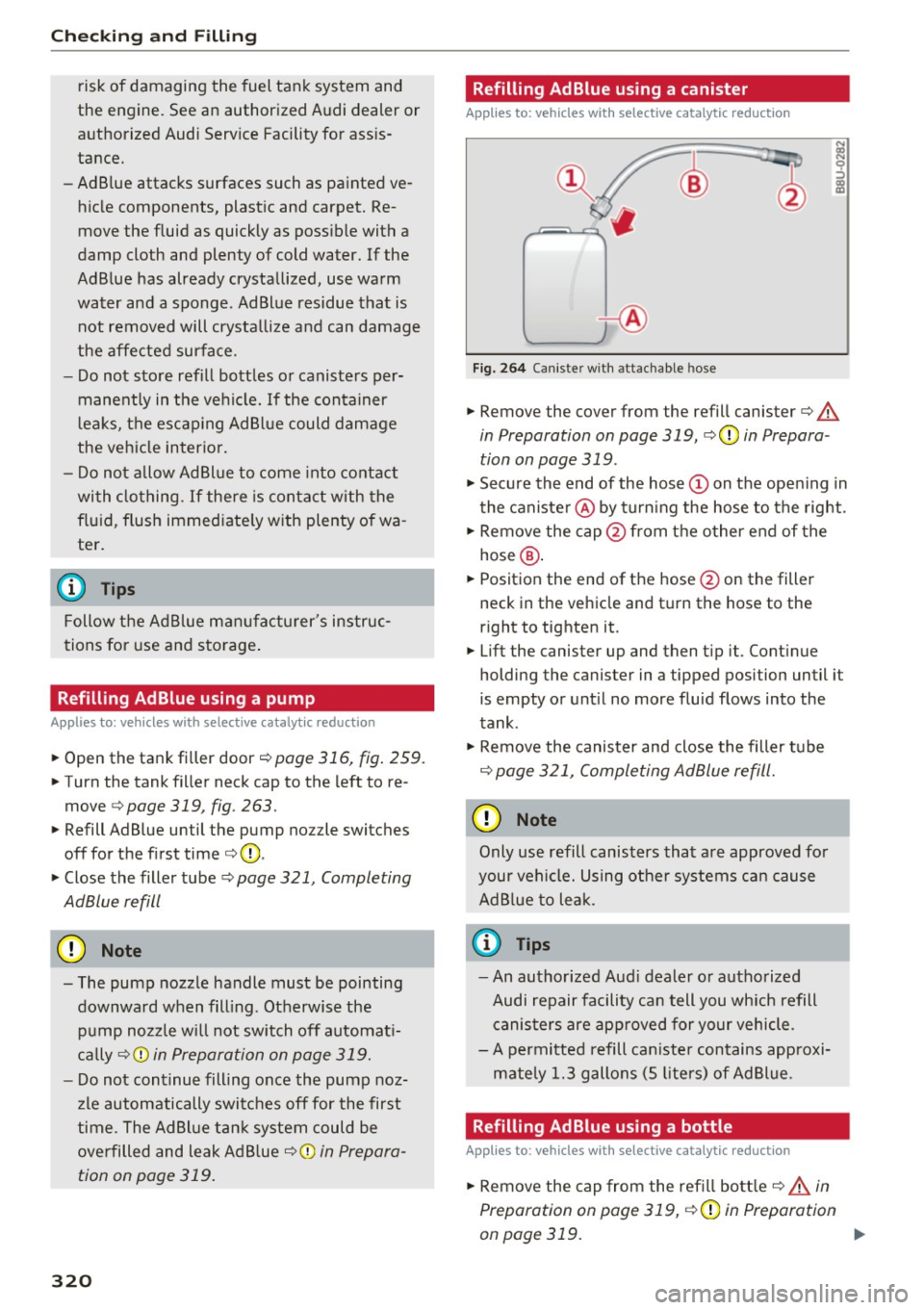
Fig. 264 Caniste r w ith attachable hose
.,. Remove the cover from the refill canister¢ A
in Preparation on page 319, ¢ (Din Prepara
tion on page 319 .
.,. Secure the end of the hose (Don the opening in
the canister @by turning the hose to the right.
.,. Remove the cap@from the other end of the
hose @ .
.,. Position the end of the hose @on the filler
neck in the vehicle and turn the hose to the
right to tighten it .
.,. Lift th@ canist er up and then tip it. Continu e
holding the canister in a tipped position until it
is empty or until no more fluid flows into the
tank.
.,. Remove the canister and close the filler tube
¢ page 321, Completing AdBlue refill .
(D Note
Only use refill canisters that are approved for
your vehicle. Using other systems can cause Ad Blue to leak .
(D Tips
-An authorized Audi dealer or authorized
Audi repair facility can tell you which refill
canisters are approved for your vehicle .
- A permitted refill canister contains approxi
mately 1.3 gallons (5 liters) of Ad Blue.
Refilling AdBlue using a bottle
Applies to: vehicles with selective catalytic reduction
.,. Remove the cap from the refill bottle ¢ A in
Preparation on page 319, ¢(Din Preparation
an page 319. ..,.
Page 323 of 402

u co .... N r-... N .... 0
0
:E: '
the bottle clockwise unti l it stops turning.
• Press lightly against the bottom of the bottle
to empty it. Continue pressing the bottom of
the bottle until it is empty or until f luid stops
flowing into the tank .
• Remove the bottle and seal the filler neck
~ page 321, Completing AdBlue refill .
(D Note
Only use refill bottles that are approved for
your veh icle. Us ing other systems can cause
Ad Blue to leak.
- You can obta in refill bottles from an author
i zed Audi dealer or author ized Audi Service
Fac ility.
- A perm itted refill bottle contains approxi
mately 0.5 gallon ( 1.9 liters) of Ad B lue.
Completing AdBlue refill
Applies to: vehicles with selective catalytic reduction
Closing th e filler neck
• Turn the Ad Blue cap to the right on the filler
tube u ntil the cap clicks into p lace
c;> .&. in
Preparation on page 319,
c;> (D in Preparation
on page 319 ..
• Then press on the left side of the tank door un -
ti l it latches.
After filling
The vehicle must be driven so that the system
recognizes t hat the Ad Bl ue was refilled. This can
take severa l min utes .
• If there was no Ad Blue left in the tank and a
range of O mi (0 km) was shown in the display ,
switch the ign ition on for about 30 seconds be
f ore star ting the engine .
(D Tips
Ad Blue in the tank can free ze at very low tem
pe ra tures. If this happens, the system will
no t detect t hat the Ad Bl ue was refilled and i t
wi ll continue to inform you of the low Ad Blue
Ch eck ing and Filling
level. The message t urns off as soon as the
tank thaws out again .
Emissions control
systems
Catalytic con verter
Applies to: vehicles with gasoline engines
T he vehicle may only be driven with un leaded
gasoline, otherwise the catalytic converter will be
destroyed.
Never drive until the tank is compl ete ly empty .
The irregu lar supply of fuel that resu lts from that
can cause eng ine misfires. Uncombusted fuel will
enter the exhaust system, which can cause over
heating and damage to the catalytic converter .
Diesel particulate filt er
Applies to: vehicles with diesel engines
The diese l particu late filter filters near ly all of
the soot particles out of the exhaust. The filter
cleans itself automatically under norma l driving
condit ions. If the filter cannot clean itself (for ex
ample, because you are only driving short distan
ces), the filter becomes clogged with soot and
the
1\1 i ndicato r light for the diese l part iculate
filte r tu rns on
c;> page 30.
_& WARNING
The tempera ture of the exhaus t sys tem is
high, bot h when driv ing and a fter stoppi ng
the engine.
- Never tou ch the e xhaust tail pipes once they
have become hot. This cou ld res ult in burns .
- Do not par k your veh icle over flamm ab le
materia ls such as grass or leaves because
the high temperature of the emissions con trol system (catalytic converter or diesel particu late filter) cou ld start a fire.
- Do not app ly underbody protectant in the
exhaust system area, beca use this increases
the risk of f ire.
321
Page 328 of 402

Check ing and F illing
CJ) Note
Driving with an insufficient oil level is likely to
cause severe damage to the engine .
@ Tips
-The oil pre ssure warn ing display. i s not
an ind icato r of the oil l evel. Do not rel y on
it. In stead , che ck th e oil le vel in your e n
gi ne a t regul ar int ervals, prefe rably e ach
t ime you re fuel , and al ways befo re go ing
on a long trip .
-If you have the impression your engine con
sumes excessive amounts of oil, we recom
mend that you consult an authorized Aud i
dealer to have the cause of your concern properly d iagnosed . Keep in mind that the
accurate measurement of oil consumpt ion
r equi res great ca re and may take some
time. An authorized Audi dealer has instruc
tions about how to measure oil consump
tion accurately.
Checking the engine oil level and adding
engine oil
The engine oil level can be checked in the Info
t ainmen t sys tem
F ig . 268 Engin e co mpartme nt: e ngine o il fille r ope ning
c ove r
Checking th e engine oil l evel
-Park t he vehicle on a leve l surface .
- Sh ut the engine off when it is warm.
0 N
-N
>< (X) IX)
- Switc h only the ignition back on. Wa it approxi-
mately two minutes so that the engine oil can
flow back into the oil pan.
326
- Select in the Infotainment system: the !MENUI
button > V ehicle > l eft control button > Se rvice
& ch ec ks > Oil level.
- Check the oil level in the Infotainment system
disp lay . Add engine oi l if the bar in the oil level
indicator is just before "min".
Adding engine oil
Fo llow the safety precautions ~ .&. in Working in
the engine compartment on page 322.
- Stop the engine and open the hood
~ page 323.
-Unscrew the cap 9=;,1 on the engine oi l filling
open ing ~
fig. 268, ~ page 324.
-Carefully add 0.5 quart (0.5 liter) of the correct
oil ~
page 324 .
-Close the eng ine oil filler opening cap.
- Close the hood, restart the ignit ion after two
m inutes and read the current o il level in the In
fotainment system.
&_ WARNING
- When adding oil, do not let oil dr ip onto hot
engine components. This inc reases the risk
of afire.
- You must secure the cap on the oil fi ller
open ing correctly so that oil does not leak
ou t onto the ho t engine and exhaust system
when the engine is running, beca use this is
a fire hazard .
- Always clean skin thoroughly if it comes into
contact with engine oil.
(D Note
-The engine o il level must not be under the
" min" marking, because this incre ases the
risk of engine damage.
- If the message
II Plea se redu ce oil lev el
appears, there is too much oil in the eng ine
and there is a risk of damaging the cata lytic
converter and engine. Do not start the en
gine . Contact an authorized A udi dealer or
authorized Audi Service Fac ility to have ex
cess engine o il extracted if necessary .
- Do not mix any addit iona l lubricants into
the engine oil. Damage caused by such add i
t ives is not covered by the warranty.
...
Page 335 of 402

u a,
-N
" N .... 0
0
l: ..
Wheels
Wheels and Tires
General information
.,.Check your tires regularly for
damage (punctures, cuts, cracks
and bulges). Remove foreign ob
jects from the tire tread.
.,. If driving over curbs or similar
obstacles, drive slowly and ap
proach the curb at an angle.
.,.Have faulty tires or rims re
placed immediately.
"'Protect your tires from oil,
grease and fuel.
.,.M ark tires before removing
them so that the same running
direction can be maintained if
they are reinstalled.
"'Lay tires flat when storing and
store them in a cool, dry location
with as little exposure to light as
possible.
(D Note
-Please note that summer and
winter tires are designed for
the conditions that are typical in those seasons. Audi recom
mends using winter tires dur
ing the winter months. Low
temperatures significantly de crease the elasticity of summ
er tires, which affects traction
Wheels
and braking ability. If summer
tires are used in very cold
temperatures, cracks can form
on the tread bars, resulting in
permanent tire damage that
can cause loud driving noise
and unbalanced tires.
-Burnished, polished or
chromed rims must not be
used in winter driving condi
tions. The surface of the rims
does not have sufficient corro
sion protection for this and
could be permanently dam aged by road salt or similar
substances.
Tire designations
Fig. 273 T ir e designations on the side -
wall Ill>
333
Page 338 of 402

Wheels
Bead
means the part of the tire that is
made of steel wires, wrapped or
reinforced by ply cords and that is
shaped to fit the rim .
Bead separation
means a breakdown of the bond
between components in the bead.
Cord
means the strands forming the
plies in the tire.
Cold tire inflation pressure
means the tire pressure recom
mended by the vehic le manufac
turer for a tire of a des ignated
size that has not been driven for more than a couple of miles (kilo
meters) at low speeds in the
three hour period before the tire pressure is measured or adj usted.
Curb weight
means the weight of a motor ve
hicle w ith standard equipment in
cluding the maximum capacity of
fuel, oil, and coolant, air condi
tioning and additiona l weight of
op tional equipment.
E x tra load tire
means a tire des igned to operate
at higher loads and at h igher in -
336
flation pressures than t he corre
spond ing standa rd tire. Extra load
tires may be identified as "XL",
"xl" , "EXTRA LOAD" , or "RF" on
the sidewall.
Gross A xle Weight Rating
("GAWR ")
means the load-carrying capacity
of a single axle system , measured
at the ti re-gro und interfaces.
Gross Vehicle Weight Rating
("GVWR")
means the max imum total loaded
weight of the vehicle .
Groove
means the space between two ad
jacent tread ribs .
Load rating (code)
means the maximum load tha t a
tire is rated to carry for a given in
flation pressure. You may not find
this informat ion on all ti res be
cause it is not required by law .
Maximum load rating
means the load rating for a tire at
the maximum permissible infla
tion p ressure for that ti re .
Maximum loaded vehicle
weight
means the sum of:
Page 346 of 402

Wheels
-The tire must flex more if the tire pressure is too low or if
the vehicle speed or load are
too high . This heats the tire up
too much. This increases the
risk of an accident because it
can cause the tire to burst and
result in loss of vehicle con
trol.
-Incorrect tire pressure in creases tire wear and has a
negative effect on driving and
braking behavior, which in
creases the risk of an accident.
(D Note
Replace lost valve caps to re
duce the risk of damage to the
tire valves.
Tire pressure table
Please note that the information
contained in the following table
was correct at the time of print
ing, and the information is sub
ject to change. If there are differ
ences between this information
and the tire pressures specified
on the label on the driver's side 8-pillar, always follow the specifica
tion on the 8-pillar label
¢ page 343, fig. 275.
344
(i} For the sake of the environment
-Tire pressure that is too low
increases fuel consumption.
-Fuel consumption may also in
crease when driving with the
comfort tire pressure is se
lected .
(D Tips
Audi recommends using the
tire pressure specified for a
normal load
¢ table on
page 345
or for a full load
when the vehicle is partially loaded.
Make sure that the tire designa
tion on your tire matches the des ignation on the tire pressure label
and the tire pressure table.
The following table lists recom mended tire pressures in cold
tires according to the load and
the size of the tires installed.
Page 348 of 402

Wheels
&_ WARNING
Please note the important safe
ty precautions regarding tire
pressure¢
page 343 and load
limits¢
page 346.
Tires and vehicle load limits
There are limits to the amount of load or weight that any vehicle
and any tire can carry . A vehicle
that is overloaded will not handle
well and is more difficult to stop .
Overloading can not only lead to loss of vehicle control, but can al
so damage important parts of the
vehicle and can lead to sudden
tire failure, including a blowout
and sudden deflat ion that can
cause the vehicle to crash.
Your safety and that of your pas
sengers also depends on making
sure that load limits are not ex
ceeded. Vehicle load includes ev
erybody and everything in and on
the vehicle . These load limits a re
technically referred to as the vehi
cle's
Gross Vehicle Weight Rat
ing
("GVWR") .
The "GVWR" includes the weight of the basic vehicle, all factory in
stalled accessories, a full tan k of
fuel, oil, coolant and other fluids
3 4 6
plus maximum load. The maxi
mum load includes the number of
passengers that the veh icle is in
tended to carry ("seating capaci
ty") with an assumed weight o f
150 lbs (68 kg) for each passen
ger at a designated seat ing pos i
tion and the total weight of any luggage in the veh icle. If you tow
a trailer, the weight of the trailer
hitch and the tongue we ight of
the loaded trailer must be includ ed as part of the vehicle load.
The
Gross Axle Weight Rating
("GAWR") is the maximum load
that can be applied at each of the
vehicle's two axles .
The fact that there is an upper
limit to your vehicle's Gross Vehi
cle Weight Rating means that the
total weight of whatever is being
carried in the vehicle (inc luding
the weight of a trailer h itch and
the tongue weight of the loaded
trailer) is limited . The more pas
sengers in the vehicle or passen
gers who are heavier than the
standard weights assumed mean
that less weight can be carried as luggage .
The Gross Vehicle Weight Rating and the Gross Axle Weight Rat ing .,.