2017 AUDI Q5 ignition
[x] Cancel search: ignitionPage 223 of 296

CD
CD
.... N ,-... N .... 0 0 C<'. 00
(D Note
Driving with an insufficient oil leve l is likely to
cause severe damage to the engine .
@ Tips
-The oil pressure warning display. is not
an indicator of the oil level. Do not rely on
it. Instead , check the oil level in your en
gine at regular intervals, preferably each
time you refuel, and always before going
on a long trip.
- If yo u have the impression your engine con
sumes excessive amounts of oil, we recom
men d that you cons ult an autho riz ed Au di
dealer to hav e the ca use of your conce rn
properly diagnosed. Keep in mind that the
a ccu ra te measurement of oil consump tion
r equi re s gre at care and m ay ta ke some
time. An a uthorized Audi de aler has instr uc
tions about how to measure oil consump
tion acc urately.
Checking the engine oil level
Read oil level
"' Park your vehicle so that it is hor izonta lly level.
"' Shu t the engine off when it is at operat ing tem-
perature.
"' Switch only the ignition back on .
"' Wai t approx. two mi nutes .
"' Se lect:
I CARI funct ion button > Oil lev el. Or
"' Se le ct:
ICARI f u n ct ion butto n> Car sy stem s*
contro l button > Servicing & checks > Oil level.
"' Read the oil level in the r adio or M MI* Disp lay.
Add engine oil if the ba r of the o il level indica
tor is near "Min"
¢ page 221.
The o il level needs to be c heck ed at reg ular i nter
va ls. The bes t times to do this are w henever you
refuel and pr io r to long trips .
D epending on t he way t he ve hicle is dr iven and
the operat ing cond itions, o il cons umption can be
up to a 1 /2 q uart per 600 m iles ( O.S li ter per
1,000 km) . Cons umption may be hig he r within
the first 3,000 miles (5,000 km).
Checking and Filling
{!) Tips
The oil leve l indicator in t he radio o r MMI*
D isp lay is only an i nfo rmation disp lay. If the
oi l level is too low, a minimum o il wa rning ap
pears in the instrument cl uster. Add oil
¢ page 221. If the hood has been o pened ,
t he cur rent oi l level is show n in the inst ru
ment clust er the n ext time t he igni tion is
swi tched o n.
Adding engine oil~
Fig. 197 En gin e co mpa rt m ent: cove r o n th e eng ine o il fill
e r neck
Befo re yo u check any thing in the engine compa rt
ment,
always read and heed all WARNINGS
¢ A in Working in the engine compartment on
page 217.
"' Shu t the eng ine off .
"' Unscrew the cap
9=;1: to the engine oil f illing
hole
¢ fig.197, ¢page 219, fig.196 .
"'Carefully top off with 0.5 quarts (0. 5 liters) of
the appropriate oil¢
page 219.
"' Check the oil level again after two minutes
~ page 221, Checking the engine oil level .
"'Top off th e oil, if nec essary.
"' Scr ew the cap ba ck on the fi lling hole.
_&. WARNING
- Whi le toppin g off , the o il mus t no t come in
con tact w ith ho t en gine parts -fir e hazard !
- Th e oi l filler c ap must b e pr oper ly sec ure d
t o p reve nt o il from being spraye d on t he ho t
e ngine an d exha ust system whe n the engi ne
-
is run ning -fi re hazard ! Ill>-
221
Page 227 of 296

CD
CD
.... N ,-... N ..... 0 0 C<'. 00
& WARNING
-Brake fluid is poisonous. It must be stored
only in the closed original container out of
the reach of children!
- Brake failure can resu lt from old or inappro
priate brake fluid. Observe these precau
t ions:
- Use only brake flu id that meets SAE speci
fication
J 1 703 and confo rms to Fede ral
Motor Vehicle Standard 116. Always check
with your author ized Audi dealer to make
sure you are using the correct brake fluid.
The correct type of brake fluid is a lso indi
cated on the brake flu id reservoir.
- The brake fluid must be new. Heavy use o f
the brakes can cause a vapor lock if the
brake fl uid is left in the system too long.
This can serious ly affect the efficiency of
the brakes as well as your safety. This
could result in an acc ident.
Brake fluid w ill damage the pa int of yo ur vehi
cle.
@) For the sake of the environment
Because of the prob lem of proper disposal of
brake flu id as we ll as the special tools re
qui red and the necessary expertise, we rec
ommend that you have the brake fluid
changed by your author ized Audi dealer.
Battery
General information
Under normal operating conditions, the battery
in your Audi does not need any maintenance.
W ith
high outside temperatures or long da ily
drives we recommend that you have the electro lyte level checked by an authorized Audi dea ler or
qua lified workshop. The e lectrolyte level should
a lso be checked each t ime the batte ry is charged
¢ page 22 7.
H ave the battery checked when you take your ve
hi cle in for serv ice. You a re well advised to re
p lace a batte ry that is o lde r than 5 years .
Check ing and Filling
Hybrid dr ive *: you can find important in format ion
about the high voltage battery under
¢ page 100.
Disconnecting the battery te rminals
Some vehi cle functions (power window regula
tors, for examp le) are lost if the batte ry te rm i
nals a re disconnected . These functions have to be
re learned after the battery terminals a re con
nected again. To prevent this, the battery should
only be disconnected from the vehicle electrical
system when absolutely necessary for repa irs.
Vehicles not dr iven for long p eriod s
If you do not drive your vehicle over a period of
severa l days or weeks, electrical compone nts are
gradually cut back or switched off. This reduces
energy consumpt ion and maintains starting ca
pability over a longer per iod
¢ page 192.
T ake into consideratio n that when you unlock
your vehicle, some convenience functions, suc h
as the inter ior lights or the power seat adjust
ment, may not be ava ilab le. The conve nience
funct ions will be available again when you turn
on the ignition and sta rt the eng ine.
Winter operation
D uring the winter months, battery capacity tends
to decrease as temperatures drop. This is be
cause more power is also consumed while start
i ng, and the headlights, rear w indow defogger,
etc., are used more ofte n.
Avo id unnecessary power consumption, pa rtic u
larly in city traff ic or when traveling only short
distances . Let your author ized Audi dealer check
the capacity of the veh icle batte ry before winter
sets in
¢ page 22 7. A we ll charged batte ry will
not only p reve nt start ing prob lems when the
wea the r is co ld, but will also last longer.
Working on the battery
Be especially careful when working on or near
the battery.
T he battery is loca ted in t he luggage compart
ment unde r the floo r. B efo re yo u check any thing .,..
225
Page 229 of 296
a,
a,
..... N
" ('I ..... 0 0
0:
co
,&_ WARNING
California P roposition 65 Warn ing :
- B attery posts, termi na ls and re lated acces
sories contain lead and lead compounds,
chemicals known to the State of California
to cause cancer and reproductive problems.
Wash hands after handling.
(D Note
- Do no t disconnect the ve hicle bat tery when
t h e ignit ion is switched on or when the en
gine is runni ng, otherwise, you w ill damage
electron ic components in the e lectr ica l sys
tem.
- If your vehicle is going to stan d for a long
period of time without be ing driven, protect
the battery from "freez ing", otherwise it
will be damaged a nd will then have to be re
placed .
Battery charging
Starting the engine requires a well charged bat
tery .
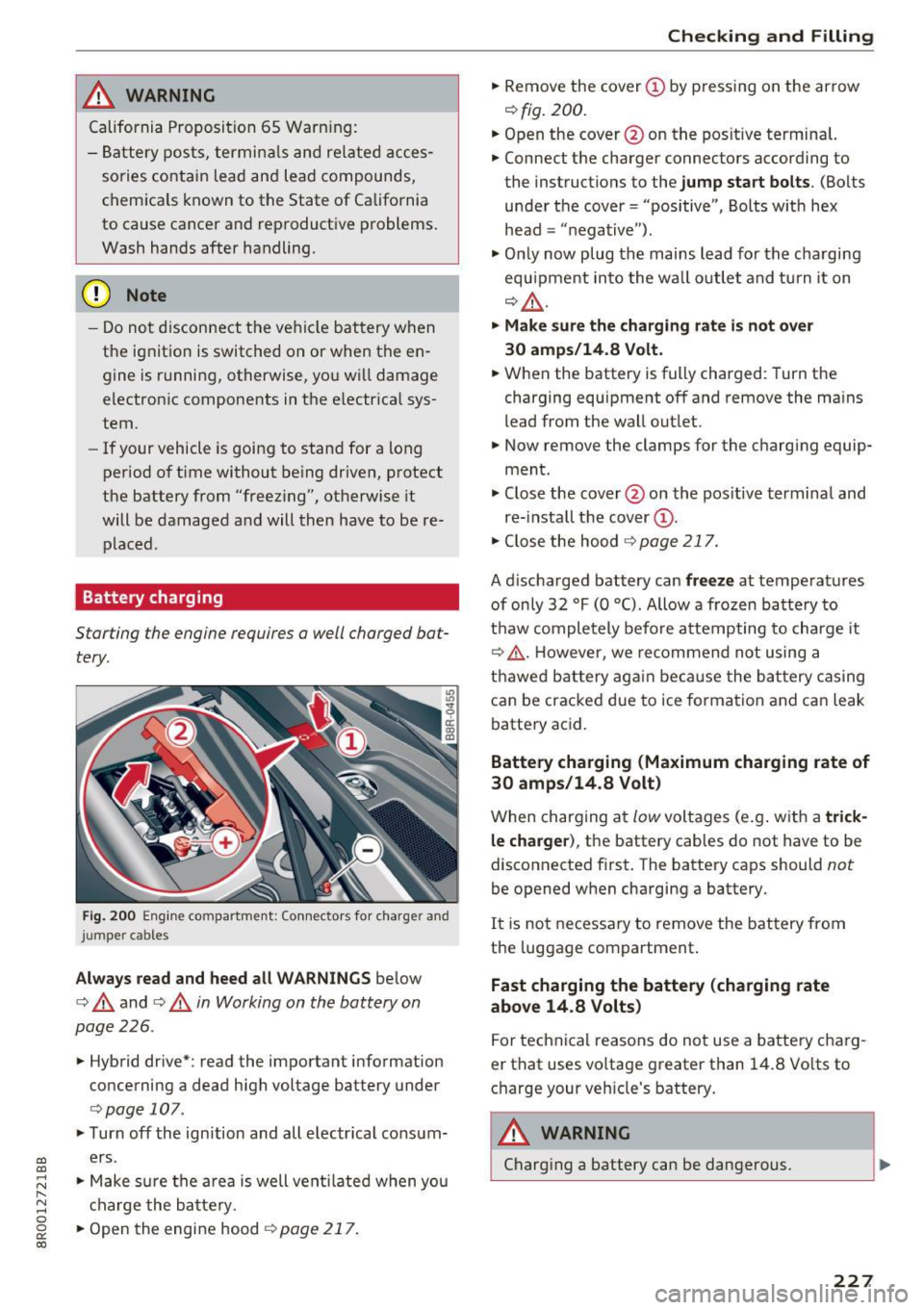
Fig. 200 Engin e co mpartme nt: Co nnectors for charger and
j um per ca bles
Always read and heed all WARNINGS below
c> & and <=> & in Working on the battery on
page 226 .
.. Hybrid dr ive*: read the important i nformation
co ncerning a dead high voltage battery under
<=> page 107.
.. Turn off the ignition and all e lectr ica l consum
ers.
.. Make s ure the a rea is well vent ilated w hen you
c harge the b attery.
.. Open the engine hood
c> page 217 .
Checking and Filling
.. Remove the cover@ by pressing on the arrow
<=>fig . 200.
.. Open the cover @on the pos itive terminal.
.. Connect the charger connecto rs according to
the instructions to the
jump start bolts . (Bolts
under the cover = "positive" , Bolts w ith hex
head = "n egative ").
.,. Onl y now plug the mains lead for the cha rgi ng
equ ipme nt in to the wa ll ou tlet and turn it on
<=> & .
.. Make sure the charging rate i s not over
30 amps/14.8 Volt.
.. When the battery is fully charged: Turn the
charging equ ipment off and remove the ma ins
lead from the wall out let .
.,. Now remove the clamps for the charg ing equip
ment .
.,. Close the cover @on the pos it ive termina l and
re- insta ll the cover
(D .
.,. Close the hood c> page 217.
A d ischarged battery can freeze at temperat ures
of on ly 32 °F (0 °C). Allow a frozen batte ry to
t h aw comple tely before attempting to charge it
c> .&, . However, we recommend not using a
t h awe d batt ery ag ain be ca use the bat tery ca sing
can be cracked due to ice formation and ca n leak
batte ry ac id.
Battery charging (Maximum charging rate of
30 amps/14.8 Volt)
W hen charging a t low voltages (e.g . w ith a trick
le charger ),
th e battery cables do not have to be
disconnected first. The battery caps should
not
be opened when cha rging a battery.
It is no t necessary to remove the bat tery from
the luggage compartment .
Fast charging the battery (charging rate
above 14 .8 Volts)
F or technical rea sons do not use a batte ry charg
er that uses vo ltage greater than 14.8 Vo lts to
c h arge your veh icle's battery .
A WARNING
-Charging a battery can be dangerous.
227
Page 251 of 296

CD
CD
.... N ,-... N .... 0 0 C<'. 00
Check/correct the pressures of all four tires and
store the pressure again in the Infotainment sys
tem ¢
page 249.
ffim (T ire Pressure Monitoring System) T ire
pressu re : S ys tem malfunction !. If ffim
appears
after switching the ignition on or whi le driving
and the
[I] indicator light in the instrument clus
ter blinks for approximate ly one minute and then
stays on, there is system malfunction. Try to
store the correct tire pressures¢
page 249. If
the ind icator light does turn off or turns on again
after a short period of time, dr ive to an author
i zed A udi dealer o r authorized Audi Service Fac ili
ty immediately to have the malfunc tion correct
ed .
& WARNING ,___ -
- If the tire pressure indicator appea rs in the
display, reduce your speed immed iate ly and
avoid any hard steer ing or braking maneu
vers. Stop as soon as possib le and check the
t ires and their pressure.
- The driver is responsib le for maintaining the
correct tire pressure. You must check the
t ire pressure regu larly.
- Under certa in conditions (such as a sporty
driv ing style, winter cond itions or unpaved
roads), the tire p ressure monitoring system
indicator may be delayed.
{D) Tips
- The t ire pressure monitoring system can al
so stop work ing when there is an ESC mal
funct ion.
- Using snow chains may result in a system
malfunction.
- The t ire pressure monitoring system in your
Audi was calibrated with "Audi Orig inal
Tires"
¢ page 23 7. We recommend that you
use these t ires.
Wh eel s
Storing tire pressures
App lies to : veh icles w ith Tir e Pressure Mo nito rin g Syste m
If the tire pressure changes or a tire is replaced,
it must be confirmed in the Infotainment sys
tem .
.,.. Make sure before storing t hat the t ire pressures
of all four tires meet the specified values and
are adapted to the load
¢ page 240 .
.,.. Switch the ignit ion on.
.,.. Select: the
I CAR ! funct io n key> Tire pre ssure
monitoring
> Ye s, store now . Or
.,.. Sele ct: the
I CAR I funct ion but ton > Car Sys
tem s*
control b utton > Service & check s > Tire
pressu re monitoring
> Store tire pre ssure >
Yes, store now.
@ Tips
Do not store the tire pressures if snow chains
are installed.
249
Page 265 of 296

a,
a,
..... N r-N ..... 0 0
0:
co
Right cockpit fuse assignment
Fig. 223 Right side of the cockpit: fuse panel wit h plastic
clip
Fuse panel @ (black)
No . Equipment
5 Steering column switch module
7 Terminal 15 diagnostic connector
8 Gateway (Databus diagnostic interface)
9 Auxil iary heater
Fuse panel @ (brown)
No. Equipment
1 CD /DVD player
2 Wi-Fi
3 MMI/Radio
4 Instrument cluster
5
Gateway (instrument cluster control mod-
ule)
6 Ignition lock
7 Light dial
8 Climate control system blower
9 Steering column lock
1 0 Climate control system
Fuses and bulbs
No . Equipment
11 Diagnostic data
link connector, terminal
30
12 Steering column switch module
Right luggage compartment fuse
assignment
Fig. 224 Right luggage compartment: fuse panel with
pla stic dip
Fuse panel @ (black)
No. Equipment
1 Luggage compartment lid control module
2 Trailer control module
3 Traile r control module
4 Tra iler control module
5 Electromechanical parking brake
6 Electronic damping control
7 Electromechanical parking brake
8 Tail lights
9 quattro Sport
10 Tail lights
11 Central locking system
12 Termina l 30
263
Page 274 of 296

Technical data
Technical data
Vehicle identification
Fig. 234 Vehicle Ident if ication Numbe r (VlN) plate : loca·
tio n on d river 's side dash panel
XXXXX XX -X -XX XX XXX XX
@-+ ~J:~t::1 ::: xxxxxxxx xx x xxxx xxx x
IYP lf'VPE XXX X XX
xx xxxxxxx xx xx xx
XXX KW
XXX
EM:. COil / fAANS , COOE xxxx XXX XXX ®i MOIOlll
©-+ IAC KIIR . / tN NEN AIJSSt
XXXX I XXXX XXX I XX PAI NT NO./ WT£Jldl
II. -AUSST . / OPTIO NS
E0 A 7D5 4UB 6X
M SSG SR W
2EH JOZ lLB lAS
lBA
3FC SM U 7 X1
F0 A
9G3 0
G7 0Y H
0JF
TL 6 3 KA 8EH UlA X 9B Q
Z7
1 XW
803 908
824 020
7T6 C V7 7 K0 4X3 2K2
3L4 4KC 3Y0 413
502
lS A 7GB 01A
4G0
XX X XX X
XX X xxxx
Fig. 235 Vehicle identificat ion labe l: in side the luggage
compart ment
Vehicle Identification Number (VlN)
The Vehicle Identification Number is located in
different places :
- under the windshield on the driver's side
¢fig . 234.
-in the radio or in the MMI*: Select: !CAR i func·
tion button
> Vehicle ID number (VIN) or se·
Leet
I CAR ! function button > Car systems* con·
trol button
> Servicing & checks > VIN num
ber .
-on the vehicle identification label.
272
Vehicle identification label
The vehicle identification label is located in the
luggage compartment above the compartment
for the vehicle tools.
The label ¢
fig. 235 shows the following vehicle
data:
(D Vehicle Identification Number (VIN)
@ Vehicle type, engine output, transmission
® Engine and transmission code
@ Paint number and interior
® Optional equipment numbers
The information of the vehicle identification label
can also be found in your Warranty
& Mainte·
nance booklet.
Safety compliance sticker
The safety compliance sticker is yo ur ass urance
that your new vehicle complies with all applicable
Federal Motor Vehicle Safety Standards which
were in effect at the time the vehicle was manu
factured. You can find this sticker on the door
jamb on the driver's side. It shows the month and
year of production and the vehicle identification
number of your vehicle (perforation) as well as
the Gross Vehicle Weight Rating (GVWR) and the
Gross Axle We ight Rating (GAWR).
High voltage warning label
The high voltage warning label is located in the
engine compartment next to the engine hood re·
lease. The spark ignition system complies w ith
the Canadian standard ICES-002 .
Weights
Gross Vehicle Weight Rating
The Gross Vehicle Weight Rating (GVWR), and
the Gross Axle Weight Rating (GAWR) for front
and rear are listed on a sticker on the door jamb
on the dr iver's side .
The Gross Vehicle Weight Rating includes the
weight of the basic vehicle plus full fuel tank, oil
and coolant, plus maximum load, which includes
passenger weight (150 lbs/68 kg per designated
seat ing position) and luggage weight¢,&. .
Page 279 of 296

CD
CD
.... N ,-... N ..... 0 0 C<'. 00
today's automobiles, have steadily reduced the
scope of maintenance and repairs which can be
carried out by vehicle owners.
Also, safety and
environmental
concerns place very strict limits
on the nature of repairs and adjustments to en
gine and transmission parts which an owner can perform .
Maintenance, adjustments and repairs usually re
quire special tools, testing devices and other
equipment available to specially trained work
shop personnel in order to assure proper per
formance, reliability and safety of the vehicle and
its many systems.
Improper maintenance, adjustments and repairs
can impair the operation and reliability of your
vehicle and even void your vehicle warranty .
Therefore, proof of servicing in accordance with
the maintenance schedule may be a condition for upholding a possible warranty claim made within
the warranty period.
Above all , operational safety can be adversely af
fected, creating unnecessary risks for you and
your passengers.
If in doubt about any servicing, have it done by
your authorized Audi dealer or any other properly equipped and qualified workshop. We strongly urge you to give your authorized Audi dealer the
opportunity to perform all scheduled mainte nance and necessary repairs. Your dealer has the
facilities, original parts and trained specialists to keep your vehicle running properly .
Performing limited maintenance yourself
The following pages describe a limited number of
procedures which can be performed on your vehi
cle with ordinary tools, should the need arise and
trained personnel be unavailable. Before per
forming any of these procedures, always thor
oughly read all of the applicable text and careful ly follow the instructions given . Always rigorously
observe the
WARNINGS provided .
Before you check anything in the engine com
partment, always read and heed all WARNINGS
c::> .&. and c::> .&. in Working in the engine compart
ment on page 217 .
Consumer information
A WARNING
-Serious personal injury may occur as a result
of improperly performed maintenance, ad
justments or repairs .
- Always be extremely careful when working
on the vehicle. Always follow commonly ac
cepted safety practices and general com
mon sense. Never risk personal injury.
- Do not attempt any of the maintenance,
checks or repairs described on the following pages if you are not fully familiar with these
or other procedures with respect to the ve hicle, or are uncertain how to proceed.
- Do not do any work without the proper tools
and equipment. Have the necessary work
done by your authorized Audi dealer or an
other properly equipped and qualified work
shop.
- The engine compartment of any motor vehi cle is a potentially hazardous area. Never
reach into the area around or touch the radi
ator fan.
It is temperature controlled and
can switch on suddenly - even when the en
gine is off and the ignition key has been re
moved . The radiator fan switches on auto
matically when the coolant reaches a certain
temperature and will continue to run until
the coolant temperature drops.
- Always remove the ignition key before any
one gets under the vehicle.
- Always support your vehicle with safety
stands if it is necessary to work underneath
the vehicle . The jack* supplied with the vehi
cle is not adequate for this purpose and
could collapse causing serious personal in
jury.
- If you must work underneath the vehicle
with the wheels on the ground, always make
sure the vehicle is on level ground, that the
wheels are always securely blocked and that the engine cannot be started.
- Always make sure the transmission selector
lever (automatic transmission) is in P (Park
position) and the park brake is applied.
277
Page 284 of 296

Index
Child safety . . . . . . . . . . . . . . . . . . . . . . . . . . 168
Important safety instructions for using child
safety seats . . . . . . . . . . . . . . . . . . . . . . . .
171
Installing a child restraint using the LATCH
system . . . . . . . . . . . . . . . . . . . . . . . . . . . .
182
Mounting and releasing the anchorage
hook
. ... .. .. .. ... ... ... .... .. .. .. . 182
Tether anchors .. ................ ... . 183
Tether straps ... .... ......... .... .. . 183
Child safety locks
Rear doors . . . . . . . . . . . . . . . . . . . . . . . . . . 42
Child safety seats
Booster seats . . . . . . . . . . . . . . . . . . . . . . .
176
Convertible child seats . . . . . . . . . . . . . . . 175
Danger of using child restraints in the front
seat ..... .. .... .......... ...... ... .
149
How do I properly install a child safety seat
. h' l ? in myve 1c e .... ................ ... . 171
Infant seats . . . . . . . . . . . . . . . . . . . . . . . . 17 4
L ATCH system . . . . . . . . . . . . . . . . . . . . . .
182
Lower anchorages ............ .... .. .
Safety instructions .................. .
Unused safety belts on the rear seat ... .
Ch ild seats 182
171
173
174
Securing . . . . . . . . . . . . . . . . . . . . . . . . . . . 178
Cigarette lighter . . . . . . . . . . . . . . . . . . . . . . . 73
Cleaning . . . . . . . . . . . . . . . . . . . . . . . . . . . 204
Cleaning/removing ice from windows . . . . .
206
Cleaning Alcantara . . . . . . . . . . . . . . . . . . . . 207
Clean ing artificial leather. . . . . . . . . . . . . . . 207
Cleaning carbon parts . . . . . . . . . . . . . 206, 207
Cleaning controls . . . . . . . . . . . . . . . . . . . . . 206
Clean ing decorative parts/trim . . . . . . . . . . 206
Cleaning displays . . . . . . . . . . . . . . . . . . . . . 206
Cleaning exhaust tail pipes . . . . . . . . . . . . . 205
Cleaning plastic parts . . . . . . . . . . . . . . . . . . 206
Cleaning rims 205
Clean ing textiles . . . . . . . . . . . . . . . . . . . . . . 207
Climate control
Air vents . . . . . . . . . . . . . . . . . . . . . . . . . . . .
79
Automatic recirculation . . . . . . . . . . . . . . . . 79
Operation . . . . . . . . . . . . . . . . . . . . . . . . . . . 78
Setup . . . . . . . . . . . . . . . . . . . . . . . . . . . . . . 79
Supplementary . . . . . . . . . . . . . . . . . . . . . . . 80
Synchronizing . . . . . . . . . . . . . . . . . . . . . . . . 79
Climate control system . . . . . . . . . . . . . . . . . 77
Climatized cupholder . . . . . . . . . . . . . . . . . . .
72
282
Clock 10
Closing
Panoramic sliding sunroof. . . . . . . . . . . . . . 44
Coat hooks . . . . . . . . . . . . . . . . . . . . . . . . . . .
76
Compass mirror . . . . . . . . . . . . . . . . . . . . . . . 58
Compliance . . . . . . . . . . . . . . . . . . . . . . . . . . 279
Consumer information . . . . . . . . . . . . . . . . . 276
Consumer Information . . . . . . . . . . . . . . . . . 138
Contacting NHTSA . . . . . . . . . . . . . . . . . . . . 138
Convenience
Closing . . . . . . . . . . . . . . . . . . . . . . . . . . . . . 44
Opening . . . . . . . . . . . . . . . . . . . . . . . . . . . . 44
Convenience key . . . . . . . . . . . . . . . . . . . . . . . 3 7
Indicator lights . . . . . . . . . . . . . . . . . . . . . .
85
Locking and unlocking vehicle . . . . . . . . . . . 37
Starting engine (START ENGINE STOP but-
ton) . . . . . . . . . . . . . . . . . . . . . . . . . . . . . . . .
84
Stopping the engine (START ENGINE STOP
button) . . . . . . . . . . . . . . . . . . . . . . . . . . . . .
85
Switching on ignition . . . . . . . . . . . . . . . . . . 84
Convertible child safety seats . . . . . . . . . . . 175
Convertible locking retractor
Activating . . . . . . . . . . . . . . . . . . . . . . . . . .
180
Deactivating . . . . . . . . . . . . . . . . . . . . . . . . 180
Using to secure a child safety seat . . . . . . 180
Cooled cupholder . . . . . . . . . . . . . . . . . . . . . . 72
Cooling box in glove compartment . . . . . . . . 75
Cooling mode (climate control) . . . . . . . . . . . 78
Cooling system
Adding coolant . . . . . . . . . . . . . . . . . . . . . .
223
Coolant . . . . . . . . . . . . . . . . . . . . . . . . . . . . 223
Coolant level checking . . . . . . . . . . . . . . . . 223
Cornering light . . . . . . . . . . . . . . . . . . . . . . . . 51
Cruise control
Changing speed . . . . . . . . . . . . . . . . . . . . . .
93
Preselect speed . . . . . . . . . . . . . . . . . . . . . . 93
Switching off . . . . . . . . . . . . . . . . . . . . . . . . 93
Switching on . . . . . . . . . . . . . . . . . . . . . . . . . 92
Warning/indicator lights . . . . . . . . . . . . . . . 14
Cruising range . . . . . . . . . . . . . . . . . . . . . . . . . 19
(upholders . . . . . . . . . . . . . . . . . . . . . . . . 71, 73
Heated and cooled . . . . . . . . . . . . . . . . . . . . 72
D
Data recorder
Date display 188
10