2016 AUDI TT COUPE ignition
[x] Cancel search: ignitionPage 207 of 322

Downloaded from www.Manualslib.com manuals search engine -Two inflatable airbags (airbag and gas genera
tor),
one for the driver and one for the front
passenger
-The airbag indicator light in the overhead con
sole
The knee airbag syste m will not deploy:
-when the ignition is switched off
-in frontal collisions when the deceleration
measured by the control unit is too low
-
in side collisions
-
in rear-end collisions
-
in rollovers
-
in the event of a system mal function (warning/
i ndicator light is on) ~page 15.
A_ WARNING
-Safety belts and the airbag system can only
prov i
de protection when occupants are in
the proper seating position ~page 197.
-If the airbag indicator light~ page 15
comes when the vehicle is being used, have
the system inspected immediately by your
authorized Audi dealer.
It is possible that
the airbag will inflate when it is not sup
posed to,
or will not inflate when it should.
How knee airbags work
The risk of injury to the leg area can be reduced
by fully inflated knee airbags.
Fig. 160 Inflated airbags protecting in a frontal collision
The knee airbag system has been designed so
that the airbags for the driver and front passen
ger deploy in certain but not all frontal collisions.
Airbag system
If the front airbags deploy, the knee airbags also
deploy
in frontal collisions when the deployment
threshold stored in the control unit is met.
When the system deploys, the airbags fill with a
propellant gas, and inflate between the lower
part of the instrument panel and the driver and
the lower part of the instrument panel and the
front passenger~ page 197, fig. 157.
Although they are not a soft pillow, they can
"cushion" the impact and in this way they can
help
to reduce the risk of injury to the lower ex
tremities.
All of this takes place in the blink of an eye, so
fast that many people don't even realize that the
airbags have deployed. The airbags also inflate
with a
great deal of force and it is important for
occupant
safety that nothing should be in their
way when they deploy.
Fully inflated airbags
in combination with proper
ly worn safety belts slow down and limit the oc
cupant's forward movement and help to reduce
the risk of injury.
Important safety instructions on the knee
airbag system
Airbags are only supplemental restraints. Always
wear
safety belts correctly and ride in a proper
seating position.
There is a lot that you and your passengers must
know and do to help the safety belts and airbags
to provide supplemental protection .
.&. WARNING
An inflating knee airbag can cause serious in
j u
ry. Wearing safety belts incorrectly and im
proper seating positions increase the risk of
serious personal injury and death whenever a
vehicle
is being used.
- The knee airbag
system cannot protect you
properly if you
are seated too close to any of
the airbag locations. When adjusting their
seat positions, it is important that both the
driver and the front passenger keep their
upper bodies and knees at the following
minimum
safe distances: ~
205
Page 208 of 322

Downloaded from www.Manualslib.com manuals search engine Airbag system
-at least 10 in (25 cm) between the chest
and the steering wheel/instrument panel.
-
at least 4 in (10 cm) between the knees
and the lower part of the instrument pan
el.
- The risk
of personal injury increases if you
lean forward
or to the side, or if the seat is
improperly positioned and you are not wear
ing your safety belt. The risk increases even
more should the airbag deploy.
- Always
make sure that the knee airbag can
inflate without interference. Objects be
tween you and the airbag can increase the
risk of injury in an accident by interfering
with
the way the airbag deploys or by being
pushed into you as the airbag deploys.
- Never
let anybody, especially children or
animals ride in the footwell in front of the
passenger seat. If the airbag deploys, this
can result in serious or fatal injuries.
- Never carry
objects of any kind in the foot
well area in front of the driver's or pas
senger's seat. Bulky objects (shopping
bags, for example) can interfere with or
prevent proper deployment of the airbag.
Small objects can be thrown through the
vehicle if the airbag deploys and injure you
or your passengers.
-Make sure there are no cracks, deep scratch
es or other damage in the area of the instru
ment panel where the knee airbags are lo
cated.
-If children are incorrectly seated, their risk
of injury increases in a collision
~page 212, Child safety.
206
Side airbags
Description of side airbags
The airbag system can provide supplemental
protection to properly restrained front
seat occu
pants .
Fig . 161 Side airbag location in the driver's seat
The side airbags are located in the sides of the
front seat backrests Q fig. 161 facing the doors.
They
are identified by the word "AIRBAG".
The side airbags installed for the front seating
positions have been designed and certified to
help reduce the risk of injury that can be caused
by airbags when they inflate, particularly when
the occupant sitting next to it is not seated prop
erly. The
side airbag for the front passenger seat
can be used with properly installed child re
straints. Please be sure to read the important in
formation and warnings whenever using a child
restraint in a vehicle: Safety belts Q page 180,
Airbag system Q page 188, Child safety
¢page 212.
The side airbag syste m b asica lly consist s o f:
-
the electronic control module and external side
impact sensors
-the two side airbags Located in the sides of the
front backrests
-the airbag warning light in the overhead con
sole.
The airbag system is monitored electronically to
make certain that it is functioning properly at all
times. Each time you turn on the ignition, the air
bag system indicator light will come on for a few
seconds (self diagnostics). Iii>
Page 209 of 322

Downloaded from www.Manualslib.com manuals search engine ..... N
G'. co ..... ID VI ..... ID .....
The side airbag system supplements the safety
belts and can help to reduce the risk of injury to
the driver's and front passenger's upper torso on
the side of the vehicle that is struck in a side col
lision. The
airbag deploys in side impacts and on
ly when the vehicle acceleration registered by the
control unit is high enough. If this rate is below
the reference value programmed into the control
unit, the side airbags will not be triggered, even
though the car may be badly damaged as a result
of the collision. It is not possible to define an air
bag
triggering range that will cover every possi
ble
angle of impact, since the circumstances will
vary considerably
between one collision and an
other. Important factors include, for example,
the nature (hard or soft) of the impacting object,
the angle of impact, vehicle speed, etc.
Q page 208, Important safety instructions on
the side airbag system.
Aside from their normal safety function, safety
belts work to help keep the driver or front pas
senger in position in the event of a side collision
so that the side airbags can provide protection.
The airbag system is not a substitute for your
safety belt. Rather, it is part of the overall occu
pant restraint system in your vehicle. Always re
member that the side airbag system can only
help
to protect you if you are wearing your safety
belt and wearing it properly. This is another rea
son why you should always wear your safety
belts, not just because the law requires you to do
so Qpage 180, General notes.
It is important to remember that while the sup
plemental side a irbag system is designed to re
duce the lik eli hood of serious injuries, other inju
ries, for
example, swelling, bruising, friction
burns and minor abrasions can also be associated
with deployed side airbags. Remember too, side
airbags will deploy only once and only in certain
kinds of accidents -your safety belts are always
there to offer protection.
Vehicle damage, repair costs or even the lack of
vehicle damage are not necessarily an indication
of over-sensitive or failed airbag activation. In
some collisions, both front and side airbags may
inflate .
Remember too, that airbags will deploy
only once
and only in certain kinds of collisions -
Airbag system
your safety belts are always there to offer protec
tion
in those accidents in which airbags are not
supposed to deploy or when they have already
deployed.
The side airbag system will not deploy:
-when the ignition is switched off
-in side collisions when the acceleration meas-
ured by
the sensor is too low
-
in front-end collisions
- in rear-end collisions
-
in rollovers.
In
some types of accidents the front a irbags, side
curtain airbags and side airbags may be triggered
together.
A WARNING
--Safety belts and the airbag system will only
provide protection
when occupants are in
the proper seating position Q page 208.
-If the airbag indicator light Q page 15
comes when the vehicle is being used, have
the system inspected immediately by your
authorized Audi dealer. It is possible that
the airbag will inflate when it is not sup
posed to, or will not inflate when it should.
How supplemental side airbags work
Side airbags deploy instantly and can help re
duce the risk
of upper torso injuries for occu
pants who are properly restrained.
Fig. 162 Inflated side airbags on left side of vehicle
When the system is triggered, the airbag is filled
with propellant gas and breaks through a seam in
the seat surface area marked "AIRBAG". It ex-
pands between the side trim panel and the ..,..
207
Page 212 of 322
Downloaded from www.Manualslib.com manuals search engine Airbag sy stem
Aside from their normal safety function, safety
belts work to help keep the driver or front pas
senger in position in the event of a collision so
that the side curtain airbags can provide protec
tion .
The airbag
system is not a substitute for your
safety belt. Rather, it is part of the overall occu
pant restraint system in your vehicle. Always re
member that the airbag system can only help to
protect you if you are wearing your safety belt
and wearing it properly . This is another reason
why you
should always wear your safety belts,
not just because the law requires you to do so
~page 180, General notes.
It is important to remember that while the side
curtain a irbag system is designed to help reduce
the likelihood of serious injuries, other injuries,
for
example, swelling, bruising, friction burns
and minor abrasions can also be associated with
these airbags upon deployment. Remember too,
these airbags will deploy only once and only in
certain kinds of accidents -your safety belts are
always there to offer protection.
The side curta in airbag sy stem basically
consists
of:
-The electronic control module and external side
impact sensors
-The side curtain airbags above the front and
rear side windows with ejection mitigation fea
tures
-The airbag indicator light in the instrument
panel
The airbag system is monitored electronically to
make certain it is function ing properly at all
times. Each time you switch on the ignition, the
airbag system indicator light will come on for a
few seconds (self diag nasties).
The side curtain airbag is not activated:
-if the ignition is switched off,
-
in side collisions when the acceleration meas-
ured by the sensor is too low,
- in
rear-end collisions .
210
A WARNING
-Safety belts and the airbag system will only
provide
protection when occupants are in
the proper seating position Q page 44,
Seats and storage.
-If the airbag indicator light Q page 15
comes when the vehicle is being used, have
the system inspected immediately by your
authorized Audi dealer. It is possible that
the airbag will inflate when it is not sup
posed to, or will not inflate when it should.
How side curtain airbags work
Side curtain airbags can work together with side
airbags to help reduce
the risk of head and upper
t orso injuries for occupants who are properly re
strained.
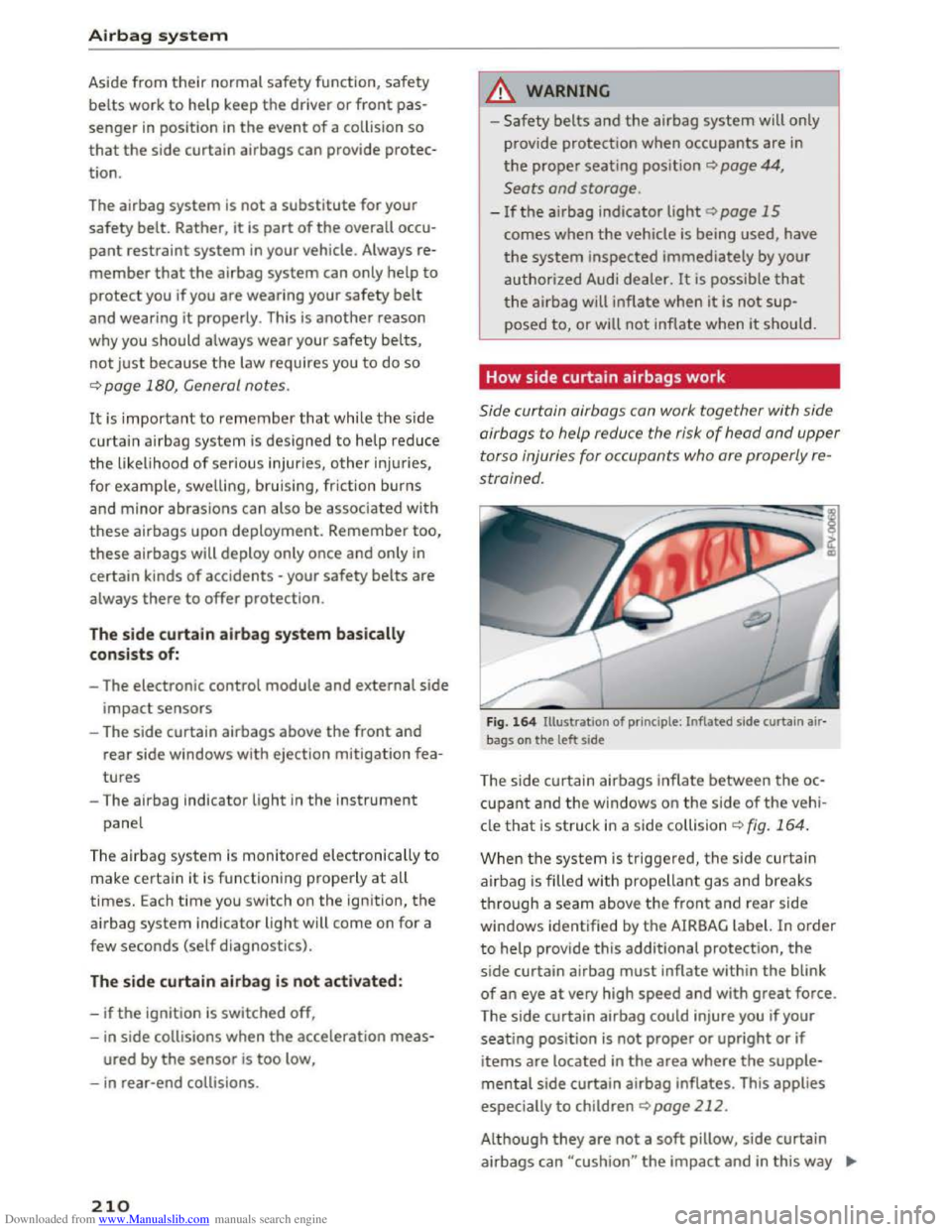
Fig. 164 Illustration of principle: Inflated side curtain air
bags on
the left side
The side curtain airbags inflate between the oc
cupant and the windows on the side of the vehi
cle
that is struck in a side collision Q fig. 164.
When the system is triggered, the s ide curtai n
airbag
is filled with propellant gas and breaks
th rough a seam above the front and rear side
windows identified by the AIRBAG label. In order
to help provide this additional protection, the
side curtain airbag must inflate within the blink
of an eye at very high speed and with great force .
The
side curtain airbag could injure you if your
seating position is not proper or upright or if
items are located in the area where the supple
mental side curtain airbag inflates. This applies
especially to children Qpage 212.
Although they are not a soft pillow, side curtain
airbags can "cushion" the impact and in this way .,..
Page 215 of 322

Downloaded from www.Manualslib.com manuals search engine ..... N
G'. CX)
..... ID IJ' ..... ID .....
exceptional circumstances and the
PASSENGER AIR BAG OFF light does not
come on and stay on, immediately install
the rear-facing child safety seat in a rear
seating position and have the airbag system
inspected immediately by your Audi dealer.
A WARNING
-Forward-facing child seats installed on the
front passenger seat may interfere with the
deployment of the airbag and cause serious
personal injury to the child.
-If exceptional circumstances require the use
of a forward-facing child restraint on the
front passenger's seat, the child's safety
and well-being require the following special
precautions to be taken:
-Always make sure that the forward-facing
seat has been designed and certified by its
manufacturer for use on a front passenger
seat with a front and side airbag.
- Always carefully follow
the manufacturer's
instructions provided with the child seat
or infant carrier.
- Never install a child
restraint without a
properly
attached top tether strap if the
child restraint manufacturer's instructions
require the top tether strap to be used.
- Never
put the forward-facing child re
straint up against or very near the instru
ment panel.
- Always move
the passenger seat into its
rearmost position in the seat's fore and
aft adjustment range, as far away from
the airbag as possible before installing the
child restraint. The backrest must be ad
justed to an upright position.
- Always
make sure that nothing prevents
the front passenger's seat from being
moved
to the rearmost position in its fore
and aft adjustment range.
- Never place objects on the seat (such as a
laptop, CD player, electronic games de
vice, power inverter or seat heater for
child
seats). These may influence the elec
trical
capacitance measured by the capaci
tive
passenger detection system and can
Child safety
also fly around in an accident and cause
serious personal injury.
- Never place
or use any electrical device
(such as a
laptop, CD player, electronic
games device, power inverter or seat heat
er for child seats) on the front passenger
seat if the device is connected to the 12-
volt socket or the cigarette lighter socket.
-
If a seat heater has been retrofitted or
otherwise added to the front passenger
seat, never install any child restraint sys
tem on this seat.
-Make sure that there are no wet objects
(such as a wet towel) and no water or oth
er liquids on the front passenger seat
cushion.
- Always
make sure that the PASSENGER
AIR BAG OFF light comes on and stays on
a ll
the time whenever the ignition is
switched on.
-If the PASSENGER AIR BAG OFF light
does not come on and stay on, immediate
ly install the forward-facing child seat in a
rear seating position and have the airbag
system inspected by your authorized Audi
dealer.
- Always buckle
the child seat firmly in
place even if a child is not sitting in it. A
loose child seat can fly around during a
sudden stop or in a collision.
- Always read
and heed all WARNINGS
whenever using a child restraint in a vehi
cle
c> page 180, Safety belts, c> page 188,
Airbag system
and ~page 212, Impor
tant information .
(D Tips
Always replace child restraints that were in
stalled in a vehicle during a crash. Damage to
a child restraint that is not visible could cause
it to fail in another collision situation.
Advanced front airbag system and children
Your vehicle is equipped with a front "Advanced
Airbag System" in compliance with United States
Federal Motor Vehicle Safety Standard (FMVSS) ~
213
Page 222 of 322

Downloaded from www.Manualslib.com manuals search engine Child safety
-Always install rear-facing child safety seats
on the rear seat.
-If you must install a rearward facing child
safety seat on the front passenger seat be
cause
of exceptional circumstances and the
PASSENGER AIR BAG OFF light does not
come on and stay on, immediately install
the rear-facing child safety seat in a rear
seating position and have the airbag system
inspected by your Audi dealer.
-The rear side of the child safety seat should
be positioned
as close as possible to the
backrest on the vehicle seat.
-Always read and heed all WARNINGS when
ever using a child
restrained in a vehicle is
being used~ page 180, Safety belts,
~page 188, Airbag system and
~page 212, Important information.
A WARNING
If exceptional circumstances require the use
of a forward-facing child restraint on the
front passenger's seat, the child's safety and
well-being require that the following special
precautions be taken:
- Make
sure the forward-facing seat has been
designed and certified by its manufacturer
for use on a front seat with a passenger
front and side airbag.
- Always follow
the manufacturer's instruc
tions provided with the child safety seat or
infant carrier.
- Always move
the front passenger seat into
the rearmost position of the passenger
seat's fore and aft adjustment range, and as
far away from the airbag as possible before
installing
the child restraint.
-Always make sure that nothing prevents the
front passenger's seat from being moved to
the rearmost position in its fore and aft ad
justment range.
- Always
make sure the backrest is in an up
right position.
- Never place
or use any electrical device
(such
as a laptop, CD player, electronic
games device, power inverter or seat heater
for child seats) on the front passenger seat
220
if the device is connected to the 12-volt
socket or the cigarette lighter socket.
-
If a seat heater has been retrofitted or oth
erwise added to the front passenger seat,
never install any child restraint system on
this seat.
-Make sure that there are no wet objects
(such
as a wet towel) and no water or other
liquids on the front passenger seat cushion.
- Never place objects on
the seat (such as a
laptop, CD player, electronic games device,
power inverter
or seat heater for child
seats). These may influence the electrical
capacitance
measured by the capacitive pas
senger detection system and can also fly
around in an accident and cause serious per
sonal injury.
- Make
sure that the PASSENGER AIR BAG
OFF light comes on and stays on all the time
whenever the ignition is switched on.
-
If the PASSENGER AIR BAG OFF light does
not come on and stay on, immediately in
stall the forward-facing child seat at a seat
ing position on the rear seat and have the
airbag system inspected by your authorized
Audi dealer.
-Take the child restraint off the front passen
ger seat and install it properly at one of the
rear seat positions if the PASSENGER AIR
BAG OFF light does not stay on whenever
the ignition is switched on.
Page 224 of 322

Downloaded from www.Manualslib.com manuals search engine Child safety
.&_ WARNING
Not using a booster seat, using the booster
seat improperly, incorrectly installing a boos
ter seat or using the vehicle safety belt im
properly increases the risk of serious personal
injury and death in a collision or other emer
gency situation. To help reduce the risk of se
rious personal injury and/or death:
-The shoulder belt must lie as close to the
center of the child's collar bone as possible
and must lie flat and snug on the upper
body. It must never lie across the throat or
neck. The lap belt must lie across the pelvis
and never across the stomach or abdomen.
Make sure that the belt lies flat and snug.
Pull on the belt to tighten if necessary.
- Failure
to properly route safety belts over a
ch i
ld's body will cause severe injuries in an
accident or other emergency situation
qpage 180.
-The rear side of the child safety seat should
be positioned as close as possible to the
backrest on the vehicle seat.
-Children on the front seat of any car, even
with Advanced Airbags, can be seriously in
jured or even killed when an airbag inflates.
- Never
let a child stand or kneel on any seat,
for example the front seat.
-Never let a child ride in the cargo area of
your vehicle .
- Always
remember that a child leaning for
ward, sitting sideways or out of position in
any way
during an accident can be struck by
a deploying airbag. This will
result in seriou s
personal injury or death.
-If you must install a booster seat on the
front passenger seat because of exceptional
circumstances the PASSENGER AIR BAG
OFF light must come on and stay on, when
ever the ignition is switched on.
-If the PASSENGER AIR BAG OFF light does
not come on and stay on, perform the
checks described q page 199, Monitoring
the Advanced Airbag System.
-Take the child restraint off the front passen
ger seat and install it properly at one of the
rear seat positions if the PASSENGER AIR
222
BAG OFF light does not stay on whenever
the ignition is switched on.
- Always
read and heed all WARNINGS when
ever using a child restrained in a vehicle is
being
used q page 180, Safety belts,
q page 188, Airbag system and
q page 212, Important information.
Booster seats on the rear seat
Children who are about 7 years and older, who
weigh more than SS lbs (2S kg) and are not taller
than 4 ft 9 in (S7 in/1.4S m) are best protected
when properly restrained on the rear seat.
Due to limited rear seat head clearance chi ld ren
4 ft 3 in (Sl in/1.30 m) and taller must not use
booster seats on the rear seat of your Audi TT
Coupe. The rear seat of your Audi TT Coupe has
been specially designed to permit children who
are between 4 ft 3 in (Sl in/1.30 m) and 4 ft 9 in
(S7 in/1.4S m) tall (about 7 to 12 years old) to
use the available three -point lap and shoulder
safety belts.
.&. WARNING
lo= ----The rear seat area is too small to safely
transport passengers taller than 4 ft 9 in
(S7 in/1.4S m).
-
Persons taller than 4 ft 9 in (S7 in/1.4S m)
as well as children in booster seats who are
too close to the rear window and roof can
suffer severe head and neck injuries when
the rear lid is closed or in a crash.
- The
minimum clearance between the pas
sengers' heads and the rear window must
never -under any circumstances -be less
than l in(2.S cm.) when the passengers sits
fully upright.
- Always make sure that the rear seat passen
gers cannot be struck when the rear lid is
closed.
Booster seats on the front seat
Children aged about 7 years and older and weigh
ing more than SS lbs (2S kg) who are between
4 ft 3 in (Sl in/1.30 m) and 4 ft 9 in (S7 in/
l.4S m) tall may in exceptional circumstances ~
Page 226 of 322

Downloaded from www.Manualslib.com manuals search engine Child safety
-It is safer to install a forward-facing child
safety seat on the rear seat.
-Always read and heed all WARNINGS when
ever using a child restrained in a vehicle is
being used c'.) page 212. Special precautions
apply when installing a child safety seat on
the front passenger seat c'.) page 189, Child
restraints on the front seot -some impor
tant things to know.
..&_WARNING
....
Always take special precautions if you must
install a forward or rearward-facing child re
straint on the front passenger's seat in excep
tional situations:
- W
henever a forward or rearwa rd-facing
chi ld r
estraint is installed on the front pas
senger seat, the PASSENGER AIR BAG OFF
ligh t must come on and stay on whenever
the ignition is switched on.
-
If the PASSENGER AIR BAG OFF light does
not come on and stay on, perform the
checks described c'.) page 199, Monitoring
the Advanced Airbag System.
-Take the child restraint off the front passen
ger seat and install it properly at one of the
rear seat positions if the PASSENGER AIR
BAG OFF light does not stay on whenever
the ignition is switched on.
-
Improper installation of child restraints can
reduce their effectiveness or even prevent
them from providing any protection.
-An improperly installed child restraint can
interfere with the airbag as it deploys and
seriously injure
or even kill the child .
-Always carefu lly follow the manufacturer's
instructions prov ided with the child safety
seat or carrier.
- After checking
to make sure that the child
restraint is properly installed, make certain
that the child restraint is correctly recog
nized by the capacitive passenger detection
system in the front passenger seat and that
the PASSENGER AIR BAG OFF light signals
the correct front passenger frontal airbag
status.
224
-
..&. WARNING
Forward-facing child restraints:
-Always make sure the forward-facing seat
has been designed and certified by its man
ufacturer for use on a front seat with a pas
senger front and side airbag.
- Never
put the forward-facing child restraint
up, against or very near the instrument pan
el.
-Always move the passenger seat into its
rearmost position in the seat's fore and aft
adjustment range, as far away from the air
bag as possible before installing the for
ward-facing child restraint. The backrest
m ust be adjusted to an upr ight position.
- M ake
sure that the PASSENGER AIR BAG
OFF light comes on and stays on all the time
whenever the ign ition is switched on.
..&_WARNING
Rearward-facing child restraints:
-A ch ild in a rearward-facing child safety seat
installed on the front passenger seat will be
seriously injured
and can be killed if the
front airbag inflates -even with an Ad
vanced Airbag System.
-The inflating airbag will hit the child safety
seat or infant carrier with great force and
will smash the child safety seat and child
against the backrest, center armrest, door
or roof.
-Always be especia lly careful if you must in
stall a rearward facing child safety seat on
the front passenger seat in exceptiona l cir
cumstances.
- Make
sure that the PASSENGER AIR BAG
OFF light comes on and stays on all the time
whenever the ignition is switched on.
-If the PASSENGER AIR BAG OFF light does
not come on and stay on, immediately in
stall the rear-facing child safety seat in a
rear seating position and have the airbag
system inspected by your Audi dealer.