2015 AUDI S3 SEDAN weight
[x] Cancel search: weightPage 6 of 282

Table of contents
Technical Data . . . . . . . . . . . . . . . . . . . .
258
Technical data . . . . . . . . . . . . . . . . . . . . 258
Vehicle identificat ion . . . . . . . . . . . . . . . . . 258
Weights . . . . . . . . . . . . . . . . . . . . . . . . . . . 258
Dimensions . . . . . . . . . . . . . . . . . . . . . . . . . 259
Capac ities . . . . . . . . . . . . . . . . . . . . . . . . . . 260
Gasoline engines . . . . . . . . . . . . . . . . . . . . 261
D iesel engine . . . . . . . . . . . . . . . . . . . . . . . 261
Consumer information . . . . . . . . . . 262
Warranty coverages . . . . . . . . . . . . . . . . . . 262
Operating your vehicle outside the U.S.A.
or Canada . . . . . . . . . . . . . . . . . . . . . . . . . . 262
Audi Service Repair Manuals and Literature . . . . . . . . . . . . . . . . . . . . . . . . . . 262
M aintenance. . . . . . . . . . . . . . . . . . . . . . . . 262
Accessories and technical changes . . . . . . 264
Declaration of Compliance,
Te lecommunication and E lectronic
Systems . . . . . . . . . . . . . . . . . . . . . . . . . . . 265
Index ... .. .. ................. .. ... 266
4
Page 61 of 282
....,
N
0 > co
rl I.O
"'
"'
"'
rl
_& WARNING
Always leave the lid on the glove compartment cover closed while driving to reduce the
risk of injury.
Additional storage compartments
There are additional storage compartments,
compartments and holders at other locations in
the vehicle :
- In the upper part of the glove compartment.
- In the center console under the center arm-
rest* .
- On the back of the right front seat . The com
partment* can hold a maximum weight of
2 lbs
(1 kg).
- Garment hooks on the B-pillar ¢
&.
_& WARNING
-Do not place any objects on the instrument
panel. Objects that are not stored securely
can slide around in the vehicle while driving,
when accelerating or braking or when turn
ing.
- Make sure that objects cannot fall out of the
center console storage compartment or oth
er compartments and into the footwell
while driving. These objects could prevent
you from braking or accelerating during sud
den braking maneuvers.
- Garments hung on the hooks must not ob
struct the driver's view. The garment hooks
are only designed for light objects . Do not
hang any garments with hard, sharp or
heavy objects in the pockets on the garment
hooks . These objects could injure vehicle oc
cupants during sudden brak ing or in a colli
sion - especially if the airbags deploy.
- Always keep the glove compartment closed
while driving to reduce the risk of injury dur
ing a collision or heavy brak ing.
- Read and following the WARNINGS in
¢ page 168, Important safety instructions
on the side airbag system.
-Hang garments so that they do not obstruct
the driver's view.
Seats and storage
-The garment hooks should only be used for
light articles of clothing . Do not leave any
heavy or sharp-edged objects in the pockets
that could interfere with the side airbags unfolding and cause injuries in the event of
a collision .
- Do not use coat hangers to hang garments,
because this could reduce the effectiveness
of the side curtain airbags.
- Do not hang any heavy objects on the gar
ment hooks, because they could cause injury
during heavy braking.
- Because of their load capacity, the hooks
should only be used to secure objects that
weigh a max imum of 10 lb (5 kg). Heavy ob
jects will not be secured sufficiently, and
this increases the risk of injury.
luggage compartment
Loading luggage compartment
Luggage items must be stowed securely.
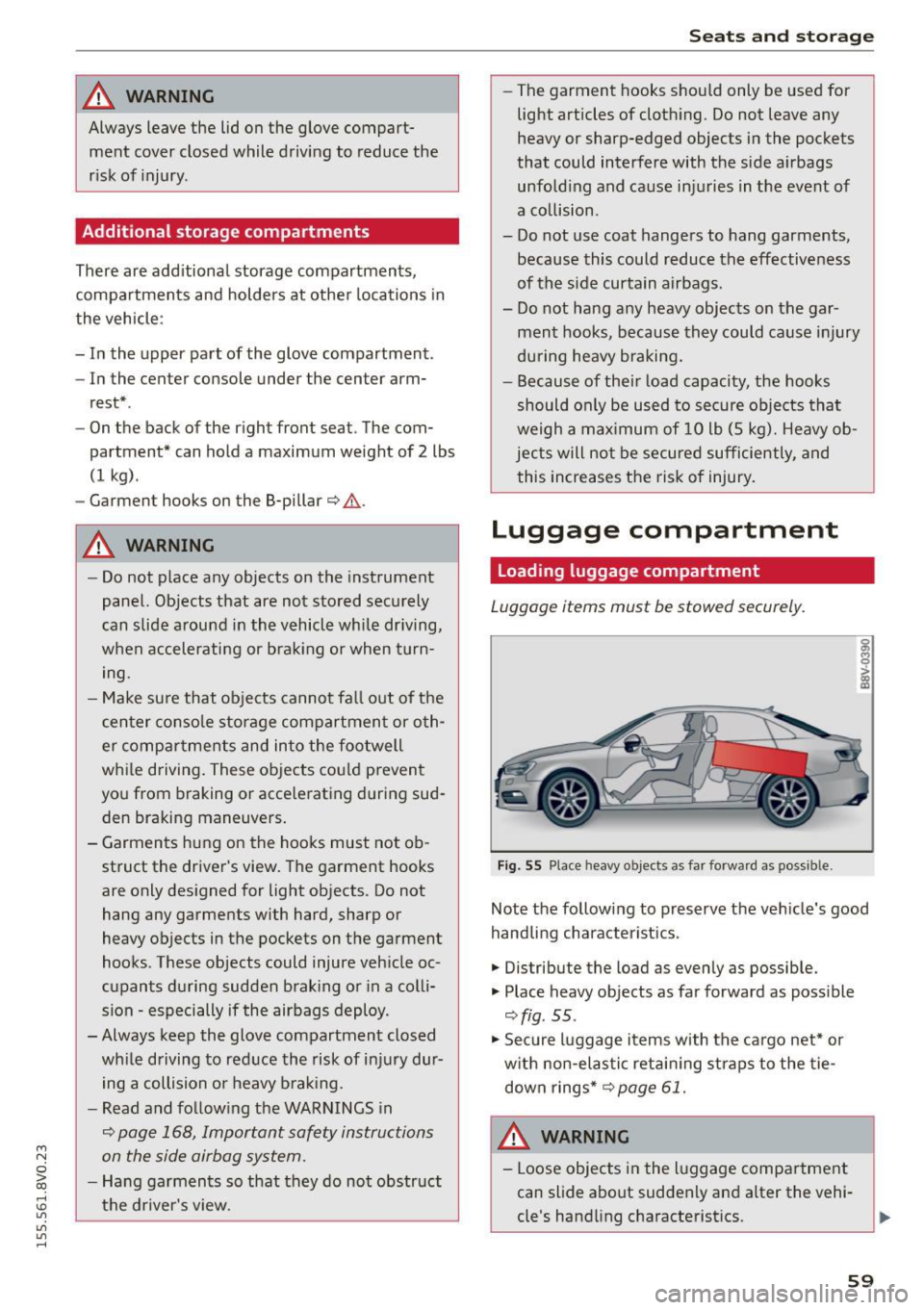
Fig. 55 Place heavy objects as far forward as poss ib le.
Note the following to preserve the vehicle's good
handling characteristics .
.,. Distribute the load as evenly as possible.
.,. Place heavy objects as far forward as possible
¢ fig . 55 .
.,. Secure luggage items with the cargo net* or
with non-elastic retaining straps to the tie
down rings* ¢
page 61.
WARNING
-Loose objects in the luggage compartment
can slide about suddenly and alter the vehi
cle's handling characteristics.
59
Page 63 of 282
....,
N
0 > co
rl I.O
"'
"'
"'
rl
Tie-downs and cargo net
The cargo net* prevents small objects from slid
ing .
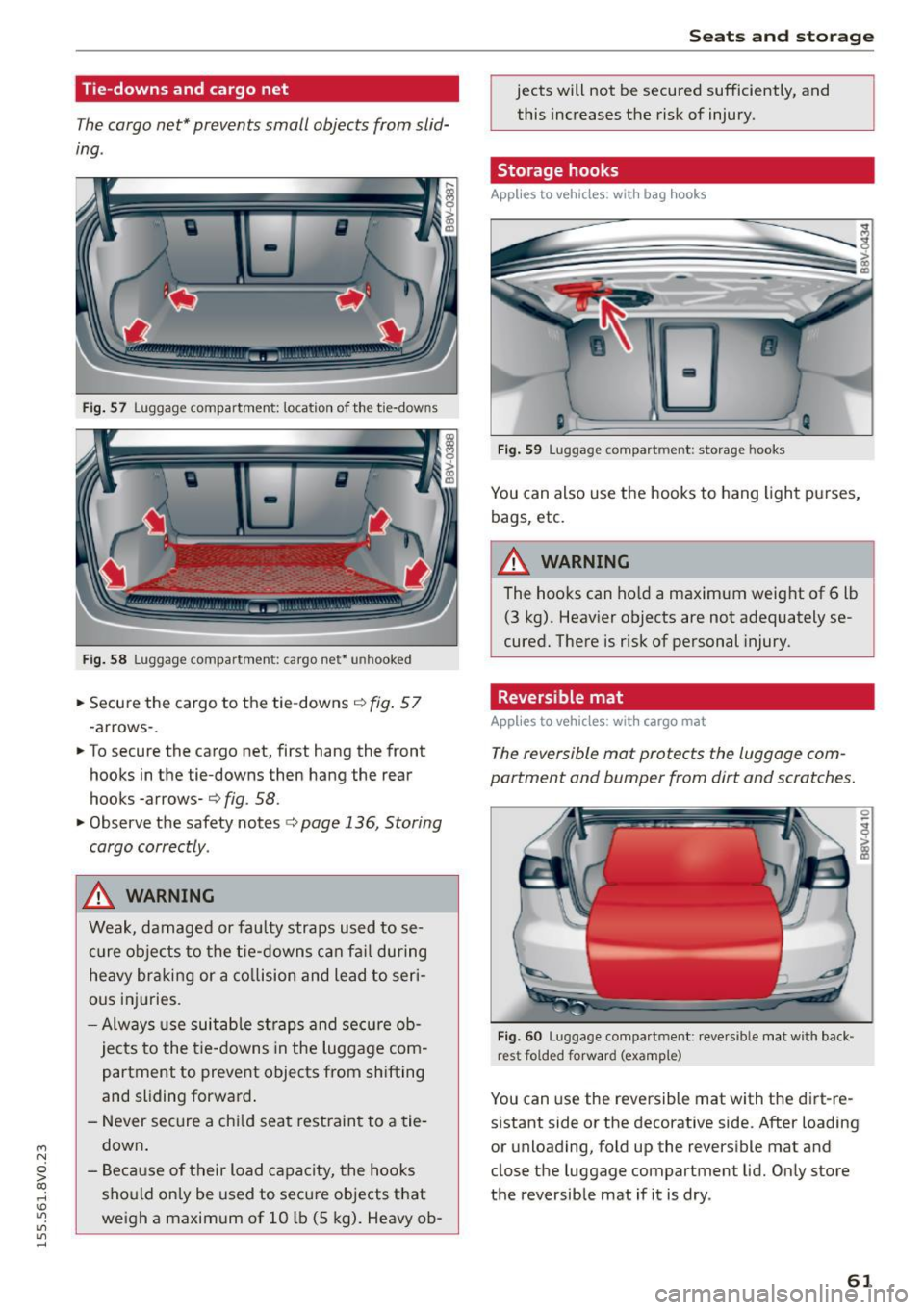
Fig. 57 Luggage compartment: location of the tie-downs
Fi g. 58 Luggage compartment: cargo net• unhooked
.. Secu re the cargo to the tie-downs¢ fig. 57
-arrows- .
.. To secure the cargo net, first hang the front
hooks in the tie-downs then hang the rear
hooks -arrows-
¢ fig. 58 .
.. Observe the safety notes c> page 136, Storing
cargo correctly .
A WARNING
Weak, damaged or faulty straps used to se
c u re obje cts to the t ie-downs ca n fa il du ring
he avy braking or a co llision and lead to seri
ous inj uries.
- Alw ays use suitab le st raps and se cure ob
jects to the t ie-downs in the luggage com
partment to preve nt objects from sh ifting
and sliding forward .
- Never sec ure a ch ild seat restrain t to a tie
down .
- Be ca use of their load capacity, the hooks
sho uld on ly be used to secu re objects t hat
weigh a maximum of 10 lb (5 kg). Heavy ob-
-
Seats and storage
jects will not be secured sufficiently, and
this increases the risk of injury.
Storage hooks
Applies to vehicles: wit h bag hooks
Fig. 59 Luggage compart ment: storage hooks
You can also use the hooks to hang ligh t pu rses,
bags, etc.
A WARNING
The hooks can ho ld a maximum weight of 6 lb
(3 kg). Heav ier objects are not adequately se
cured. There is risk of personal injury.
Reversible mat
Applies to vehicles: wit h cargo mat
The reversible mot protects the luggage com
partment and bumper from dirt and scratches.
Fig . 60 Luggage co mpa rtment: revers ible mat with back ·
rest folded forward (examp le)
You can use the reve rsible mat with t he dirt-re
s istant side or the decorative side. After loading
or unloading, fo ld up the revers ible mat and
close the luggage compartment lid. Only store
the reversib le mat if it is dry .
61
Page 65 of 282
M N
0 > co ,...., \!) ..,.,
..,.,
..,., ,....,
tightened. If necessary, retighten the mountings and check the entire system
from t ime to t ime.
- After mounting a roof rack system, or when
you transport objects on the roof of your ve
hicle, the height of the veh icle is naturally
increased. Be careful when driving under
l ow bridges or in parking garages for exam
ple. This could cause damage to the load
and even the vehicle itself.
- Make sure the open rear lid and the sun
roof* do not come into contact with the roof
rac k.
Loading the roof rack
Always distribute loads evenly . Make sure any
thing on the roof rack is securely tied down .
... Always distribute the loads on the roof rack
evenly .
... Always attach items to the roof rack securely
before you d rive off .
The maximum perm iss ible roof weight is
165 lb
( 75 kg ). The roof weight is the total of the
weight of the roof rack, the attachments and the
cargo you a re ca rrying . You must also not exceed
the maximum load weight fo r the roof rack you
a re using.
When using a roof rack system wh ich has a lower
l oad carrying capacity, you must not use up the
tota l maxim um permissible load car ry ing capac i
ty specified above. Inste ad , you shou ld load t he
roof rack system only to the maximum capacity
specified by the manufact urer of the roof rack
system .
A WARNING
Weak, damaged or improper straps used to
secure items to the roof rack can fa il during
hard brak ing or in a collision and cause seri
ous personal injury.
- Make sure the roof rack is insta lled exactly
as spec ified above
¢ page 62.
- Always use suitable mounting straps for se
curing items to the roof rack to help prevent
items from shift ing or f ly ing fo rward.
-
S eat s and stor age
- Items on the roof rac k must always be se
curely mounted.
- The use of a roof rack can negatively affect
the way a vehicle handles. Cargo that is
large, heavy, bulky, long or flat will have a
greater negative inf luence on the vehicle's
ae rodynamics, center of gravity and overall
h a ndling. Always drive slowly, avoid sudden
b rak ing and maneuvers when transpor ting
cargo on the roof of your veh icle.
- Never exceed the maxim um permissible
load carrying capacity of the roof of your ve
h icle, the permiss ible axle weights and the
perm issib le tota l we igh t of your vehicle
¢ page 258, Weights .
@ For the sake of the environment
As a result of the increased wind resistance
created by a roof ra ck , your vehicle is using
fuel unnecessarily. So remove the roof rac k af
ter using it.
63
Page 93 of 282

M N
0 > co ,...., \!) ..,.,
..,.,
..,., ,....,
Trailer mode Driving with a trailer
General information
Your Audi was designed primarily for passenger
transportation .
If you plan to tow a tra iler, p lease remember that
the additiona l load will affect d urability, econo
my and performance .
T railer towing not on ly places more stress on the
vehicle, it a lso calls for more concentrat ion from
the dr iver .
F or this reason, a lways fo llow the operating and
d riving instructions provided and use common
sense.
Technical requirements
Traile r hitch
Use a weight-carrying hitch conforming to the
gross trailer we ight. The hitch must be suitable
for your vehicle and trai ler and must be mounted
securely on the veh icle 's chassis at a technically
sound
location . Use on ly a tra iler hitc h with a re
movable ba ll mou nt. Always chec k w ith the t ra il
e r hitch m anu fac tur er to make sure that you a re
using the co rrec t hitch.
Do not use a bumper hitch .
The hitch must be installed in such a way that it
does not i nterfere wit h the impact -absorbi ng
bumper system. No mod ificat ions should b e
mad e to the vehicle exhaust and brake systems .
Fr om time to t ime, c hec k t hat a ll h itch mou nti ng
bo lts remain sec urely fastened .
When you are no t tow ing a trailer,
remove the
trai ler hitch ball mount . Th is prevents the hitc h
fr om caus ing damage should you r vehicle be
s truck from behind~,&. .
Trailer brakes
If yo ur tra iler is equipped w it h a braking system,
check to be s ure that it conforms to all regu la
tions.
Trailer mode
T he trailer hyd raulic brake system must not be di
rect ly connected to the ve hicle's hydraulic b rake
system .
Safety chains
Always use s afe ty chains be tween your ve hicle
and the tra ile r.
Trailer lights
Tra ile r li ghts must meet all regulations. Be sure
to check w it h your Aud i dea le r fo r corr ect w irin g,
swi tches and relays.
Mirrors
If you a re unable to see the traffic behind you us
i ng the regular o uts ide mirrors, then you
must in
sta ll extended mirrors .
It is importa nt that you
always have clea r vision to the rea r.
_&. WARNING
Afte r removing the trailer hit ch, d o no t store
i t in yo ur vehicle. In ca se of sudden br akin g,
the hitch could fly fo rward and inju re you or
your passengers.
Operating instructions
Maximum traile r weight
A trai le r fo r you r vehicle is limited to a typi cal
class 1 or class 2 trai le r.
Trailer load distribution
B e sure the load in the t raile r is held secure ly in
pla ce to p revent it from shift ing forward, back
ward or sideways .
Never allow a pas senger to ride in a trailer~.&.
in Driving instructions on page 92.
Engine cooling system
Towing a trailer makes the engine work harder . It
is important tha t the cooling system 's pe rform
ance is up to the additional load. Make s ure that
the coo ling system has enoug h flu id.
Tire pressure
When towing a trailer, inflate the tires of your ve-
hicle to the cold tire pressure listed under "Full
lilJJ..
91
Page 94 of 282

Trailer mode
load" on the label located on the driver's side B
pillar (visible when the door is open). Inflate
trailer tires to trailer and tire manufacturers'
specifications.
Lights
Check to make sure both vehicle and trailer lights
are working properly.
Safety chains
Be sure tra iler safety cha ins are properly connect
ed from the trailer to the hitch on the vehicle.
L eave enough slack in the chains to permit turn
ing corners. When you install safety chains, make
sure they will not drag on the road when you are
driving .
The chains should cross under the trai ler tongue
to prevent it from dropping in case of separation
from the hitch .
Driving instructions
Driving with a trailer always requires extra care
and consideration .
To obta in the best poss ible handling of vehicle
and trailer, please note the following:
.,. Do not tow a loaded tra iler when your car itself
is not loaded.
.. Be especia lly careful when passing other
vehicles.
.. Observe speed limits .
.. Do not drive at the maximum permissible
speed.
.. Always apply brakes early.
.. Monitor the temperature gauge.
Weight distribution
Towing a loaded trai ler with an empty car results
in a high ly unstable distribution of weight. If this
cannot be avoided, drive at very low speeds only
to avoid the risk of losing steering control.
A "balanced" rig is easie r to operate and control.
This means that the tow vehicle should be loaded
to the extent possible and permissible, while
keeping the trailer as light as poss ible under the
circumstances. Whenever possible, transfer
some cargo to the luggage compartment of the
92
tow vehicle while observing tongue load require
ments and vehicle loading considerations.
Speed
The higher the speed, the more diff icult it be
comes for the driver to control the rig. Do not
drive at the maximum permissible speed. Reduce
your speed even more if load, weather or wind
conditions are unfavorab le -particularly when
going downh ill.
Reduce veh icle speed
immediately if the trailer
shows the slightest sign of swaying .
Do not try
to stop the swaying by accelerating.
Observe speed limits. In some areas, speeds for
vehicles towing tra ile rs are lower than fo r regular
vehicles .
Always apply brakes early. When driving down
hill, shift int o a lo wer gear to use the eng ine
braking effect to slow the vehicle . Use of the
brakes alone can cause them to overheat and fail.
Coolant temperature
The coolant temperature gauge¢ page 12 must
be obse rved carefully. The coolant temperature
can increase if you dr ive on long inclines in a low
gear at high engine speeds . Reduce your speed
immediately if the LEDs in the top part of the dis
play turn on .
For more information abo ut ind icator lights, re
fer to. ¢
page 19 .
A WARNING
-
Anyone not properly restrained in a moving
vehicle is at a much greater risk in an acci
dent. Never let anyone ride in your car who is
not proper ly wearing the restraints provided
by Aud i.
Trailer mode notes
Important to know
Your vehicle handles differently when towing a
trai ler because of the additiona l weight and dif
ferent weight distribution . Safety, performance
and economy will greatly depend on how careful-
ly you load your trailer and operate your r ig. ..,.
Page 138 of 282
Driving safet y
mats wi ll prevent them from sliding into posi
tions that cou ld interfere with the peda ls or im
pa ir safe operation of your vehicle in other ways .
A WARNING
Pedals that cannot move freely can result in a
loss of vehicle control and increase the risk of
serious persona l injury .
- Always make sure that floor mats are prop
erly secured .
- Never place or insta ll floor mats or other
floor coverings in t he veh icle that cannot be
properly secured in place to prevent them
from slipping and inte rfering w ith the ped
als or the ability to control the veh icle .
- Never place or insta ll floor mats or other
floor coverings on top of already installed
floor mats. Additiona l floo r mats and other
c overings w ill reduce the si ze of the pedal
area and interfere w ith the pedal s.
- Always proper ly reinstall and secu re floor
mats that have been take n ou t for clean ing .
- Always make sure that objects cannot fa ll
in to the dr iver footwell while the veh icle i s
moving. Obje cts can be come trapped unde r
the brake pedal an d accelerator peda l caus
ing a loss of vehicle cont ro l.
Storing cargo correctly
Loading the luggage compartment
All luggage and other objects must be properly
s towed and secured in the luggage compart
ment.
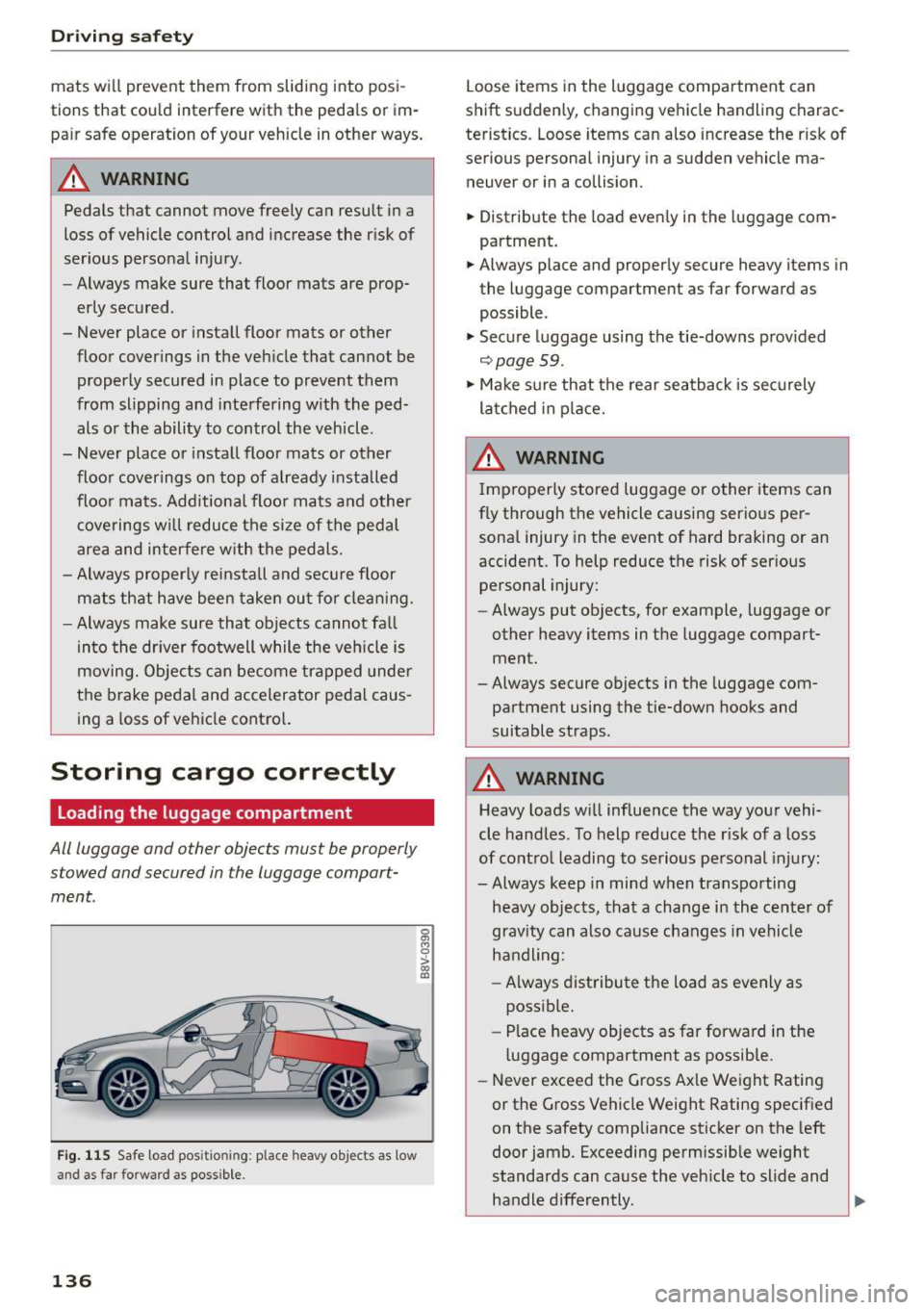
F ig . 11 5 Safe load pos it io nin g: place heavy objects as low
an d a s far for ward as possib le .
136
Loose items in the luggage compa rtment can
shift suddenly, changing vehicle handling charac
teristics. Loose items can also increase the r isk o f
serious persona l injury in a sudden vehicle ma
neuver or in a collision.
.,. Distribute the load even ly in the luggage com
partment.
.,. Always place and properly secure heavy items in
the luggage compartment as far forward as
possible .
.,. Secure luggage using the tie-downs prov ided
~ page 59.
.,. Ma ke s ure that the rear seatback is securely
la tc hed in place.
A WARNING
I mproperly stored luggage or other items can
fly through the vehicle causing serio us per
sona l injury in the event o f hard braking or an
accident. To help reduce the risk of ser ious
personal injury:
- Always put objects, for example, luggage or
other heavy items in the luggage compart
ment.
- Always secure objects in the luggage com
partment using the tie-down hooks and
suitable straps.
A WARNING
H eavy loads wi ll influence the way your vehi
cle handles . To help reduce the r isk of a loss
of contro l leading to se rio us pe rsonal injury:
-Always keep in mind when transpo rting
heavy objects, tha t a change i n the center of
grav ity can also cause changes in vehi cle
h a ndli ng:
- Always distribute the load as evenly as
possib le.
- Place heavy objects as far forward in the
luggage compartment as possib le.
- Never exceed the Gross Axle Weight Rating
or the Gross Vehicle Weight Rating specif ied
on the safety compliance sticker on the left
door jamb. Exceeding permissib le weight
standards can cause the veh icle to slide and
handle d ifferently. ,...
Page 139 of 282
M N
0 > co ..... \!) 1.1"1
1.1"1
1.1"1
.....
-Please observe information on safe driving
~page 130.
A WARNING
To help prevent poisonous exhaust gas from
being drawn into the vehicle, always keep the
rear lid closed while driving .
- Never transport objects larger than those
fitting completely into the luggage area be
cause the rear lid cannot be fully closed.
- If you absolutely must drive with the rear lid
open, observe the following notes to reduce
the risk of poisoning:
- Close all windows,
- Close the power roof*,
- Open all air outlets in the instrument pan-
el,
- Switch off the air recirculation,
- Set the fresh air fan to the highest speed.
A WARNING
Always make sure that the doors, all windows,
the power roof* and the rear lid are securely
closed and locked to reduce the risk of injury
when the vehicle is not being used.
-After closing the rear lid, always make sure
that it is properly closed and locked.
- Never leave your vehicle unattended espe
cially with the rear lid left open . A child
could crawl into the vehicle through the lug
gage compartment and close the rear lid be
coming trapped and unable to get out. Be
ing trapped in a vehicle can lead to serious
personal injury.
- Never let children play in or around the vehi
cle.
- Never let passengers ride in the luggage
compartment. Vehicle occupants must al
ways be properly restrained in one of the ve hicle's seating positions.
(D Tips
- Air circulation helps to reduce window fog
ging. Stale air escapes to the outside
through vents in the trim panel. Be sure to keep these slots free and open.
Driving safety
-The tire pressure must correspond to the
load. The tire pressure is shown on the tire
pressure label. The tire pressure label is lo
cated on the driver's side B-pillar. The tire
pressure label lists the recommended cold
tire inflation pressures for the vehicle at its
maximum capacity weight and the tires that
were on your vehicle at the time it was man ufactured. For recommended tire pressures
for normal load conditions, please see chap
ter ~
page 224.
' Tie-downs
The luggage compartment is equipped with four
tie-downs to secure luggage and other items.
Use the tie-downs to secure your cargo properly
~page 136, Loading the luggage compartment.
In a collision, the laws of physics mean that even
smaller items that are loose in the vehicle will
become heavy missiles that can cause serious in
jury. Items in the vehicle possess energy which
vary with vehicle speed and the weight of the
item. Vehicle speed is the most significant factor.
For example, in a frontal collision at a speed of
30 mph (48 km/h) , the forces acting on a 10-lb
(4.5 kg) object are about 20 times the normal
weight of the item. This means that the weight
of the item would suddenly be about
200 lbs. (90 kg). You can imagine the injuries
that a 200 lbs. (90 kg) item flying freely through
the passenger compartment could cause in a col
lision like this.
A WARNING
-Weak, damaged or improper straps used to
secure items to tie-downs can fail during hard
braking or in a collision and cause serious per
sonal injury .
- Always use suitable mounting straps and
properly secure items to the tie-downs in
the luggage compartment to help prevent
items from shifting or flying forward as dan
gerous missiles.
- When the rear seat backrest is folded down,
always use suitable mounting straps and
properly secure items to the tie-downs in
137