2015 AUDI S3 SEDAN light
[x] Cancel search: lightPage 184 of 282
Child safet y
In order for the airbag to offer protection, it is
important that all vehicle occupants, especially
any children, who must be in the front seat be
cause of except ional circumstances, be proper ly
restrained and as far away from the airbag as
possible . By keeping room between the child's
body and the front of the passenger compart
ment, the airbag can inflate comp letely and pro
vide supp lemental protection in ce rtain frontal
coll is ions .
A WARNING
Not using a booster seat, using the booster
seat improperly, incorrect ly installing a boos
ter seat or using the vehicle safety belt im
properly increases the risk of serious personal
injury and death in a collision or other emer
gency situat ion. To help reduce the risk of se
r ious personal injury and/or death:
- The shoulder belt must lie as close to the
center of the child's collar bone as possible
and must lie flat and snug on the upper
body .
It must never lie across the throat or
neck. The lap belt must lie across the pelv is
and never across the stomach or abdomen.
Make sure that the be lt lies flat and snug.
Pull on the belt to tighten i f necessa ry .
- Failure to properly route safety be lts over a
child 's body will cause severe injuries in an
accident or other emergency sit uation
¢ page 140.
- The rear side of the child safety seat shou ld
be positioned as close as possible to the
backrest on the vehicle seat.
- For adjustable head restraints: adjust or re
move the rear seat head restraint if it is dif
ficult to install the child seat with the head
restraint in place¢
page 56. Install the
head restraint again immediately once the
child seat is removed . Driv ing without head
restraints or with head restraints that are
not properly adjusted increases the r isk of
serious o r fatal neck injury dramatically .
- Children on the front seat of any car, even
with Advanced Airbags, can be ser iously in
jured or even killed when an airbag inflates.
- Never let a child stand or knee l on any seat,
for example the front seat.
182
-
- Never let a child ride in the cargo area of
your veh icle.
- Always remember that a child leaning for
ward, sitting sideways or out of position in any way during an acc ident can be struck by
a deploying airbag. This will resu lt in serious
personal injury or death.
- If you must install a booster seat on the
front passenger seat because of exceptional
circumstances the
PASSENGER AIR BAG
OFF
li ght must come on and stay on, when
eve r the ign it ion is switched on.
- If the
PASSENGER AIR B AG OF F light does
not come on and stay on, perform the
checks described ¢
page 160, Monitoring
the Advanced Airbag System.
- Ta ke the child restraint off the front passen
ge r seat and install it properly at one of the
rear seat positions if the
PA SSENGER AIR
BAG OFF
light does not stay on whenever
the ignition is switched on .
- Always read and heed a ll WARNINGS when
ever using a child restrained in a vehicle is
being used¢
page 140, Safety belts,
¢page 148, Airbag system
and
¢ page 172, Important information.
Securing child seats
Securing a child safety seat using a safety
belt
Safety belts for the rear seats and the front pas
senger can be locked with the convertible lo cking
retractor to properly secure child safety seats .
The safety belts emergency locking retracto rs fo r
the rear seats safety belts and for the front pas
senger's seat safety be lt have a convert ible lock
ing retractor for chi ld restraints. The safety belt
must be locked so that belt webbing cannot un
reel. The retractor can be activated to lock the
safety belt and prevent the safety be lt webbing
from loosening up during normal driving. A child
safety seat can on ly be properly installed when
the safety belt is locked so that the child and
c hi ld safety seat will stay in p lace .
Always remember: Even though your vehicle is
equipped with an Advanced Airbag system, all
Page 185 of 282
M N
0 > co ,...., \!) ..,.,
..,.,
..,., ,....,
children, especially those 12 years and younger,
should always ride in the back seat properly re
strained for their age and size.
A WARNING
-
Improperly installed child safety seats in
crease the risk of serious personal injury and
death in a collision.
- Always make sure that the safety belt re
tractor is locked when installing a child safe
ty seat. An unlocked safety belt retractor
cannot hold the child safety seat in place
during normal driving or in a crash.
- Always buckle the child safety seat firmly in
place even if a child is not sitting in it . A
loose child safety seat can fly around during
a sudden stop or in a collision.
- Always make sure that the rear seat back
rest to which the center rear safety belt* is
attached is securely latched whenever the
rear center safety belt is being used to se
cure a child restraint.
- If the backrest is not securely latched, the
child and the child restraint will be thrown
forward together with the backrest and will strike parts of the vehicle interior. The child
can be seriously injured or killed.
- Never install rear-facing child safety seats or
infant carriers on the front passenger seat.
A child will be seriously injured and can be killed when the passenger airbag inflates.
- The inflating airbag will hit the child safety seat or infant carrier with great force and
will smash the child safety seat and child
against the backrest, center armrest, door
or roof.
- Always install rear-facing child safety seats or infant carriers on the rear seat.
- Forward-facing child safety seats or infant
carriers installed on the front passenger's
seat may interfere with the deployment of
the airbag and cause serious injury to the child.
- It is safer to install a forward-facing child
safety seat on the rear seat.
- Always read and heed all WARNINGS when
ever using a child restrained in a vehicle is
being used
r:::> page 172 . Special precautions
Child safety
apply when installing a child safety seat on
the front passenger seat
r:::> page 149, Child
restraints on the front seat -some impor
tant things to know .
A WARNING
Always take special precautions if you must
install a forward or rearward-facing child re
straint on the front passenger's seat in excep
tional situations:
- Whenever a forward or rearward-facing
child restraint is installed on the front pas
senger seat, the
PASSENGER AIR BAG OFF
light must come on and stay on whenever
the ignition is switched on.
- If the
PASSENGER AIR BAG OFF light does
not come on and stay on, perform the
checks described
r:::> page 160, Monitoring
the Advanced Airbag System.
- Take the child restraint off the front passen
ger seat and install it properly at one of the
rear seat positions if the
PASSENGER AIR
BAG OFF
light does not stay on whenever
the ignition is switched on.
- Improper installation of child restraints can
reduce their effectiveness or even prevent
them from providing any protection.
-An improperly installed child restraint can interfere with the airbag as it deploys and
seriously injure or even kill the child.
-Always carefully follow the manufacturer's
instructions provided with the child safety
seat or carrier.
- After checking to make sure that the child
restraint is properly installed, make certain
that the child restraint is correctly recog nized by the capacitive passenger detection
system in the front passenger seat and that
the
PASSENGER AIR BAG OFF light signals
the correct front passenger frontal airbag
status.
A WARNING
Forward-facing child restraints:
-
183
Page 186 of 282
Child safety
-Always make sure the forward-facing seat
has been designed and certified by its man
ufacturer for use on a front seat with a
passenger front and side airbag.
- Never put the forward-facing child restraint
up, aga inst or very near the instrument pan
el.
- Always move the passenger seat into its
rearmost position in the seat's fore and aft
adjustment range, as far away from the air
bag as possible before installing the for
ward-fac ing child restraint. The backrest
must be adjusted to an upright posit ion.
- Make sure that the
PASSENGER AIR BAG
OFF
light comes on and stays on all the time
whenever the ignition is switched on.
_&. WARNING
Rearward-fac ing ch ild restra ints:
- A child in a rearward-facing child safety seat
installed on the front passenger seat will be
seriously injured and can be killed if the
front airbag inflates -even with an Ad
vanced Airbag System .
- T he inflating airbag wil l hit the child safety
seat or infant carrier with great force and
will smash the chi ld safety seat and child
against the backrest, center armrest, door
or roof.
- Always be especially carefu l if you must in
stall a rearward facing child safety seat on
the front passenger seat in exceptional cir
cumstances.
- Make sure that the
PASSENGER AIR BAG
OFF
light comes on and stays on all the t ime
whenever the ignition is switched on .
- If the
PASSENGER AIR BAG OFF light does
not come on and stay on, immed iately in
stall the rear-fac ing ch ild safety seat in a
rear seating position and have the airbag
system inspected by your Aud i dealer.
184
· Activating the convertible locking retractor
Use the convertible locking retractor to secure a
child restraint.
Always heed the child safety seat manufacturer's
instructions when installing a child restraint in
your vehicle . T o activate the convert ible locking
retractor:
.. Place the child restraint on a seat, preferably on
the rear seat .
.. Slowly pull the belt
all the way out.
.. Route it around or through the child restraint
belt pat h
c::> ,&..
.. Push the ch ild safety seat down with your full
weight to get the safety belt really tight.
.. Insert the belt tongue into the buckle for that
seating position.
.. Guide the safety be lt back into the retractor un
til the belt lies flat and snug on the ch ild safety
seat.
.. You should hear a "clicking" noise as the belt
w inds back into the inertia reel. Test the con
vert ible lock ing retractor by pulling on the belt .
You should no longer be able to pull the belt
out of the ret ractor. The convertible locking re
tractor is now activated .
.. Make sure that the red release button is facing
away from the child restraint so that it can be
unbuckled quickly .
.. Pull on the belt to make sure the safety belt is
properly tight and fastened so that the seat
cannot move forward or s ideways more than
one inch (2 .5 cm).
_&. WARNING
Using the wrong child restraint or an improp
erly installed child restraint can cause serious
personal injury or death in a crash.
- Always make sure that the safety belt re
tractor is loc ked when insta lling a child safe
ty seat. An unlocked safety belt retractor
cannot hold the child safety seat in place
during normal driving or in a crash.
- Always buckle the child safety seat firmly in
place even if a chi ld is not sitting in it. A
loose child safety seat can fly around during
a sudden stop or in a crash.
.
Page 190 of 282
Child safety
Tether anchors and tether straps
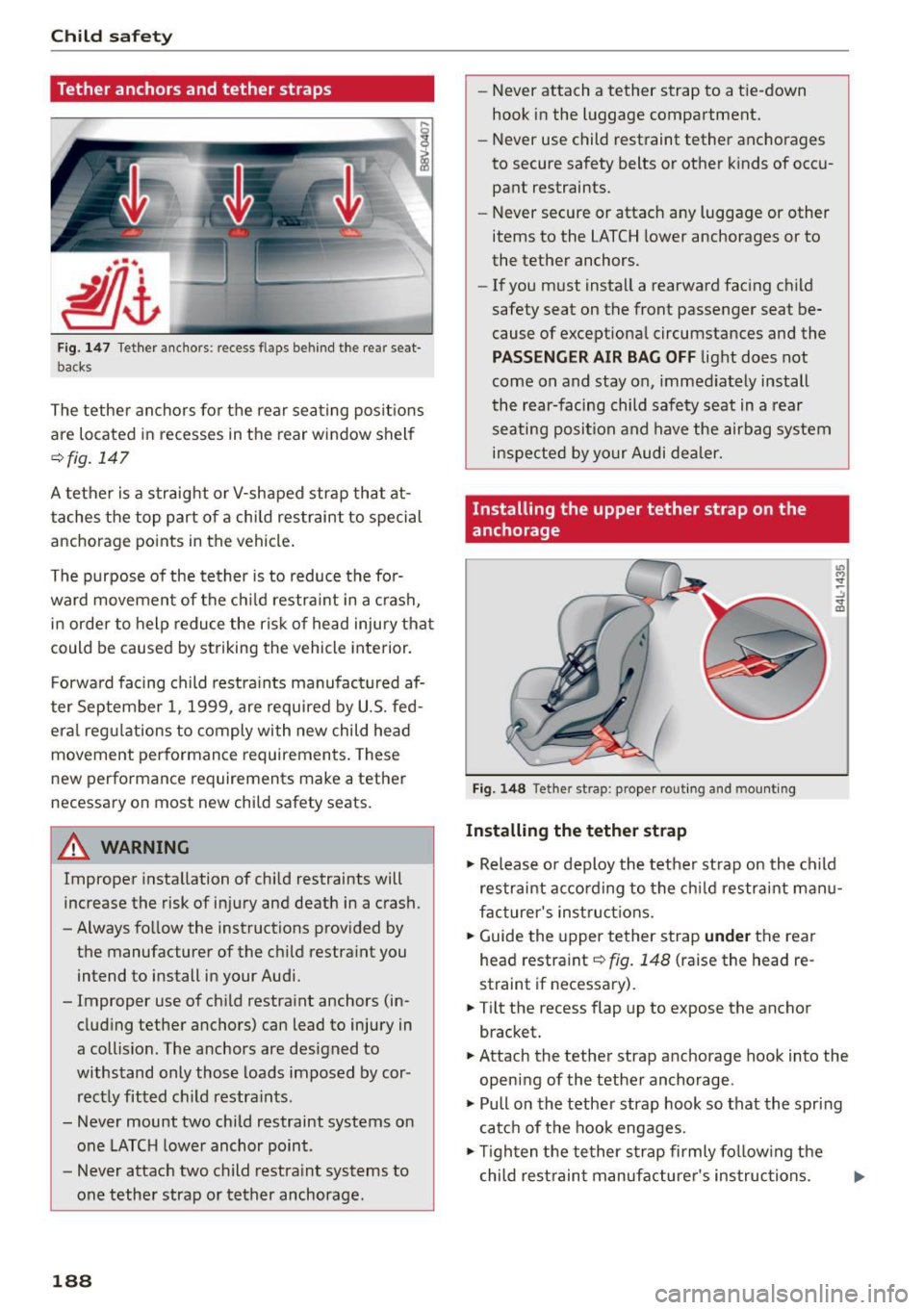
Fig. 147 Tether anchors: recess flaps behind the rear seat
ba cks
The tether anchors for the rear seating positions
are located in recesses in the rear window shelf
~fig. 147
A tether is a straight or V-shaped strap that at
taches the top part of a child restraint to special
anchorage points in the vehicle.
The purpose of the tether is to reduce the for ward movement of the child restraint in a crash,
in order to help reduce the risk of head injury that
could be caused by striking the vehicle interior.
Forward facing child restraints manufactured af
ter September 1, 1999, are required by U.S. fed
eral regulations to comply with new child head
movement performance requirements. These
new performance requirements make a tether
necessary on most new child safety seats.
&_ WARNING
Improper installation of child restraints will
increase the risk of injury and death in a crash.
- Always follow the instructions provided by
the manufacturer of the child restraint you
intend to install in your Audi.
- Improper use of child restraint anchors (in
cluding tether anchors) can lead to injury in
a collision. The anchors are designed to
withstand only those loads imposed by cor
rectly fitted child restraints .
- Never mount two child restraint systems on
one LATCH lower anchor point .
- Never attach two child restraint systems to
one tether strap or tether anchorage.
188
.
- Never attach a tether strap to a tie-down
hook in the luggage compartment.
- Never use child restraint tether anchorages
to secure safety belts or other kinds of occu
pant restraints.
- Never secure or attach any luggage or other
items to the LATCH lower anchorages or to
the tether anchors.
- If you must install a rearward facing child
safety seat on the front passenger seat be
cause of exceptional circumstances and the
PASSENGER AIR BAG OFF light does not
come on and stay on , immediately install
the rear-facing child safety seat in a rear
seating position and have the airbag system
inspected by your Audi dealer.
Installing the upper tether strap on the
anchorage
Fig. 148 Tether st ra p : proper routing and mounting
Installing the tether strap
11> Release or deploy the tether strap on the child
restraint according to the child restraint manu
facturer's instructions.
"Guide the upper tether strap
under the rear
head restraint ~
fig. 148 (raise the head re
straint if necessary) .
"Tilt the recess flap up to expose the anchor
bracket.
"Attach the tether strap anchorage hook into the
opening of the tether anchorage .
11o Pull on the tether strap hook so that the spring
catch of the hook engages.
11> Tighten the tether strap firmly following the
child restraint manufacturer's instructions.
Page 191 of 282
M N
0 > co ,...., \!) 1.1'1
1.1'1
1.1'1
,....,
Relea sin g the teth er strap
"' Loosen the tens ion following the child restra int
manufacturer's instructions.
"' Depress the spring catch on the hook and re
lease it from the anchorage.
(D Note
If you leave the child restraint with the tether
strap firmly insta lled for several days, this
could leave a mark on the upholstery on the
seat cush ion and backrest in the area where
the tether strap was installed. The upholstery
wou ld also be permanently stretched around
the tether strap. This applies espec ially to
leather seats.
Using tether straps on rearward-facing
child restraints
Currently, few rear-facing child restraint systems
come with a tether. P lease read and heed the
child restraint system manufacturer's instruc
tions carefully to determ ine how to properly in
stall the tether .
A WARNING
A child in a rearward-facing child safety seat
installed on the front passenger seat will be
ser iously injured and can be killed if the front
airbag inflates -even w ith an Advanced A irbag
System.
- T he inflating a irbag w ill hit the chi ld safety
s eat or infant carrie r wi th grea t fo rce and
will smash the chi ld safety seat and chi ld
against t he backrest, center armrest, or
doo r.
- If you mus t install a rearward facing chi ld
safety seat on the front passenger seat be
cause of exceptional c ircumstances and the
PASSENGER AIR BAG OFF light does not
come on and stay on, immediately install
the rear-fac ing child safety seat in a rear
seat ing pos it ion and have the airbag system
inspected by you r A udi dealer .
Child sa fety
Additional information
Sources of information about child
restraints and their use
T he re a re a number o f sou rces of add itiona l infor
mation about child restraint se lection, insta lla
tion and use:
N HT SA advises that the bes t ch ild safety seat is
the one that f its yo ur child and fits in your vehi
cle, and that you will use correctly and consis
tent ly .
T ry before yo u buy!
U.S National Highw ay Traffic Safety Admin istr a
tion
T el.: 1-888-3 27- 42 36 (TIY: 1-800-424-9153)
www. n htsa .gov
National SAFE KIDS Campaign
Tel.: (202) 662-0600
www.safe kids.o rg
Safety Belt Saf e U.S .A
Tel.: (800) 7 45-SAFE (English)
T el.: (800) 747-SANO (Span ish)
www.carseat .org
Transport Canada Information C entre
Tel.: 1-800-333-0371 o r call 1-613-998-86 16 if
you are in the Ottawa a rea
http://www.tc.gc.ca/e ng/ roadsafety/menu .htm
Aud i Cu stomer R elations
Tel.: (800) 822-2834
189
Page 198 of 282

Checking and Fill in g
Ad Blue is the market ing name for Diese l Exhaust
Fl uid (DEF) .
The AdBlue is carried in a separate tank in the ve
h icle. The AdB lue usage acco unts for approxi
mately 0.5% to 1.2% of the diesel fuel that is
used .
When a message about refil ling the Ad Blue ap
pea rs in the instrument cluster disp lay, yo u must
refill the AdBlue yourself or have it refilled by an
authorized Aud i dealer or authorized Audi Se rvice
Facility ¢
page 197 .
A WARNING
Failure to heed Ad Blue refill information in
the instrument cluster can prevent the vehicle
from be ing started and driven. If the veh icle
cannot be driven and an emergency arises,
personal in ju ry can occur.
-Always have the Ad Blue tank refilled well before the tank runs d ry.
(D Tips
-
- The instrument cluster display indicates the
distance remaining that can be driven
¢ page 196. If the AdBlue tank is com
plete ly empty, the engine w ill not start
again after the ig nition is switched off.
- Ad Blue is required by law to operate this ve
hi cle.
Messages in the instrument cluster display
Applies to vehicles: with diesel engine
The display indicates if the Ad Blue level is low or
if there is a system malfunction .
Fig. 1 52 In stru ment cl uste r: ind ic a tor in th e disp la y
196
AdBlue level low
You w ill be informed if the Ad B lue in the tan k
drops below a certa in leve l.
Ad Blue /;, Please refill AdB lue . Range
1500 mi (2400 km )
This message appears when there is only enough
AdBl ue left to d rive the distance ind icated in the
drive r information system. Fill the Ad Blue.
AdBlue /9 Refill AdBlue! No restart in
600 mile s (1000 km )! See owner' s manu al
T his message appears when there is only eno ugh
Ad B lue left to drive the distance ind icated in the
dr iver information sys tem. Fill the Ad Blue. Other
wise the engine w ill not start again if you stop it
once the distance indicated has been driven . As
l ong as the indicator light is on, yo u
can check t he remain ing range in the tr ip com
p uter*.
Refill Ad Blu e! Engine start not po s
sible! See owner 's m anual
This message appears w hen the Ad Blue tank is
empty . Fill the Ad Blue. Otherwise you will not be
able to start the eng ine again once you stop it .
The Ad Blue must be refilled when the amount in
the tank has reached the minimum level
¢ page 197, Filling theAdBlue .
¢4 tncorrect filling /system malfuncti on
A message appears if the Ad Blue ta nk was fi lled
with a f lu id other than Ad Blue and the system
has detected that the tank was filled incorrect ly,
or if there is a system malfunction.
AdBlue ./' AdBlue: System fault! No restart in
600 miles (1000 km ). See owner's manual.
This message appears when it is on ly possible to
drive the distance indicated in the driver informa
tion system . Drive to the nearest authorized Aud i
dealer or author ized A udi Service Facility to have
the malfunct ion corrected. O therwise the engine
will not sta rt again if you stop it once the dis
tance indicated has been d riven .
Ad Blue: system fault . Engine start
not possible! See owner 's manual
Page 199 of 282

....,
N
0 > co
rl I.O
"'
"'
"'
rl
This message appears if the system has detected
that the tank was filled incorrectly or that there
is a malfunction. Drive immediately to the near
est authori zed Aud i dealer or authori zed Audi
Service Facility to have the malfunction correct
ed . Otherwise you will not be able to start the en
g in e again once you stop it.
Filling the Ad Blue
Applies to vehicles: with selective catalyt ic red uctio n
A special refill bottle must be used to fill the
AdBlue.
Fig. 153 Right rear vehicle s ide: removing the Ad B lue cap
Fig. 154 Ad Blue filler tube: inserting the refi ll bott le
The Ad Blue tank opening is located near the die
sel tank opening. Add at least 1 gallon (3.8 lit
ers) of AdBlue (two bottles). This is the minimum
amount required to ensure the system detects
the refilling and to start the engine. You can add
a maximum of approximately 4 gallons (15 lit
ers) .
Opening the filler tube and adding AdBlue
Requirement: the request to add Ad Blue must
appear in the instrument cluster display.
• Park your vehicle on a level surface.
• switch the ignition off .
Checking and Filling
• Open the tank door q page 192.
• Tur n the cap on the tank opening to the left to
remove
q fig. 153.
• Remove the cap from the refill bottle.
• Position the refill bottle on the filler tube and
turn the bottle clockwise until it stops turning
@ qfig. 154.
• Press lightly against the bottom of the bottle
@ to empty it. Con tinue pressing the bottom
of the bottle unti l it is empty or until flu id
stops flowing into the tank.
• Turn the bottle to the left without pressing on
the bottom.
Closing the filler neck
• Turn the Ad Blue cap to the right on the filler
tube until the cap clicks into place.
• Close the tank cover.
After filling
The vehicle must be driven. The system may take
up to two minutes to detect that the AdBlue has
been filled.
• If there was no Ad Blue left in the tank and a
range of
O mi (0 km ) was displayed in the in
strument cluster, switch the ignition on fo r
about 30 seconds before start ing the engine.
_& WARNING
=
Ad Blue can irritate the skin, eyes and respira-
tory system . If there is contact with the fluid,
flush immediate ly with plenty of water. Con
sult a physician if necessary.
(D Note
- Only use Ad Blue that conforms to the
standard ISO 22241-1. Do not mix any addi
tives with the Ad Blue and do not dilute it
with water.
- Do not add AdBlue to the diese l tank or add
diesel fuel to the Ad B lue tank. Mixing can
lead to damage to the engine and the Ad Bl
ue tank system. Warranty does not cover
damage caused by this .
- Ad Blue attacks surfaces such as painted ve
hicle components, plastic and carpet. Re-
move the fluid as quickly as possible with a ..,.
197
Page 201 of 282

....,
N
0 > co
rl I.O
"'
"'
"'
rl
-Always proceed with extreme caution so
that clothing, jewelry or long hair do not
become caught in the radia tor fan, fan
belt or other moving components or do not come into contact with hot compo
nents . T ie back long hair before beg inning
work and do no t wear cloth ing that can
hang down into the eng ine.
- limit your exposure to exhaust and chemi
cals to as short a time as possible
q ,& .
..&, WARNING
California Propos ition 65 Warning:
- Engine exhaust, some of its constituents,
and certai n veh icle components conta in or
em it chemicals known to the State of Cali
forn ia to cause cancer and birth defec ts and
reproductive harm. In addition, certai n flu
ids contained in vehicles and certain prod
ucts of component wear contain or emit
chemicals known to the State of California
t o cause cancer and birth defects or other
reproductive harm .
- Battery posts , terminals and related acces
sories contain lead and lead compounds,
chem icals known to the State of California
to cause cancer and reproductive harms .
Wash hands after hand ling.
(D Note
When filli ng flu ids, be sure not to m ix the flu
ids up . Otherwise seve re malfunctions and en
gine damage w ill occur .
@ For the sake of the environment
You should regu larly check the grou nd under
your veh icle in order to detect leaks quickly . If
there are visible spots from oil or other f luids,
b ring yo ur vehicle to an autho rized Aud i dea l
er or authori zed Audi Se rv ice F acili ty to be
checked.
Ch eck in g and Fillin g
Opening the hood
The hood is released from the in terior .
Fig . 155 Se ctio n from t he dr iver' s footwe ll: re le a se le ve r
Fig . 156 Ro cke r swit c h un der t he hoo d
Make sure the wiper arms a re not raised up from
the windsh ie ld . Oth erwise the paint cou ld be
damaged.
.,. W ith the driver's door open, pull the lever be
low the instr ument pane l in the d irect ion of the
arrow
<=> fig. 155.
.,. Raise the hood slightly r:!> ff::.. .
.,. Press the rocker switch unde r the hood upward
q fig. 156 . This re leases the catch .
.,. Open the hood .
..&, WARNING
-=
Never open the hood when you see that steam
or coolant drips from the engine compart
ment- there is a da nger of bu rns! Wait unt il
n o steam or coolant flows out .
- Never open the hood when you see that
s team or coo lant dr ips from the e ngine
comp artment- the re is a dange r of burns !
Wait until no steam or coo lant flows o ut .
199