2015 AUDI S3 SEDAN light
[x] Cancel search: lightPage 173 of 282
M N
0 > co ,...., \!) ..,.,
..,.,
..,., ,....,
through a seam above the front and rear side
windows identified by the AIRBAG label. In order
to help provide this additional protection, the
side curtain airbag must inflate within the blink
of an eye at very high speed and wi th great force.
T he side curtain airbag could injure you if your
seating position is not proper or upright or if
items are located in the area where the supple
mental side curtain airbag inflates . This applies
especially to children
q page 172 .
Although they are not a soft pillow, side curtain
airbags can "cushion " the impact and in this way
they can help to reduce the risk of injury to the
head and the upper part of the body.
A fine dust may develop when the airbag deploys.
This is quite normal and does not mean there is a
fire in the vehicle .
Important safety instructions on the side
curtain airbag system
Airbags are only supplemental restraints. Always
properly wear safety belts and ride in a proper
seating position.
There is a lot that you and your passengers must
know and do to help the safety belts and airbags
do their job to provide supplemental protection.
,&. WARNING
Improperly wearing safety belts and improper
seating positions increase the risk of serious
personal injury and death whenever a vehicle
is being used.
- Never let occupants place any parts of their bodies in the area from which the side cur
tain airbag inflate.
-Always make sure that the side curtain air bags can inflate without interference.
- Use the built-in coat hooks only for light
weight clothing . Never leave any heavy or
sharp-edged objects in the pockets that may
interfere with airbag deployment and can
cause personal injury in a collision.
- Never use hangers to hang clothes on the
hooks.
Airbag system
-Only use factory-installed sun shades or, if
shades installed after the vehicle leaves the
factory, use only genuine Audi sun shades.
- Never swing the sun visors over to the side
windows if things such as pens, garage door
openers, hands-free speakers, etc. are at
tached to the sun visors . They could come
loose and cause serious injury if the side cur
tain airbag inflates.
- A deploying airbag inflates in a fraction of a second and with great force .
- Never attach objects to the cover or in the deployment zone of a side curtain airbag .
- The airbag deployment zones must be kept
clear at all times. Make sure there are no ob
jects, pets, or other persons in the space be
tween any vehicle occupant and any airbag
at any time.
- Do not attach any accessories to the doors .
,&. WARNING
-- The airbag system can deploy only once. If
the airbag has been triggered, the system
must be replaced by an authorized Audi
dealer or qualified workshop.
- Always have work involving the side curtain
airbag system, removal and installation of
the airbag components, or other repairs per
formed by a qualified dealership. Otherwise the airbag system may not work correctly.
- Never attempt to modify any components of the airbag system in any way.
171
Page 175 of 282
M N
0 > co ,...., \!) 1.1'1
1.1'1
1.1'1
,....,
exceptional circumstances and the
PASSENGER AIR BAG OFF light does not
come on and stay on, immediately install
the rear-facing child safety seat in a rear
seating position and have the airbag system
inspected immediately by your Audi dealer .
A WARNING
-Forward-facing child seats installed on the
front passenger seat may interfere with the deployment of the airbag and cause serious
personal injury to the child.
-If exceptional circumstances require the use
of a forward-facing child restraint on the
front passenger's seat, the child's safety
and well-being require the following special
precautions to be taken:
-Always make sure that the forward-facing seat has been designed and certified by its manufacturer for use on a front passenger
seat with a front and side airbag.
-Always carefully follow the manufacturer's
instructions provided with the child seat
or infant carrier.
- Never install a child restraint without a
properly attached top tether strap if the
child restraint manufacturer's instructions require the top tether strap to be used.
- Never put the forward-facing child re
straint up against or very near the instru
ment panel.
- Always set the safety belt upper anchor
age to the adjustment position that per
mits proper installation in accordance with
the child restraint manufacturer's instruc
tions.
- Always move the passenger seat into its
rearmost position in the seat's fore and aft
adjustment range, as far away from the
airbag as possible before installing the
child restraint . The backrest must be ad
justed to an upright position .
- Always make sure that nothing prevents
the front passenger's seat from being moved to the rearmost position in its fore
and aft adjustment range.
Child safety
-Never place objects on the seat (such as a
laptop, CD player, electronic games device,
power inverter or seat heater for child
seats) . These may influence the electrical
capacitance measured by the capacitive
passenger detection system and can also
fly around in an accident and cause serious
personal injury.
- Never place or use any electrical device
(such as a laptop, CD player, electronic
games device, power inverter or seat heat
er for child seats) on the front passenger
seat if the device is connected to the 12-
volt socket or the cigarette lighter socket.
- If a seat heater has been retrofitted or
otherwise added to the front passenger
seat, never install any child restraint sys
tem on this seat.
- Make sure that there are no wet objects
(such as a wet towel) and no water or oth
er liquids on the front passenger seat
cushion.
- Always make sure that the
PASSENGER
AIR BAG OFF
light comes on and stays on
all the time whenever the ignition is
switched on.
- If the
PASSENGER AIR BAG OFF light
does not come on and stay on, immediate
ly install the forward-facing child seat in a
rear seating position and have the airbag
system inspected by your authorized Audi
dealer.
- Always buckle the child seat firmly in
place even if a child is not sitting in it. A
loose child seat can fly around during a
sudden stop or in a collision.
- Always read and heed all WARNINGS
whenever using a child restraint in a vehi
cle
¢ page 140, Safety belts, ¢ page 148,
Airbag system
and ¢ page 172, Impor
tant information.
(D Tips
Always replace child restraints that were in
stalled in a vehicle during a crash. Damage to
a child restraint that is not visible could cause
it to fail in another collision situation.
173
Page 176 of 282
Child safety
Advanced front airbag system and children
Your vehicle is equipped with a front "Advanced
Airbag System" in compliance with United States Federal Motor Vehicle Safety Standard (FMVSS)
208 as applicable at the time your vehicle was
manufactured.
The Advanced Airbag system in your vehicle has
been certified to meet the "low-risk" require
ments for 3- and 6-year old children on the pas
senger side and small adults on the driver side.
The low risk deployment criteria are intended to
reduce the risk of injury through interaction with
the airbag that can occur, for example, by being
too close to the steering wheel and instrument panel when the airbag inflates. In addition, the
system has been certified to comply with the
"suppression " requirements of the Safety Stand
ard, to turn off the front airbag for infants up to
12 months who are restrained on the front pas
senger seat in child restraints that are listed in
the Standard.
Even though your vehicle is equipped with an Ad
vanced Airbag system, all children, especially
those 12 years and younger, should always ride in
the back seat properly restrained for their age
and size. The airbag on the passenger side makes
the front seat a potentially dangerous place for a
child to ride. The front seat is not the safest place
for a child in a forward-facing child safety seat .
It
can be a very dangerous place for an infant or a
larger child in a rearward-facing seat .
The vehicle's Advanced Airbag System has a ca
pacitive passenger detection system in the front
passenger seat cushion that can detect the pres
ence of a baby or a child in a child restraint sys
tem on this seat.
The capacitive passenger detection system regis
ters the changes that result in an electrical field
when a child, a child restraint, and a baby blanket
are on the front passenger seat. The change in
the measured capacitance due to the presence of
a child, a child restraint, and a baby blanket on
the front passenger seat is related to the child re
straint system resting on the seat. The measured
capacitance of a child restraint system varies de-
174 pending
on the type of system and specific make
and model.
The electrical capacitance of the various types, makes, and models of child restraints specified
by the U.S.National Highway Traffic Safety Ad
ministration (NHTSA) in the relevant safety
standard are stored in the Advanced Airbag Sys
tem control unit together with the capacitances
typical of infants and a 1-year old child. When a
child restraint is used on the front passenger seat
with a typical 1 year-old infant, the Advanced Air
bag System compares the capacitance measured
by the capacitive passenger detection system
with the data stored in the electronic control
unit.
Child restraints and Advanced front airbag
system
Regardless of the child restraint that you use,
make sure that it has been certified to meet Unit
ed States Federal Motor Vehicle Safety Standards
and has been certified by its manufacturer for
use with an airbag. Always be sure that the child
restraint is properly installed at one of the rear
seating positions. If in exceptional circumstances
you must use it on the front passenger seat, care
fully read all of the information on child safety
and Advanced Airbags and heed all of the appli cable WARNINGS. Make certain that the child
and child restraint are correctly recognized by the
capacitive passenger detection system in the
front passenger seat, that the front passenger airbag is turned off, and that the airbag status is
always correctly signaled by the
PASSENGER AIR
BAG OFF
light .
Many types and models of child restraints have
been available over the years, new models are in
troduced regularly incorporating new and im
proved designs and older models are taken out of
production. Child restraints are not standardized.
Child restraints of the same type typically have
different weights and sizes and different "foot
prints", the size and shape of the bottom of the
child restraint that sits on the seat, when they
are installed on a vehicle seat . These differences
make it virtually impossible to certify compliance
with the requirements for advanced airbags with ..,.
Page 179 of 282
....,
N
0 > co
rl I.O
"'
"'
"'
rl
-Make sure the forward-facing seat has
been designed and certified by its manu
facturer for use on a front seat with a pas
senger front and side airbag.
- Always carefully follow the manufacturer's
instructions provided with the child safety
seat or carrier.
- Always move the front passenger seat into
the rearmost position of the passenger
seat's fore and aft adjustment range, and
as far away from the airbag as possible be
fore installing the child restraint.
- Always make sure that nothing prevents
the front passenger's seat from being
moved to the rearmost position in its fore
and aft adjustment range .
- Always make sure that the backrest is in
the upright position.
- Never place or use any electrical device
(such as a laptop, CD player, electronic
games device, power inverter or seat heat
er for child seats) on the front passenger
seat if the device is connected to the 12-
volt socket or the cigarette lighter socket.
- If a seat heater has been retrofitted or
otherwise added to the front passenger
seat, never install any child restraint sys
tem on this seat.
- Make sure that there are no wet objects
(such as a wet towel) and no water or oth
er liquids on the front passenger seat
cushion.
- Never place objects on the seat (such as a
laptop, CD player, electronic games device,
power inverter or seat heater for child
seats). These may influence the electrical
capacitance measured by the capacitive
passenger detection system and can also
fly around in an accident and cause serious
personal injury.
- Always buckle the child safety seat firmly in
place even if a child is not sitting in it. A
loose child safety seat can fly around during
a sudden stop or in a collision .
- Always read and heed all WARNINGS when
ever using a child restrained in a vehicle is
being used
¢ page 140, Safety belts,
Child safety
¢ page 148, Airbag system and
¢ page 172, Child safety.
A WARNING
-
To reduce the risk of serious injury, make sure
that the
PASSENGER AIR BAG OFF light
comes on and stays on whenever a child re
straint is installed on the front passenger seat
and the ignition is switched on.
- Take the child restraint off the front passen ger seat and install it properly at one of the
rear seat positions if the
PASSENGER AIR
BAG OFF
light does not stay on.
- Have the airbag system inspected by your
authorized Audi dealer immediately.
Secure unused safety belts on the rear seat
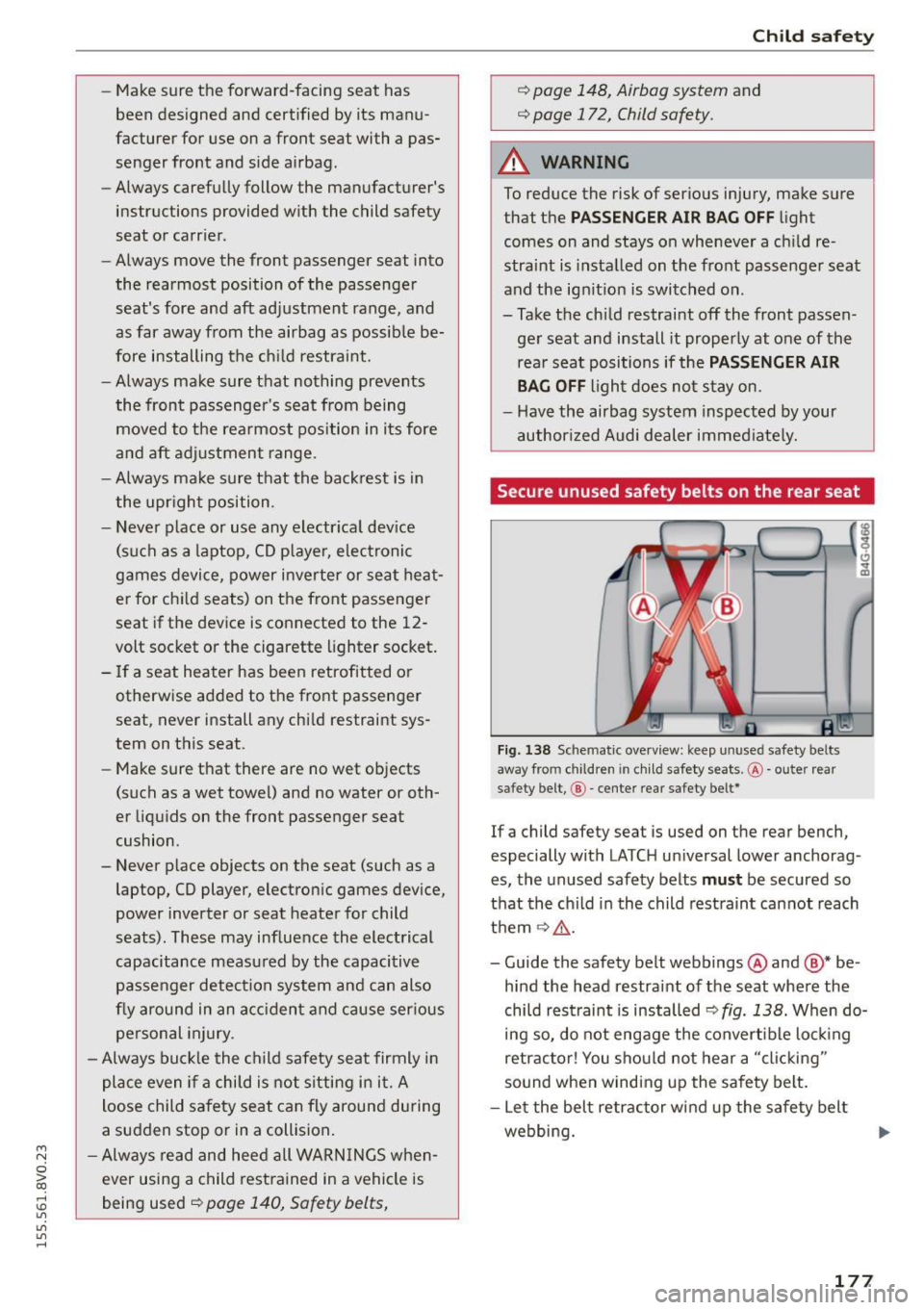
Fig. 138 Schematic overview: keep unused safety belts
away from children in c hild safety seats. @-outer rear
safety belt, @ -ce nter rear safety belt*
If a child safety seat is used on the rear bench,
especially with LATCH universal lower anchorag
es, the unused safety belts
must be secured so
that the child in the child restraint cannot reach
them ¢_& .
- Guide the safety belt webbings @and
®* be
hind the head restraint of the seat where the
child restraint is installed
¢ fig. 138. When do
ing so, do not engage the convertible locking
retractor! You should not hear a "clicking "
sound when winding up the safety belt.
- Let the belt retractor wind up the safety belt
webbing.
177
Page 180 of 282
Child safety
_& WARNING
A child in a child safety seat installed with the LATCH lower anchorages or with the standard
safety belt or a child in a booster seat on the
rear seat cou ld play with unused rear seat
safety belts and become entangled. This
could cause the child serious personal injury
and even death.
- Always secure unused rear seat safety belts
out of reach of children in child seats such
as by properly routing them around the
head restraint of the seat where the child re
straint is installed.
- Never activate the convertible locking re tractor when routing the safety belts around
the head restraints.
- Never let anyone sit at the center rear seat
ing position if the center rear safety belt has
been routed around a rear head restraint.
Child seats
Infant seats
Babies and infants up to about one year old and
20 lbs. or 9 kg need special rearward-facing
child restraints that support the back, neck and
head in a crash.
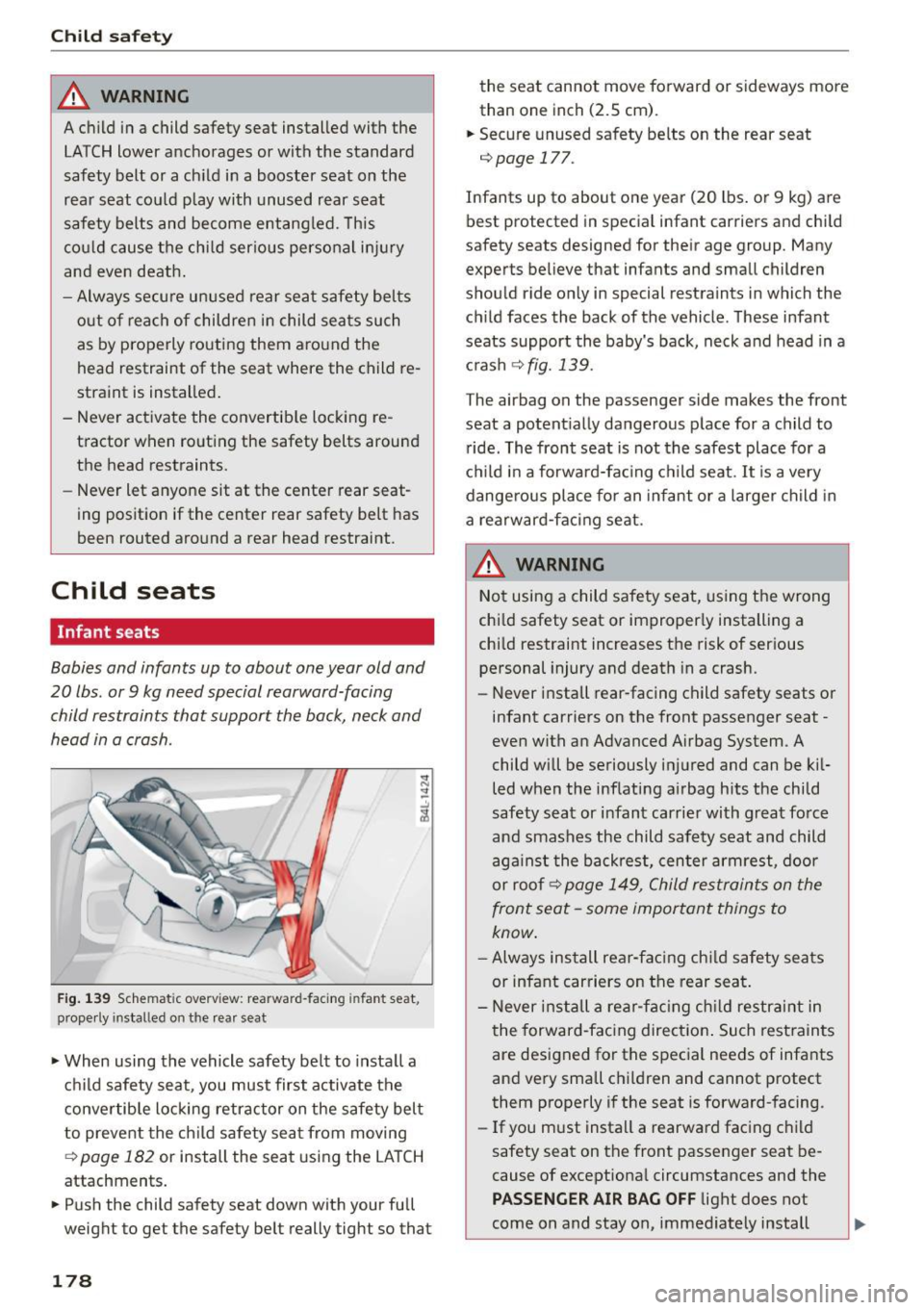
Fig. 139 Schematic overview: rearward-facing infant seat,
properly installed on the rear seat
.. When using the vehicle safety be lt to install a
child safety seat, you must first activate the
convertible locking retractor on the safety belt
to prevent the child safety seat from moving
c::> page 182 or install the seat using the LATCH
attachments.
.. Push the child safety seat down with your full
weight to get the safety belt really tight so that
178
the seat cannot move forward or sideways more
than one inch (2.5 cm).
.. Secure unused safety belts on the rear seat
c::>page 177.
Infants up to about one year (20 lbs. or 9 kg) are
best protected in special infant carriers and child
safety seats designed for their age group. Many
experts believe that infants and small children
should ride only in special restraints in which the
ch ild faces the back of the vehicle. These infant
seats support the baby's back, neck and head in a
crash
c::> fig. 139.
The airbag on the passenger side makes the front
seat a potent ially dangerous place for a child to
ride . The front seat is not the safest place for a
child in a forward-facing ch ild seat.
It is a very
dangerous place for an infant or a Larger child in
a rearward-facing seat.
_& WARNING
Not using a child safety seat, using the wrong
child safety seat or improperly installing a
child restraint increases the risk of serious personal injury and death in a crash.
- Never install rear-facing child safety seats or
infant carriers on the front passenger seat -
even with an Advanced Airbag System. A
child will be seriously injured and can be kil led when the inflating airbag hits the child
safety seat or infant carrier with great force
and smashes the child safety seat and child
against the backrest, center armrest, door
or roof
c::> page 149, Child restraints on the
front seat -some important things to
know .
-Always install rear-facing chi ld safety seats
or infant carriers on the rear seat.
- Never install a rear-fac ing ch ild restraint in
the forward-facing direction. Such restraints
are designed for the special needs of infants
and very small children and cannot protect
them properly if the seat is forward-facing.
- If you must install a rearward facing child
safety seat on the front passenger seat be
cause of exceptional circumstances and the
PASSENGER AIR BAG OFF light does not
come on and stay on, immediately install
~
Page 181 of 282
....,
N
0 > co
rl I.O
"'
"'
"'
rl
the rear-facing ch ild safety seat in a rear
seating pos it ion and have the airbag system
inspected by your Audi dealer.
- Never place or use any electrical device
(such as a laptop, CO player, electron ic
games dev ice, power inverter or seat heater
for child seats) on the front passenger seat if the dev ice is connected to the 12-volt
socket or the c igarette lighter socket.
- If a seat heater has been retrofitted or oth
erwise added to the front passenger seat,
never i nstall any ch ild restra int system on
this seat.
- Make sure that there are no wet objects
(such as a wet towel) and no wa ter or othe r
liquids on the front passenger seat c ushion.
- Never place objects on the seat (such as a
laptop, CD playe r, e lectronic games dev ice,
power inverter or seat heater for chi ld
seats). These may influence the e lectr ica l
capacitance measured by the capacitive pas·
senger detection system and can a lso fly
around in an accident and cause serious per
sonal injury.
- Always read and heed all WARNINGS when·
ever using a child restrained in a vehicle is
being used
c:::> page 140, Safety belts,
¢ page 148, Airbag system and
c::> page 172, Important information.
Convertible child safety seats
Properly used convertible child safety seats can
help protect toddlers and children over age one
who weigh between 20 and 40 lbs. (9 and 18 kg)
in a crash.
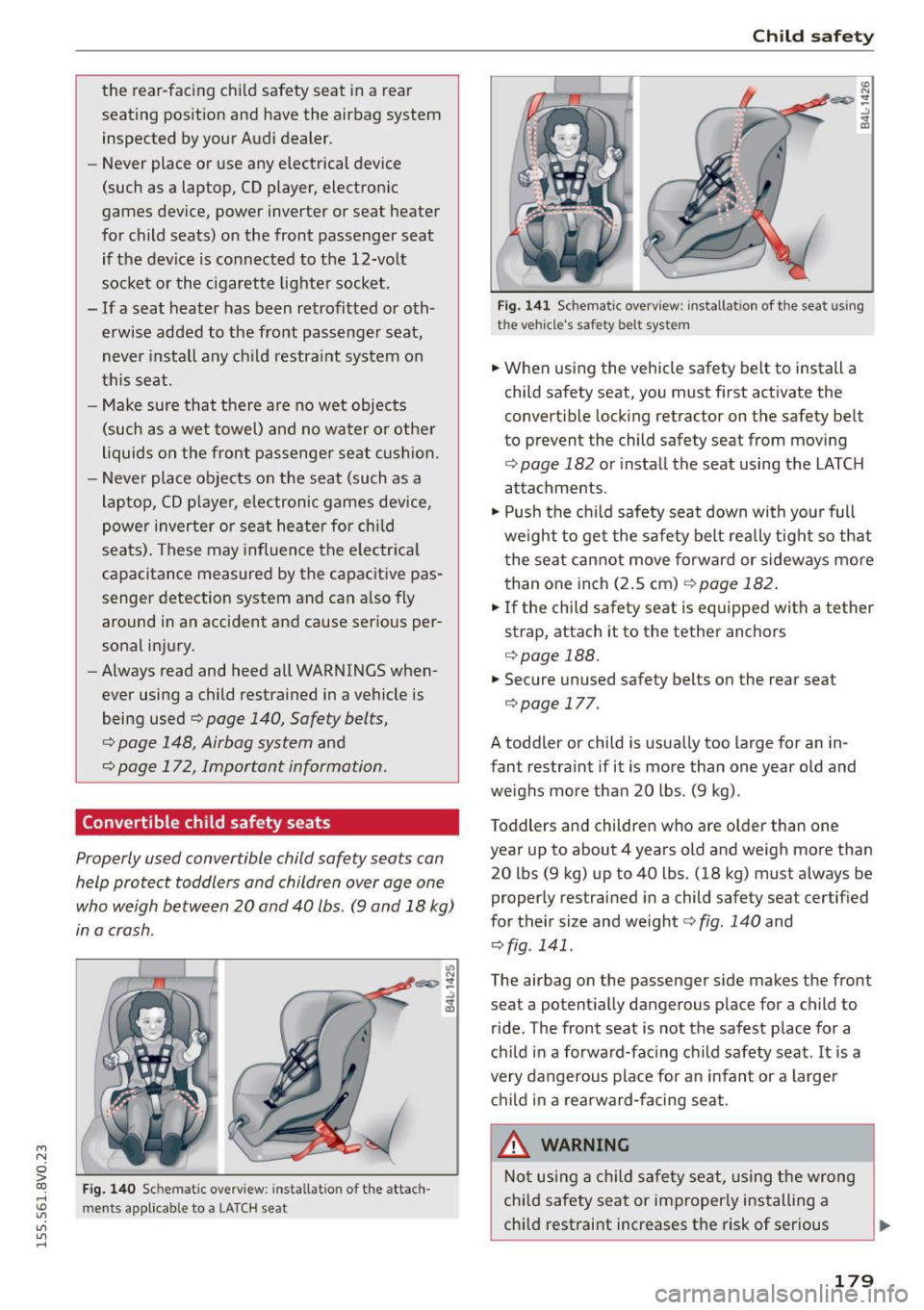
F ig . 140 Schemat ic overview : installat ion of t he atta ch
ments applicab le to a LATCH seat
Chil d sa fe ty
Fig. 141 Schemat ic overv iew: installat io n of the seat us ing
the vehicle's sa fety belt system
.. When using the vehicle safety belt to install a
child safety seat, you must first activate the
convert ible lock ing retractor on the safety belt
to prevent the child safety seat from moving
c::> page 182 or install the seat using the LATC H
attachments .
.. Push the ch ild safety seat down with your full
weight to get the safety belt rea lly t ight so that
t he seat cannot move forward or sideways more
than one inch (2.5 cm)
c::> page 182.
.. If the child safety seat is equipped with a tether
strap, attach it to the tether anchors
c::> page 188 .
.. Secure unused safety belts on the rear seat
c::>page 177.
A toddler or child is usua lly too large for an in
fant restraint if it is more than one year old and
weighs more than 20 lbs. (9 kg).
Toddlers and children who are older than one
year up to about 4 years old and weigh more than 20 lbs (9 kg) up to 40 lbs. (18 kg) must always be
properly restrained in a child safety seat certif ied
for their size and we ight
c:::> fig . 140 and
c::> fig . 141.
The airbag on the passenger side makes the front
seat a potent ially dangerous p lace for a child to
ride . The front seat is not the safest place for a
child i n a forward-fac ing child safety seat. It is a
very dangerous place for an infant or a larger
c h ild in a rearward-facing seat.
_&. WARNING
No t using a child sa fety seat, us ing the wrong
child safety seat or improper ly installing a
child restraint increases the risk of serious
~
179
Page 182 of 282
Child safety
personal injury and death in a collision or oth
er emergency situation.
- Children on the front seat of any car, even
with Advanced Airbags, can be seriously in
jured or even killed when an airbag inflates.
A child in a rearward-facing child safety seat
installed on the front passenger seat will be
seriously injured and can be killed if the
front airbag inflates -even with an Ad
vanced Airbag System.
- The inflating airbag will hit the child safety
seat or infant carrier with great force and
will smash the child safety seat and child
against the backrest, center arm rest, door
or roof.
- Always install rear-facing child safety seats
on the rear seat.
- If you must install a rearward facing child
safety seat on the front passenger seat be cause of exceptional circumstances and the
PASSENGER AIR BAG OFF light does not
come on and stay on, immediately install
the rear-facing child safety seat in a rear
seating position and have the airbag system inspected by your Audi dealer .
- The rear side of the child safety seat should
be positioned as close as possible to the
backrest on the vehicle seat .
- For adjustable head restraints: adjust or re
move the rear seat head restraint if it is dif
ficult to install the child seat with the head
restraint in place
Q page 56 . Install the
head restraint again immediately once the
child seat is removed. Driving without head
restraints or with head restraints that are
not properly adjusted increases the risk of
serious or fatal neck injury dramatically.
- Always read and heed all WARNINGS when
ever using a child restrained in a vehicle is
being used
Q page 140, Safety belts,
Q page 148, Airbag system and
Q page 172, Important information.
A WARNING
If exceptional circumstances require the use
of a forward-facing child restraint on the front
passenger's seat, the child's safety and well-
180
being require that the following special pre
cautions be taken :
- Make sure the forward-facing seat has been
designed and certified by its manufacturer
for use on a front seat with a passenger
front and side airbag .
- Always follow the manufacturer's instruc
tions provided with the child safety seat or infant carrier .
- Always move the front passenger seat into
the rearmost position of the passenger
seat's fore and aft adjustment range, and as
far away from the airbag as possible before installing the child restraint .
- Always make sure that nothing prevents the
front passenger's seat from being moved to
the rearmost position in its fore and aft ad
justment range.
- Always make sure the backrest is in an up
right position .
- Never place or use any electrical device
(such as a laptop, CD player, electronic
games device , power inverter or seat heater
for child seats) on the front passenger seat
if the device is connected to the 12-volt
socket or the cigarette lighter socket.
- If a seat heater has been retrofitted or oth
erwise added to the front passenger seat, never install any child restraint system on
this seat.
- Make sure that there are no wet objects
(such as a wet towel) and no water or other
liquids on the front passenger seat cushion.
- Never place objects on the seat (such as a
laptop, CD player, electronic games device,
power inverter or seat heater for child
seats). These may influence the electrical
capacitance measured by the capacitive pas
senger detection system and can also fly
around in an accident and cause serious per
sonal injury.
- Make sure that the
PASSENGER AIR BAG
OFF
light comes on and stays on all the time
whenever the ignition is switched on.
- If the
PASSENGER AIR BAG OFF light does
not come on and stay on, immediately in
stall the forward-facing child seat at a seat-
ing position on the rear seat and have the
~
Page 183 of 282
....,
N
0 > co
rl I.O
"'
"'
"'
rl
airbag system inspected by your authorized
Audi dealer.
- Take the child restraint off the front passen
ger seat and install it properly at one of the
rear seat pos it ions if the
PASSENGER AIR
BAG OFF
light does not stay on whenever
the ignition is switched on .
Booster seats and safety belts
Properly used booster seats can help protect
children weighing be tween about 40 lbs. and 80
lbs . (18 kg and 36 kg) who are less than 4
ft. 9
in . (57 inches/1 .45 meters) tall .
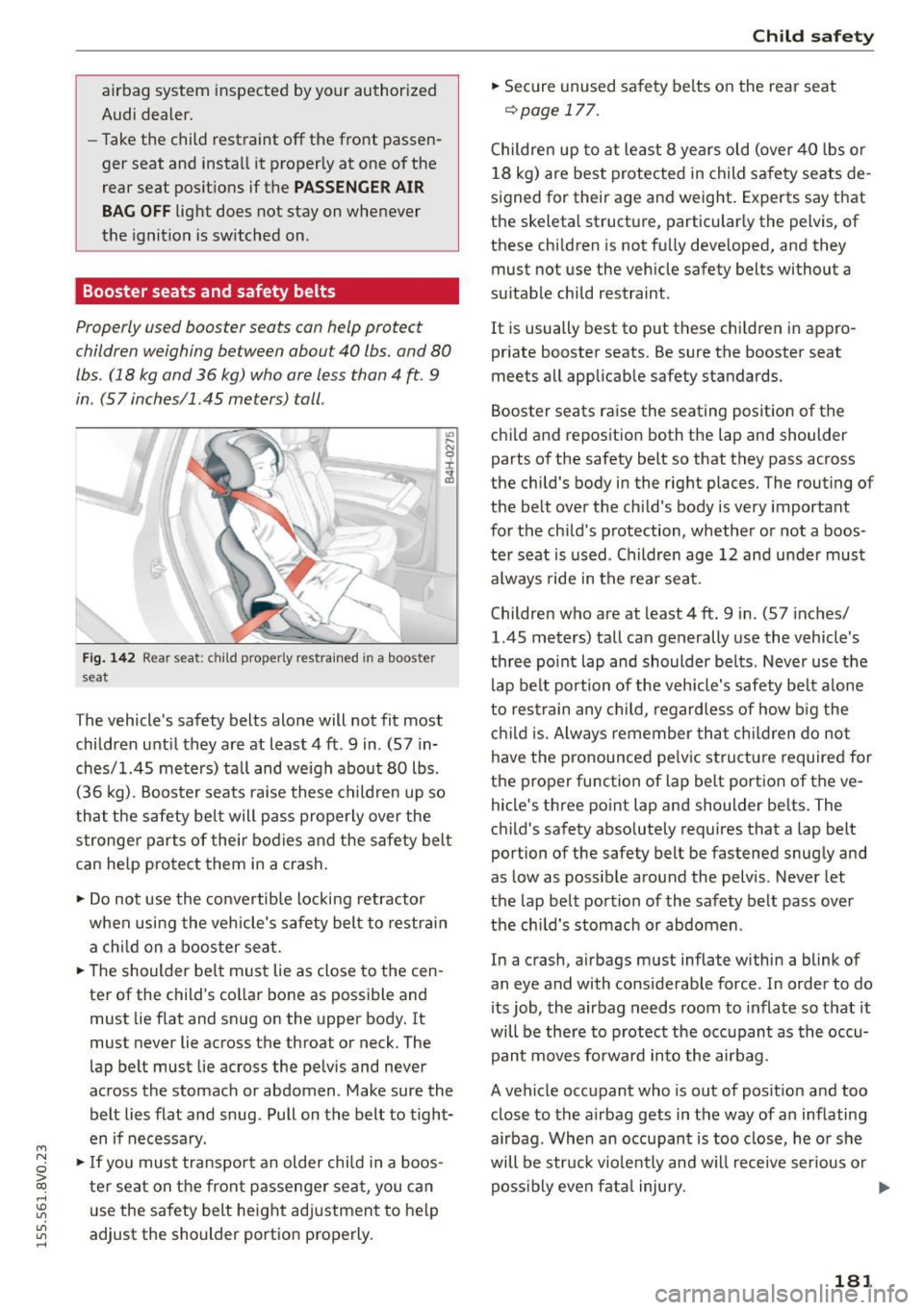
Fig. 14 2 Re ar seat: child pro perl y restrain ed in a booster
seat
T he vehicle's safety belts alone will not fit most
children unti l they are at least 4
ft . 9 in . (57 in
ches/1.45 meters) tall and we igh about 80 lbs .
(36 kg) . Booster seats raise these children up so
that the safety bel t will pass properly over the
stronger parts of their bodies and the safety belt
can help protect them in a c rash.
.,. Do not use the co nvertib le locking retractor
when using the vehicle's safety bel t to restra in
a ch ild on a boos ter sea t.
.. The shoulder be lt must lie as close to the cen
te r of the child's co llar bone as possible and
must lie flat and snug on the upper body. It
must never lie across the throat or neck. The
lap belt must lie across the pelvis and never
ac ross the stomach or abdomen . Make sure the
belt lies flat and snug . Pull on the belt to tight
en if necessary .
.,. If you must transpo rt an older chi ld in a boos
ter seat on the front passenger sea t, you can
use the safety belt height adj ustmen t to help
adjust the shoulder port ion properly .
Child sa fe ty
.. Secure unused sa fety belts on the rear seat
i=> page 177.
Childre n up to at least 8 yea rs old (over 40 lbs or
18 kg) are best protected in child safety seats de
s igned for their age and weight . Experts say that
the skeleta l structure, particularly the pelvis, of
these chi ldren is not f ully deve loped, and they
must not use the vehicle safety belts without a
su itable child restraint .
It is usually best to put these child ren in appro
priate booster seats . Be sure the booster seat
meets all applicab le safety standards.
Booster seats ra ise the seating position of the
child and reposit ion both the lap and shoulder
parts of the safety belt so that they pass across
the chi ld's body in the right places. The routing of
the be lt over the chi ld 's body is very important
for the ch ild's protection, whether or not a boos
te r seat is used . Children age 12 and under must
always ride in the rear seat.
Children who are at least 4
ft. 9 in . (57 inches/
1.45 meters) tall can generally use the vehicle's
th ree po int lap and shoulder be lts . N ever use the
lap belt portion of the veh icle's safety belt a lone
to re strain any child , regardles s of how b ig the
c hi ld i s. A lways remember that c hildren do no t
have the pronounced pe lv ic struct ure required for
the p roper function of lap belt port ion of the ve
hicle 's t hree point lap and shoulder be lts . The
c h ild 's safety abso lutely requires that a lap belt
portion of the safety belt be fastened snug ly and
as low as possible around the pelvis . Never let
the lap belt portion of the safety belt pass over
the ch ild's stomach or abdomen .
In a crash, a irbags must inflate within a blink of
an eye and with considerable force . In order to do
its job, the airbag needs room to inflate so that it
will be the re to p rotect the occ upant as th e occu
pant moves fo rward into the airbag .
A vehicle occupant who is out of posit ion and too
close to the a irbag gets in the way of an inflating
airbag . When an occupan t is too close, he o r she
will be struck violent ly and w ill receive ser ious or
poss ibly eve n fa ta l injury. .,,.
181