2015 AUDI S3 SEDAN light
[x] Cancel search: lightPage 202 of 282

Checking and Fill in g
Closing the hood
.. Push the hood down until the force of the strut
is overcome.
.. Let the hood fall light ly into the Latch.
Do not
press it in.
c::> _&. .
A WARNING
If the hood is not latched completely, it cou ld
fly up while you are driving and obstruct your
vision.
Gasoline engine compartment overview
The most important check points .
-For safety reasons, the hood must always be
closed securely wh ile d riving. Because of
this, always check the hood after closing it
to make sure it is Latched correctly . The
hood is Latched if the front corne rs cannot
be Lifted.
- If you notice that the hood is not Latched while you are dr iving, stop immediately and
close it, because this increases the risk of an
accident.
F ig . 1 57 Typica l locat io n of th e reservo ir, eng ine oil dipstick, a nd engine o il filler opening
(D Coolant expansion tank (_L) .....
@
@
©
®
®
0
®
Eng ine oil dipstick ......... ... .
E ng ine oil filler opening
("!:::r.) .. .
Brake fluid reservoir((())) ...... .
Ba ttery(+) under a cover
Body ground point(-)
Washer fluid reservoir
(W) ... .. .
Fu se housing ... ......... .... .
200
206
203
203
207
209
212
248
The engine oil filler opening and the dipstick
( items @and
@) c::> fig. 157 may be Located in a
different area depending on engine vers io n.
A WARNING -
Read and following the WARNINGS before
checking anyth ing in the eng ine compartment
c::> pag e 198.
Page 204 of 282

Checking and F ill in g
Using the proper engine o il is important for the
functionality and service life of the engine. Your
engine was factory-fi lled w ith a high-quality o il
which can usually be used throughout the ent ire
year.
@) Note
Your L imited New Vehicle Warranty does not
cover damage or malfunctions due to failure
to follow recommended ma intenance and use
requ irements as set forth in the Audi Ow ne r's
Manual and Wa rranty
& Ma intenance booklet .
- Use only a high quality eng ine oil t hat ex-
pressly comp lies w ith the Audi o il quality
standard specified for your vehicle's e ngine .
Using a ny other oil can cause se rious engine
damage.
- Do not mix any lubricants o r othe r addit ives
i nto the engine oil. Doing so can cause en
g ine damage.
(D Tips
If you need to add oil and there is none availa
ble that meets the Audi o il quality standard
y o ur eng ine requires, you m ay add a total of
no more than 0.5 quart/li ter o f a h igh-quali ty
"synthet ic"oil that meets the fo llowing speci
fications .
- V ehicles wi th gasoline engine: AC EA A3 o r
API SM with a viscosity grade of SAE 0W- 30,
SAE SW -30 or SAE SW-40 .
- Vehicles with d iesel engine: ACEA C3 o r
API CF with a viscosity g rade of SAE 0W-30
or SAE SW-30.
- Fo r more information abo ut engine oi l t h at
has been approved for your vehicle, please
contact either your a uthorized Audi dea ler
or Audi Customer Relations at
1 (800) 822-2834 or visit ou r web site at
www.aud iusa.com or www .aud icanada .ca.
Engine oil consumption
The engine in your vehicle depends on an ade
quate amount of oil to lubricate and cool all of
its moving parts .
In order to provide effective lubrication and cool ing of in ternal engine components, all internal
202
combust ion engines consume a certa in amoun t
of oil. Oil consumptio n varies from engine to en
gine and may change sign ificant ly over the li fe of
the engine . Typically, eng ines with a specif ied
break-in period (see
¢ page 70) consume more
o il dur ing the break-in per iod than they consume
after oil consumption has s tabilized .
Under normal cond itions, the rate of oil con
sump tion depends on the quality and viscos ity of
the oil, the RPM (revolutions per minute) at
wh ich the engine is operated, the ambie nt tem
perature and road cond it ions . Furthe r facto rs a re
t h e amo unt of o il di lution from water conde nsa
t ion or fue l residue and the ox idat ion leve l o f the
o il. As any engine is s ubject to wear as mileage
builds up, the oil consumption may increase ove r
time unt il rep lacement of wo rn components may
become necessary.
With a ll these va riab les coming into p lay, no
standard rate of oil consumption can be estab
li shed or spec ified. There is no alte rnative to reg
ul ar and frequent checking o f the oil leve l, see
Note .
If the yellow engine oi l level warning sym bo l Ill
in the instrument cluster lights up, yo u should
check the o il level as soon as possible
¢ page 203. Top off the oil at your earliest con
venience
¢ page 203.
A WARNING
Before you c heck anythi ng in the eng ine com
partment, always read and heed al l WAR N
IN GS ¢page 198.
(D Note
Driving w it h an insufficient o il level is likely to
cause severe damage to the engine.
(D Tips
- The oil pressure warning d isplay. is not
an indicator of the oil level. Do not rely on
it. Instead, check th e oil level in your en
gine at regular intervals, preferably each
time you refuel , and alway s before going
on a long trip.
Page 208 of 282

Checking and Fill in g
system and could result in damage not cov
ered by your New Vehicle Limited Warranty.
Adding coolant
Fig. 162 Eng ine compartment: ma rkings on the coola nt
expans ion tank
Read an d follo wing the WARNINGS before
checking anything in the engine compartment
r::;,page 198.
Checking the engine coolant level
.. Park your vehicle on a level surface.
.. switch the ignition off.
.. Read the coolant level on the coolant expansion
tank
r::;, fig . 162 . The coolant level must be be
tween the mark ings when the engine in cold .
When the engine is warm it can be slightly
above the upper marking .
Adding coolant
Requirement: there must be a residual amount of
coolant in the expans ion tank
c> Q).
.. Let the engine cool down.
.. Place a cloth over the coolant expansion tank
cap and unscrew the cap counterclockwise
<=>& .
.,. Add coolant mixed in the correct ratio
r::;, page 205 up to the upper marking .
.. Make sure that the fluid level rema ins stable.
Add more coolant if necessary.
.. Close the cap secure ly.
A coolant loss s uggests a leak. Immediate ly drive
your veh icle to an authorized A udi dealer or au
thor ized Audi Service Facility and have the cool
ing system inspected.
If the cooling system is not
leaking, a loss can come from the coolant boiling
206
thro ugh ove rheating and being pushed out o f the
cooling system.
A WARNING
The cooling system is pressurized and can be
come very hot. To reduce the risk of burns
from hot coolant:
- Do not open the coolant expansion tank cap
w ith the engine hot. There is a risk of burns .
- Stop the eng ine and a llow it to cool.
- Protect your face, hands and arms from es-
caping coolant and steam by covering the
coo lant tank cap with a large, thick cloth.
- Turn the coolant tank cap counterclockwise
slowly and keep light pressure on the cap.
- To reduce the risk of burns, do not allow any
antifreeze or coolant to drip onto the e x
haust system or hot engine components.
The ethy lene glycol in engine coola nt can
catch fire under certa in circumstances.
- The coolant additive and the coolant can be
dangerous to your health. For this reason,
keep the coolant in the o riginal container
away from ch ildren . The re is a risk of poison
ing .
- W hen working in the engine compartment,
remember that the rad iator fa n can switch
on ev en if the ignition is switched off, wh ich
increases the risk of pe rsonal injury.
@ Note
Do not add coolant if the expans ion tank is
empty . Air cou ld enter the cooling system and
damage the eng ine. If this is the case, do not
continue driving. See an author ized Audi deal
er or a uth ori zed Audi Service Facility for a ssis
ta nce .
. Radiator fan
The radiator fan switches on automatically by it
self
An a uxiliary electric radiato r fan switches on and
off depending on coolan t temperature and other
vehicle ope rat ing cond itions .
After yo u sw itch the engine off, the aux ilia ry fan
can continue running for up to 10 m inutes -even .,,.
Page 209 of 282

with the ignition off. It can even switch on again
l ater by itself~.& , if
- the temperature of the engine coolant rises due to the heat bui ld-up from the eng ine in the en
gine compartment, or
- the engine compar tment heats up because the
vehicle is parked in intense sunlight.
A WARNING , --
- To reduce the risk of personal injury never
touch the radiator fan.
- The auxiliary e lectric fan is temperature con
trolled and can switch on suddenly even
when the engine is not running.
- The aux iliary radiator fan switches on auto
matically when the engine coo lant reaches a
certain temperature and will continue to run
until the coolant temperature drops.
Brake fluid
Checking brake fluid level
Fig. 163 Engine compa rt m ent: cove r on the brake fluid
reservo ir
N N -N
"' :ll
Before you check anything i n the engine compa rt
ment,
al ways re ad and h eed all W ARN INGS
~page 198.
... Read the brake fluid level from the b ra ke fluid
reservoir
r¢ fig. 163, r:¢ page 200, fig. 157. The
brake f luid leve l must be between the "MIN"
and "MAX" markings.
The location of the brake fl uid reservo ir can be
...., seen in the engine compartment illustration
N
~ r¢ page 200.
co
rl I.O
"'
"'
"'
rl
Check in g and Fillin g
The fluid level may drop slightly after some time
due to the automatic adjustment of the brake
pads . This is not cause for a larm.
If the brake f luid leve l falls considerably below
the "MIN" mark, the brake warning/indicator
light
1111 (U.S. mode ls) I. (Canadian models)
will come on
~ page 17. Do not continue to oper
ate the vehicle . The comp lete brake system
should be thoroughly checked by an authorized
Audi dealer or other qualified fac ility and the
cause corrected . If the brake flu id level is too low,
the brake warning/indicator light wi ll illuminate .
Contact an a uthorized Audi dea ler
immedi ate ly .
Changing brake fluid
Have the brake fluid changed by an experienced
technician.
Brake fluid absorbs moisture from the air. If the
water content in the brake flu id is too hig h, cor
ros ion in the brake system may result after a per i
od of t ime. The bo iling po int of the brake fluid
will a lso decrease cons iderab ly and decrease
braking performance.
Therefore, the brake fluid must be changed
e ve ry
tw o years .
Always use new brake flu id which co n
forms to Federal Motor Vehicle Standard "FMVSS
116 DOT 4".
The brake fluid reservoir can be diff icu lt to reach,
therefore, we recommend tha t you have the
brake flu id changed by you r authorized
Audi
de aler.
Your dea le r has the correct tools, the
right brake fluid and the know-how to do this for
you .
A WARNING
- -
-Brake flu id is poisonous. It must be stored
only in the closed original conta iner out of
the reach of children !
- Brake failure can resu lt from o ld or inappro
priate brake fluid. Observe these precau
tions:
- Use only brake fluid that meets SA E spe ci
ficat ion
J 1703 and conforms to Federa l
Motor Vehicle Standard 116. Always check
with your a uthorized Audi dea ler to make
~
207
Page 210 of 282
Checking and F ill in g
sure you are using the correct brake f luid .
The correct type of brake fluid is also indi
cated on the brake fluid reservoir .
- The brake fluid must be new. Heavy use of
the brakes can cause a vapor lock if the
brake fluid is left in the system too long.
This can ser iously affect the effic iency of
the brakes as well as your safety . This
could res ult in an accident.
(D Note
Brake flu id will damage the paint of your vehi
cle .
@ For the sake of the environment
Because of the problem of proper d isposa l of
brake fluid as well as the spec ia l tools re-
quired and the necessary expertise, we rec
ommend tha t you have the b rake fluid
changed by your author ized Audi dealer.
Battery
General information
The battery in yo ur Audi does not need any ma in
tenance under normal operating conditions. Aud i
recommends having the electro lyte level check by
an author ized Audi dealer or author ized Audi
Service Fac ility when the re a re
high outside tem
pe ratu res or when dr iv ing a ll day. The electroly te
leve l sho uld also be checked ea ch t ime the bat
t ery is charged
9 page 210 .
Have the battery checked when you br ing you r ve
hicle in fo r an inspec tio n. It is a good idea to re
p la ce the batte ry if i t is more than 5 ye ars old .
During certai n types of a irbag dep loyments, the
battery is disconnect ed from the vehicle electr i
cal system fo r safety reasons
9 .&. in Repair, care
and disposal of the airbags on page 163.
Disconnecting the battery terminals
Some veh icle functions (such as power windows)
are not ava ilable when the batte ry is disco nnect
ed. These functions must be programmed after
the ba ttery is reconnec ted. To avoid havi ng to do
t his , on ly disconnect the b attery from the veh icle
208
electrica l sys tem when that is necessa ry to pe r
form repairs.
To reprogram the func tion s, proceed as fo llows:
Function Reprogramming
P owe r window one-
9 page 41, Correcting
to uch up/down f unc-power window malfunc-
tion tions
Remote control key o r If the vehicle does not
Conve nience key reac t to the key , it must
be synchronized
9 page 35
Digita l clock 9 page 10
ESC indi cato r light The ind icator lig ht goes
o ut afte r driving a few
meters
Not running the vehicle for long periods of
time
If you do not d rive yo ur vehicle for several days or
weeks, e lectr ica l components are gradua lly re
duced or switched off. Th is red uces energy con
s u mption and maintains the vehicle's ability to
start over a long per iod of t ime ¢
page 128.
Some conven ience functions , such as inter ior
li ght ing or power seats* may not wo rk . These
convenienc e functions w ill be availabl e agai n
o nce you swi tch the ig nition on and sta rt the en
gine.
Winter operation Du ring the winter months , it is common for the
batte ry capaci ty to dec rease as the tempe rat ur es
become lower . This is because more powe r is
needed to start the vehicle and componen ts such
as the he ad lights and the rear window defogger
are used more frequent ly.
Avoid using powe r unnecessar ily, especially in
c ity dr iv ing o r o n short trips . H ave yo ur au thor
iz ed Audi de aler or author ized A udi Se rv ice Facili
ty check the ba ttery capacity before the start of
winter ¢
page 210. A well-charged battery will
not only reduce starting problems in co ld weath
er, but it will a lso last longer .
Page 211 of 282

M N
0 > co ,...., \!) er,
er,
er,
,....,
A WARNING ,~
- Work on the battery requires expert knowl
edge. Contact an authorized Aud i dealer or
authorized Audi Service Fac ility for informa
t ion regarding the v ehicl e batte ry. There is a
risk for chemical burns or e xplosions.
- Never open the vehicle battery . Do no t try to
change the batte ry elect ro lyte level. Other
wise ex plosive gas will e scape from the bat
tery and increase the r is k of an explosion.
@ Tips
If your vehicle is not driven for severa l wee ks
in very cold tempe ratu res, remove the battery
and store it in a pla ce where i t will no t freeze.
This preven ts the bat tery from being d am
aged and needing to be replaced .
Working on the battery
Be especially careful when working on or near
the battery.
The bat te ry is loc ated in t he luggage compart
men t under the floor. Before yo u check any thing
i n the l uggage comp artme nt,
read and heed all
WARNINGS
q ,&. .
Always heed the sa fety warning s, when working
on the vehicle battery o r th e veh icle elec trical
sys tem to preven t inju ry.
The following WARNINGS are very important
when work ing on the battery:
Always he ed the following WARNING SYM-
BOLS and safety pre caution s wh en working on
the battery .
®
Always wear eye protect ion.
A
Battery acid contains sulfuric acid. Al ·
ways wear gloves and eye protection.
@
No
• sparks
- flame s
- smok ing.
Checking and Fillin g
&
When a battery is charged, it produce s
-hydrog en gas which i s explo siv e a nd
c ould cau se p ers onal injury.
®
Always keep the battery well out of
reach of children .
A WARNING ..,__ -
Whenever working on the battery or on the
electr ica l system, the re is the risk of in jury,
accident and even fi re. Read and heed the fol
l ow ing WARNI NGS:
- Always wear eye protection. Do not let bat
tery ac id or a ny lead particles get on your
skin o r clothing. Shield yo ur eyes. Exp losive
gases can ca use blindness or o ther in jury.
- Battery acid conta ins sulfuric acid. Sulfuric
acid can ca use b lindness and severe burns.
- Always wear g loves and eye protection. Do
not tilt the battery because ac id could leak
out of the ventilation openings.
- If you get battery ac id in your eyes or on
your s kin, immed iate ly r inse with cold wa
ter fo r several minutes and get medical at
tent ion.
- If you shou ld ingest any battery acid , seek
med ica l attent io n immed iate ly.
- Do not expose the batte ry to an open flame,
electric sparks or an open light.
- Do not smoke.
- Do not interchange the positive and nega-
tive cables .
- When working on the battery , be s ure not to
short-c ircuit the terminals with tools or oth
er metal objects . This would ca use the bat
tery to heat up very quickly , which could
lead to damage or exp losion and perso nal
in jur y.
- When a battery is charged, it produces hy
drogen gas which is e xplos ive and could
cause persona l injury .
- Always keep the battery well out of the
reach of children.
- Before work is done on the electrical sys
tem, disconnect the negat ive g round cab le.
- Before performing any work on t he e lectr i
cal system, sw itch
off the engine and igni-
tion as well as any electrical equ ipme nt. The .,..
209
Page 212 of 282

Checking and Fill in g
negative cable on the battery must be dis·
connected. If you are just going to replace a
light bulb, then it is enough to switch off
the lights .
- Before disconnecting the battery, switch off
the anti-theft alarm system! Otherwise you
will set off the alarm .
- When disconnecting the battery, first dis
connect the negative cable and then the
posit ive cab le.
- Before reconnect ing the battery, make sure
all electrical consumers are switched off . Re
connect the pos itive cable first and then the
negative cable . Never intercha nge the ca
bles -th is could star t a fire!
- Never charge a froze n or a thawed-out bat
te ry.
It co uld explode! If a batte ry has fro
zen, then it m ust be repl aced. A d isc harged
b at tery can free ze over at 3 2 °F (0 °C).
- Make sure the vent hose is always attached
to the opening on the side of the battery .
- Never use batte ries which are damaged.
T he re is the danger of an explos ion! Always
replace a damaged battery.
_& WARNING
California P ropos ition 65 Warning:
- Battery posts , termina ls and re lated acces
sories contain lead and lead compounds ,
chemicals known to the Sta te of C alifornia
to cause ca nce r and reproductive problems.
Wash hands after hand ling.
(D Note
- Do not d isconnect t he ve hicle battery when
the ignition is o n or when the engine is run
ning, othe rwise , you w ill damage electronic
components in the electrical system .
- If your vehicle is going to stand for a long
period of time without be ing driven, p rotect
the battery from "freezing", otherwise it
will be damaged and will then have to be re
placed.
210
Battery charging
Starting the engine requires a well charged bat
tery .
Fig. 16 4 En g in e compa rtmen t: connecto rs fo r a c harg er
and jump start c ables
Always read and heed all WARNINGS below
c> .& and q .& in Working on the battery on
page 209 .
.,.. Switch off the ignition and all elec trical con
sumers.
.,.. Make s ure the area is we ll ventilated when you
charge the battery .
.,.. Open the eng ine hood
q page 199 .
.,.. Open the red cover on the positive pole
q fig. 164 .
.,.. Clamp the charge r te rm inal clamps as inst ruct
ed on the
battery terminal (+ ) and o nly on the
body ground point (· ).
.,.. On ly now plug the mains lead for the charging
equ ipmen t in to the wall outlet and turn it on
~ .& -
... Make sure the charging rate is not ov er
30 amps / 14 .8 Volt .
.,.. When the bat tery is fully cha rged : Tur n the
charg ing equipment off and remove the mains
lead from the wall outlet.
.,.. Now remove the clamps fo r the charging equip -
ment .
.,.. Close the red cover on the positive pole.
.,.. Close the hood
c> page 200.
A d ischarged battery can freeze at temperatures
of only 32 F
0 (0 °C) . Allow a frozen battery to
thaw complete ly before attempting to charge it
~ .&. . However, we recommend not using a
thawed battery aga in because the battery casing ..,_
Page 216 of 282
Tires and wheels
Tires and wheels
Wheels
General information
~check your tires regularly for
damage (punctures, cuts, crac ks
and bulges). Remove foreign ob
jects from the tire tread.
~ If driving over curbs or similar
obstacles, drive slowly and ap
proach the curb at an angle.
~ Have faulty tires or rims re
placed immediately.
~ Protect your tires from oil,
grease and fuel.
~ Mark tires before removing
them so that the same running direction can be maintained if
they are reinstalled.
~Lay tires flat when storing and
store them in a cool, dry location
with as little exposure to light as possible.
(D Note
-Please note that summer and winter tires are designed for
the conditions that are typical i n those seasons. Audi recom
mends using winter tires dur
i ng the winter months. Low
temperatures significantly de crease the elasticity of summ
er tires, which affects traction
214
and braking ability. If summer
tires are used in very cold tem peratures, cracks can form on
the tread bars, resulting in
permanent tire damage that
can cause loud driving noise
and unbalanced tires.
-Burnished, polished or chromed rims must not be used in winter driving condi
tions. The surface of the rims does not have sufficient corro
sion protection for this and
could be permanently dam
aged by road salt or similar
substances.
Tire designations
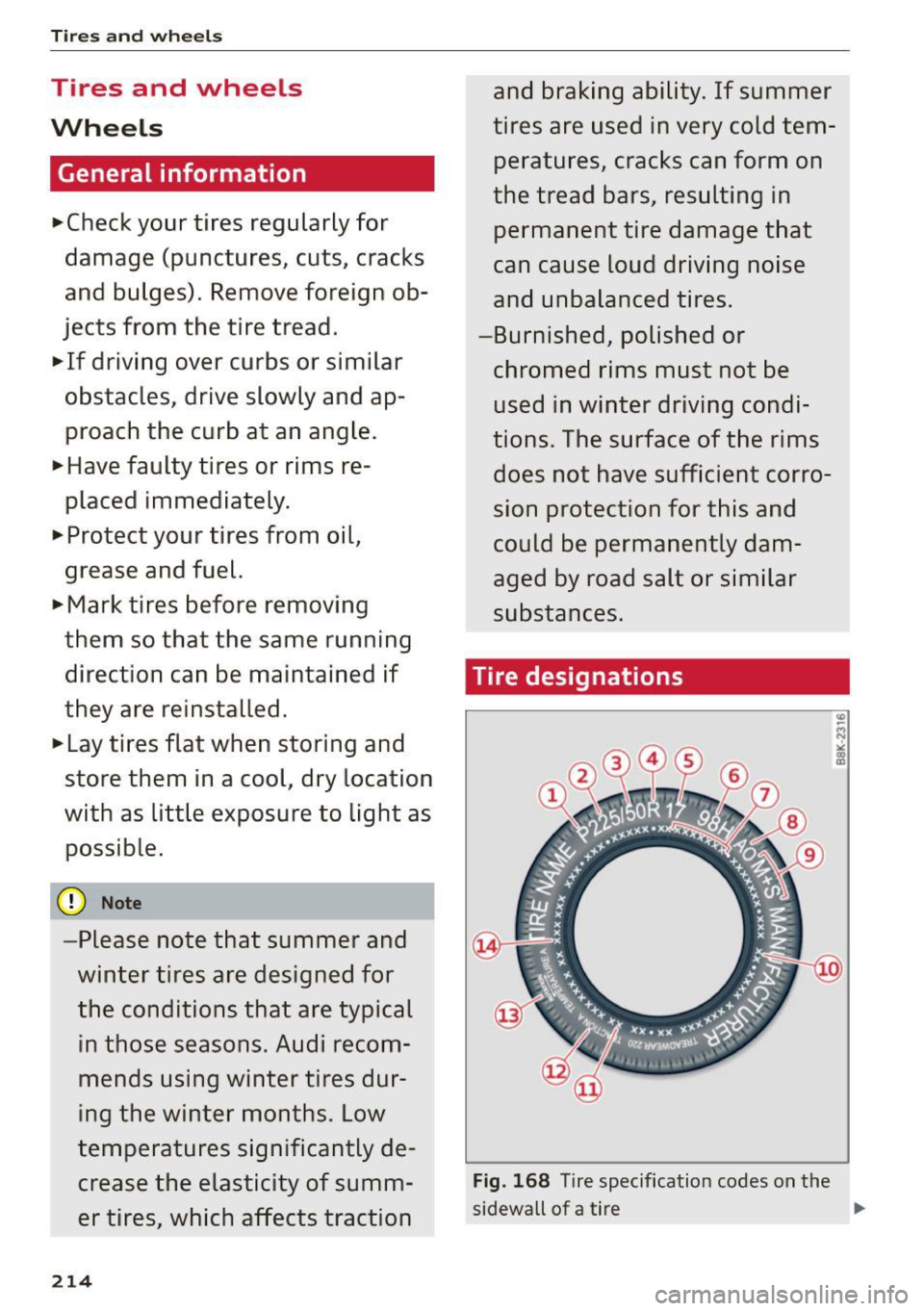
Fig. 168 Tire specification codes on the
sidewall of a tire .,_