2005 VOLKSWAGEN GOLF airbag
[x] Cancel search: airbagPage 114 of 444
Incorrectly positioned safety belts can cause severe injuries .
Wearing safe ty belts improperly ca n cause
seriou s inju ry or death. belts can
only work when they are correctly
tioned on the body.
tions reduce the eff ective ness of safety
belt s
and even increase the ris k of
jury and death by moving the safe ty belt to
c riti
cal a reas of th e body. Improper seatin g
position s also increase the risk of serious
inju ry and death when an airbag deploys
and strike s an occupant who is not in the
correct
seating pos ition. A driver is
sponsible for the safety of
pants and especially fo r chi ldren.
for e:
Safety
correct si ttin g posi tion in the vehicle whil e
Improperly worn safety belts increas e th e risk of serious personal injury and death w he neve r
a ve hicl e is being used.
make sure that all vehicle pants are correctly restrained and stay in a correct seating position whenever the ve hicle
i s being used.
page
In a frontal collision, the safety belts for the front and rear outboard seating
ation is high enough . Thi s tighten s th e belt and takes up belt slack. Taking up the slack help s to reduce forward occupant m ove ment during a
collision.
Th e
belt pretensioner can only be act iva ted once.
The belt pre te nsio ner can be activated in a
frontal , side or r ea r-end collision . will no t vate in a rollover in wh ic h the sid e airbag s do not
depl oy.
2l Where applicabl e
26 Safety
can be activa te d unnecess arily in a and will then have to be replac ed .
W he n the safe ty belt pretensioner is
Applicable safety requirements must be se rve d whe n the vehicle or components of the
syste m are scrap ped . A qualified dealers hip is miliar with these re gulation s a nd be pleased to pass on the information to you .
Be sure to observe safe ty, environmenta l and other reg ulat ions if th e ve hicl e or indiv idual
part s oft he system, parti cularl y the safe ty belt or airbag, are to be di sposed. We recommend you
Page 116 of 444
2.1 Safety first
Airbag system
Important things to know
Airbags are only supplemental re straint s. For airbags to do their job,
sen gers, befor e dri vin g a lw ay s:
- Adju st th e driver' s
seat and steering
w heel
5.
- Wear y
our safety be lt s properly
13.
- Always properly use the correct child
re straint
to protect page 53.
a co llisio n airbags mu st
times.
keep in g roo m be tween your bo d y and the
s teerin g w heel and the front of the passe nge r the ai rb ag can and completely and pro vid e supplemental page 4, occupant seatin g For details on th e o perati on of the seat adju stment control s and
important th at page 53,
There is a tha t the dri ver and th e passengers can and must d o t o h elp the individual safe ty feature s work
seating position is important so that the fron t airb ag on the drive r sid e c an do its job.
28 Airbag system
you h ave a physical impairment o r condition that prevents you from sitti ng properly on the
driver seat w ith the safe ty
may be necessary .
your au th o rize d dealer or qualified workshop, or the to mer
When the ai rbag syste m deploys, a gas generato r the ai rbags. brea k ope n the padded cove rs, and
shie ld again without interruptio n.
o f thi s tak es place in the of a n eye, so fast th at many people don 'teven realize that the airbags ha ve deplo yed. The airb ags also
reducing th e forces actin g o n the occupant d ur in g t he crash . th is way th ey help to re duce the ris k of in ju ry
t o the head and uppe r bo dy in t he cra s h. Airbags
d o not protect the arms or the lowe r parts of th e
body.
Both f ront a irb ags no t fro nta l
collisio ns. The tr igger ing o f the airbag sys te m
d epend s o n the an d re gis te re d by the electronic
contro l unit.
b ags
Page 117 of 444
sion. d am age, repair co sts or eve n the
l ack of damage is no t an of w het her an airb ag s ho uld o r
not.
i s no t po ssible to define cove r every poss ibl e kind and an g le of impact that alway s tri gge r th e bags , s ince th e c ircumstan ces vary era b ly be tw ee n one po rt ant factors include , for examp le, the natur e
( hard or so ft) of th e objec t that the ca r hi ts, th e
angle of imp act, vehicle speed, etc. The front bag s als o no t in side or rear sio ns, orin rollove rs .
Always re m em ber: Airb ags
depl oy only
once, and only in certain kinds of collisions. safety b elts are always th ere to tion in th o se situ ations in w hi ch airb ags are not supposed t o dep loy . o r when they have already
d eployed; for exa mpl e, wh en yo ur
sub stitut e for safe ty bel t. The airba g syste m wor ks mo st
effectivel y w he n u sed with the sa fety belts. Therefore , always properly wear your sa fety
WARNING
S itting too clo se to the stee rin g wheel or strument pa n el will decrease the effec tiv en ess of the airbags and will increase the risk of sonal injury in a co llision.
Ne ver sit clo se r than in ch es (25 em ) to th e steering wheel or instrument panel.
If you cannot sit more than
first
(continued)
to it when it
To redu ce the risk of injury when an airbag inflates, always wear safety belts properly 19,
Always make certain that children age 12 or younge r always rid e in the rear seat. If dren are not properly restrained, they may be sever ely injured or killed when an airb ag flat es.
Never le t childr en ride unrestrained or
Adju st the front seats properly.
Never rid e w ith the backr est
Always sit as far as poss ible from the steerin g whee l or the instrument panel
Alway s sit upright with your back against the backrest of your seat.
Neve r place your feet on the in strument panel or on th e seat . Always keep both feet on the in front of the seat to help preven t rio us in juri es to the legs and hip s if the a irbag
infl ates.
Never reclin e the front passenger 's seat to transport objects. Item s can also move into the area of th e s ide alrbag or the front airbag during braking or in a sudden maneuver. jects b eco me projectiles and caus e injury when an airbag infl ates.
WARNING
Airbags that have deplo yed in a cra sh mus t b e replaced .
onl y o riginal equipment airbags proved by Volkswagen and Installed by a
trained technician who has th e necessary tool s and diagnostic equipment to properly replace any airbag in your
Never permit salvage d or recycled airba gs
to be installed in your vehic le.
Airbag system 29
Page 118 of 444
page 53.
Eve n though your vehicl e is equipped wit h an Advanced Airbag System, make certain that all childre n , especially those 12 years and younger, a lways ride in the back seat properly restrained for their
if an infant up to about one year of age restrained in on e of the rearward-fac ing or forward-facing infant re
straints lis ted in Federal Mo tor Standard 208 with which the Advanced Airbag Sys te m in your was certified has been installed on the front passenger seat. For a listing of the child restraints that were used certify compli ance with the
55.
The PASSENGER
will stay on if the front passenger seat is not occupied,
will stay o n if the tot al weight o n the front passenger seat is that of a typical year-o ld infant restrain ed in one of th e rearward-facing or forward-fa cing infant restraints listed in
w ill go off if the front passenger seat is occupied by a n adult as re gis te red by the weightsen sin g page 40,
can stay on if the weight on the seat is more than th e typical! year-o ld infant re-
strained i n one of the child restraints li sted in 208 but less than weigh t of a small
the total weigh t on the front passenger seat is more tha n that of a typica l
208, the front airbag on the passenger side can deploy (the PASSENGER
light does not come on) even if the weight is less than the weight of a small adult. I f the PASSENGER light does not come o n, th e front airbag o n the passenger side has not been turned off by th e e lectronic control unit and can deploy if the control unit senses an impact that meets the conditions stored in its
memory.
For example, the airbag may deploy if:
a small chil d that is heavie r than a typical year-old infant is on the front passenger seat restrained in one of the c hild seats liste d in 20 8 page 55 or
a child who has outgrown child restraints is on the front passenger seat.
If the front passenger airbag is turned off, the PASSENGER and sta ys on.
The front airbag on the passenger sid e w ill deplo y if the PASSENGER BAG lig ht does not come on and sta y on even if a small or teenager, or passenger who is not sitting up
right w ith their back against a non-recl in ed bac kre st with th eir feet on the in
front of the seat i s on the
deployment occurs in those crashes that ta ke place at lowe r decelera ti o ns as defined in
Page 119 of 444
the elec tronic control page 41, SENGER
Always remember. a child seat or infa nt carrier
in stalled on th e fron t seat may the rapidly pas senger's airbag in a frontal collision. The
airbag could greatly re duce the effectiveness of the c hild restraint and even seriou sly injure th e
c hild during
stro ng ly recommend that children always sit in
th e back page 53,
infant in a seat stall ed on th e front passe nge r seat ously injured and can be killed if the front
airbag inflates eve n with an
System.
The inflating airba g will hit the child seat or infant carrier with great force and will
smas h th e c hild seat and c hild against the backrest, cent e r armre st, door or roof.
Always install r earwa rd-facing child seats on the rear scat.
If you must install a rearward facing child seat on the front passe nger scat becau se of
light docs not com e on and stay on, imme diatel y
your authorized swage n dealer or qualified workshop.
terferc with the ously inju re or even the child -eve n with
a n A irb ag
in exceptio nal circumstances, you must
in stall a fonvard-facing c hild restraint on the front passe nger's sca t:
-
Fon vard-facin g seats install ed on the front passenger's seat may interfer e
with the deplo ym ent of the air bag and cause seriou s personal injury to the child .
2.1 Safety first
turer's instructions provid ed with the c hild
sea t or carrier.
- Neve r
put the fonvard-faci ng c hild
ment panel.
- Always move the passe nge r sca t into its
rearmost pos ition in the scat's fore and aft adjustment range, as far away from the airbag as possi ble before installing ward-facing
scat that can increase the total weight te re d by the weig ht-sensing mat and ca n
ca use injury in a cras h.
Make sure that the BAG light comes on and stays on all the time w henever the igniti on i s switc hed on.
th e BAG light does not com e on and stay on , imm ediately in stall the fonv ard-facing child scat in a rea r seatin g
position and have the airba g sys tem inspec ted
by your authorized Volkswagen dealer or qualified workshop.
To reduce the ris k of se rious injury, make su re that tltc light is on whenever a child restraint is install ed on th e
front passenger scat and the ig niti on is switched on.
the d ocs not stay on, perform th e c hecks descr ibed the Advanc ed
Take the c hild restra int off the front senger seat and in stall it properly at one of the
r ear sea t position s if th e BAG light does not sta y on.
Airbag system 31
Page 120 of 444
Have th e a irbag system inspected by you r authorize d Volkswagen deale r or qualified
workshop immediately. Always carefully follow instructions from
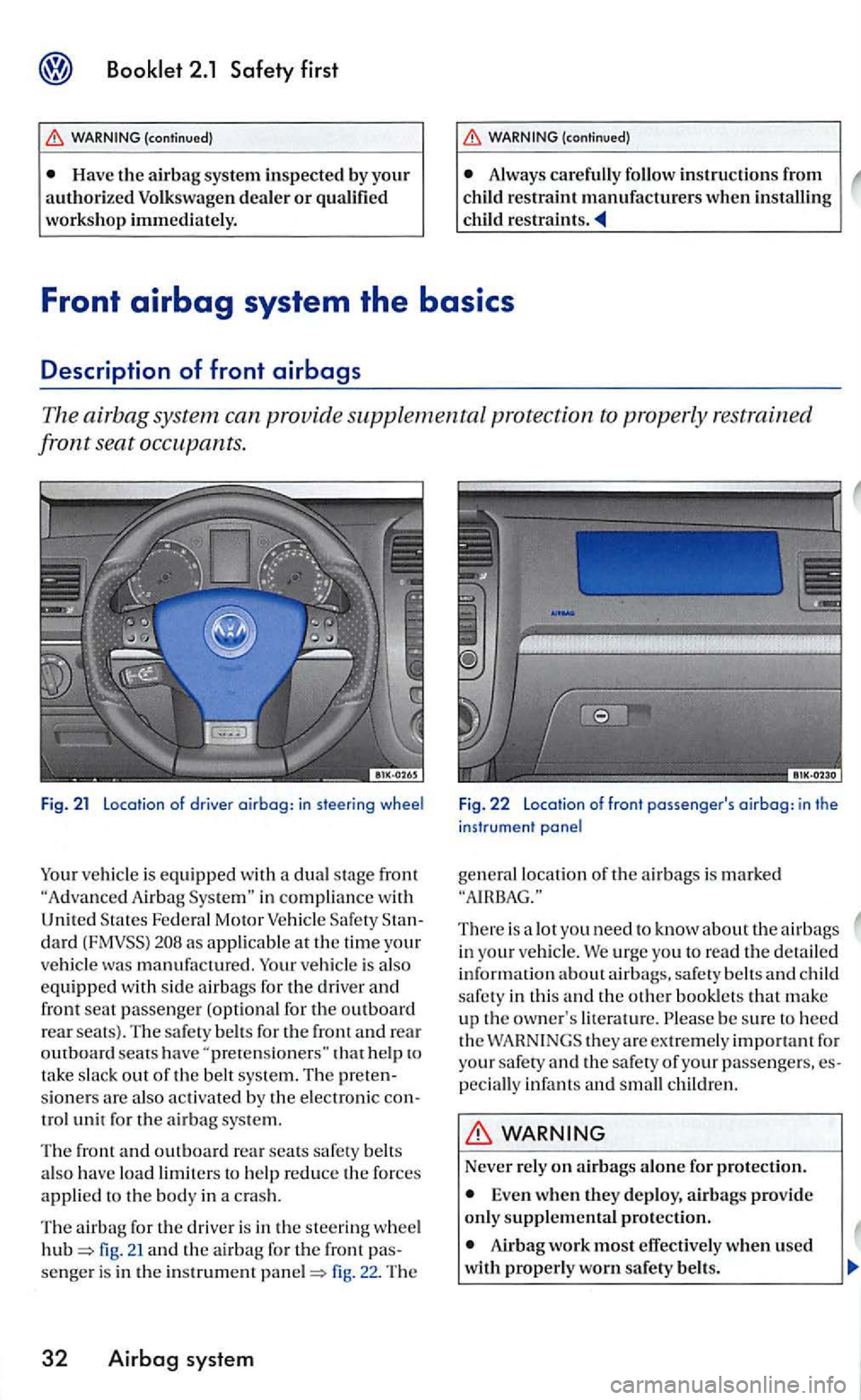
Fig. 21 Location of driver airbag: in steering wheel
ve hicl e is equipped with a dual s tage front A ir bag in compliance w ith
Unit ed Fede ra l Motor Veh icle dard as applicable at th e time your ve hicl e was manufa ctured . vehi cle is also equipped w ith sid e airbags for the driver and fron t se at passenge r (opt io nal for the outboard re a r seats). The sa fety belts for th e front and re a r outboard seats have ''pretensioners"
fig. 21 and th e ai rbag for the front fig. 22. The
32 Airbag system
F ig. 22 Location of front passenger's airbag: in the
instrument panel
gen era l lo ca tion of the a irba gs is marked
There is a lot you need to know about th e airbags in yo ur veh icle . We urg e you to read the detailed
information abo ut airb ags. safety belts and child
safe ty in thi s and the o th er bookle ts th at m ake
up the own er' s literature. be sur e to heed
th e th ey are extrem ely important for
your safet y and t h e s afety of yo ur passe nge rs, pecially infan ts and small c hildr en.
WARNING
Never rely on airb ags alone for protect ion.
Even when they deplo y, airbags provide only supplem ental protection.
Airbag work most effective ly w he n used
with properl y worn safet y belts.
Page 121 of 444
Therefore, always wear your safety belts and make sure that everybody in your vehicl e
i s properly re strained.
A person o n the front passenger seat, cially infants and small
Although the Advanced Airbag System in your vehicle is designed to turn orr the front passenger airbag if an in fant or a small child in one of the child restraints used to certify the Advanced Airbag System is on the front
tion s is impossible in all conceivabl e situa-
Applies to vehicles: with advanced front airbag system
Advanced front airbag system
Your vehicl e is equipped with a front Advanced
A irbag System in complia nce with States Federal Motor Vehicle Safety Standard as applicable the time your hicle was manufactured.
The front Advanced AirbagSystem supplemems the s afety belt s to provide additional protection
for the driver's and front passenge r' s head s and upper bodi es in frontal crashes. The airbags
straint system in your vehicle. Always remember that the a irba g system can only help to protect if you are sittin g upright, wearin g your safe ty belt and wearing it properly. This is why
yo u and your passengers must always be erly restrained, not just because the law requi res you to be.
The Adva nced Airbag System in yo ur ve hicl e has been to meet the ment s for 3 and 6 yea r-old childr en (as defined
in the s tandard) on the passenger sid e and very
The Advanced AirbagSyste m can deploy in accordance with the
fant restrained in one of the fonvard facing or rearward facing child seats wit h which
plo yment arc met.
Accident statistic s have shown that
For their own safety, all children, especially 12 years and younger, should always ride in the back properly restrained for their age and
small adult s on the driver side. ployment occurs in those crashes th at tak e place
troni c control unit. The low risk deployment teria are intended to help reduce the ris k of jury through interact ion with th e front airbag
t hat can occur in these collisions, for example.
b y
being too close to the steering wheel and
deplo yme nt to occur. the PASSENGER light mus t be orr "Monito ring the Advanced Airbag
year old. restrained in one of the rearward-facing or forward-facing
child restraims (listed in Federal Motor Vehicle Safety Standard with which the Advanced
A irbag System in yo ur veh icle was the PASSENGER BAG light mayor may not come on. Wh en the PASSENGER light is off, the fron t airbag on the passe nge r side may or may not deploy depending o n the nature
Airbog system 33
Page 122 of 444
a small child that is heavier than a typica l
I ye ar-old infant in one o f th e child restraint s
w ith whi ch th e A dvan ced Airbag was page 55.
a child who has outgrown child res traints is
o n
a small adult or te enage r is on th e front se nger seat.
a passe nge r w ho is not sitting upright with
thei r back against a non -re clined backr est with
th eir feet on th e ve hicl e floor in front of the seat occupant seatin g is on t h e fr o nt passenger seat.
re quir em ent s of th e to turn off the fron t a irb ag
f o r infant s 12 months old and younger w ho are
re strained on the fro nt passenger seat in ch ild
restraint s that are liste d in the Standard re str aint s and Adva nce d
requires the front airb ag on th e passenge r sid e to be turned off if th e tota l weig ht
r eg is tered on th e front passe nger is less
th an a inf ant up to about one year of age is s tra ined on the front passe nger seat in one of the rea rward-faci ng or for wa rd-fa cin g inf ant str aint s listed in Fed eral Moto r Vehicle
page 55
The BAG
light does no t come o n and stay on . th e front airbag on the passen ge r
s id e has not been turned off by th e co ntrol u nit and can deploy if th e control unit se nses an pact that meets th e co nditio ns s tored in its page
Alwa ys remember: Even thoug h yo ur veh icle is equipp ed with Adva nced Airb ags, the sa fest
34 Airbag system
pla ce fo r childr en i s properl y restrained on th e back seat. b e sure to read the important
information in the sections tl1at follo w and be
sure to heed all of th e WARNINGS.
To reduce th e risk of serious injury when an airbag inflates , always wear safety belts erly .
You will also receive serious injuries and could even be killed if you are up against the airbag or too close to it when it infl ates eve n
with an Advance d Airbag
An infant or child in a rearward-facing child
seat installed on the fron t passenger seat will be seriously injure d and can be killed if th e
front airbag inflate s eve n with an Advanc ed
Airbag System.
Although
ment is impossibl e in all conce ivab le tions that may happen during th e usefu l lif e of your ve hicle.
The infl atin g airbag hit the child seat or infant ca rrier with great force and will
s m as h th e child seat and child against backres t, center armrest, door or roof.
straint s in the rear seat.
front passe nge r scat because of ceptional circumstances and the
sh op.
terfer e with the airbag as it deploys and seri -