Downloaded from www.Manualslib.com manuals search engine Front Towing
Tow Limits -- 35 mph (55 kd), 50 miles (80 km)
NOTICE:
Do not tow with sling type equipment or bumper,
fog lamps and
air dam damage will occur. Use
wheel-lift or car-carrier equipment. Additional
ramping may be required for car-carrier
equipment. Use safety chains and wheel straps.
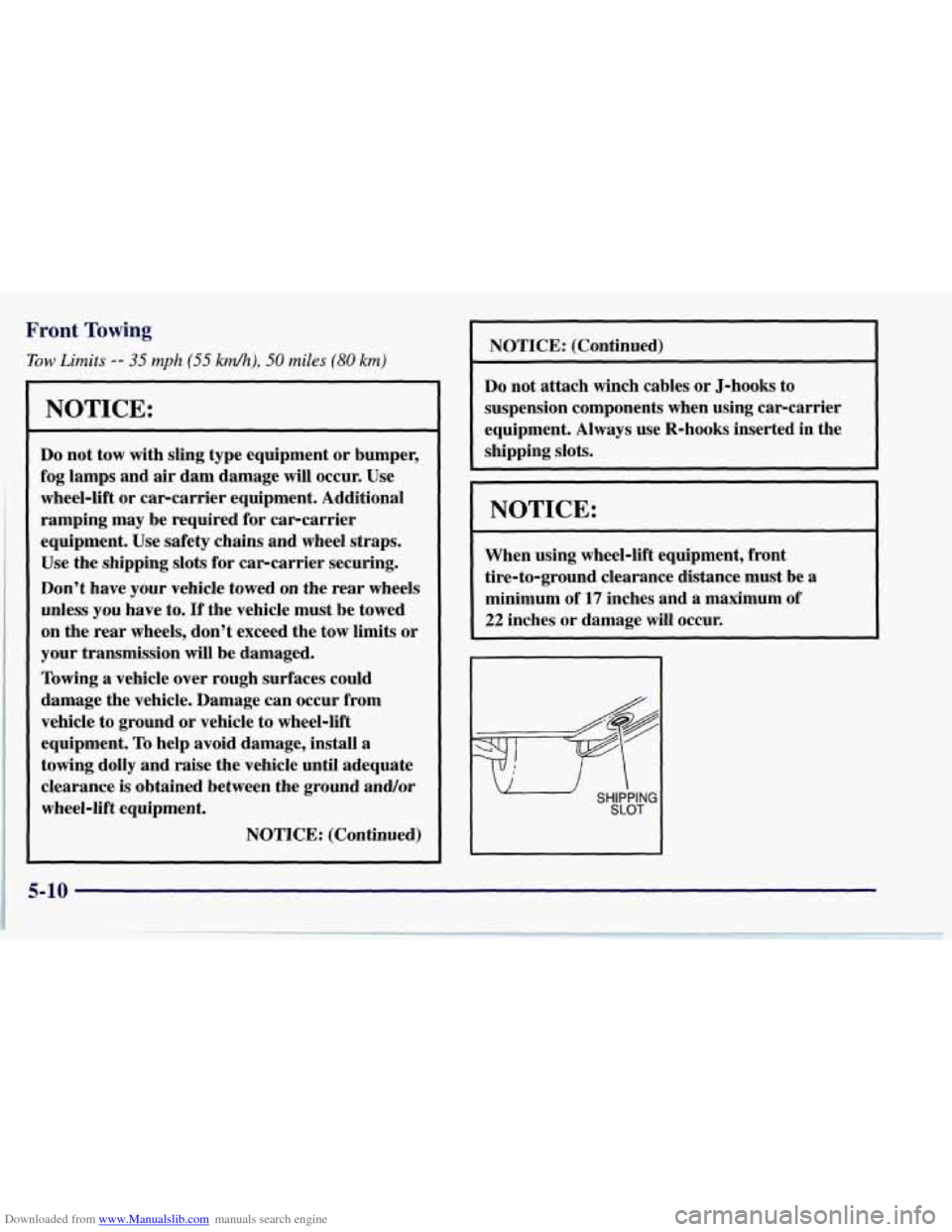
Use the shipping slots for car-carrier securing.
Don’t have your vehicle towed on the rear wheels
unless you have to. If the vehicle must be towed
on the rear wheels, don’t exceed the tow limits or
your transmission will be damaged.
Towing
a vehicle over rough surfaces could
damage the vehicle. Damage can occur from
vehicle to ground or vehicle to wheel-lift
equipment.
To help avoid damage, install a
towing dolly and raise the vehicle until adequate
clearance
is obtained between the ground and/or
wheel-lift equipment.
NOTICE: (Continued)
NOTICE: (Continued)
Do not attach winch cables or J-hooks to
suspension components when using car-carrier
equipment. Always use R-hooks inserted in the
shipping
slots.
NOTICE:
When using wheel-lift equipment, front
tire-to-ground clearance distance must be
a
minimum of 17 inches and a maximum of
22 inches or damage will occur.
SLOT
5-10
Downloaded from www.Manualslib.com manuals search engine Rear Towing
NOTICE:
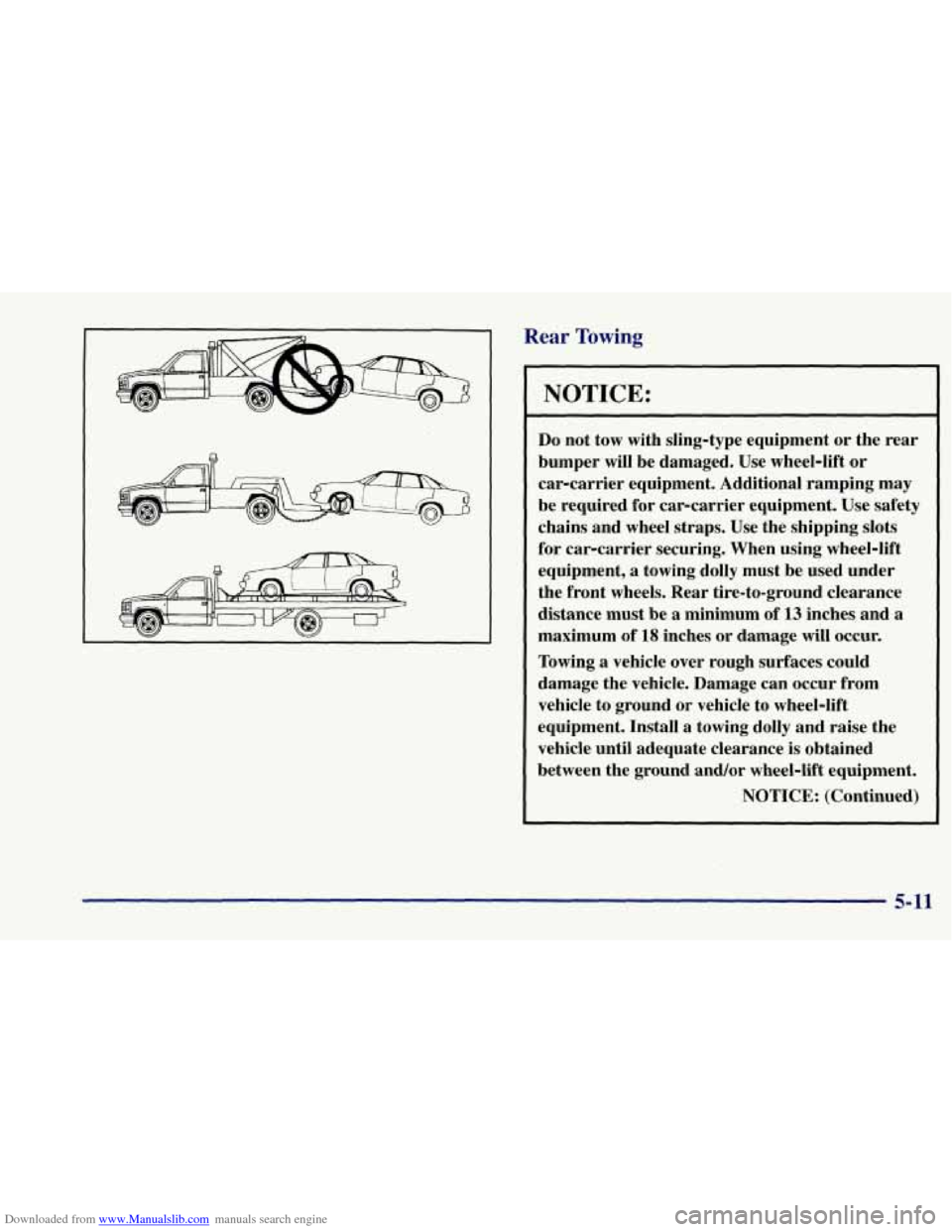
Do not tow with sling-type equipment or the rear
bumper will be damaged. Use wheel-lift or
car-carrier equipment. Additional ramping may
be required for car-carrier equipment. Use safety
chains and wheel straps. Use the shipping slots
for car-carrier securing. When using wheel-lift
equipment, a towing dolly must be used under
the front wheels. Rear tire-to-ground clearance
distance must be a minimum of
13 inches and a
maximum of
18 inches or damage will occur.
Towing
a vehicle over rough surfaces could
damage the vehicle. Damage can occur from
vehicle to ground or vehicle to wheel-lift
equipment. Install a towing dolly and raise the
vehicle until adequate clearance is obtained
between the ground and/or wheel-lift equipment.
NOTICE: (Continued)
5-11
Downloaded from www.Manualslib.com manuals search engine Wheel Alignment and Tire Balance
The wheels on your vehicle were aligned and balanced
carefully at the factory to give you the longest tire life
and best overall performance.
Scheduled wheel alignment and wheel balancing
are not
needed. However, if you notice unusual tire wear or
your vehicle pulling one way or the other, the alignment
may need to be reset. If you notice your vehicle
vibrating when driving on a smooth road, your wheels may need to be rebalanced.
Wheel Replacement
Replace any wheel that is bent, cracked, or badly rusted
or corroded. If wheel nuts keep coming loose, the wheel,
wheel bolts and wheel nuts should be replaced. If the
wheel leaks air, replace it (except some aluminum
wheels, which can sometimes be repaired). See your
Chevrolet dealer if any of these conditions exist.
Your dealer will know the kind of wheel you need.
Each new wheel should have the same load-carrying
capacity, diameter, width, offset and be mounted the
same way as the one it replaces.
If you need to replace any of your wheels, wheel bolts
or wheel nuts, replace them only with new
GM original
equipment parts. This way, you will be sure to have the
right wheel, wheel bolts and wheel nuts for your
Corvette.
Using the wrong replacement wheels, wheel bolts
or wheel nuts on your vehicle can be dangerous. It
could affect the braking and handling
of your
vehicle, make your
tires lose air and make you lose
control. You could have
a collision in which you or
others could be injured. Always use the correct
wheel, wheel bolts and wheel nuts for replacement.
NOTICE:
The wrong wheel can also cause problems with
bearing life, brake cooling, speedometer or
odometer calibration, headlamp aim, bumper
height, vehicle ground clearance and tire
clearance to the body and chassis.