Page 176 of 324
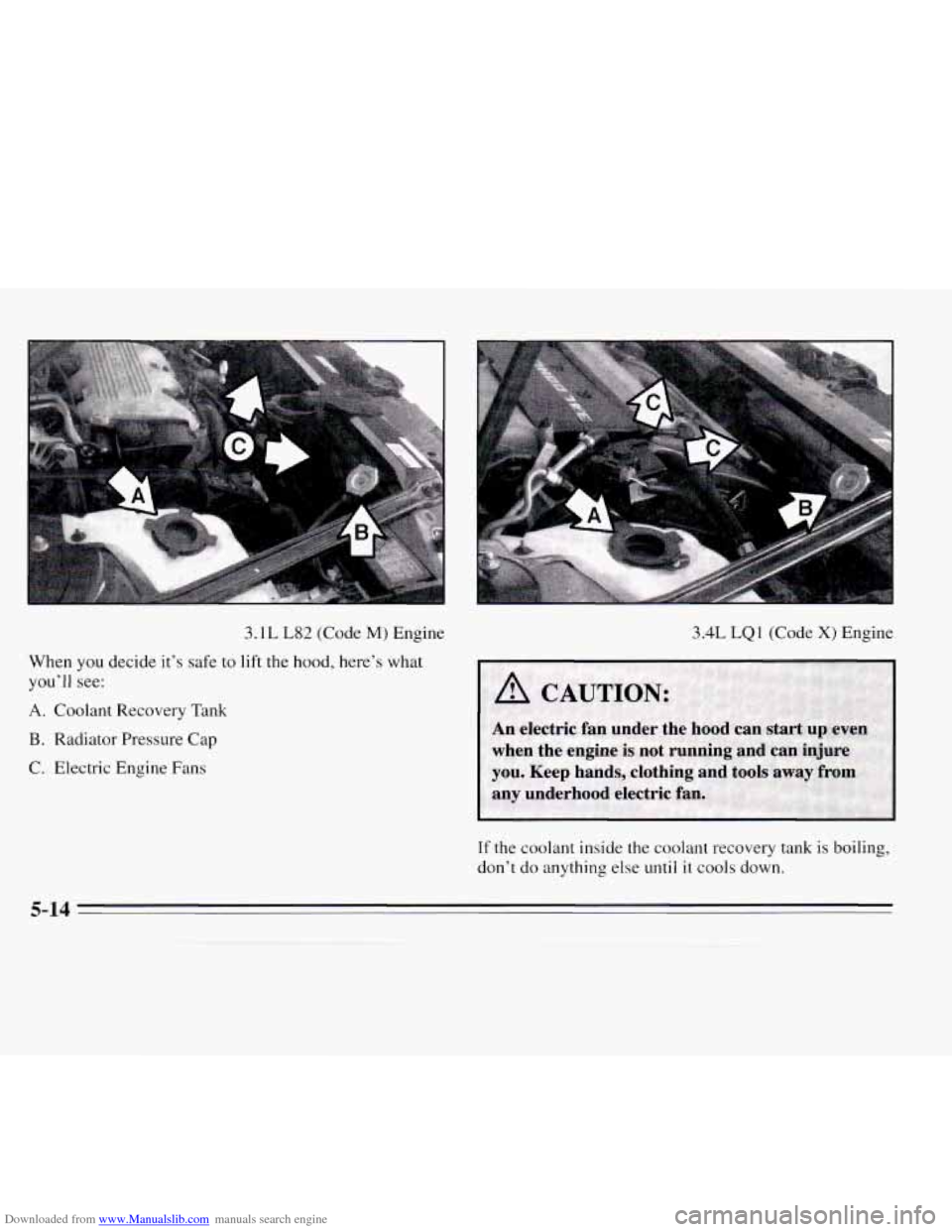
Downloaded from www.Manualslib.com manuals search engine 3.1L L82 (Code M) Engine 3.4L LQ 1 (Code X) Engine
When you decide it’s safe to lift the hood, here’s what
you’ll see:
A. Coolant Recovery Tank
B. Radiator Pressure Cap
C. Electric Engine Fans
If the coolant inside the coolant recovery tank is boiling,
don’t do anything else
until it cools down.
5-14
Page 177 of 324
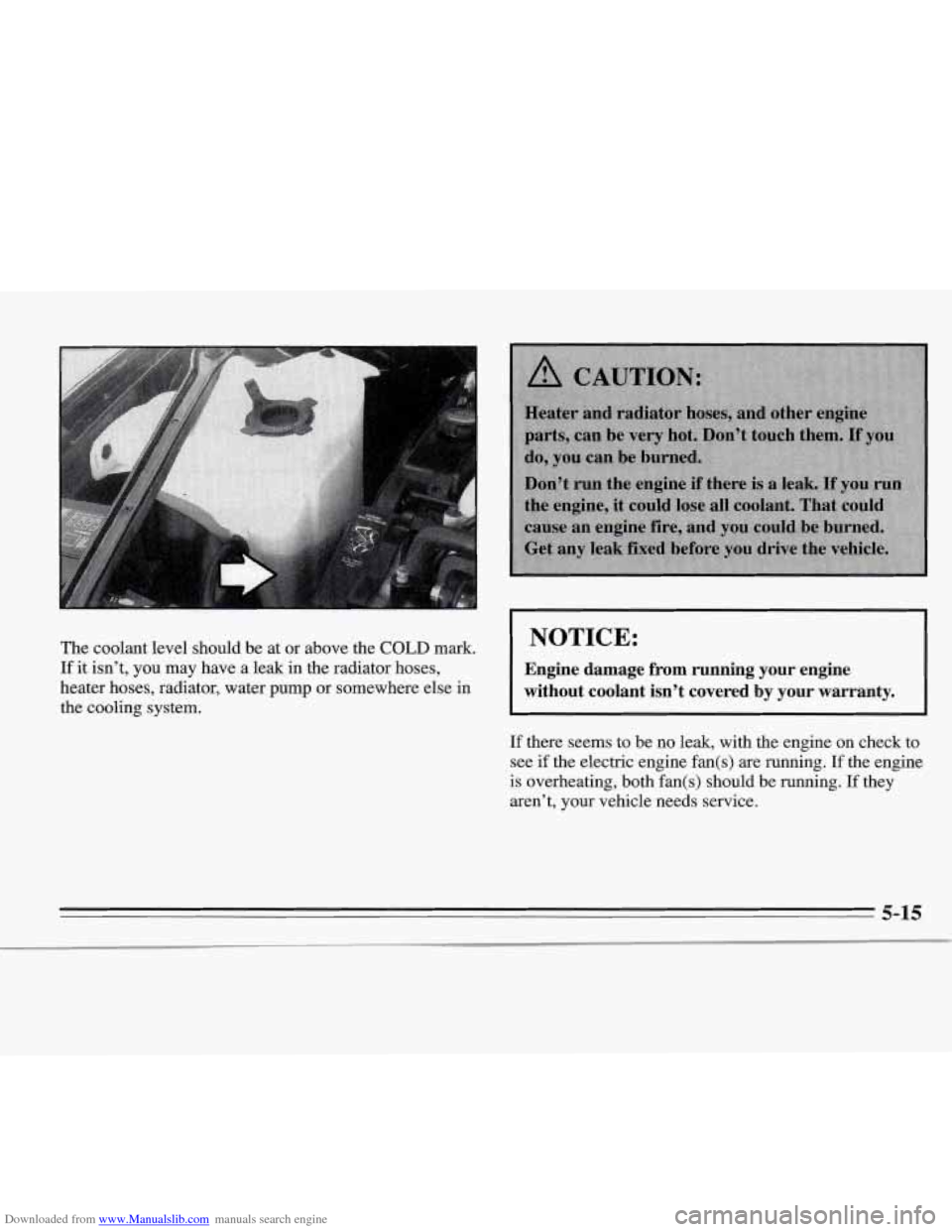
Downloaded from www.Manualslib.com manuals search engine The coolant level should be at or above the COLD mark.
If it isn’t, you may have a leak in the radiator hoses,
heater hoses, radiator, water pump or somewhere else in
the cooling system.
I NOTICE
Engine damage from running your engine
without coolant isn’t covered by your warranty.
If there seems to be no leak, with the engine on check to
see if the electric engine fan(s) are running. If the engb
is overheating, both fan(s) should be running.
If they
aren’t, your vehicle needs service.
5-15
Page 178 of 324
Downloaded from www.Manualslib.com manuals search engine How to Add Coolant to the Coolant
Recovery Tank
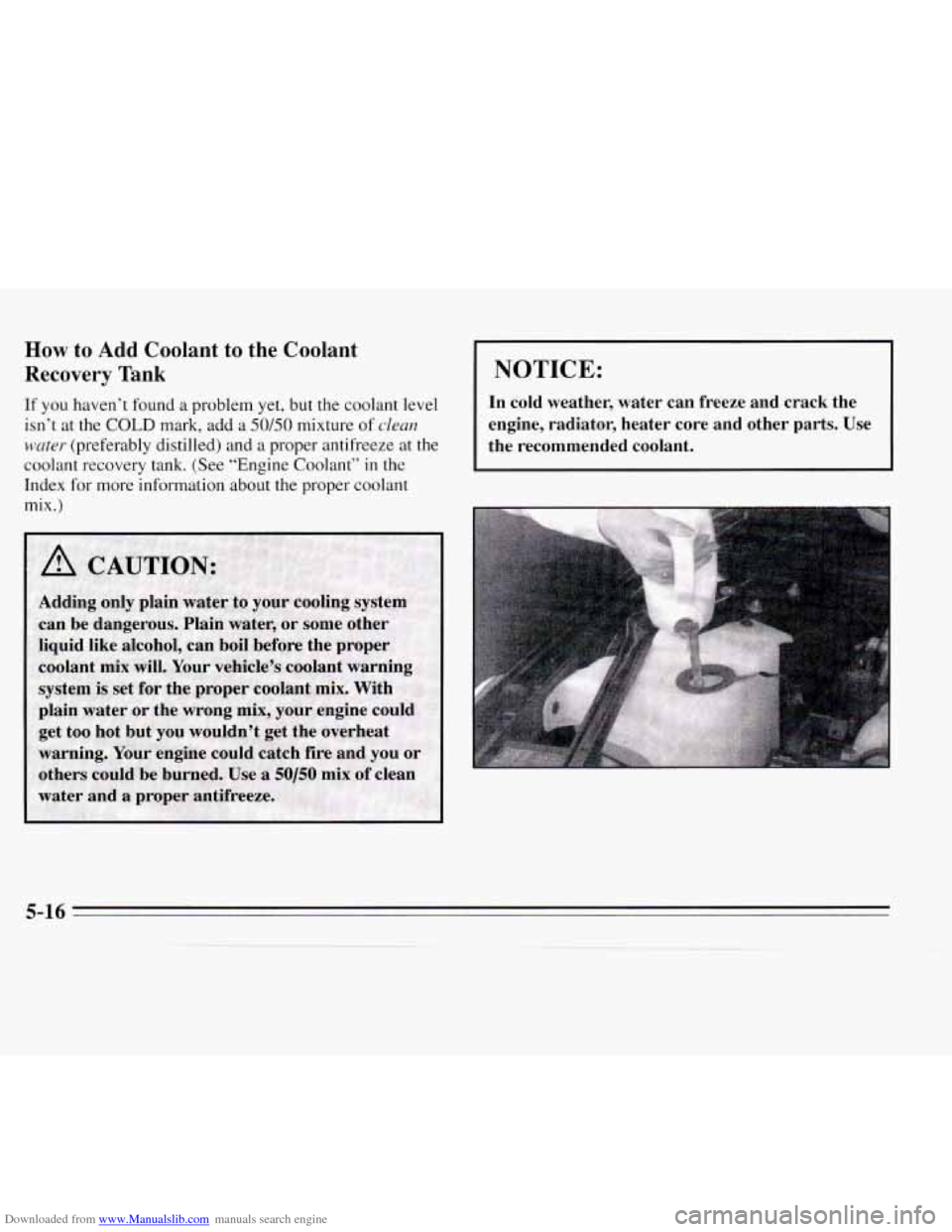
If you haven’t found a problem yet, but the coolant level
isn’t at the COLD mark, add a
50/50 mixture of clean
water (preferably distilled) and a proper antifreeze at the
coolant recovery tank. (See “Engine Coolant’’
in the
Index
for more information about the proper coolant
mix. j
I NOTICE:
In cold weather, water can freeze and crack the
engine, radiator, heater core and other parts.
Use
the recommended coolant.
5-16
Page 179 of 324
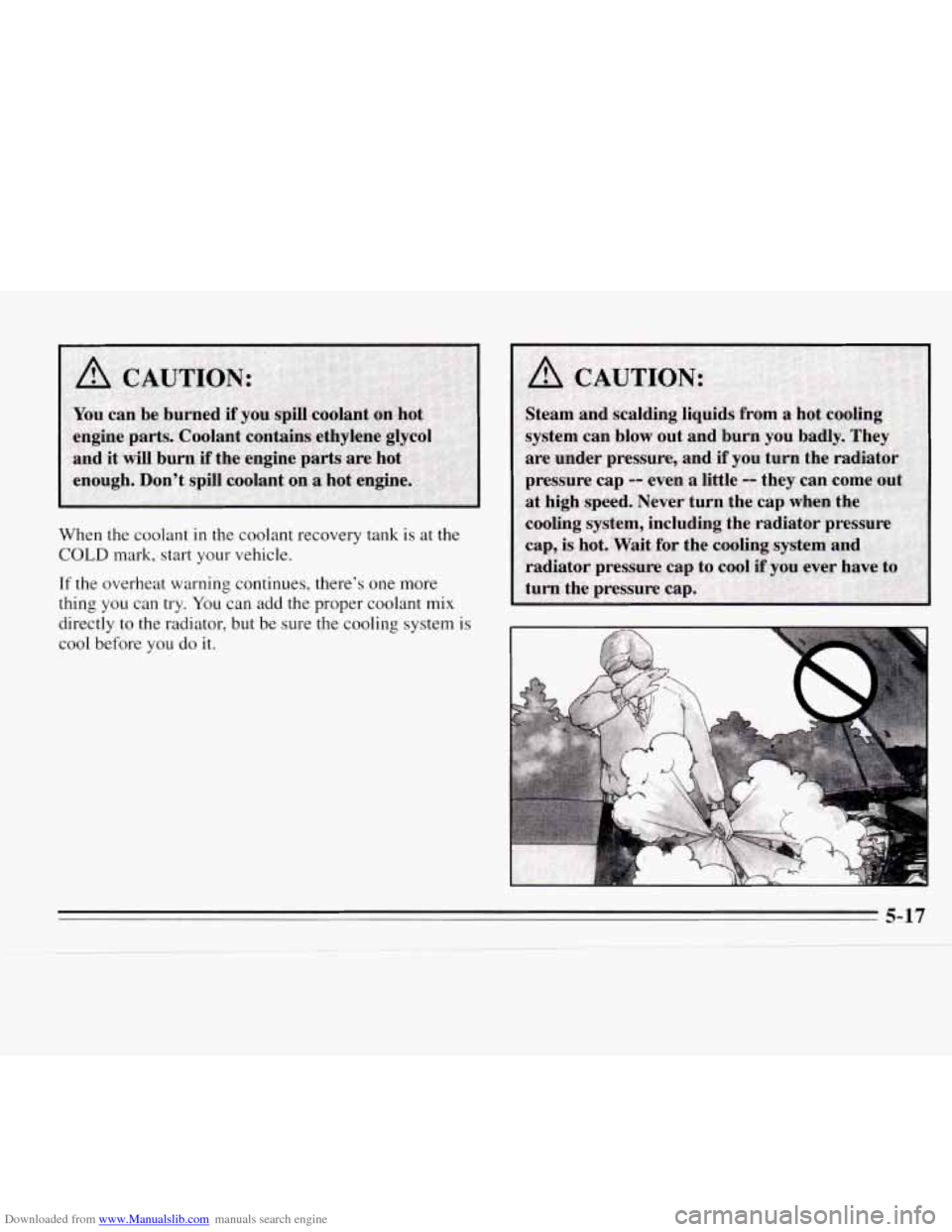
Downloaded from www.Manualslib.com manuals search engine When the coolant in the coolant recovery tank is at the
COLD mark, start your vehicle.
If the overheat warning continues, there's one more
thing you can try.
You can add the proper coolant mix
directly
to the radiator, but be sure the cooling system is
cool before you do it.
5-17
Page 180 of 324
Downloaded from www.Manualslib.com manuals search engine How to Add Coolant to the Radiator
NOTICE:
Your engine has a specific radiator fill procedure.
Failure to follow this procedure could cause
your
engine to overheat and be severely damaged.
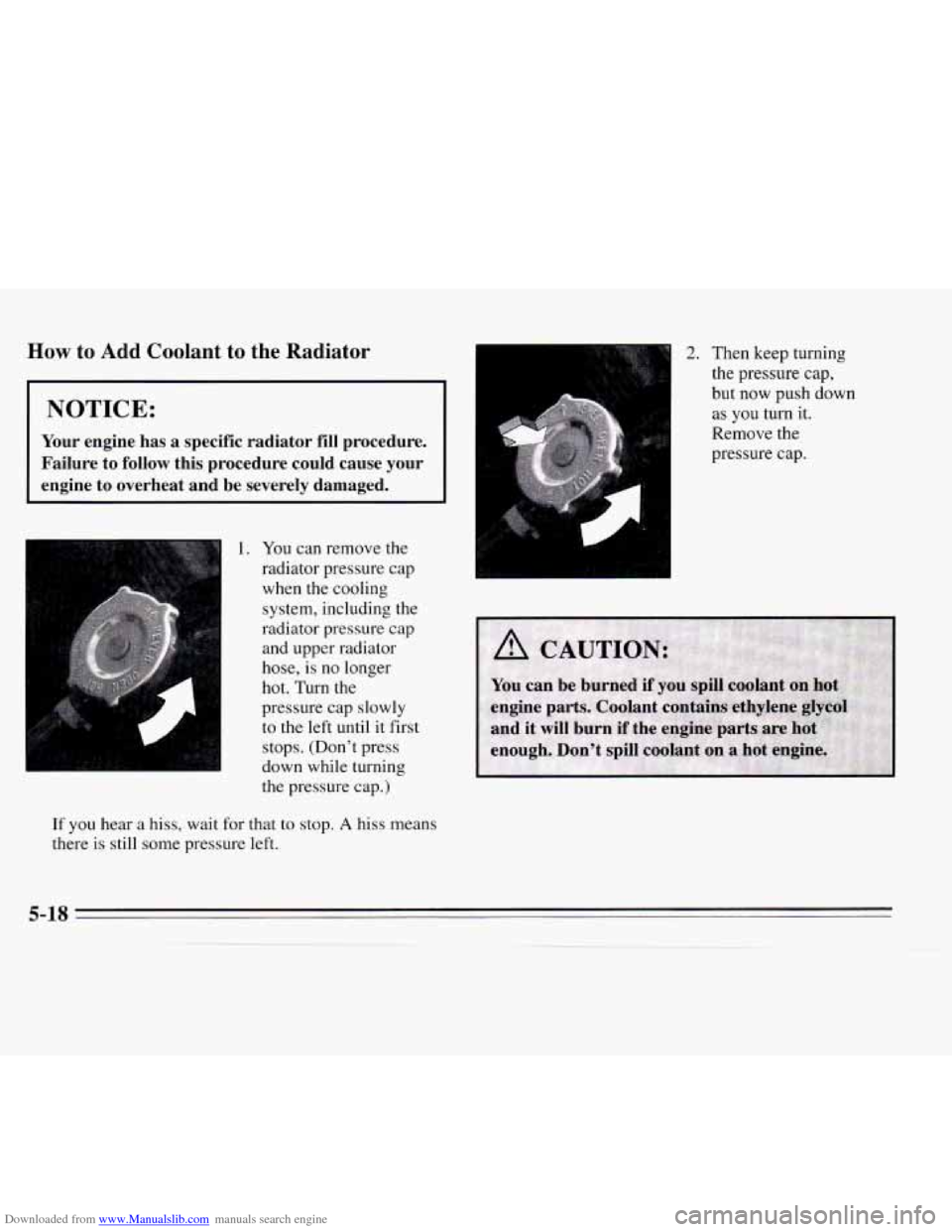
r 1. You can remove the
radiator pressure cap
when the cooling system, including the
radiator pressure cap
and upper radiator
hose, is no longer
hot.
Turn the
pressure cap slowly
to the left until it first
stops. (Don't press
down while turning
the pressure cap.)
If you hear a hiss, wait for that to stop. A hiss means
there is still some pressure left.
-1 2. Then keep turning
I the pressure cap,
but now push down
as you turn it.
Remove the
pressure cap.
5-18
Page 181 of 324
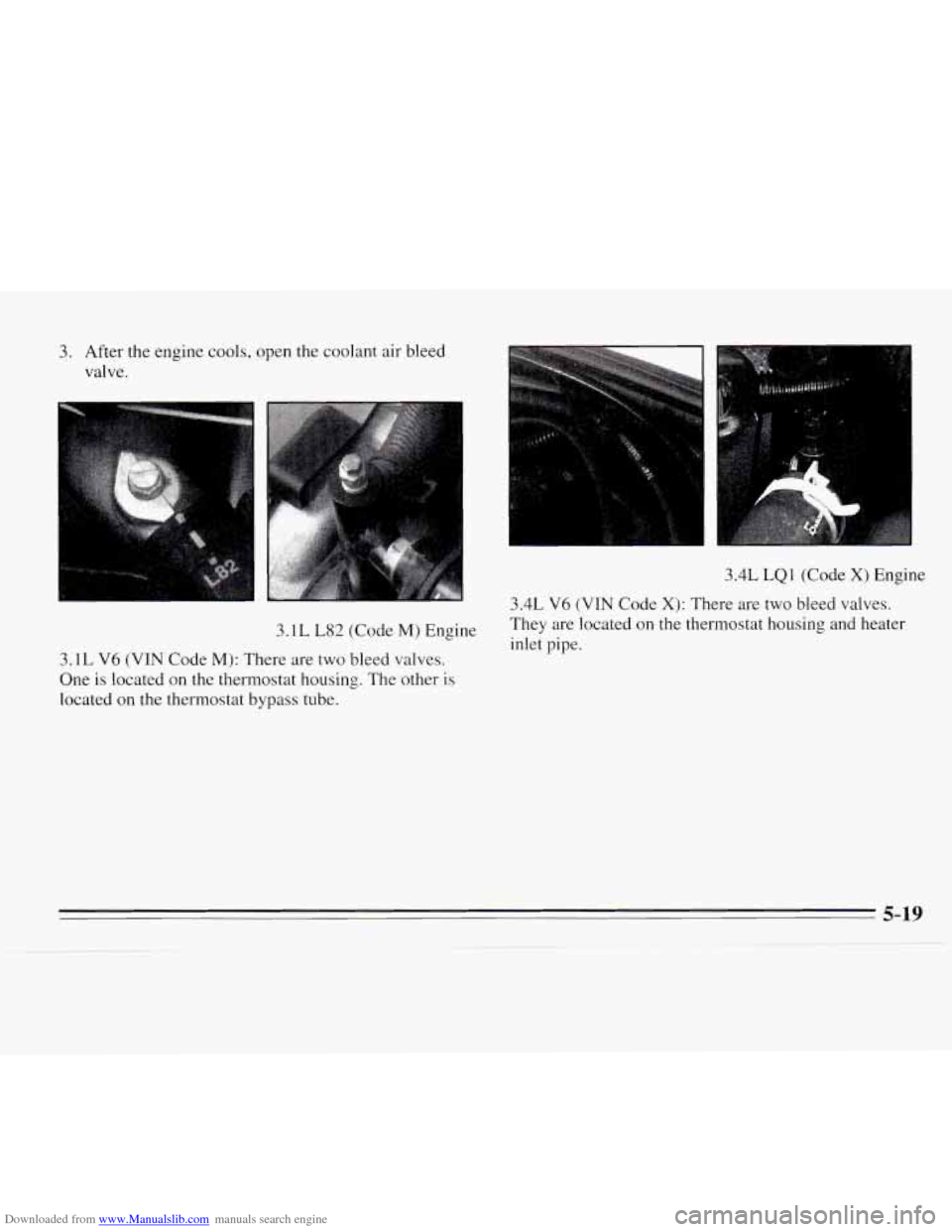
Downloaded from www.Manualslib.com manuals search engine 3. After the engine cools, open the coolant air bleed
valve.
3.1 L L82 (Code M) Engine
3.1L V6 (VIN Code M): There are two bleed valves.
One
is located on the thermostat housing. The other is
located on the thermostat bypass tube.
31
3.4L LQl (Code X) Engine
3.4L V6 (VIN Code X): There are two bleed valves.
They are located on
the thermostat housing and heater
inlet pipe.
5-19
Page 182 of 324
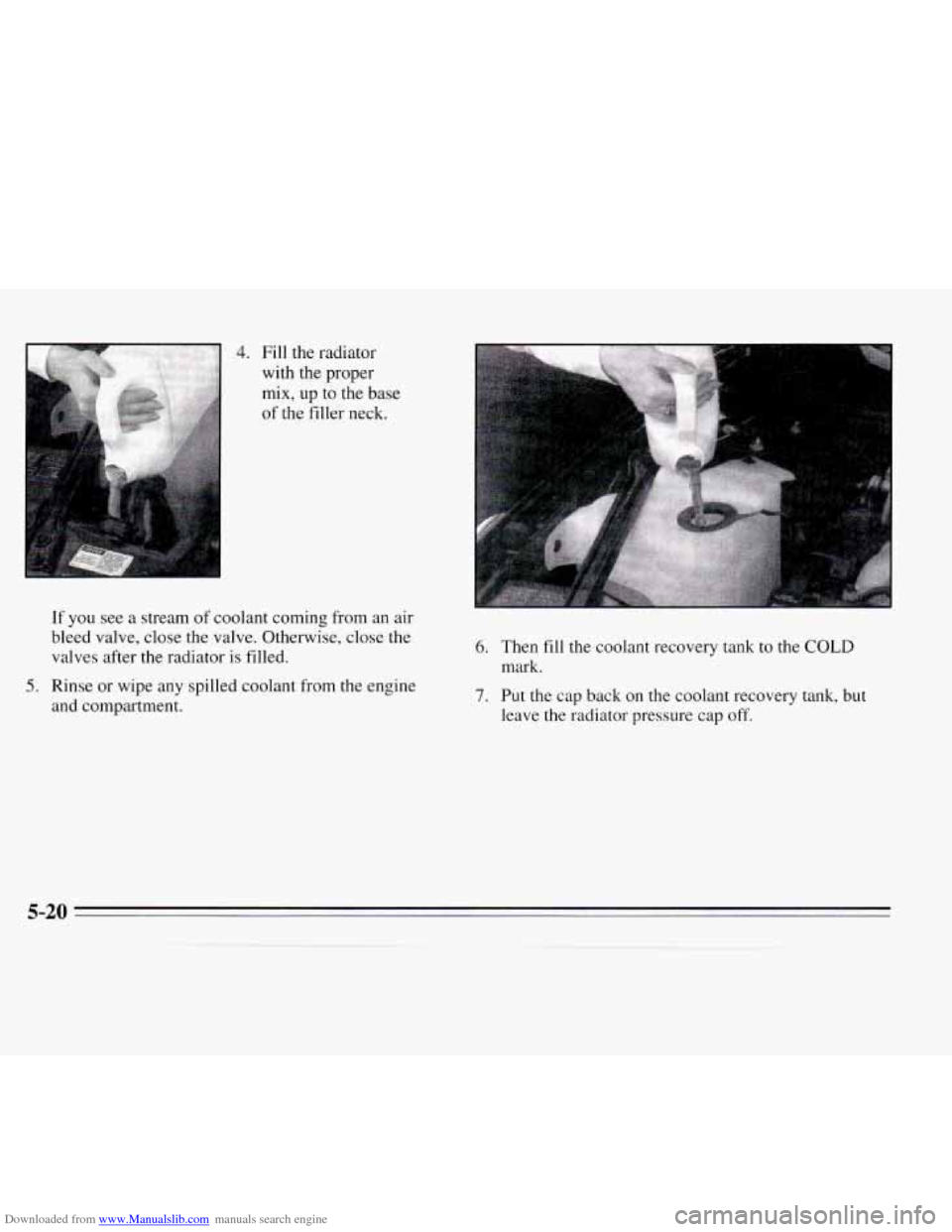
Downloaded from www.Manualslib.com manuals search engine If you see a stream of coolant coming from an air
bleed valve, close the valve. Otherwise, close the
valves after the radiator is filled.
5. Rinse or wipe any spilled coolant from the engine
and compartment.
I
6. Then fill the coolant recovery tank to the COLD
mask.
7. Put the cap back on the coolant recovery tank, but
leave
the radiator pressure cap off.
Page 183 of 324
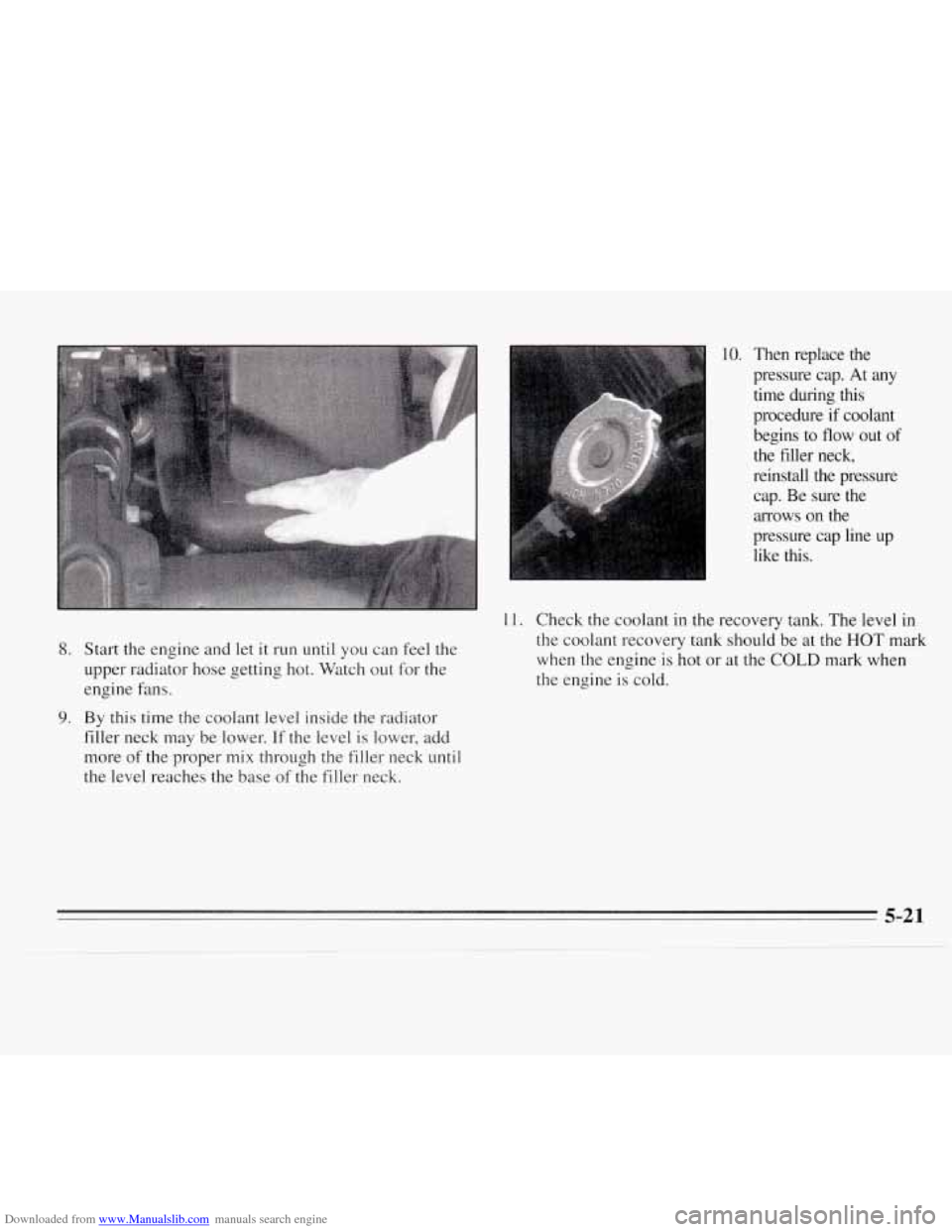
Downloaded from www.Manualslib.com manuals search engine 10. Then replace the
pressure cap. At any
time during this
procedure if coolant
begins
to flow out of
the filler neck,
reinstall the pressure cap. Be sure the
arrows on the
pressure cap line up
like
this.
8. Start the engine and let it run until you can feel the
upper radiator hose getting hot. Watch out for the
engine fans.
9. By this time the coolant level inside the radiator
filler neck may be lower.
If the level is lower, add
more
of the proper mix through the filler neck until
the level reaches the base of the filler neck. 11.
Check the coolant in the recovery tank. The level in
the coolant recovery tank should be at
the HOT mark
when the engine is hot or at the
COLD mark when
the engine is cold.
5-21