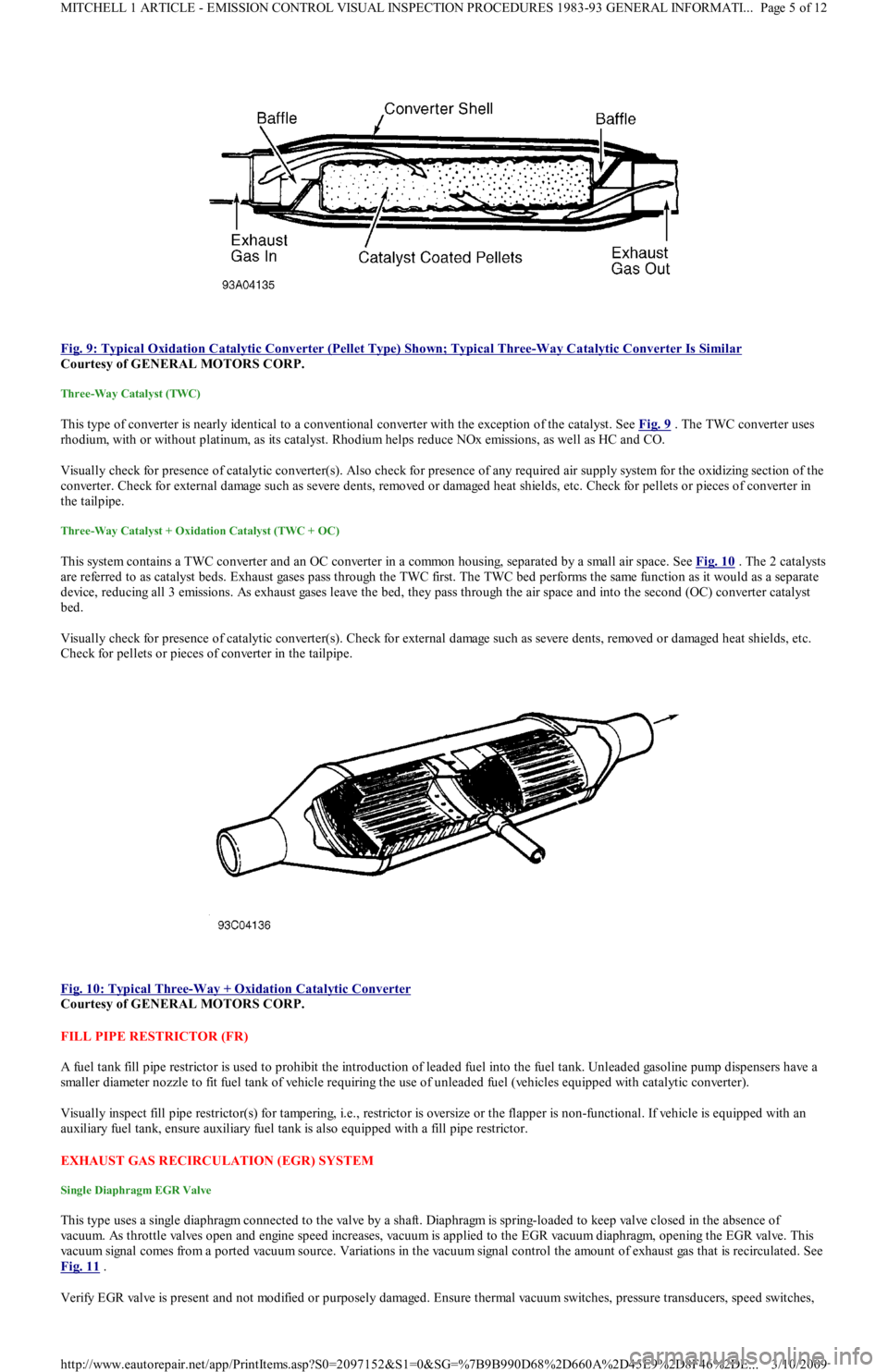
Fig. 9: Typical Oxidation Catalytic Converter (Pellet Type) Shown; Typical Three
-Way Catalytic Converter Is Similar
Courtesy of GENERAL MOTORS CORP.
Three-Way Catalyst (TWC)
This type of converter is nearly identical to a conventional converter with the exception of the catalyst. See Fig. 9 . The TWC converter uses
rhodium, with or without platinum, as its catalyst. Rhodium helps reduce NOx emissions, as well as HC and CO.
Visually check for presence of catalytic converter(s). Also check for presence of any required air supply system for the oxidizing section of the
converter. Check for external damage such as severe dents, removed or damaged heat shields, etc. Check for pellets or pieces of converter in
the tailpipe.
Three-Way Catalyst + Oxidation Catalyst (TWC + OC)
This system contains a TWC converter and an OC converter in a common housing, separated by a small air space. See Fig. 10. The 2 catalysts
are referred to as catalyst beds. Exhaust gases pass through the TWC first. The TWC bed performs the same function as it would as a separate
device, reducing all 3 emissions. As exhaust gases leave the bed, they pass through the air space and into the second (OC) converter catalyst
bed.
Visually check for presence of catalytic converter(s). Check for external damage such as severe dents, removed or damaged heat shields, etc.
Check for pellets or pieces of converter in the tailpipe.
Fig. 10: Typical Three
-Way + Oxidation Catalytic Converter
Courtesy of GENERAL MOTORS CORP.
FILL PIPE RESTRICTOR (FR)
A fuel tank fill pipe restrictor is used to prohibit the introduction of leaded fuel into the fuel tank. Unleaded gasoline pump dispensers have a
smaller diameter nozzle to fit fuel tank of vehicle requiring the use of unleaded fuel (vehicles equipped with catalytic converter).
Visually inspect fill pipe restrictor(s) for tampering, i.e., restrictor is oversize or the flapper is non-functional. If vehicle is equipped with an
auxiliary fuel tank, ensure auxiliary fuel tank is also equipped with a fill pipe restrictor.
EXHAUST GAS RECIRCULATION (EGR) SYSTEM
Single Diaphragm EGR Valve
This type uses a single diaphragm connected to the valve by a shaft. Diaphragm is spring-loaded to keep valve closed in the absence of
vacuum. As throttle valves open and engine speed increases, vacuum is applied to the EGR vacuum diaphragm, opening the EGR valve. This
vacuum signal comes from a ported vacuum source. Variations in the vacuum signal control the amount of exhaust gas that is recirculated. See
Fig. 11
.
Verify EGR valve is present and not modified or purposely damaged. Ensure thermal vacuum switches, pressure transducers, speed switches,
Page 5 of 12 MITCHELL 1 ARTICLE - EMISSION CONTROL VISUAL INSPECTION PROCEDURES 1983-93 GENERAL INFORMATI
...
3/10/2009 http://www.eautorepair.net/app/PrintItems.asp?S0=2097152&S1=0&SG=%7B9B990D68%2D660A%2D45E9%2D8F46%2DE
...