1991 FORD FESTIVA power steering
[x] Cancel search: power steeringPage 248 of 454
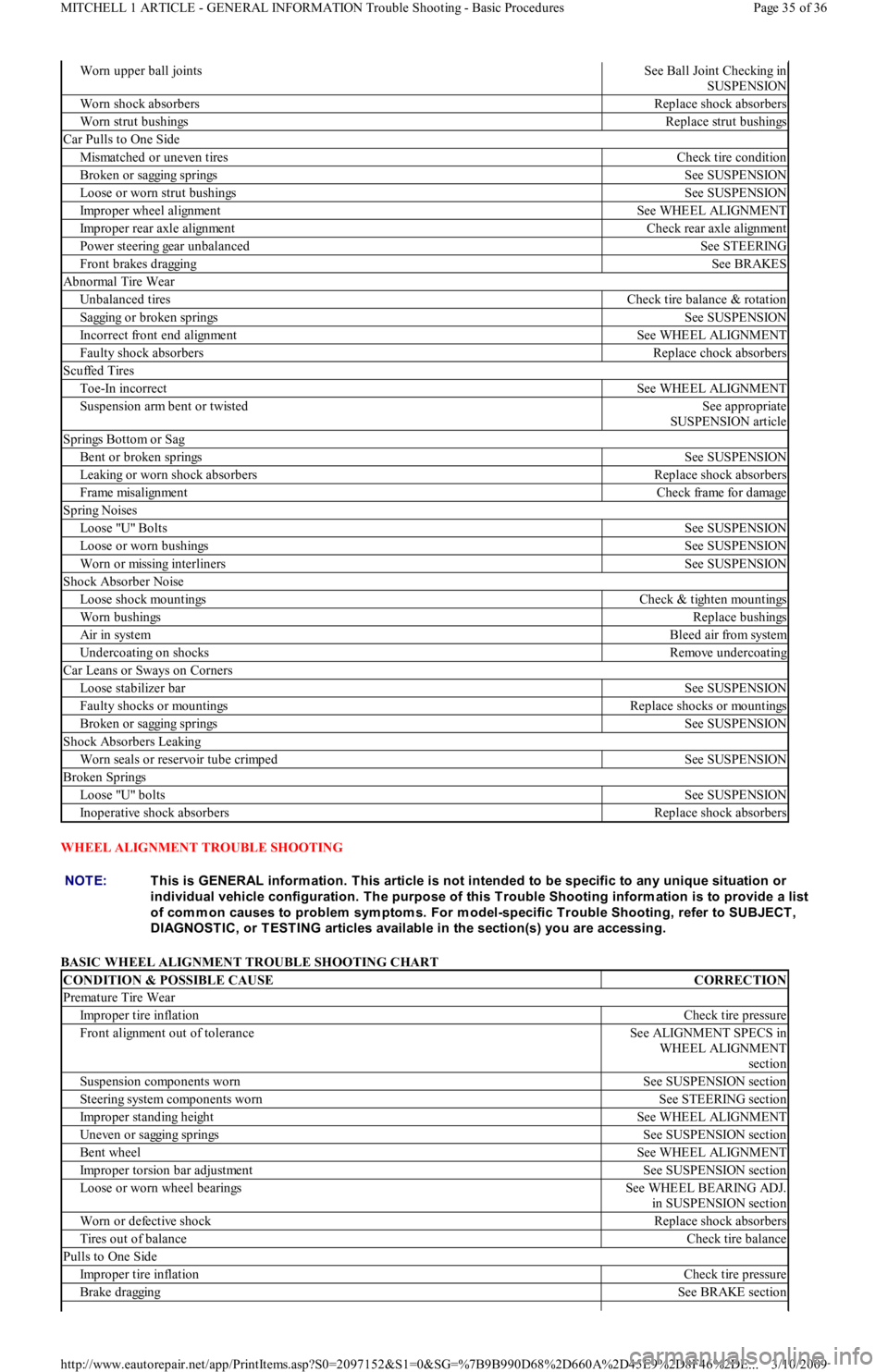
WHEEL ALIGNMENT TROUBLE SHOOTING
BASIC WHEEL ALIGNMENT TROUBLE SHOOTING CHART
Worn upper ball jointsSee Ball Joint Checking in
SUSPENSION
Worn shock absorbersReplace shock absorbers
Worn strut bushingsReplace strut bushings
Car Pulls to One Side
Mismatched or uneven tiresCheck tire condition
Broken or sagging springsSee SUSPENSION
Loose or worn strut bushingsSee SUSPENSION
Improper wheel alignmentSee WHEEL ALIGNMENT
Improper rear axle alignmentCheck rear axle alignment
Power steering gear unbalancedSee STEERING
Front brakes draggingSee BRAKES
Abnormal Tire Wear
Unbalanced tiresCheck tire balance & rotation
Sagging or broken springsSee SUSPENSION
Incorrect front end alignmentSee WHEEL ALIGNMENT
Faulty shock absorbersReplace chock absorbers
Scuffed Tires
Toe-In incorrectSee WHEEL ALIGNMENT
Suspension arm bent or twistedSee appropriate
SUSPENSION article
Springs Bottom or Sag
Bent or broken springsSee SUSPENSION
Leaking or worn shock absorbersReplace shock absorbers
Frame misalignmentCheck frame for damage
Spring Noises
Lo o se "U" Bo l t sSee SUSPENSION
Loose or worn bushingsSee SUSPENSION
Worn or missing interlinersSee SUSPENSION
Shock Absorber Noise
Loose shock mountingsCheck & tighten mountings
Worn bushingsReplace bushings
Air in systemBleed air from system
Undercoating on shocksRemove undercoating
Car Leans or Sways on Corners
Loose stabilizer barSee SUSPENSION
Faulty shocks or mountingsReplace shocks or mountings
Broken or sagging springsSee SUSPENSION
Shock Absorbers Leaking
Worn seals or reservoir tube crimpedSee SUSPENSION
Broken Springs
Lo o se "U" b o l t sSee SUSPENSION
Inoperative shock absorbersReplace shock absorbers
NOTE:This is GENERAL inform ation. This article is not intended to be specific to any unique situation or
individual vehicle configuration. T he purpose of this T rouble Shooting inform ation is to provide a list
of com m on causes to problem sym ptom s. For m odel-specific T rouble Shooting, refer to SUBJECT ,
DIAGNOST IC, or T EST ING articles available in the section(s) you are accessing.
CONDITION & POSSIBLE CAUSECORRECTION
Premature Tire Wear
Improper tire inflationCheck tire pressure
Front alignment out of toleranceSee ALIGNMENT SPECS in
WHEEL ALIGNMENT
section
Suspension components wornSee SUSPENSION section
Steering system components wornSee STEERING section
Improper standing heightSee WHEEL ALIGNMENT
Uneven or sagging springsSee SUSPENSION section
Bent wheelSee WHEEL ALIGNMENT
Improper torsion bar adjustmentSee SUSPENSION section
Loose or worn wheel bearingsSee WHEEL BEARING ADJ.
in SUSPENSION section
Worn or defective shockReplace shock absorbers
Tires out of balanceCheck tire balance
Pulls to One Side
Improper tire inflationCheck tire pressure
Brake draggingSee BRAKE section
Page 35 of 36 MITCHELL 1 ARTICLE - GENERAL INFORMATION Trouble Shooting - Basic Procedures
3/10/2009 http://www.eautorepair.net/app/PrintItems.asp?S0=2097152&S1=0&SG=%7B9B990D68%2D660A%2D45E9%2D8F46%2DE
...
Page 249 of 454
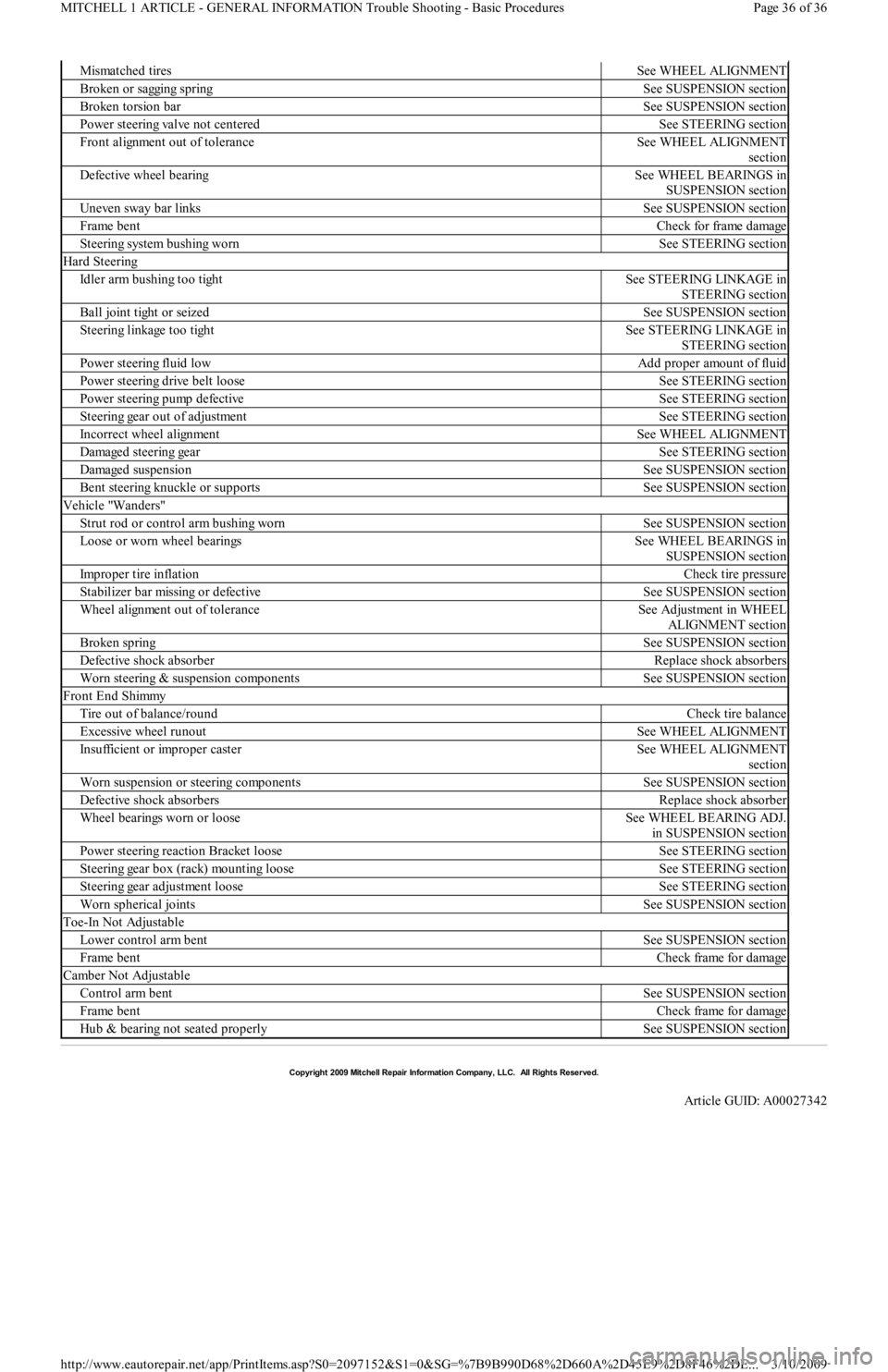
Mismatched tiresSee WHEEL ALIGNMENT
Broken or sagging springSee SUSPENSION section
Broken torsion barSee SUSPENSION section
Power steering valve not centeredSee STEERING section
Front alignment out of toleranceSee WHEEL ALIGNMENT
section
Defective wheel bearingSee WHEEL BEARINGS in
SUSPENSION section
Uneven sway bar linksSee SUSPENSION section
Frame bentCheck for frame damage
Steering system bushing wornSee STEERING section
Hard Steering
Idler arm bushing too tightSee STEERING LINKAGE in
STEERING section
Ball joint tight or seizedSee SUSPENSION section
Steering linkage too tightSee STEERING LINKAGE in
STEERING section
Power steering fluid lowAdd proper amount of fluid
Power steering drive belt looseSee STEERING section
Power steering pump defectiveSee STEERING section
Steering gear out of adjustmentSee STEERING section
Incorrect wheel alignmentSee WHEEL ALIGNMENT
Damaged steering gearSee STEERING section
Damaged suspensionSee SUSPENSION section
Bent steering knuckle or supportsSee SUSPENSION section
Vehicle "Wanders"
Strut rod or control arm bushing wornSee SUSPENSION section
Loose or worn wheel bearingsSee WHEEL BEARINGS in
SUSPENSION section
Improper tire inflationCheck tire pressure
Stabilizer bar missing or defectiveSee SUSPENSION section
Wheel alignment out of toleranceSee Adjustment in WHEEL
ALIGNMENT section
Broken springSee SUSPENSION section
Defective shock absorberReplace shock absorbers
Worn steering & suspension componentsSee SUSPENSION section
Front End Shimmy
Tire out of balance/roundCheck tire balance
Excessive wheel runoutSee WHEEL ALIGNMENT
Insufficient or improper casterSee WHEEL ALIGNMENT
section
Worn suspension or steering componentsSee SUSPENSION section
Defective shock absorbersReplace shock absorber
Wheel bearings worn or looseSee WHEEL BEARING ADJ.
in SUSPENSION section
Power steering reaction Bracket looseSee STEERING section
Steering gear box (rack) mounting looseSee STEERING section
Steering gear adjustment looseSee STEERING section
Worn spherical jointsSee SUSPENSION section
Toe-In Not Adjustable
Lower control arm bentSee SUSPENSION section
Frame bentCheck frame for damage
Camber Not Adjustable
Control arm bentSee SUSPENSION section
Frame bentCheck frame for damage
Hub & bearing not seated properlySee SUSPENSION section
Copyr ight 2009 Mitchell Repair Information Company, LLC. All Rights Reserved.
Article GUID: A00027342
Page 36 of 36 MITCHELL 1 ARTICLE - GENERAL INFORMATION Trouble Shooting - Basic Procedures
3/10/2009 http://www.eautorepair.net/app/PrintItems.asp?S0=2097152&S1=0&SG=%7B9B990D68%2D660A%2D45E9%2D8F46%2DE
...
Page 371 of 454
whichever occurs first.
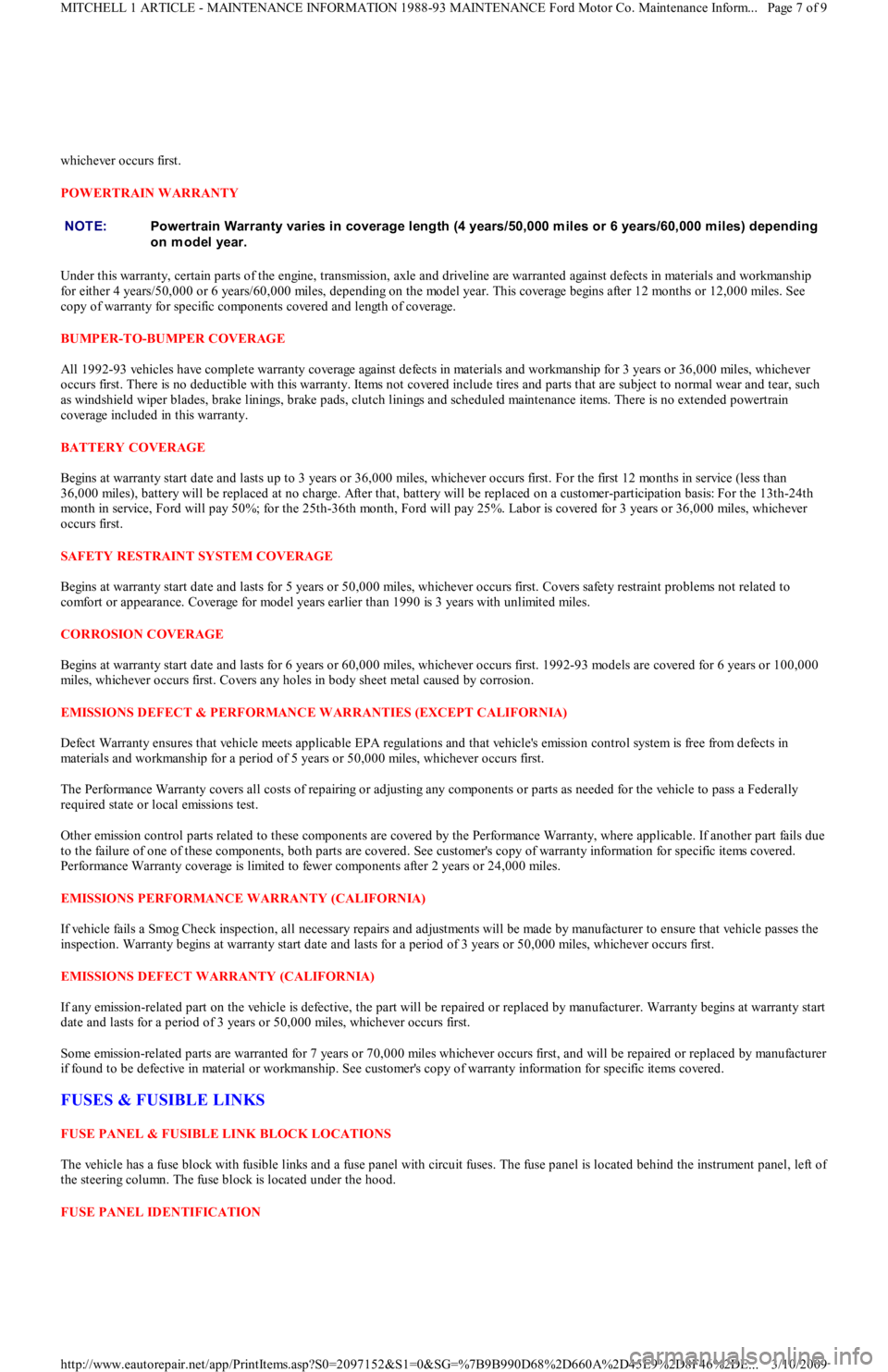
POWERTRAIN WARRANTY
Under this warranty, certain parts of the engine, transmission, axle and driveline are warranted against defects in materials and workmanship
for either 4 years/50,000 or 6 years/60,000 miles, depending on the model year. This coverage begins after 12 months or 12,000 miles. See
copy of warranty for specific components covered and length of coverage.
BUMPER-TO-BUMPER COVERAGE
All 1992-93 vehicles have complete warranty coverage against defects in materials and workmanship for 3 years or 36,000 miles, whichever
occurs first. There is no deductible with this warranty. Items not covered include tires and parts that are subject to normal wear and tear, such
as windshield wiper blades, brake linings, brake pads, clutch linings and scheduled maintenance items. There is no extended powertrain
coverage included in this warranty.
BATTERY COVERAGE
Begins at warranty start date and lasts up to 3 years or 36,000 miles, whichever occurs first. For the first 12 months in service (less than
36,000 miles), battery will be replaced at no charge. After that, battery will be replaced on a customer-participation basis: For the 13th-24th
month in service, Ford will pay 50%; for the 25th-36th month, Ford will pay 25%. Labor is covered for 3 years or 36,000 miles, whichever
occurs first.
SAFETY RESTRAINT SYSTEM COVERAGE
Begins at warranty start date and lasts for 5 years or 50,000 miles, whichever occurs first. Covers safety restraint problems not related to
comfort or appearance. Coverage for model years earlier than 1990 is 3 years with unlimited miles.
CORROSION COVERAGE
Begins at warranty start date and lasts for 6 years or 60,000 miles, whichever occurs first. 1992-93 models are covered for 6 years or 100,000
miles, whichever occurs first. Covers any holes in body sheet metal caused by corrosion.
EMISSIONS DEFECT & PERFORMANCE WARRANTIES (EXCEPT CALIFORNIA)
Defect Warranty ensures that vehicle meets applicable EPA regulations and that vehicle's emission control system is free from defects in
materials and workmanship for a period of 5 years or 50,000 miles, whichever occurs first.
The Performance Warranty covers all costs of repairing or adjusting any components or parts as needed for the vehicle to pass a Federally
required state or local emissions test.
Other emission control parts related to these components are covered by the Performance Warranty, where applicable. If another part fails due
to the failure of one of these components, both parts are covered. See customer's copy of warranty information for specific items co vered .
Performance Warranty coverage is limited to fewer components after 2 years or 24,000 miles.
EMISSIONS PERFORMANCE WARRANTY (CALIFORNIA)
If vehicle fails a Smog Check inspection, all necessary repairs and adjustments will be made by manufacturer to ensure that vehicle passes the
inspection. Warranty begins at warranty start date and lasts for a period of 3 years or 50,000 miles, whichever occurs first.
EMISSIONS DEFECT WARRANTY (CALIFORNIA)
If any emission-related part on the vehicle is defective, the part will be repaired or replaced by manufacturer. Warranty begins at warranty start
date and lasts for a period of 3 years or 50,000 miles, whichever occurs first.
Some emission-related parts are warranted for 7 years or 70,000 miles whichever occurs first, and will be repaired or replaced by manufacturer
if found to be defective in material or workmanship. See customer's copy of warranty information for specific items covered.
FUSES & FUSIBLE LINKS
FUSE PANEL & FUSIBLE LINK BLOCK LOCATIONS
The vehicle has a fuse block with fusible links and a fuse panel with circuit fuses. The fuse panel is located behind the instrument panel, left o
f
the steering column. The fuse block is located under the hood.
FUSE PANEL IDENTIFICATION NOTE:Powertrain Warranty varies in coverage length (4 years/50,000 m iles or 6 years/60,000 m iles) depending
on model year.
Page 7 of 9 MITCHELL 1 ARTICLE - MAINTENANCE INFORMATION 1988-93 MAINTENANCE Ford Motor Co. Maintenance Inform...
3/10/2009 http://www.eautorepair.net/app/PrintItems.asp?S0=2097152&S1=0&SG=%7B9B990D68%2D660A%2D45E9%2D8F46%2DE
...
Page 378 of 454
Back To Article
ST EERING SYST EM - POWER
1991-92 ST EERING Ford Motor Co. - Steering - Power Rack & Pinion
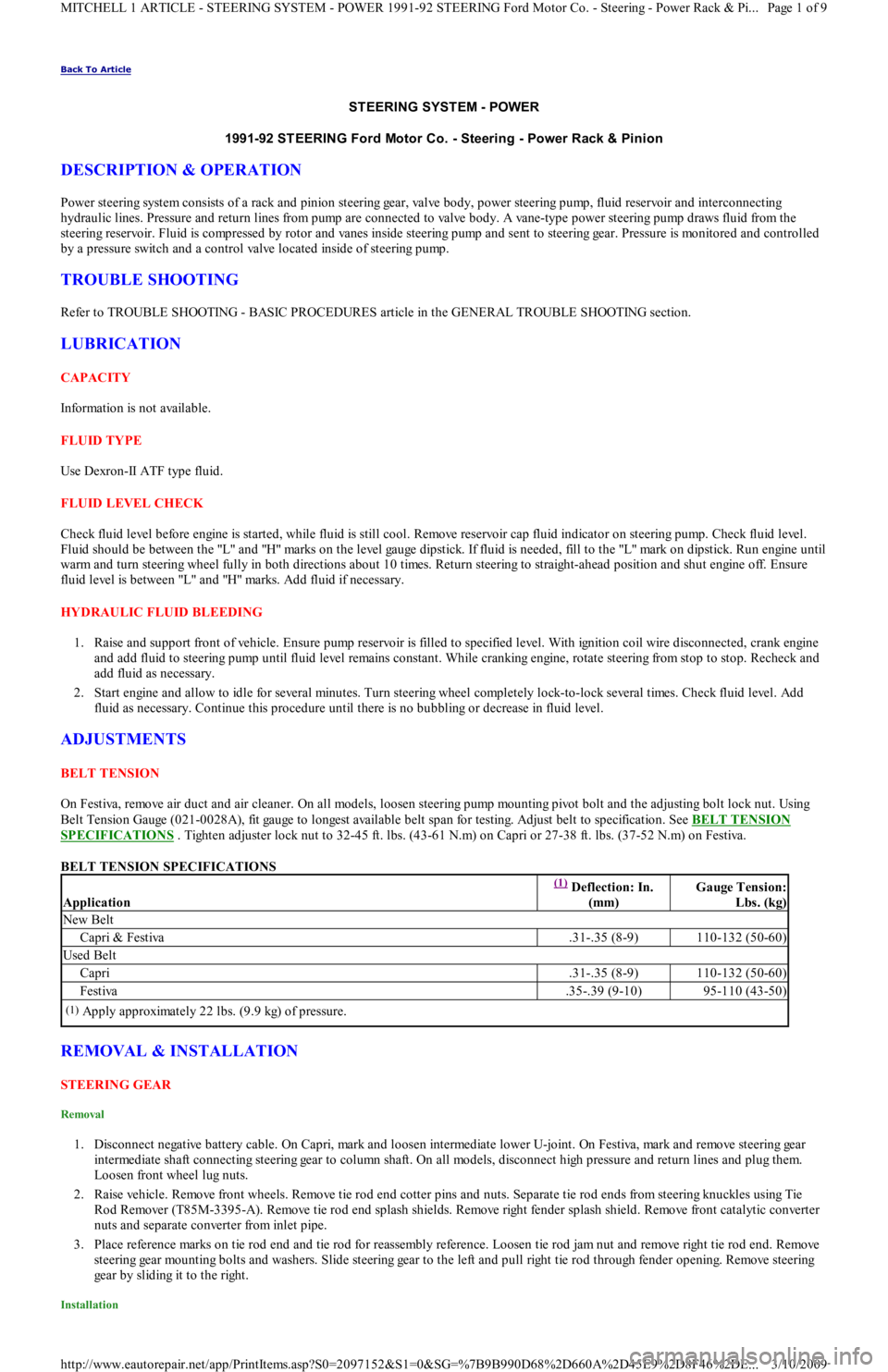
DESCRIPTION & OPERATION
Power steering system consists of a rack and pinion steering gear, valve body, power steering pump, fluid reservoir and interconnecting
hydraulic lines. Pressure and return lines from pump are connected to valve body. A vane-type power steering pump draws fluid from the
steering reservoir. Fluid is compressed by rotor and vanes inside steering pump and sent to steering gear. Pressure is monitored and controlled
by a pressure switch and a control valve located inside of steering pump.
TROUBLE SHOOTING
Refer to TROUBLE SHOOTING - BASIC PROCEDURES article in the GENERAL TROUBLE SHOOTING section.
LUBRICATION
CAPACITY
Information is not available.
FLUID TYPE
Use Dexron-II ATF type fluid.
FLUID LEVEL CHECK
Check fluid level before engine is started, while fluid is still cool. Remove reservoir cap fluid indicator on steering pump. Check fluid level.
Fluid should be between the "L" and "H" marks on the level gauge dipstick. If fluid is needed, fill to the "L" mark on dipstick. Run engine until
warm and turn steering wheel fully in both directions about 10 times. Return steering to straight-ahead position and shut engine off. Ensure
fluid level is between "L" and "H" marks. Add fluid if necessary.
HYDRAULIC FLUID BLEEDING
1. Raise and support front of vehicle. Ensure pump reservoir is filled to specified level. With ignition coil wire disconnected, crank engine
and add fluid to steering pump until fluid level remains constant. While cranking engine, rotate steering from stop to stop. Recheck and
add fluid as necessary.
2. Start engine and allow to idle for several minutes. Turn steering wheel completely lock-to-lock several times. Check fluid level. Add
fluid as necessary. Continue this procedure until there is no bubbling or decrease in fluid level.
ADJUSTMENTS
BELT TENSION
On Festiva, remove air duct and air cleaner. On all models, loosen steering pump mounting pivot bolt and the adjusting bolt lock nut. Using
Belt Tension Gauge (021-0028A), fit gauge to longest available belt span for testing. Adjust belt to specification. See BELT TENSION
SPECIFICATIONS . Tighten adjuster lock nut to 32-45 ft. lbs. (43-61 N.m) on Capri or 27-38 ft. lbs. (37-52 N.m) on Festiva.
BELT TENSION SPECIFICATIONS
REMOVAL & INSTALLATION
STEERING GEAR
Removal
1. Disconnect negative battery cable. On Capri, mark and loosen intermediate lower U-joint. On Festiva, mark and remove steering gear
intermediate shaft connecting steering gear to column shaft. On all models, disconnect high pressure and return lines and plug them.
Loosen front wheel lug nuts.
2. Raise vehicle. Remove front wheels. Remove tie rod end cotter pins and nuts. Separate tie rod ends from steering knuckles using Tie
Rod Remover (T85M-3395-A). Remove tie rod end splash shields. Remove right fender splash shield. Remove front catalytic converter
nuts and separate converter from inlet pipe.
3. Place reference marks on tie rod end and tie rod for reassembly reference. Loosen tie rod jam nut and remove right tie rod end. Remove
steering gear mounting bolts and washers. Slide steering gear to the left and pull right tie rod through fender opening. Remove steering
gear by sliding it to the right.
Installation
Application
(1) Deflection: In.
(mm)Gauge Tension:
Lbs. (kg)
New Belt
Capri & Festiva.31-.35 (8-9)110-132 (50-60)
Used Belt
Capri.31-.35 (8-9)110-132 (50-60)
Festiva.35-.39 (9-10)95-110 (43-50)
(1)Apply approximately 22 lbs. (9.9 kg) of pressure.
Page 1 of 9 MITCHELL 1 ARTICLE - STEERING SYSTEM - POWER 1991-92 STEERING Ford Motor Co. - Steering - Power Rack & Pi
...
3/10/2009 http://www.eautorepair.net/app/PrintItems.asp?S0=2097152&S1=0&SG=%7B9B990D68%2D660A%2D45E9%2D8F46%2DE
...
Page 379 of 454
1. Position steering gear in its mounting position. Attach intermediate shaft to steering gear pinion and tighten clamp bolt to 13-20 ft. lbs.
(18-26 N.m). Guide intermediate shaft into steering column hole. Lower vehicle.
2. Lift steering gear and align intermediate shaft with universal joint and install clamp bolt. Raise vehicle. Install steering gear mounting
bolts and tighten to 23-34 ft. lbs. (31-46 N.m). Install right tie rod end, using marks made during removal for installation reference.
Attach tie rod ends to steering knuckles. Install tie rod end nuts and tighten to 22-33 ft. lbs. (29-44 N.m).
3. Install tie rod end cotter pins. Attach catalytic converter to inlet pipe and install attaching nuts. Tighten nuts to 23-34 ft. lbs. (31-46
N.m). Install tie rod end splash shields. Install right fender splash shield. install front wheels. Lower vehicle.
4. Connect high pressure and return lines. Connect negative battery cable. Add power steering fluid and bleed air from system and check
for leaks. See HYDRAULIC FLUID BLEEDING
under LUBRICATION.
POWER STEERING PUMP
Removal (Capri)
1. Remove right radiator support and brace. Remove pump drive belt. Disconnect intercooler outlet hose at throttle intake (if equipped).
R e mo ve gr o u n d wir e fr o m e n gin e l ift in g e ye .
2. Remove pressure and return hoses and plug. Remove wire from pressure switch. Remove adjusting screw, nut and block from pump
bracket. Remove pivot bolt. Remove bracket retaining bolts then remove pump.
Removal (Festiva)
Remove air duct and air cleaner. Disconnect electrical connector from fluid pressure switch on power steering pump. Disconnect and plug
return and pressure lines. Remove adjustment bolt. Remove lock nut, washer and bracket bolt. Loosen mounting bolt and disconnect drive
belt. Remove mounting bolt. Remove power steering pump.
Installation (Capri & Festiva)
To install pump, reverse removal procedure. Adjust steering belt tension. Tighten all nuts and bolts to specification. See TORQUE
SPECIFICATIONS . Add power steering fluid and bleed air from system and check for leaks. See HYDRAULIC FLUID BLEEDING
under LUBRICATION.
OVERHAUL
STEERING GEAR
Disassembly (Capri)
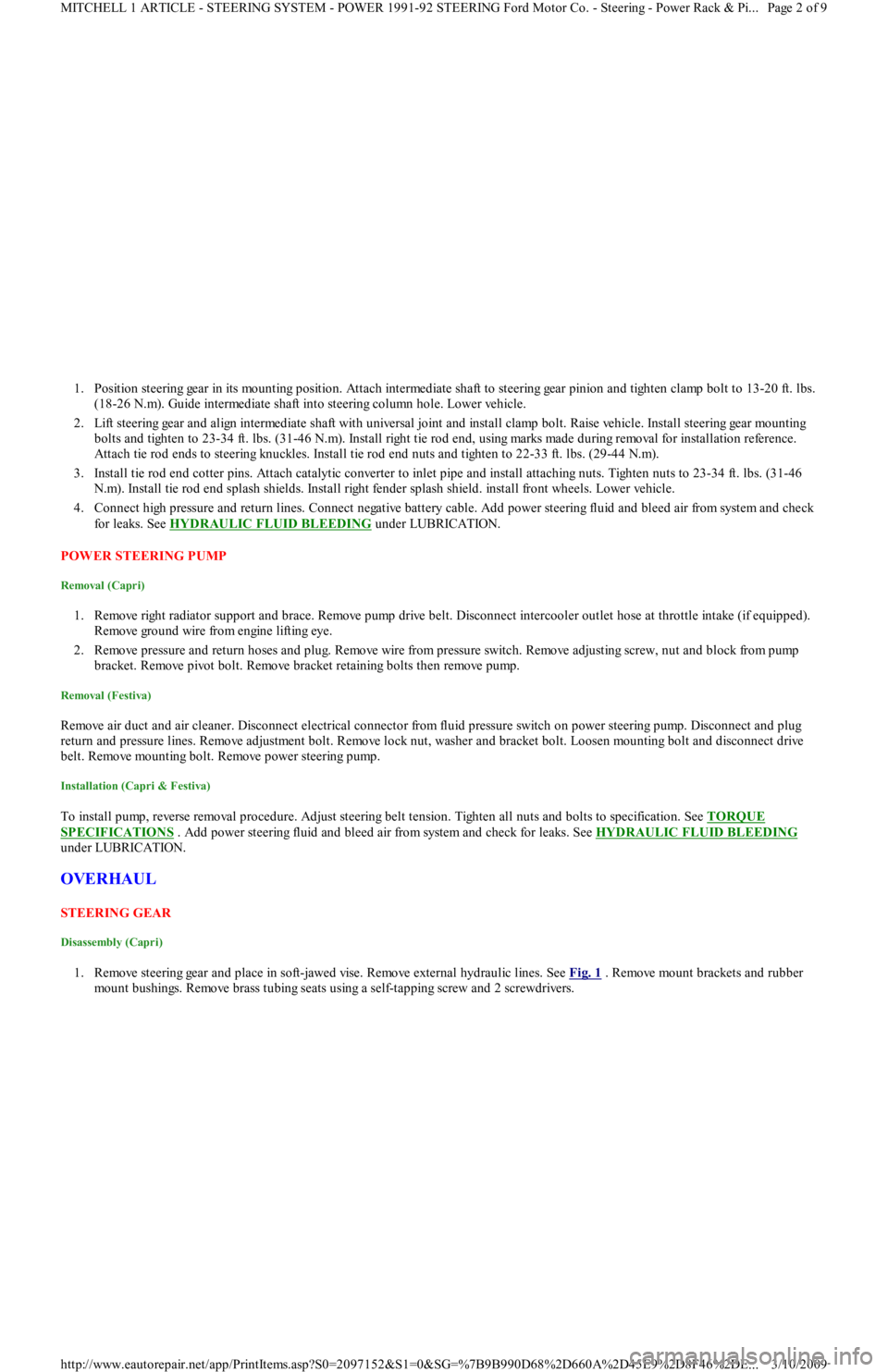
1. Remove steering gear and place in soft-jawed vise. Remove external hydraulic lines. See Fig. 1 . Remove mount brackets and rubber
mount bushings. Remove brass tubing seats using a self-tapping screw and 2 screwdrivers.
Page 2 of 9 MITCHELL 1 ARTICLE - STEERING SYSTEM - POWER 1991-92 STEERING Ford Motor Co. - Steering - Power Rack & Pi
...
3/10/2009 http://www.eautorepair.net/app/PrintItems.asp?S0=2097152&S1=0&SG=%7B9B990D68%2D660A%2D45E9%2D8F46%2DE
...
Page 380 of 454
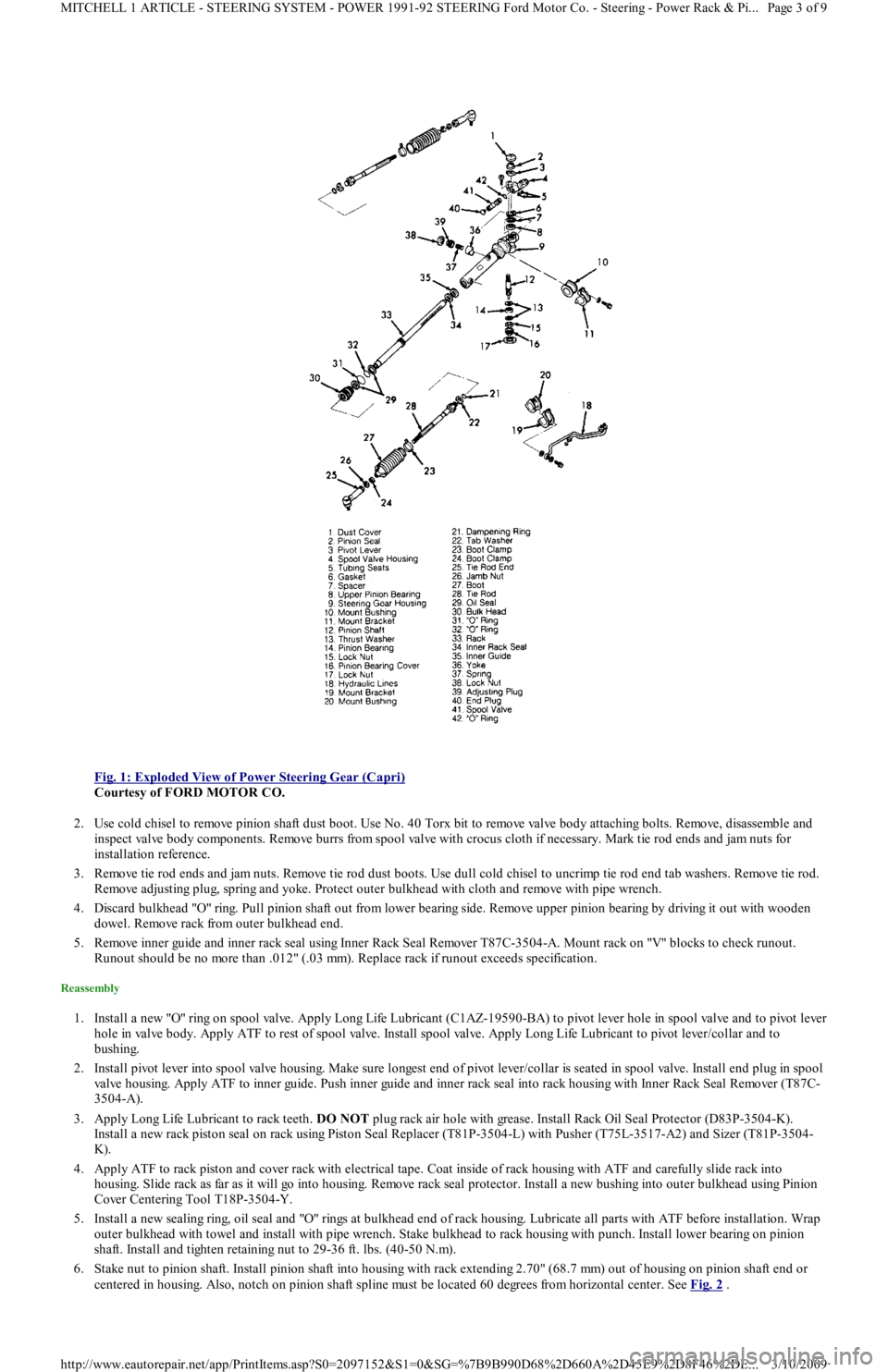
Fig. 1: Exploded View of Power Steering Gear (Capri)
Courtesy of FORD MOTOR CO.
2. Use cold chisel to remove pinion shaft dust boot. Use No. 40 Torx bit to remove valve body attaching bolts. Remove, disassemble and
inspect valve body components. Remove burrs from spool valve with crocus cloth if necessary. Mark tie rod ends and jam nuts for
installation reference.
3. Remove tie rod ends and jam nuts. Remove tie rod dust boots. Use dull cold chisel to uncrimp tie rod end tab washers. Remove tie rod.
Remove adjusting plug, spring and yoke. Protect outer bulkhead with cloth and remove with pipe wrench.
4. Discard bulkhead "O" ring. Pull pinion shaft out from lower bearing side. Remove upper pinion bearing by driving it out with wooden
dowel. Remove rack from outer bulkhead end.
5. Remove inner guide and inner rack seal using Inner Rack Seal Remover T87C-3504-A. Mount rack on "V" blocks to check runout.
Runout should be no more than .012" (.03 mm). Replace rack if runout exceeds specification.
Reassembly
1. Install a new "O" ring on spool valve. Apply Long Life Lubricant (C1AZ-19590-BA) to pivot lever hole in spool valve and to pivot lever
hole in valve body. Apply ATF to rest of spool valve. Install spool valve. Apply Long Life Lubricant to pivot lever/collar and to
bushing.
2. Install pivot lever into spool valve housing. Make sure longest end of pivot lever/collar is seated in spool valve. Install end plug in spool
valve housing. Apply ATF to inner guide. Push inner guide and inner rack seal into rack housing with Inner Rack Seal Remover (T87C-
3504-A).
3. Apply Long Life Lubricant to rack teeth. DO NOT plug rack air hole with grease. Install Rack Oil Seal Protector (D83P-3504-K).
Install a new rack piston seal on rack using Piston Seal Replacer (T81P-3504-L) with Pusher (T75L-3517-A2) and Sizer (T81P-3504-
K).
4. Apply ATF to rack piston and cover rack with electrical tape. Coat inside of rack housing with ATF and carefully slide rack into
housing. Slide rack as far as it will go into housing. Remove rack seal protector. Install a new bushing into outer bulkhead using Pinion
Cover Centering Tool T18P-3504-Y.
5. Install a new sealing ring, oil seal and "O" rings at bulkhead end of rack housing. Lubricate all parts with ATF before installation. Wrap
outer bulkhead with towel and install with pipe wrench. Stake bulkhead to rack housing with punch. Install lower bearing on pinion
shaft. Install and tighten retaining nut to 29-36 ft. lbs. (40-50 N.m).
6. Stake nut to pinion shaft. Install pinion shaft into housing with rack extending 2.70" (68.7 mm) out of housing on pinion shaft end or
centered in housing. Also, notch on pinion shaft spline must be located 60 degrees from horizontal center. See Fig. 2
.
Page 3 of 9 MITCHELL 1 ARTICLE - STEERING SYSTEM - POWER 1991-92 STEERING Ford Motor Co. - Steering - Power Rack & Pi
...
3/10/2009 http://www.eautorepair.net/app/PrintItems.asp?S0=2097152&S1=0&SG=%7B9B990D68%2D660A%2D45E9%2D8F46%2DE
...
Page 381 of 454
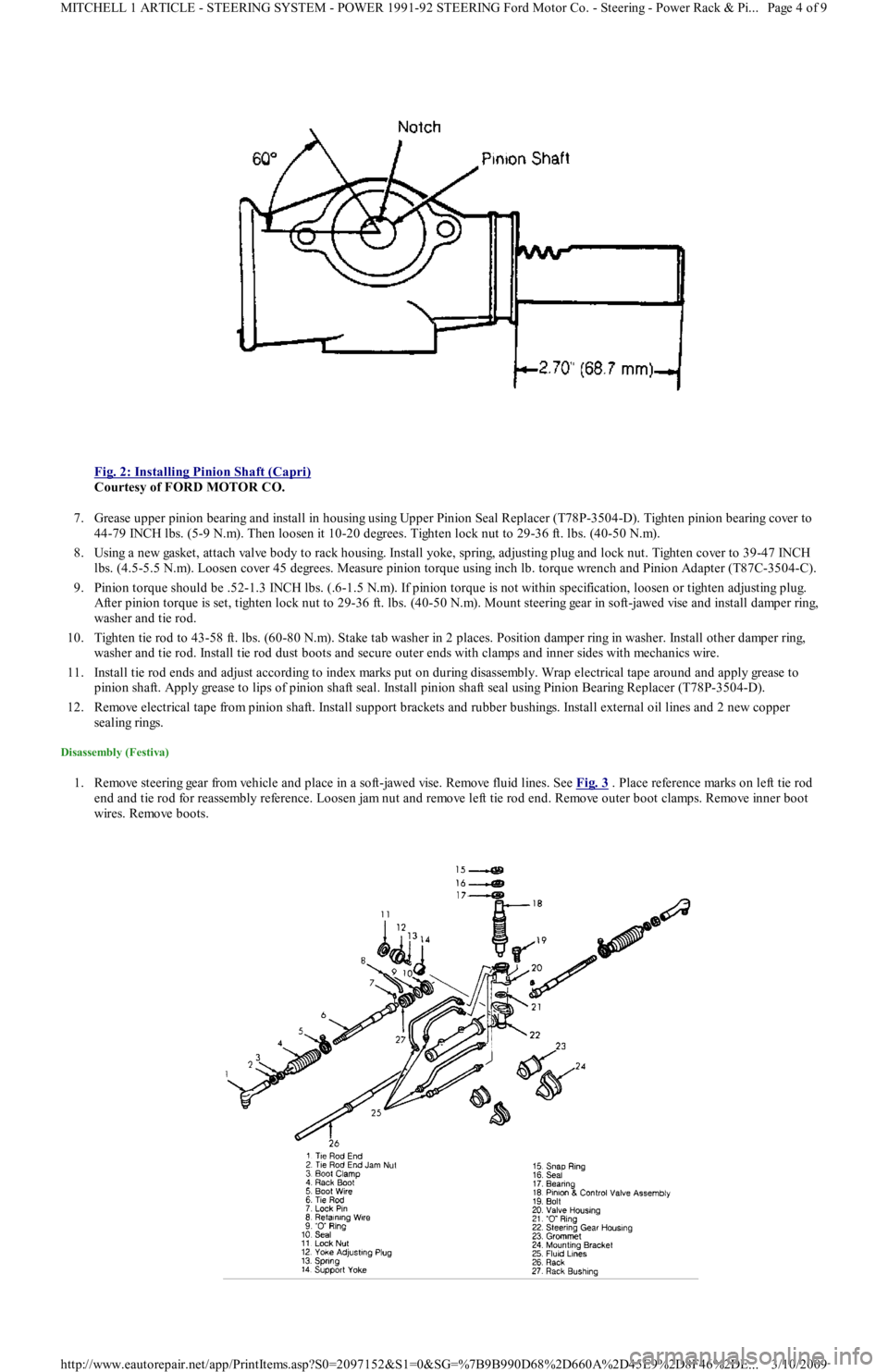
Fig. 2: Installing Pinion Shaft (Capri)
Courtesy of FORD MOTOR CO.
7. Grease upper pinion bearing and install in housing using Upper Pinion Seal Replacer (T78P-3504-D). Tighten pinion bearing cover to
44-79 INCH lbs. (5-9 N.m). Then loosen it 10-20 degrees. Tighten lock nut to 29-36 ft. lbs. (40-50 N.m).
8. Using a new gasket, attach valve body to rack housing. Install yoke, spring, adjusting plug and lock nut. Tighten cover to 39-47 INCH
lbs. (4.5-5.5 N.m). Loosen cover 45 degrees. Measure pinion torque using inch lb. torque wrench and Pinion Adapter (T87C-3504-C).
9. Pinion torque should be .52-1.3 INCH lbs. (.6-1.5 N.m). If pinion torque is not within specification, loosen or tighten adjusting plug.
After pinion torque is set, tighten lock nut to 29-36 ft. lbs. (40-50 N.m). Mount steering gear in soft-jawed vise and install damper ring,
washer and tie rod.
10. Tighten tie rod to 43-58 ft. lbs. (60-80 N.m). Stake tab washer in 2 places. Position damper ring in washer. Install other damper ring,
washer and tie rod. Install tie rod dust boots and secure outer ends with clamps and inner sides with mechanics wire.
11. Install tie rod ends and adjust according to index marks put on during disassembly. Wrap electrical tape around and apply grease to
pinion shaft. Apply grease to lips of pinion shaft seal. Install pinion shaft seal using Pinion Bearing Replacer (T78P-3504-D).
12. Remove electrical tape from pinion shaft. Install support brackets and rubber bushings. Install external oil lines and 2 new copper
sealing rings.
Disassembly (Festiva)
1. Remove steering gear from vehicle and place in a soft-jawed vise. Remove fluid lines. See Fig. 3 . Place reference marks on left tie rod
end and tie rod for reassembly reference. Loosen jam nut and remove left tie rod end. Remove outer boot clamps. Remove inner boot
wires. Remove boots.
Page 4 of 9 MITCHELL 1 ARTICLE - STEERING SYSTEM - POWER 1991-92 STEERING Ford Motor Co. - Steering - Power Rack & Pi
...
3/10/2009 http://www.eautorepair.net/app/PrintItems.asp?S0=2097152&S1=0&SG=%7B9B990D68%2D660A%2D45E9%2D8F46%2DE
...
Page 382 of 454
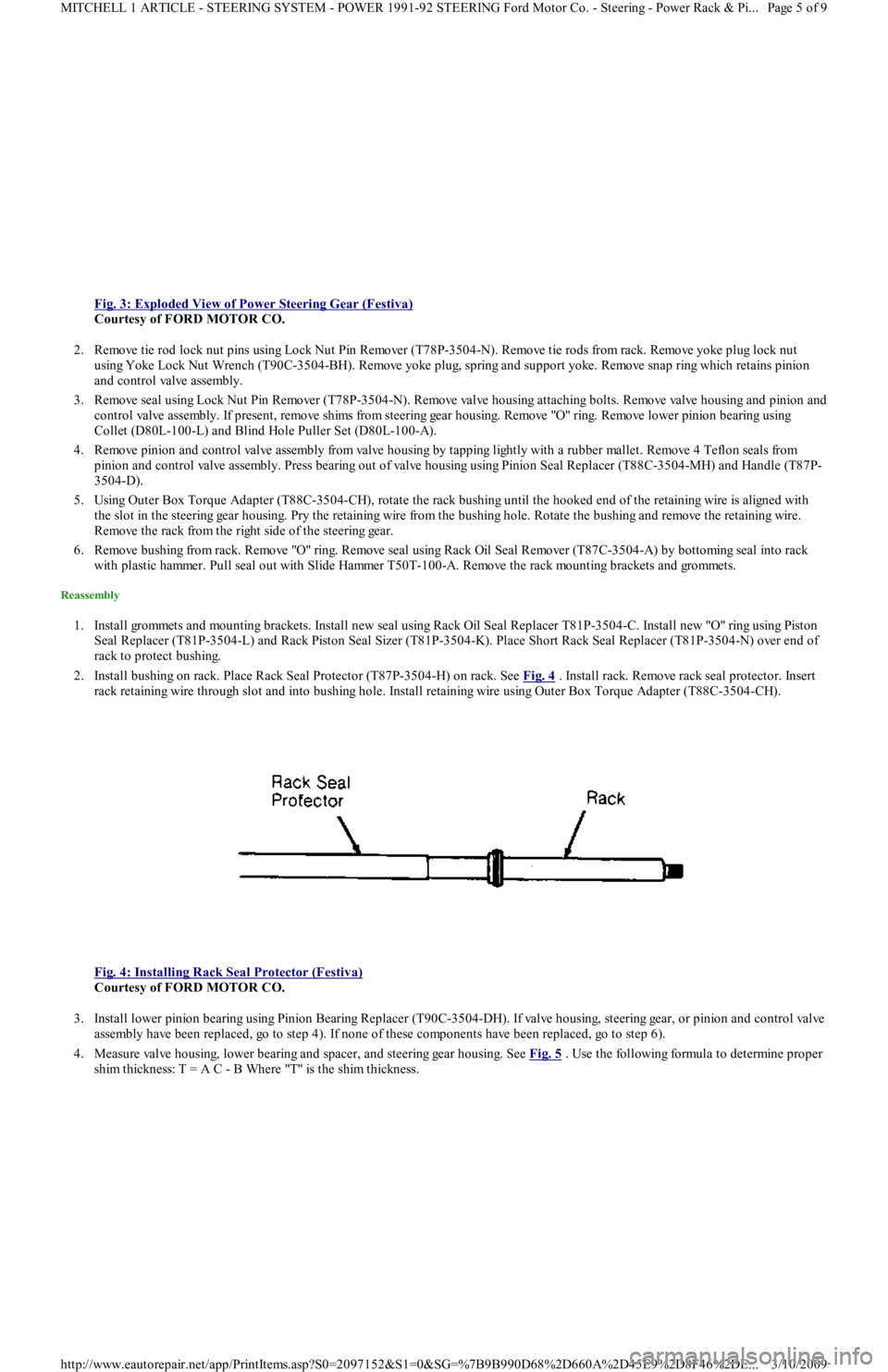
Fig. 3: Exploded View of Power Steering Gear (Festiva)
Courtesy of FORD MOTOR CO.
2. Remove tie rod lock nut pins using Lock Nut Pin Remover (T78P-3504-N). Remove tie rods from rack. Remove yoke plug lock nut
using Yoke Lock Nut Wrench (T90C-3504-BH). Remove yoke plug, spring and support yoke. Remove snap ring which retains pinion
and control valve assembly.
3 . R e mo ve se a l u sin g Lo c k Nu t P in R e mo ve r ( T7 8 P - 3 5 0 4 - N) . R e mo ve va l ve h o u sin g a t t a c h in g b o l t s. R e mo ve va l ve h o u sin g a n d p in io n and
control valve assembly. If present, remove shims from steering gear housing. Remove "O" ring. Remove lower pinion bearing using
Collet (D80L-100-L) and Blind Hole Puller Set (D80L-100-A).
4. Remove pinion and control valve assembly from valve housing by tapping lightly with a rubber mallet. Remove 4 Teflon seals from
pinion and control valve assembly. Press bearing out of valve housing using Pinion Seal Replacer (T88C-3504-MH) and Handle (T87P-
3504-D).
5. Using Outer Box Torque Adapter (T88C-3504-CH), rotate the rack bushing until the hooked end of the retaining wire is aligned with
the slot in the steering gear housing. Pry the retaining wire from the bushing hole. Rotate the bushing and remove the retaining wir e .
Remove the rack from the right side of the steering gear.
6 . R e mo ve b u sh in g fr o m r a c k. R e mo ve "O" r in g. R e mo ve se a l u sin g Rack Oil Seal Remover (T87C-3504-A) by bottoming seal into rack
with plastic hammer. Pull seal out with Slide Hammer T50T-100-A. Remove the rack mounting brackets and grommets.
Reassembly
1. Install grommets and mounting brackets. Install new seal using Rack Oil Seal Replacer T81P-3504-C. Install new "O" ring using Piston
Seal Replacer (T81P-3504-L) and Rack Piston Seal Sizer (T81P-3504-K). Place Short Rack Seal Replacer (T81P-3504-N) over end of
rack to protect bushing.
2. Install bushing on rack. Place Rack Seal Protector (T87P-3504-H) on rack. See Fig. 4
. Install rack. Remove rack seal protector. Insert
rack retaining wire through slot and into bushing hole. Install retaining wire using Outer Box Torque Adapter (T88C-3504-CH).
Fig. 4: Installing Rack Seal Protector (Festiva)
Courtesy of FORD MOTOR CO.
3. Install lower pinion bearing using Pinion Bearing Replacer (T90C-3504-DH). If valve housing, steering gear, or pinion and control valve
assembly have been replaced, go to step 4). If none of these components have been replaced, go to step 6).
4. Measure valve housing, lower bearing and spacer, and steering gear housing. See Fig. 5
. Use the following formula to determine proper
shim thickness: T = A C - B Where "T" is the shim thickness.
Page 5 of 9 MITCHELL 1 ARTICLE - STEERING SYSTEM - POWER 1991-92 STEERING Ford Motor Co. - Steering - Power Rack & Pi
...
3/10/2009 http://www.eautorepair.net/app/PrintItems.asp?S0=2097152&S1=0&SG=%7B9B990D68%2D660A%2D45E9%2D8F46%2DE
...