Downloaded from www.Manualslib.com manuals search engine Safety Maintenance Schedule" on the inside of the
glove box door
as illustrated.
The schedule lists the various safety checks to be
performed at regularly scheduled intervals,
as well
as some of the other important vehicle maintenance
requirements. You are urged to check
off each item
on the schedule after the operation has been per
formed. Following are further details on the safety
check items:
Checks To Be Made At Oil Change Intervals
(4 months or 6,000 miles, whichever comes
first)
• Brake Lines and Hoses -Check for proper at
tachments, leaks, cracks, chafing, deterioration,
etc. Any questionable parts noted should be re
placed or repaired immediately.
• Fluid Levels-Check level of fluid in brake master
cylinder, power steering pump, radiator, engine,
axle and transmission. Any significant
loss could
mean that a malfunction
is developing in the sys
tem and corrective action should be taken imme
diately.
On cars with disc brakes, a low fluid level
in the front brake master cylinder reservoir could
34
also be an indicator that disc brake pads need
replacing.
• Front and Rear Suspension and Steering Sys
tem-Check for damaged or missing parts, or parts
showing visible signs of excessive wear or lack of
lubrication. Questionable parts should be replaced
by a qualified mechanic without delay.
• Exhaust System -Check complete exhaust sys
tem and nearby body areas and trunk lid for
broken, damaged, missing or mispositioned parts,
open seams, holes, loose connections
or other de
terioration which could permit exhaust fumes to
seep into the trunk or passenger compartment. Any
defects should be corrected immediately. To help
insure continued integrity, exhaust system pipes
rearward of the
muffler must be replaced whenever
a new
muffler is installed.
• Tires and Wheels -Check tires for excessive
wear, nails, cuts or other damage. Make certain
wheels are not bent
~nd wheel nuts are tight. Un
even or abnormal tire wear may indicate the need
for alignment service. Check tire inflation pressure
at least monthly, or more often
if daily visual
inspection indicates the need.
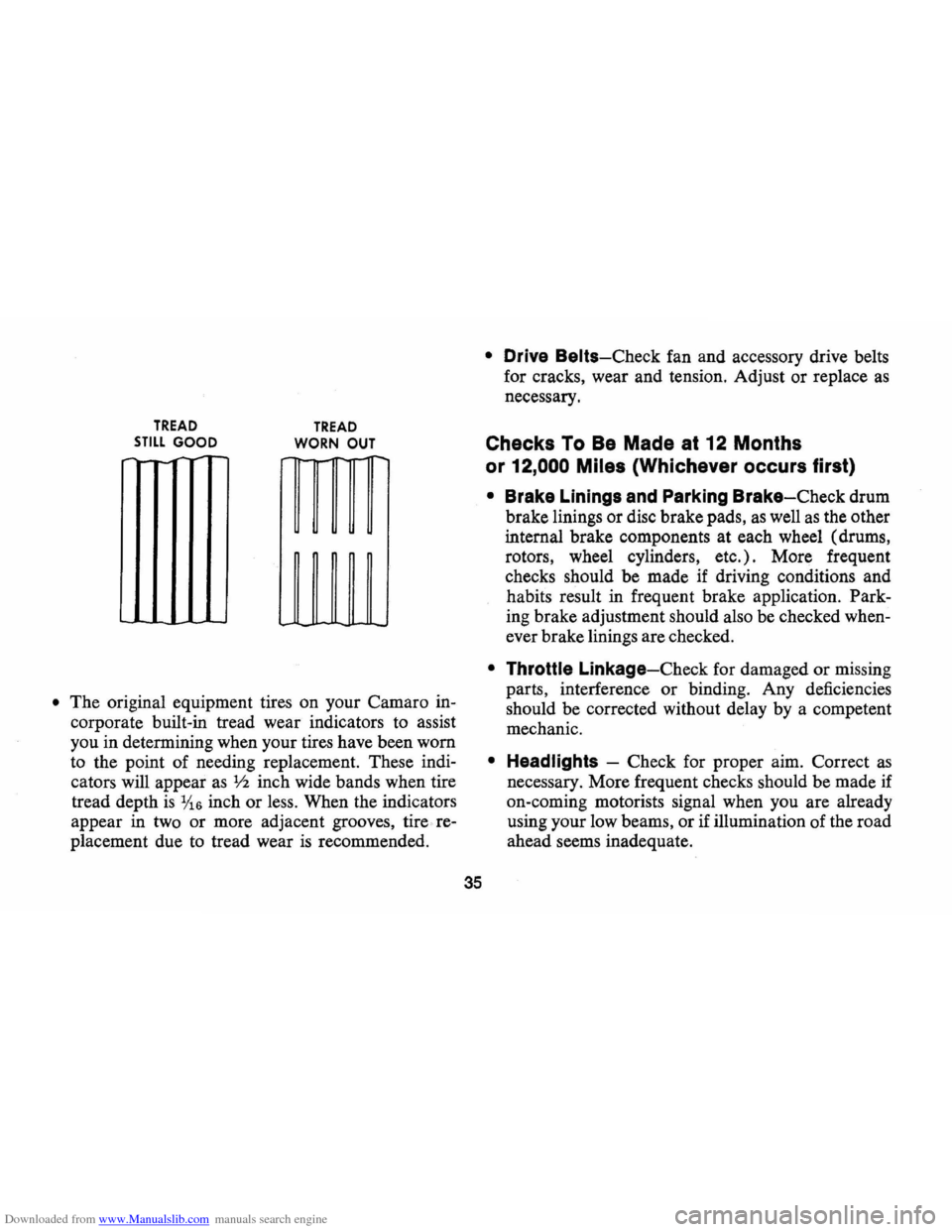
Downloaded from www.Manualslib.com manuals search engine TREAD STILL GOOD
-
TREAD
WORN OUT
• The original equipment tires on your Camaro in
corporate built-in tread wear indicators to assist
you in detennining when your tires have been worn
to the point of needing replacement. These indi
cators will appear
as V2 inch wide bands when tire
tread depth
is 1;16 inch or less. When the indicators
appear in two or more adjacent grooves, tire re
placement due to tread wear
is recommended.
35
• Drive Belts-Check fan and accessory drive belts
for cracks, wear and tension. Adjust or replace
as
necessary.
Checks To Be Made at 12 Months
or
12,000 Miles (Whichever occurs first)
• Brake Linings and Parking Brake-Check drum
brake linings or disc brake pads,
as well as the other
internal brake components at each wheel (drums,
rotors, wheel cylinders, etc.) . More frequent
checks should be made if driving conditions and
habits result in frequent brake application. Park
ing brake adjustment should also be checked when
ever brake linings are checked.
• Throttle Linkage-Check for damaged or missing
parts, interference or binding. Any deficiencies
should be corrected without delay by a competent
mechanic.
• Headlights -Check for proper aim. Correct as
necessary. More frequent checks should be made if
on-coming motorists signal when you are already
using your low beams, or if illumination of the road
ahead seems inadequate.