7-14
Maintenance
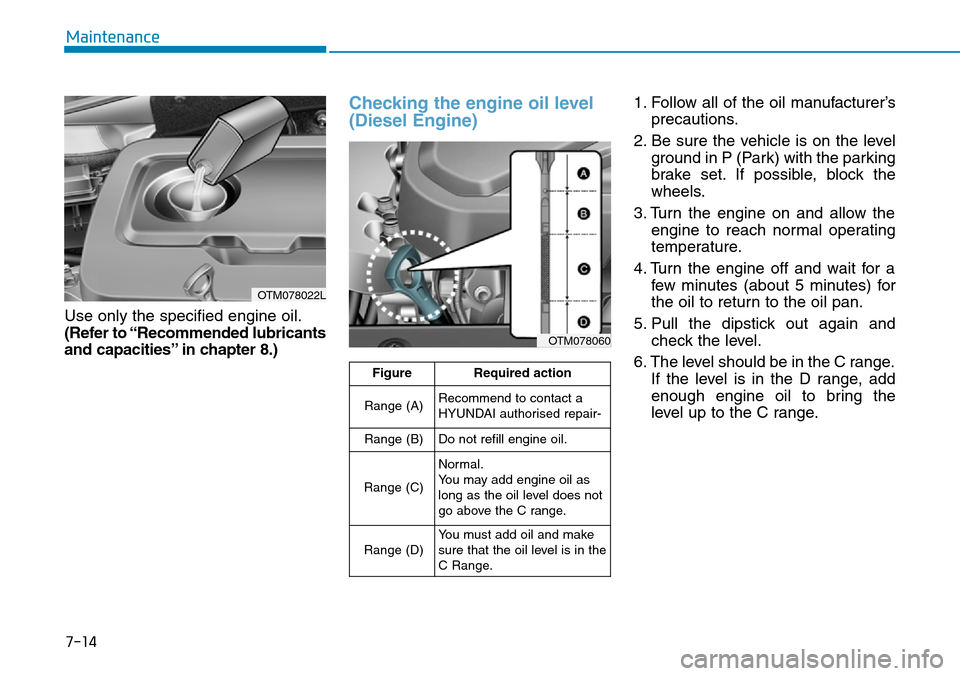
Use only the specified engine oil.
(Refer to “Recommended lubricants
and capacities” in chapter 8.)
Checking the engine oil level
(Diesel Engine)1. Follow all of the oil manufacturer’s
precautions.
2. Be sure the vehicle is on the level
ground in P (Park) with the parking
brake set. If possible, block the
wheels.
3. Turn the engine on and allow the
engine to reach normal operating
temperature.
4. Turn the engine off and wait for a
few minutes (about 5 minutes) for
the oil to return to the oil pan.
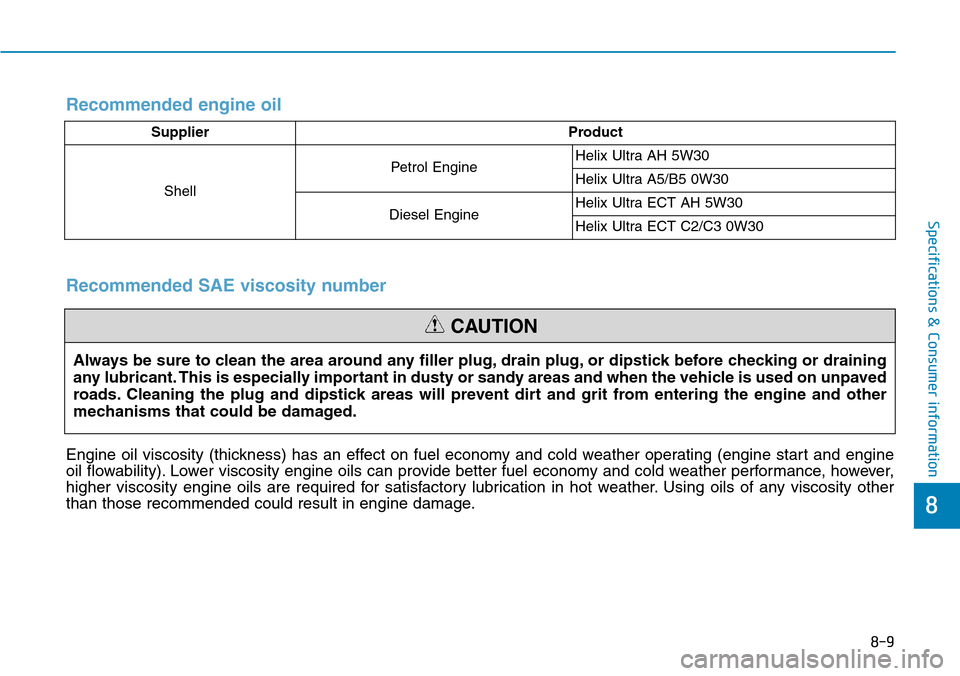
5. Pull the dipstick out again and
check the level.
6. The level should be in the C range.
If the level is in the D range, add
enough engine oil to bring the
level up to the C range.
OTM078022L
OTM078060
FigureRequired action
Range (A)Recommend to contact a
HYUNDAI authorised repair-
Range (B)Do not refill engine oil.
Range (C)
Normal.
You may add engine oil as
long as the oil level does not
go above the C range.
Range (D)You must add oil and make
sure that the oil level is in the
C Range.
8-9
8
Specifications & Consumer information
Recommended engine oil
Supplier Product
ShellPetrol EngineHelix Ultra AH 5W30
Helix Ultra A5/B5 0W30
Diesel EngineHelix Ultra ECT AH 5W30
Helix Ultra ECT C2/C3 0W30
Always be sure to clean the area around any filler plug, drain plug, or dipstick before checking or draining
any lubricant. This is especially important in dusty or sandy areas and when the vehicle is used on unpaved
roads. Cleaning the plug and dipstick areas will prevent dirt and grit from entering the engine and other
mechanisms that could be damaged.
CAUTION
Recommended SAE viscosity number
Engine oil viscosity (thickness) has an effect on fuel economy and cold weather operating (engine start and engine
oil flowability). Lower viscosity engine oils can provide better fuel economy and cold weather performance, however,
higher viscosity engine oils are required for satisfactory lubrication in hot weather. Using oils of any viscosity other
than those recommended could result in engine damage.