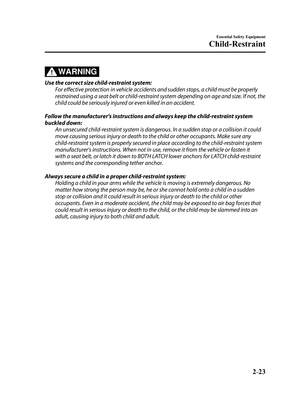
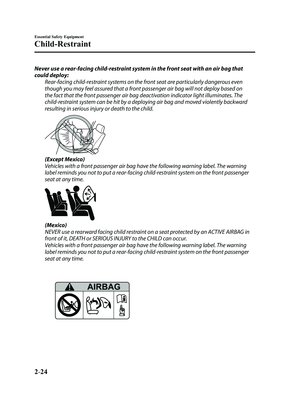
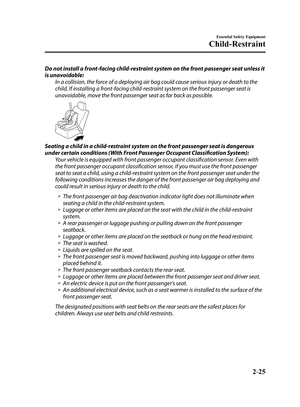
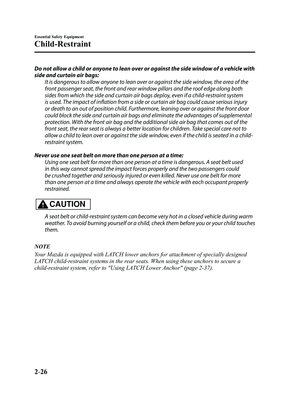
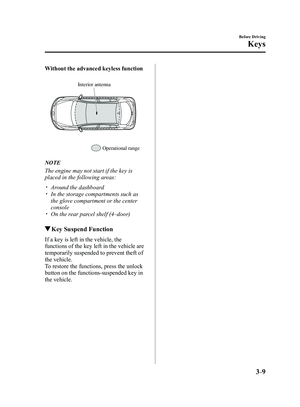
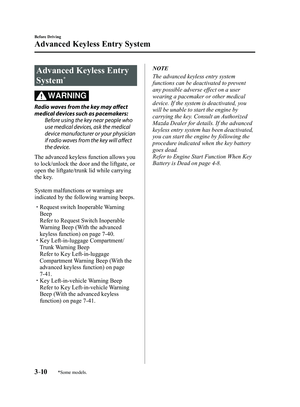
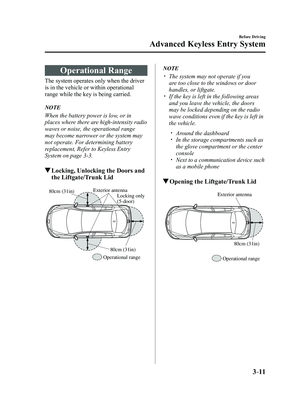
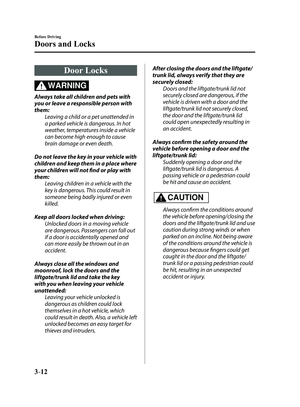
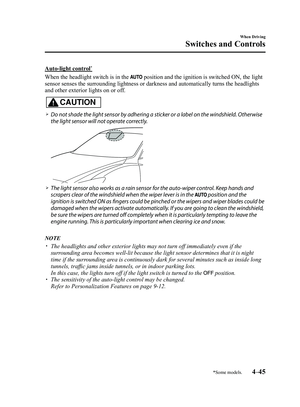
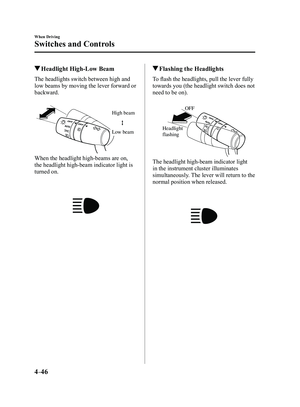
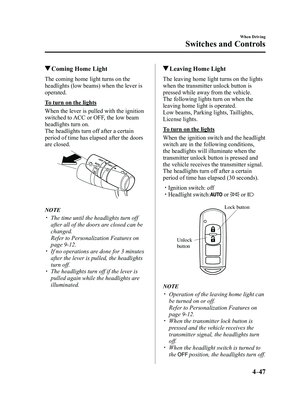
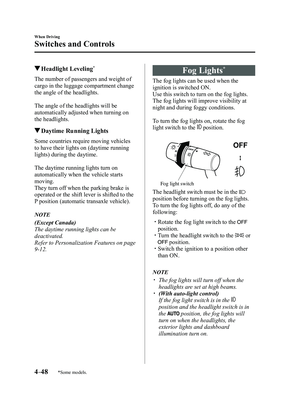
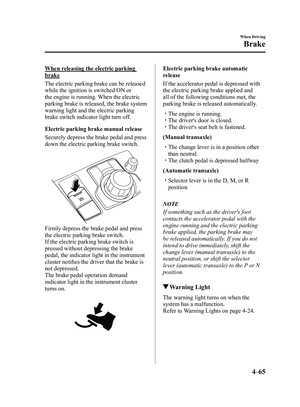
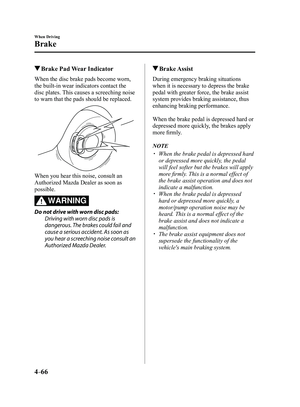
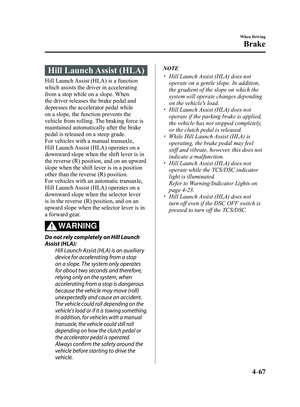
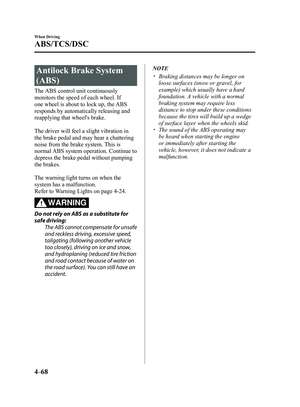
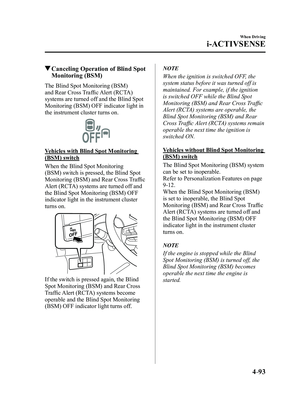
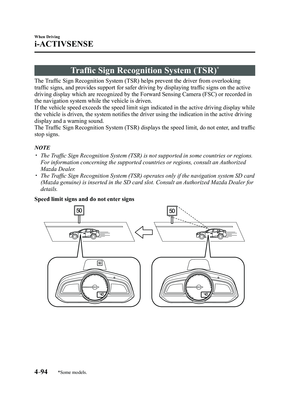
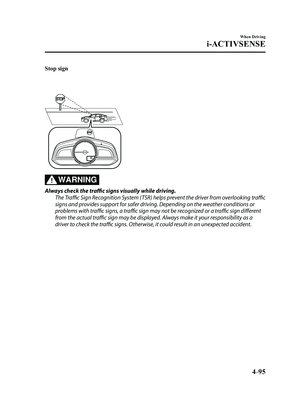
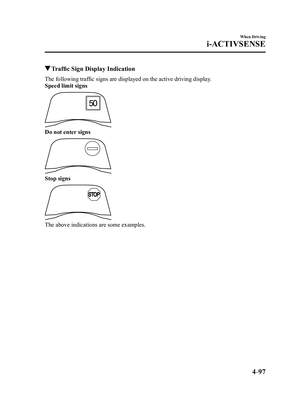
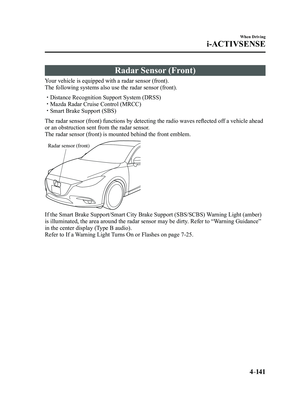
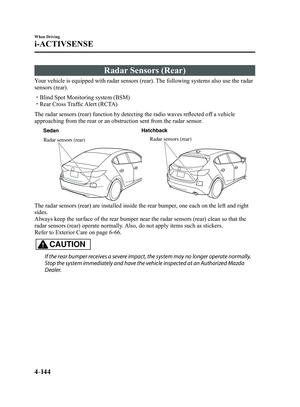
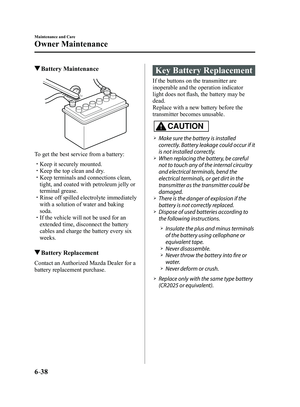
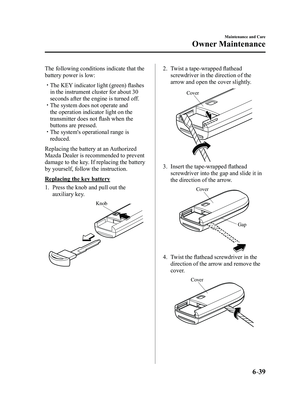
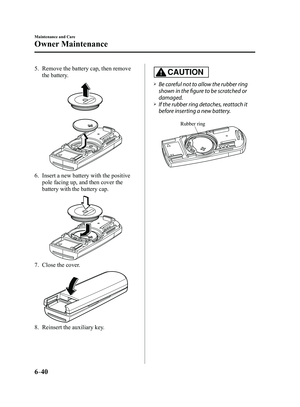
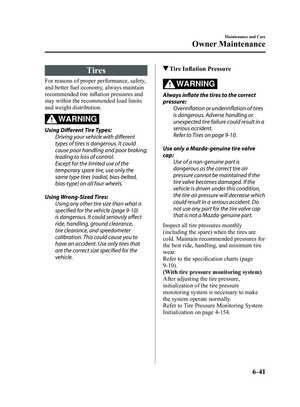
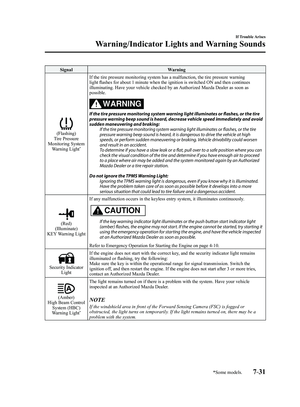
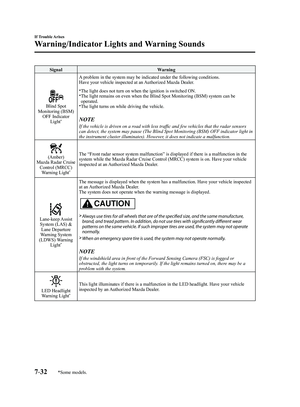
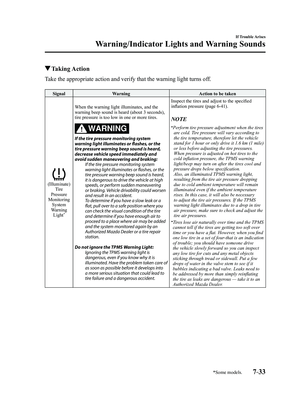
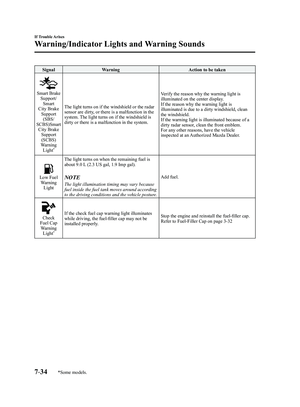
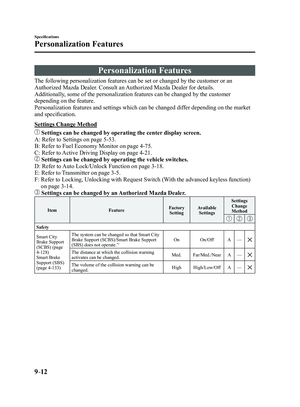
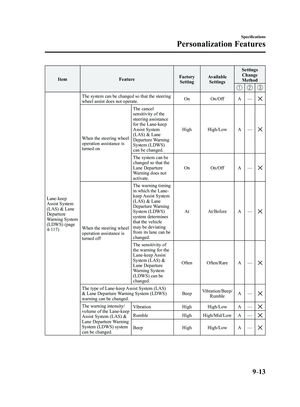
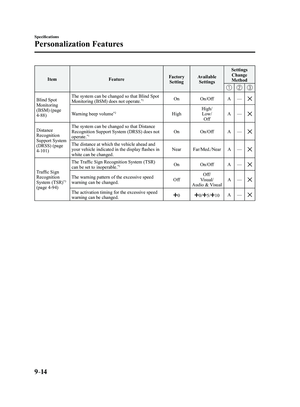
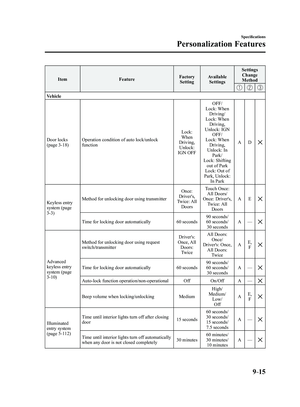
Page 65 of 612

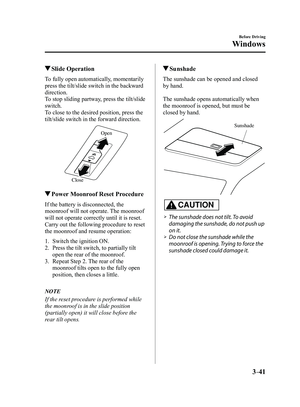
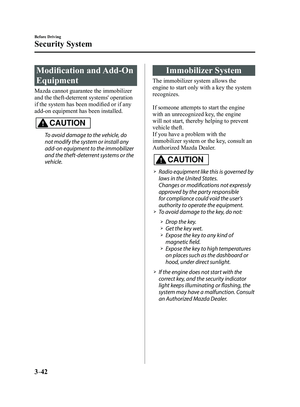
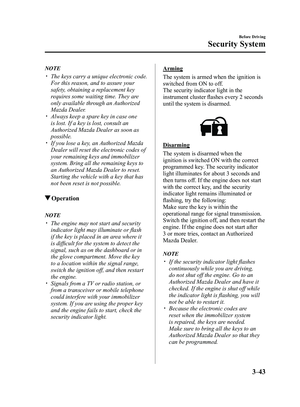
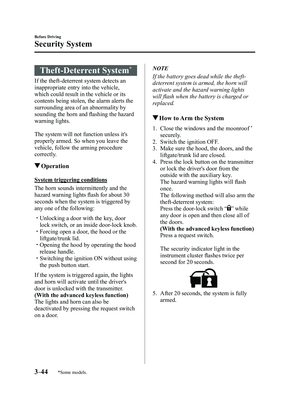
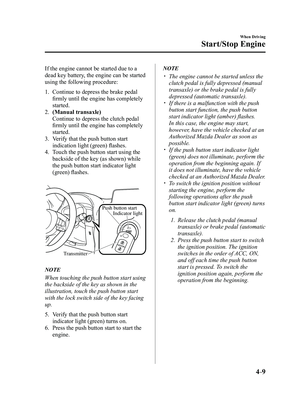
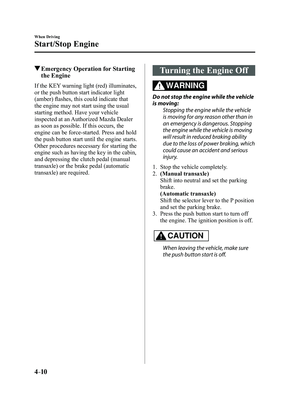
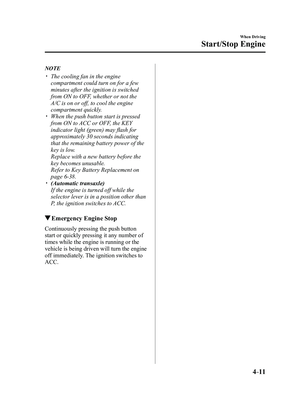
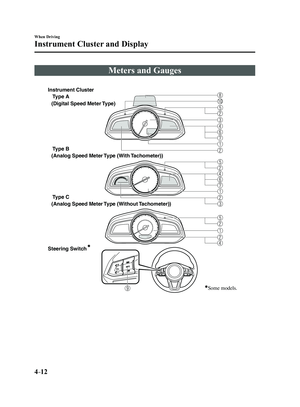
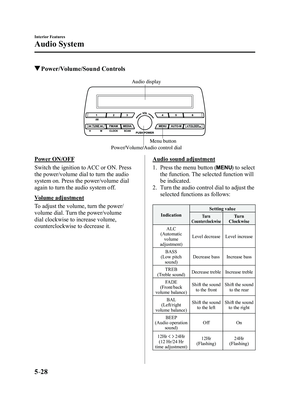
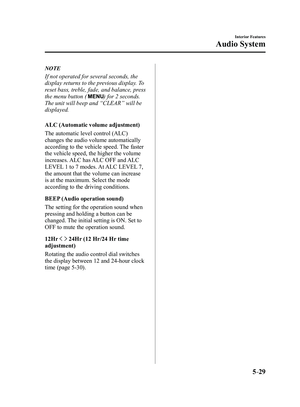
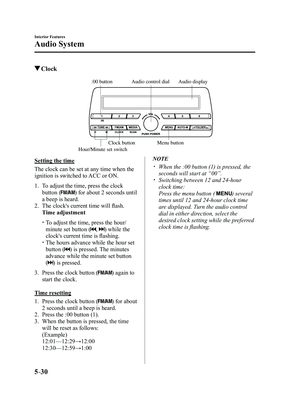
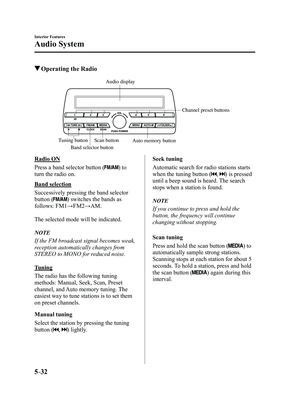
2–51
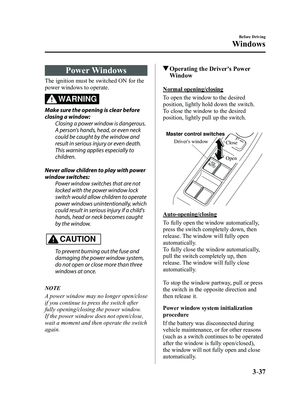
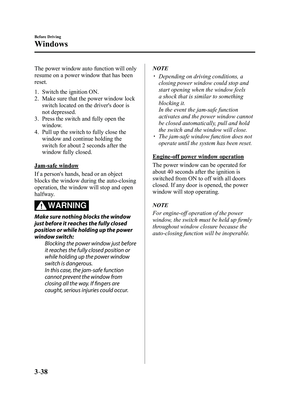
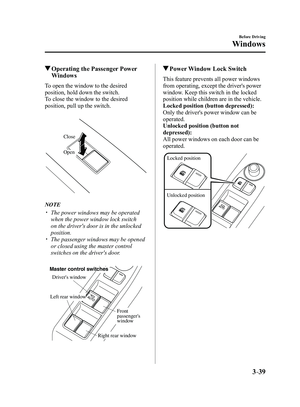
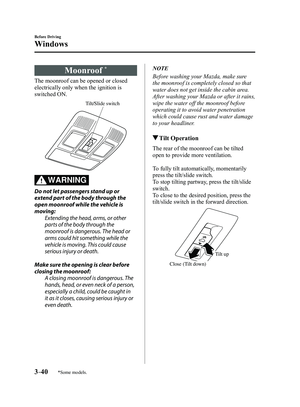
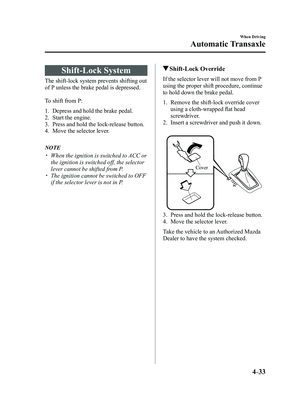
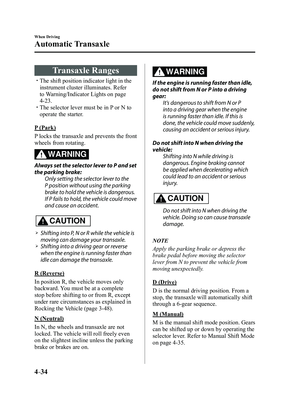
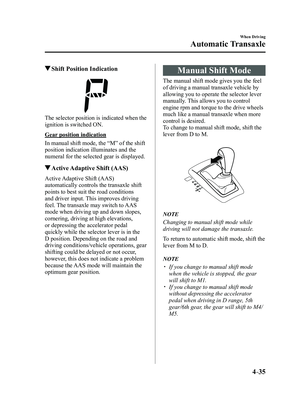
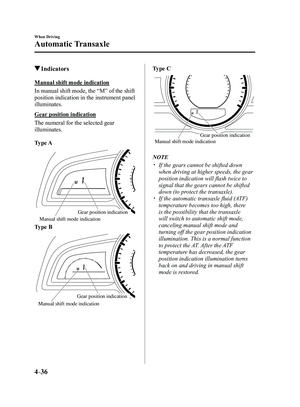
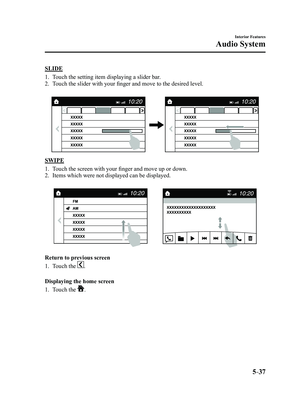
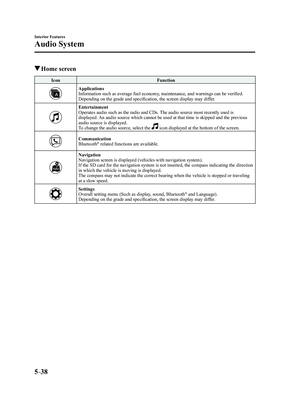
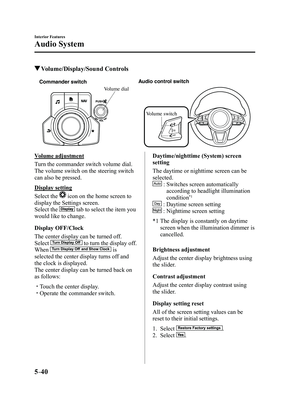
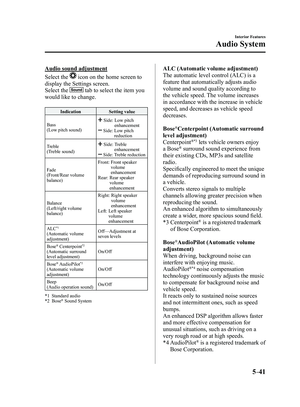
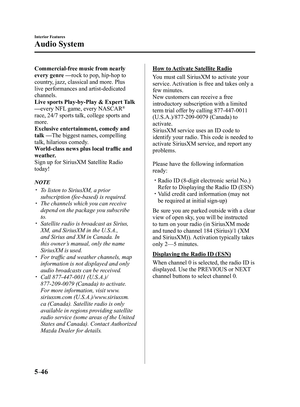
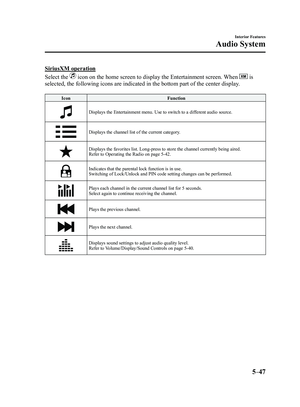
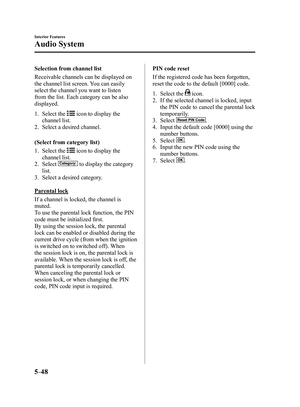
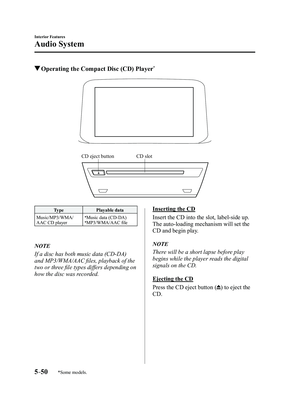
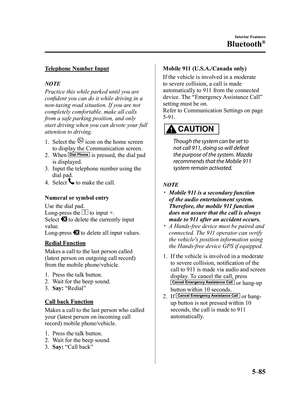
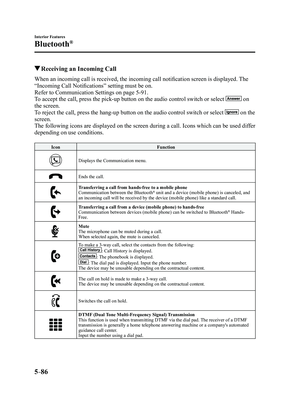
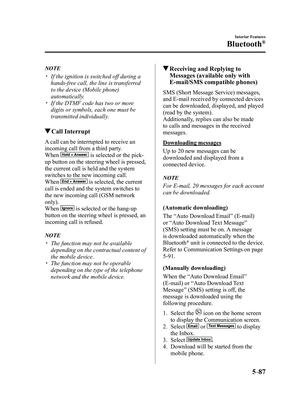
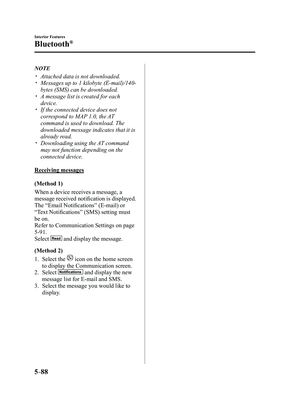
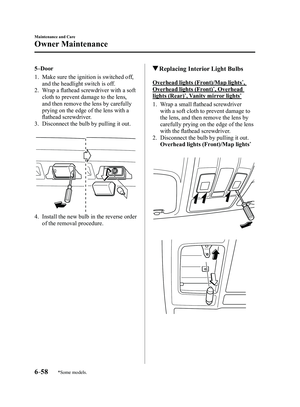
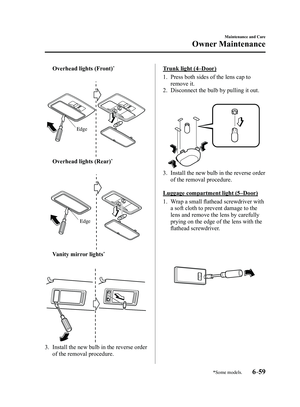
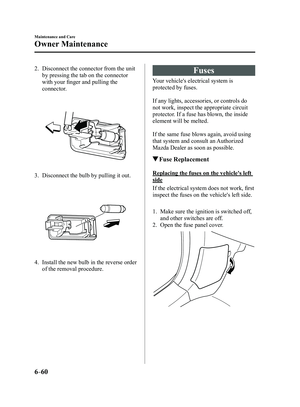
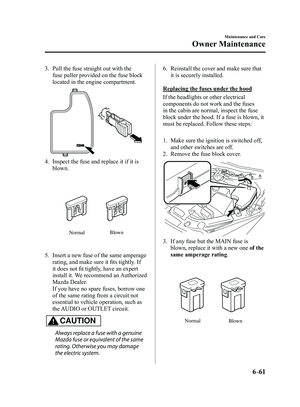
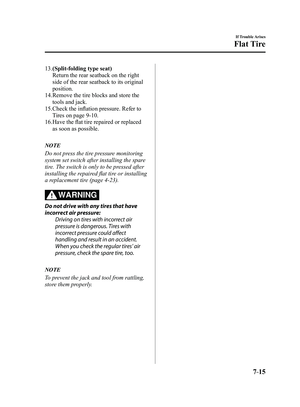
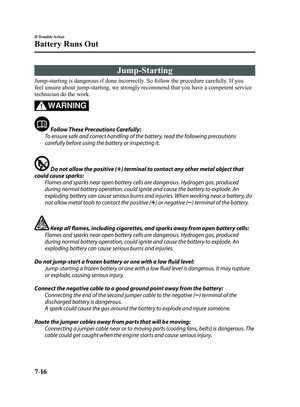
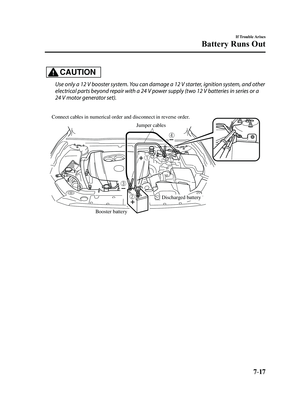
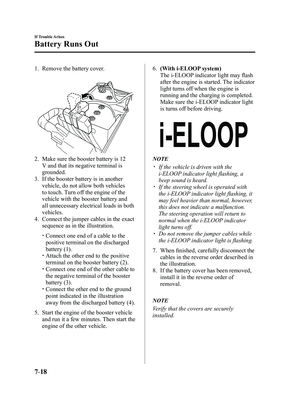
Essential Safety Equipment
SRS Air Bags
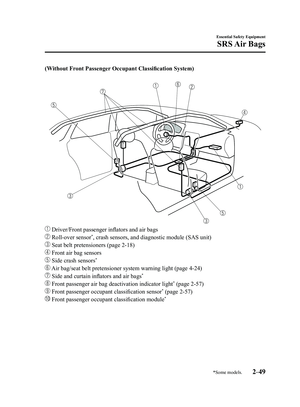
*Some models.
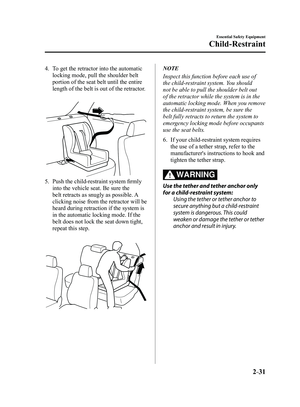
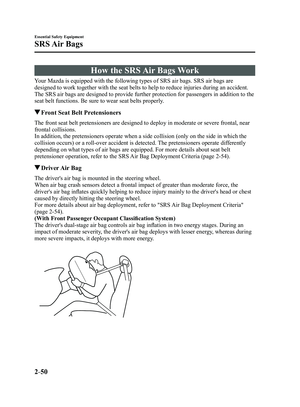
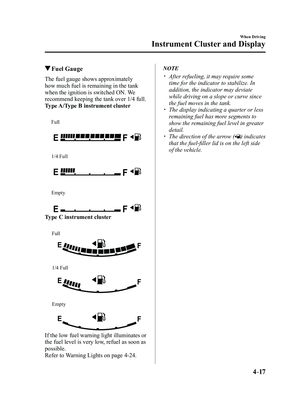
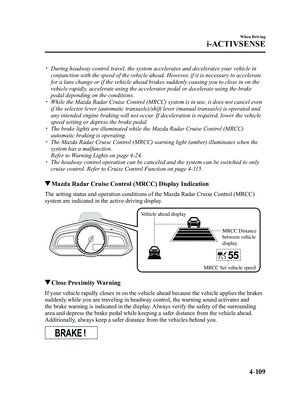
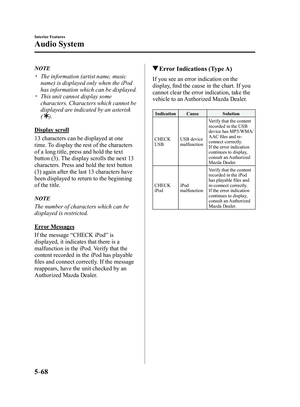
Front Passenger Air Bag
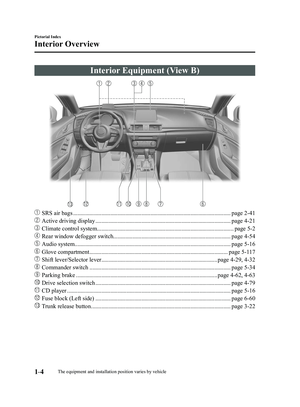
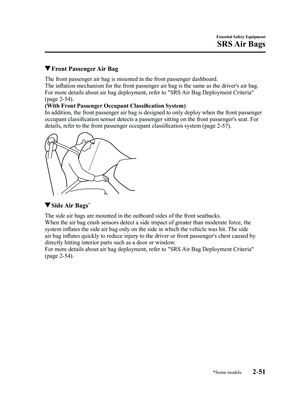
The front passenger air bag is mounted in the front passenger dashboard.\
The inflation mechanism for the front passenger air bag is the same as the driver's air bag.
For more details about air bag deployment, refer to "SRS Air Bag Deployment Criteria"
(page
2-54).
(With Front Passenger Occupant Classification System)
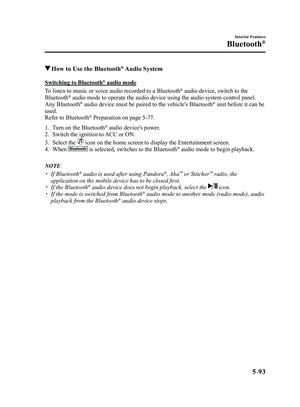
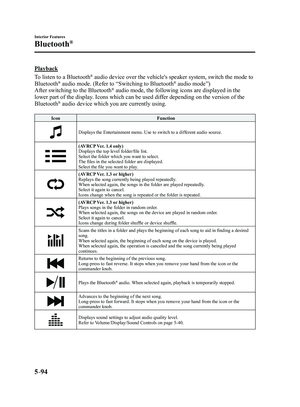
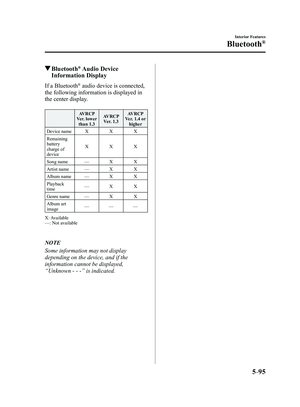
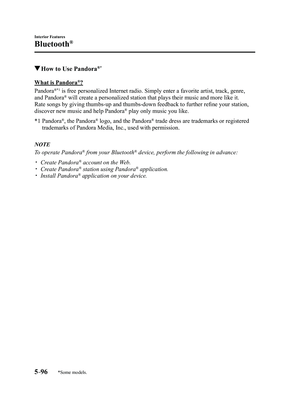
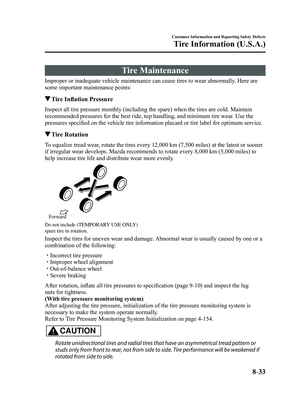
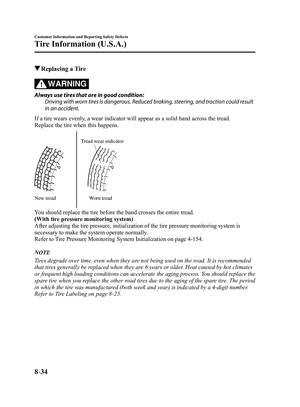
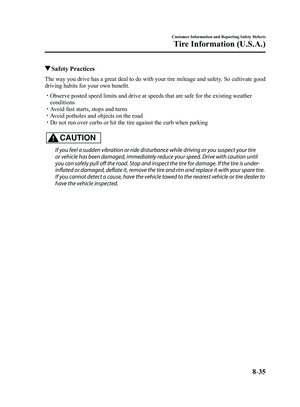
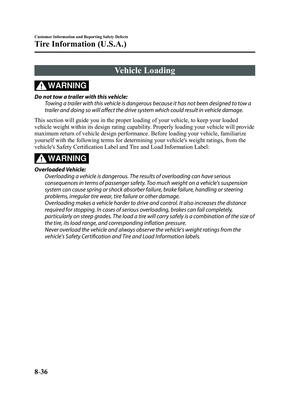
In addition, the front passenger air bag is designed to only deploy when\
the front passenger
occupant classification sensor detects a passenger sitting on the front passenger's seat. For
details, refer to the front passenger occupant classification system (page
2-57).
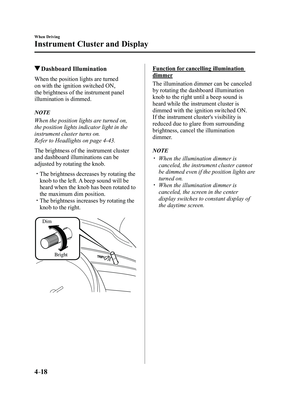
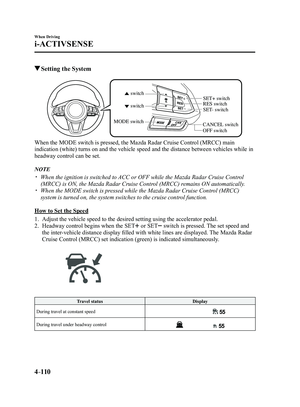
Side Air Bags*
The side air bags are mounted in the outboard sides of the front seatbac\
ks.
When the air bag crash sensors detect a side impact of greater than mode\
rate force, the
system inflates the side air bag only on the side in which the vehicle was hit. The side
air bag inflates quickly to reduce injury to the driver or front passenger's chest caused by
directly hitting interior parts such as a door or window.
For more details about air bag deployment, refer to "SRS Air Bag Deployment Criteria"
(page
2-54).
Mazda3_8FL6-EA-16F_Edition2.indb 512016/08/10 17:35:09
Page 66 of 612

2–52
Essential Safety Equipment
SRS Air Bags
*Some models.
(With Front Passenger Occupant Classification System)
In addition, the front passenger side bag is designed to only deploy whe\
n the front passenger
occupant classification sensor detects a passenger sitting on the front passenger's seat. For
details, refer to the front passenger occupant classification system (page
2-57).
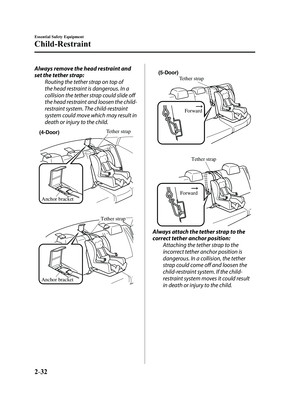
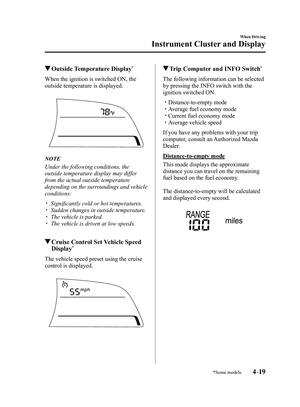
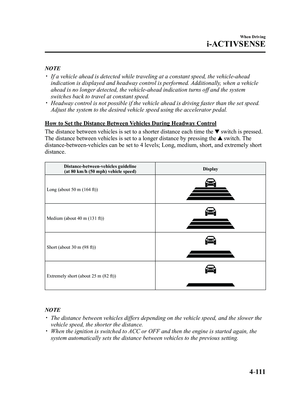
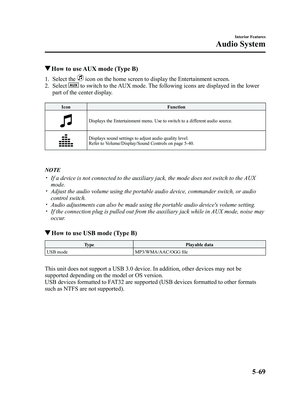
Curtain Air Bags*
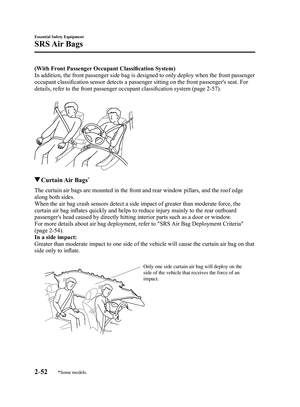
The curtain air bags are mounted in the front and rear window pillars, a\
nd the roof edge
along both sides.
When the air bag crash sensors detect a side impact of greater than mode\
rate force, the
curtain air bag inflates quickly and helps to reduce injury mainly to the rear outboard
passenger's head caused by directly hitting interior parts such as a doo\
r or window.
For more details about air bag deployment, refer to "SRS Air Bag Deployment Criteria"
(page
2-54).
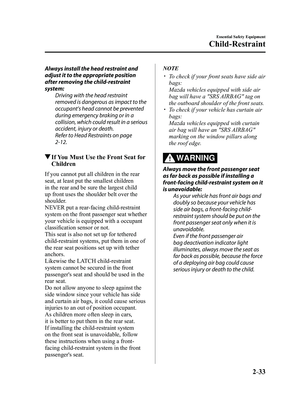
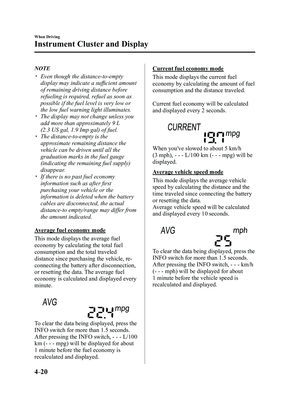
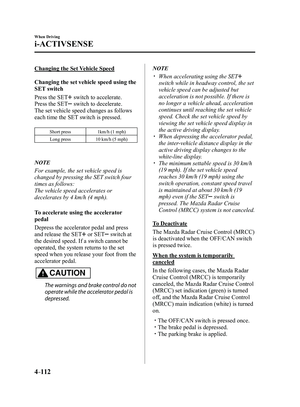
In a side impact:
Greater than moderate impact to one side of the vehicle will cause the curtain air bag on that
side only to inflate.
Only one side curtain air bag will deploy on the
side of the vehicle that receives the force of an
impact.
Mazda3_8FL6-EA-16F_Edition2.indb 522016/08/10 17:35:10
Page 67 of 612
2–53
Essential Safety Equipment
SRS Air Bags
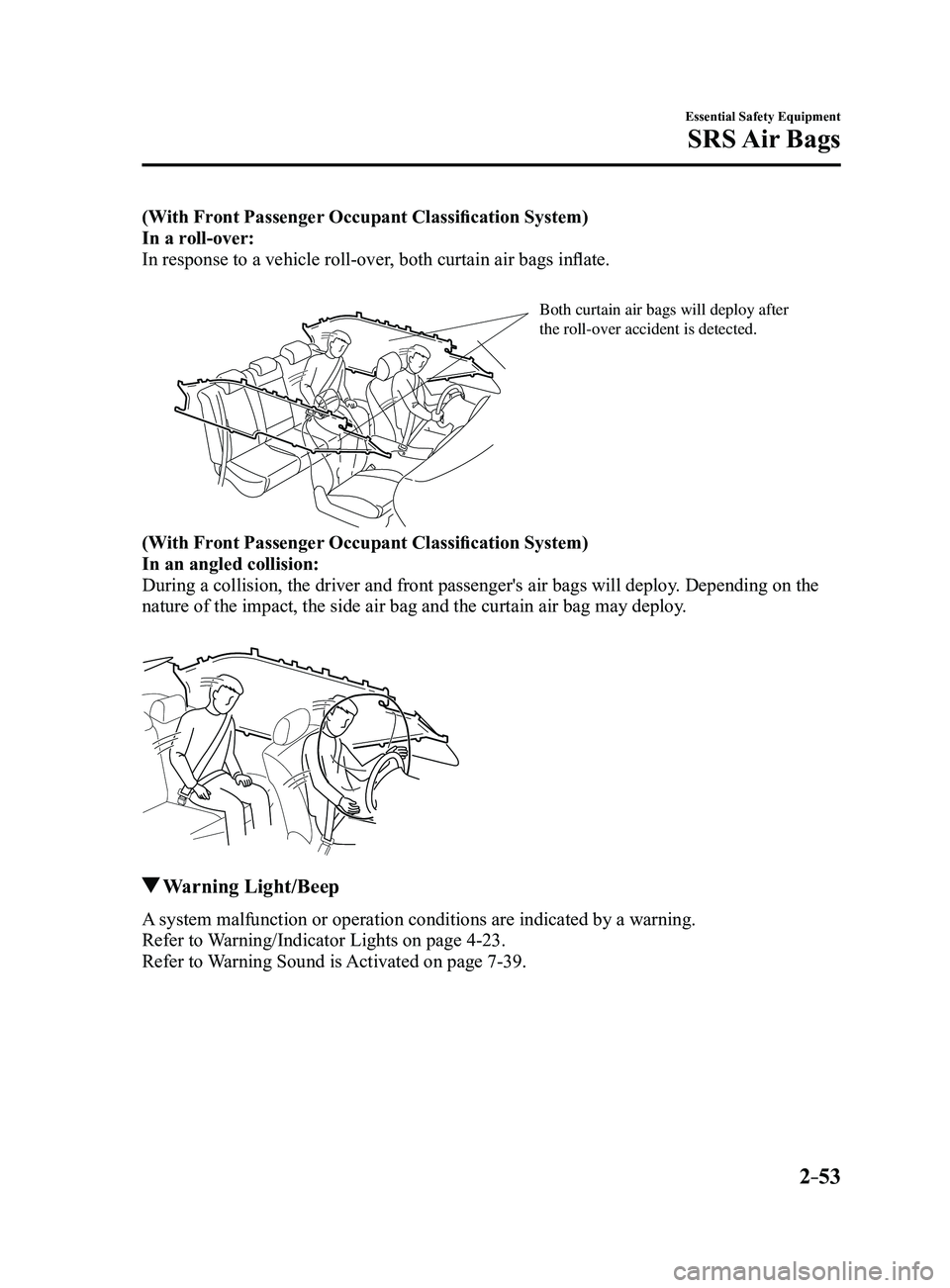
(With Front Passenger Occupant Classification System)
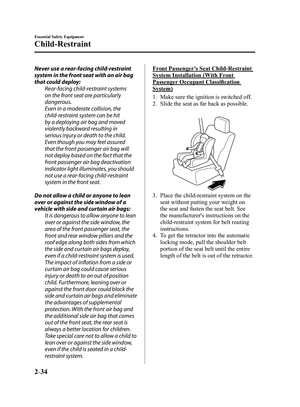
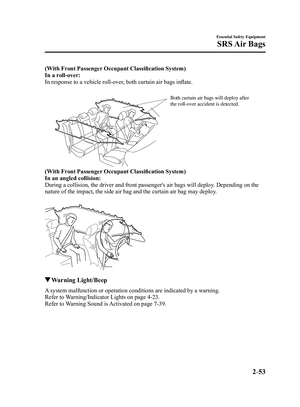
In a roll-over:
In response to a vehicle roll-over, both curtain air bags inflate.
Both curtain air bags will deploy after the roll-over accident is detected.
(With Front Passenger Occupant Classification System)
In an angled collision:
During a collision, the driver and front passenger's air bags will deplo\
y. Depending on the
nature of the impact, the side air bag and the curtain air bag may deplo\
y.
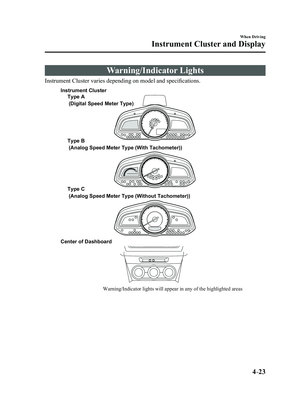
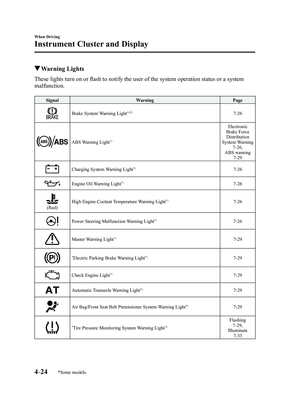
Warning Light/Beep
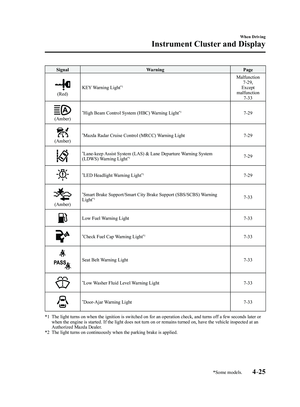
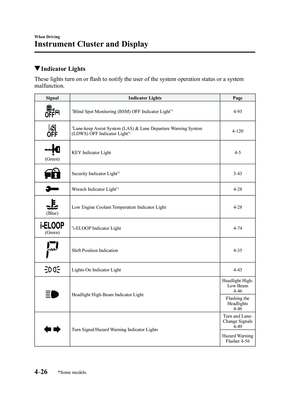
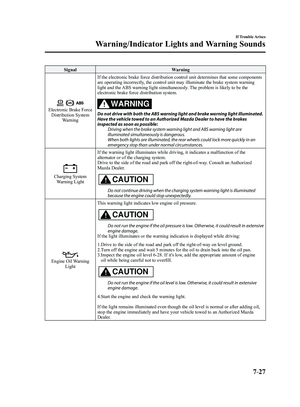
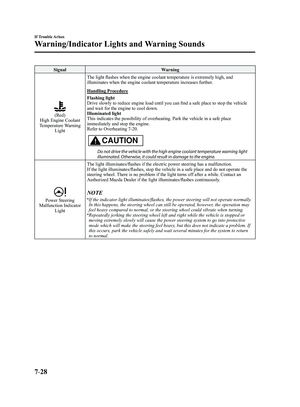
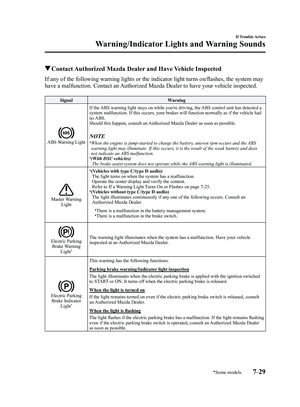
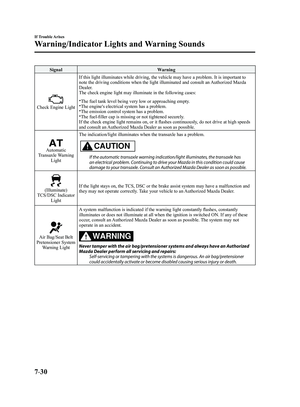
A system malfunction or operation conditions are indicated by a warning.
Refer to Warning/Indicator Lights on page
4-23.
Refer to Warning Sound is Activated on page
7-39.
Mazda3_8FL6-EA-16F_Edition2.indb 532016/08/10 17:35:10
Page 68 of 612

2–54
Essential Safety Equipment
SRS Air Bags
*Some models.
SRS Air Bag Deployment Criteria
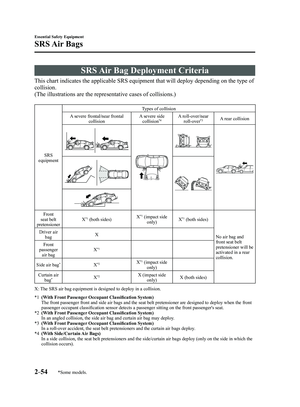
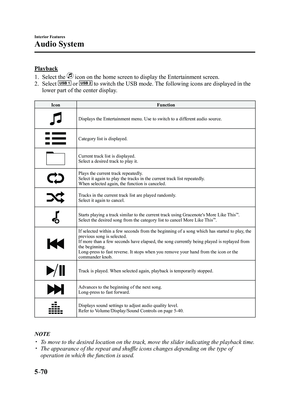
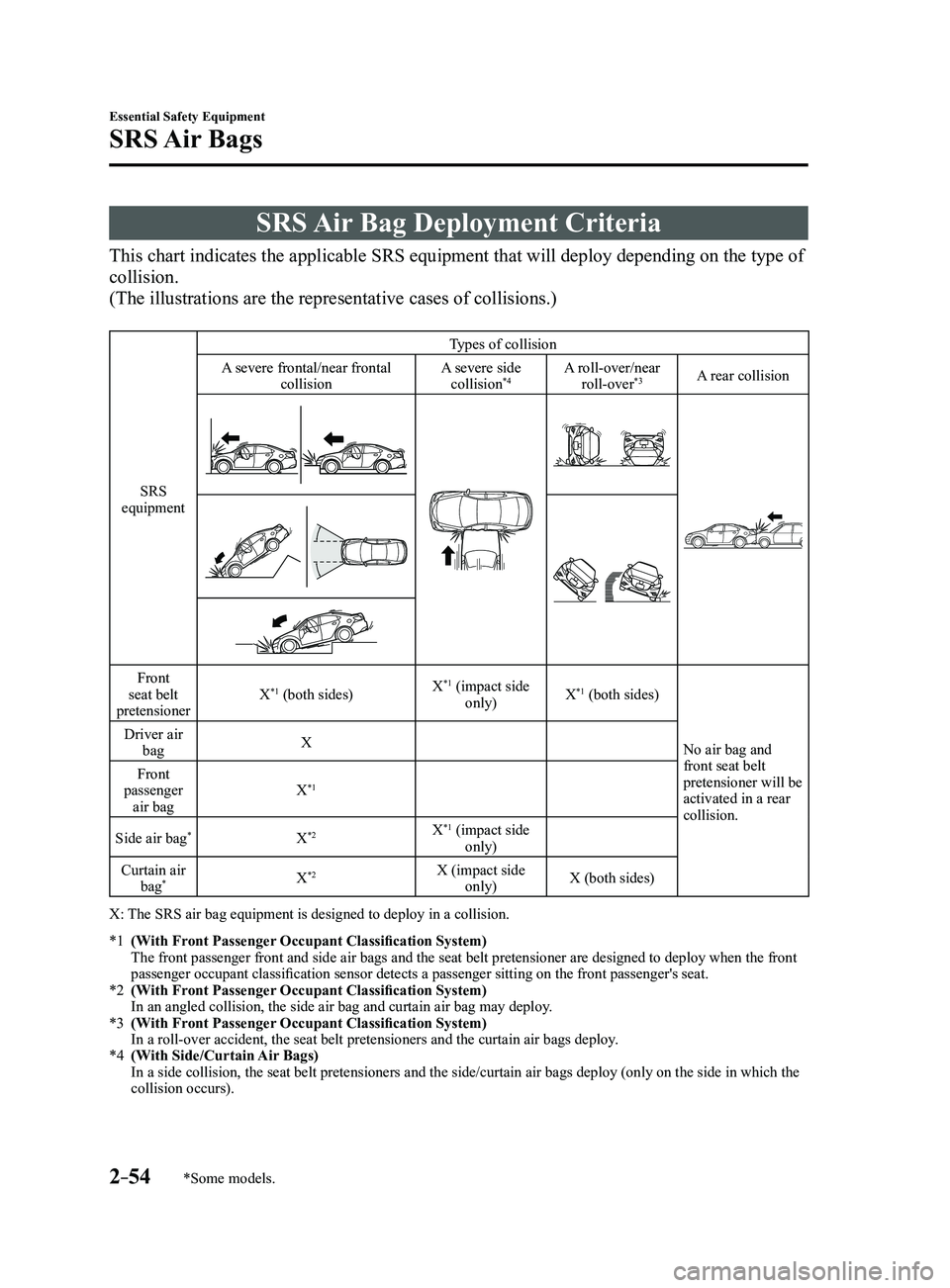
This chart indicates the applicable SRS equipment that will deploy depending on the type of
collision.
(The illustrations are the representative cases of collisions.)
SRS
equipment Types of collision
A severe frontal/near frontal collision A severe side
collision
*4A roll-over/near roll-over*3A rear collision
Front seat belt
pretensioner X*1 (both sides)
X*1 (impact side
only) X*1 (both sides)
No air bag and
front seat belt
pretensioner will be
activated in a rear
collision.
Driver air
bag X
Front
passenger air bag X
*1
Side air bag*X*2X*1 (impact side
only)
Curtain air bag
*X*2X (impact side only) X (both sides)
X: The SRS air bag equipment is designed to deploy in a collision.
*1 (With Front Passenger Occupant Classification System) The front passenger front and side air bags and the seat belt pretension\
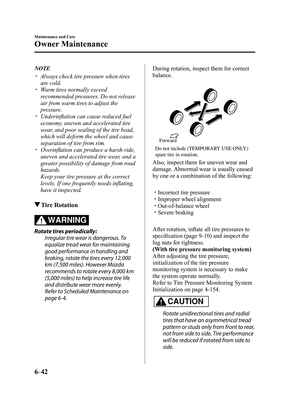
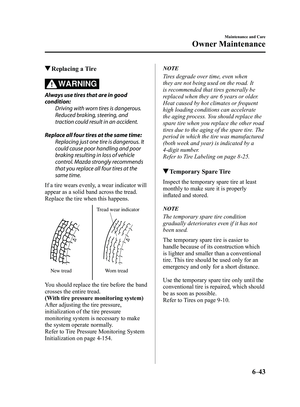
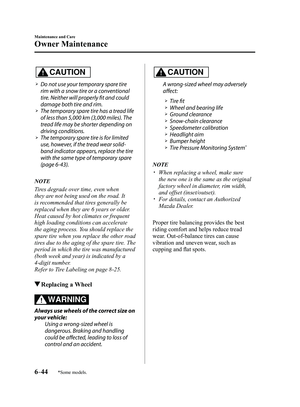
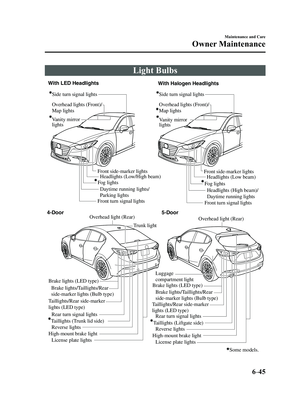
er are designed to deploy when the front passenger occupant classification sensor detects a passenger sitting on the front passenger's seat.*2 (With Front Passenger Occupant Classification System) In an angled collision, the side air bag and curtain air bag may deploy .*3 (With Front Passenger Occupant Classification System) In a roll-over accident, the seat belt pretensioners and the curtain air\
bags deploy .*4 (With Side/Curtain Air Bags) In a side collision, the seat belt pretensioners and the side/curtain ai\
r bags deploy (only on the side in which the collision occurs).
Mazda3_8FL6-EA-16F_Edition2.indb 542016/08/10 17:35:12
Page 69 of 612
2–55
Essential Safety Equipment
SRS Air Bags
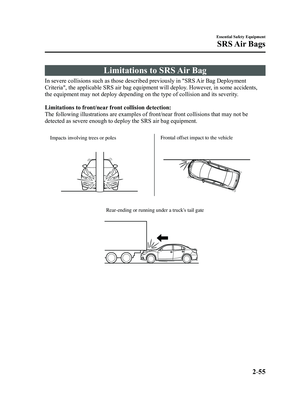
Limitations to SRS Air Bag
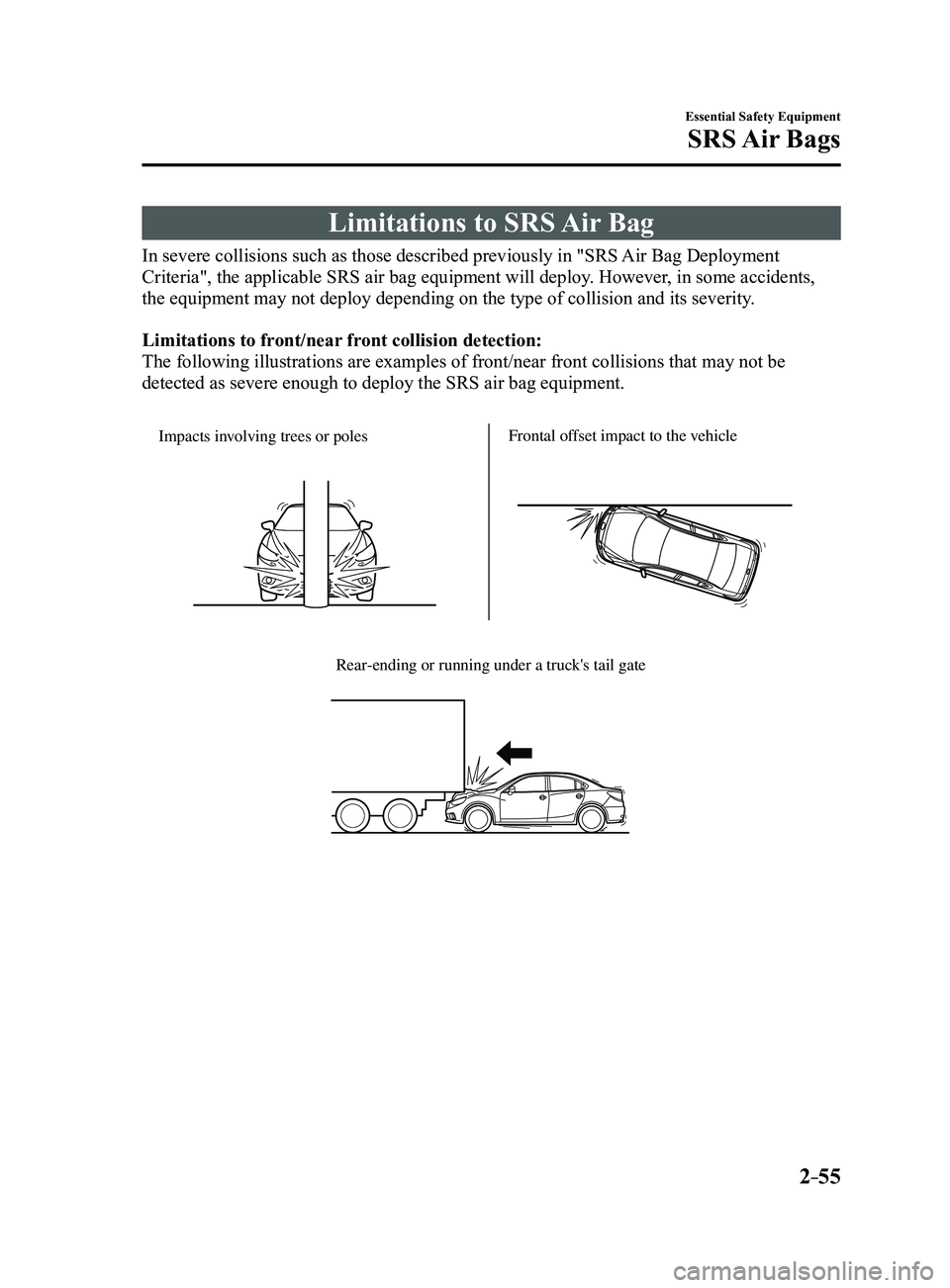
In severe collisions such as those described previously in "SRS Air Bag Deployment
Criteria", the applicable SRS air bag equipment will deploy. However, in some accidents,
the equipment may not deploy depending on the type of collision and its severity.
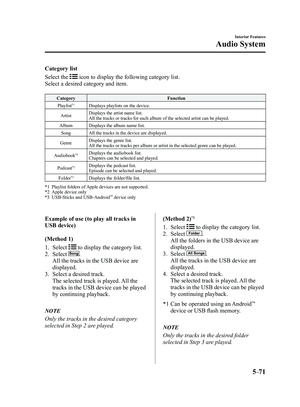
Limitations to front/near front collision detection:
The following illustrations are examples of front/near front collisions \
that may not be
detected as severe enough to deploy the SRS air bag equipment.
Impacts involving trees or polesFrontal offset impact to the vehicle
Rear-ending or running under a truck's tail gate
Mazda3_8FL6-EA-16F_Edition2.indb 552016/08/10 17:35:12
Page 70 of 612
2–56
Essential Safety Equipment
SRS Air Bags
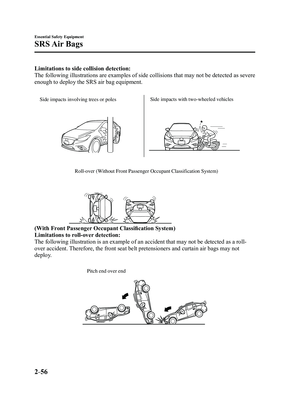
Limitations to side collision detection:
The following illustrations are examples of side collisions that may not\
be detected as severe
enough to deploy the SRS air bag equipment.
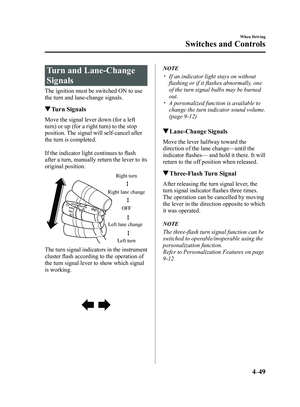
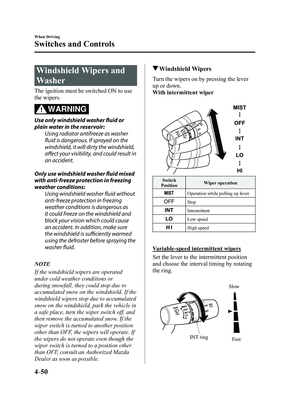
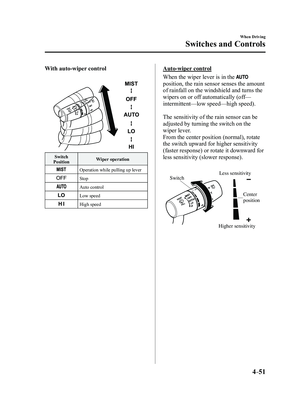
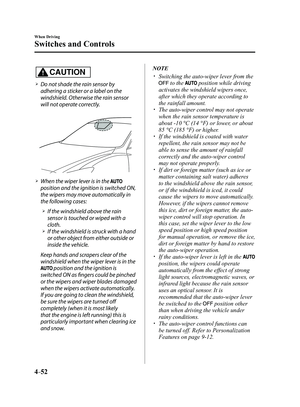
Side impacts involving trees or polesSide impacts with two-wheeled vehicles
Roll-over (Without Front Passenger Occupant Classification System)
(With Front Passenger Occupant Classification System)
Limitations to roll-over detection:
The following illustration is an example of an accident that may not be \
detected as a roll-
over accident. Therefore, the front seat belt pretensioners and curtain air bags may no\
t
deploy.
Pitch end over end
Mazda3_8FL6-EA-16F_Edition2.indb 562016/08/10 17:35:13
Page 71 of 612

2–57
Essential Safety Equipment
SRS Air Bags
*Some models.
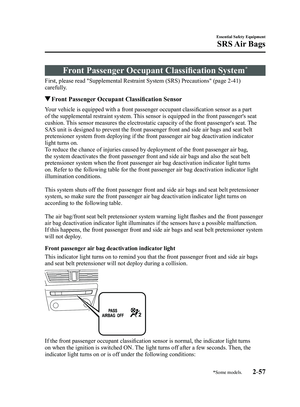
Front Passenger Occupant Classification System*
First, please read "Supplemental Restraint System (SRS) Precautions" (page 2-41)
carefully.
Front Passenger Occupant Classification Sensor
Your vehicle is equipped with a front passenger occupant classification sensor as a part
of the supplemental restraint system. This sensor is equipped in the front passenger's seat
cushion. This sensor measures the electrostatic capacity of the front passenger's\
seat. The
SAS unit is designed to prevent the front passenger front and side air b\
ags and seat belt
pretensioner system from deploying if the front passenger air bag deacti\
vation indicator
light turns on.
To reduce the chance of injuries caused by deployment of the front passen\
ger air bag,
the system deactivates the front passenger front and side air bags and a\
lso the seat belt
pretensioner system when the front passenger air bag deactivation indica\
tor light turns
on. Refer to the following table for the front passenger air bag deactivation indicator light
illumination conditions.
This system shuts off the front passenger front and side air bags and seat belt pretensioner\
system, so make sure the front passenger air bag deactivation indicator \
light turns on
according to the following table.
The air bag/front seat belt pretensioner system warning light flashes and the front passenger
air bag deactivation indicator light illuminates if the sensors have a p\
ossible malfunction.
If this happens, the front passenger front and side air bags and seat be\
lt pretensioner system
will not deploy.
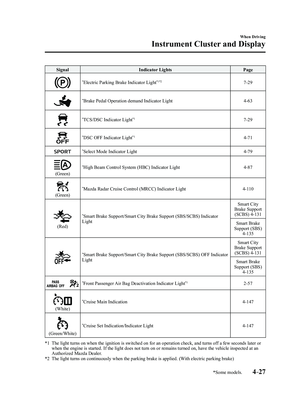
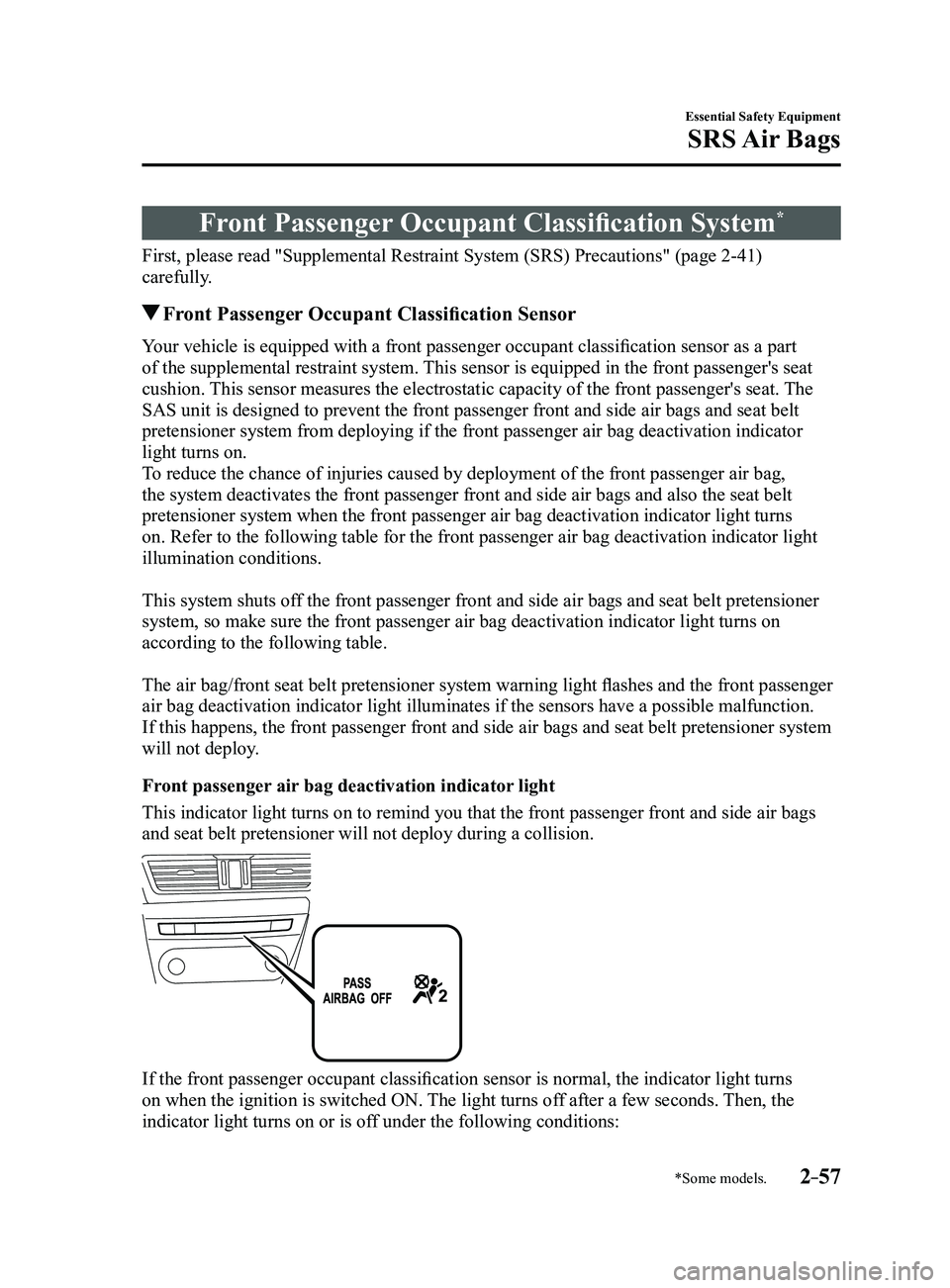
Front passenger air bag deactivation indicator light
This indicator light turns on to remind you that the front passenger fro\
nt and side air bags
and seat belt pretensioner will not deploy during a collision.
If the front passenger occupant classification sensor is normal, the indicator light turns
on when the ignition is switched ON. The light turns off after a few seconds. Then, the
indicator light turns on or is off under the following conditions:
Mazda3_8FL6-EA-16F_Edition2.indb 572016/08/10 17:35:13
Page 72 of 612

2–58
Essential Safety Equipment
SRS Air Bags
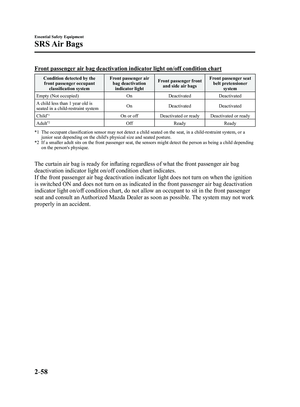
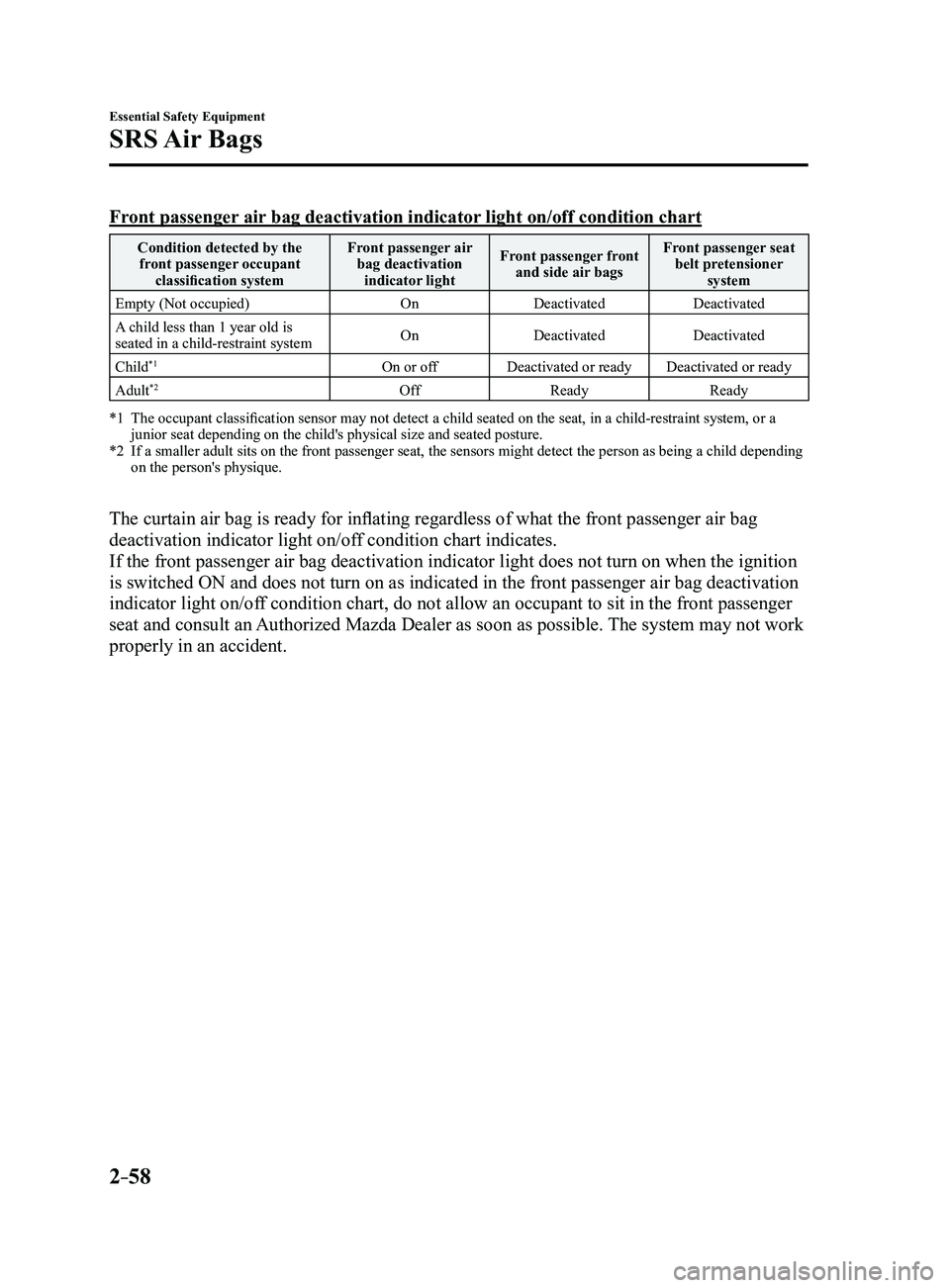
Front passenger air bag deactivation indicator light on/off condition chart
Condition detected by the front passenger occupant classification system Front passenger air
bag deactivation indicator light Front passenger front
and side air bags Front passenger seat
belt pretensioner system
Empty (Not occupied) OnDeactivated Deactivated
A child less than 1 year old is
seated in a child-restraint system On
Deactivated Deactivated
Child
*1On or off Deactivated or ready Deactivated or ready
Adult*2Off Ready Ready
*1 The occupant classification sensor may not detect a child seated on the seat, in a child-restraint system, or a junior seat depending on the child's physical size and seated posture.*2 If a smaller adult sits on the front passenger seat, the sensors might d\
etect the person as being a child depending on the person's physique.
The curtain air bag is ready for inflating regardless of what the front passenger air bag
deactivation indicator light on/off condition chart indicates.
If the front passenger air bag deactivation indicator light does not tur\
n on when the ignition
is switched ON and does not turn on as indicated in the front passenger air bag deactivation
indicator light on/off condition chart, do not allow an occupant to sit in the front passenge\
r
seat and consult an Authorized Mazda Dealer as soon as possible. The system may not work
properly in an accident.
Mazda3_8FL6-EA-16F_Edition2.indb 582016/08/10 17:35:14