2017 AUDI A7 roof rack
[x] Cancel search: roof rackPage 57 of 284
co
co
.... N
" N .... 0
00
<.,;) 'SI'
-Do not hang heavy objects on the coat
hooks, as they could cause personal injury in
a sudden stop.
(D Note
Objects on the rear shelf that rub against the
rear w indow can damage the rear window
heating wires.
Roof rack
App lies to: ve hicles with roof rac k
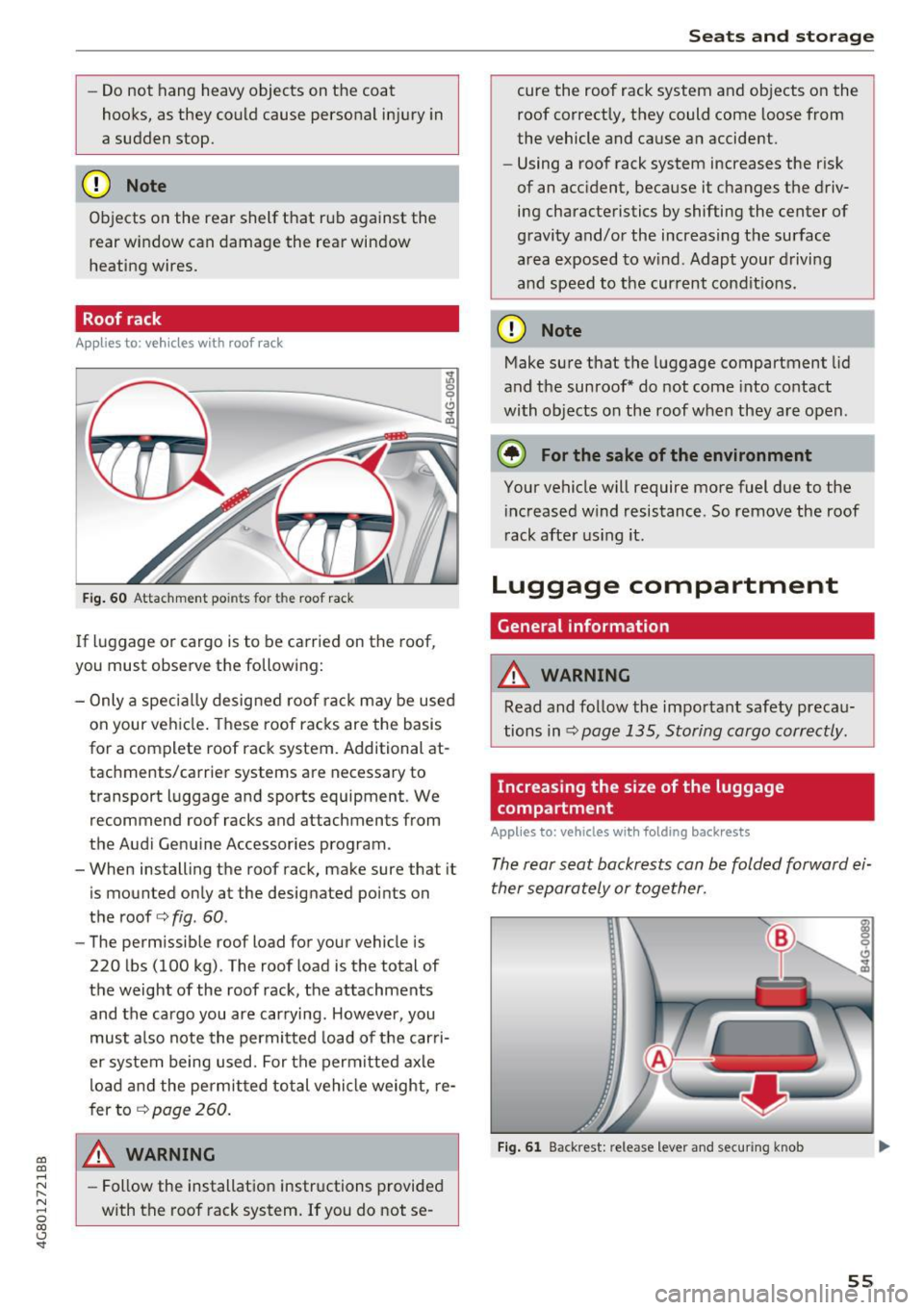
Fig. 60 Attac hm ent po int s for t he roof rack
If luggage or cargo is to be carried on the roof,
you must observe the following: :,;
0
0
Cl
"' a,
-
Only a special ly desig ned roof ra ck may be used
on your ve hicle . These roof rac ks are the basis
for a complete roof rack system. Additional at
tachm ents/carrier systems are necessary to
transport luggage and sports equipment . We
recommend roof racks and attachments from
the Audi Ge nuine Accessor ies program .
- When installing the roof rack, make sure that it
i s mounted only at the designated points on
the roof
c> fig . 60 .
- The permissib le roof load for your vehicle is
220 l bs (100 kg) . The roof load is the total of
the weight of the roof rack, the attachments and the cargo you are carrying . However, you
must a lso note the permit ted load of the car ri
er system being used. For the perm itted axle
l oad and the permit ted total vehicle weight , re
f er to
c> page 260.
A WARNING
- Follow the installation instructions provided
with the roof rack system. If you do not se-
Seats and storag e
cure the roof rack system and objects o n the
roof correct ly, t hey could come loose from
the vehicle and cause an accident.
- Using a roof rack system increases the r isk
of an accident , because it changes the driv
ing characte ristics by shifting the center of
gravity and/o r the increas ing t he surface
area exposed to w ind . Adapt your drivi ng
an d speed to the cur rent con ditions .
(D Note
Make sure t hat the luggage compartment lid
and t he sunroof* do not come into contact
with ob jects on the roof when they are open .
@ For the sake of the environment
Your vehicle will require more fuel due to the
increased w ind resis tance . So remove the roof
r ack afte r using it.
Luggage compartment
General information
A WARNING
-Read and follow the important safety preca u-
tions in ¢
pag e 135, Storing cargo correctly .
Increasing the size of the luggage
compartment
Applies to: vehicles with folding backrests
The re ar seat backrests can b e folded forward ei
ther separately or toge ther.
Fi g. 61 Backr est: re lease leve r and se cur ing knob
55
Page 69 of 284

co
co
.... N
" N .... 0
00
<.,;) 'SI"
lead to greater tire wear and will affect driving
behav ior.
Do not drive on
winter tires year-round , as this
will consume up to 10% more fuel.
Eliminate unnecessary weight
Since every kilogram of extra weight increases
fuel consumption, a quick inspection of the lug
gage compartment may be worth it to avoid un
necessary weight.
When not being used, a roof rack should be re moved to decrease the wind resistance of the ve
hicle. You will save approximately 12% of your
fuel when at speeds from 62-75 mph (100-120 km/h).
Save energy
The engine drives the generator, which generates
electricity; the fuel consumption also increases
with the demand for electricity. Therefore, switch
electrical equipment off when you no longer
need it. Examples of equipment that uses a lot of
energy are air blowers at a high setting, the rear
window defogger and seat heating*.
CD Note
Do not leave engine idling unattended after
starting. If warning lights should come on to
indicate improper operation, they would go
unheeded. Extended idling also produces
heat, which could result in overheating or
other damage to the vehicle or other proper
ty .
CD Note
-Have your vehicle maintained properly and
in accordance with the service recommenda
tions in your Warranty
& Maintenance book
let. Lack of proper maintenance as well as
improper use of the vehicle will impair the
function of the emission control system and
could lead to damage .
- Do not alter or remove any component of
the Emission Control System unless ap
proved by the manufacturer.
- Do not alter or remove any device, such as
heat shields, switches, ignition wires,
Driving
valves , which are designed to protect your
vehicle's Emission Control System and other
important vehicle components.
(D Tips
The consumption estimates as published by
ENVIRONMENTAL PROTECTION AGENCY
(EPA) and Transport Canada may not corre
spond to your actual consumption on the
road, which will vary depending upon vehicle
load and speed, road and weather conditions,
trip length, etc .
Steering
Manual steering wheel position adjustment
Applies to: vehicles with manual steering wheel adjustment
The steering wheel position is adjustable up and
down and forward and back.
Fig. 74 L eve r o n t he stee ring col umn
"'Pull the lever in the direction of the arrow
Q &_ .
"' Bring the steering wheel into the desired posi
tion.
"' Push the lever against the steering column un
til it is secure.
_& WARNING
~ -
Improper use of steering wheel adjustment
and improper seating position can cause seri
ous personal injury.
-Adjust the steering wheel column only when the vehicle is not moving to prevent loss of
vehicle control.
- Adjust the driver's seat or steering wheel so
that there is a minimum of 10 in (25 cm) between your chest and the steering wheel
II>
67
Page 157 of 284

co
co
,..,
N
" N ,..,
0
00
\.J '
heed all of the WARNINGS.
A WARNING
To reduce the risk of injury when an a irbag in
flates, always wear safety belts properly.
- If you are unrestrained, leaning forward, sit ting s ideways or out of position in any way,
your risk of injury is much h igher.
- You will also receive serious injur ies and
cou ld even be killed if you are up aga inst the
airbag or too close to it when it inflates -
even with an Advanced Airbag
r::;, page 148 .
A WARNING
A child in a rearward-facing chi ld seat insta l
led on the front passenger seat will be ser i
ously inju red and can be ki lled if the front air
bag inflates - even with an Advanced Airbag
System.
- Although the Advanced A irbag System in
yo ur vehicle is designed to t urn off the front
airbag when a rearward -facing child re
straint has been insta lled on the front pas
senger seat, nobody can absolutely g uaran
tee that deployment is impossible in a ll con
ceivable s ituations that may happen during
the useful life of you r vehicle.
- The inflating a irbag w ill hit the child seat or
infant carrier w ith great force and will
smash the ch ild seat and child against the
backrest, ce nter armrest , door, or roof.
- Always install rearward-fac ing child re
straints on the rear seat.
- If you must install a rearward facing ch ild
seat on the front passenger seat because of
exceptiona l circumstances and the
PASSEN
GER AIR BAG OFF
light does not come on
and stay on, immediately insta ll the rear
f acing child seat in a re ar seat ing position
and have the airbag system inspected by
yo ur Audi dealer .
Airbag sys tem
A WARNING
If, in exceptional c ircumstances, you must in
stall a forward-facing child restraint on the
front passenger's seat:
- Always make sure the forward-facing seat
has bee n des igned and certified by its man
ufacture r for use on a fro nt seat with a pas
senger front and side airbag.
- Never p ut the forward-facing child restra int
up aga inst or very nea r the instr ument pan
el.
- Always move the front passenger seat to
the highest posit io n in the up and down ad
justment range and move it back to the
rearmost posit ion in the seat's fo re and aft
adj ustment range, as far away from the a ir
bag as possible, before install ing the for
ward-facing ch ild restraint.
- Always make sure that the safety be lt upper
anchorage is behind the c hild restraint and
not next to or in front of the child restraint
so that the safety be lt will be p roperly posi
tioned.
-Always make sure that there is noth ing on
the front passenge r seat that will cause the
capacitive passenge r detection system in
the seat to signal to the Airbag System that
the seat is occup ied by a person when it is
not, or to signal that it is occupied by some
one w ho is heavier than the person actually
sitt ing on the sea t. The presen ce of addi
tional ob jects could cause the passenger
front ai rbag to be turned on when it should
be off, or cou ld cause the ai rbag to work in a
way that is d ifferent from the way it wou ld
have wo rked without the object on the seat.
- Make sure that the
PASSENGER AIR BAG
OFF
li ght comes on and stays on all the time
whenever the ignit ion is switched on.
Advanced Airbag System components
The front passenger seat in your veh icle has a lot
of very important parts of t he Advanced Airbag
System in it . These parts include the capacitive
passenge r detection system, wir ing, b rackets,
and more. The contro l unit moni to rs the system
on the fro nt passenge r seat when the igni tion is ..,.
155
Page 161 of 284

co
co
.... N
" N .... 0
00
\.J '
A child in a rearward-facing child seat instal
led on the front passenger seat will be seri
ously injured and can be killed if the front air
bag inflates - even with an Advanced Airbag
System .
- The inflating airbag will hit the child seat or
infant carrier with great force and will
smash the child seat and child against the backrest , center armrest, door or roof.
- Always install rear-facing child seats on the
rear seat.
- If you must install a rearward facing child
seat on the front passenger seat because of
exceptional circumstances and the
PASSEN
GER AIR BAG OFF
light does not come on
and stay on, immediately install the rear
facing child seat in a rear seating position and have the a irbag system inspected by
your Audi dealer.
A WARNING
Objects between you and the airbag will in
crease the risk of injury in a crash by interfer
ing with the way the airbag unfolds or by be
ing pushed into you as the airbag inflates .
- Never hold things in your hands or on your
lap when the vehicle is in use .
- Never transport items on or in the area of
the front passenger seat . Objects could
move into the area of the front airbags dur
ing braking or other sudden maneuvers and
become dangerous projectiles that can
cause serious personal injury if the airbags
inflate.
- Never place or attach accessories or other
objects (such as cup holders, telephone
brackets , large, heavy or bulky objects) on
the doors, over or near the area marked "AIRBAG" on the steering wheel, instru
ment panel, seat backrests or between
those areas and yourself . These objects
could cause injury in a crash, especially
when the airbags inflate .
- Never recline the front passenger 's seat to
transport objects . Items can also move into
the area of the side airbag or the front air-
-
Airbag system
bag during braking or in a sudden maneu
ver. Objects near the airbags can become
projectiles and cause injury, particularly
when the seat is reclined.
- Never place or transport objects on the
front passenger seat. Objects on the front
passenger seat could cause the capacitive
sensor in the seat to signal to airbag system
that the seat is occupied by a person when it
in fact is not, or that the person on the seat
is heavier than he or she actually is . The
change in electric capacitance because of
such objects can cause the passenger front
airbag to be turned on when it should be
off, or can cause the airbag to work in a way
that is different from the way it would have
worked without objects on the seat.
- Always make sure that there is nothing on
the front passenger seat that will cause the
capacitive passenger detection system in
the seat to signal to the Airbag System that
the seat is occupied by a person when it is
not , or to signal that it is occupied by some
one who is heavier than the person actually
sitting on the seat. The presence of an ob
ject could cause the passenger front airbag to be turned on when it should be off, or
could cause the airbag to work in a way that is different from the way it would have
worked without the object on the seat.
A WARNING
-The fine dust created when airbags deploy can
cause breathing problems for people with a history of asthma or other breathing condi
tions .
- To reduce the risk of breathing problems,
those with asthma or other respiratory con
ditions should get fresh air right away by
getting out of the vehicle or opening win
dows or doors.
- If you are in a collision in which airbags de
ploy, wash your hands and face with mild
soap and water before eating.
- Be careful not to get the dust into your eyes,
or into any cuts or scratches.
- If the residue should get into your eyes,
flush them with water .
159
Page 217 of 284

a,
a,
..... N r-. N ..... 0 a, OJ ..
Maximum (permissible )
inflat ion pressure
means the maximum cold infla
tion pressure to wh ich a t ire may
be inflated. Also called "maxi
mum inflation pressure ."
Normal occupant weight
means 150 lbs . (68 kilograms)
times the number of occupants
seated in the veh icle up to the to
tal seating capacity of your vehi
c le .
Occupant distribution
means distribution of occupants
in a vehicle.
Oute r diameter
means the overall diameter of an
inflated new tire .
Overall width
means the linear distance be
tween the exteriors of the side
walls of an inflated tire, including
elevations due to labeling, deco
rations, or protective bands or
ribs.
Ply
means a layer of rubber-coated
parallel cords.
Wheels
Production options weight
means the combined weight of
those installed regular production
options weighing over 5 lbs. (2.3
kg) in excess of those standard
items which they replace, not pre
viously considered in curb weight
or accessory weight, including
heavy duty brakes, ride levelers,
roof rack, heavy duty battery, and
special trim .
Radial ply tire
means a pneumatic tire in which
the ply cords that extend to the
beads are laid at substantially 90
degrees to the centerline of the
tread.
Recommended inflation
pressure
see ¢ page 214, Cold tire infla
tion pressure.
Reinforced tire
means a tire designed to operate
at higher loads and at higher in
flation pressures than the corre
sponding standard tire. Rein
forced tires may be identified as
"X L", "xl", "EXTRA LOAD", or "RF"
on the sidewall. ..,
215
Page 253 of 284

co
co
.... N
" N .... 0
00
<.,;) 'SI"
Driver side cockpit fuse
assignment
Fig. 2 11 Driver side cockp it: fuse panel wit h plastic bracket
Fuse panel @ (black)
No . Equipment
Electromecha nica l powe r steering, trailer
1 hitch, ionizer, switch st
rip, seat heating
(rear), electromechan ica l park ing brake
Ho rn, climate con trol system, Gateway,
2 automati
c dimm ing in ter ior rearv iew m ir-
ro r, On -Board Un it
4 Park ing aid, headlight ra nge adjustment
5
Dynamic steering, E lectron ic Stabilization
Control (ESC)
6 Headlights
7 Adapt ive cruise control
8 Front passenger's seat senso rs, a irbag
9 Gateway
10 Engine sound, night vision ass
ist, garage
door opene r (H ome link), parki ng aid
11 Video camera image processing
1 2 Headlights
13 Steering column sw
itch module
Fuses
Fuse panel @ (black)
14 Termina l 15 (luggage compartment)
15 S tarte r
Fuse panel @ (brown)
No . Equipment
1 Infotainment system
2 Infotainment system
3 Front passenger's seat
5
A
irbag, Elect ronic S tabilization Con trol
( E SC)
6 Ant
i-theft alarm system
7 Electromec hanical pa rking brake
8 Inter io r li ghts
9
Windshie ld video came ra heating, light/
rain sensor
10 Lumbar support (dr iver's seat)
11 Driver
's seat
12 Electronic st abilization con trol
13 Horn
1 4 Head lights
15 Front seat heating
16 Dynam ic steering
Fuse panel © (red)
No . Equipment
1 Clutch peda l
2 Fuel p ump
3 Brake
light sensor
4 AdB lue (diese l engine)/engine aco ustics
5 Rear door
6 Fr
ont door
7 Electronic stab ilization control
8 Windshie ld w iper motor
9 Head light washer system
10 Interio
r lighting, climate control system
1 1 Head lights
12 Sunroof
251
Page 274 of 284

Index
Electronic differential lock
Indicator light . . . . . . . . . . . . . . . . . . . . . . . 16
Electronic D ifferent ial Lock . . . . . . . . . . . . . 120
Electronic immobilizer . . . . . . . . . . . . . . . . . . 28
Electronic speed limiter . . . . . . . . . . . . . . . . . 26
Electronic stabilization control Indicator light . . . . . . . . . . . . . . . . . . . . . . . 16
Electronic Stabilization Control . . . . . . . . . . 120
Sport mode . . . . . . . . . . . . . . . . . . . . . . . . 121
Emergency assistance . . . . . . . . . . . . . . . . . 240
Emergency braking function . . . . . . . . . . . . . 74
E mergency flashers . . . . . . . . . . . . . . . . . . . . 42
Emergency locking the front passenger door 32
E mergency operation
Doors . . . . . . . . . . . . . . . . . . . . . . . . . . . . . . 32
Luggage compartment lid . . . . . . . . . . . . . . 3S
Selector lever . . . . . . . . . . . . . . . . . . . . . . . . 81
Sunroof. . . . . . . . . . . . . . . . . . . . . . . . . . . . . 38
Emergency release
Fuel filler door . . . . . . . . . . . . . . . . . . . . . . 195
Emergency starting 254
Energy management . . . . . . . . . . . . . . . . . . 126
I ndicator light . . . . . . . . . . . . . . . . . . . . . . . 14
Engi ne
Coolant . . . . . . . . . . . . . . . . . . . . . . . . . . . . 205
Prewarming . . . . . . . . . . . . . . . . . . . . . . . . . 69
Start-Stop system . . . . . . . . . . . . . . . . . . . . 71
Starting . . . . . . . . . . . . . . . . . . . . . . . . . . . . 69
Starting with jumper cables . . . . . . . . . . . 254
Stopping . . . . . . . . . . . . . . . . . . . . . . . . . . . . 70
Warming up/cooling down . . . . . . . . . . . . . 65
Engine compartment
Opening/closing the hood . . . . . . . . . . . . . 201
Overview . . . . . . . . . . . . . . . . . . . . . . . . . . . 202
Safety precautions . . . . . . . . . . . . . . . . . . . 199
Engine control (indicator light) . . . . . . . . . . . 17
Engine oil . . . . . . . . . . . . . . . . . . . . . . . . . . . 202
Adding . . . . . . . . . . . . . . . . . . . . . . . . . . . . 204
Changing . . . . . . . . . . . . . . . . . . . . . . . . . . 205
Checking the engine oil level . . . . . . . . . . . 204
Fue l consumption . . . . . . . . . . . . . . . . . . . 204
Indicator light . . . . . . . . . . . . . . . . . . . . . . . 15
O il consumption . . . . . . . . . . . . . . . . . . . . . 203
Specification and viscosity . . . . . . . . . . . . . 202
Temperature indicator . . . . . . . . . . . . . . . . . 87
Engine sound . . . . . . . . . . . . . . . . . . . . . . . . 105
Engine speed limitat ion (indicator light) . . . 18
272
Engine Start/Stop mode
refer to Start/Stop system . . . . . . . . . . . . . 73
Engine warm-up request
Ind icator light . . . . . . . . . . . . . . . . . . . . . . . 18
Environment Catalytic converter . . . . . . . . . . . . . . . . . . . 198
Diesel particulate filter . . . . . . . . . . . . . . . 199
Proper d isposa l of drained engine oil . . . . 205
Unleaded fuel.. .. .. .. .. ........... .. 191
EPC (engine contro l).. .. ............. ... 17
ESC Automatic post-collision braking system .
also refer to Electroni c stabilization con
trol
...............................
ESP
refer to Electronic stabilization control ..
Event Data Recorder (EDR) ............ . 120
120
120
127
Exterior lighting . . . . . . . . . . . . . . . . . . . . . . . 40
Exterior mirrors
Adjusting . . . . . . . . . . . . . . . . . . . . . . . . . . . 44
D ' . 1mming ........ .. .. ................ 44
Heating...... ... .. .. ................ 44
Exterior temperature display . . . . . . . . . . . . . 21
F
Fastening
Booster seats . . . . . . . . . . . . . . . . . . . . . . . 182
Convertible child safety seats . . . . . . . . . . 180
Infant seats . . . . . . . . . . . . . . . . . . . . . . . . 178
Floor mats . . . . . . . . . . . . . . . . . . . . . . . . . . . 134
Folding the rear seats . . . . . . . . . . . . . . . . . . . 55
Foot pedals . . . . . . . . . . . . . . . . . . . . . . . . . . 134
For the sake of the environment
E nvironmentally -friendly driving . . . . . . . . 66
Fueling . . . . . . . . . . . . . . . . . . . . . . . . . . . . 193
Leaks . . . . . . . . . . . . . . . . . . . . . . . . . . . . . . 200
Roof rack . .. .. .. .. .. ... .......... ... 55
Warming up the engine . . . . . . . . . . . . . . . . 69
Freeze protection
Coolant additive . . . . . . . . . . . . . . . . . . . . . 205
Front airbags Description . . . . . . . . . . . . . . . . . . . . . . . . . 152
How they work . . . . . . . . . . . . . . . . . . . . . . 158
Frontal collisions and the laws of physics . . 141
Page 278 of 284

Index
Power windows Child safety lock . . . . . . . . . . . . . . . . . . . . . . 36
Convenience opening . . . . . . . . . . . . . . . . . . 37
Malfunction . . . . . . . . . . . . . . . . . . . . . . . . . 37
Pregnant women
Special considerations when wearing a safe-
ty belt . . . . . . . . . . . . . . . . . . . . . . . . . . . . . 145
Pre sense . . . . . . . . . . . . . . . . . . . . . . . . . . . . 138
Pretensioners Pre sense . . . . . . . . . . . . . . . . . . . . . . . . . . 138
Preventative passenger protection . . . . . . . 138
Prewarming . . . . . . . . . . . . . . . . . . . . . . . . . . 69
Proper occupant seating positions . . . . . . . 130
Proper safety belt position . . . . . . . . . . . . . . 144
Proper seating position Front passenger. ................ ... . 131
Occupants . . . . . . . . . . . . . . . . . . . . . . . . . . 130
Rear passengers . . . . . . . . . . . . . . . . . . . . . 132
Protecting . . . . . . . . . . . . . . . . . . . . . . . . . . . 23 7
Q
quattro (all wheel drive) . . . . . . . . . . . . . . . . 124
Selective wheel torque control . . . . . . . . . 120
Question What happens to unbelted occupants? 141
R
Rail carrier. . . . . . . . . . . . . . . . . . . . . . . . . . . 259
Rain/light sensor Headlights . . . . . . . . . . . . . . . . . . . . . . . . . . 40
Indicator light . . . . . . . . . . . . . . . . . . . . . . . 19
I ntermittent (w indshield wipers) . . . . . . . . 46
Raising the vehicle . . . . . . . . . . . . . . . . . . . . 258
Range (fuel level) . . . . . . . . . . . . . . . . . . . . . . 22
Reading lights . . . . . . . . . . . . . . . . . . . . . . . . . 43
Rear fog lights . . . . . . . . . . . . . . . . . . . . . . . . 40
Rear light
Indicator light . . . . . . . . . . . . . . . . . . . . . . . 19
Rear shelf . . . . . . . . . . . . . . . . . . . . . . . . . . . . 57
Rear spoi ler . . . . . . . . . . . . . . . . . . . . . . . . . . 125
Rearview camera
refer to Parking systems .......... 109, 110
Rearview mirror dimming . . . . . . . . . . . . . . . 44
Rear window defogger (4 -zone deluxe auto
matic climate control) . . . . . . . . . . . . . . . . . . 63
276
Rear window defogger (deluxe automatic cli
mate contro l) . . . . . . . . . . . . . . . . . . . . . . . . . 61
Recirculation mode (4 -zone deluxe automatic
climate control) . . . . . . . . . . . . . . . . . . . . . . . 62
Recirculation mode (deluxe automatic climate
control) . . . . . . . . . . . . . . . . . . . . . . . . . . . . . . 60
Recuperation . . . . . . . . . . . . . . . . . . . . . . . . . 22
Refueling . . . . . . . . . . . . . . . . . . . . . . . . . . . . 193
Fuel filler door emergency release 195
Remote control
refer to Remote control key . . . . . . . . . . . . 28
Remote control key . . . . . . . . . . . . . . . . . . . . 28
LED . . . . . . . . . . . . . . . . . . . . . . . . . . . . . . . . 29
Personalizing . . . . . . . . . . . . . . . . . . . . . . . . 28
Replacing the battery . . . . . . . . . . . . . . . . . 29
Unlocking/locking . . . . . . . . . . . . . . . . . . . . 30
Remote control operation Garage door opener (Homelink) . . . . . . . . . 38
Removing the side trim panel in the luggage
compartment . . . . . . . . . . . . . . . . . . . . . . . . 195
Repair manuals . . . . . . . . . . . . . . . . . . . . . . . 264
Repairs Airbag system . . . . . . . . . . . . . . . . . . . . . . 163
Replacement key . . . . . . . . . . . . . . . . . . . . . . 28
Replacing windshield wiper blades . . . . . . . . 47
Reporting Safety Defects . . . . . . . . . . . 136, 137
Reset button (tr ip odometer) . . . . . . . . . . . . 24
Resetting the trip odometer . . . . . . . . . . . . . 24
Residual heat (4-zone deluxe automatic cli -
mate contro l) . . . . . . . . . . . . . . . . . . . . . . . . . 63
Retractor . . . . . . . . . . . . . . . . . . . . . . . . . . . . 143
Reverse gear (automatic transmission) . . . . . 76
Rims ......... ... .. .. ............... 226
Road carrier . . . . . . . . . . . . . . . . . . . . . . . . . 259
Roof load . . . . . . . . . . . . . . . . . . . . . . . . . . . . . 55
Roof rack . . . . . . . . . . . . . . . . . . . . . . . . . . . . . 55
s
Safe driving habits . . . . . . . . . . . . . . . . . . . . 129
Safety . . . . . . . . . . . . . . . . . . . . . . . . . . . . . . 129
Airbag system . . . . . . . . . . . . . . . . . . . . . . 148
Belts . . . . . . . . . . . . . . . . . . . . . . . . . . . . . . 140
Cargo . . . . . . . . . . . . . . . . . . . . . . . . . . . . . 135
Correct seat ing position . . . . . . . . . . . . . . 130
Pedal area . . . . . . . . . . . . . . . . . . . . . . . . . . 134