2015 AUDI Q7 lights
[x] Cancel search: lightsPage 73 of 350

M
"' 0 ..J
"". rl I.O
"' rl
"' rl
when leaving the car parked close to other
vehicles.
Memory setting for the exterior mirro rs *
When the seat pos ition is saved in the memo
r y, the position of the exte rior mirrors is saved
at t he same time~
page 76.
If the position of the passenger mirror is
changed whe n the vehicle is in reve rse gear
and the switch is i n the ® position, th is new
tilte d position will be a utomat ica lly saved to
the remote key when the vehicle is taken out
of reverse gear. To save, the rotary knob for
mirror ad justment must be in the ® position,
the selector lever must be in the P position
and the ign ition must be off . Th is will now be
come the stored setting when the vehicle is
put in reverse gear again .
Tilting the passenger' s side e xterior
mirror (only with seat memory )
When you move the selector lever into R (Re
ve rse), the mir ror on the front passenger's
door (knob tu rned to @
Q fig. 73) will tilt
slig htly downward. This make is easier for you
to see the curb w hen you are backing in to a
parking space.
The mirro r returns to its in itia l position as
soon as reve rse gear is disengaged and vehicle
speed is above abou t 9 mp h (1 5 km/h). The
mirror a lso retu rns to its initia l position if the
switch is moved to the driver's exterior mirror
© o r the ignit io n is switched off.
(D Note
-Cur ved (i.e. convex) mirr or surfaces in
crease your field of view. Remembe r th at
vehicles or other objects w ill appear
smaller and farther away than when
seen in a flat mirror. If yo u use this mir
ror to est imate distances of following
vehicles when c hanging lanes, you could
estimate incorrectly and cause an acci
dent.
- If the mir ro r hous ing is moved un inten
tiona lly (for exampl e, while park ing your
vehicle), t hen you must first fo ld the mi r- Clear vi
sion 71
ror elect rically . Do not read just the mir
ror housing ma nually . You cou ld damage
the motor which controls the m irror .
-If you wash the vehicle in a n automatic
car wash, you must fold the exter ior mir
rors in to reduce the risk of damage to
the mirrors . Never fold power fo ld ing ex
terior mirrors* by hand. Only fo ld them
in and o ut using the power controls.
(D Tips
If t here sho uld be a ma lf u nction in the
e lectrica l system, you can st ill adjust the
ex ter ior mirrors by press ing the edge of
the m irror.
Dimming the mirrors
Fig . 74 Auto matic dimming rearview mirror*
Manual anti-glare adjustment
.,. Move the small lever ( located on the bottom
edge of the mirror) to the rear .
Automatically dimming mirrors*
.,. To dim the rearview mi rror and both exterio r
m irrors* , pr ess the @ button . Th e d io d e @
turns on. The rearview and exterior mirrors *
dim a utomatically when light shines on
them, for examp le from headlights on ave
hicle to the rear.
A WARNING ...
Elect ro lyte fluid can lea k from aut omatic
d imm ing mirro rs if the glass is b roken .
E lec trolyte fluid can irrit ate sk in, eyes and
res pirato ry sys tem.
Page 124 of 350

122 Adapti ve crui se control
A WARNING
Following ot her vehicles too closely in
creases the risk of a crash and serious per
sonal injury .
- Following other vehicles too closely, par
t icularly at higher speeds increases the
risk of collis ions and serious pe rsonal in
Jury.
- Setting short distances to the traffic
ahead reduces the time and distance
available to br ing you r vehicle to a safe
stop and makes i t even mo re ne cessary
to pay close attention to traffic.
- Always select a speed and distance to
traffic ahead that is safe and appropr iate
under the prevailing traff ic, road, weath
er and Lighting conditions .
- Never re ly on the dis tance control fea
ture of ACC a lone to p reven t rear -end col
lisions. Always be prepared to brake and
take evasive act ion to avoid co llisions
and other acc ident situations.
- Never allow the closing speed between
you and other vehicles to be so h igh that
the adaptive cruise control may not be
able to slow your vehicle safe ly. If clos
ing speed is too high, you must apply the
brakes yourself to reduce the risk of a
rear-end c rash.
- Always select a g reater following dis
tance to the veh icle ahead on wet roads
than o n dry roads.
- Always read and heed the information
and WARNI NGS
9 .&. in Description on
page 115.
(0 Tips
The distance setting is reset to the factory
default
DISTANCE 3 the next time the ig
nition is turned on.
Driver information
Displays in the instrument cluster
Applies to veh icles: w ith adaptive cruise contro l
Depending on the driving situation, driver in
formation is displayed in the instrument clus
ter .
Fig . 1 37 Overv iew ins tr u me nt cluster
@ Speedometer and indica to r Li ght d isp lay
@ Display in the instrument cluster
@ Speedometer and indicato r light
display
Important information concerning vehicle op
eration with adaptive cruise control is shown
i n display a rea @. The desired speed you set is
i ndica ted in the speedome ter (LED lights
aro und t he ed ge).
T he ind icator Lights show whether the system
has detected a vehicle trave ling ahead .
@ Display in the in strument cluster
In display area@ information from the navi
gation system* and th e tr ip computer is dis
played in addition to informat ion about adap
t ive cru ise control.
You can select among the different informa
t io n by repeated brief taps o n the
I RESET I but
ton on the w indshie ld w iper Lever
9 page 25,
Operation .
Certain pieces of information in the bottom
part of the display are not shown permanent
ly . Information is displayed only if you set or
c h ange the speed setting, change the time in
te rva l, when messages are disp layed or if the
adaptive cruise co ntro l is turned
off for safety
r easons .
Page 125 of 350

M
"' 0 ..J
"". rl I.O
"' rl
"' rl
Display in the speedometer
Applies to vehicles: with adaptive cruise control
Fig. 138 D isplay in the speedomete r
Des ired spe ed
The desired speed set by the driver is dis
p layed by a red LED.
If the desi red speed was set between two
lines on the speedometer using the
I SETI but
ton, the two closest light emitting diodes will
come on <=>
fig. 138.
The system a llows only speeds to be set be
tween 20 to 95 mph (30 to 150 km/h) to be
set. This speed range is faint ly illuminated in
the speedometer (LED lights).
Ind icator lights (symbols )
-- Open road :
The indicator light_
shows that ACC is act ive and that no moving
vehicle has been detected with in range of the radar sensor up ahead in your lane of
travel. The set speed is maintained.
- - Driving in traff ic: The ind icator
light - shows that a vehicle moving in
your lane of travel has been detected up
front in your lane of travel. Your speed is ad
justed according to the speed of the vehicle
up front . ACC accelerates and brakes auto
matically within the sys tem's capabilit ies .
-- Driver int ervention prompt: The
red flashing warning light- means
Request for driver to a ssume control. You
as the dr iver must s low the vehicle with the
f oot brake. The symbo l-t ells you
t h at the adaptive c ruise co ntrol is not able
to slow the vehicle down enough to keep a
enough distance to the ve hicle in front of
you. A warning tone will a lso sound when
Ad apti ve crui se control 12 3
the symbol appears. For more information
about the driver intervention prompt
r::!) page 126.
_& WARNING
Improper use of the adaptive cruise con
trol feat ures and inattent ion can lead to a
crash and ser ious pe rsonal inju ry.
- Never a llow the closing speed between
you and othe r vehicles to be so high that
the adaptive cruise cont ro l may not be
ab le to slow yo ur vehicle safely. If clos
ing speed is too high, you must apply the
brakes yo urself to reduce t he ris k of a
rear-e nd crash.
- Always sele ct a greate r followi ng d is
tance to the vehicle up ahead on wet
roads t han on d ry roads.
- Always rea d and h eed t he i nfo rmation
an d WAR NINGS <=>
& in Desc rip tio n on
page 115 .
(D Tips
- If you use t he accelerator to go faste r
t han t he speed of the vehicle ahead o f
yo u, the dr iver in tervention prompt will
not be accompa nied by a warn ing tone.
- I f the speed you previ ously set is exceed
ed, the indic ator light in the s peedome
ter wi ll swi tch off.
Display in the instrument cluster
Appl ies to vehicles: wit h adaptive cruise control
Fig. 139 Disp lay in the inst rument cluster
-
Scroll through the availabl e information dis
p lays by br iefly tapp ing the
I RESET ! button at
the en d of the windshield wipe r leve r. Yo u can ..,.
Page 133 of 350
M
"' 0 _,
"". rl I.O
"' rl
"' rl
Audi side assist Lane Change Assistant
Description
App lies to vehicles: with side assist
The side assist helps you when changing
lanes .
AUDl Q7
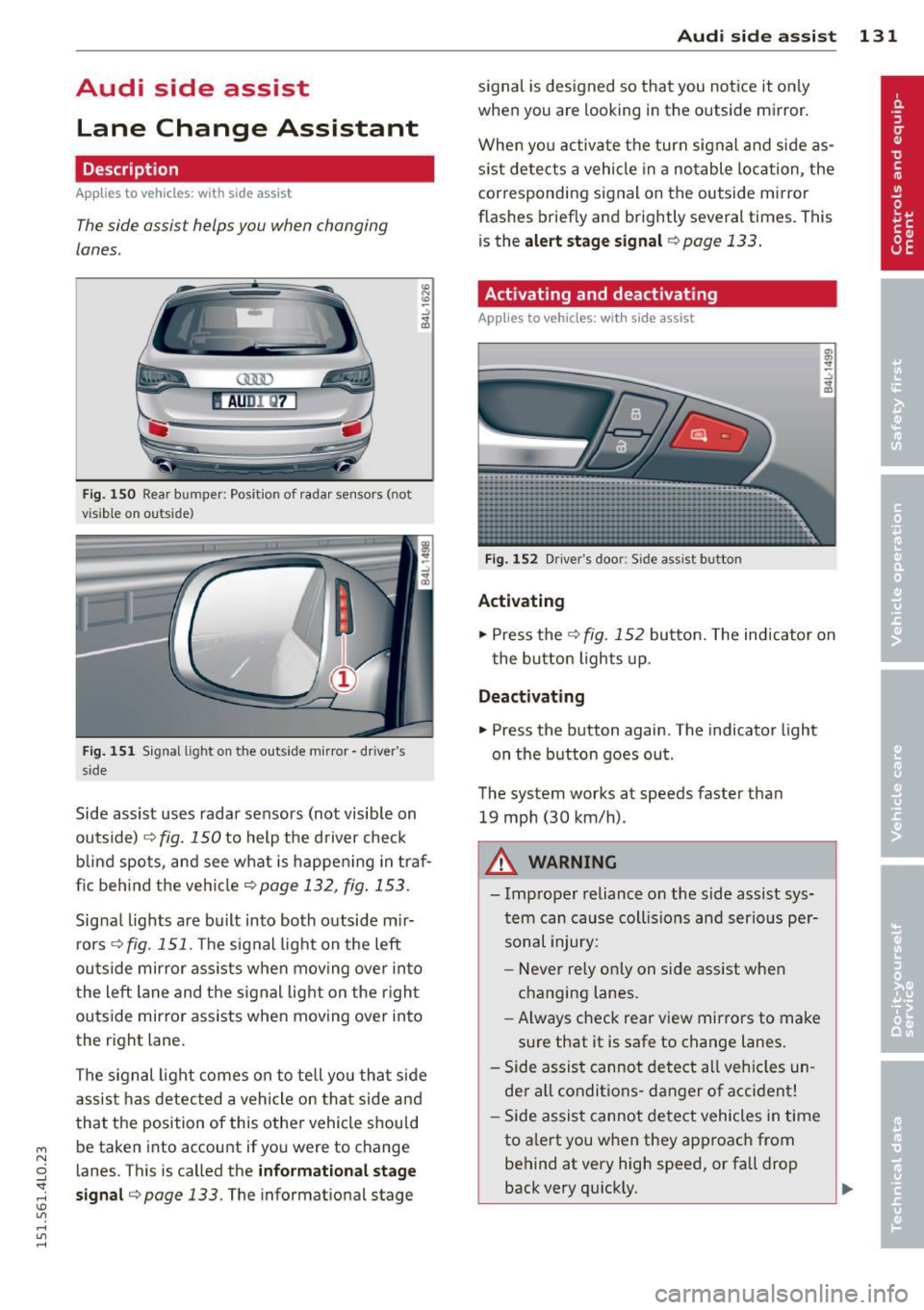
Fig. 150 Rear b umper: Pos it ion of radar sensors (not
v is ib le on outside)
F ig .
15 1 Signal light on the outside mirror -driver 's
s ide
~ -..:, .. (D
Side assist uses radar sensors (not visib le on
outside) ¢
fig. 150 to help the d river check
b lind spots, and see what is happen ing in traf
fic beh ind the veh icle
¢ page 132, fig. 153.
Signa l lights are bu ilt into both outside m ir
r ors ¢
fig. 151 . The signal light on the left
ou tside mirror assists when moving over into
the left lane and the signal light on the r igh t
ou tside mirror assists when moving over in to
the right lane .
The s ignal lig ht comes on to tell yo u that side
assis t has detec ted a vehicle on tha t side and
that t he position of this othe r vehicle shou ld
be taken into account if yo u were to change
l anes. This is called the
informationa l stage
sign al¢ page 133.
The informat ional stage
Aud i side assist 131
signal is designed so that you notice it on ly
when you are looking in the outside mirror.
When yo u activate the turn signal and side as
s ist de tects a vehicle in a no table location, the
corresponding signal on the outside mi rror
flashes briefly and brightly several times. Th is
is the
alert stage signal ¢page 133.
Activating and deactivating
Applies to vehicles: wit h side assist
Fi g.
1 52 D river 's doo r: Side assist button
Activating
.,. Press the
¢ fig. 152 button. The indicator on
t he button lights up .
Deactivating
.,. Press the button again. The indicator light
on the button goes ou t.
The system works at speeds faster than
19 mph (30 km/h) .
A WARNING
-Imp roper reliance on the side assist sys
tem can cause coll is ions and serio us pe r
sonal injury:
- Never rely on ly on side assist when
changing lanes.
- Always check rear view mirrors to make
su re that it is safe to change lanes.
- Side assist canno t detect all veh icles un
de r all conditions- danger of accident!
- Side assist canno t detect vehicles in time
to a lert you w hen they app roac h from
behind at very hig h speed, or fall drop
back very qu ickly.
~
Page 136 of 350

134 Audi side assist
@ Informational stage signal lights up
A fast approaching veh icle - in the left-hand
l ane for examp le - was detected by the sen
sors . Although this vehicle is sti ll far away, it
should be taken into account if you were to
change lanes, due to the considerable differ
ence in speed. The informational stage signal
on the outside m irror lights up
c::;, page 133.
@ Alert stage signal flashes
If you activate your turn signal in driving sit
uation @, the signal briefly f lashes repeated
ly. Side ass ist is alerting you to a veh icle that
you may not have noticed.
@ Tips
- The faster a vehicle approaches from the
rear, the sooner the signal on the outside
mirror lights up. Side assist will signa l,
at the latest, when a detected vehicle en
ters your "blind spot" .
- When vehicles approach very quickly,
changing lanes can be dangerous even if
the signal on the outside mirror does not
light up.
Driving situation: Slowly approaching
vehicles
Applies to vehicles : wi th side assist
@
Fig. 15 5 Side assist: S low ly approac hing veh icles and
veh icles in yo ur blind spot
@ Signal on outside mirror does not light
up
A vehicle approaching slowly -in the left-hand
lane for example - was detec ted by the sen
sors. Because of the small d ifference in speed
and the considerable distance from your vehi
cle, the signal on the outside mirror will not
light up
c::;, &. in Safety tips on page 138.
@ Informational stage signal lights up
The distance between your vehicle and that of
the slow ly approaching vehicle has narrowed .
The informationa l stage signal on the outside
mirror lights up.
As soon as the differe nce in speed and dis
tance is registered as notable if you were to
change lanes, a signa l on the mirror lights up.
Side assist will signal at the latest when a de-
tected vehicle enters your "b lind spot". .,,.
Page 137 of 350

M
"' 0 _,
"". rl I.O
"' rl
"' rl
@ Alert stage signal flashes
If you activate your turn signal in driving sit
uation @, the signa l light briefly flashes re
peatedly. Side assist is alerting you of a vehi
cle that you may not have noticed .
@ Tips
-The faster a vehicle approaches from the
rear, the sooner the signa l on the outside
mirror lights up. Side assist will signa l,
at the latest, when a detected vehicle en
ters your "blind spot".
- When vehicles approach very quickly,
changing lanes can be dangerous even if
the signal on the outside mirror does not
light up.
Driving situation: Vehicles dropping
back slowly
Applies to vehicles: with side assist
®
Fig . 156 S id e assist: Vehicles dropp ing back s lowly
CD Signal on outs ide mirror does not light
up
The vehicle that you passed has not yet been
detected by side assist . The signal on the out
side mirror does not light up
q .& in Safety
tips on page 138.
Audi side assist 135
@ Informational stage signal lights up
A vehicle dropping back slowly on the r ight
(difference in speed of less than 9 mph, or lS
km/h) has been detected by side assist. The
informational stage signa l on the outside mir
ror lights up.
@ Alert stage signal flashes
If you activate yo ur turn signal in driving sit
uation @, the signal briefly flashes repeated
ly. Side assist is alerting you of a vehicle that
you may not have noticed.
Driving situation: Vehicles dropping
back quickly
Applies to vehicles: with side assist
®
Fig. 157 Side assist: Veh icles dropp ing back quickly
CD Signal on outside mirror does not light
up
T he vehicle just passed has not yet been de
tected by side ass ist. The sign al on the out
side mirror does not light up
q .& in Safety
tips on page 138 .
@ Signal on outside mirror does not light
up
The vehicle dropping back quickly on the right
( difference in speed of more than 9 mph, or
lS km/h) has been detected by side assist,
1J1>
Page 141 of 350

Automatic
transmission
tiptronic
Introduction
The automatic transmission is controlled elec
tronically. The transmission upshifts or down
shifts automatically depending on which drive
program is selected. The power is transferred
by a torque converter .
When a
mode rate d riv in g s ty le is used, the
transmission selects the most econom ica l
driving mode. It w ill then change up early and
delay the downshifts to g ive better fuel econ
omy.
T he transmission switches to a sporty mode
after a k ick-down or when the driver uses a
spo rty driving sty le characterized by quick ac
celerator pedal movements, heavy accelera
tion, frequent changes in speed and traveling
at the maximum speed.
If desired, the driver can a lso select the gears
manually ( tiptronic mode ) ¢ page 142.
Selector lever positions
Fig. 160 D isp lay in t he i nst ru m en t cluster: selecto r
l ever in pos it ion P
The selector lever position engaged appears
next to the selecto r lever as well as in the in
strument clus ter disp lay.
P- P ark
M N In th is selector lever pos ition the transmis-o
;;f_ sion is mechan ically locked . Engage P only
~ when the vehicle is completely stopped ¢ 11::.. 1.1'1 ,...., 1.1'1 ,....,
Automatic tran sm iss ion 139
in Driving the automatic transmission on
page 141.
T o shift in or out of posit io n P , yo u m ust first
press and ho ld the brake pedal and then press
the re lease button in the selector leve r handle
whi le moving the selector lever to or from P.
You can shift out of th is position only with the
ignition on.
R -Reverse
Se lect R on ly when the vehicle is at a full stop
and the engine is running at idle speed ¢ 11::.. in
Driving the automatic transmission on
page 141.
Before you move the se lector lever to R, press
both the button in the hand le o f the selector
lever
and the brake pedal at the same t ime.
When the ignition is on, the backup lights illu
minate when the selecto r lever is moved into
R .
N -Neutral
The t ransm iss ion is in neut ral in this pos ition.
S hi ft to t his position fo r standing with the
brakes appl ied ¢
11::.. in Driving the automatic
transmission on page 141 .
The vehicle can
also roll when the engine is stopped .
When the vehicle is stat iona ry or at speeds
below 1 mph (2 km/h), yo u m ust always apply
the footbrake before and whi le mov ing the
lever o ut of
N .
D - Normal position for driving forward
In the no rma l mode D, the t ransmission auto
matically selects the s uitable gear ratio.
It de
pends on engine load, vehicle speed and driv
i ng sty le.
S -Sport posit ion
Se lect the sport mode S for spo rty dr iv ing .
T he vehicle makes fu ll use of the eng ine's
power. Shift ing may become noticeable when
acce lerat ing.
When the vehicle is stat ionary or at speeds
below 1 mph (2 km/h), you must always app ly ...,
Page 143 of 350

M
"' 0 _,
"". rl I.O
"' rl
"' rl
Driving the automatic transmission
Fig. 162 Shift g ate on the center co nso le: se lector lev
er wi th release butt on
Starting the engine
~ The selector lever must be in P or N .
Starting off
~ Press and hold the brake pedal.
~ Press and hold the release button in these
lector lever handle , select the desired selec
tor lever pos ition such as D and release the
button .
~ Wait briefly until the transmission has shift
ed (you will feel a slight movement).
~ Remove your foot from the brake pedal and
acce lerate .
Stopping temporarily
~ Keep the vehicle stationary us ing the brak
ing pedal, for examp le at traffic lights.
~ Do not press the accelerato r pedal when do -
ing this.
Stopping /parking
If the selector lever is not in the P position
when you open the driver's door, the vehicle
could roll. The message
Transmi ssion : Car
may roll! Shift to park! appears.
~ Press and hold the brake pedal unt il the ve
hicle has come to a complete stop.
~ Set the parking brake firmly 9 page 112,
Parking.
~ Se lect the P selector lever position 9 &.-
Stopping on an incline
~ Always press the brake pedal to hold the ve
hicle in place and prevent it from "rolling
back"
9 ,& . Do not try to prevent the vehi-
Autom atic transm ission 141
cle from "rolling back" when a gear is en
gaged by increasing the engine speed
c::>(D.
Under certain circumstances, such as driving
in the mountains, it may be usefu l to switch
temporarily to the manual shift program in or
der to adjust the gears to the driving condi
tions by hand
c::> page 142 .
On slopes, activate the parking brake first and
then move the selector lever to the P position.
This prevents too much stress from being
placed on the locking mechanism.
A WARNING
- Unintended vehicle movement can cause
serious injury.
- Never leave your vehicle with the engine
running while in gear.
If you must leave
your veh icle when the engine is running,
apply the park ing brake firmly and move
the selector lever to P.
- Power is still transmitted to the wheels
when the engine is running at idle. To
prevent the vehicle from "c reeping ", you
must keep your foot on the brake when
the engine is running and the selector
lever is in D, Sor R or "tiptronic" mode is
selected.
- Do not press the accelerator pedal when
changing the se lector lever position
while the vehicle is stationary and the engine is running.
- Never shift into R or P while driving.
- Before driving down a steep slope, re-
duce your speed and shift into a lower
gear with "tiptronic".
- Do not ride the brakes or press the bra ke
pedal too often or too long when driving
down a hi ll. Constant braking causes the
brakes to overheat and substantially re
duces braking performance, increases braking distance or causes complete fa il·
ure of the brake system.
- To prevent the vehicle from rolling back
when stopping on inclines, always hold it
in place with the brake pedal or parking
brake . .,..