2012 VOLKSWAGEN GOLF Rear
[x] Cancel search: RearPage 260 of 516
this section find information about:
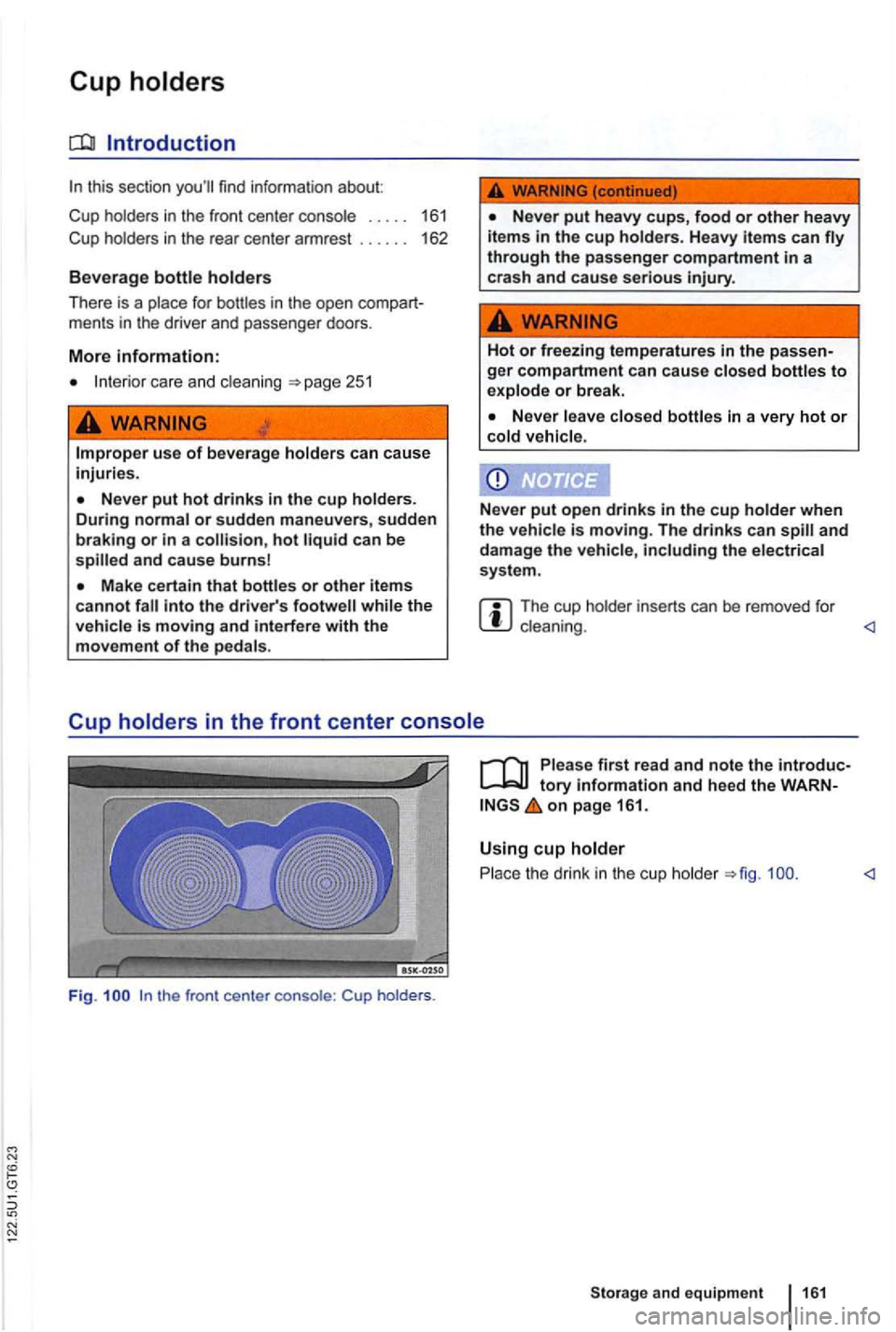
Cup holde rs
in the fro nt center console . . . . . 161
Cup holde rs in the rear center armrest . . . . . . 162
Beverage bottle holders
There is a place for bottles in the open
care and cleaning 251
use of bever age holders can cause injuries.
Make certain that bottles or other items cannot
Hot or freezing te mperatures in the
The c.up holder inserts can be removed for cleanrng .
on page 161.
Using cup holder
Place the drink in the cup holde r
Page 270 of 516
Shifting
Introduction
this section find information about:
Warning
and i ndicator ... .. . .
Pedals
............. ........... .
Manual transmission: Gearshift lever
172
173
174
Automat ic transm ission :
lever.... 175
Sh ifting with nptro nic ® . . . . . . . . . . . . . . . . . . 176
Driving with automatic transmiss ion 177
Automat ic transmission malfunction . . . . . . . . 178
Explanatory
notes in this sec tion regarding
Direct
The backup lights come on.
Climatronic switches to air culation mode.
The rear window wiper switches on when the
windshield wipers are switched on.
More information:
Braking , stoppi ng and parking 179
Climate control
Engine control and emission control system
Emergency
Rapid acceleration can cause skidding and loss of traction , especially on slippery roads,
re sulting in a loss of vehicle control, sions, and seriou s personal injury.
use the kick-down feature or fast cele ration if visibility, weather, road, and
Constant braking causes the brakes to and se rious personal injury.
the brakes or apply the brake
pedal too often or too long.
substantially reduce braking performance, increase stopping
the brakes by keeping your foot on the brake pedal when you do not want to brake . Thi s make the brakes wear faster.
gine braking and reduce the load on the brakes. Otherwise , the brake system could overheat and even
Page 281 of 516
Failure to heed warning lights or t ex t WARN-can result in vehicle damage .
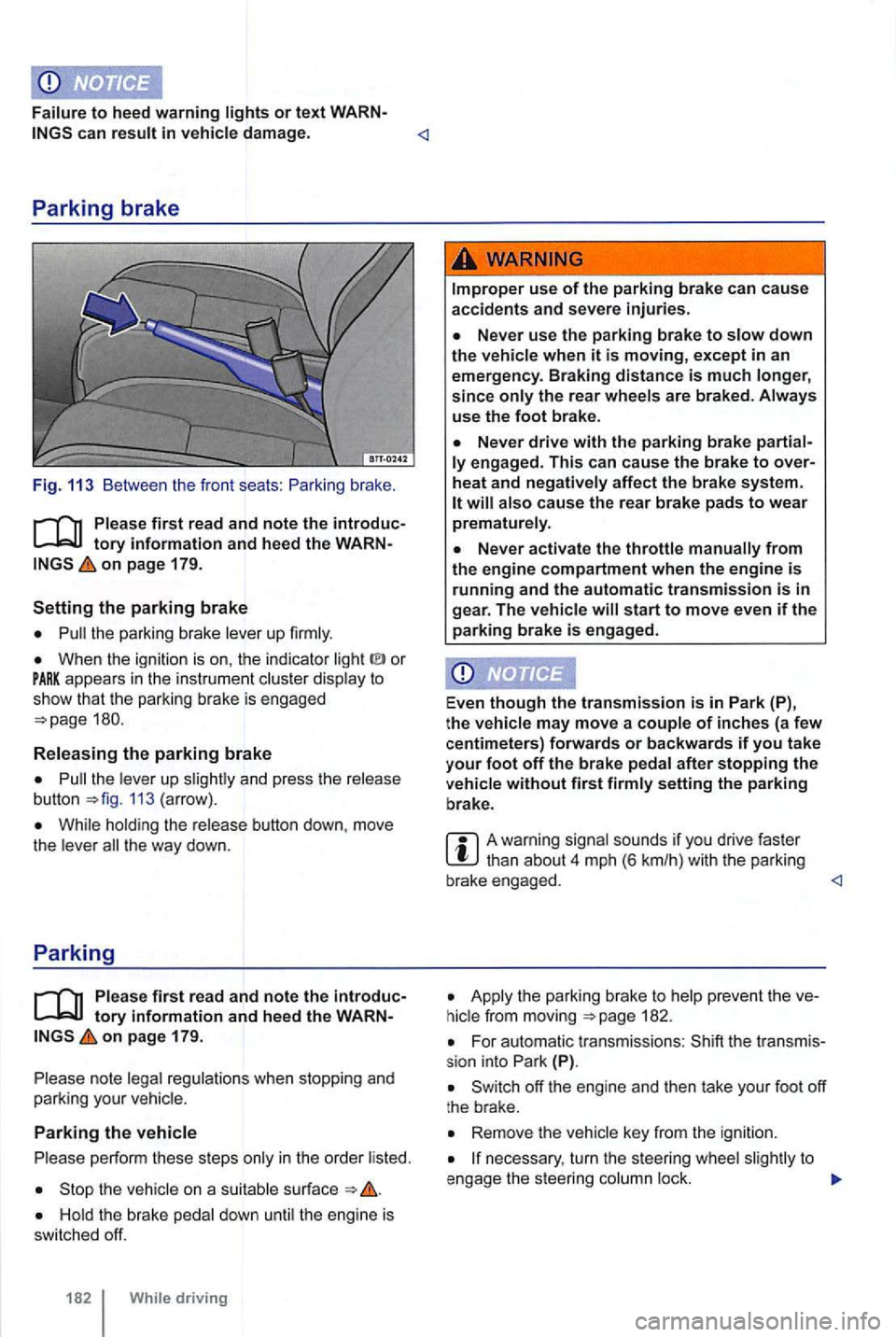
Fig. 113 Between the front seats :
on page 179.
the parking brake lever up firmly.
When the ignition is on , the indicator or appears in the instrume nt c luster display to show th at the park ing brake is engaged
the leve r up 113 (arrow) .
While hold ing the release button down, move
t h e lever t he way down.
Parking
Ple ase firs t r ea d and note the introductory info rm ation and heed the WARNon pa ge 179.
note legal regulations when stopping and
parking your vehicle.
Parking the vehicle
p erform these steps only in the order listed.
the vehicle on a suitab le surface
the rear wheels are braked . Always
use the foot bra ke.
engag ed. This c an cause the brak e to over
heat and neg ati vely affec t the b rak e sys te m .
start to move even if the parking brake is e ngag ed .
Even
though the tra nsmission is in P ark (P),
t h e vehi cle may move a couple of inche s (a fe w
c entimeters) forwards or backwards if you take
your f oot off the brake pedal after stopping the
ve hicl e without fir s t firmly setting the parking
b rake .
A warning signal sounds if you drive faster
Apply t he parking brake to 182.
For automatic transmissions : (P).
Remove the vehicle key from the igni tion.
necessary , turn the steer ing whee l to
e ngage the steer ing column lock.
Page 289 of 516
Climate control system (air cond itioner): th e
trast ing temperatures , it requires a large amount of energy, which is genera ted by the engine. The
tempe ratu re in the shou ld therefore not be
ext remely different from that of the outside ature . may be to venti la te the veh icle fore driving and then to drive a short distance with
the windows open. After that, sw itch on the air
Keep the
windows increase fuel consumption.
off the rear window defroste r as soon as
t he windows are free of fog and ice.
14
miles
Fi g.
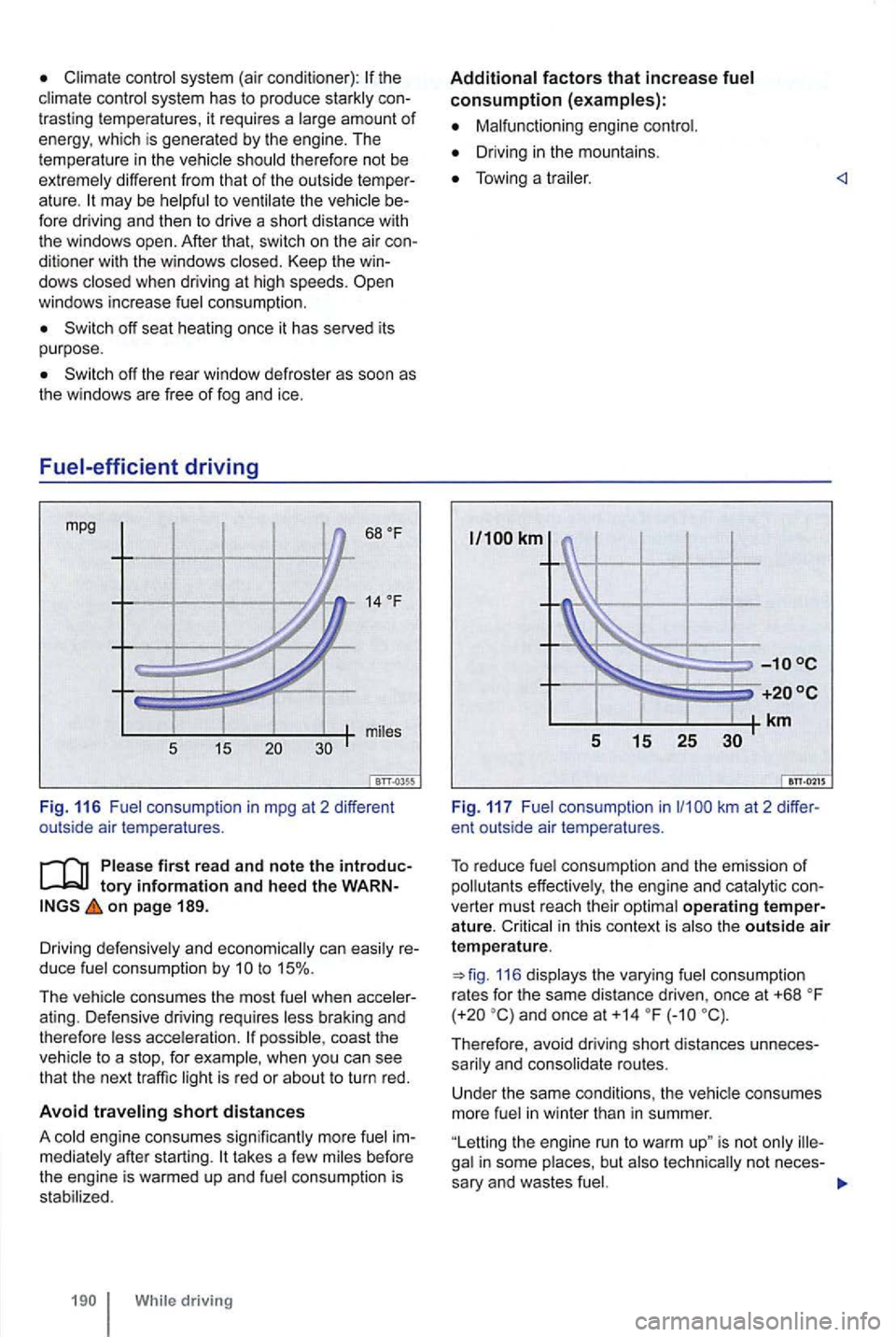
116 F uel consumption in mpg at 2 different
outside air temperatures .
on page 189.
D riving defensive
ly and economica lly can easily duce fuel cons umptio n by to 15%.
The veh icle consumes the most fuel when ating. Defensive driving requires less braking and
ther efore less acceleration. possibl e, coast the
vehicle to a stop , for example, when you can see that the next traffic light is red or about to turn red.
Avoid traveling short distances
A co ld engine consumes sign ificantly more fuel media tely after starting .
consumption (examples):
Malfunction ing eng ine control.
Drivi ng in the mountain s.
T owing a tra iler.
-1
Fig. 117 Fuel consumption in ent outside air temperatures .
To reduce fuel consumption and the emission of
ature. Criti cal in thi s con te xt is also the outside air temperature.
T herefo re , avoid driving short distances sarily and consolidate routes.
Un der the same conditions , the veh icle consumes
more fuel in winte r tha n in summer.
in some places, but also not neces -
Page 311 of 516
Air vents
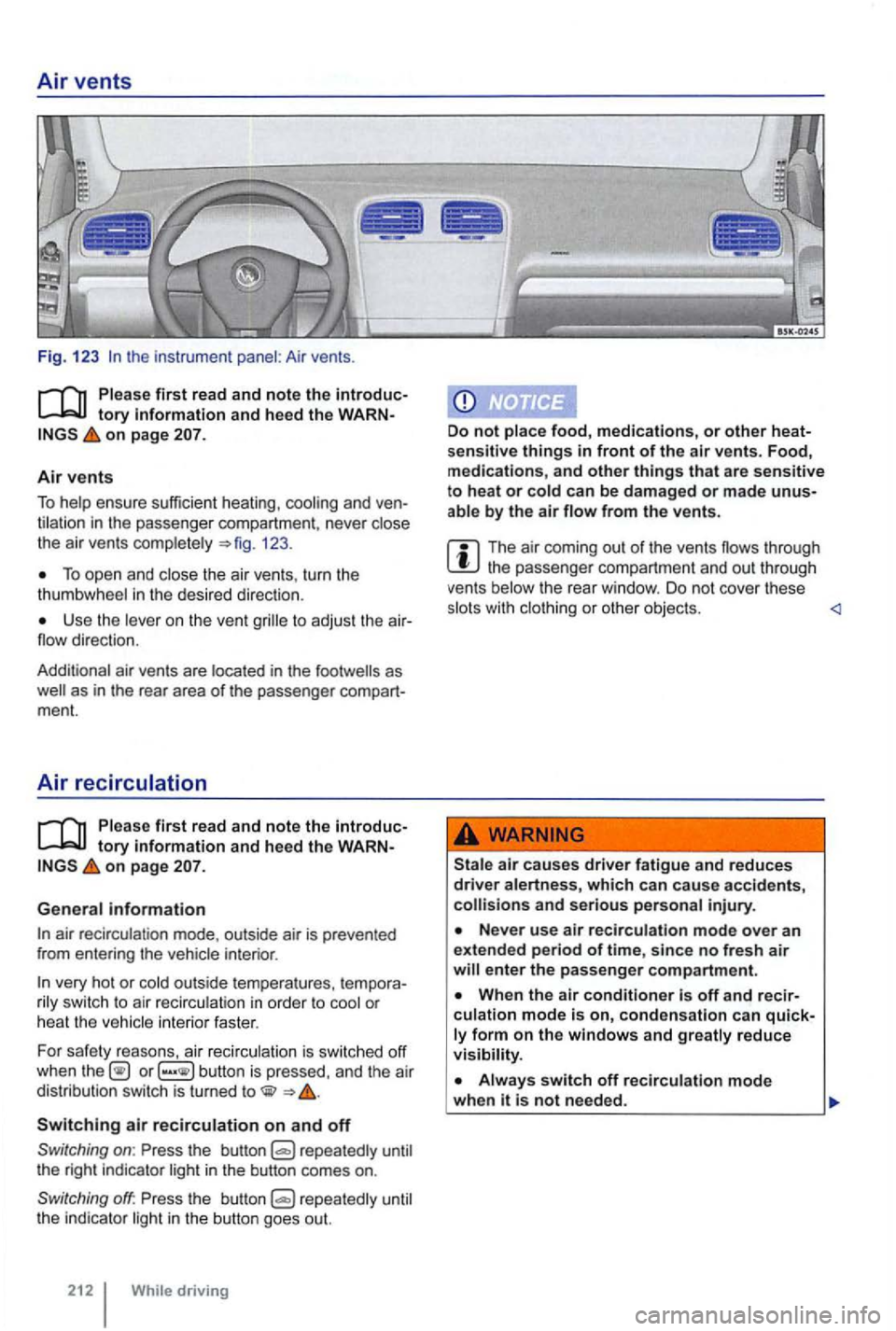
Fig. 123 the instr ument panel : Air vents.
Plea se first read and note the lntroduc
on page
Air vents
To help ensure sufficie nt heating , cool ing and ventilat ion in the passenger compartment , neve r close
the air ven ts complete ly 123.
T o open and close the air vents, turn the
thu mbwhee l in the desir e d direc tio n.
direction.
Additional air ven ts are loca ted in the
as as in the rear area of the passenger compart
ment.
Air
on pag e
G en era l information
air recircula tion mode , outside air is prevented
from entering the vehicle inte rior .
button is pressed, and the air
dist ribution switc h is tu rned to
Switching air recirculation on and off
Switching o n : Press the
until the indica to r light in the button goes out.
driving
Do not place food, medic ations, or other heat
s en sitive things in front of the air vents. Food ,
m ed ication s, and other thing s that are sensitiv e
t o heat or cold can be dama ged or made unusabl e by the air
Th e air comi ng o ut of th e ve nts through
Sta le air c auses driver fatigue and reduces driver al ertness, which can caus e accidents,
collisions a nd serious personal injury.
ente r the passeng er compa rtm ent.
off a nd recirculatio n m ode is on , conden sation can quickly form on the windows and greatly reduce visibility.
Alwa ys switch off recircula tion mode when it is not n ee ded .
Page 343 of 516
Washing the vehicle
tory information and heed the on page 243 .
T he longer insect splatter , bird droppings, tree sap,
r oad dirt , indust rial deposits , tar , soot , road
and othe r aggressive materials stay on your cle, the more damage they do to the paint finish.
H igh temperatures (includi ng strong sunlight)
oughly.
Car wash
Pay close attention to the information provided
by the car wash operator . B efo re goi ng throu gh a
ca r was h, b e s ure to take th e usual precautio ns t o
avoid damag e , such as closi ng the windows ,
The paint finish is toug h enough th at the vehicle can
the wheels and under the door
After the vehi cle ha s been washed , the wet brakes or, in winter, brake discs or pads ed with ice, react slower and need longer stopping distances .
WARNING
Always dry the brakes and clean off any ice coatings with a few careful applications of the brake . Make sure not to endanger other motorists or cyclists or disobey legal require-
ments .
edges under the vehicl e can cut ex-
posed skin.
Always protect your hands and arms from cuts on sharp metal edges when cleaning the under-body , the inside of the wheel housings,
etc.
The water temperature must not be more
than
Ne ver clean headlights with a dry cloth or sponge . Always use a w et cloth o r s ponge . For best result s use soapy water.
When washing or rinsing the vehicle in cold weather , do not
cult to open the vehicle!
To help prevent vehicle damage
in a car wash:
in the car wash to help prevent damage to wheel rims and tires!
Make sure there is enough clearance for the
height and width of the vehic le .
To help prevent paint damage to the engine
hood, place wiper blades against the shield after they have dried. Do not let them
snap back into place .
Lock the rear hatch to prevent unintentional
opening in the car wa sh .
Page 345 of 516
Removing wax residue
Automatic car washes and vehicle care products
can leave a wax residue on glass surfaces.
T hese wax residues can only be removed with
special cleane rs or clean ing clo ths. Wax residue
left on the wind shie ld can cause the windshield
wipe rs to grab and squeak instead
of
cloth.
Windshie ld wiper squeak and grab can be
reduced
by the winds hield washer fluid tank with a
wiper
fr om yo ur auth orized Volkswagen dealer and au
thorized Volkswagen For the re
moval of wax residue, Volkswagen recom mends
the cleaners:
For the warmer months, Windscreen Clear 184 A 1 or equivalent . Mixing ra tio (1 part concentra te to
(-18 about 1:2 (1 part conce ntrat e to 2 parts water) , oth
erwise mixing ra tio 1 :4 in windshie ld washer reser
voir .
Window cleaning cloths I ch amois
G 522 A 1 or equ iva le nt for windows an d
outside mirrors.
Removing snow
Rem ove snow from windows and outside mir
rors with an appropria te br ush .
Removing ice
Th e best way to remov e ice is wi
th a deice r sp ray. When using an ice scraper always scrap e in on e
direct ion , never bac k and forth . D irt can scratch
the glass when moving t he sc ra per backward .
WARNING
Dirty or fogged up windows re duce visibility and incre ase the risk of accidents and seve re
injuries .
Don't drive until you have clear visibility th rough all windows.
Never mix recommend ed cleaning agents
with other cleaning agents in the windshield
washer
Never use warm or hot water to remove snow and ice from windows and mirrors. This could cause the gla ss to crackl
The heating elements for the rear defroster are on the inside of the rear window. Do not put stickers over the heating elements on the inside of the rear window and never clean the inside of the windows with corrosive or acidic cleaning agents or other chemic als that could damage the heating element s.
Antenna s installed on the insides of windows can be damaged by abra sive objects or by corrosive or acidic cleaning agents or other chemicals . Do not place any stickers on the windshield-integrated antenna and never clean
the antenna with corrosive or acidic cleaning
agents or other ch emicals.
Page 346 of 516
on page 243.
F ac tory
-installed wiper blades have a graphite
coating. The graphite coating lets the wiper blades
glide smoothly over the windshield.
wiper blades regularly. Wiper blades
that grab and squeak must be r ep laced if worn or
damaged and cleaned if dirty
Replace worn or damaged wiper blades immedi
ate ly . Replacement blades may be purchased from
any authorized Volkswagen dealer or autho
rized
Volkswagen
Lifting and
Us ing a soft remove dust and
dirt from the wiper blades.
Changing the wiper on the windshield
Lift and tilt the wiper arm(s) away from the
windsh ield I rear window.
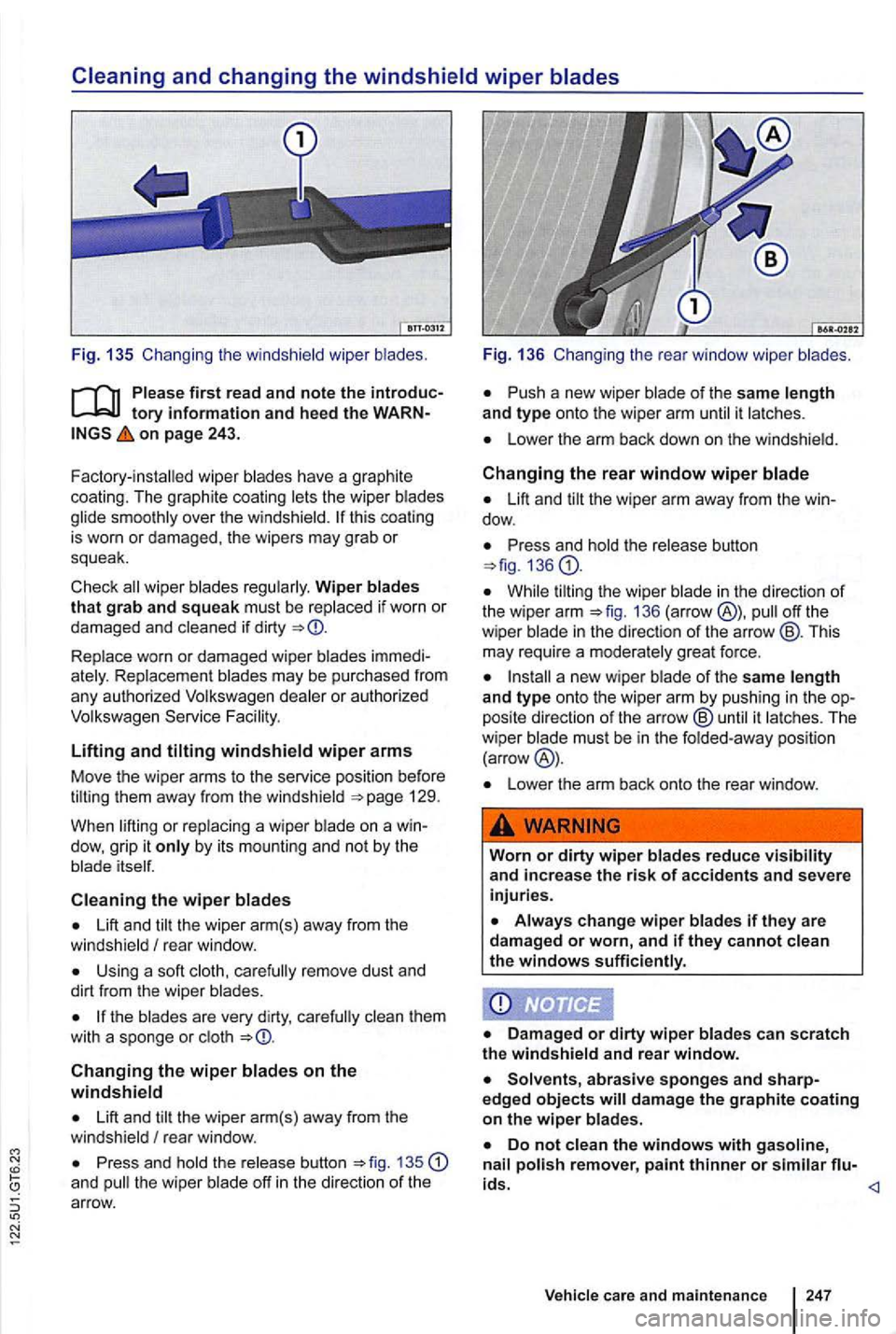
Press and hold the release button 135 and the wipe r blade off in th e direction of the arrow.
N
N
Fig . 136 Changi ng the rear window wipe r blades .
Push a new wiper blade of the same length
and type onto the wiper arm until it la tches.
Lower the arm back down on the windshield.
Changing the rear window wiper
Lift and
Pres s and hold the release button 136
While tilt in g the wiper blade in the direction of the wipe r arm 136 (arrow @),
abrasive sponges and sharpedged objects
Vehicle care and maintenance 247