2006 VOLKSWAGEN GOLF PLUS Tire
[x] Cancel search: TirePage 155 of 541
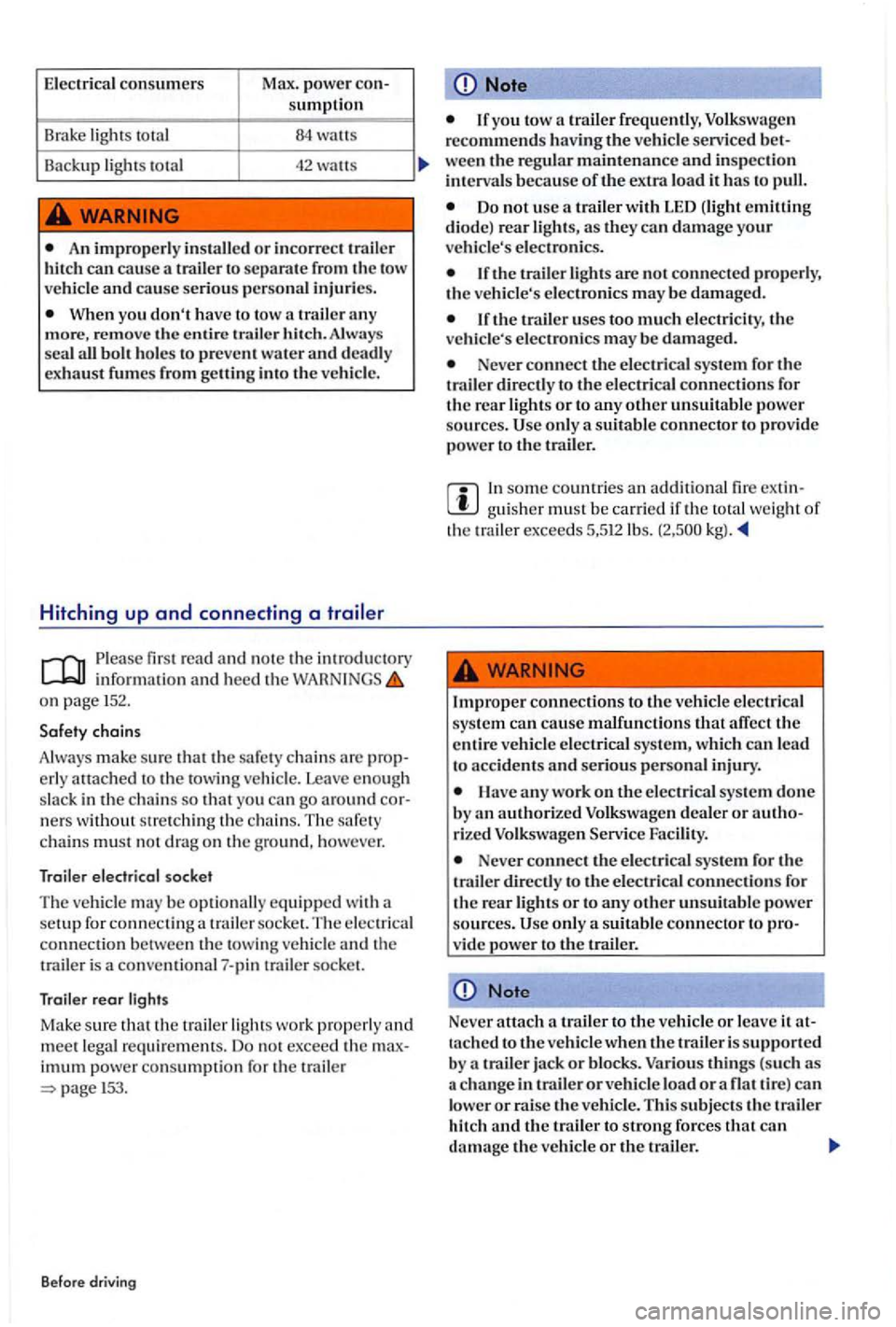
Electrical consumers Max. power sumption
Brake lights total
An improp erl y in sta ll ed or incorrect t railer hit ch can
trail er any
m ore , remove the entire trailer hitch. Always
sea l all bolt ho les to prevent water and deadly
exhaust fumes from getting int o the ve hicle.
Hitching up and connecting a
Ple a se firs t r ea d and no te the introdu cto ry informati on and heed th e on pag e 152.
n ers witho ut str etc hi ng the c hain s. T he safety
c hain s mu st n ot drag o n th e g ro und, ho wev er.
Trailer electrical socket
The vehicl e m ay be opti onally equipped with a
setup for con nec ting a trailer so cket. Th e ele ctrical connec tio n betwee n th e towing ve hicle and the
trailer is a convent io nal7-pin trailer socke t.
T raile r rear lights
Mak e sure that th e trailer light s work prop erly and
m ee t le gal re quir em ent s. D o no t excee d th e
im um po w er co nsumpti on f or th e trail er 153 .
Before drivin g
Note
If you tow a trailerfrequenll y,
ween th e re gular maintenance and inspecti on
int erva ls because of the extra load it has to pull.
Do not use a trailer with LED (lig ht emitting
di ode) rear lights, as they ca n d amage your ve hicle's ele ctroni cs.
If the uses too much elec tricity, the
ve hicle' s e lectroni cs may be damaged.
Never connect the electric.1.l system for th e
trailer directly to the electrical connection s for
th e rear light s or to any other unsuitabl e powe r
sources. Use onl y a suit abl e connector to provide
po we r to trailer.
In some co untries an additio na l fire extingui sh er must be carried if th e tota l w eight of th e trailer exce e d s 5,512lb s.
Improp er connections to the ve hicl e elec trical
sys te m can cause malfunction s that affect the
entire vehicle electrical system, which lead to acciden ts and seriou s pe rso nal injury.
Have any work on the electrical syste m d on e
b y an authorized Volkswage n dealer or autho
rized Volk sw age n Facility.
Never connect th e e lectrical syste m for the trailer to Ll1e e lectrical connections for
th e rear lights or to any other unsuit abl e power
sources . Usc only a suitabl e con nec tor to vide power to the trail er .
Note
------------------------~ Never attach trailer to the vehicle or leave it taclled to the vehicle when the trail er i s supported
b y a trailer jack or blocks. Various thin gs (sucl1 as c h a ng e in traile r or vehicl e load or a fla t tir e) can lower or raise the ve hicle. Thi s subj ects th e trailer
hit ch and th e trailer to strong fo rces that can d a mag e th e ve hicl e or the trailer.
Page 156 of 541
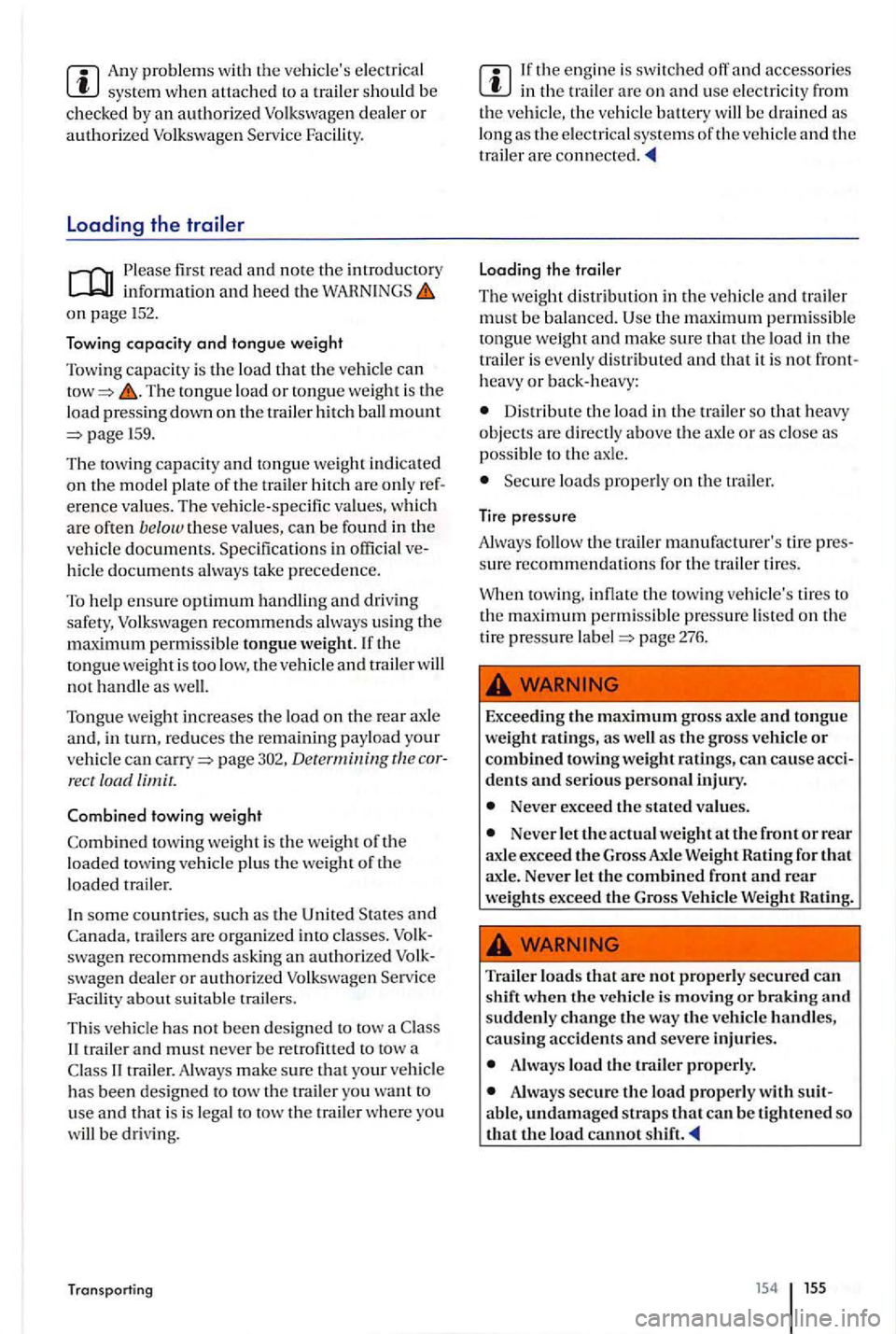
Any problems with the vehicle's elec trica l system when attached to a trailer should be chec ked by an authorized Volkswagen dealer or authorized Volkswagen Service Facility.
Loading the trailer
Pleas e first read and note the introductory information and heed the on page 152.
Towing capacity and tongue weight
Towing capac ity is the load that th e vehicle can
159.
The towing capacity and tongue weigh t indicated on the model plate o f the trail er hit ch are only re f
e ren ce value s. The vehicle-specific values, which are often below these values, can be found in the vehicle document s. Specificat ions in officia l ve
hicl e documents alwa ys take precedence.
To help en sure optimum handling and driving safe ty, Volkswagen recommends always using the
not handle as well.
Tongue weight increases the load on the rear axle and, in turn, reduces the remaining pay load your ve hicl e can cor
rect load limit.
Combined towing weight
towing weight is th e we ight of the
l oaded tow in g vehicle plus th e we igh t of th e
l oaded trailer.
In some countries, su ch a s th e States and Ca nada, trailer s are organ ize d in to cla sses. swagen recommend s askin g an authori zed swage n dealer or auth orized Volksw agen Se rvice
Facili ty about suitabl e trailer s.
Thi s
vehicle has not been desig n ed to tow a traile r and must n eve r be retrofitted to tow a II trailer. Always make sure that your vehicl e has been designed to tow the trai le r you want to use and that is is legal to tow the traile r where you be driving.
T ronsporting
Loading the trailer
The weig ht dist ribution in the vehicle and tra iler
mu st be balanced. th e maximum permissible
tongue weight and make sure that the load in the
trail er i s eve nly di stributed and that it is not front
h eavy or back-heavy:
Distribut e th e load in th e trail er so that heavy objec ts are directly above the axl e or as close as
po ssibl e to the
Secu re load s properly on the trail er.
Tire pressure
Always follow th e trail er manufac turer' s tir e pres
s ure recommendations fo r the trailer tires.
W h
en towing, inflat e th e towin g vehicl e's tir es to the maximum permissible press ure listed on th e
tir e pressure la bel pag e 276.
Exceeding
the maximum gross axle and tongue weight ratings, as well as the gross vehicle or combined towing weight ratings, can cause accidents and serious personal injury.
Never exceed the stated va lues.
Never let the actual weight at the front or rear axle exceed the Gross Axle Weight Rating for that
axle. Never let the combined front and rear weights exceed the Gross Vehicle Weight Rating.
Trailer loads
that are not properl y secured can shift when the vehicl e is moving or braking and suddenly change the way the vehicle handles,
causing accidents and severe injuries.
Always load the trailer properly.
Always secure the load properly with suitable, undamaged straps that can be tightened so that th e load cannot shift.
154 155
Page 159 of 541
Note
can use one of these adapte rs if required for the proper in stallation of bi cycle rack or
m ent s are m el. Wh en u sin g bicycle rack s or carri ers make sure that th e tailli ghts are n o t
bl ocke d.
Retrofitting a
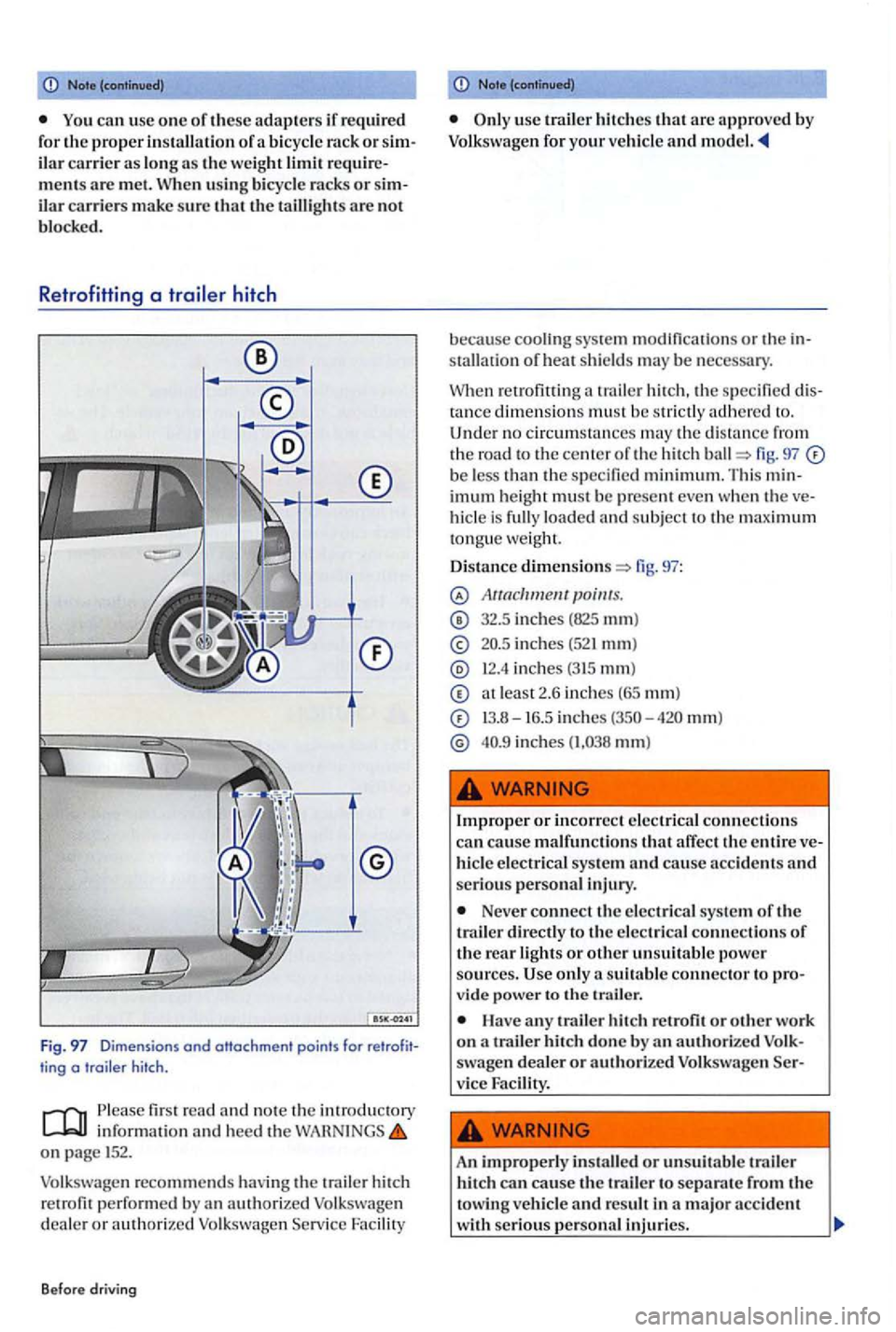
Fig. 97 Dimensions ond ottochment points for ting o hitch.
first re ad and not e th e intr oductory information and h eed th e on page 152 .
V o lk sw age n rec
ommends hav in g the trai le r hit ch
r e trofit perf o rm ed b y an Volk swag en deale r o r authorized Volk s wa gen Servic e Facility
B efore driving
Note (continued)
use hitches that a re approved by for your vehicl e and
because cooli ng sys te m m od ification s or th e sta llation of heat shield s may be necessary.
Wh en re trofi tting
traile r hi tch, th e specified ta nce dimensions must be stri ctly adhered to. Under no circums ta nces m ay the distance f ro m
th e road to the center o f the hitch fig. 97 be le ss than th e s pecifi ed min im um. Thi s imum height must be present ev e n whe n the hi cle is full y load ed and subje ct to the maximum tongue weigh
D istance fig. 97:
32.5 inch es (825 mm)
in ches ( 52 1 mm)
inc hes (315 mm )
atleast2 .6 in ches (6 5 mm)
13.8-16.5 inches mm)
in ches
Imprope r or incorrect elec tri cal connection s
ca n cause malfunction s that affect th e e ntire hicl e elec tri cal sys te m and cau se acc id e nt s and serio us perso na l injury.
Neve r connect th e e lectrical syste m of the
trailer directly to the e lec trical connectio ns of the rear light s or oth er unsuitabl e power sources . U se only v ide po w er t o th e trailer.
H ave a ny trailer hit ch r etrofit or other work on a trailer hit ch don e by an authorized swage n deal er or authorize d Volkswage n
An improperly in stalled or uns uitable trailer hitcl1 can cause th e trai le r to separate fro m the
towing vehicl e and result in major accident with serious perso nal injuries.
Page 172 of 541
sock ets
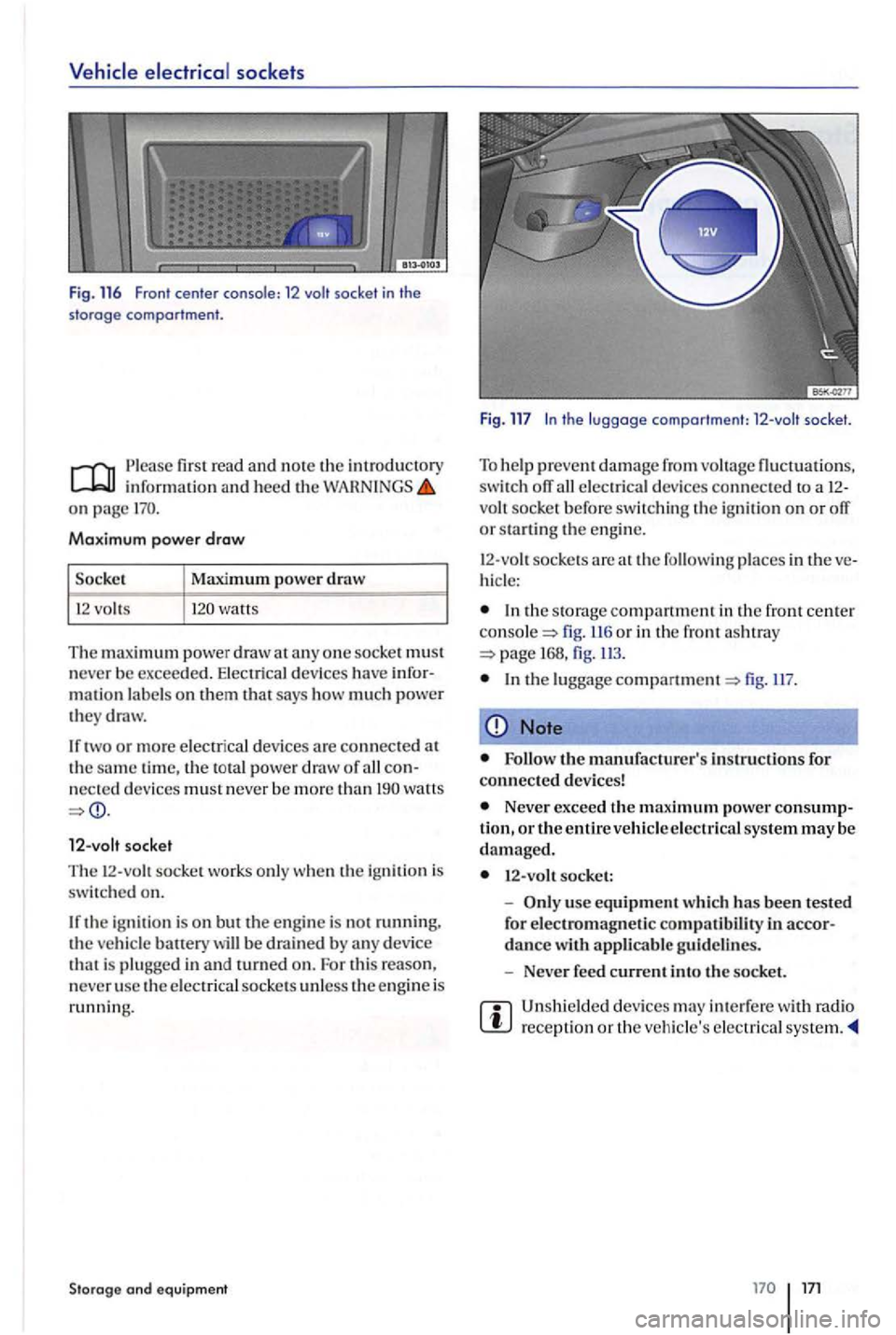
F ig . 116 Fron t cente r conso le : 12 socket in the
sto rage comportment .
first r ea d and note the introductory information and heed the on page
Maximum power draw
watts
The maximum power draw at any one socke t must never be exceede d. Electrical devices have infor
m ation labels on them that says how muc h power they draw.
watts
socket
The socke t works only when the ig nition is swit ched on.
the ignition is on but the en g in e is not running. the ve hicl e battery will be drain ed by any device tha t is p lugged in and turned on. For this reason.
n ever use the e lectrical socke ts unl ess the engine is running.
Storage and eq uipment
Fig. 117 socket.
To h elp prevent damage from voltag e fluctuations,
swi tch off electric al devices connected to a 12-vo h socke t before swit ch ing the ignit ion on or
places in ve
hicl e:
the storage center fig . 116 or in the front ashtray 168, fig .
lugga ge fig.
Note
the manufacturer's instructions for
connected dev ic es!
Never exceed th e m aximum power consumption, or the entire ve hicl e electrical system may be damaged.
use equipment which has been tested for applicable gu ideli nes.
Neve r feed current into the socket .
Unshielded devices may interfere with radio reception or the veh icle's electrica l
Page 189 of 541
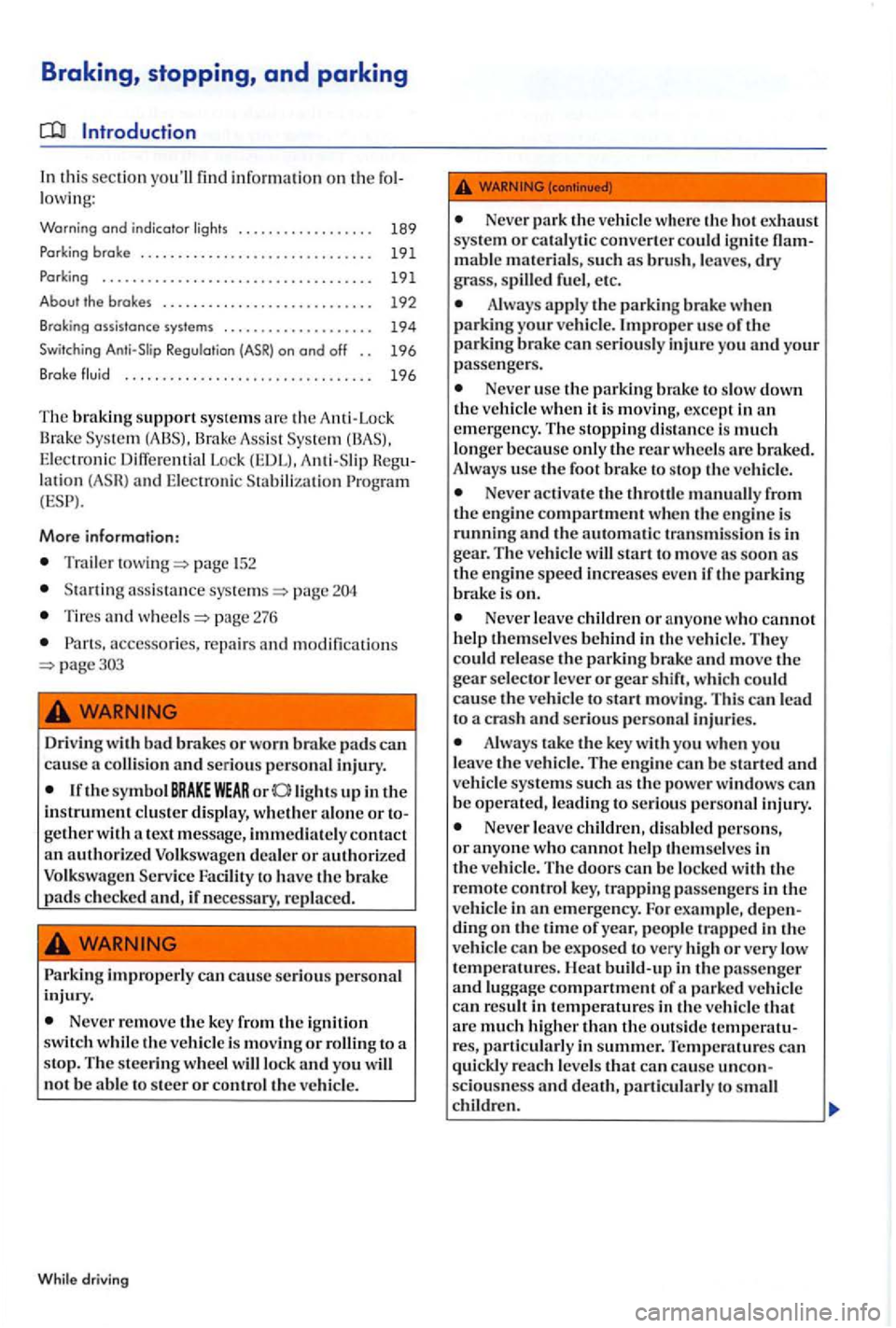
Braking, stopping, and parking
Introduction
In this section yo u'll find inform ation on fo l
lowi ng:
Warning and indicator lights . . . . . . . . . . . . . . . . . 189
Park in g brake . . . . . . . . . . . . . . . . . . . . . . . . . . . .
.. . . . . . . . . . . . . . . 19 1
About t
he brakes . . . . . . . . .. . . . . . . . . . . . .. . . . 192
Bra king assistance sys tem s . . . . . . . . . . . . . . . . . . . . 194
Switching Anti-Slip Regulation (ASR) on ond off . . 196
Brake fluid . . . . . . . . . . . . . . . . . . . . . . . . . . . . . . . . . 196
T he brakin g support syste ms are Brake A ss is t E lec tro nic Differ e n tial Loc k (EDL). Anti-Slip
M ore information:
Trail er page
pag e
Tires and page 276
acce ssories, r epa ir s and modifi catio ns
brakes or worn brake pads can
ca use colli sio n and serious personal inju ry.
light s up in the
in strument cluste r di splay, w heth er a lo n e or to
ge ther with tex t message, immediat ely conta ct an authorized Volk swage n dea ler or authorized
Volkswag en Se rvi ce Faci lity to have th e brake pad s ch ecke d and , if necessary, re pl aced.
WARNING
improperly can cause se riou s pe rso nal
injury .
Never re m ove key from the ignition switch while vehicl e is m ov ing or ro llin g to a
s top. The steering w heel w ill lock and you not be
Never park the vehicle w here the ho t ex ha ust
syste m or catalyti c convert er could ignit e flam
mabl e mater ia ls, su ch as brus h , leaves , dry grass, spilled fue l, e tc .
Always apply th e parki ng brake whe n
p a rki ng your veh icle. Imprope r u sc of th e
p a rking bra ke can se rio usly injur e you and your passe nge rs.
Never use the
e m ergency . The stopping dista n ce is muc h
longer b ec au se onl y the wheels arc braked . use the foot brake to sto p the vehicle .
Never the throttl e from
th e e ng in e
th e automati c transmission is in gear. The ve hicle will start t o move as soon the e ngine speed ev en i f th e brake is on.
Never leave childr en or anyo ne w ho canno t
h elp them se lve s beh in d in the vehicl e. They could re leas e the brak e move the gear selector leve r or shift , wh ic h could cause th e vehicle to start m ov ing. Thi s ca n lea d
to a cras h and seri ous personal injuri es.
Always take the key with you when yo u
leave th e ve hicle . The engine ca n be started and ve hicl e sys te m s s uch as the power wind ows can
b e operate d , le ad ing to seri ous perso nal injury.
Neve r leave childr en , di sabled perso ns, or a nyon e who cannot h elp them se lves in the vehicl e. T he doors can b e lo cke d wit h the re mote contro l ke y, trapping passe nge rs in the
ve hicle in an emerge ncy. For exa mpl e, dep ending on th e tim e of year, people trappe d in the
ve hicle can be ex pose d to very high or very temperatures. Heat build -up in the passenger and parked vehicl e result in temperatu res in the ve hicl e th at arc much hi gher than the outsid e tempe mtu
res, partic ul arl y in summer. T emperatures ca n
qui ckly reac h le v e ls that can cause uncon
scio usn ess ch ildr en.
Page 190 of 541
Note
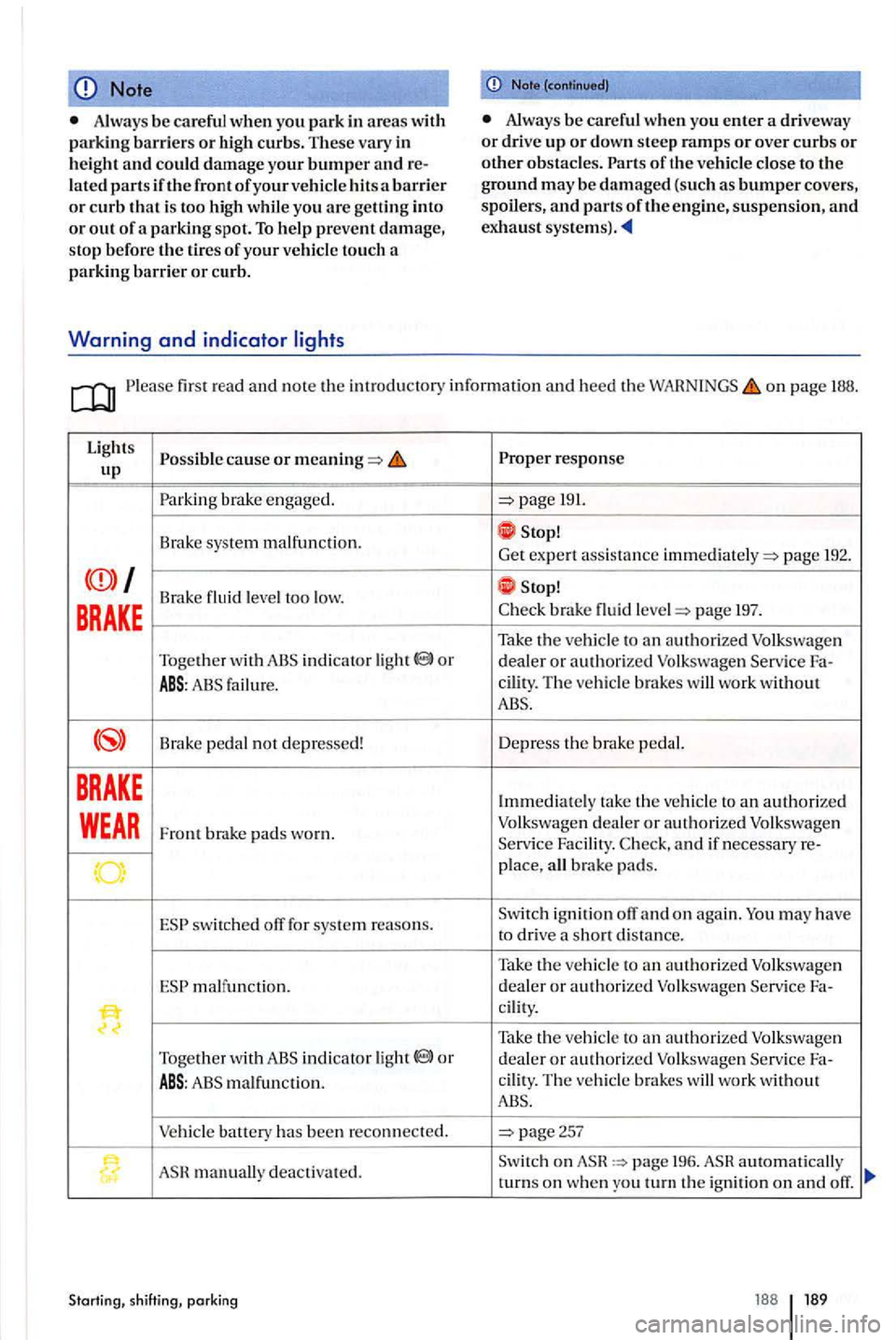
Always be careful when you park in areas with parking barriers or high cmbs. These vary in h eigh t and could damage your bumper andrelated parts ifLhe front of your ve hicl e hit s a barrier or curb that is too high while you are getting into or out of a parking spot . To help prevent damage, stop before the tires of your vehicle touch a parking barrier or curb.
Warning and indicator
Note (continu ed)
Always be careful when you enter a driveway or drive up or down steep ramps or over curbs or obstacles. of the vehicle close to Lhe ground may be damaged (s u ch as bumper covers,
spoilers, and parts of the engine, suspen sion, and exhaust
firs t read and note Lhe introdu ctory informat io n and hee d the WAHNINGS page 188.
Lig ht s
191.
Brak e syste m malfun ction. Stop!
Get
expert assi stance pag e 192.
Brake fluid leve l too low. Stop!
BRAKE brake fluid page 197.
Take the vehicle to an au thorized indicator light or dea ler or authorize d Volksw agen Service Fa-
ABS: failure. ci
lity. Th e ve hicl e brakes will work without ABS.
Brake pedal not depressed! Depress the brake
pedal.
BRAKE Immediate ly take the vehicle to an auth orized
WEAR Front brake pads wo rn. Volkswagen dealer or authorized Volk swage n
Serv ice Facility. and if necessary re-place, all brake pads.
switc h ed off for syste m r easo ns. Switch ignit ion off an d on again . You may have
to dri ve a short dis tan ce.
Take th e ve hicle to an authori zed Volksw age n malfunc ti on. dealer or a
uthorize d Volk sw agen Service Fa-cilit y .
Tak e the vehicl e to or d ea le r or a uthori zed Volksw agen Service Fa-
ABS:
page257
manually deacti va te d. S
witch on p age 196. a ut om atically
turns on w he n you turn the ig nition on and off.
Startin g, shift ing, parking 188 189
Page 193 of 541
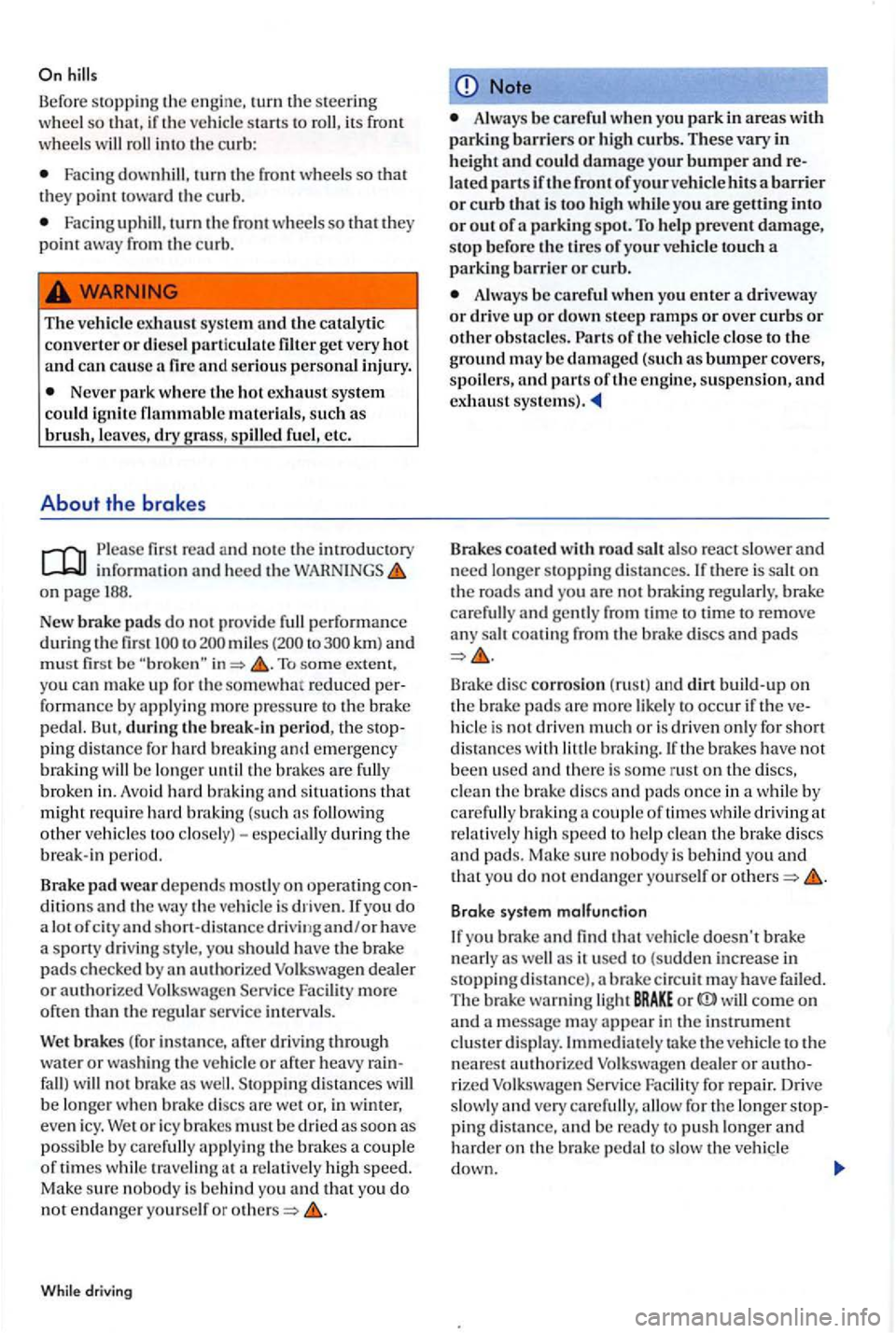
Befo re stopping th e en gine, turn the s teerin g
w heel so th at, if the ve hicl e sta rt s to its w heels w ill int o th e curb:
Fac ing turn the fro nt whee ls s o th a t
they point t oward the curb .
Fa c in g uphill , turn the front whee ls so that th ey
p o int away from the curb .
WARNING
The vehicl e exh aust system and the catalyt ic
co nverter or diesel particulate filter get very hot and can cause a and serious personal injury.
Never park where the ho t exhaust system could ignite flammable m aterial s, su ch as brush, leaves, dry grass , spilled fuel, etc.
About the brakes
read and note th e introductor y information and hee d th e on page 188.
New d o not provi de to miles to km) and m ust firs t be
hard braking and situ atio ns that
mi ght re quir e hard braking (such follow in g other vehicles too closely)-during the break-in period .
pad wear depe nd s m ostly o n operatin g the vehicle is d riven.lfyou do a l ot o f ci ty and shor t-dis ta nce driv ing and/or have
a sp o rt y driv in g s ty le, yo u sh ould have th e brake
p ad s checke d by a n authorized Vol ksw age n d eal er or a u thori ze d Volkswagen Service Fa cilit y m ore
o fte n than the regula r servi ce interva ls.
Wet
r e la tive ly hi gh speed.
Mak e sure nobo dy is be hind you and that yo u do
not endanger yo urself or
Not e
Alwa ys be careful when you park in areas with parking barriers or high curbs . T hese vary in heig ht and could damage your bumper lated parts if the front of your ve hicl e hits a barrier or curb that is too high while you are getting into or out of parking spot. To help prevent dam age,
s top b efore the tires of your ve hicle touch a parking barrier or c urb.
Alwa ys be c areful when you enter a or down steep ramps or over curbs or other obstacl es. o f th e v ehicl e close to the ground be damaged (such as btm1per covers,
s p oi lers, and parts of the en gine, suspension, and exhaust sys tems).
coa ted with road sa lt also react slowe r and need lo nge r stopping dis ta n ces. there is salt o n
t h e ro ads and you are no t b raki ng reg ularly , b ra ke carefully and ge ntl y from tim e to tim e to rem ove
a n y salt coa ting from the bra ke discs an d pad s
Brake d isc corro sion (rust) and dirt buil d-up on
th e br
ake pads are m ore like ly to o ccur if th e hide is no t dri ven muc h or i s drive n only fo r sh o rt dista nces w ith littl e brakin g. th e brake s have not
been use d and th ere is so me ru st o n t he di scs, clean th e brak e discs and p ad s o nce in a whi le by carefully braking co upl e of times whi le dri v in g at
r e lati vely hi gh sp ee d to help clean the bra ke di scs
and pad s. Mak e sure n o bod y is behind you and that you do no t enda nger yo urself or
B rake system malfunction
you brake and
th e ve hicl e to the n earest authorize d Volkswage n dea ler or
p in g d is ta nce, and be ready to pus h lo nger and harder on th e brak e pedal to slow th e ve hicl e
d own.
Page 196 of 541
can be swi tched on or off
196.
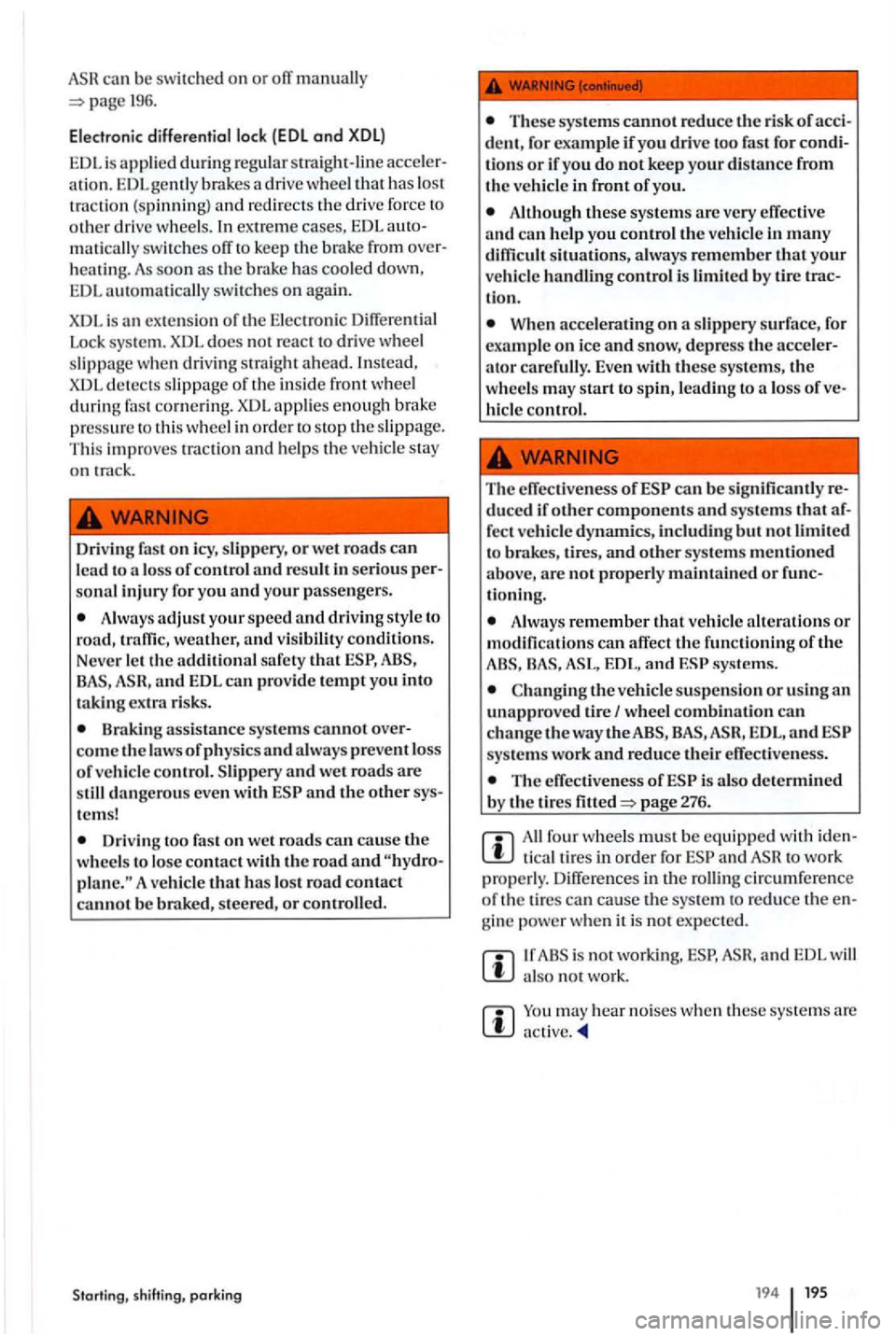
Electr onic differential lock (EDL ond XDL)
EDL is applied during regular straight-li ne at ion. brake s a drive wheel that has lost
trac tio n (sp inn ing) and r edi rects the drive force to
o th er drive whee ls. In ext re m e cases, EDL from h eating. As soon
loss of contro l a nd result in serious sonal inju ry for yo u and yo ur passe ngers.
A lw ays adjust your s peed and driv in g s ty le to
road, traffic,
r is ks.
B rakin g ass istance syste m s cannot come th e laws of p h ys ics an d always prevent loss
o f vehi cle control. Slipp ery and wet roads are
s till da ngero us eve n with
te ms!
D rivin g to o fast on wet roads cause th e
w heels to lose contact w ith the road and A vehicl e that h as los t road contact
canno t b e brake d, steered , or controlled .
Start ing, sh ifti ng, parkin g
These syste ms cannot red uce th e risk of
Althoug h th ese syste m s a re very eff ec tive
a nd can h elp yo u control tile ve hicle in man y
diffi cult situatio ns, always remember th at your vehicle
W hen acce le ra tin g o n a slippery surface, fo r
exam ple o n icc and sn ow, depress the
''
can b e sig nificantl y duced if other components and sys tems that
ti onin g.
A lways re m ember th at ve hicl e
syste m s.
Cha nging the vehi cle su sp ens io n or using an unapproved tire w heel combinati on ca n
c h a ngethewayth eABS, EDL, and syste ms work and reduce their effecti ve ness.
T he effective ness of page 276 .
All fo ur w hee ls must b e equip ped with tic a l tir es in order for to wo rk
properly. Differences in th e
g ine powe r w he n it is not expected.
I f is not working, and EDL will also not work.
active.