Page 202 of 248
Used engine coolant should be disposed of in an appropriate
manner. Follow your community's regulations and standards for recycling
and disposing of automotive fluids.
Coolant refill capacity
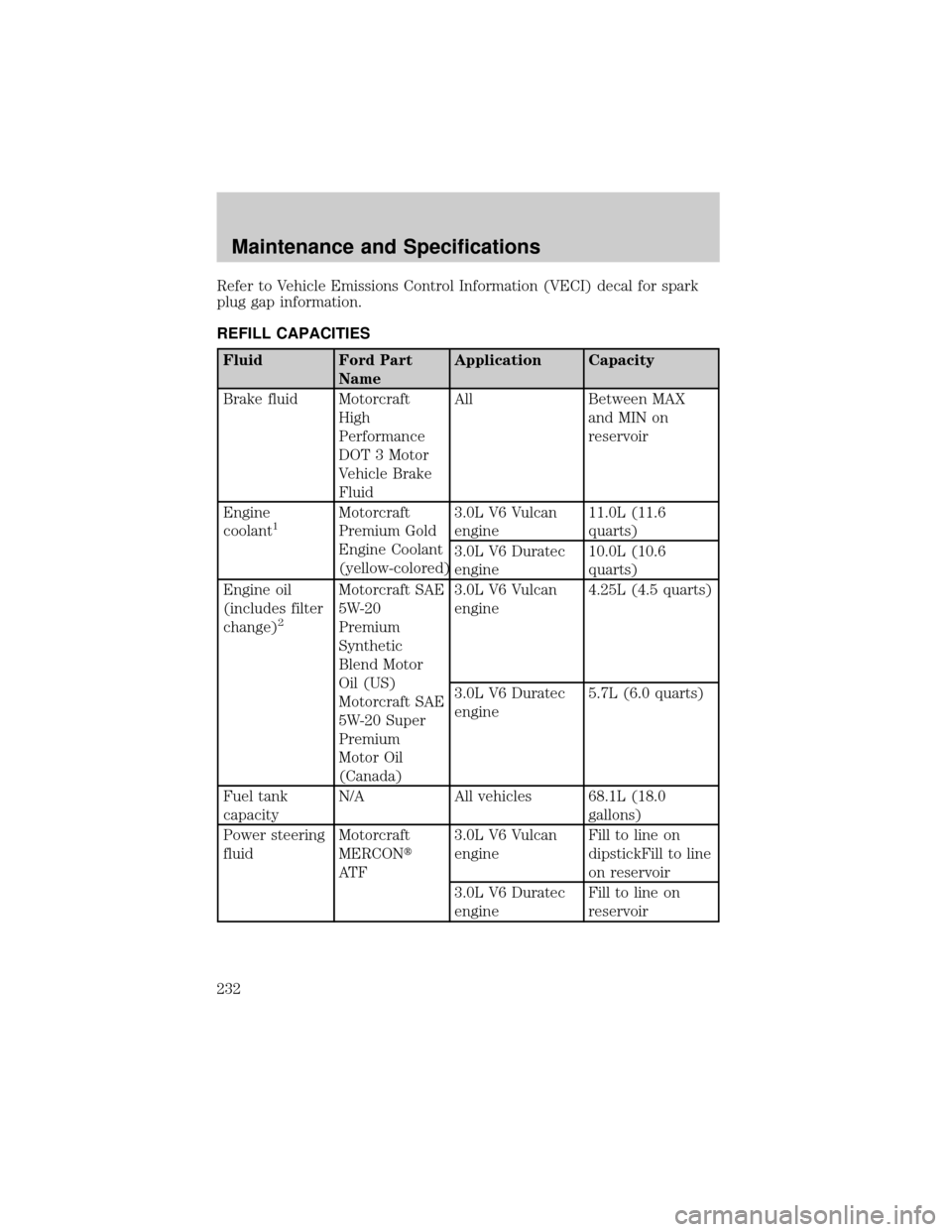
To find out how much fluid your vehicle's cooling system can hold, refer
toRefill capacitiesin this section.
Fill your engine coolant reservoir as outlined inAdding engine coolant
in this section.
Severe climates
If you drive in extremely cold climates (less than ±36É C [±34É F]):
²It may be necessary to increase the coolant concentration
above 50%.
²NEVER increase the coolant concentration above 60%.
²Increased engine coolant concentrations above 60% will
decrease the overheat protection characteristics of the engine
coolant and may cause engine damage.
²Refer to the chart on the coolant container to ensure the
coolant concentration in your vehicle will provide adequate
freeze protection at the temperatures in which you drive in the
winter months.
If you drive in extremely hot climates:
²It is still necessary to maintain the coolant concentration
above 40%.
²NEVER decrease the coolant concentration below 40%.
²Decreased engine coolant concentrations below 40% will
decrease the corrosion protection characteristics of the engine
coolant and may cause engine damage.
²Decreased engine coolant concentrations below 40% will
decrease the freeze protection characteristics of the engine
coolant and may cause engine damage.
²Refer to the chart on the coolant container to ensure the
coolant concentration in your vehicle will provide adequate
protection at the temperatures in which you drive.
Vehicles driven year-round in non-extreme climates should use a 50/50
mixture of engine coolant and distilled water for optimum cooling system
and engine protection.
Maintenance and Specifications
202
Page 215 of 248
1. Start the engine and let it run until it reaches normal operating
temperature (the engine coolant temperature gauge indicator will be
near the center of the normal area between H and C).
2. While the engine idles, turn the steering wheel left and right several
times.
3. Turn the engine off.
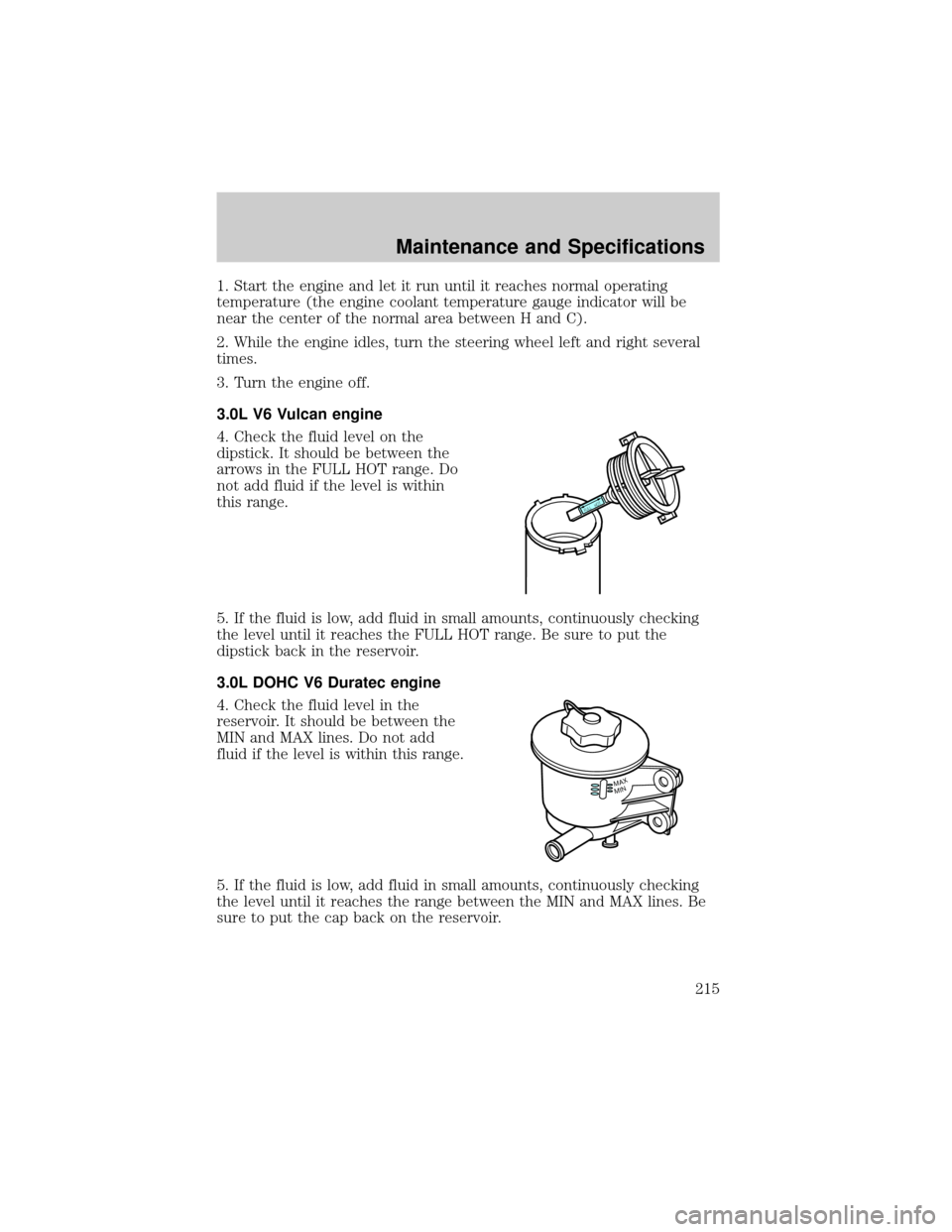
3.0L V6 Vulcan engine
4. Check the fluid level on the
dipstick. It should be between the
arrows in the FULL HOT range. Do
not add fluid if the level is within
this range.
5. If the fluid is low, add fluid in small amounts, continuously checking
the level until it reaches the FULL HOT range. Be sure to put the
dipstick back in the reservoir.
3.0L DOHC V6 Duratec engine
4. Check the fluid level in the
reservoir. It should be between the
MIN and MAX lines. Do not add
fluid if the level is within this range.
5. If the fluid is low, add fluid in small amounts, continuously checking
the level until it reaches the range between the MIN and MAX lines. Be
sure to put the cap back on the reservoir.
FULL HOT
MINMAX
Maintenance and Specifications
215
Page 232 of 248
Refer to Vehicle Emissions Control Information (VECI) decal for spark
plug gap information.
REFILL CAPACITIES
Fluid Ford Part
NameApplication Capacity
Brake fluid Motorcraft
High
Performance
DOT 3 Motor
Vehicle Brake
FluidAll Between MAX
and MIN on
reservoir
Engine
coolant
1Motorcraft
Premium Gold
Engine Coolant
(yellow-colored)3.0L V6 Vulcan
engine11.0L (11.6
quarts)
3.0L V6 Duratec
engine10.0L (10.6
quarts)
Engine oil
(includes filter
change)
2
Motorcraft SAE
5W-20
Premium
Synthetic
Blend Motor
Oil (US)
Motorcraft SAE
5W-20 Super
Premium
Motor Oil
(Canada)3.0L V6 Vulcan
engine4.25L (4.5 quarts)
3.0L V6 Duratec
engine5.7L (6.0 quarts)
Fuel tank
capacityN/A All vehicles 68.1L (18.0
gallons)
Power steering
fluidMotorcraft
MERCONt
AT F3.0L V6 Vulcan
engineFill to line on
dipstickFill to line
on reservoir
3.0L V6 Duratec
engineFill to line on
reservoir
Maintenance and Specifications
232