Page 697 of 3870
2. Remove the battery from the vehicle.
3. Inspect battery carrier for damage caused by loss of acid from the battery. If
acid damage is present, it is necessary to clean area with a solution of clean
warm water and baking soda. Scrub area with a stiff bristle brush. Wipe clean
with a cloth moistened with ammonia or baking soda in water.
4. Clean the battery, especially the top with same solutions as described in step 3.
5. Inspect the battery case and cover for cracks. If cracks are present, battery must
be replaced.
6. Clean the battery post with a suitable battery post cleaning tool.
7. Clean the inside surfaces of the terminal clamps with a suitable battery
terminal cleaning tool. Replace damaged or frayed cables and broken terminal
clamps.
8. Install the battery in the vehicle.
9. Connect the positive and negative cables to the battery in the order of mention.
10. Tighten the clamp nut securely. BATTERY CHARGING Battery electrolyte temperature may temporarily be allowed to rise to 55°C (131°F).
Increase of electrolyte temperature above 55°C (131°F) is harmful to the battery,
causing deformation of battery cell, decrease in life of battery, etc.
case is cracked or leaking to protect hands from
the electrolyte. A suitable pair of rubber gloves
(not the household type) should be worn when
removing battery by hand.
WARNING:When batteries are being charged, an explosive gas
forms beneath the cover of each cell. Do not smoke
near batteries on charge or which have recently
been charged. Do not break live circuits at the
terminals of the batteries on charge. A spark will
occur where the live circuit is broken. Keep all open
flames away from the battery.
2004 Mitsubishi Endeavor Limited 2004 ELECTRICAL Battery - Endeavor
Page 708 of 3870
2. With the brake pedal fully released, depress the brake pedal slowly until it
stops.
3. With a measuring device (ruler, etc.) next to the brake pedal, depress the
pedal firmly and measure the distance the pedal traveled.
Q: Is the distance greater than 20 mm (0.8 inch)?
YES: Bleed the brakes to remove air in the fluid (Refer to
PROPORTIONING VALVE FUNCTION TEST < Vehicles without
ABS>
). Then go to Step 7 .
NO: Go to Step 2.
STEP 2. Check the pad for wear.
Refer to DISC BRAKE PAD CHECK AND REPLACEMENT
.
Q: Is the pad thickness outside of specifications?
YES: Replace the part. Then go to Step 7 .
NO: Go to Step 3.
STEP 3. Check the vacuum hose and check valve for damage.
Refer to CHECK VALVE OPERATION CHECK
.
Q: Is there a damage?
YES: Replace the part. Then go to Step 7 .
NO: Go to Step 4.
STEP 4. Check the master cylinder function.
Refer to MASTER CYLINDER FUNCTION CHECK
.
Q: Is there a fault?
YES: Repair it. Then go to Step 7 .
NO: Go to Step 5.
STEP 5. Check for brake fluid leaks
.
2004 Mitsubishi Endeavor LS
2004 BRAKES Basic Brake System - Endeavor
Page 709 of 3870
Q: Is there a leak?
YES: Check the connection for looseness, corrosion, etc. Clean and repair
as necessary. If leaking in any tube or hose section, replace the complete
tube or hose. Then go to Step 7 .
NO: Go to Step 6.
STEP 6. Check the clearance (too much) between the push rod and
primary piston.
Refer to MASTER CYLINDER ASSEMBLY AND BRAKE BOOSTER
.
Q: Is the clearance outside of specifications?
YES: Adjust the clearance. Then go to Step 7.
NO: Go to Step 7.
STEP 7. Recheck symptom.
Q: Is the symptom eliminated?
YES: The procedure is complete.
NO: Start over at Step 1 . If a new symptom surfaces, refer to the
SYMPTOM CHART
.
INSPECTION PROCEDURE 4: BRAKE DRAG DIAGNOSIS
STEP 1. Check the parking brake operating lever return.
2004 Mitsubishi Endeavor LS
2004 BRAKES Basic Brake System - Endeavor
Page 736 of 3870
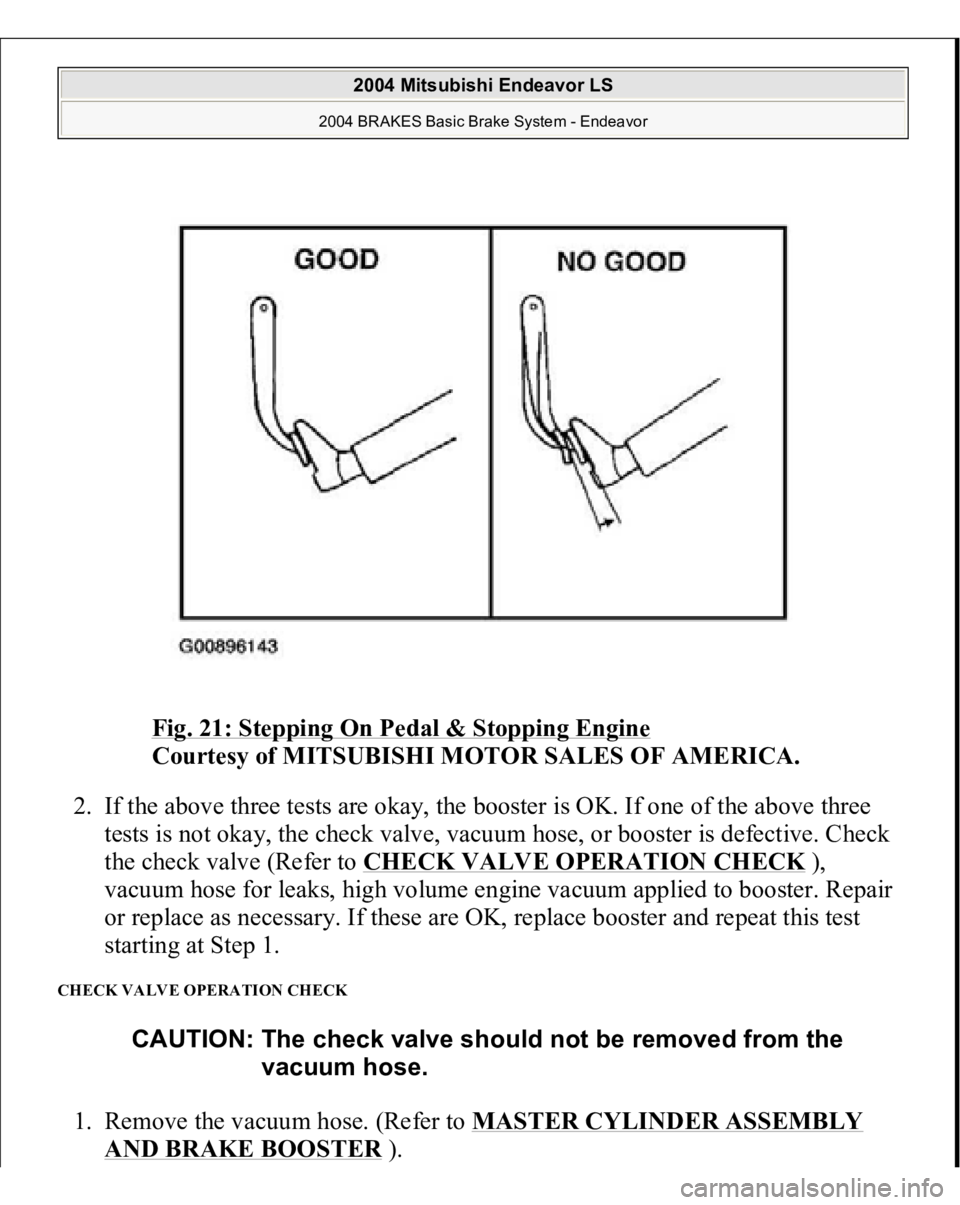
Fig. 21: Stepping On Pedal & Stopping Engine
Courtesy of MITSUBISHI MOTOR SALES OF AMERICA.
2. If the above three tests are okay, the booster is OK. If one of the above three
tests is not okay, the check valve, vacuum hose, or booster is defective. Check
the check valve (Refer to CHECK VALVE OPERATION CHECK
),
vacuum hose for leaks, high volume engine vacuum applied to booster. Repair
or replace as necessary. If these are OK, replace booster and repeat this test
starting at Step 1.
CHECK VALVE OPERATION CHECK 1. Remove the vacuum hose. (Refer to MASTER CYLINDER ASSEMBLY
AND BRAKE BOOSTE
R).
CAUTION: The check valve should not be removed from the
vacuum hose.
2004 Mitsubishi Endeavor LS
2004 BRAKES Basic Brake System - Endeavor
Page 993 of 3870
CENTRAL DOOR LOCKING SYSTEM DIAGNOSIS The central door locking system is controlled by the simplified wiring system
(SWS). Refer to SYMPTOM CHART
.
POWER WINDOW DIAGNOSIS The power window is controlled by the simplified wiring system (SWS). Refer to
SYMPTOM CHART
.
DOOR DIAGNOSIS INTRODUCTION TO GLASS AND DOOR DIAGNOSIS Glass and door faults include water leaks and improper opening and closing. Causes
for these faults can include faults in the glass, weatherstrip, drain hole, waterproof
film or door installation. GLASS AND DOOR DIAGNOSTIC TROUBLESHOOTING STRATEGY Use these steps to plan your diagnostic strategy. If you follow them carefully, you
will be sure that you have exhausted most of the possible ways to find a glass and
door fault.
1. Gather information from the customer.
2. Verify that the condition described by the customer exists.
3. Find the malfunction by following the Symptom Chart.
4. Verify malfunction is eliminated. SYMPTOM CHART SYMPTOM REFERENCE SYMPTOM
INSPECTION
PROCEDURE
REFERENCE PAGE
Water leak through door
window glass
1
INSPECTION
PROCEDURE 1: Water
Leak Throu
gh Door
Window Glass
2004 Mitsubishi Endeavor LS
2004 BODY & ACCESSORIES Door - Endeavor
Page 994 of 3870
SYMPTOM PROCEDURES INSPECTION PROCEDURE 1: Water Leak Through Door Window Glass DIAGNOSIS
STEP 1. Check the window Check the glass runchannel.
Q: Is the window glass runchannel in good condition?
YES: Go to Step 2.
Door window glass
malfunction
2
INSPECTION
PROCEDURE 2: Door
Window Glass Malfunction
Water leak through door
edge
3
INSPECTION
PROCEDURE 3: Water
Leak Throu
gh Door Edge
Water leak from door
center
4
INSPECTION
PROCEDURE 4: Water Leak from Door Center
Door hard to open
5
INSPECTION
PROCEDURE 5: Door
Hard to Open
Door does not open or
close completely
6
INSPECTION
PROCEDURE 6: Door Does Not Open or Close
Completely
Uneven gap between
body
7
INSPECTION
PROCEDURE 7:
Uneven Gap Between
Body
Wind noise around door
8
INSPECTION
PROCEDURE 8: Wind
Noise Around Door
2004 Mitsubishi Endeavor LS
2004 BODY & ACCESSORIES Door - Endeavor
Page 995 of 3870
NO: Replace the weatherstrip, then go to Step 4 .
STEP 2. Check the door window glass installation.
Q: Is the door window glass installed correctly?
YES: Go to Step 3.
NO: Reinstall the door window glass (Refer to DOOR GLASS AND REGULATOR
). Then go to Step 4 .
STEP 3. Check the clearance at the top of the door window glass.
Q: Is the clearance at the top of the door window glass correct?
YES: Go to Step 4.
NO: Adjust the door window glass. Refer to DOOR WINDOW GLASS
ADJUSTMENT
. Then go to Step 4.
STEP 4. Retest the system.
Q: Is any water leaking?
YES: Return to Step 1 .
NO: The procedure is complete.
INSPECTION PROCEDURE 2: Door Window Glass Malfunction DIAGNOSIS
STEP 1. Check the door window glass installation condition.
Q: Is the door window installed correctly?
YES: Go to Step 2.
NO: Reinstall the door window glass (Refer to DOOR GLASS AND
REGULATOR
). Then go to Step 4 .
STEP 2. Check the door sash.
Q: Is the door sash in good condition?
2004 Mitsubishi Endeavor LS
2004 BODY & ACCESSORIES Door - Endeavor
Page 996 of 3870
YES: Go to Step 3.
NO: Repair or replace door sash, then go to Step 4 .
STEP 3. Inspect the window regulator assembly.
Q: Is the window regulator assembly in good condition?
YES: Go to Step 4.
NO: Repair or replace the window regulator assembly, then go to Step 4.
STEP 4. Retest the system.
Q: Does the door window operate correctly?
YES: The procedure is complete.
NO: Return to Step 1 .
INSPECTION PROCEDURE 3: Water Leak Through Door Edge DIAGNOSIS
STEP 1. Check the weatherstrip.
Q: Is the weatherstrip in good condition?
YES: Go to Step 2.
NO: Replace the weatherstrip, then go to Step 3 .
STEP 2. Check the door fit (alignment).
Q: Is the door fit (alignment) correct?
YES: Go to Step 3.
NO: Adjust the door fit. (Refer to DOOR FIT ADJUSTMENT
). Then
go to Step 3.
STEP 3. Retest the system.
Q: Is any water leaking?
YES: Return to Ste
p 1 .
2004 Mitsubishi Endeavor LS
2004 BODY & ACCESSORIES Door - Endeavor