Page 79 of 240
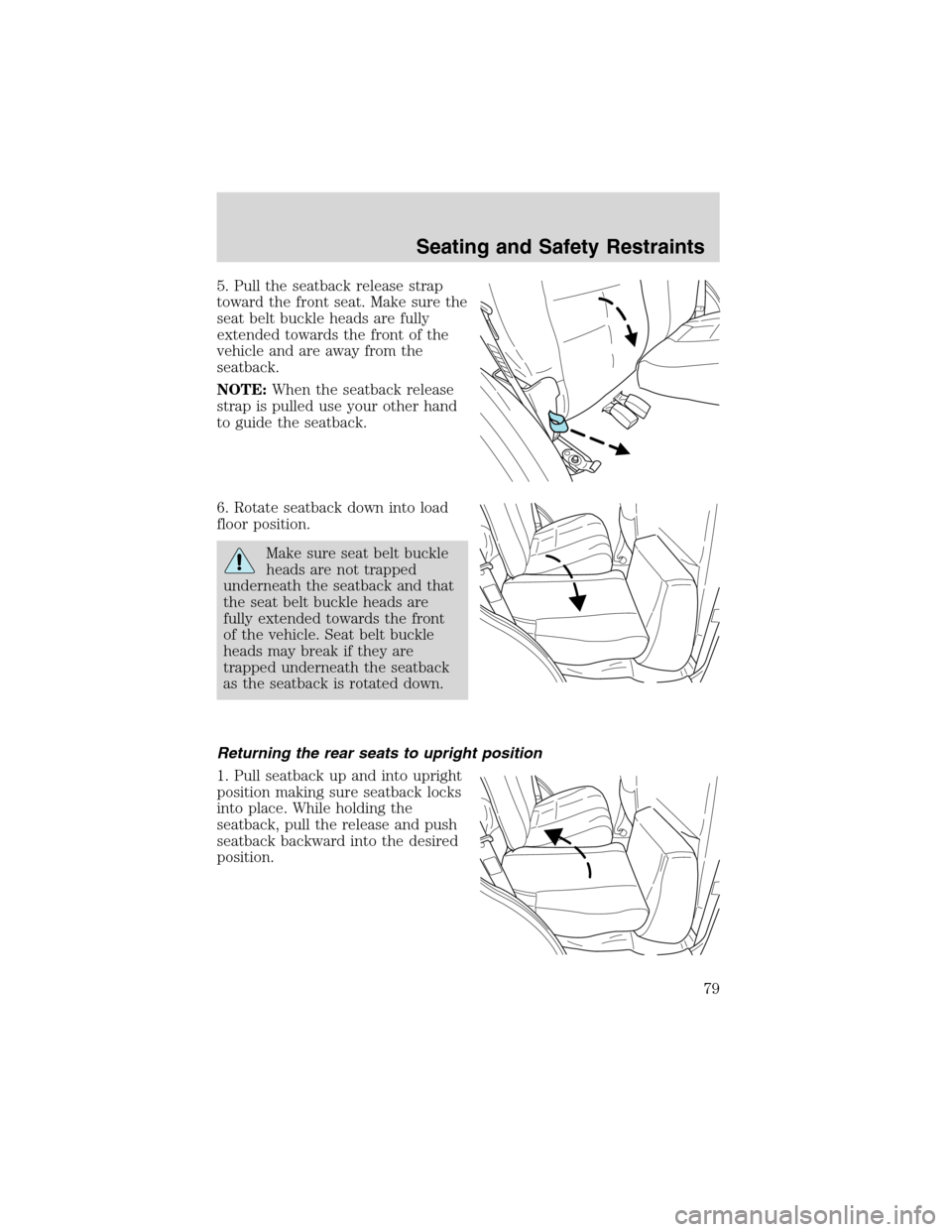
5. Pull the seatback release strap
toward the front seat. Make sure the
seat belt buckle heads are fully
extended towards the front of the
vehicle and are away from the
seatback.
NOTE:When the seatback release
strap is pulled use your other hand
to guide the seatback.
6. Rotate seatback down into load
floor position.
Make sure seat belt buckle
heads are not trapped
underneath the seatback and that
the seat belt buckle heads are
fully extended towards the front
of the vehicle. Seat belt buckle
heads may break if they are
trapped underneath the seatback
as the seatback is rotated down.
Returning the rear seats to upright position
1. Pull seatback up and into upright
position making sure seatback locks
into place. While holding the
seatback, pull the release and push
seatback backward into the desired
position.
Seating and Safety Restraints
79
Page 80 of 240
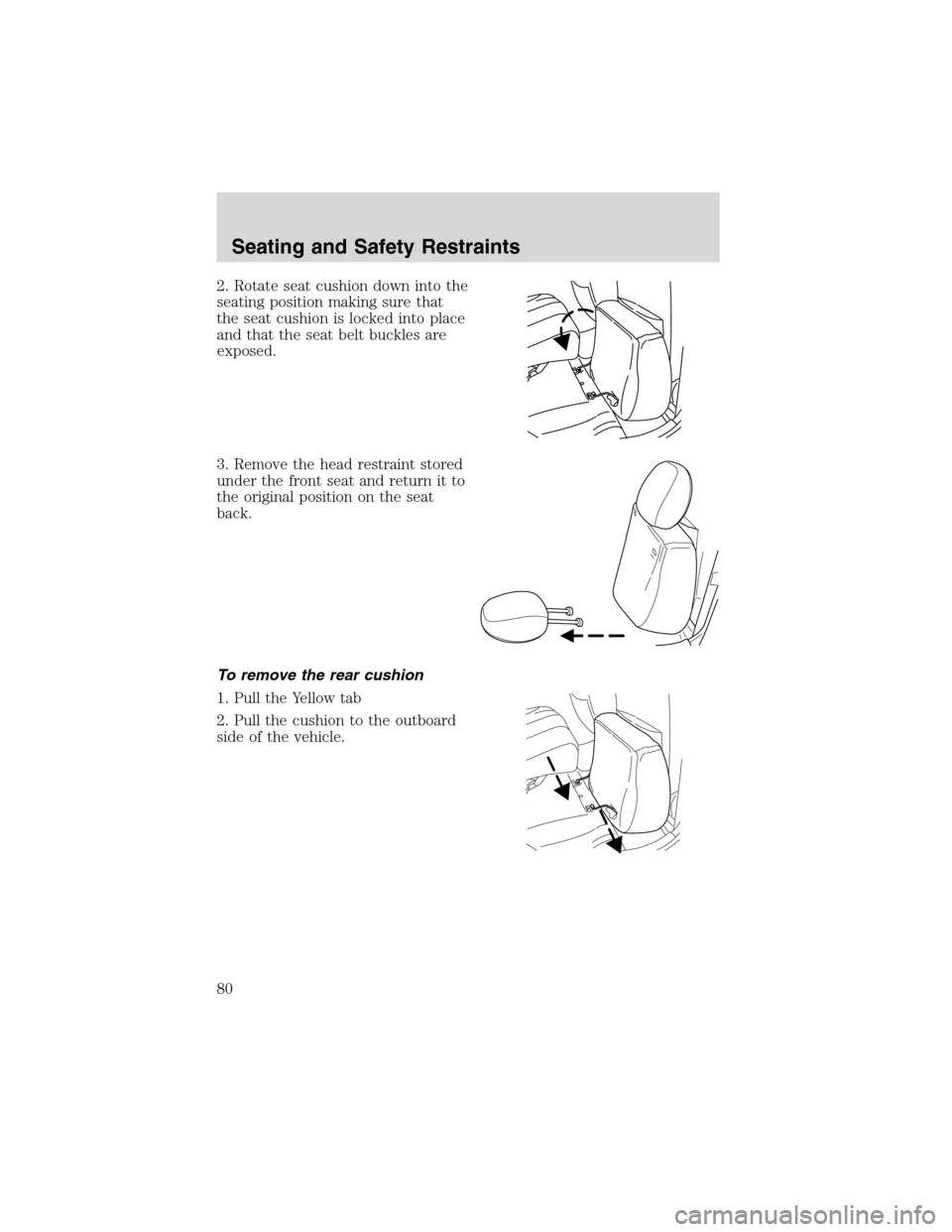
2. Rotate seat cushion down into the
seating position making sure that
the seat cushion is locked into place
and that the seat belt buckles are
exposed.
3. Remove the head restraint stored
under the front seat and return it to
the original position on the seat
back.
To remove the rear cushion
1. Pull the Yellow tab
2. Pull the cushion to the outboard
side of the vehicle.
Seating and Safety Restraints
80
Page 81 of 240
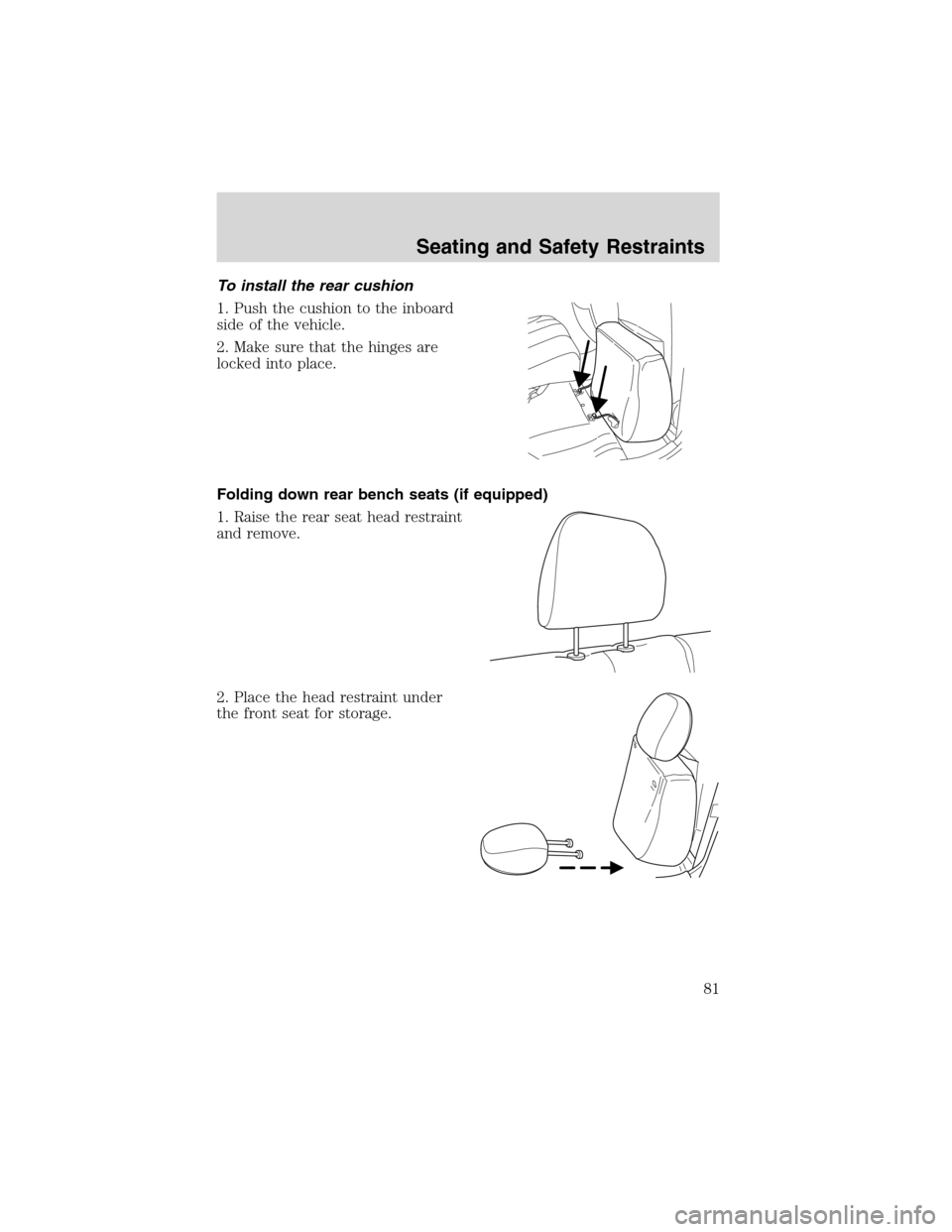
To install the rear cushion
1. Push the cushion to the inboard
side of the vehicle.
2. Make sure that the hinges are
locked into place.
Folding down rear bench seats (if equipped)
1. Raise the rear seat head restraint
and remove.
2. Place the head restraint under
the front seat for storage.
Seating and Safety Restraints
81
Page 82 of 240
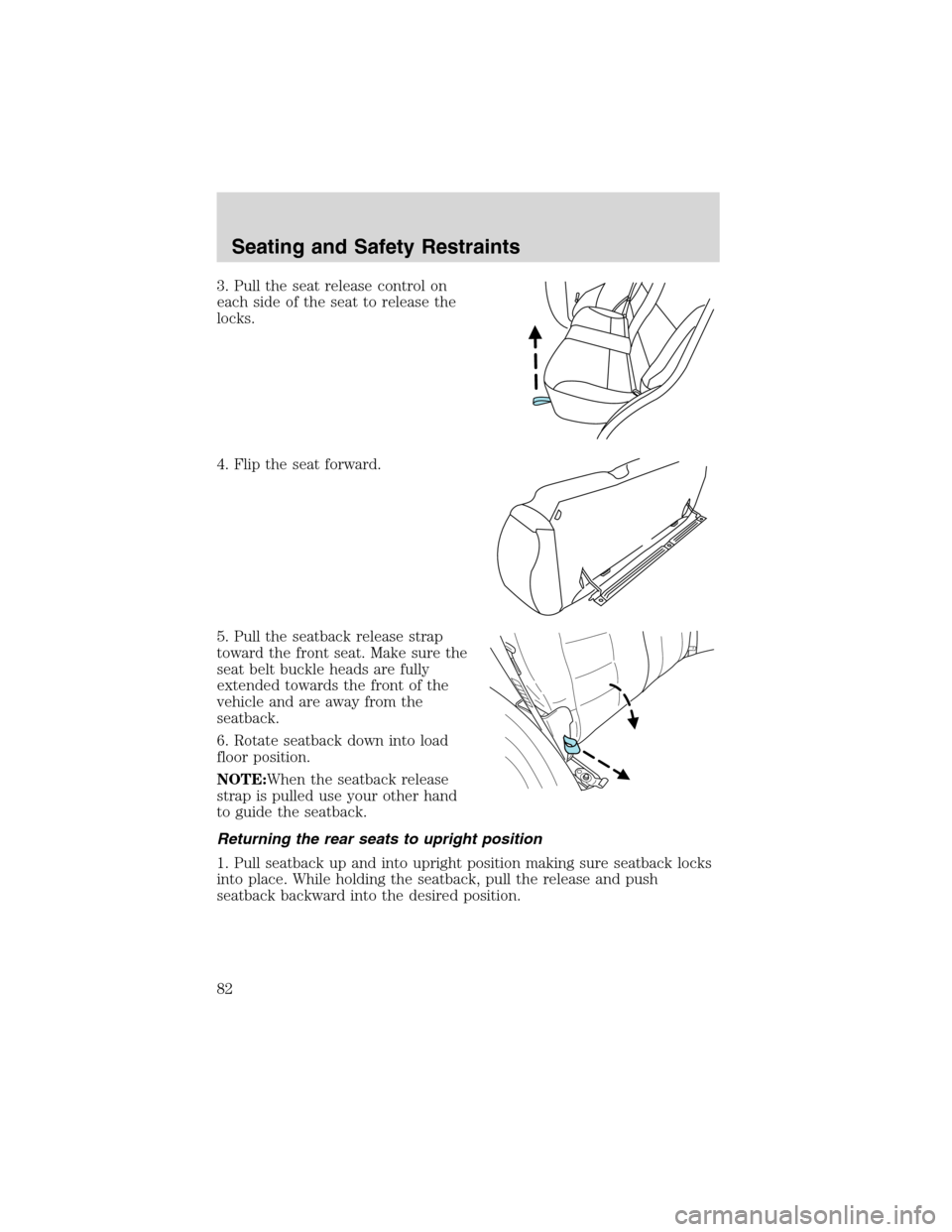
3. Pull the seat release control on
each side of the seat to release the
locks.
4. Flip the seat forward.
5. Pull the seatback release strap
toward the front seat. Make sure the
seat belt buckle heads are fully
extended towards the front of the
vehicle and are away from the
seatback.
6. Rotate seatback down into load
floor position.
NOTE:When the seatback release
strap is pulled use your other hand
to guide the seatback.
Returning the rear seats to upright position
1. Pull seatback up and into upright position making sure seatback locks
into place. While holding the seatback, pull the release and push
seatback backward into the desired position.
Seating and Safety Restraints
82
Page 83 of 240
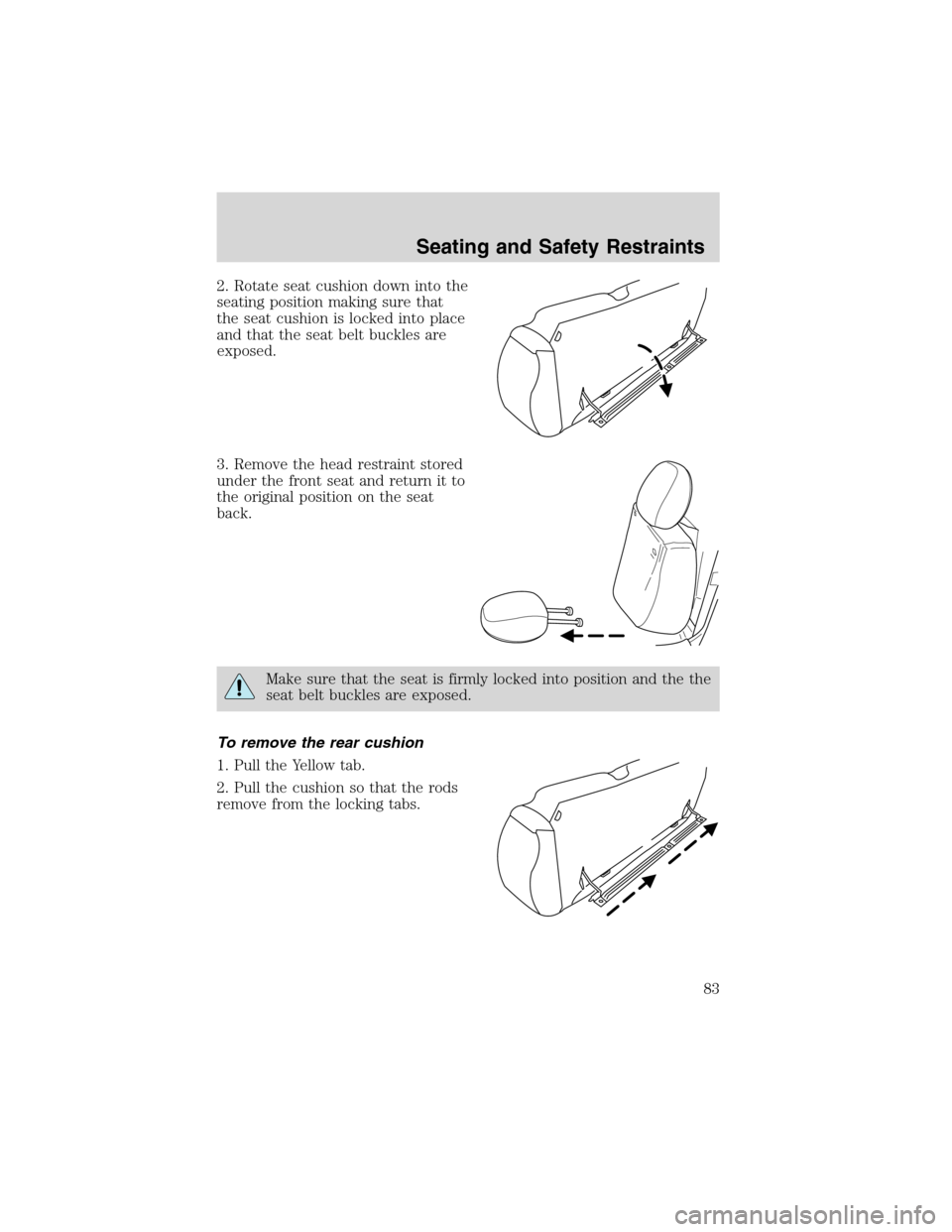
2. Rotate seat cushion down into the
seating position making sure that
the seat cushion is locked into place
and that the seat belt buckles are
exposed.
3. Remove the head restraint stored
under the front seat and return it to
the original position on the seat
back.
Make sure that the seat is firmly locked into position and the the
seat belt buckles are exposed.
To remove the rear cushion
1. Pull the Yellow tab.
2. Pull the cushion so that the rods
remove from the locking tabs.
Seating and Safety Restraints
83
Page 84 of 240
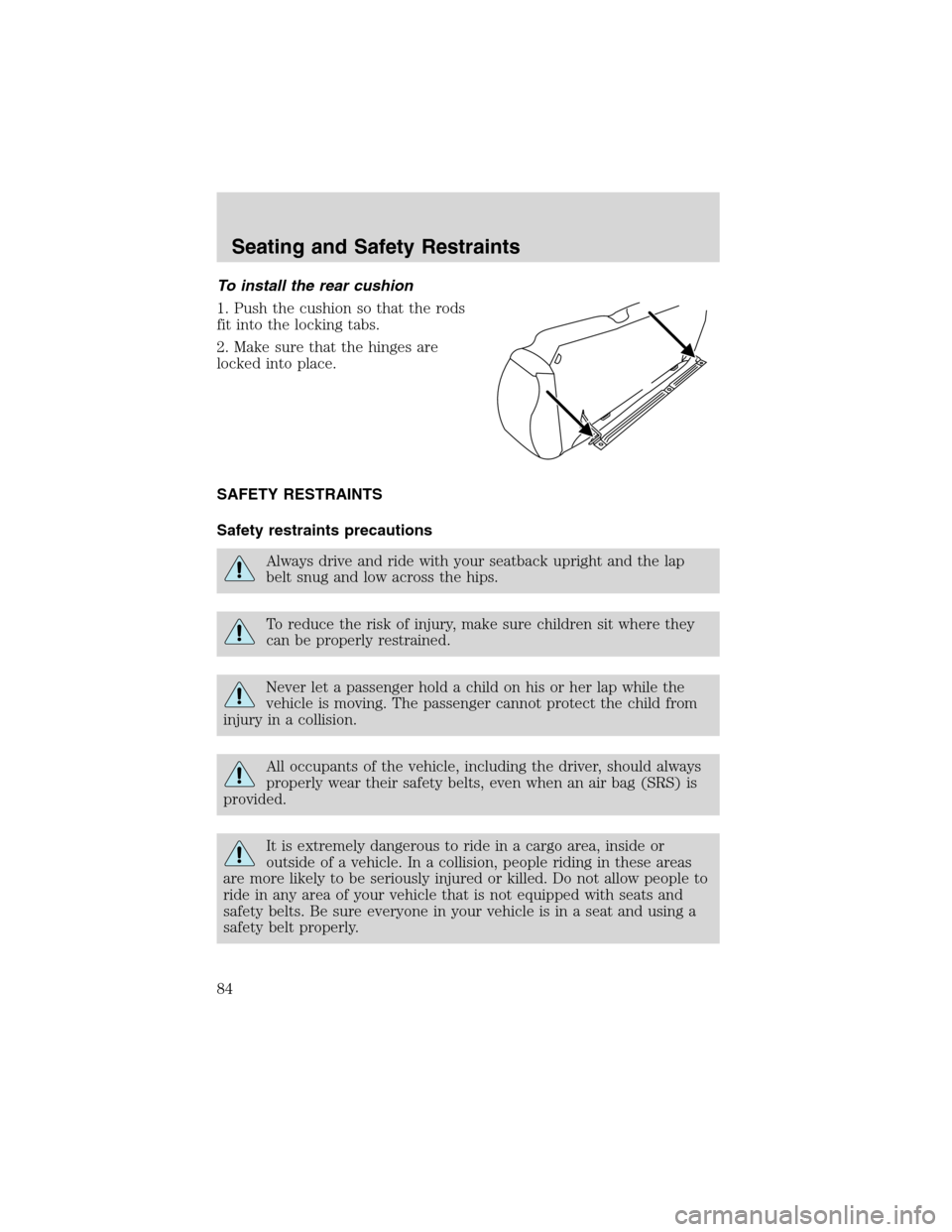
To install the rear cushion
1. Push the cushion so that the rods
fit into the locking tabs.
2. Make sure that the hinges are
locked into place.
SAFETY RESTRAINTS
Safety restraints precautions
Always drive and ride with your seatback upright and the lap
belt snug and low across the hips.
To reduce the risk of injury, make sure children sit where they
can be properly restrained.
Never let a passenger hold a child on his or her lap while the
vehicle is moving. The passenger cannot protect the child from
injury in a collision.
All occupants of the vehicle, including the driver, should always
properly wear their safety belts, even when an air bag (SRS) is
provided.
It is extremely dangerous to ride in a cargo area, inside or
outside of a vehicle. In a collision, people riding in these areas
are more likely to be seriously injured or killed. Do not allow people to
ride in any area of your vehicle that is not equipped with seats and
safety belts. Be sure everyone in your vehicle is in a seat and using a
safety belt properly.
Seating and Safety Restraints
84
Page 85 of 240
In a rollover crash, an unbelted person is significantly more likely
to die than a person wearing a safety belt.
Each seating position in your vehicle has a specific safety belt
assembly which is made up of one buckle and one tongue that
are designed to be used as a pair. 1) Use the shoulder belt on the
outside shoulder only. Never wear the shoulder belt under the arm. 2)
Never swing the safety belt around your neck over the inside shoulder.
3) Never use a single belt for more than one person.
Always transport children 12 years old and under in the back
seat and always properly use appropriate child restraints.
Safety belts and seats can become hot in a vehicle that has been
closed up in sunny weather; they could burn a small child. Check
seat covers and buckles before you place a child anywhere near them.
Energy Management Feature
•This vehicle has a safety belt system with an energy management
feature at the front seating positions to help further reduce the risk of
injury in the event of a head-on collision.
•The front outboard safety belt system has a retractor assembly that is
designed to extend the seat belt webbing in a controlled manner. This
helps reduce the belt force acting on the user’s chest.
BELT AND RETRACTOR ASSEMBLY MUST BE REPLACED if
the safety belt assembly automatic locking retractor feature or
any other safety belt function is not operating properly when checked
according to the procedures in Workshop Manual. Failure to replace
the Belt and Retractor assembly could increase the risk of injury in
collisions.
Seating and Safety Restraints
85
Page 86 of 240
Combination lap and shoulder belts
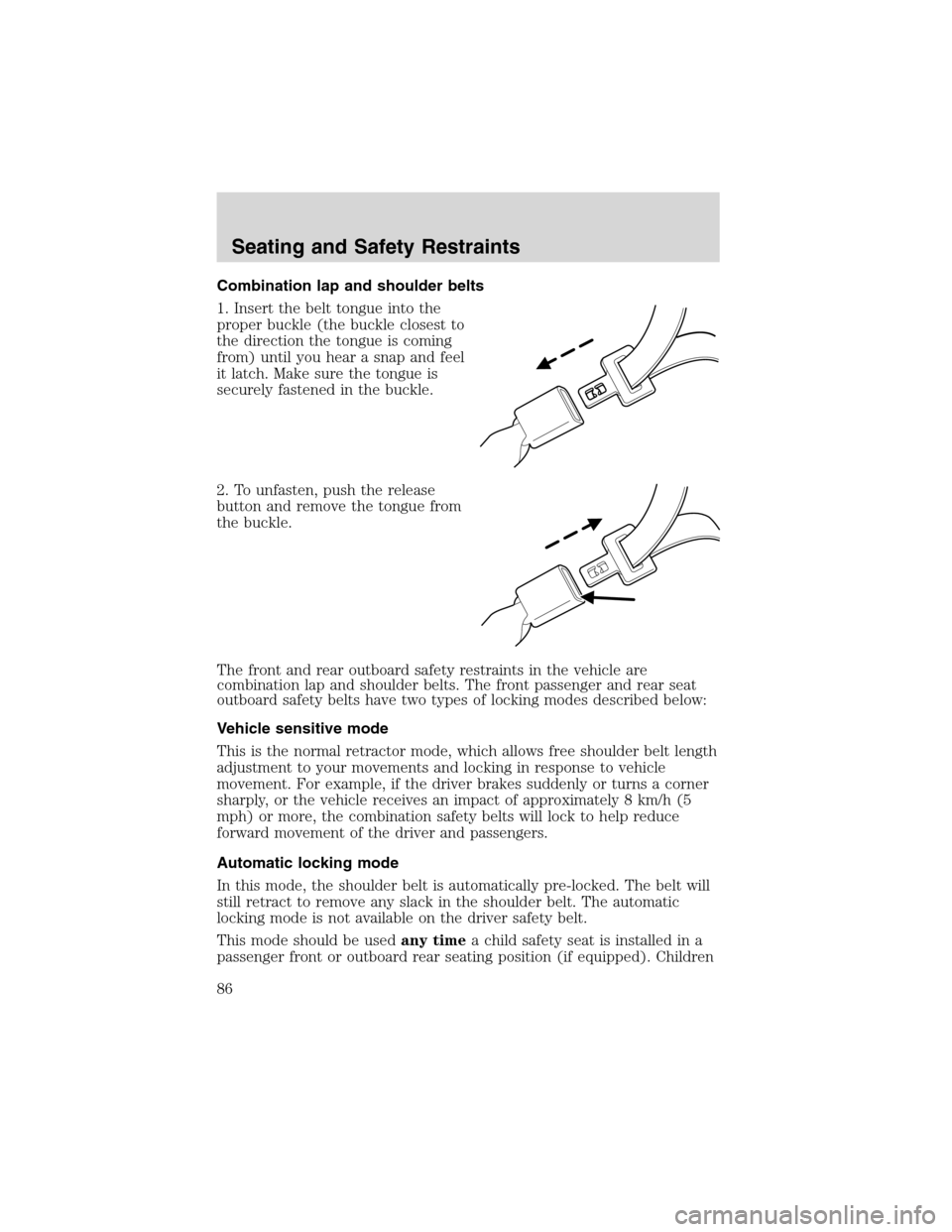
1. Insert the belt tongue into the
proper buckle (the buckle closest to
the direction the tongue is coming
from) until you hear a snap and feel
it latch. Make sure the tongue is
securely fastened in the buckle.
2. To unfasten, push the release
button and remove the tongue from
the buckle.
The front and rear outboard safety restraints in the vehicle are
combination lap and shoulder belts. The front passenger and rear seat
outboard safety belts have two types of locking modes described below:
Vehicle sensitive mode
This is the normal retractor mode, which allows free shoulder belt length
adjustment to your movements and locking in response to vehicle
movement. For example, if the driver brakes suddenly or turns a corner
sharply, or the vehicle receives an impact of approximately 8 km/h (5
mph) or more, the combination safety belts will lock to help reduce
forward movement of the driver and passengers.
Automatic locking mode
In this mode, the shoulder belt is automatically pre-locked. The belt will
still retract to remove any slack in the shoulder belt. The automatic
locking mode is not available on the driver safety belt.
This mode should be usedany timea child safety seat is installed in a
passenger front or outboard rear seating position (if equipped). Children
Seating and Safety Restraints
86