2003 DODGE RAM height
[x] Cancel search: heightPage 651 of 2895
SEAT BELT TURNING LOOP
ADJUSTER
REMOVAL
WARNING: DURING AND FOLLOWING ANY SEAT
BELT OR CHILD RESTRAINT ANCHOR SERVICE,
CAREFULLY INSPECT ALL SEAT BELTS, BUCKLES,
MOUNTING HARDWARE, RETRACTORS, TETHER
STRAPS, AND ANCHORS FOR PROPER INSTALLA-
TION, OPERATION, OR DAMAGE. REPLACE ANY
BELT THAT IS CUT, FRAYED, OR TORN.
STRAIGHTEN ANY BELT THAT IS TWISTED.
TIGHTEN ANY LOOSE FASTENERS. REPLACE ANY
BELT THAT HAS A DAMAGED OR INOPERATIVE
BUCKLE OR RETRACTOR. REPLACE ANY BELT
THAT HAS A BENT OR DAMAGED LATCH PLATE
OR ANCHOR PLATE. REPLACE ANY CHILD
RESTRAINT ANCHOR OR THE UNIT TO WHICH THE
ANCHOR IS INTEGRAL THAT HAS BEEN BENT OR
DAMAGED. NEVER ATTEMPT TO REPAIR A SEAT
BELT OR CHILD RESTRAINT COMPONENT.
ALWAYS REPLACE DAMAGED OR FAULTY SEAT
BELT AND CHILD RESTRAINT COMPONENTS WITH
THE CORRECT, NEW AND UNUSED REPLACEMENT
PARTS LISTED IN THE DAIMLERCHRYSLER MOPAR
PARTS CATALOG.
(1) Unsnap and remove the trim cover from the
front outboard seat belt turning loop to access the
screw that secures the turning loop to the height
adjuster on the upper inner B-pillar. Discard the
removed turning loop trim cover as it is not intended
for reuse.
(2) Remove the screw that secures the seat belt
turning loop to the height adjuster.
(3) Remove the front seat belt turning loop from
the height adjuster.
(4) Remove the upper trim from the inner B-pillar.
(Refer to 23 - BODY/INTERIOR/B-PILLAR UPPER
TRIM - REMOVAL).
(5) Loosen the two screws that secure the seat belt
turning loop height adjuster far enough to remove
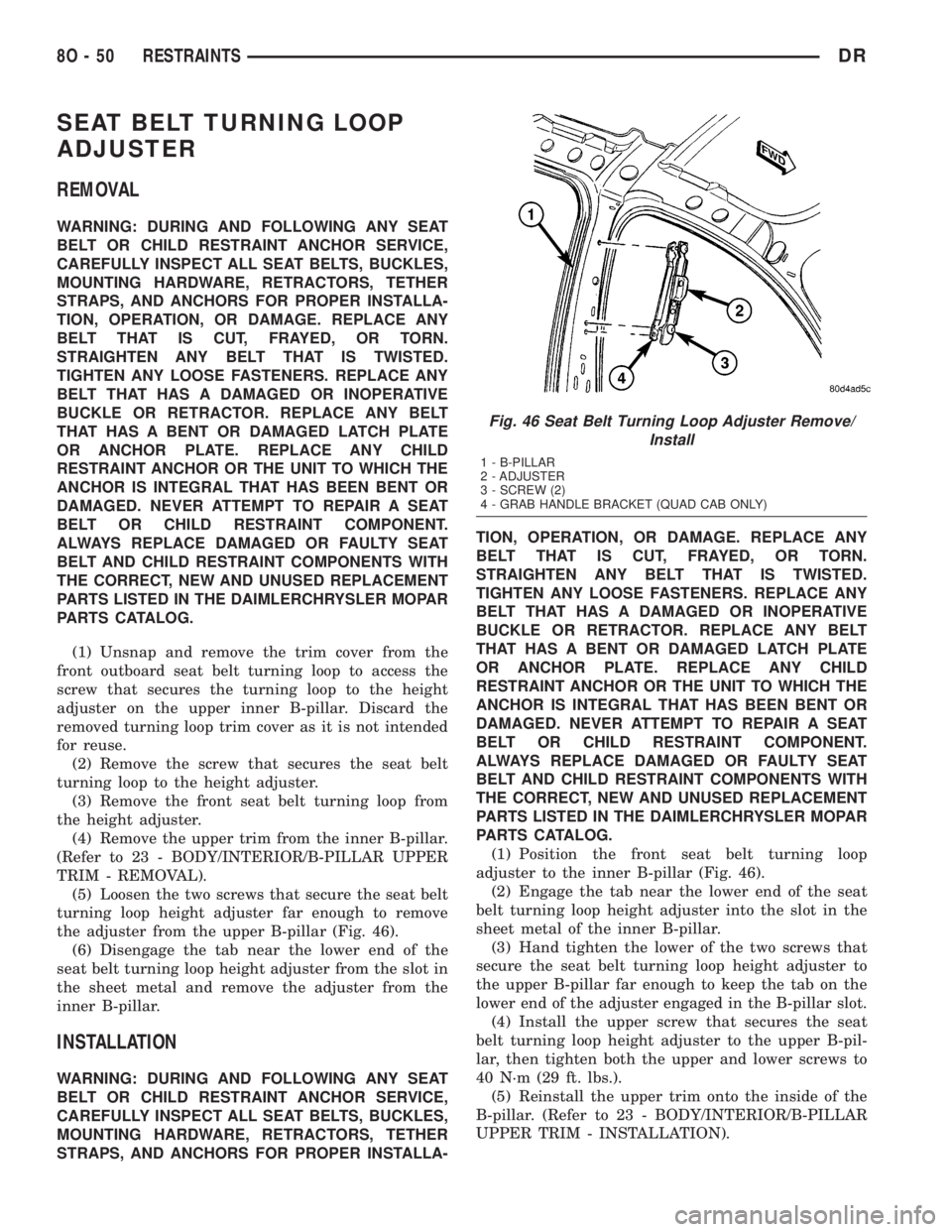
the adjuster from the upper B-pillar (Fig. 46).
(6) Disengage the tab near the lower end of the
seat belt turning loop height adjuster from the slot in
the sheet metal and remove the adjuster from the
inner B-pillar.
INSTALLATION
WARNING: DURING AND FOLLOWING ANY SEAT
BELT OR CHILD RESTRAINT ANCHOR SERVICE,
CAREFULLY INSPECT ALL SEAT BELTS, BUCKLES,
MOUNTING HARDWARE, RETRACTORS, TETHER
STRAPS, AND ANCHORS FOR PROPER INSTALLA-TION, OPERATION, OR DAMAGE. REPLACE ANY
BELT THAT IS CUT, FRAYED, OR TORN.
STRAIGHTEN ANY BELT THAT IS TWISTED.
TIGHTEN ANY LOOSE FASTENERS. REPLACE ANY
BELT THAT HAS A DAMAGED OR INOPERATIVE
BUCKLE OR RETRACTOR. REPLACE ANY BELT
THAT HAS A BENT OR DAMAGED LATCH PLATE
OR ANCHOR PLATE. REPLACE ANY CHILD
RESTRAINT ANCHOR OR THE UNIT TO WHICH THE
ANCHOR IS INTEGRAL THAT HAS BEEN BENT OR
DAMAGED. NEVER ATTEMPT TO REPAIR A SEAT
BELT OR CHILD RESTRAINT COMPONENT.
ALWAYS REPLACE DAMAGED OR FAULTY SEAT
BELT AND CHILD RESTRAINT COMPONENTS WITH
THE CORRECT, NEW AND UNUSED REPLACEMENT
PARTS LISTED IN THE DAIMLERCHRYSLER MOPAR
PARTS CATALOG.
(1) Position the front seat belt turning loop
adjuster to the inner B-pillar (Fig. 46).
(2) Engage the tab near the lower end of the seat
belt turning loop height adjuster into the slot in the
sheet metal of the inner B-pillar.
(3) Hand tighten the lower of the two screws that
secure the seat belt turning loop height adjuster to
the upper B-pillar far enough to keep the tab on the
lower end of the adjuster engaged in the B-pillar slot.
(4) Install the upper screw that secures the seat
belt turning loop height adjuster to the upper B-pil-
lar, then tighten both the upper and lower screws to
40 N´m (29 ft. lbs.).
(5) Reinstall the upper trim onto the inside of the
B-pillar. (Refer to 23 - BODY/INTERIOR/B-PILLAR
UPPER TRIM - INSTALLATION).
Fig. 46 Seat Belt Turning Loop Adjuster Remove/
Install
1 - B-PILLAR
2 - ADJUSTER
3 - SCREW (2)
4 - GRAB HANDLE BRACKET (QUAD CAB ONLY)
8O - 50 RESTRAINTSDR
Page 652 of 2895
(6) Position the seat belt turning loop onto the
height adjuster on the upper inner B-pillar.
(7) Install and tighten the screw that secures the
seat belt turning loop to the height adjuster. Tighten
the screw to 40 N´m (29 ft. lbs.).
(8) Engage the lower snap features of the new trim
cover over the front outboard seat belt turning loop
and, using hand pressure, press firmly and evenly on
the top of the trim cover until it snaps into place.
SIDE CURTAIN AIRBAG
DESCRIPTION
Optional side curtain airbags are available for this
model when it is also equipped with dual front air-
bags. These airbags are passive, inflatable, Supple-
mental Restraint System (SRS) components, and
vehicles with this equipment can be readily identified
by a molded identification trim button with the ªSRS
- AIRBAGº logo located on the headliner above each
A-pillar, and above each B-pillar on quad cab models
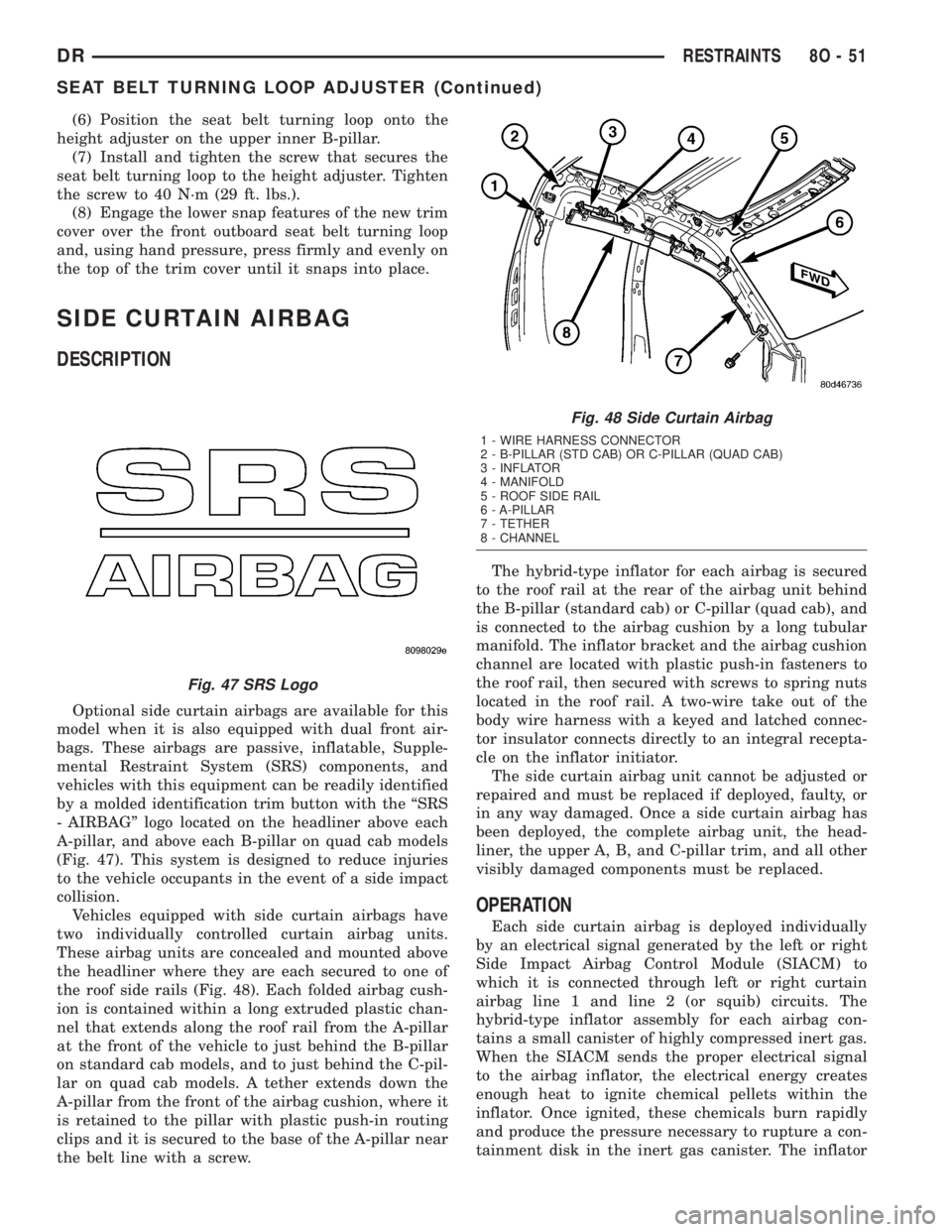
(Fig. 47). This system is designed to reduce injuries
to the vehicle occupants in the event of a side impact
collision.
Vehicles equipped with side curtain airbags have
two individually controlled curtain airbag units.
These airbag units are concealed and mounted above
the headliner where they are each secured to one of
the roof side rails (Fig. 48). Each folded airbag cush-
ion is contained within a long extruded plastic chan-
nel that extends along the roof rail from the A-pillar
at the front of the vehicle to just behind the B-pillar
on standard cab models, and to just behind the C-pil-
lar on quad cab models. A tether extends down the
A-pillar from the front of the airbag cushion, where it
is retained to the pillar with plastic push-in routing
clips and it is secured to the base of the A-pillar near
the belt line with a screw.The hybrid-type inflator for each airbag is secured
to the roof rail at the rear of the airbag unit behind
the B-pillar (standard cab) or C-pillar (quad cab), and
is connected to the airbag cushion by a long tubular
manifold. The inflator bracket and the airbag cushion
channel are located with plastic push-in fasteners to
the roof rail, then secured with screws to spring nuts
located in the roof rail. A two-wire take out of the
body wire harness with a keyed and latched connec-
tor insulator connects directly to an integral recepta-
cle on the inflator initiator.
The side curtain airbag unit cannot be adjusted or
repaired and must be replaced if deployed, faulty, or
in any way damaged. Once a side curtain airbag has
been deployed, the complete airbag unit, the head-
liner, the upper A, B, and C-pillar trim, and all other
visibly damaged components must be replaced.
OPERATION
Each side curtain airbag is deployed individually
by an electrical signal generated by the left or right
Side Impact Airbag Control Module (SIACM) to
which it is connected through left or right curtain
airbag line 1 and line 2 (or squib) circuits. The
hybrid-type inflator assembly for each airbag con-
tains a small canister of highly compressed inert gas.
When the SIACM sends the proper electrical signal
to the airbag inflator, the electrical energy creates
enough heat to ignite chemical pellets within the
inflator. Once ignited, these chemicals burn rapidly
and produce the pressure necessary to rupture a con-
tainment disk in the inert gas canister. The inflator
Fig. 47 SRS Logo
Fig. 48 Side Curtain Airbag
1 - WIRE HARNESS CONNECTOR
2 - B-PILLAR (STD CAB) OR C-PILLAR (QUAD CAB)
3 - INFLATOR
4 - MANIFOLD
5 - ROOF SIDE RAIL
6 - A-PILLAR
7 - TETHER
8 - CHANNEL
DRRESTRAINTS 8O - 51
SEAT BELT TURNING LOOP ADJUSTER (Continued)
Page 1263 of 2895
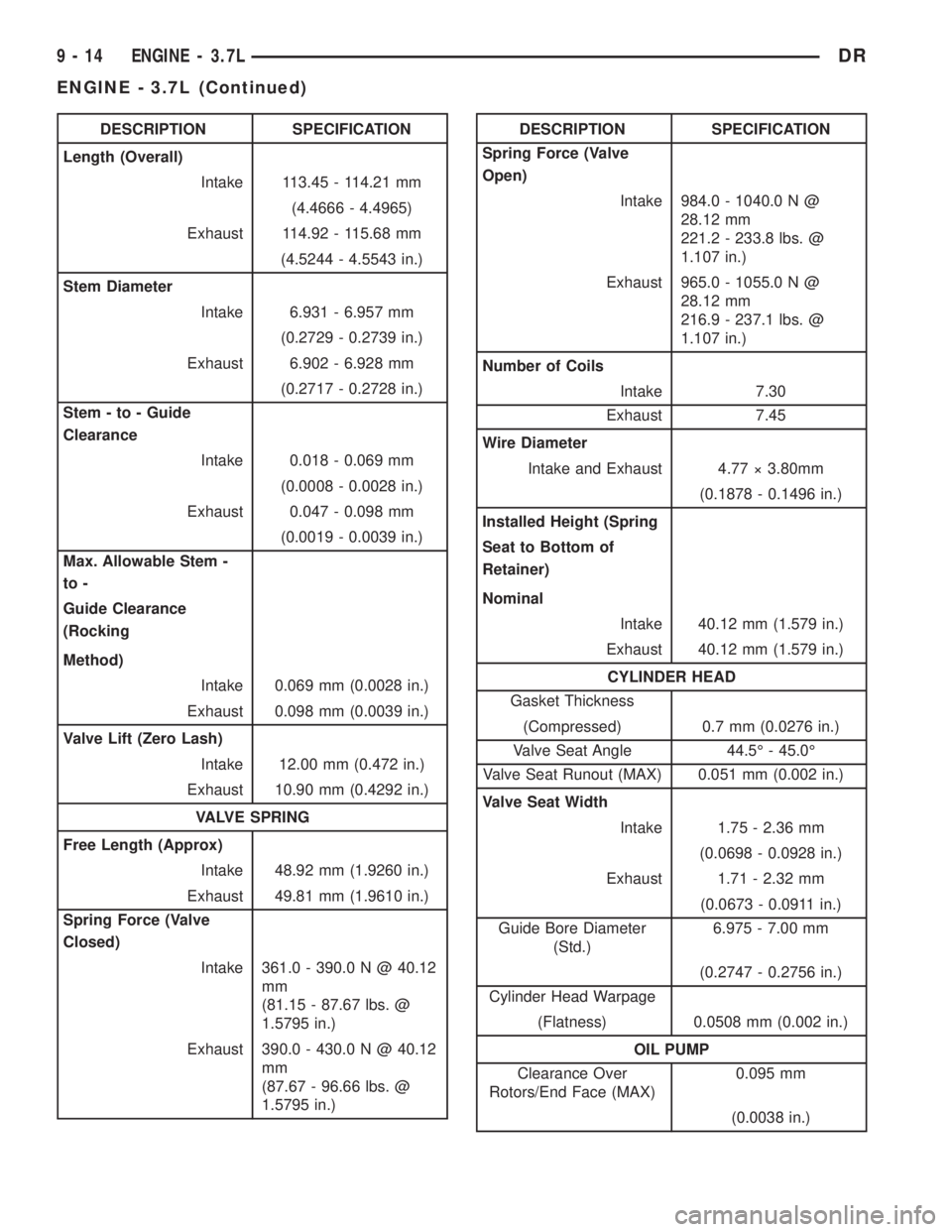
DESCRIPTION SPECIFICATION
Length (Overall)
Intake 113.45 - 114.21 mm
(4.4666 - 4.4965)
Exhaust 114.92 - 115.68 mm
(4.5244 - 4.5543 in.)
Stem Diameter
Intake 6.931 - 6.957 mm
(0.2729 - 0.2739 in.)
Exhaust 6.902 - 6.928 mm
(0.2717 - 0.2728 in.)
Stem - to - Guide
Clearance
Intake 0.018 - 0.069 mm
(0.0008 - 0.0028 in.)
Exhaust 0.047 - 0.098 mm
(0.0019 - 0.0039 in.)
Max. Allowable Stem -
to -
Guide Clearance
(Rocking
Method)
Intake 0.069 mm (0.0028 in.)
Exhaust 0.098 mm (0.0039 in.)
Valve Lift (Zero Lash)
Intake 12.00 mm (0.472 in.)
Exhaust 10.90 mm (0.4292 in.)
VALVE SPRING
Free Length (Approx)
Intake 48.92 mm (1.9260 in.)
Exhaust 49.81 mm (1.9610 in.)
Spring Force (Valve
Closed)
Intake 361.0 - 390.0 N @ 40.12
mm
(81.15 - 87.67 lbs. @
1.5795 in.)
Exhaust 390.0 - 430.0 N @ 40.12
mm
(87.67 - 96.66 lbs. @
1.5795 in.)DESCRIPTION SPECIFICATION
Spring Force (Valve
Open)
Intake 984.0 - 1040.0 N @
28.12 mm
221.2 - 233.8 lbs. @
1.107 in.)
Exhaust 965.0 - 1055.0 N @
28.12 mm
216.9 - 237.1 lbs. @
1.107 in.)
Number of Coils
Intake 7.30
Exhaust 7.45
Wire Diameter
Intake and Exhaust 4.77 ý 3.80mm
(0.1878 - 0.1496 in.)
Installed Height (Spring
Seat to Bottom of
Retainer)
Nominal
Intake 40.12 mm (1.579 in.)
Exhaust 40.12 mm (1.579 in.)
CYLINDER HEAD
Gasket Thickness
(Compressed) 0.7 mm (0.0276 in.)
Valve Seat Angle 44.5É - 45.0É
Valve Seat Runout (MAX) 0.051 mm (0.002 in.)
Valve Seat Width
Intake 1.75 - 2.36 mm
(0.0698 - 0.0928 in.)
Exhaust 1.71 - 2.32 mm
(0.0673 - 0.0911 in.)
Guide Bore Diameter
(Std.)6.975 - 7.00 mm
(0.2747 - 0.2756 in.)
Cylinder Head Warpage
(Flatness) 0.0508 mm (0.002 in.)
OIL PUMP
Clearance Over
Rotors/End Face (MAX)0.095 mm
(0.0038 in.)
9 - 14 ENGINE - 3.7LDR
ENGINE - 3.7L (Continued)
Page 1276 of 2895
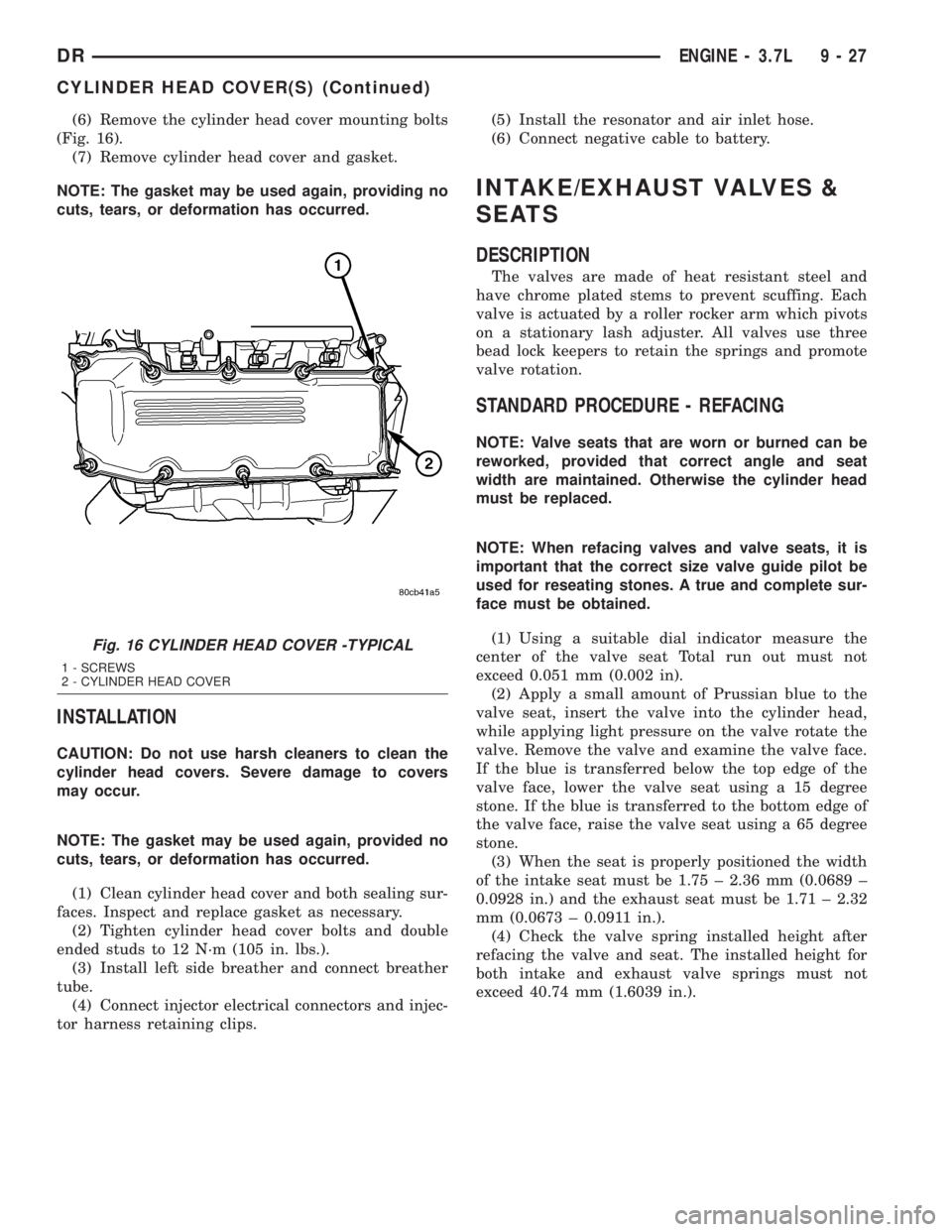
(6) Remove the cylinder head cover mounting bolts
(Fig. 16).
(7) Remove cylinder head cover and gasket.
NOTE: The gasket may be used again, providing no
cuts, tears, or deformation has occurred.
INSTALLATION
CAUTION: Do not use harsh cleaners to clean the
cylinder head covers. Severe damage to covers
may occur.
NOTE: The gasket may be used again, provided no
cuts, tears, or deformation has occurred.
(1) Clean cylinder head cover and both sealing sur-
faces. Inspect and replace gasket as necessary.
(2) Tighten cylinder head cover bolts and double
ended studs to 12 N´m (105 in. lbs.).
(3) Install left side breather and connect breather
tube.
(4) Connect injector electrical connectors and injec-
tor harness retaining clips.(5) Install the resonator and air inlet hose.
(6) Connect negative cable to battery.
INTAKE/EXHAUST VALVES &
SEATS
DESCRIPTION
The valves are made of heat resistant steel and
have chrome plated stems to prevent scuffing. Each
valve is actuated by a roller rocker arm which pivots
on a stationary lash adjuster. All valves use three
bead lock keepers to retain the springs and promote
valve rotation.
STANDARD PROCEDURE - REFACING
NOTE: Valve seats that are worn or burned can be
reworked, provided that correct angle and seat
width are maintained. Otherwise the cylinder head
must be replaced.
NOTE: When refacing valves and valve seats, it is
important that the correct size valve guide pilot be
used for reseating stones. A true and complete sur-
face must be obtained.
(1) Using a suitable dial indicator measure the
center of the valve seat Total run out must not
exceed 0.051 mm (0.002 in).
(2) Apply a small amount of Prussian blue to the
valve seat, insert the valve into the cylinder head,
while applying light pressure on the valve rotate the
valve. Remove the valve and examine the valve face.
If the blue is transferred below the top edge of the
valve face, lower the valve seat using a 15 degree
stone. If the blue is transferred to the bottom edge of
the valve face, raise the valve seat using a 65 degree
stone.
(3) When the seat is properly positioned the width
of the intake seat must be 1.75 ± 2.36 mm (0.0689 ±
0.0928 in.) and the exhaust seat must be 1.71 ± 2.32
mm (0.0673 ± 0.0911 in.).
(4) Check the valve spring installed height after
refacing the valve and seat. The installed height for
both intake and exhaust valve springs must not
exceed 40.74 mm (1.6039 in.).
Fig. 16 CYLINDER HEAD COVER -TYPICAL
1 - SCREWS
2 - CYLINDER HEAD COVER
DRENGINE - 3.7L 9 - 27
CYLINDER HEAD COVER(S) (Continued)
Page 1278 of 2895
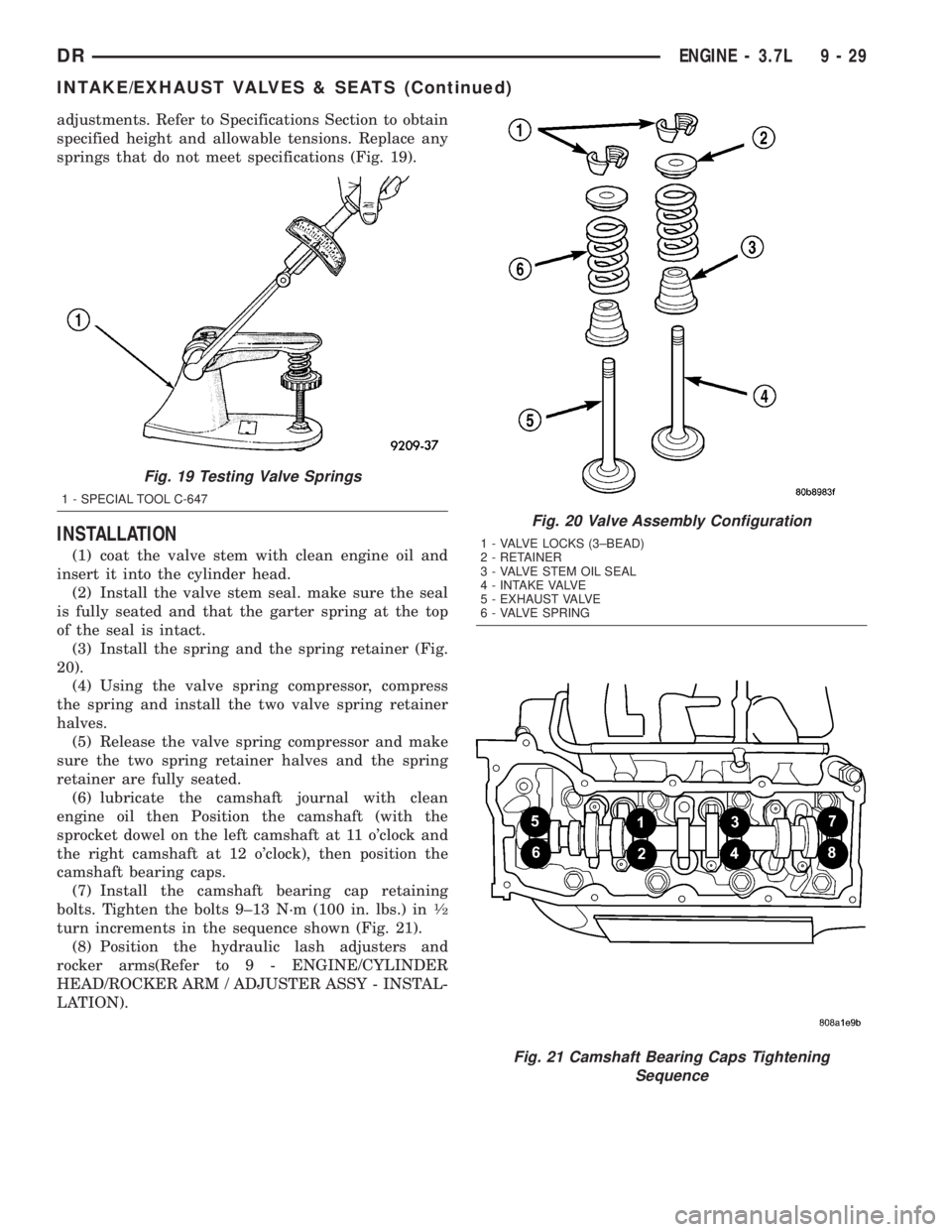
adjustments. Refer to Specifications Section to obtain
specified height and allowable tensions. Replace any
springs that do not meet specifications (Fig. 19).
INSTALLATION
(1) coat the valve stem with clean engine oil and
insert it into the cylinder head.
(2) Install the valve stem seal. make sure the seal
is fully seated and that the garter spring at the top
of the seal is intact.
(3) Install the spring and the spring retainer (Fig.
20).
(4) Using the valve spring compressor, compress
the spring and install the two valve spring retainer
halves.
(5) Release the valve spring compressor and make
sure the two spring retainer halves and the spring
retainer are fully seated.
(6) lubricate the camshaft journal with clean
engine oil then Position the camshaft (with the
sprocket dowel on the left camshaft at 11 o'clock and
the right camshaft at 12 o'clock), then position the
camshaft bearing caps.
(7) Install the camshaft bearing cap retaining
bolts. Tighten the bolts 9±13 N´m (100 in. lbs.) in
1¤2
turn increments in the sequence shown (Fig. 21).
(8) Position the hydraulic lash adjusters and
rocker arms(Refer to 9 - ENGINE/CYLINDER
HEAD/ROCKER ARM / ADJUSTER ASSY - INSTAL-
LATION).
Fig. 19 Testing Valve Springs
1 - SPECIAL TOOL C-647
Fig. 20 Valve Assembly Configuration
1 - VALVE LOCKS (3±BEAD)
2 - RETAINER
3 - VALVE STEM OIL SEAL
4 - INTAKE VALVE
5 - EXHAUST VALVE
6 - VALVE SPRING
Fig. 21 Camshaft Bearing Caps Tightening
Sequence
DRENGINE - 3.7L 9 - 29
INTAKE/EXHAUST VALVES & SEATS (Continued)
Page 1349 of 2895
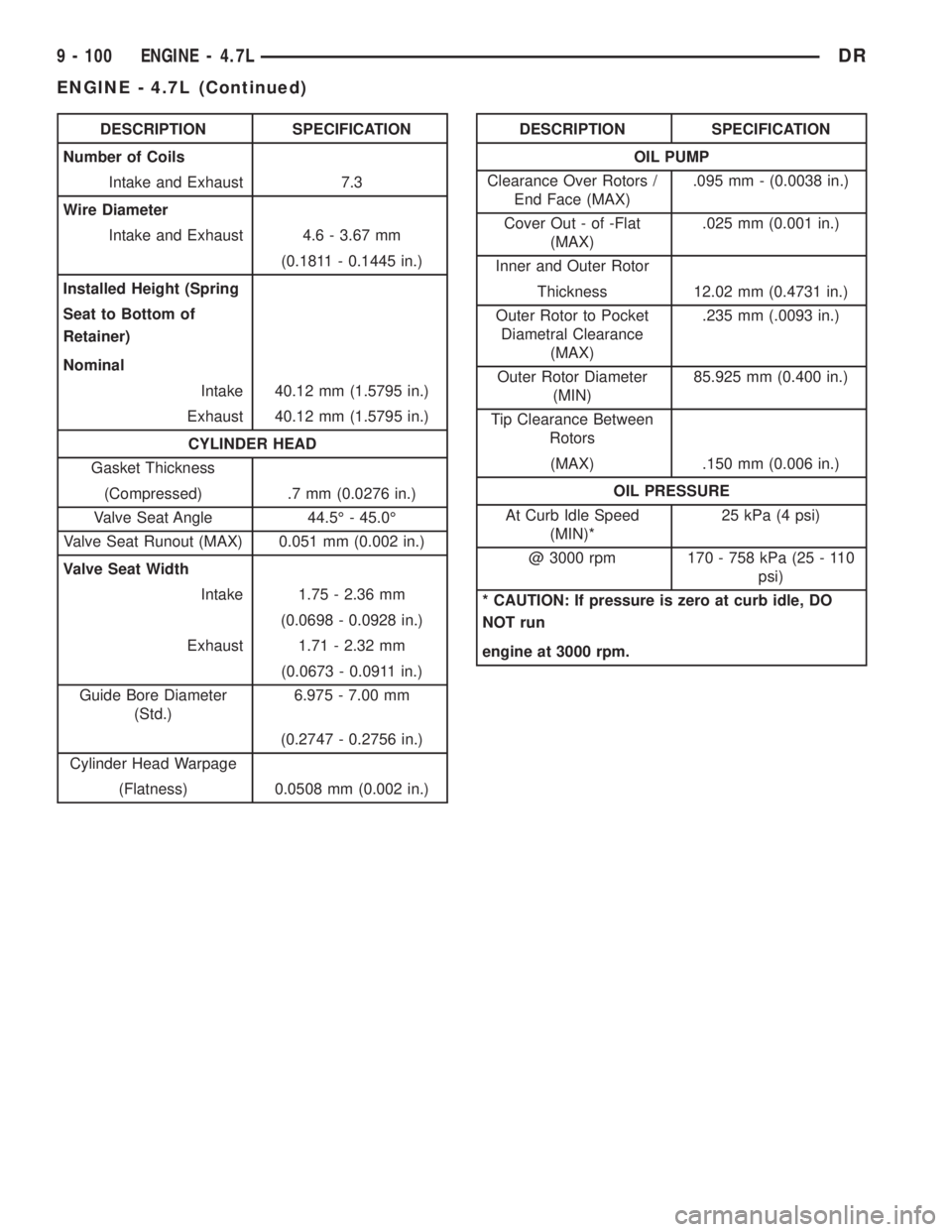
DESCRIPTION SPECIFICATION
Number of Coils
Intake and Exhaust 7.3
Wire Diameter
Intake and Exhaust 4.6 - 3.67 mm
(0.1811 - 0.1445 in.)
Installed Height (Spring
Seat to Bottom of
Retainer)
Nominal
Intake 40.12 mm (1.5795 in.)
Exhaust 40.12 mm (1.5795 in.)
CYLINDER HEAD
Gasket Thickness
(Compressed) .7 mm (0.0276 in.)
Valve Seat Angle 44.5É - 45.0É
Valve Seat Runout (MAX) 0.051 mm (0.002 in.)
Valve Seat Width
Intake 1.75 - 2.36 mm
(0.0698 - 0.0928 in.)
Exhaust 1.71 - 2.32 mm
(0.0673 - 0.0911 in.)
Guide Bore Diameter
(Std.)6.975 - 7.00 mm
(0.2747 - 0.2756 in.)
Cylinder Head Warpage
(Flatness) 0.0508 mm (0.002 in.)DESCRIPTION SPECIFICATION
OIL PUMP
Clearance Over Rotors /
End Face (MAX).095 mm - (0.0038 in.)
Cover Out - of -Flat
(MAX).025 mm (0.001 in.)
Inner and Outer Rotor
Thickness 12.02 mm (0.4731 in.)
Outer Rotor to Pocket
Diametral Clearance
(MAX).235 mm (.0093 in.)
Outer Rotor Diameter
(MIN)85.925 mm (0.400 in.)
Tip Clearance Between
Rotors
(MAX) .150 mm (0.006 in.)
OIL PRESSURE
At Curb Idle Speed
(MIN)*25 kPa (4 psi)
@ 3000 rpm 170 - 758 kPa (25 - 110
psi)
* CAUTION: If pressure is zero at curb idle, DO
NOT run
engine at 3000 rpm.
9 - 100 ENGINE - 4.7LDR
ENGINE - 4.7L (Continued)
Page 1372 of 2895
NOTE: It may be necessary to tap the top of the
valve spring to loosen the spring retainers locks
enough to be removed.
(4) Remove the two spring retainer lock halves.
NOTE: the valve spring is under tension use care
when releasing the valve spring compressor.
(5) Remove the valve spring compressor.
(6) Remove the spring retainer, and the spring.
NOTE: Check for sharp edges on the keeper
grooves. Remove any burrs from the valve stem
before removing the valve from the cylinder head.
(7) Remove the valve from the cylinder head.
NOTE: The valve stem seals are common between
intake and exhaust.
(8) Remove the valve stem seal. Mark the valve for
proper installation.
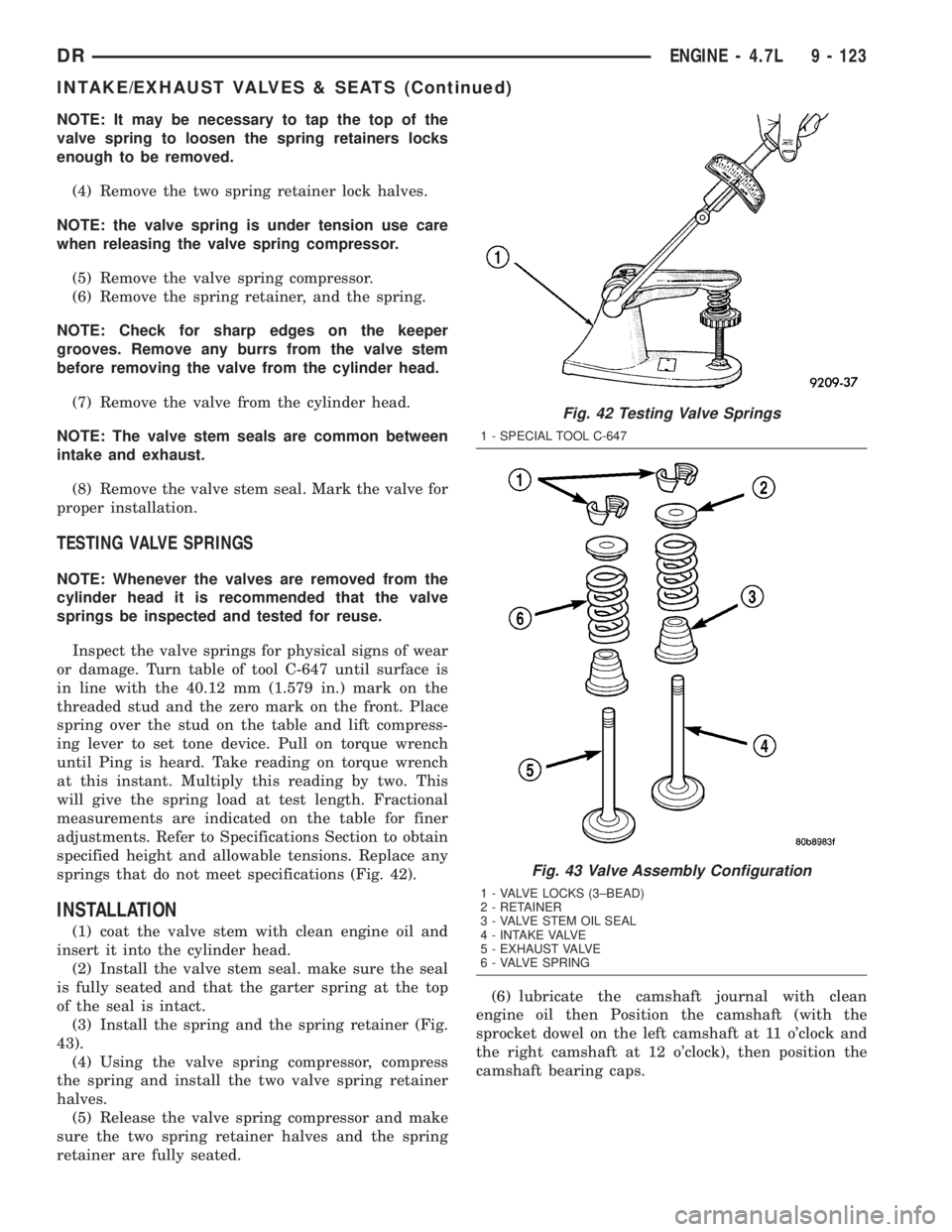
TESTING VALVE SPRINGS
NOTE: Whenever the valves are removed from the
cylinder head it is recommended that the valve
springs be inspected and tested for reuse.
Inspect the valve springs for physical signs of wear
or damage. Turn table of tool C-647 until surface is
in line with the 40.12 mm (1.579 in.) mark on the
threaded stud and the zero mark on the front. Place
spring over the stud on the table and lift compress-
ing lever to set tone device. Pull on torque wrench
until Ping is heard. Take reading on torque wrench
at this instant. Multiply this reading by two. This
will give the spring load at test length. Fractional
measurements are indicated on the table for finer
adjustments. Refer to Specifications Section to obtain
specified height and allowable tensions. Replace any
springs that do not meet specifications (Fig. 42).
INSTALLATION
(1) coat the valve stem with clean engine oil and
insert it into the cylinder head.
(2) Install the valve stem seal. make sure the seal
is fully seated and that the garter spring at the top
of the seal is intact.
(3) Install the spring and the spring retainer (Fig.
43).
(4) Using the valve spring compressor, compress
the spring and install the two valve spring retainer
halves.
(5) Release the valve spring compressor and make
sure the two spring retainer halves and the spring
retainer are fully seated.(6) lubricate the camshaft journal with clean
engine oil then Position the camshaft (with the
sprocket dowel on the left camshaft at 11 o'clock and
the right camshaft at 12 o'clock), then position the
camshaft bearing caps.
Fig. 42 Testing Valve Springs
1 - SPECIAL TOOL C-647
Fig. 43 Valve Assembly Configuration
1 - VALVE LOCKS (3±BEAD)
2 - RETAINER
3 - VALVE STEM OIL SEAL
4 - INTAKE VALVE
5 - EXHAUST VALVE
6 - VALVE SPRING
DRENGINE - 4.7L 9 - 123
INTAKE/EXHAUST VALVES & SEATS (Continued)
Page 1438 of 2895
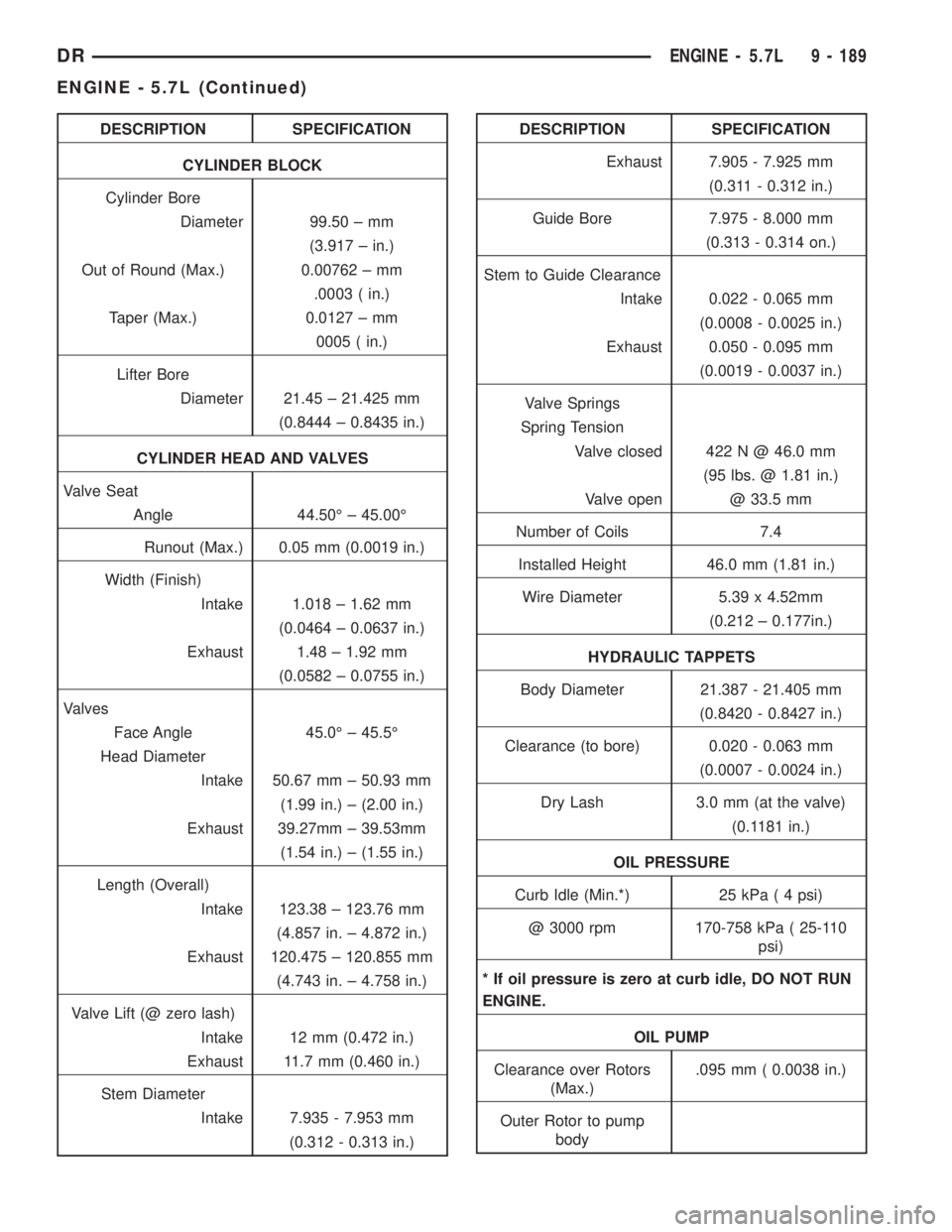
DESCRIPTION SPECIFICATION
CYLINDER BLOCK
Cylinder Bore
Diameter 99.50 ± mm
(3.917 ± in.)
Out of Round (Max.) 0.00762 ± mm
.0003 ( in.)
Taper (Max.) 0.0127 ± mm
0005 ( in.)
Lifter Bore
Diameter 21.45 ± 21.425 mm
(0.8444 ± 0.8435 in.)
CYLINDER HEAD AND VALVES
Valve Seat
Angle 44.50É ± 45.00É
Runout (Max.) 0.05 mm (0.0019 in.)
Width (Finish)
Intake 1.018 ± 1.62 mm
(0.0464 ± 0.0637 in.)
Exhaust 1.48 ± 1.92 mm
(0.0582 ± 0.0755 in.)
Valves
Face Angle 45.0É ± 45.5É
Head Diameter
Intake 50.67 mm ± 50.93 mm
(1.99 in.) ± (2.00 in.)
Exhaust 39.27mm ± 39.53mm
(1.54 in.) ± (1.55 in.)
Length (Overall)
Intake 123.38 ± 123.76 mm
(4.857 in. ± 4.872 in.)
Exhaust 120.475 ± 120.855 mm
(4.743 in. ± 4.758 in.)
Valve Lift (@ zero lash)
Intake 12 mm (0.472 in.)
Exhaust 11.7 mm (0.460 in.)
Stem Diameter
Intake 7.935 - 7.953 mm
(0.312 - 0.313 in.)DESCRIPTION SPECIFICATION
Exhaust 7.905 - 7.925 mm
(0.311 - 0.312 in.)
Guide Bore 7.975 - 8.000 mm
(0.313 - 0.314 on.)
Stem to Guide Clearance
Intake 0.022 - 0.065 mm
(0.0008 - 0.0025 in.)
Exhaust 0.050 - 0.095 mm
(0.0019 - 0.0037 in.)
Valve Springs
Spring Tension
Valve closed 422 N @ 46.0 mm
(95 lbs. @ 1.81 in.)
Valve open @ 33.5 mm
Number of Coils 7.4
Installed Height 46.0 mm (1.81 in.)
Wire Diameter 5.39 x 4.52mm
(0.212 ± 0.177in.)
HYDRAULIC TAPPETS
Body Diameter 21.387 - 21.405 mm
(0.8420 - 0.8427 in.)
Clearance (to bore) 0.020 - 0.063 mm
(0.0007 - 0.0024 in.)
Dry Lash 3.0 mm (at the valve)
(0.1181 in.)
OIL PRESSURE
Curb Idle (Min.*) 25 kPa ( 4 psi)
@ 3000 rpm 170-758 kPa ( 25-110
psi)
* If oil pressure is zero at curb idle, DO NOT RUN
ENGINE.
OIL PUMP
Clearance over Rotors
(Max.).095 mm ( 0.0038 in.)
Outer Rotor to pump
body
DRENGINE - 5.7L 9 - 189
ENGINE - 5.7L (Continued)