Page 157 of 224
Working with the engine on
1. Set the parking brake fully and
ensure the gearshift is securely
latched in P (Park).
2. Block the wheels to prevent
your vehicle from moving
unexpectedly.
Do not start your engine
with the air cleaner
removed and do not remove it
while the engine is running.
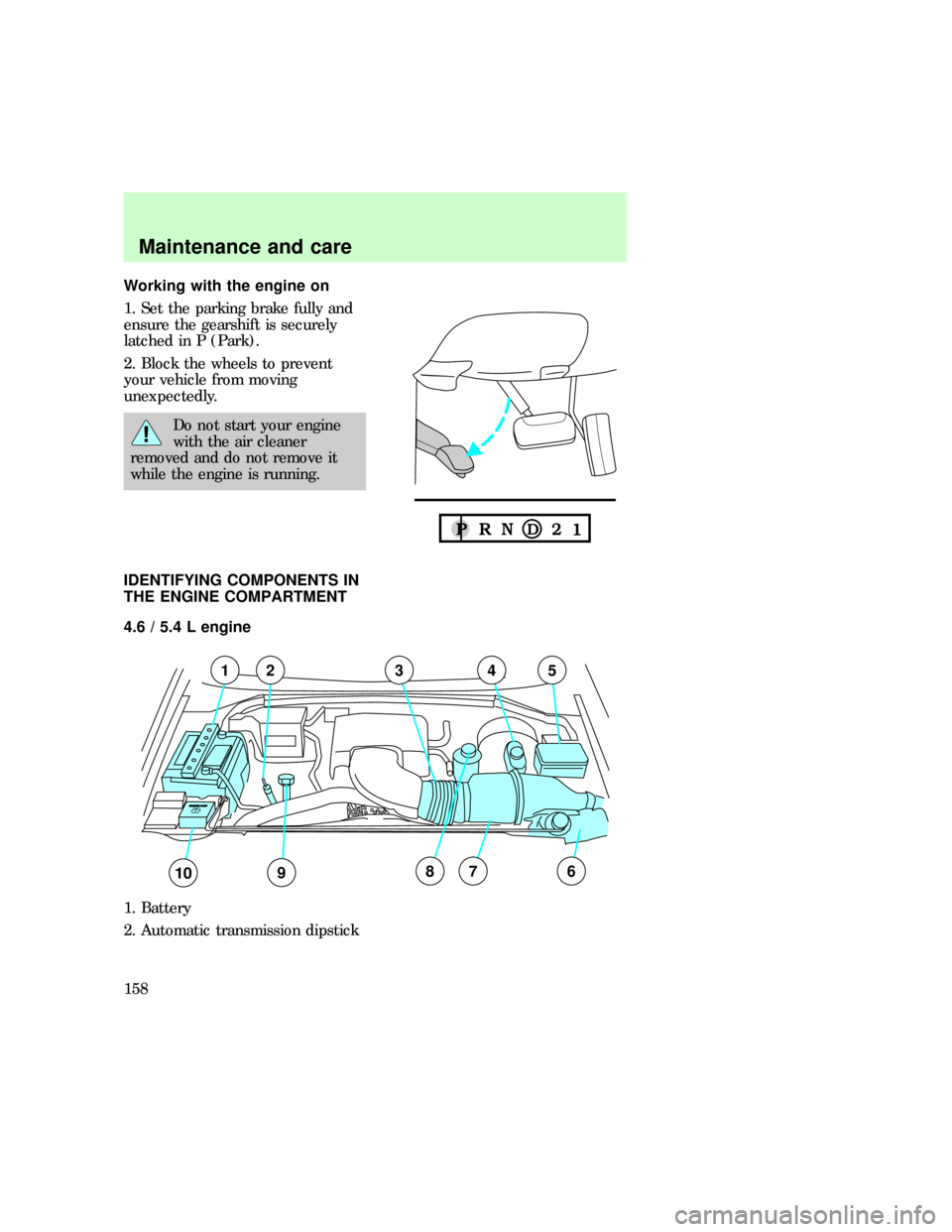
IDENTIFYING COMPONENTS IN
THE ENGINE COMPARTMENT
4.6 / 5.4 L engine
1. Battery
2. Automatic transmission dipstick
12
107869
345
exd_title_engine_compartments
exd_2_engine_compartment
Maintenance and care
158
Page 158 of 224
3. Engine oil dipstick (For more
information on the engine oil
dipstick location and maintenance,
refer toChecking and adding
engine oilin this chapter.)
4. Brake fluid reservoir
5. Engine compartment fuse panel
6. Engine coolant reservoir
7. Air cleaner filter
8. Power steering fluid reservoir
9. Engine oil filler cap
10. Washer fluid reservoir
CHECKING AND ADDING
ENGINE OIL
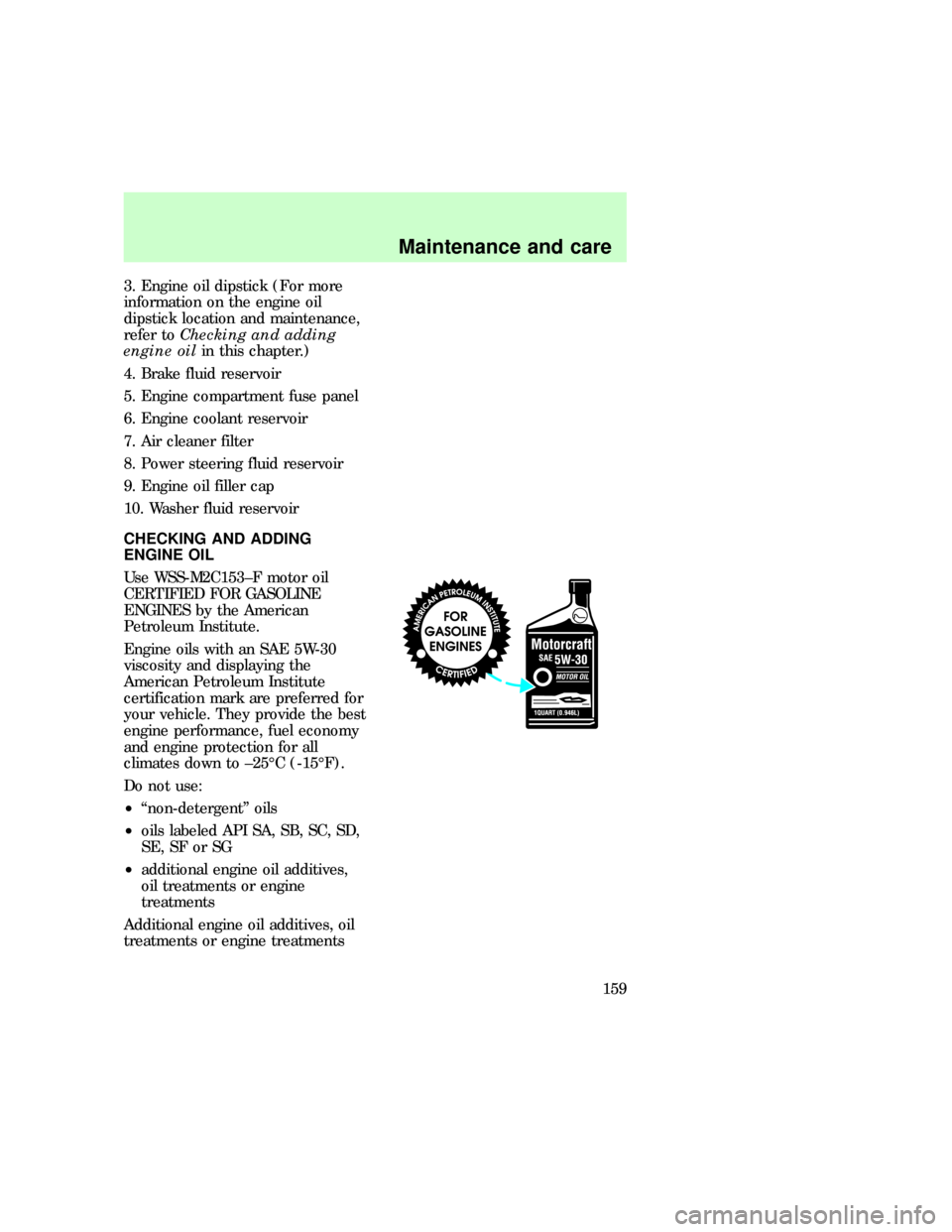
Use WSS-M2C153±F motor oil
CERTIFIED FOR GASOLINE
ENGINES by the American
Petroleum Institute.
Engine oils with an SAE 5W-30
viscosity and displaying the
American Petroleum Institute
certification mark are preferred for
your vehicle. They provide the best
engine performance, fuel economy
and engine protection for all
climates down to ±25ÉC (-15ÉF).
Do not use:
²ªnon-detergentº oils
²oils labeled API SA, SB, SC, SD,
SE, SF or SG
²additional engine oil additives,
oil treatments or engine
treatments
Additional engine oil additives, oil
treatments or engine treatments
com_check-add_oil.01
Maintenance and care
159
Page 159 of 224
are never needed and could, under
certain conditions, lead to engine
damage which is not covered by
your Ford warranty.
Synthetic engine oils which are
CERTIFIED and of the preferred
viscosity may be used in your
engine. The engine oil and oil filter
must still be changed according to
the ªService Guideº.
Checking the engine oil
Check the engine oil each time you
fuel your vehicle.
To check the oil:
1. Make sure the vehicle is on level
ground. If the engine is running,
turn the engine off and wait a few
minutes for the oil to drain into
the oil pan.
2. Set the parking brake and
ensure the gearshift is securely
latched in P.
3. Open the hood. Protect yourself
from engine heat.
exd_checking_engine_oil
Maintenance and care
160
Page 161 of 224

Changing the engine oil and
filter
Change your engine oil and filter
according to the following
kilometers (mileage) and time
requirements, whichever occurs
first:
²Normal Schedule ± 8,000 km
(5,000 miles) or six months.
²Severe Duty Schedule ± 5,000
km (3,000 miles) or three
months. Severe duty operation
would include extensive idling,
trailer towing, driving in severe
dust and police, taxi or delivery
service.
Ford production and aftermarket
(Motorcraft) oil filters are designed
for added engine protection and
long life. If a replacement oil filter
is used that does not meet Ford
material and design specifications,
startup engine noises or knock
may be experienced.
It is recommended you use the
appropriate Motorcraft oil filter (or
another brand meeting Ford
specifications) for your engine
application.
Checking and adding brake
fluid
Brake fluid should be checked and
refilled as needed at least once
each year:
exd_fix-me
com_checking-adding_fluid.01
Maintenance and care
162
Page 162 of 224
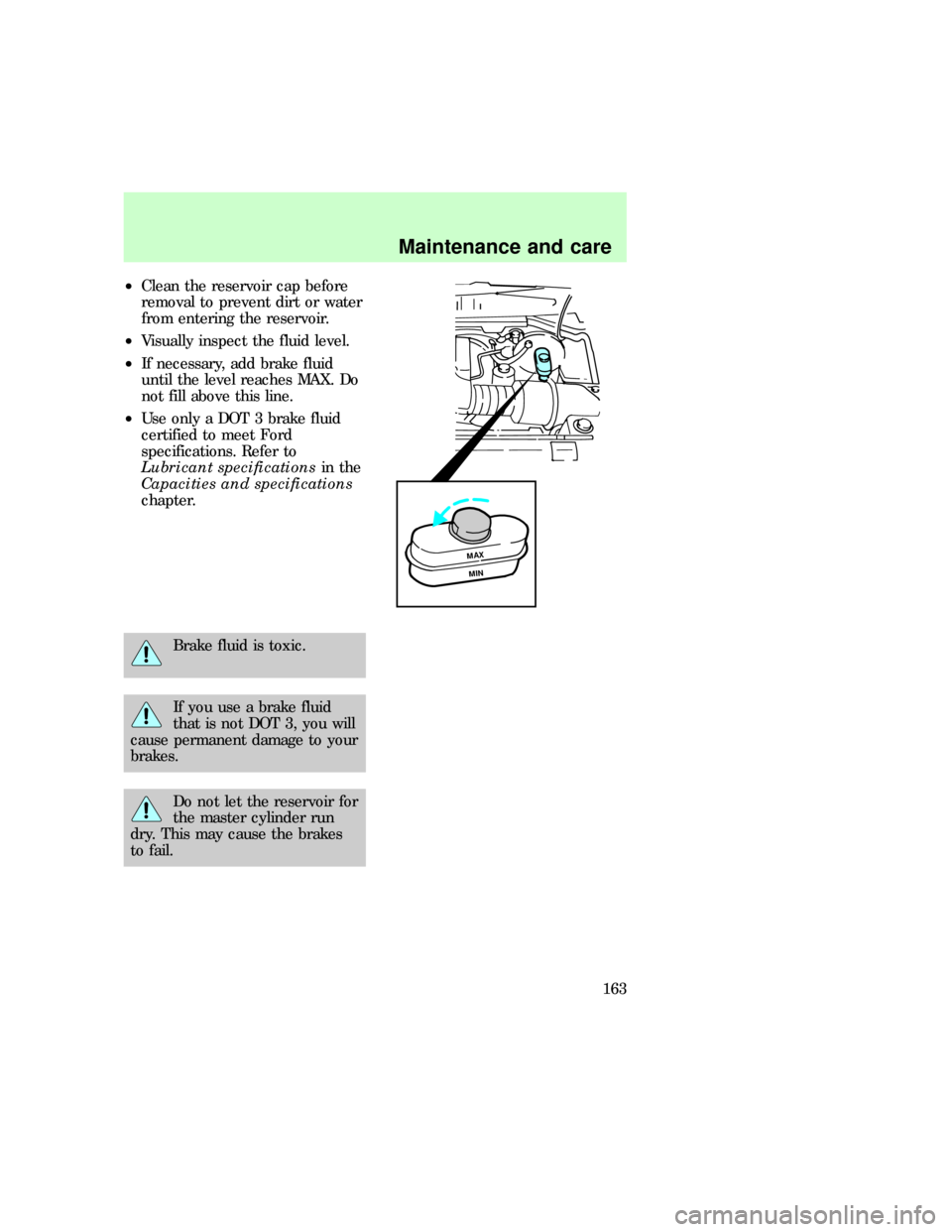
²Clean the reservoir cap before
removal to prevent dirt or water
from entering the reservoir.
²Visually inspect the fluid level.
²If necessary, add brake fluid
until the level reaches MAX. Do
not fill above this line.
²Use only a DOT 3 brake fluid
certified to meet Ford
specifications. Refer to
Lubricant specificationsin the
Capacities and specifications
chapter.
Brake fluid is toxic.
If you use a brake fluid
that is not DOT 3, you will
cause permanent damage to your
brakes.
Do not let the reservoir for
the master cylinder run
dry. This may cause the brakes
to fail.
MAX
MIN
exd_washer-fluid
Maintenance and care
163
Page 172 of 224
approximately 32 km (20 miles) of
driving. However, you can check
the fluid level without driving to
obtain a normal operating
temperature if the outside
temperature is above 10ÉC (50ÉF).
If your vehicle has been operated
for an extended period at high
speeds, in city traffic during hot
weather or pulling a trailer, the
vehicle should be turned off for
about 30 minutes to allow the fluid
to cool before checking.
1. Park the vehicle on a level
surface.
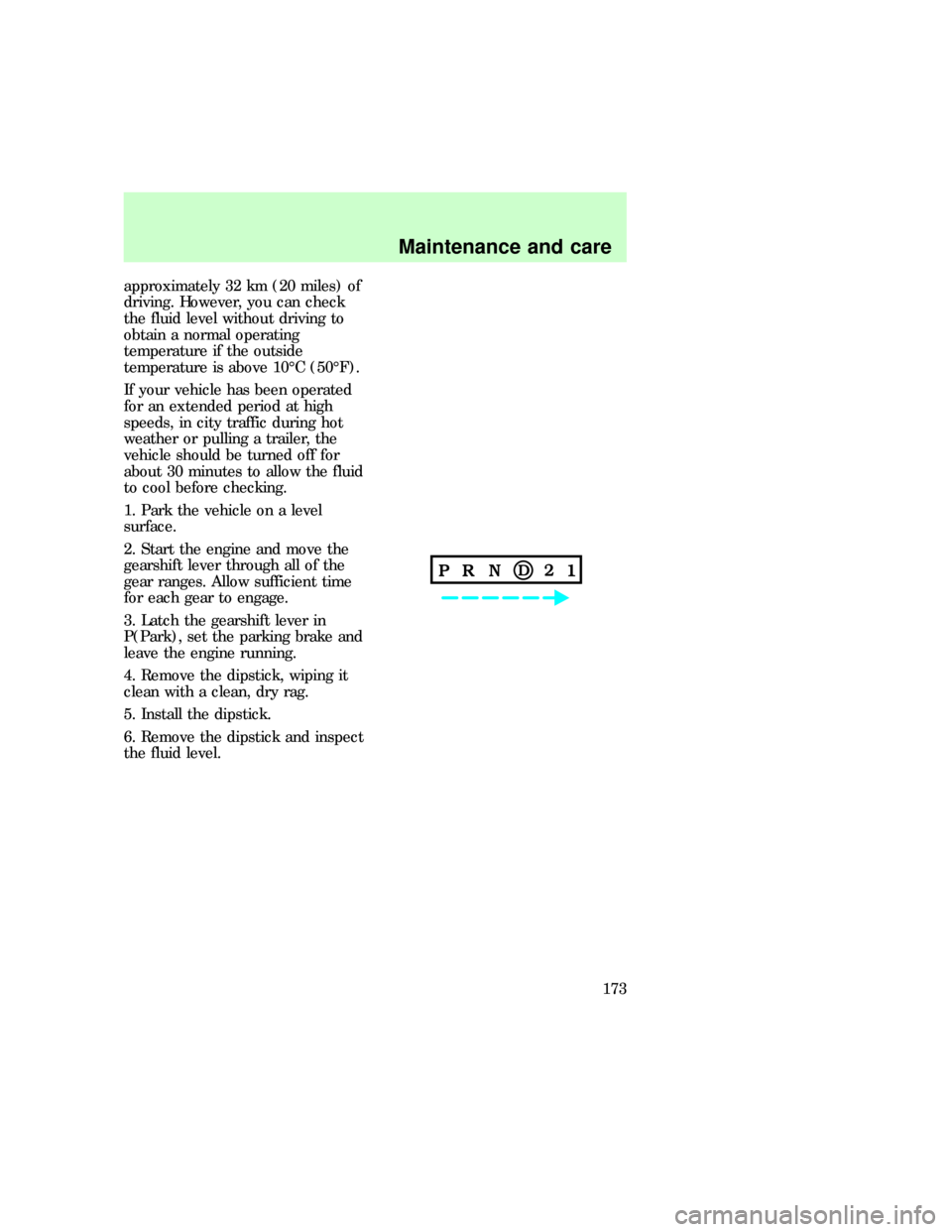
2. Start the engine and move the
gearshift lever through all of the
gear ranges. Allow sufficient time
for each gear to engage.
3. Latch the gearshift lever in
P(Park), set the parking brake and
leave the engine running.
4. Remove the dipstick, wiping it
clean with a clean, dry rag.
5. Install the dipstick.
6. Remove the dipstick and inspect
the fluid level.
Maintenance and care
173
Page 187 of 224
²Install cables securely, verifying
that the cables do not touch any
wiring, brake lines or fuel lines.
²Drive cautiously. If you hear the
cables rub or bang against the
vehicle, stop and retighten
them. If this does not work,
remove the cables to prevent
vehicle damage.
²Avoid overloading your vehicle.
²Remove the tire cables when
they are no longer needed.
²Do not use cables on dry roads.
²The suspension insulation and
bumpers will help prevent
vehicle damage. Do not remove
these components from the
vehicle when using snow tires
and traction devices.
²Do not exceed 48 km/h (30
mph) with tire cables on your
vehicle.
Consult your dealer for information
on other Ford approved methods
of traction control.
FUEL INFORMATION
The ignition key must be turned to
3 (Off) or 1 (Acc) during refueling
to obtain accurate fuel gauge
ratings.
exd_fuel_info
exd_important_precautions
Maintenance and care
188
Page 197 of 224
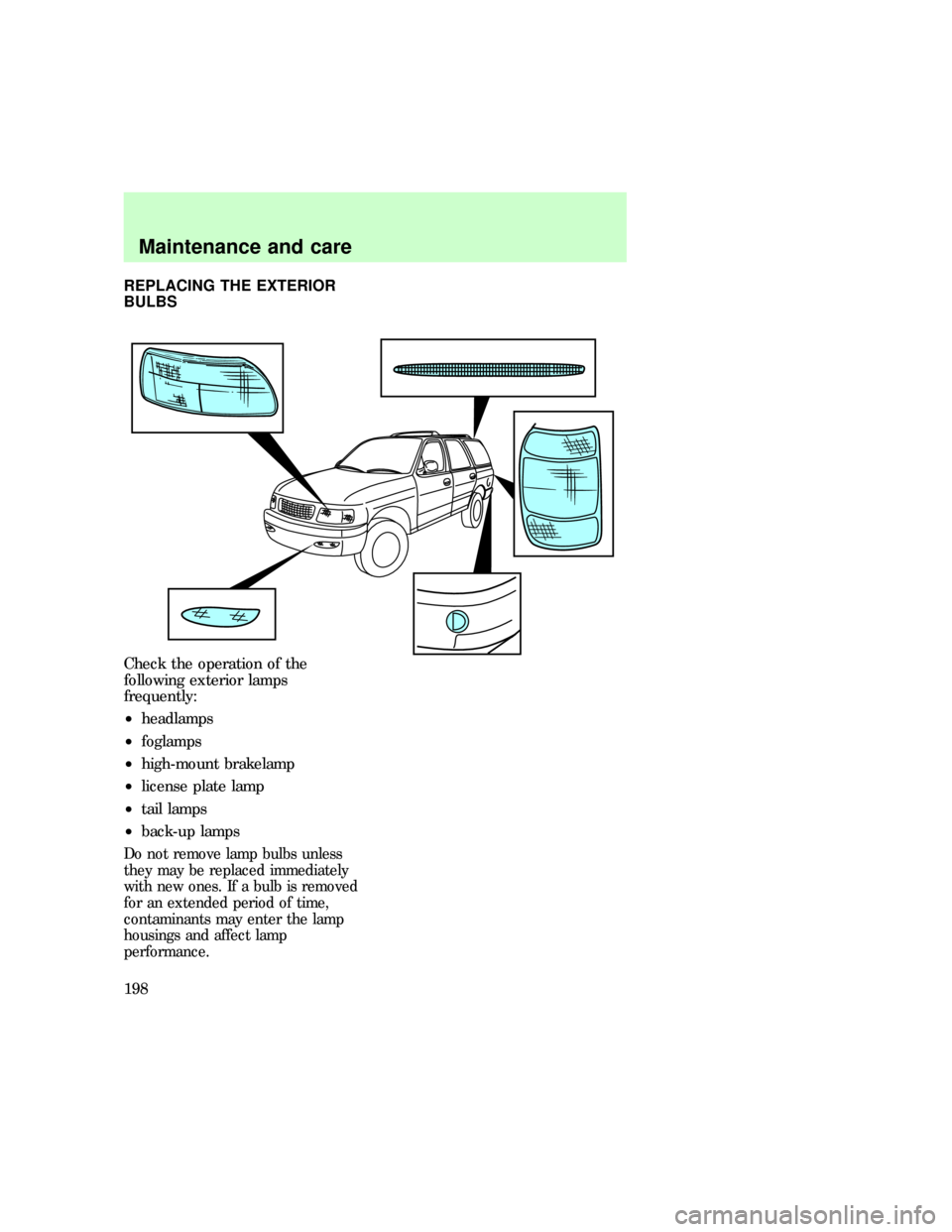
REPLACING THE EXTERIOR
BULBS
Check the operation of the
following exterior lamps
frequently:
²headlamps
²foglamps
²high-mount brakelamp
²license plate lamp
²tail lamps
²back-up lamps
Do not remove lamp bulbs unless
they may be replaced immediately
with new ones. If a bulb is removed
for an extended period of time,
contaminants may enter the lamp
housings and affect lamp
performance.
Maintenance and care
198