Page 52 of 191
Disarming a triggered system
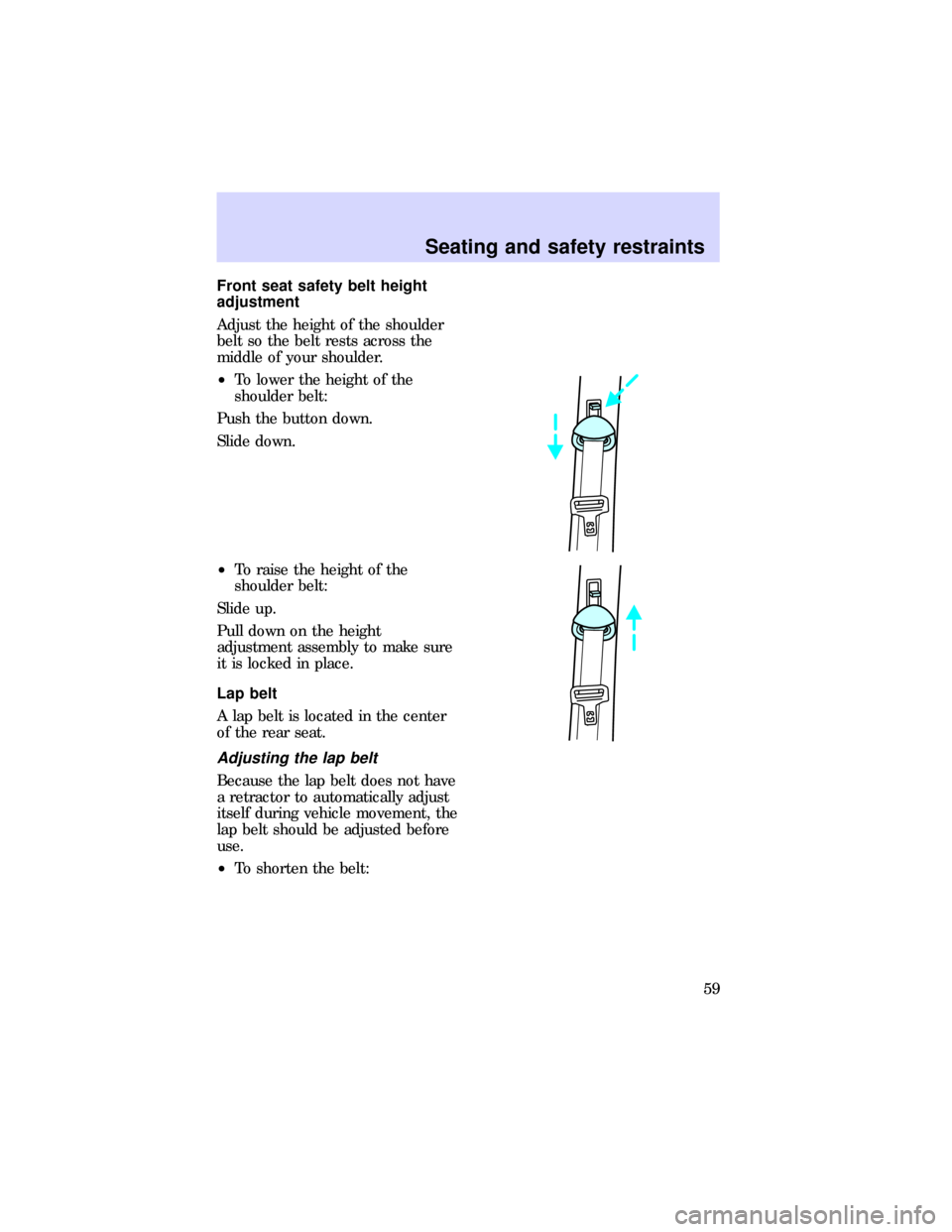
Press either the UNLOCK or
PANIC button to disarm a
triggered anti-theft system.
A triggered system can also be
disarmed by inserting the key and
turning the ignition to ON.
This device complies with Part 15
of the FCC rules. Operation is
subject to the two following
conditions: (1) this device may not
cause harmful interference, and
(2) this device must accept any
interference received, including
interference that may cause
undesired operation.
Replacement batteries for the
remote entry and/or anti-theft
system transmitters can be
purchased at pharmacies, watch
stores, or at authorized dealers.
If a transmitter is lost, a new one
may be programmed by your
dealer. Take any remaining
transmitters with you to the dealer
so they may be reprogrammed.
The system will work with up to
four transmitters. Your vehicle
comes equipped with two
transmitters; additional
transmitters can be ordered from
your dealer. It will be necessary to
have all of the transmitters
programmed to the remote entry
system by the dealer at the same
time.
UN
LOCK
LOCK
PANIC
UN
LOCKLOCK
TRUNK
PANIC
Controls and features
52
Page 54 of 191
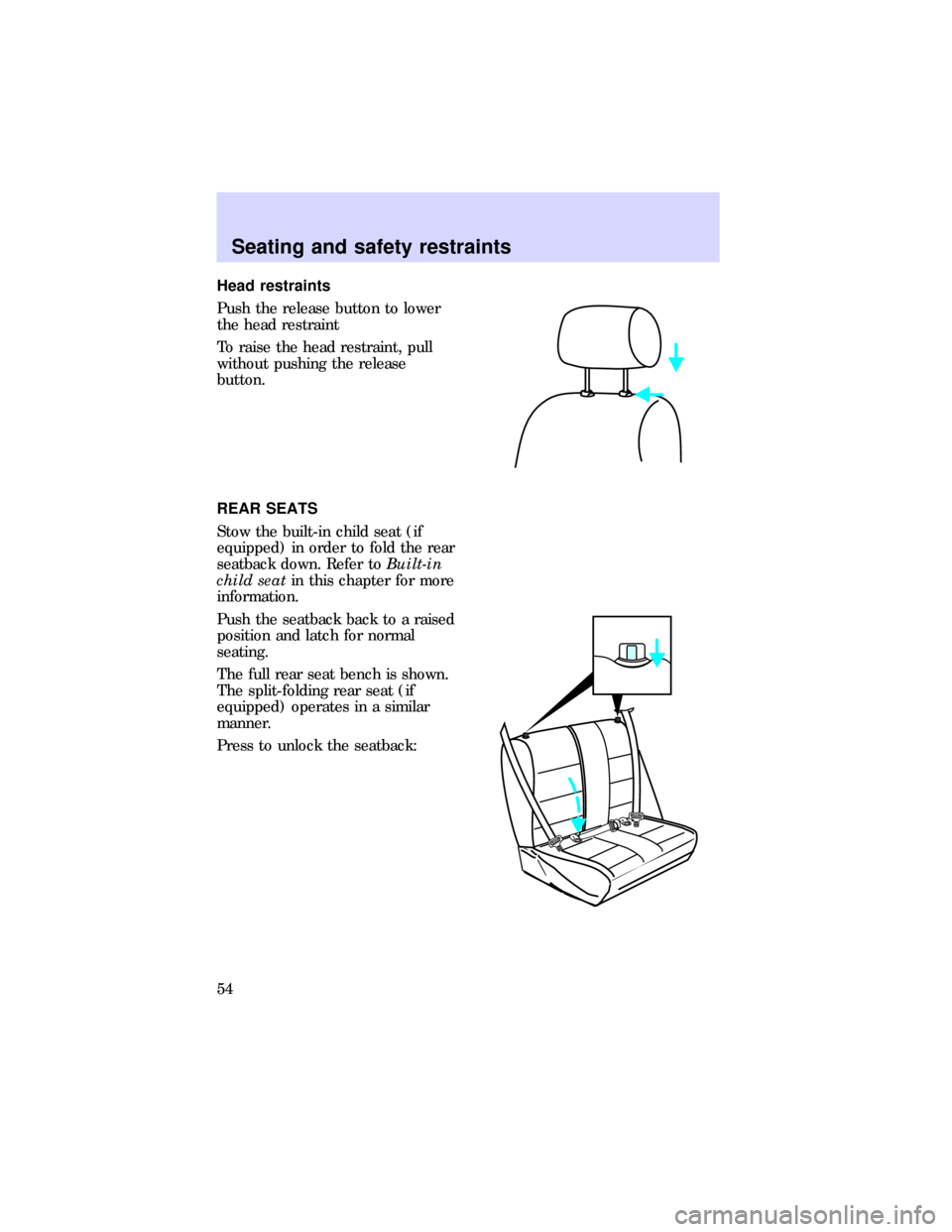
Head restraints
Push the release button to lower
the head restraint
To raise the head restraint, pull
without pushing the release
button.
REAR SEATS
Stow the built-in child seat (if
equipped) in order to fold the rear
seatback down. Refer toBuilt-in
child seatin this chapter for more
information.
Push the seatback back to a raised
position and latch for normal
seating.
The full rear seat bench is shown.
The split-folding rear seat (if
equipped) operates in a similar
manner.
Press to unlock the seatback:
Seating and safety restraints
54
Page 56 of 191
Be sure everyone in your
vehicle is in a seat and
using a safety belt properly.
USING THE SAFETY
RESTRAINTS PROPERLY
Combination lap and shoulder
belts
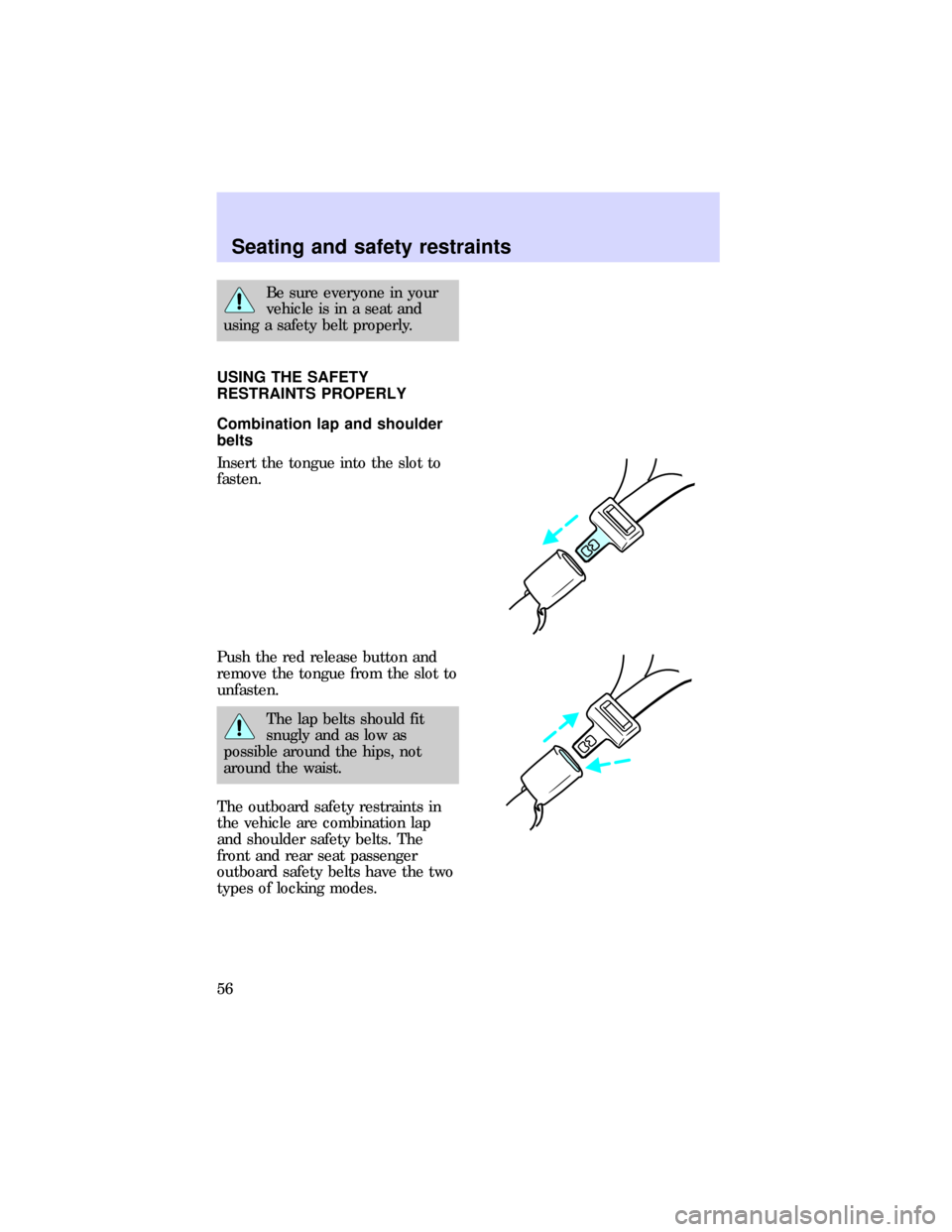
Insert the tongue into the slot to
fasten.
Push the red release button and
remove the tongue from the slot to
unfasten.
The lap belts should fit
snugly and as low as
possible around the hips, not
around the waist.
The outboard safety restraints in
the vehicle are combination lap
and shoulder safety belts. The
front and rear seat passenger
outboard safety belts have the two
types of locking modes.
Seating and safety restraints
56
Page 57 of 191
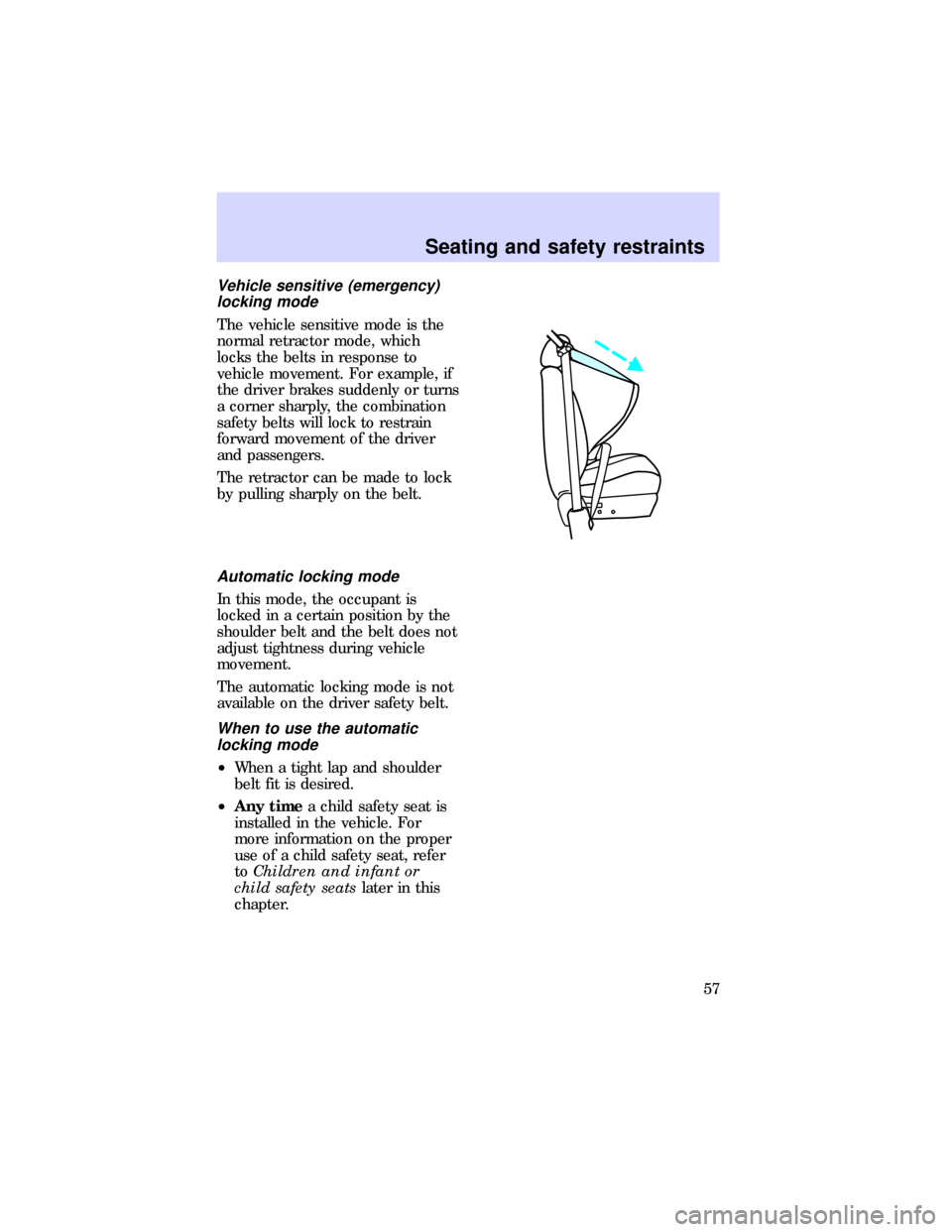
Vehicle sensitive (emergency)
locking mode
The vehicle sensitive mode is the
normal retractor mode, which
locks the belts in response to
vehicle movement. For example, if
the driver brakes suddenly or turns
a corner sharply, the combination
safety belts will lock to restrain
forward movement of the driver
and passengers.
The retractor can be made to lock
by pulling sharply on the belt.
Automatic locking mode
In this mode, the occupant is
locked in a certain position by the
shoulder belt and the belt does not
adjust tightness during vehicle
movement.
The automatic locking mode is not
available on the driver safety belt.
When to use the automatic
locking mode
²When a tight lap and shoulder
belt fit is desired.
²Any timea child safety seat is
installed in the vehicle. For
more information on the proper
use of a child safety seat, refer
toChildren and infant or
child safety seatslater in this
chapter.
Seating and safety restraints
57
Page 58 of 191
Using the automatic locking
mode
The automatic locking mode must
be used when installing an
aftermarket child safety seat in any
outboard passenger seat.
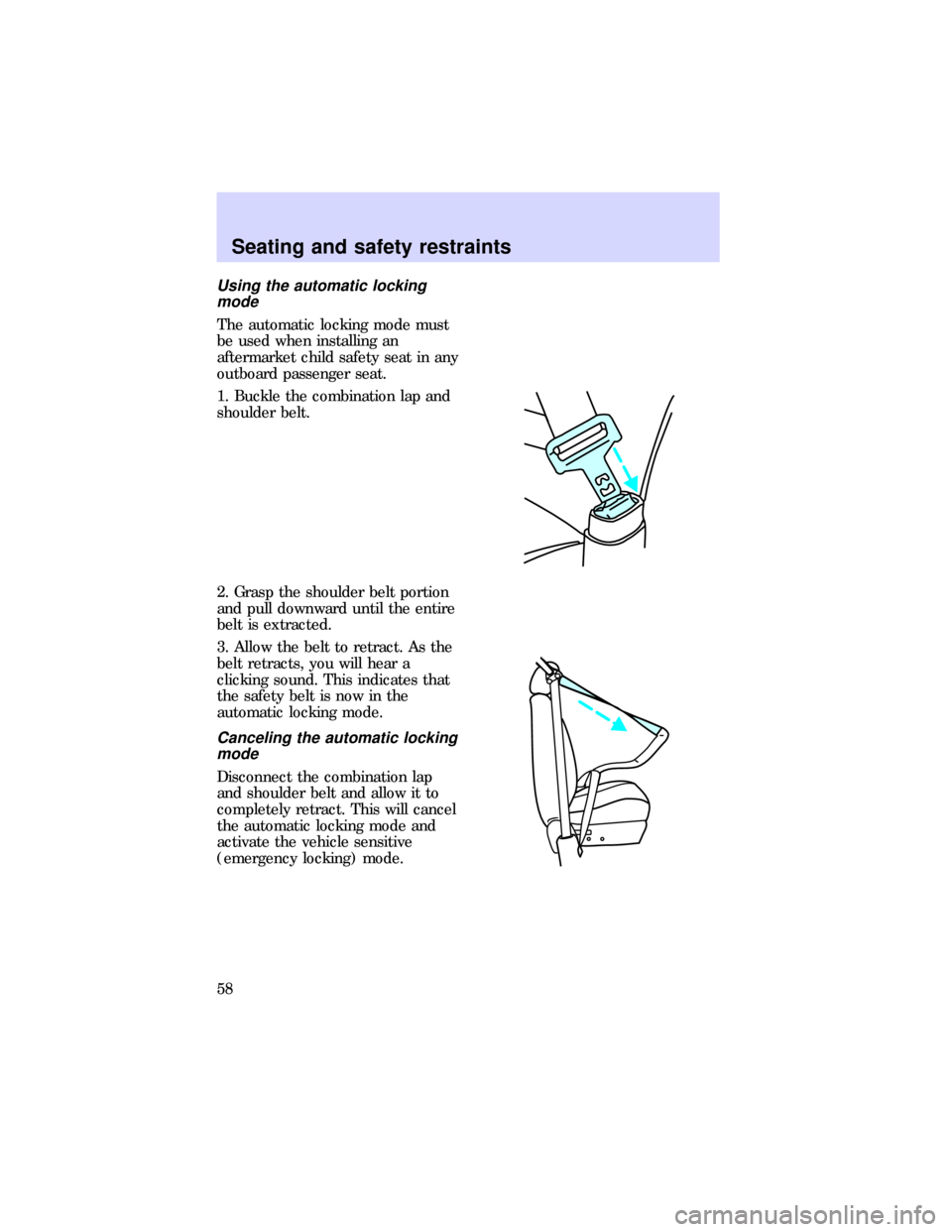
1. Buckle the combination lap and
shoulder belt.
2. Grasp the shoulder belt portion
and pull downward until the entire
belt is extracted.
3. Allow the belt to retract. As the
belt retracts, you will hear a
clicking sound. This indicates that
the safety belt is now in the
automatic locking mode.
Canceling the automatic locking
mode
Disconnect the combination lap
and shoulder belt and allow it to
completely retract. This will cancel
the automatic locking mode and
activate the vehicle sensitive
(emergency locking) mode.
Seating and safety restraints
58
Page 59 of 191
Front seat safety belt height
adjustment
Adjust the height of the shoulder
belt so the belt rests across the
middle of your shoulder.
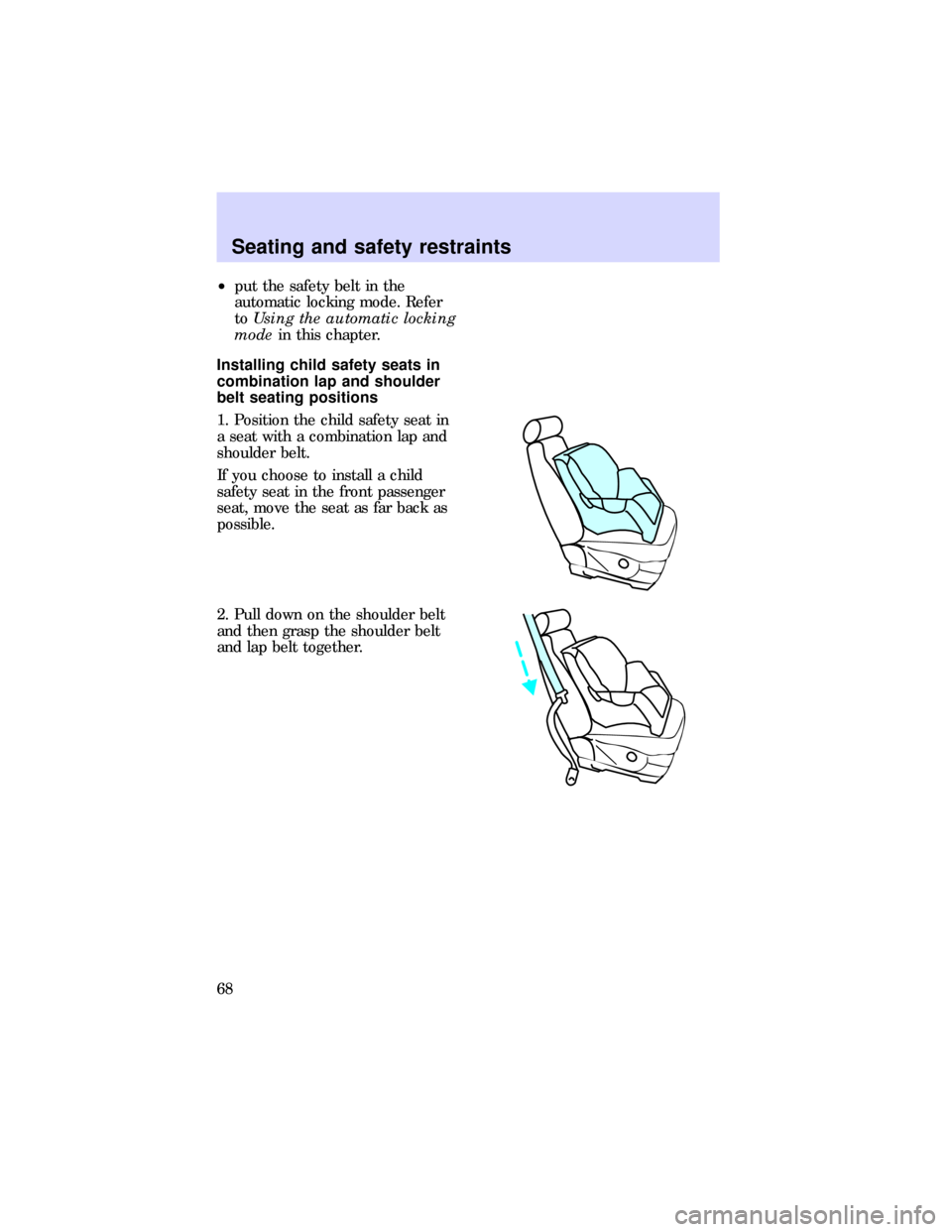
²To lower the height of the
shoulder belt:
Push the button down.
Slide down.
²To raise the height of the
shoulder belt:
Slide up.
Pull down on the height
adjustment assembly to make sure
it is locked in place.
Lap belt
A lap belt is located in the center
of the rear seat.
Adjusting the lap belt
Because the lap belt does not have
a retractor to automatically adjust
itself during vehicle movement, the
lap belt should be adjusted before
use.
²To shorten the belt:
Seating and safety restraints
59
Page 68 of 191
²put the safety belt in the
automatic locking mode. Refer
toUsing the automatic locking
modein this chapter.
Installing child safety seats in
combination lap and shoulder
belt seating positions
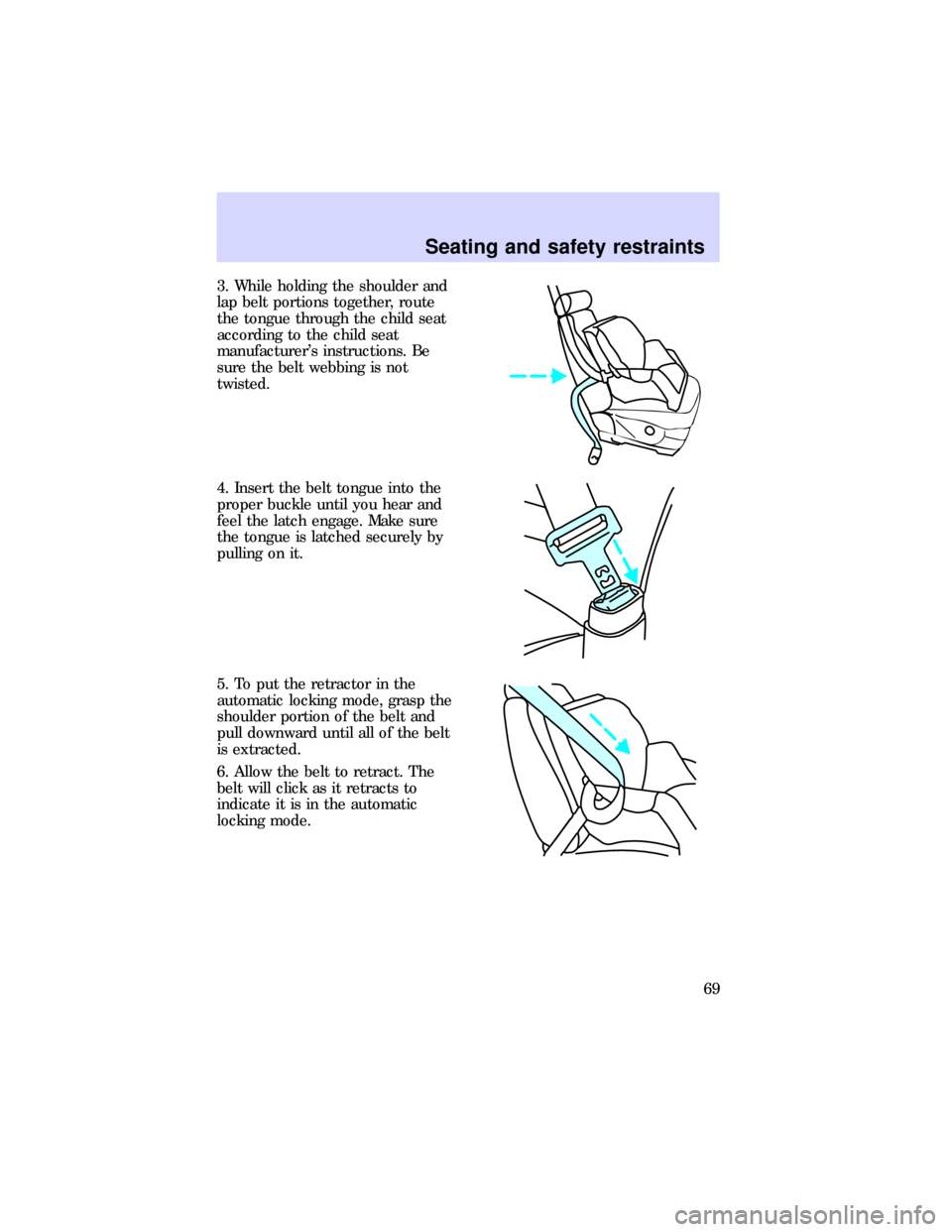
1. Position the child safety seat in
a seat with a combination lap and
shoulder belt.
If you choose to install a child
safety seat in the front passenger
seat, move the seat as far back as
possible.
2. Pull down on the shoulder belt
and then grasp the shoulder belt
and lap belt together.
Seating and safety restraints
68
Page 69 of 191
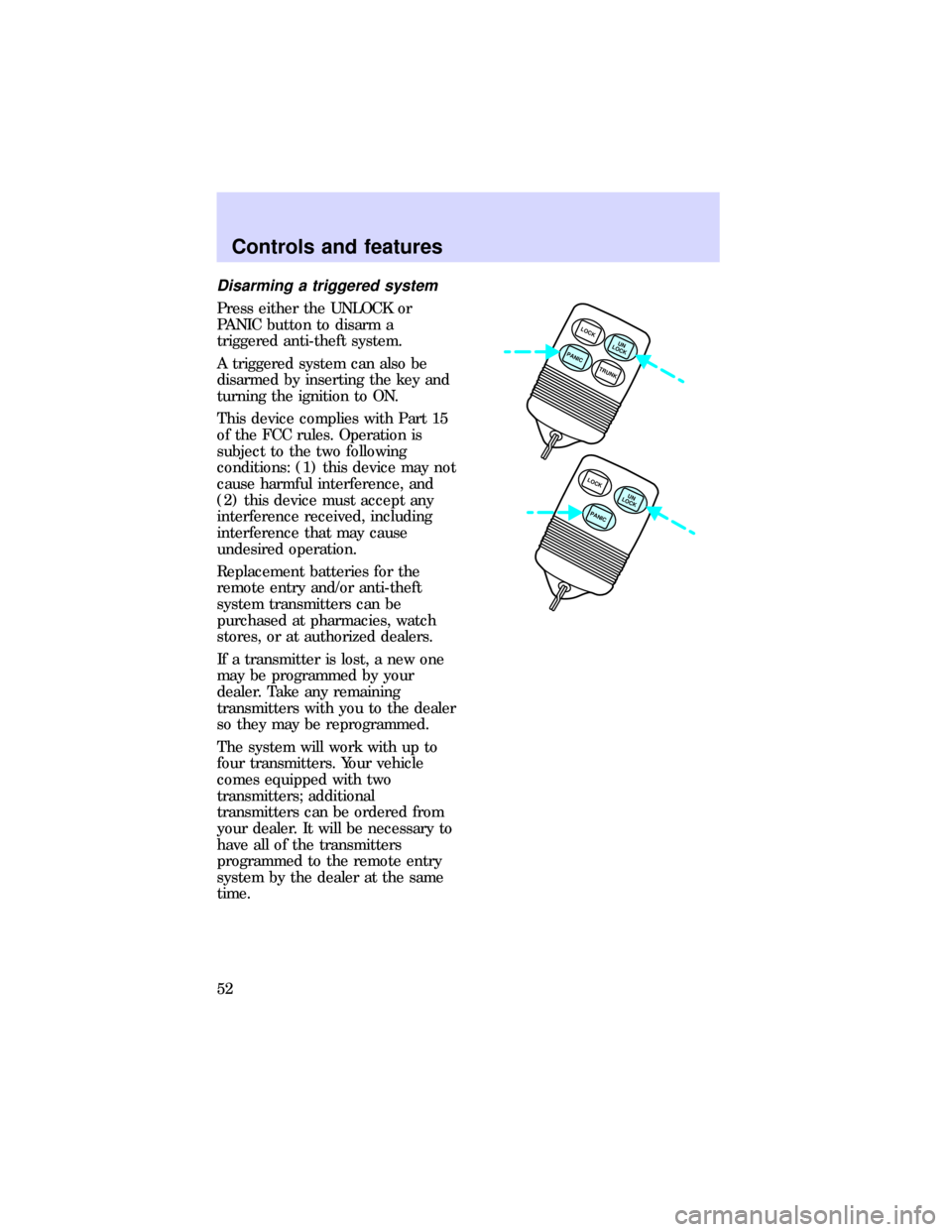
3. While holding the shoulder and
lap belt portions together, route
the tongue through the child seat
according to the child seat
manufacturer's instructions. Be
sure the belt webbing is not
twisted.
4. Insert the belt tongue into the
proper buckle until you hear and
feel the latch engage. Make sure
the tongue is latched securely by
pulling on it.
5. To put the retractor in the
automatic locking mode, grasp the
shoulder portion of the belt and
pull downward until all of the belt
is extracted.
6. Allow the belt to retract. The
belt will click as it retracts to
indicate it is in the automatic
locking mode.
Seating and safety restraints
69