Page 202 of 388
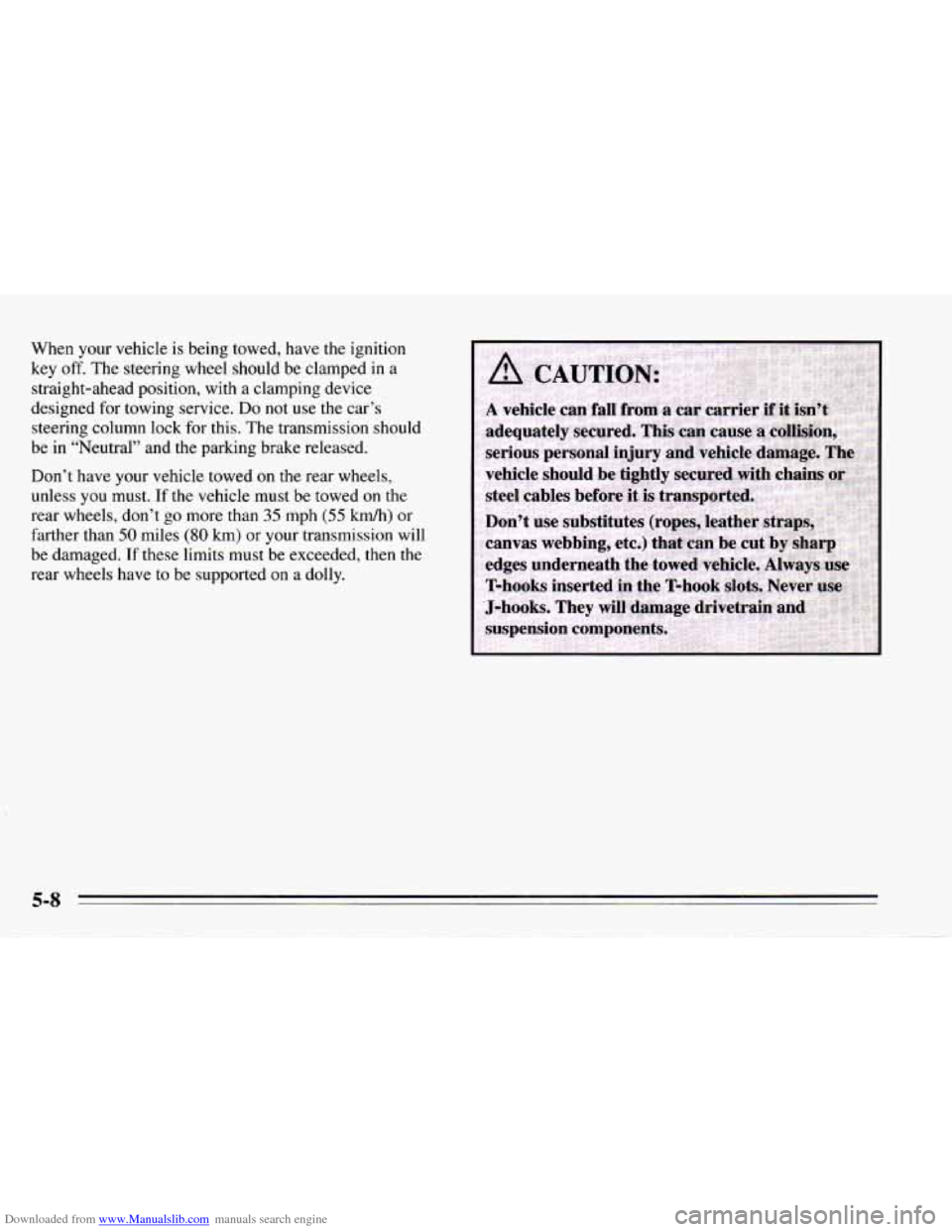
Downloaded from www.Manualslib.com manuals search engine When your vehicle is being towed, have the ignition
key off. The steering wheel should be clamped in a
straight-ahead position, with a clamping device
designed for towing service.
Do not use the car’s
steering column lock for this. The transmission should
be in “Neutral” and the parking brake released.
Don’t have your vehicle towed
on the rear wheels,
unless you must.
If the vehicle must be towed on the
rear wheels, don’t go more than
35 mph (55 km/h) or
farther than 50 miles (80 km) or your transmission will
be damaged.
If these limits must be exceeded, then the
rear wheels have to be supported on
a dolly.
Page 203 of 388
Downloaded from www.Manualslib.com manuals search engine Front Towing Hook-Ups
I
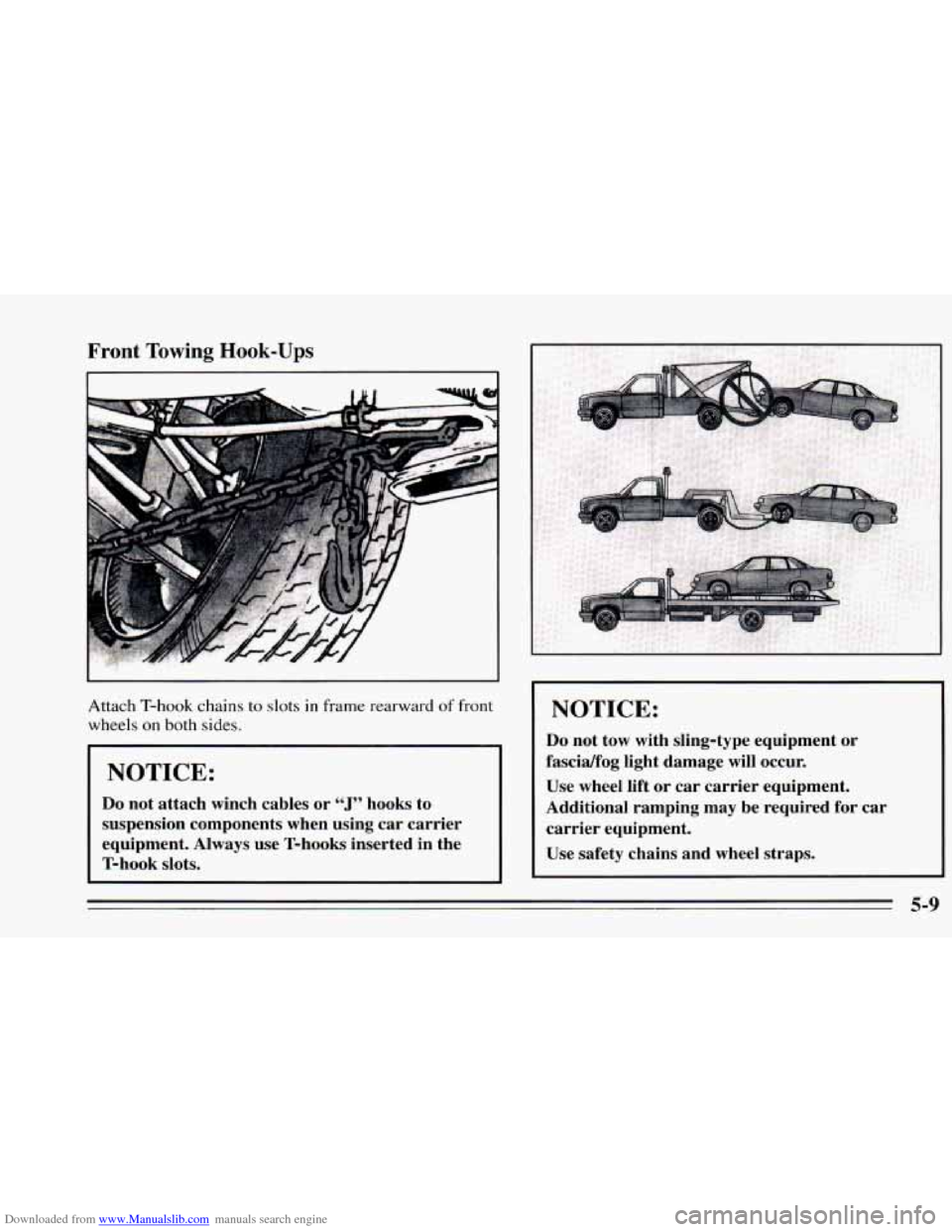
Attach T-hook chains to slots in frame rearward of front
wheels on both sides.
NOTICE:
Do not attach winch cables or “J” hooks to
suspension components when using car carrier
equipment. Always use
T-hooks inserted in the
T-hook slots.
NOTICE:
Do not tow with sling-type equipment or
fascidfog light damage will occur.
Use wheel lift or car carrier equipment.
Additional ramping may be required for car
carrier equipment.
Use safety chains and wheel straps.
Page 204 of 388
Downloaded from www.Manualslib.com manuals search engine Attach a separate safety chain around outboard end of
each lower control arm.
NOTICE:
Take care not to damage the brake pipes and
hoses or the
ABS sensor and wiring.
NOTICE:
Towing a vehicle over rough surfaces could
damage
a vehicle. Damage can occur from
vehicle-to-ground or
vehicle-to-wheel-lift-equipment contact. To help
avoid damage, install
a towing dolly and raise
vehicle until adequate clearance is obtained
between the ground and/or wheel-lift equipment.
5-10
Page 205 of 388
Downloaded from www.Manualslib.com manuals search engine Rear Towing Hook-Ups
I
p
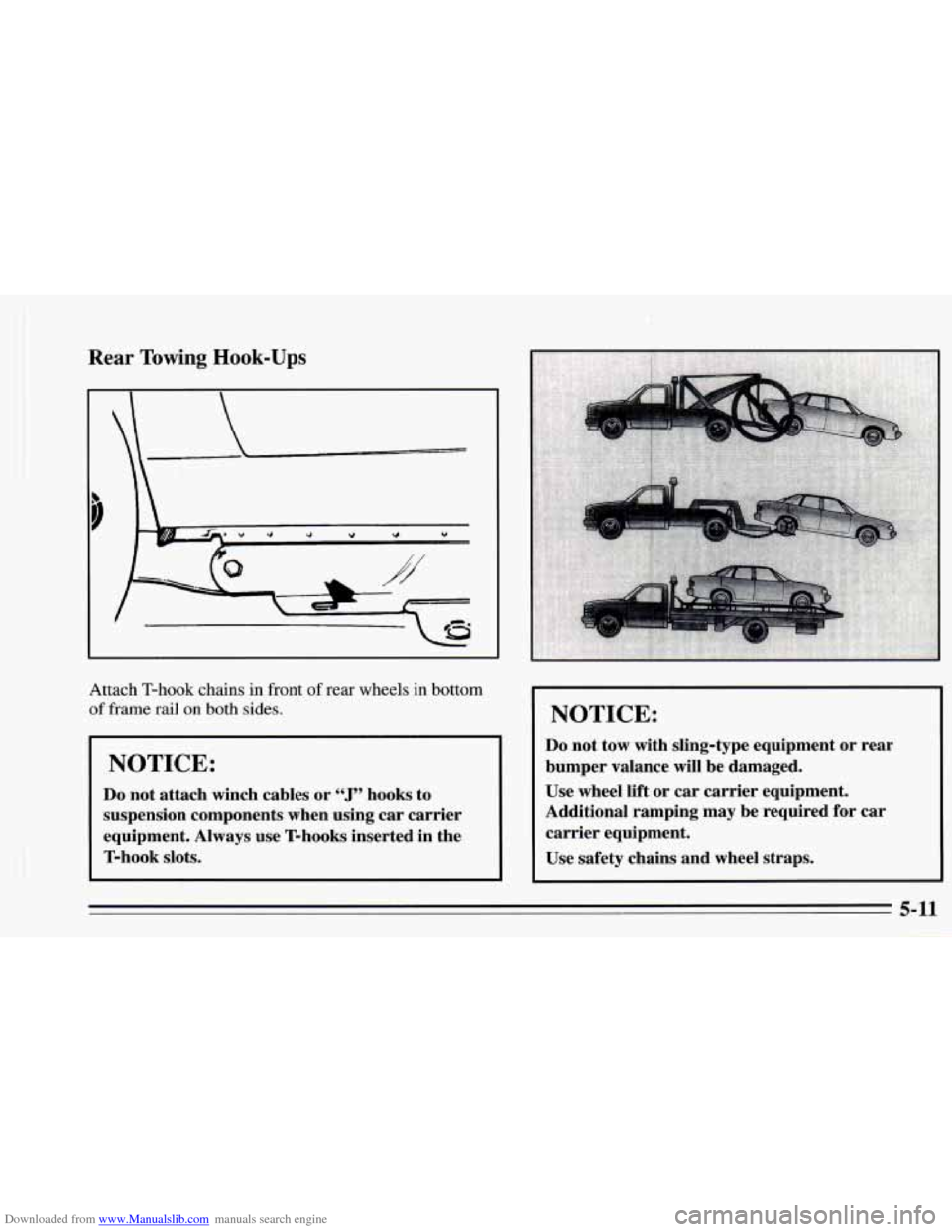
Attach T-hook chains in front of rear wheels in bottom
of frame rail
on both sides.
I NOTICE:
Do not attach winch cables or “J” hooks to
suspension components when using car carrier
equipment. Always use T-hooks inserted in the
T-hook slots.
NOTICE:
Do .not tow with sling-type equipment or rear
bumper valqce wilI be damaged.
Use wheel lift
or car carrier equipment.
Additional rainping may be required for car
carrier equipment.
Use safety chdins
and wheel straps.
5-11
Page 206 of 388
Downloaded from www.Manualslib.com manuals search engine L
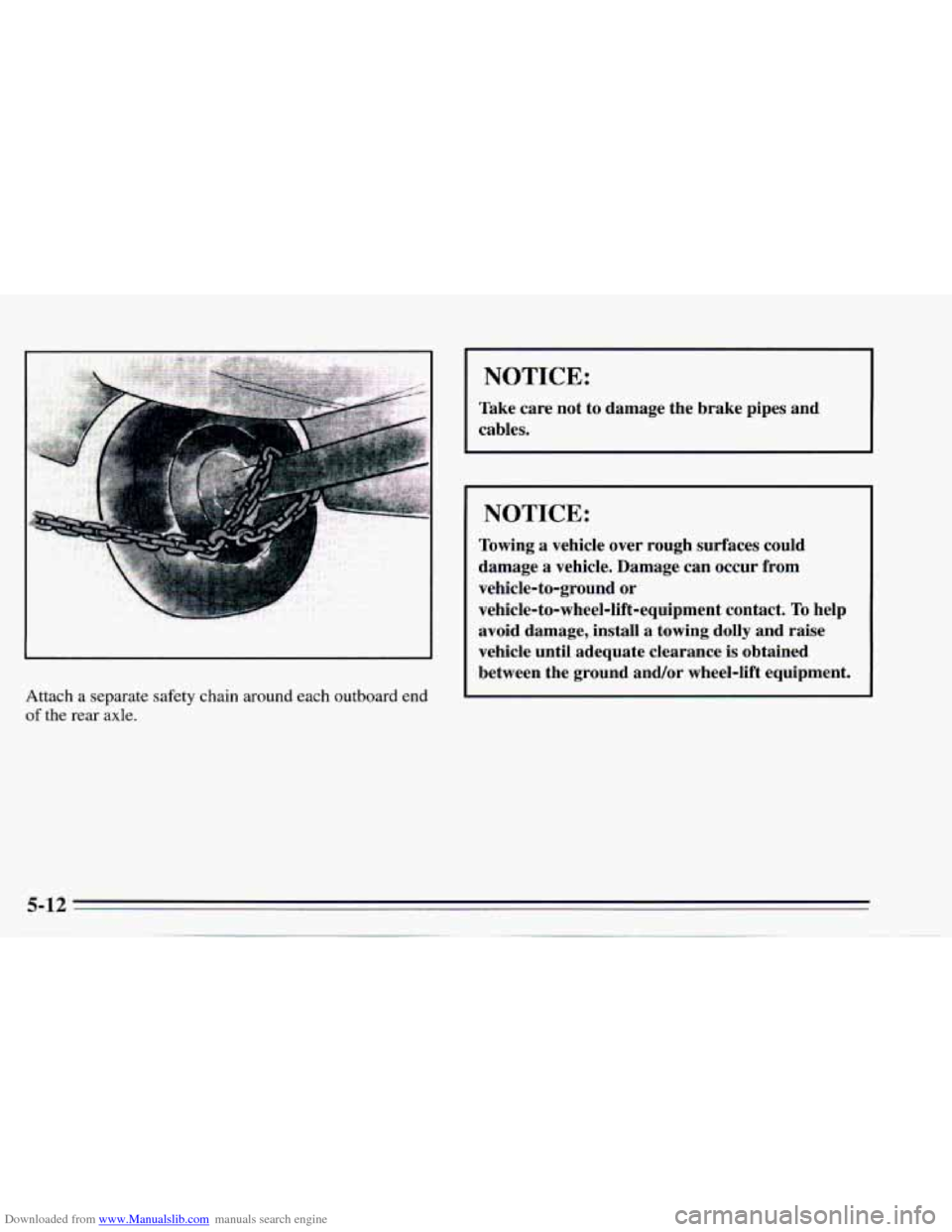
Attach a separate safety chain around each outboard end
of the rear axle.
NOTICE:
Take care not to damage the brake pipes and
cables.
NOTICE:
Towing a vehicle over rough surfaces could
damage a vehicle. Damage can occur from
vehicle-to-ground or
vehicle-to-wheel-lift-equipment contact. To help
avoid damage, install a towing dolly and raise
vehicle until adequate clearance is obtained
between the ground and/or wheel-lift equipment.
Page 220 of 388
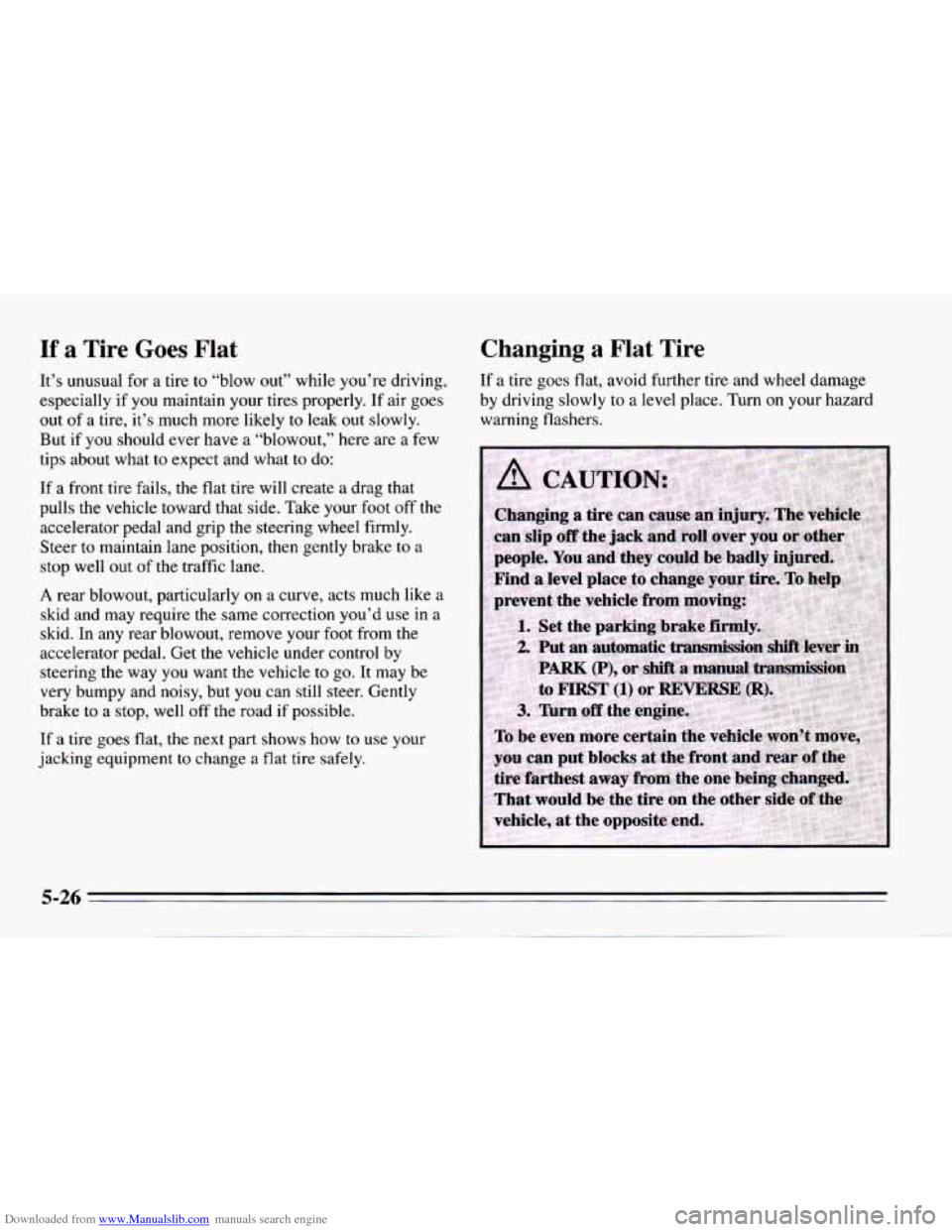
Downloaded from www.Manualslib.com manuals search engine If a Tire Goes Flat
It’s unusual for a tire to “blow out” while you’re driving,
especially if you maintain your tires properly. If air goes
out of a tire, it’s much more likely to leak out slowly.
But if you should ever have a “blowout,” here are a few
tips about what to expect and what to do:
If a front tire fails, the flat tire will create a drag that
pulls the vehicle toward that side. Take your foot off the
accelerator pedal and grip the steering wheel firmly.
Steer to maintain lane position, then gently brake to a
stop well out of the traffic lane.
A rear blowout, particularly on a curve, acts much like a
skid and may require the same correction you’d use in a
skid. In any rear blowout, remove your foot from the
accelerator pedal. Get the vehicle under control
by
steering the way you want the vehicle to go. It may be
very bumpy and noisy, but you can still steer. Gently
brake to a stop, well off the road if possible.
If a tire goes flat, the next part shows how
to use your
jacking equipment to change a flat tire safely.
Changing a Flat Tire
If a tire goes flat, avoid further tire and wheel damage
by driving slowly to
a level place. Turn on your hazard
warning flashers.
5-26
Page 222 of 388
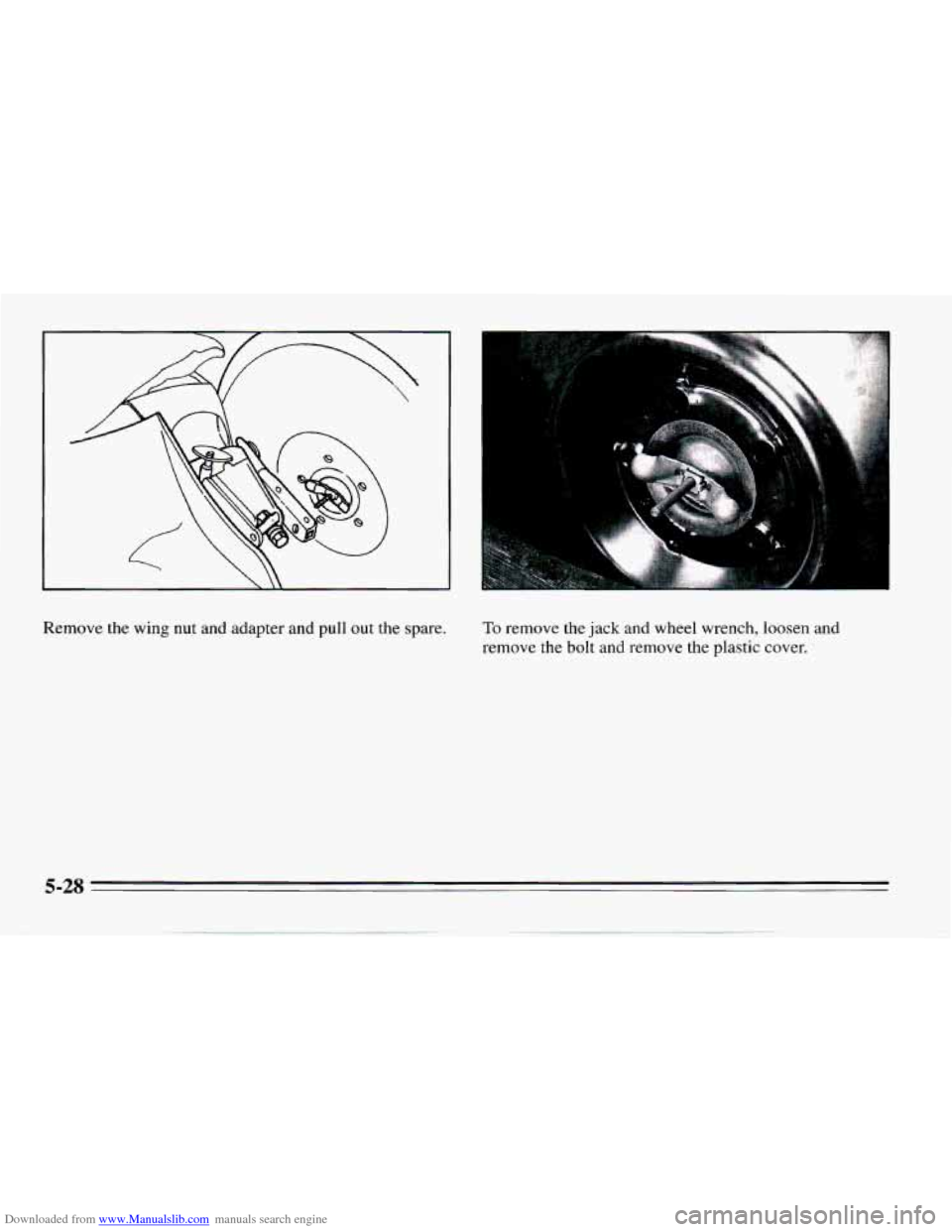
Downloaded from www.Manualslib.com manuals search engine Jsemove the wing nut and adapter and pull out the spare. To remove the jack and wheel wrench, loosen and
remove the bolt and remove the plastic cover.
5-28
Page 223 of 388
Downloaded from www.Manualslib.com manuals search engine AA
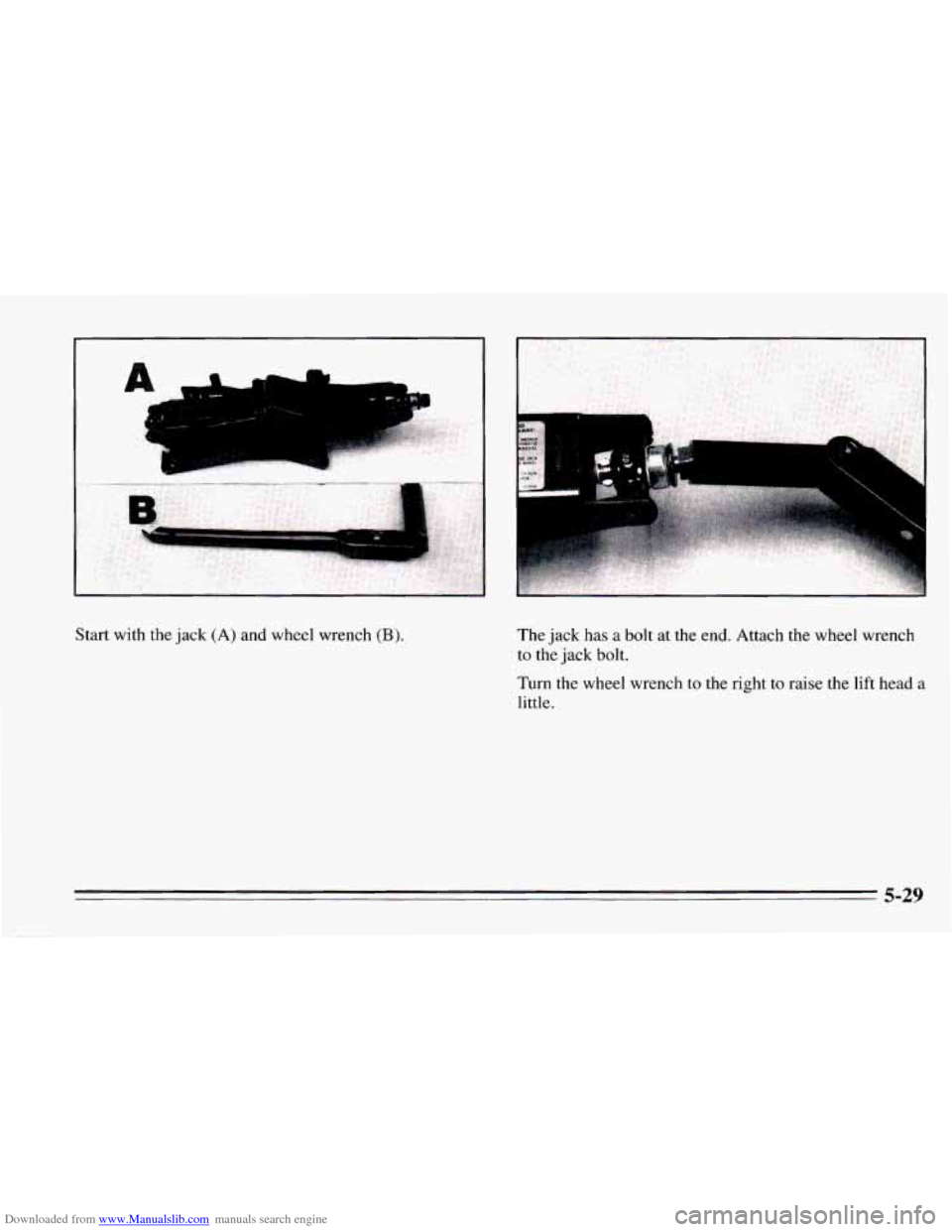
Start with the jack (A) and wheel wrench (B). The jack has a bolt at the end. Attach the wheel wrench
to the jack bolt.
Turn the wheel wrench to the right to raise the lift head a
little.
5-29