1991 FORD FESTIVA check engine
[x] Cancel search: check enginePage 306 of 454
Back To Article
1991 GENERAL SERVICING
A/C Com pressor Refrigerant Oil Checking
ISOLATING COMPRESSOR
1. Connect service gauge set to the compressor service valves and open compressor valves slightly (turn in clockwise). Start engine and
operate air conditioning. Slowly turn compressor suction valve clockwise toward closed (front-seated) position.
2. When suction pressure is reduced to zero or less, turn off engine and compressor and quickly turn suction valve stem in to full front-
seated position. Suction pressure should be slightly above zero. Turn discharge valve into front-seated position.
3. To check oil level, slowly open compressor crankcase plug to relieve any remaining pressure. After oil level is corrected, cap service
gauge ports on both valves. Back-seat suction service valve to allow refrigerant to enter compressor. Open discharge valve halfway.
4. Loosen discharge service valve cap, allowing refrigerant pressure to force air out of compressor. Back-seat service valve and tighten cap.
Compressor is now ready for operation.
REFRIGERANT OIL
Only new, pure, moisture-free refrigerant oil should be used in the air conditioning system. This oil is highly refined and dehydrated to a point
where moisture content is less than 10 parts per million. The oil container must be tightly closed at all times when not in use, or moisture will
be absorbed into the refrigerant oil from the air.
SERVICING PRECAUTIONS
DISCHARGING SYSTEM PRECAUTIONS
If compressor has stem-type service valves, it can be isolated and removed without discharging entire system. See ISOLATING
COMPRESSOR at the beginning of this article. Otherwise, discharge system completely before loosening any fittings.
DISCONNECTING LINES & FITTINGS TEST
After system is discharged, carefully clean area around all fittings to be opened. Always use 2 wrenches when tightening or loosening fittings
to avoid twisting or distorting lines. Cap or plug all openings as soon as lines are removed. DO NOT remove caps until immediately before
connections are made. This will keep entry of air and moisture to a minimum.
CONNECTING LINES AND FITTINGS
A new gasket or "O" ring should be used in all instances when connecting lines or fittings. Dip "O" ring in new refrigerant oil and ensure it is
not twisted during installation. Always use 2 wrenches to prevent damage to lines and fittings.
PLACING SYSTEM IN OPERATION
After component service or replacement has been completed and all connections have been made, evacuate system thoroughly with a vacuum
pump. Charge system with proper amount of refrigerant and perform a leak test. See REFRIGERANT OIL & R-12 SPECIFICATIONS chart in
this section for system capacities. Be sure to check all fittings that have been opened. After system has been leak tested, make a system
performance check.
ATSUGI ROTARY VANE DRAIN & REFILL
1. Before checking and adjusting oil level, operate compressor at engine idling speed, with controls set for maximum cooling and high
blower speed, for 20 to 30 minutes to return oil to compressor.
2. Stop engine, discharge refrigerant and remove compressor from vehicle. See SERVICING PRECAUTIONS at beginning of article. Drain
compressor oil from compressor discharge port and measure the amount. Oil is sometimes hard to drain when compressor is cool.
Remove oil while compressor is warm.
3. If the amount drained is less than 3 ounces, conduct leak tests at system connections, and if necessary, repair or replace faulty parts.
Check purity of oil and adjust oil level as follows.
4. If amount drained was above 3 ounces, oil level is right. Pour in same amount as was drained. If amount drained was below 3 ounces,
pour in 3 ounces of new refrigerant oil.
BOSCH 6-CYL DRAIN & REFILL
1. Before checking and adjusting oil level, operate compressor at engine idling speed, with controls set for maximum cooling and high
blower speed, for 20 to 30 minutes to return oil to compressor.
2. Stop engine and discharge refrigerant. Remove refrigerant oil level inspection plug on side of compressor. Oil should be at lower lip of
threaded hole. Add necessary new refrigerant oil (if low). Replace inspection plug and tighten to 10-12 ft. lbs. (14-16 N.m). NOTE:Only com pressors with stem -type service valves can be isolated.
NOTE:Recent findings by the EPA indicate that refrigerant is harm ful to the earth's protective Ozone layer.
When discharging refrigerant, DO NOT allow refrigerant to enter the atm osphere. If available, use
refrigerant recovery/recycle system s when discharging system . Always follow m anufacturer's
instructions.
NOTE:Air conditioning system s will not norm ally need addition of refrigerant oil unless definite oil loss has
occurred due to ruptured lines, leaking com pressor seals, com pressor overhaul or com ponent
replacem ent.
Page 1 of 4 MITCHELL 1 ARTICLE - 1991 GENERAL SERVICING A/C Compressor Refrigerant Oil Checking
3/10/2009 http://www.eautorepair.net/app/PrintItems.asp?S0=2097152&S1=0&SG=%7B9B990D68%2D660A%2D45E9%2D8F46%2DE
...
Page 307 of 454
CALSONIC V5 5-CYLINDER
1. Before checking and adjusting oil level, operate compressor at 1000-1500 engine RPM, and set controls at maximum cooling and
blowing speed for 20-30 minutes to return oil to compressor.
2. Stop engine. Discharge refrigerant and remove compressor from vehicle. See SERVICING PRECAUTIONS at the beginning of this
article. Drain compressor oil from compressor discharge port and measure oil amount. Oil may be hard to drain if compressor is cool.
Drain oil while compressor is warm.
3. If amount drained is less than 3.2 ounces, conduct leak tests at system connections. Repair or replace faulty parts as necessary. Check
purity of oil and oil level as follows.
4. If amount drained is more than 3.2 ounces, oil level is okay; fill with same amount drained using new oil. If amount drained is less than
3.2 ounces, pour in 3.2 ounces of new refrigerant oil.
DIESEL KIKI ROTARY VANE DRAIN & REFILL
1. Before checking and adjusting oil level, operate compressor at engine idling speed, with controls set for maximum cooling and high
blower speed, for 20 to 30 minutes to return oil to compressor.
2. Stop engine, discharge refrigerant and remove compressor from vehicle. See SERVICING PRECAUTIONS at the beginning of this
article. Drain compressor oil from compressor discharge port and measure the amount. Oil is sometimes hard to drain when compressor
is cool. Remove oil while compressor is warm.
3. If the amount is less than 2.4 ounces, conduct leak tests at system connections, and if necessary, repair or replace faulty parts. Check
purity of oil and adjust oil level as follows.
4. If amount drained was above 2.4 ounces, oil level is right. Pour in same amount as was drained. If amount drained was below 2.4
ounces, pour in 2.4 ounces of new refrigerant oil.
DIESEL KIKI 6-CYL DRAIN & REFILL
1. Before checking and adjusting oil level, operate compressor at engine idling speed, with controls set for maximum cooling and high
blower speed, for 20 to 30 minutes to return oil to compressor.
2. Stop engine, discharge refrigerant and remove compressor from vehicle. See SERVICING PRECAUTIONS at the beginning of this
article. Remove oil drain plug and drain oil. Measure amount of oil drained. Install drain plug with new "O" ring.
3. If amount drained was more than 2 ounces (4.4 ounces for Infinity), refill with same amount of new oil. If amount drained was less than
2 ounces (4.4 ounces for Infinity), refill with 2 ounces (4.4 ounces for Infinity). Install filler plug and recharge system.
FORD FX-15 6-CYLINDER DRAIN & REFILL
1. Slowly discharge system. Remove A/C compressor. Drain compressor oil from suction and discharge ports. Measure amount drained and
discard oil.
2. If amount drained from removed (old) compressor is between 3 and 5 ounces, add drained amount of new SUNINSO 5GS refrigerant oil
into the NEW compressor through suction port.
3. If amount drained is less than 3 ounces, add 3 ounces to the NEW compressor. If amount drained is more than 5 ounces, add 5 ounces.
Use new "O" rings on refrigerant lines. Install A/C compressor. Evacuate and recharge system. Perform leak test.
HARRISON 4-CYL DRAIN & REFILL
The Harrison 4-cyl compressor is charged (new) with 6 ounces of refrigerant oil. Because compressor does not have an oil sump, it should not
have to be removed for oil measurement (it retains very little oil). Note the following situations for checking and adding oil to this compressor.
NO OIL LEAK; REPLACING COMPONENTS
If only the compressor is to be replaced, remove, drain oil, measure and reinstall an equal amount of new oil. If evaporator is being replaced,
add 3 ounces of new oil. If condenser is being replaced, add one ounce.
LOSS OF REFRIGERANT OVER EXTENDED PERIOD
When a loss of refrigerant has occurred over an extended period of time and a component is being replaced to correct the leak, add an
appropriate amount of refrigerant oil to the component.
SIGNS OF EXCESSIVE OIL LEAKAGE
If system has lost excessive oil, remove accumulator. Drain and measure oil. If more than 3 ounces is measured, replace the same amount of
new oil as was drained. If less than 3 ounces is measured, add 3 ounces of new oil. Add and additional 2 ounces of new oil to compensate for
that lost by replacing the accumulator (held in desiccant).
HARRISON V5 5-CYLINDER DRAIN & REFILL
1. If system is operable, run for several minutes to stabilize system before performing repairs. Turn off engine. Discharge system and
remove compressor. See SERVICING PRECAUTIONS at the beginning of this article. Remove drain plug. Drain and measure oil. NOTE:Replacem ent FX-15 com pressors contain 7 ounces of refrigerant oil. Prior to installing com pressor,
drain refrigerant oil and determ ine proper am ount of refrigerant oil to be added.
NOTE:T he Harrison com pressor DOES NOT have an oil sum p. It's crucial that the com pressor rem ains well
oiled. It takes very little tim e to destroy this com pressor if it runs dry.
NOTE:If the exact oil charge is in doubt, drain and flush system . Add a new 6-ounce charge of refrigerant oil to
the system .
Page 2 of 4 MITCHELL 1 ARTICLE - 1991 GENERAL SERVICING A/C Compressor Refrigerant Oil Checking
3/10/2009 http://www.eautorepair.net/app/PrintItems.asp?S0=2097152&S1=0&SG=%7B9B990D68%2D660A%2D45E9%2D8F46%2DE
...
Page 308 of 454
2. If more than one ounce is drained, add same amount. If less than one ounce is drained, add 2 ounces of new refrigerant oil to
compressor.
3. If A/C components are replaced, add refrigerant oil to system. Add one ounce if condenser is replaced. Add 3.5 ounces if accumu l at o r is
replaced.
4. When replacing a component which has caused a large refrigerant leak, add 3 ounces of new oil plus the required amount for the part
being replaced. Add oil directly to part being replaced if possible. If oil can not be easily added to part, add oil to accumulator.
HITACHI 5-CYL DRAIN & REFILL
1. Before checking and adjusting oil level, operate compressor at 1000-1500 engine RPM, and set controls at maximum cooling and high
blowing speed for about 10 minutes to return oil to compressor.
2. Stop engine. Discharge refrigerant and remove compressor from vehicle. See SERVICING PRECAUTIONS at the beginning of this
article. Drain oil from compressor through suction port. Measure amount of oil drained.
3. If amount drained is more than 2.4 ounces, fill with same amount using new oil. If amount drained is less than 2.4 ounces, fill with 2.4
ounces. Install compressor and recharge.
4. If A/C components are replaced. add refrigerant oil to system. Add 1.7 ounces if condenser is replaced. Add 2.4 ounces if evaporator is
replaced. oil does not need to be added if receiver-drier is replaced.
HITACHI 6-CYL DRAIN & REFILL
1. Before checking and adjusting oil level, operate compressor at engine idling speed, with controls set for maximum cooling and high
blower speed, for 10 minutes to return oil to compressor.
2. Stop engine, discharge refrigerant and remove compressor from vehicle. See SERVICING PRECAUTIONS at the beginning of this
article. Drain oil from compressor suction port. Measure amount of oil drained. If amount drained was more than 2.4 ounces, refill with
same amount of new oil. If amount drained was less than 2.4 ounces, refill with 2.4 ounces. Install compressor and recharge.
MATSUSHITA ROTARY VANE DRAIN & REFILL
Discharge system. Remove compressor from vehicle. Drain oil from compressor through inlet and outlet holes. Refill compressor with 3.4-4.7
ounces of oil through suction port. When replacing evaporator, add 2 ounces. When replacing other A/C components, add 1.4 ounces per
component replaced.
NIPPONDENSO ROTARY VANE DRAIN & REFILL
1. Before checking and adjusting oil level, operate compressor at engine idle speed, and set controls at maximum cooling and high blowing
speed for 20-30 minutes to return oil to compressor.
2. Stop engine. Discharge refrigerant and remove compressor from vehicle. See SERVICING PRECAUTIONS at the beginning of this
article. Drain compressor oil through compressor intake and discharge ports. Measure amount drained. Oil may be hard to drain if
compressor cool. Drain compressor while compressor is warm.
3. If amount drained is less than 2.4 ounces, conduct leak tests at system connections. If necessary, repair or replace faulty parts. Check
purity of oil level and adjust oil level as follows.
4. If amount drained is more than 2.4 ounces, oil level is okay; fill with same amount drained using new oil. If amount drained is less than
2.4 ounces, pour 2.4 ounces of new refrigerant oil.
5. When replacing condenser, add one ounce. when replacing other A/C components, add .33 ounce per container replaced.
NIPPONDENSO 6 & 10-CYL DRAIN & REFILL
When inspecting system for oil loss, look for signs of leaking (shiny, wet spots on components or underside of hood). If oil leak is noted or
component replacement is required, use the following procedure as indicated:
NO OIL LEAK
Discharge system and change components as necessary. See SERVICING PRECAUTIONS at the beginning of this article. Add refrigerant oil
to components as necessary.
OIL LEAK
1. Slowly discharge system. Repair or replace faulty components. If equipped with a drain plug, remove plug, drain and discard oil. If not
equipped with a drain plug, remove compressor from vehicle and pour oil out suction and discharge ports.
2. Replace drain plug (if equipped). Add 1.5 ounces of new refrigerant oil through suction port. Use new gaskets or "O" rings when
replacing suction and discharge lines.
COMPRESSOR FAILURE OR SYSTEM CONTAMINATED
If either situation exists, discharge system and remove compressor, receiver-drier and expansion valve. Clean expansion valve screen. Flush
entire system. Install new compressor and receiver-drier. New compressors contain correct amount of oil. If installing overhauled compressor,
add 1.5 ounces of new refrigerant oil through suction port.
PANASONIC ROTARY VANE DRAIN & REFILL
1. Before checking and adjusting oil level, operate compressor at 1000-1500 engine RPM, and set controls at maximum cooling and high
blowing speed for about 10 minutes to return oil to compressor.
2. Stop engine. Discharge refrigerant and remove compressor from vehicle. See SERVICING PRECAUTIONS at the beginning of this NOTE:If oil drained contains m etal chips or other debris, replace receiver-drier. Flush out system before
evacuating and recharging.
Page 3 of 4 MITCHELL 1 ARTICLE - 1991 GENERAL SERVICING A/C Compressor Refrigerant Oil Checking
3/10/2009 http://www.eautorepair.net/app/PrintItems.asp?S0=2097152&S1=0&SG=%7B9B990D68%2D660A%2D45E9%2D8F46%2DE
...
Page 309 of 454
article. Drain oil from compressor through suction and discharge ports. Measure amount of oil drained. If amount drained is more than
2.4 ounces, fill with same amount using new oil. If amount drained is less than 2.4 ounces, fill with 2.4 ounces. Install compressor and
recharge.
3. If A/C components are replaced, add refrigerant oil to system. Add 1.4 ounces if condenser is replaced. Add 2 ounces if the evaporator
is replaced. Oil does not need to be added if receiver-drier is replaced.
SANDEN SCROLL DRAIN & REFILL
Discharge system. Remove compressor from vehicle. Drain oil from compressor through inlet and outlet holes. Refill compressor with 2.8
ounces of oil through suction port. When replacing condenser, add .5 ounce. When replacing evaporator, add 1.7 ounces. When replacing
other A/C components, add .5 ounce per component replaced.
SANDEN 5-CYL DRAIN & REFILL
1. Discharge system. Remove compressor belt and loosen mounting bolts. Rotate compressor in brackets until filler plug is at top. Clean
area around filler plug and remove plug slowly. Rotate front hub plate so notch in lobe is 110 degrees from the bottom. This rotates ball
end of top piston to align with oil fill port and allows clearance for dipstick. See Fig. 1
.
2. Insert compressor dipstick diagonally from right to left until stop on dipstick contacts filler plug surface. Remove dipstick and note oil
fill level. Each increment on dipstick represents one ounce of oil. Add oil if necessary to reach 3-4 ounce level.
Fig. 1: Sanden 5
-Cylinder Oil Level Checking
Courtesy of SANDEN INTERNATIONAL U.S.A, INC.
SANDEN 7-CYL DRAIN & REFILL
1. Before checking and adjusting oil level, operate compressor at engine idle speed, and set controls at maximum cooling and high blowing
speed for 20-30 minutes to return oil to compressor.
2. Stop engine. Discharge refrigerant and remove compressor from vehicle. See SERVICING PRECAUTIONS at the beginning of this
article. Remove oil drain plug and drain oil. Measure amount of oil drained. Install drain plug with new "O" ring.
3. If amount drained is more than 3 ounces, fill with same amount using new oil. If amount drained is less than 3 ounces, fill with 3
ounces. Install filler plug. Install compressor and recharge system.
Copyr ight 2009 Mitchell Repair Information Company, LLC. All Rights Reserved.
Article GUID: A00038952
Page 4 of 4 MITCHELL 1 ARTICLE - 1991 GENERAL SERVICING A/C Compressor Refrigerant Oil Checking
3/10/2009 http://www.eautorepair.net/app/PrintItems.asp?S0=2097152&S1=0&SG=%7B9B990D68%2D660A%2D45E9%2D8F46%2DE
...
Page 311 of 454
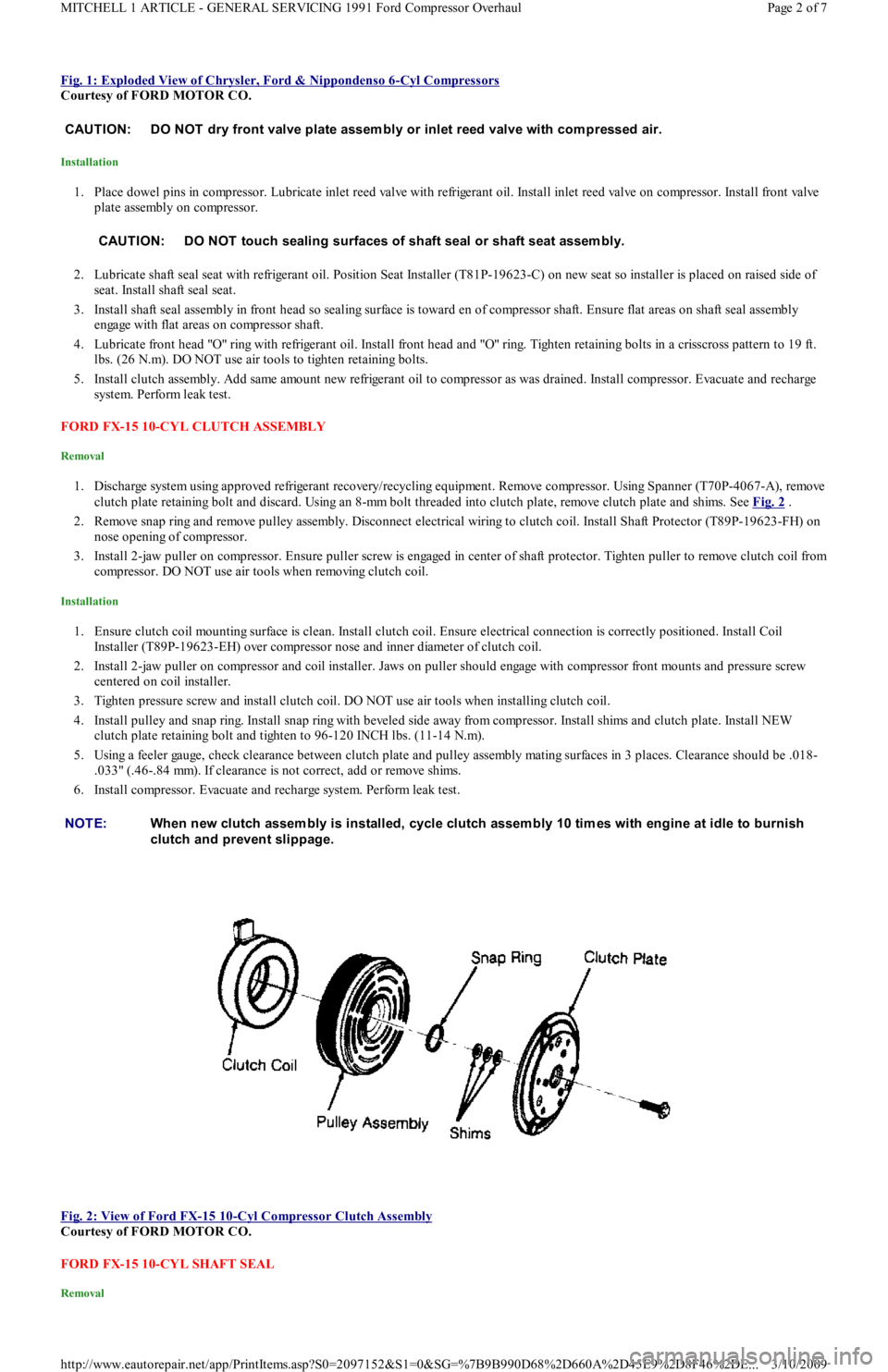
Fig. 1: Exploded View of Chrysler, Ford & Nippondenso 6-Cyl Compressors
Courtesy of FORD MOTOR CO.
Installation
1. Place dowel pins in compressor. Lubricate inlet reed valve with refrigerant oil. Install inlet reed valve on compressor. Install front valve
plate assembly on compressor.
2. Lubricate shaft seal seat with refrigerant oil. Position Seat Installer (T81P-19623-C) on new seat so installer is placed on raised side of
seat. Install shaft seal seat.
3. Install shaft seal assembly in front head so sealing surface is toward en of compressor shaft. Ensure flat areas on shaft seal assembly
engage with flat areas on compressor shaft.
4. Lubricate front head "O" ring with refrigerant oil. Install front head and "O" ring. Tighten retaining bolts in a crisscross pattern to 19 ft.
lbs. (26 N.m). DO NOT use air tools to tighten retaining bolts.
5. Install clutch assembly. Add same amount new refrigerant oil to compressor as was drained. Install compressor. Evacuate and recharge
system. Perform leak test.
FORD FX-15 10-CYL CLUTCH ASSEMBLY
Removal
1. Discharge system using approved refrigerant recovery/recycling equipment. Remove compressor. Using Spanner (T70P-4067-A), remove
clutch plate retaining bolt and discard. Using an 8-mm bolt threaded into clutch plate, remove clutch plate and shims. See Fig. 2
.
2. Remove snap ring and remove pulley assembly. Disconnect electrical wiring to clutch coil. Install Shaft Protector (T89P-19623-FH) on
nose opening of compressor.
3. Install 2-jaw puller on compressor. Ensure puller screw is engaged in center of shaft protector. Tighten puller to remove clutch coil from
compressor. DO NOT use air tools when removing clutch coil.
Installation
1. Ensure clutch coil mounting surface is clean. Install clutch coil. Ensure electrical connection is correctly positioned. Install Coil
Installer (T89P-19623-EH) over compressor nose and inner diameter of clutch coil.
2. Install 2-jaw puller on compressor and coil installer. Jaws on puller should engage with compressor front mounts and pressure screw
centered on coil installer.
3. Tighten pressure screw and install clutch coil. DO NOT use air tools when installing clutch coil.
4. Install pulley and snap ring. Install snap ring with beveled side away from compressor. Install shims and clutch plate. Install NEW
clutch plate retaining bolt and tighten to 96-120 INCH lbs. (11-14 N.m).
5. Using a feeler gauge, check clearance between clutch plate and pulley assembly mating surfaces in 3 places. Clearance should be .018-
.033" (.46-.84 mm). If clearance is not correct, add or remove shims.
6. Install compressor. Evacuate and recharge system. Perform leak test.
Fig. 2: View of Ford FX
-15 10-Cyl Compressor Clutch Assembly
Courtesy of FORD MOTOR CO.
FORD FX-15 10-CYL SHAFT SEAL
Removal
CAUT ION: DO NOT dry front valve plate assem bly or inlet reed valve with com pressed air.
CAUT ION: DO NOT touch sealing surfaces of shaft seal or shaft seat assem bly.
NOTE:When new clutch assem bly is installed, cycle clutch assem bly 10 tim es with engine at idle to burnish
clutch and prevent slippage.
Page 2 of 7 MITCHELL 1 ARTICLE - GENERAL SERVICING 1991 Ford Compressor Overhaul
3/10/2009 http://www.eautorepair.net/app/PrintItems.asp?S0=2097152&S1=0&SG=%7B9B990D68%2D660A%2D45E9%2D8F46%2DE
...
Page 313 of 454
NIPPONDENSO 10P13 CLUTCH ASSEMBLY
Removal
1. Discharge system using approved refrigerant recovery/recycling equipment and remove compressor. Using Clutch Holder (1014), hold
clutch plate and remove crankshaft nut. Using Clutch Plate Remover (T80L-19703-B), pull clutch plate from compressor. Remove
clutch plate shims.
2. Remove snap ring and pulley assembly. If pulley assembly cannot be removed by hand, use Shaft Protector (T80L-19703-G) and 3-jaw
puller to remove pulley. Remove snap ring. Disconnect electrical wiring and remove clutch coil.
Installation
1. Install clutch coil over locating pin. Install snap ring with beveled side away from compressor.
2. Install pulley assembly using Pulley Installer (T80L-19703-J) and hammer (if necessary). Install snap ring with beveled side away from
compressor.
3. Install clutch plate shims. Ensure clutch plate aligns with crankshaft key. Install clutch plate using Clutch Plate Installer (T80L-19703-
F).
4. Install crankshaft nut. Using spanner, tighten nut to 10-14 ft. lbs. (13-20 N.m). DO NOT tighten nut with air tools. Using feeler gauge,
check clearance between clutch plate and pulley.
5. Rotate compressor clutch and check clearance in more than one place. Proper clearance is .021-.036" (.53-.91 mm). If clearance is not
correct, add or remove shims.
6. Add same amount new refrigerant oil to compressor as was drained. Rotate compressor 10 revolutions to distribute oil. Install
compressor. Evacuate and recharge system. Perform leak test.
NIPPONDENSO 10P13 SHAFT SEAL
Removal
1. Discharge system using approved refrigerant recovery/recycling equipment and remove compressor. Drain oil from compressor and
record amount for reassembly. Using Clutch Holder (1014), hold clutch plate and remove crankshaft nut.
2. Pull clutch plate from compressor using Clutch Plate Remover (T80L-19703-B). Remove clutch plate shims. Clean compressor area
around seal. Remove felt packing and dust seal retainer from nose of front cover. See Fig. 3
.
3. Using Key Remover (T81P-19623-NH), remove key from compressor shaft. Remove seal seat retaining snap ring. Remove seal seat from
compressor using Seal Seat Remover/Installer (T87P-19623-B).
4. Place Seal Remover/Installer (T87P-19623-C) on compressor. Rotate seal remover/installer clockwise until tangs engage in seal. Pull
seal from compressor.
Installation
1. Lubricate shaft seal, seal seat and inside of compressor nose with refrigerant oil. Install Seal Protector (T71P-19703-H) over compressor
shaft. Using seal remover/installer, install shaft seal in compressor.
2. Rotate seal on compressor shaft to align flat areas on seal with those on compressor shaft.
3. Using seal seat remover/installer, install seal seat until it contacts seal. Install snap ring. Install key in crankshaft with rounded edge
inward.
4. Install clutch plate shims. Ensure clutch plate is aligned with crankshaft key. Using Clutch Plate Installer (T80L-19703-F), install clutch
plate.
5. Install crankshaft nut. Using spanner, tighten nut to 10-14 ft. lbs. (13-20 N.m). DO NOT tighten nut with air tools. Using feeler gauge,
check clearance between clutch plate and pulley.
6. Rotate compressor clutch and check clearance in more than one place. Proper clearance is .021-.036" (.53-.91 mm). If clearance is not
correct, add or remove shims.
7. Add same amount new refrigerant oil to compressor as was drained. Rotate compressor 10 revolutions to distribute oil in compressor.
Install compressor. Evacuate and recharge system. Perform leak test. NOTE:After installing new clutch, cycle clutch 10 tim es with engine at idle speed to prevent clutch slippage.
Page 4 of 7 MITCHELL 1 ARTICLE - GENERAL SERVICING 1991 Ford Compressor Overhaul
3/10/2009 http://www.eautorepair.net/app/PrintItems.asp?S0=2097152&S1=0&SG=%7B9B990D68%2D660A%2D45E9%2D8F46%2DE
...
Page 315 of 454
5. Using Shaft Seal Remover/Installer (T87P-19623-C), remove seal by pushing downward on shaft seal remover/installer and rotating
clockwise to engage seal tangs. Pull seal from compressor.
Installation
1. Place Shaft Seal Protector (T71P-19703-H) over compressor shaft. Lubricate shaft seal and nose of compressor with new refrigerant oil.
DO NOT touch sealing surface of seal or shaft. Engage seal tangs on shaft seal remover/installer.
2. Align flats of seal with flats on crankshaft and push new seal on compressor shaft. Push downward on shaft seal remover/installer and
turn counterclockwise to disengage seal tangs.
3. Attach shaft seal seat to shaft seal seat remover/installer and lubricate with new refrigerant oil. Install seal seat and push inward against
seal. Install seal seat retaining snap ring.
4. Install dust seal retainer and felt packing. Install clutch plate shims. Ensure clutch plate aligns with crankshaft key. Using Clutch Plate
Installer (T80L-19703-F), install clutch plate.
5. Install crankshaft nut. Using spanner to hold clutch, tighten crankshaft nut to 10-14 ft. lbs. (13-20 N.m). DO NOT tighten nut with air
tools.
6. Using feeler gauge, check clearance between clutch plate and pulley. Rotate compressor clutch and check clearance in more than one
place. Proper clearance is .021-.036" (.53-.91 mm). If clearance is not correct, add or remove shims.
7. Add same amount new refrigerant oil to compressor as was drained. Rotate compressor 10 revolutions to distribute oil. Install
compressor. Evacuate and recharge system. Perform leak test.
NIPPONDENSO 10P15A SHAFT SEAL
Removal
1. Discharge system using approved refrigerant recovery/recycling equipment and remove compressor. Drain oil from compressor and
record amount for reassembly. Remove clutch assembly. See NIPPONDENSO 10P15A CLUTCH ASSEMBLY R & I in this article.
2. Remove manifold assembly from top of compressor. Clean compressor front hub area. Using Ring Remover (T71P-19703-C), remove
retaining ring from front of compressor shaft.
3. Remove felt seal from front of compressor. Remove front head retaining bolts and front head from compressor. Remove snap ring fro m
rear of front head. Remove seal from rear of front head.
Installation
1. Install seal and snap ring in front head. Install front head on compressor. Tighten bolts to 18-20 ft. lbs. (24-27 N.m). Install felt packing
and retaining ring.
2. Install manifold assembly and tighten bolts to 18-20 ft. lbs. (24-27 N.m). Add same amount of new refrigerant oil to compressor as that
drained from compressor. Rotate compressor 10 revolutions to distribute oil in compressor. Install compressor. Evacuate and recharge
system. Perform leak test.
NIPPONDENSO 10PA17 & 10PA17A CLUTCH ASSEMBLY
Removal
1. Remove compressor shaft bolt and discard. Remove clutch plate and shims. If clutch hub cannot be removed by hand, thread a 8-mm
bolt in center of clutch plate. Tighten bolt and remove clutch plate.
2. Remove pulley assembly retaining snap ring. Remove pulley assembly. Remove snap ring and disconnect clutch coil electrical wiring.
Remove clutch coil.
Installation
1. Install clutch coil so pin in back of coil aligns with hole in front housing. Install snap ring with beveled side away from compressor.
2. Install pulley assembly. Install snap ring with beveled side away from compressor. Coat splines of compressor shaft with White grease. I
f
reusing original clutch plate and pulley, old shims can be used.
3. If installing new components, install one thin shim. Install clutch plate. Tighten compressor shaft bolt to 10 ft. lbs. (14 N.m). DO NOT
air tools to tighten bolt.
4. Using feeler gauge, measure air gap between clutch plate and pulley surface in 3 areas. Proper clearance is .014-.026" (.35-.66 mm).
Adjust shim thickness to obtain correct clearance.
5. Once compressor shaft bolt is tightened, recheck clearance between clutch plate and pulley surface in 4 places. Readjust clearance if
necessary.
NIPPONDENSO 10PA17 & 10PA17A SHAFT SEAL
Removal
1. Discharge system using approved refrigerant recovery/recycling equipment and remove compressor. Drain oil from compressor and
record amount for reassembly. Install compressor in Holding Fixture (T89P-19623-D) and clamp fixture in a vise.
2. Remove clutch assembly. See NIPPONDENSO 10PA17 & 10PA17A CLUTCH ASSEMBLY R & I in this article. Remove front head
retaining bolts. Separate front head from compressor, using care not to scratch sealing surface. See Fig. 4
.
3. Using "O" Ring Remover (T71P-19703-C), remove felt dust seal and dust seal retainer from front head. Remove shaft seal retaining snap
ring. Position front head (nose up) on cardboard placed on a flat surface. Using Shaft Seal Remover (T89P-19623-E), push shaft seal
from front head. NOTE:After installing new clutch, ensure voltage is correct and cycle clutch with 5 seconds on and 5 seconds
off. Repeat cycle for approxim ately 20 tim es with A/C on, blower fan on high speed and engine RPM at
1500-2000. T his provides better clutch torque capability.
Page 6 of 7 MITCHELL 1 ARTICLE - GENERAL SERVICING 1991 Ford Compressor Overhaul
3/10/2009 http://www.eautorepair.net/app/PrintItems.asp?S0=2097152&S1=0&SG=%7B9B990D68%2D660A%2D45E9%2D8F46%2DE
...
Page 317 of 454
Back To Article
A/C COMPRESSOR SERVICING
1991 GENERAL SERVICING Com pressor Service
ISOLATING COMPRESSOR
1. Connect service gauge set to the compressor service valves and open compressor valves slightly (turn in clockwise). Start engine and
operate air conditioning. Slowly turn compressor suction valve clockwise toward closed (front-seated) position.
2. When suction pressure is reduced to zero or less, turn off engine and compressor and quickly turn suction valve stem in to full front-
seated position. Suction pressure should be slightly above zero. Turn discharge valve into front-seated position.
3. To check oil level, slowly open compressor crankcase plug to relieve any remaining pressure. After oil level is corrected, cap service
gauge ports on both valves. Back-seat suction service valve to allow refrigerant to enter compressor. Open discharge valve halfway.
4. Loosen discharge service valve cap, allowing refrigerant pressure to force air out of compressor. Back-seat service valve and tighten cap.
Compressor is now ready for operation.
REFRIGERANT OIL
Only new, pure, moisture-free refrigerant oil should be used in the air conditioning system. This oil is highly refined and dehydrated to a point
where moisture content is less than 10 parts per million. The oil container must be tightly closed at all times when not in use, or moisture will
be absorbed into the refrigerant oil from the air.
DISCHARGING SYSTEM PRECAUTIONS
If compressor has stem-type service valves, it can be isolated and removed without discharging entire system. Otherwise, discharge system
completely using approved refrigerant recovery/recycling equipment before loosening any fittings.
DISCONNECTING LINES & FITTINGS TEST
After system is discharged, carefully clean area around all fittings to be opened. Always use 2 wrenches when tightening or loosening fittings
to avoid twisting or distorting lines. Cap or plug all openings as soon as lines are removed. Do not remove caps until immediately before
connections are made. This will keep entry of air and moisture to a minimum.
CONNECTING LINES AND FITTINGS
A new gasket or "O" ring should be used in all instances when connecting lines or fittings. Dip "O" ring in new refrigerant oil and ensure it is
not twisted during installation. Always use 2 wrenches to prevent damage to lines and fittings.
PLACING SYSTEM IN OPERATION
After component service or replacement has been completed and all connections have been made, evacuate system thoroughly with a vacuum
pump. Charge system with proper amount of refrigerant and perform a leak test. See REFRIGERANT OIL & R-12 SPECIFICATIONS chart in
this section for system capacities. Be sure to check all fittings that have been opened. After system has been leak tested, make a system
performance check.
ATSUGI ROTARY VANE CLUTCH R & I
Removal
When replacing compressor clutch, be careful not to scratch shaft or bend pulley. When removing center bolt, hold clutch disc with Clutch
Holder (KV99231010). Using Hub Puller (KV998VR001 & KV99231010), remove clutch disc. When removing pulley, remove lock nut with
Hub Socket (KV99235160).
Installation
Wipe oil off clutch surface. Adjust disc pulley clearance to .012-.024" (.3-.6 mm). Tighten center bolt to 80-104 INCH lbs. (9.1-11.8 N.m).
Tighten clutch lock nut to 22-29 ft. lbs. (29-39 N.m). See Fig. 1
. CAUT ION: When discharging air conditioning system , use only approved refrigerant recovery/recycling
equipm ent. Make every attem pt to avoid discharging refrigerant into the atm osphere.
NOTE:Only com pressors with stem -type service valves can be isolated.
CAUT ION: When discharging air conditioning system , use only approved refrigerant recovery/recycling
equipm ent. Make every attem pt to avoid discharging refrigerant into the atm osphere.
NOTE:Air conditioning system s will not norm ally need addition of refrigerant oil unless definite oil loss has
occurred due to ruptured lines, leaking com pressor seals, com pressor overhaul or com ponent
replacem ent.
Page 1 of 18 MITCHELL 1 ARTICLE - A/C COMPRESSOR SERVICING 1991 GENERAL SERVICING Compressor Service
3/10/2009 http://www.eautorepair.net/app/PrintItems.asp?S0=2097152&S1=0&SG=%7B9B990D68%2D660A%2D45E9%2D8F46%2DE
...