Page 98 of 143

Brakes
Brake System Design
The diagonally-separated dual service brake systemis designed so half the
system will still provide
braking action if the other
half fails.However, stopping the car with only half the system will require
more pedal pressure and pedal travel than normal. Also, the distance
required to stop will be longer using only half the brake system. If
the brakes fail suddenly, downshift to a lower gear for increased engine braking, and pull off the road as soon as possible.
It is dangerous to drive your car with a problem in either the
brake electrical or hydraulic system; have your dealer check
both systems if you suspect brake trouble. Do not ride the brakes, In other words, don't put your foot on
the brake pedal unless you intend to brake. This causes excessive brake wear and can damage, or lead to loss of braking
effectiveness through overheating. Your brake lights may also
confuse drivers behind you.Driving through deep water may affect the brakes.
Check their effectiveness by pressing the brake pedal gently.If the car does not slow down at the normal rate, continue
gently applying the brakes, while maintaining a safe speed, until
they dry out and normal performance returns.
Brake Wear
Both front and rear brakes should be inspected for wear at the
intervals shown in the maintenance schedule on page 78
When the brakes require maintenance, use only genuine Honda replacement parts or their equivalent.
Brake Wear Indicators
Your car is equipped with audible brake wear indicators. When the
brake pads need to be replaced, the wear indicators will make a "screeching" sound or a high pitch chirp.
NOTE:
Due to some driving habits or climates, brakes may "squeal" when
you first apply them or when you have them partially applied; this is normal, and does not indicate excessive wear. The wear indicator
makes a "screeching" sound while the brakes are applied.ProCarManuals.comMain Menu t s
Page 100 of 143

The condition of the battery can be determined by checking the
test indicator. Service as required according to the label on the
battery.
Any corrosion around the positive and negative terminals should be washed off with a solution of baking soda and warm water. Dry the
terminals and then coat them with grease.
The battery gives off explosive gases; keep sparks, flames andcigarettes away. Provide adequate ventilation when charging orusing the battery in an enclosed space.
The battery contains sulfuric acid (electrolyte). Contact with skin or eyes may cause severe burns. Wear protective clothing
and a face shield.
— If electrolyte gets on your skin, flush with water.
— If electrolyte gets in your eyes, flush with water for at least
15 minutes and call a physician immediately.
Electrolyte is poisonous.
— If swallowed, drink large quantities of water or milk and follow with milk of magnesia or vegetable oil and call a physician.
KEEP OUT OF REACH OF CHILDREN.
Battery
TEST INDICATOR
TERMINAL
TERMINAL
ProCarManuals.comMain Menu t s
Page 112 of 143
Appearance Care (cont'd)
Rust Prevention
Rusting is likely to occur in parts of the car where water is trapped
or where there is continual dampness. Water will collect inside doors and body panels if drain holes
become clogged.
Water which seeps under or soaks floor mats will subject floor sections to prolonged wetness or dampness. Road dirt or sand, which collects and fills recesses on the
underside of the car, retains moisture long after the rest of the
car has dried.
The removal of paint and undercoating by stones, gravel, and minor accidents immediately exposes metal to air and moisture.Rusting is increased by high humidity and by the presence of
corrosive substances in the air or on the roads.
Salt used for road de-icing will coat the bottom of the ear and
hasten rusting.Localities with high humidity have greater potential for rust
problems, especially where salt is also present on the road or in
moist sea air.
Industrial pollution will accelerate the deterioration of paint
finishes and promote rusting.
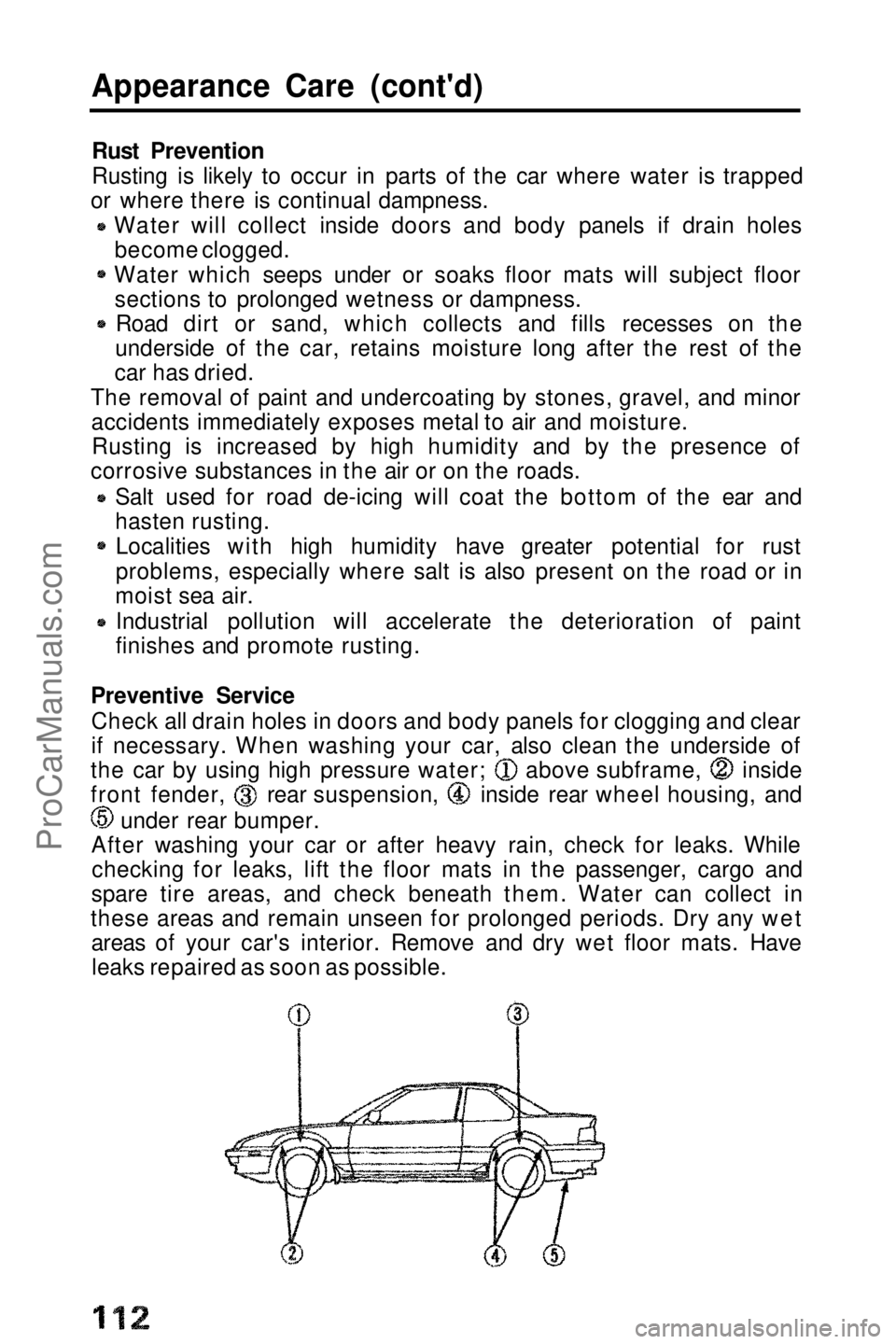
Preventive Service Check all drain holes in doors and body panels for clogging and clear
if necessary. When washing your car, also clean the underside of the car by using high pressure water; above subframe, inside
front fender, rear suspension, inside rear wheel housing, and
under rear bumper.
After washing your car or after heavy rain, check for leaks. While checking for leaks, lift the floor mats in the passenger, cargo and
spare tire areas, and check beneath them. Water can collect in
these areas and remain unseen for prolonged periods. Dry any wet areas of your car's interior. Remove and dry wet floor mats. Haveleaks repaired as soon as possible.ProCarManuals.comMain Menu t s
Page 121 of 143

If towing is necessary, contact a professional towing service. Your
authorized Honda dealer can assist you with detailed towing
instructions.
Never use tow chains or rope to tow a car; your ability to safety
control the car may be adversely affected.
We recommend the following:
Flat Bed Equipment — Entire car is winched on a flat bed vehicle.
This is the best way of transporting your Honda.
Wheel Lift Type — Tow with the front wheels off the ground.
If the
car can only be towed with the front wheels on the ground:
make sure the transmission is full of fluid (see page 86 — 87)
and tow with the transmission in neutral (N) and the ignition key in
the I position.
CAUTION:
To avoid serious damage on automatic transmission cars, first start the engine and shift to D, then to N and shut the engine off. If
the engine does not run or the transmission cannot be shifted
while the engine is running, the car must be transported on flatbed equipment.
Check local regulations for towing.
CAUTION:
Do not exceed 35 mph (55 km/h) or tow for distances of more
than 50 miles (80 km). If a Sling Type tow is used, the tow truck driver should position
wood spacer blocks between your car's frame and the chains
and lift straps to avoid damaging the bumper and the body. Do not use the bumpers to lift the car or to support the car's
weight while towing.
When towing a car with 4WS even with the front wheels off the ground, turn the wheels straight ahead and tie the steering wheel in place. TowingProCarManuals.comMain Menu s t
Page 122 of 143
If Your Car Gets Stuck
If your car gets stuck in sand, mud, or snow, call a professional
towing service for assistance in getting your car out,
CAUTION:
Do not rev up the engine and allow the wheels to spin freely at
high speed. Severe transmission damage may result if the wheels are allowed to spin for more than a few seconds. DO NOT try to free a car with automatic transmission from
snow etc. by rocking the car alternately between forward and
reverse gears. Severe transmission damage may result from
shifting into gear with the wheels moving.ProCarManuals.comMain Menu s t
Page 128 of 143
DOT Tire Quality Grades
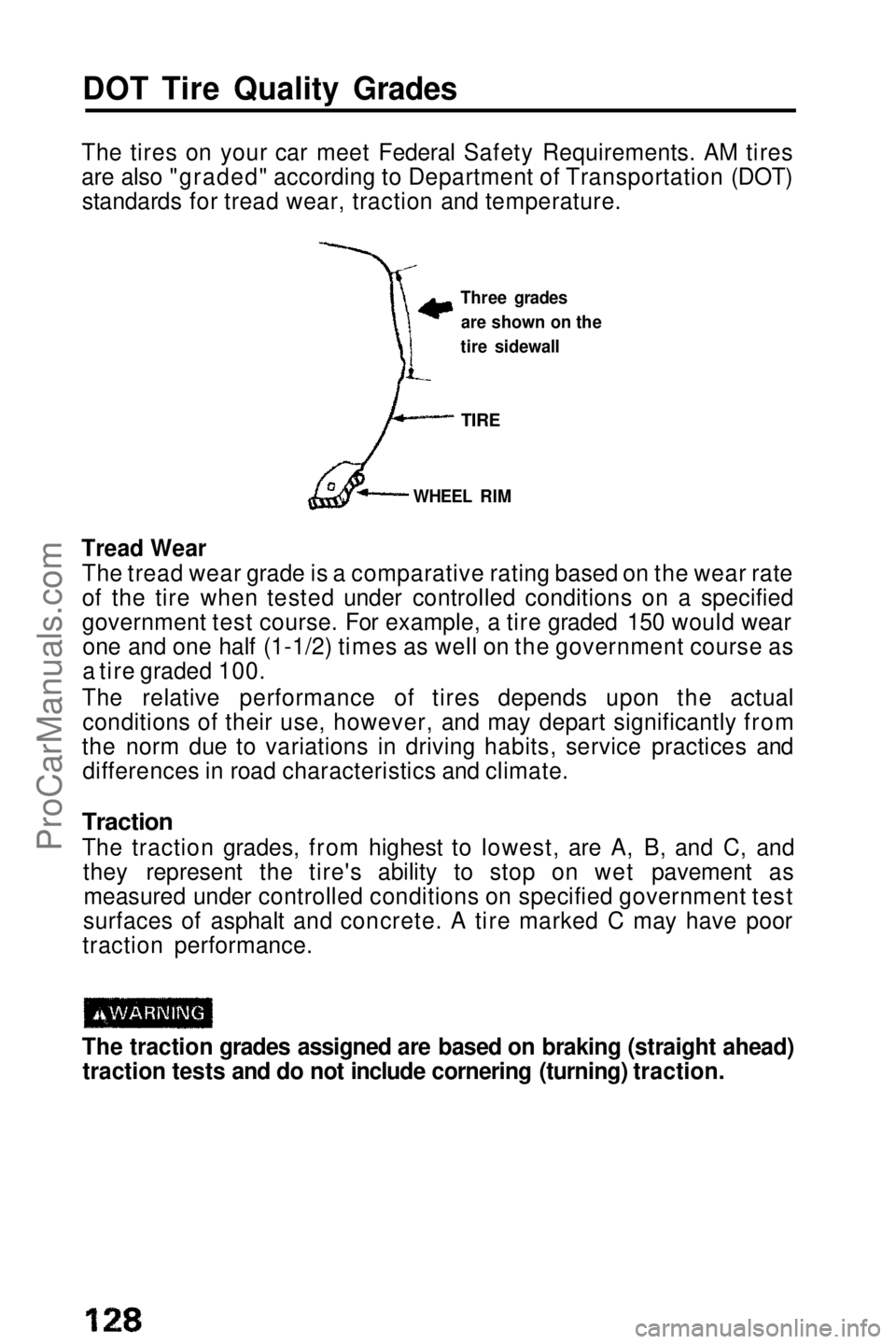
The tires on your car meet Federal Safety Requirements. AM tires
are also "graded" according to Department of Transportation (DOT) standards for tread wear, traction and temperature.
Three gradesare shown on the
tire sidewall
TIRE
WHEEL RIM
Tread Wear The tread wear grade is a comparative rating based on the wear rate
of the tire when tested under controlled conditions on a specified
government test course. For example, a tire graded 150 would wearone and one half (1-1/2) times as well on the government course as
a tire graded 100.
The relative performance of tires depends upon the actual conditions of their use, however, and may depart significantly from
the norm due to variations in driving habits, service practices and differences in road characteristics and climate.
Traction
The traction grades, from highest to lowest, are A, B, and C, and they represent the tire's ability to stop on wet pavement asmeasured under controlled conditions on specified government test
surfaces of asphalt and concrete. A tire marked C may have poor
traction performance.
The traction grades assigned are based on braking (straight ahead) traction tests and do not include cornering (turning) traction.ProCarManuals.comMain Menu t s
Page 135 of 143

Warranty Service
Warranty The following warranties are provided with every new vehicle: 1. New Car Limited Warranty
2. Emission Control Systems Defects Warranty
3. Emissions Performance Warranty
4. Battery Limited Warranty 5. Rust Perforation Limited Warranty
6. Accessory Limited Warranty 7. Replacement Parts Limited Warranty
8. Replacement Muffler Lifetime Limited Warranty
9. Seat Belt Limited Warranty.
All warranties pertaining to your car can be found in the warranty
booklet provided with your new car except the required
maintenance schedule which is contained here in the Owner's
Manual.
If you are unable to obtain warranty service or are dissatisfied with
the warranty decision or service you received at an authorized Honda dealership, you should review the matter with that
dealership's Service Manager. This will normally resolve your problem. If it does not resolve your problem you should appeal the
decision with the owner of the dealership. Please bear in mind that
your problem will likely be resolved at the dealership, using the
dealer's facilities, equipment and personnel. So it is very important
that your initial contact be with the dealer or his management. After following these steps, if you wish to have the matterreviewed by American Honda you should contact the Automobile
Zone Office serving your area, as shown on the map on the inside of
the back cover. When contacting American Honda, please provide
the Automobile Zone Office with the following information:
Vehicle Identification Number
Servicing Dealer Name and Address
Date of Purchase
Mileage on your Car
Your Name, Address, and Phone Number
Nature of Problem
Selling Dealer
After a review of the facts, you will be advised of what can be done.ProCarManuals.comMain Menu t s
Page 136 of 143
Service Manuals
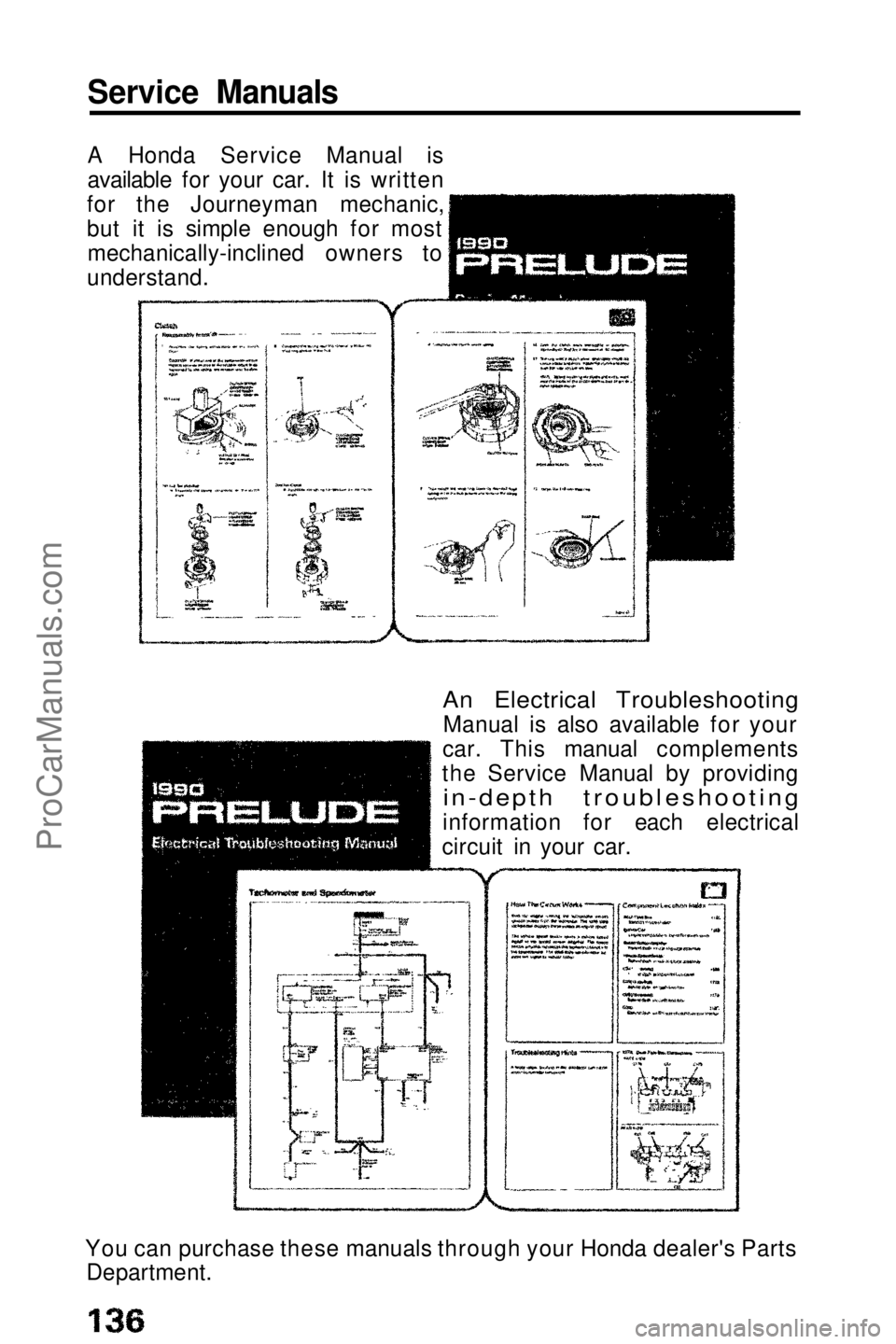
A Honda Service Manual is
available for your car. It is written
for the Journeyman mechanic,
but it is simple enough for most mechanically-inclined owners to
understand.
An Electrical Troubleshooting
Manual is also available for your
car. This manual complements
the Service Manual by providing
in-depth troubleshooting
information for each electrical
circuit in your car.
You can purchase these manuals through your Honda dealer's Parts Department.ProCarManuals.comMain Menu t s