1982 CHEVROLET CAMARO oil filter
[x] Cancel search: oil filterPage 719 of 875

GM – CAMARO 1982-1992 – Repair Guide (Checked by WxMax) 719
11. Lubricate the new large O-ring with cl
ean engine oil and install it directly
over the backup washer. Be sure t he O-ring is seated properly and is
flush with the top of the fuel meter body surface.
12. Lubricate the new small O-ring with clean engine oil and install it on the
nozzle end of the injector. Push t he O-ring on far enough to contact the
filter.
WARNING - Do not attempt to reverse this procedure and install the backup
washer and O-ring after the injector is located in the cavity. To do so will
prevent proper seating of the O-ring in th e cavity recess which could result in a
fuel leak and possible fire.
13. Install the injector by aligning the raised lug on the injector base with the
notch cast into the fuel meter body . Push down on the injector making
sure it is fully seated in the cavity. In jector installation is correct when the
lug is seated in the notch and the electrical terminals are parallel to the
throttle shaft.
14. Using new gaskets on the fuel mete r cover and a new dust seal, install
the cover to the fuel meter body. Use an appropriate thread locking
compound on the cover attaching screws.
15. Connect the injector electrical c onnector by pushing straight down until
seated firmly in place.
16. Connect the negative battery cable.
17. With the engine OFF and the igniti on ON, check for fuel leaks.
18. Install the air cleaner.
ADJUSTMENTS
MINIMUM IDLE SPEED
Minimum idle speed should only be adjus ted when installing a replacement
throttle body. The idle stop screw is used to regulate the minimum idle speed of
the engine. The throttle body is adjusted at the factory, then covered with a cap
or plug to discourage unnecessary readjustment.
2.5L ENGINES 1. Remove the air cleaner and pl ug the THERMAC vacuum port.
2. Disconnect the TV cable from the th rottle control bracket to allow access
to the idle adjustment screw.
3. Remove the throttle stop screw plug or cap.
4. Connect a tachometer to the engine.
5. Disconnect the Idle Air Control (IAC) valve connector.
6. Start the engine with the transmi ssion in PARK (auto transmission) or
NEUTRAL (manual transmission) and allow the engine speed to
stabilize. All accessories (A/C, rear defogger, etc.) should be OFF.
7. Install tool J-33047 in t he idle air passage of the throttle body. Be certain
that the tool seats fully in t he passage and no air leaks exist.
Page 763 of 875
GM – CAMARO 1982-1992 – Repair Guide (Checked by WxMax) 763
•
Jackstands for support.
• Oil filter wrench.
• Spout or funnel for pouring fluids.
• Grease gun for chassis lubrication (unl ess your vehicle is not equipped
with any grease fittings)
• Hydrometer for checking the battery (unless equipped with a sealed,
maintenance-free battery).
• A container for draining oil and other fluids.
• Rags for wiping up the inevitable mess.
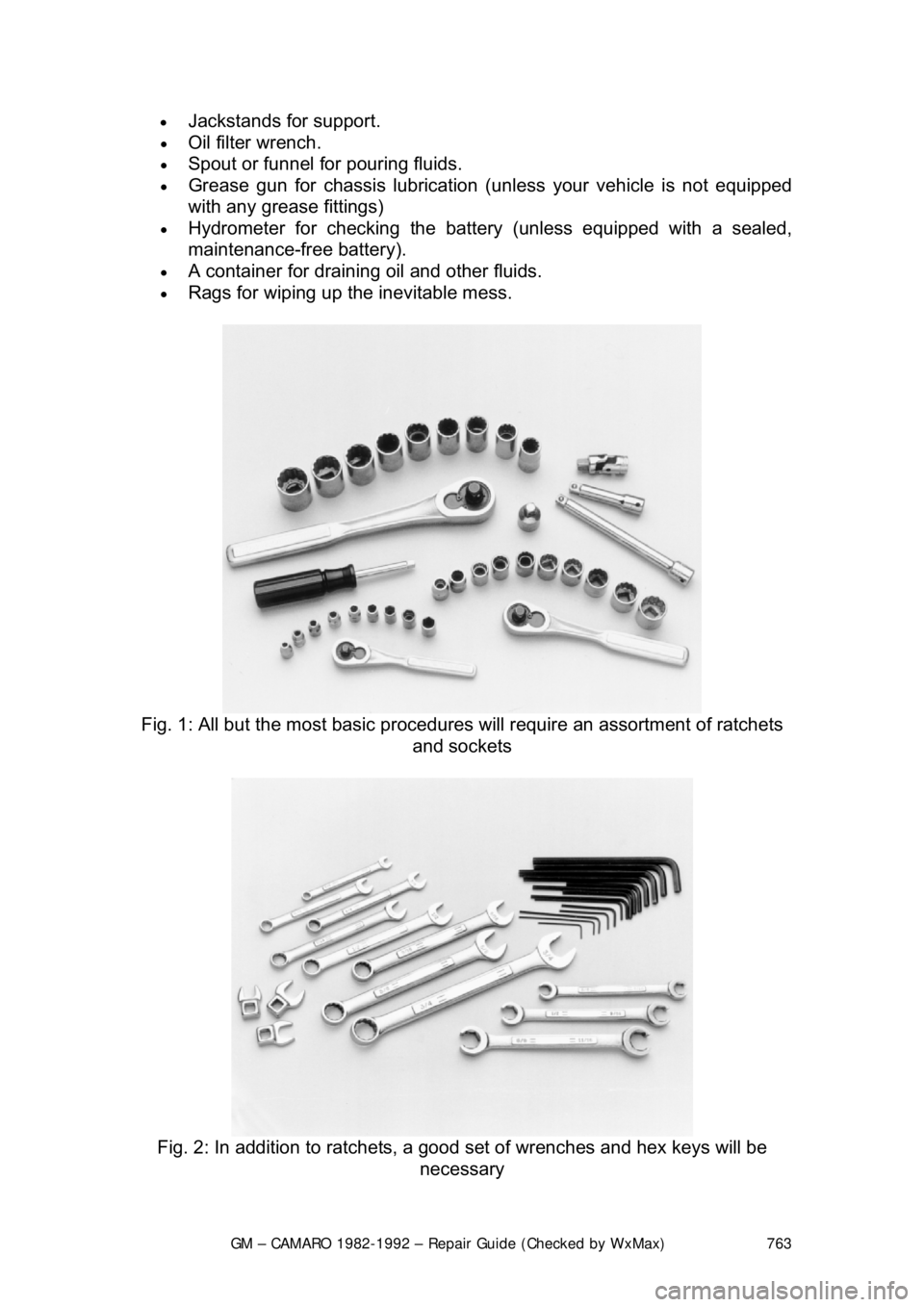
Fig. 1: All but the most basic procedures will require an assortment of ratchets
and sockets
Fig. 2: In addition to ratchets, a good set of wrenches and hex keys will be
necessary
Page 779 of 875

GM – CAMARO 1982-1992 – Repair Guide (Checked by WxMax) 779
ENGINE OIL AND FILTER CHANGE
Under normal operating conditions, the oi
l is to be changed every 7,500 miles
(12,000km) or 12 months, whichever occurs first.
Although the manufacturer recommends changing the f ilter at the first oil
change and then at every other oil c hange, (unless 12 months pass between
changes), The editors of this informat ion recommend changing the filter with
each service. It is a small price to pay for extra protection.
When driving conditions frequently include dusty or polluted areas, trailer
towing, idling for long periods of ti me, or low speed operation, or when
operating at temperatures below freezing or driving short distances (under 4
miles or 6.4km), change t he oil and filter more frequently. Under these
circumstances, oil has a greater chance of building up sludge and contaminants
which could damage your engine. If your v ehicle use fits into one or more of
these categories, (as it does for most vehicles), it is suggested that the oil and
filter be changed every 3, 000 miles (1361km) or 3 months, whichever comes
first.
The oil should be disposed of properly after it is drained from the vehicle. Store
the oil in a suitable container and take the container to an official oil recycling
station. Most gas stations or oil and lube facilities will take the used oil at little or
no expense to you.
Oil should always be changed after the engine has been running long enough to
bring it up to normal operating temperature. Hot oil will flow more easily and will
carry more contaminants than will cold oi l. The oil drain plug is located on the
bottom of the oil pan (bottom of the engi ne, underneath the car). The oil filter is
located on the left side of most engines covered by this information. To change
the oil and filter:
1. Run the engine until it reaches normal operating temperature.
2. Raise the front of the vehicle and s upport it safely using a suitable pair of
jackstands.
3. Slide a drain pan of a least 6 quar ts capacity under the oil pan. Wipe the
drain plug and surrounding area clean using an old rag.
CAUTION - The EPA warns that prolonged contact with used engine oil may
cause a number of skin disorders, incl uding cancer! You should make every
effort to minimize your exposure to used engine oil. Pr otective gloves should be
worn when changing the oil. Wash y our hands and any other exposed skin
areas as soon as possible after exposure to used engine oil. Soap and water, or
waterless hand cleaner should be used.
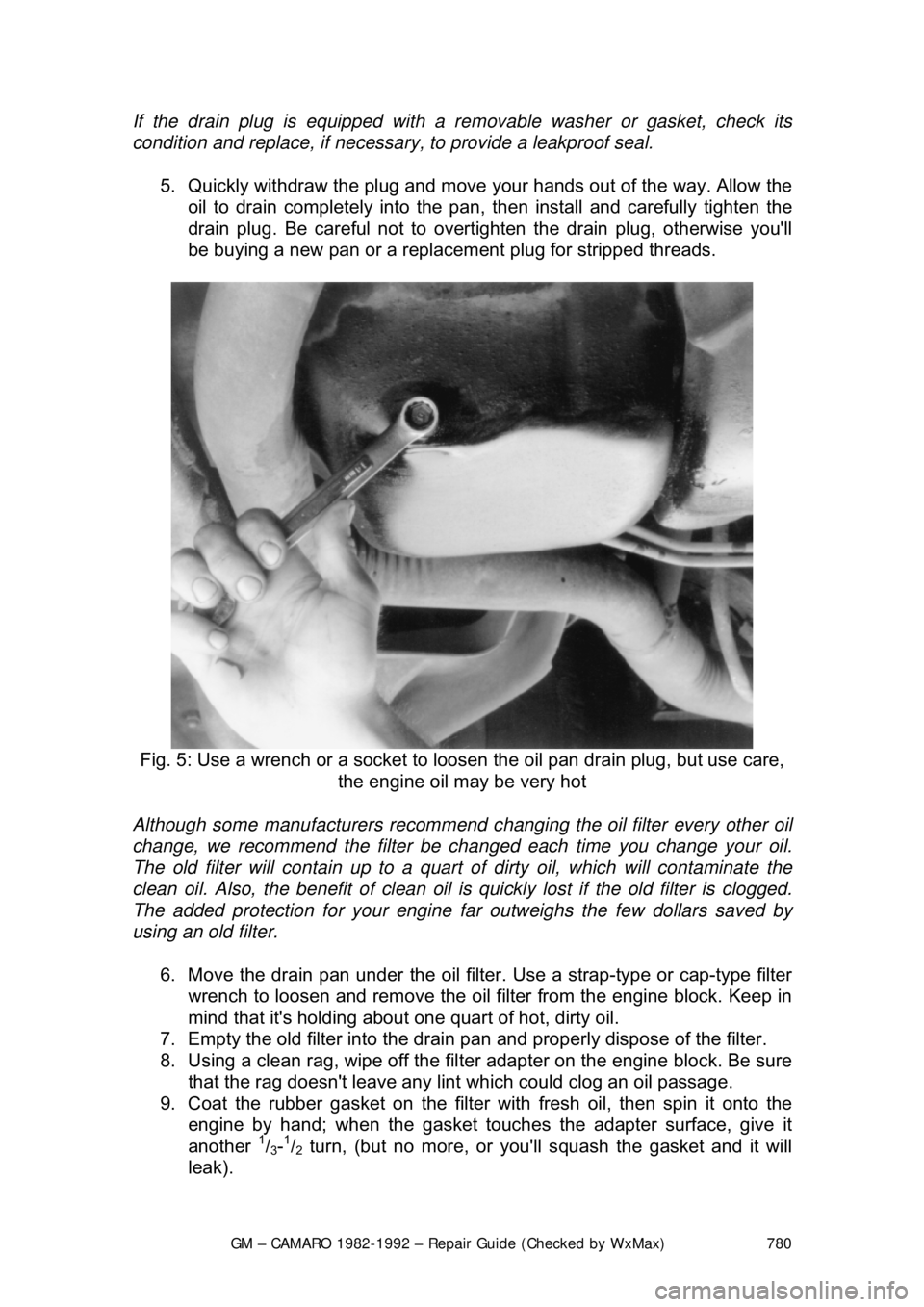
4. Loosen the drain plug using a ratc het, short extension and socket or a
box-wrench. Turn the plug out by hand, using a rag to shield your fingers
from the hot oil. By keeping an in ward pressure on the plug as you
unscrew it, oil won't escape past the threads and you can remove it
without being burned by hot oil.
Page 780 of 875
GM – CAMARO 1982-1992 – Repair Guide (Checked by WxMax) 780
If the drain plug is equipped with a re
movable washer or gasket, check its
condition and replace, if necessary , to provide a leakproof seal.
5. Quickly withdraw the plug and move your hands out of the way. Allow the
oil to drain completely into the pan, then install and carefully tighten the
drain plug. Be careful not to overtighten the drain plug, otherwise you'\
ll
be buying a new pan or a replacem ent plug for stripped threads.
Fig. 5: Use a wrench or a socket to l oosen the oil pan drain plug, but use care,
the engine oil may be very hot
Although some manufacturers recommend c hanging the oil filter every other oil
change, we recommend the filter be chan ged each time you change your oil.
The old filter will contain up to a quart of dirty oil, which will contaminate the
clean oil. Also, the benefit of clean oil is quickly lost if the old filter is clogged.
The added protection for your engine far outweighs the few dollars saved by
using an old filter.
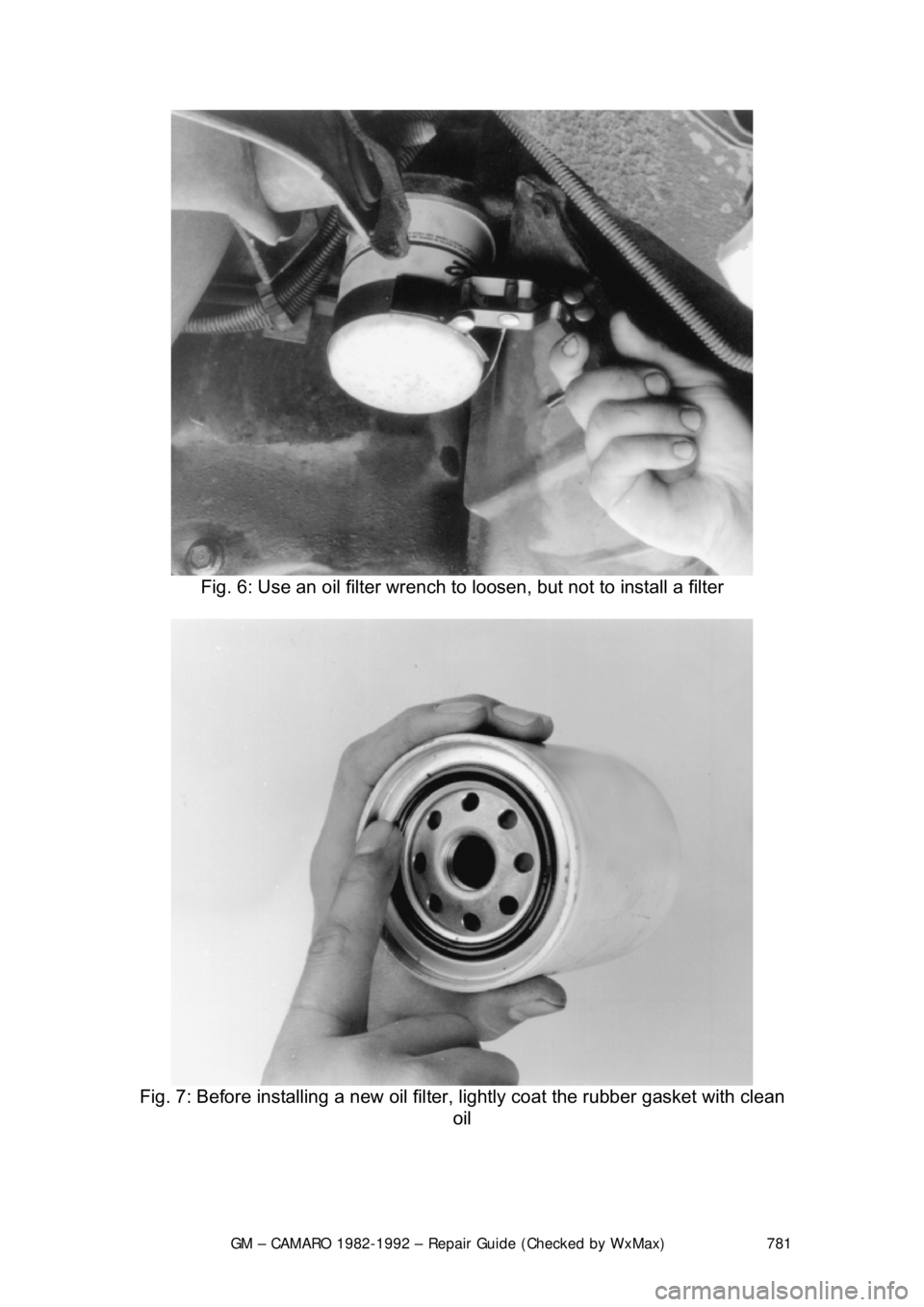
6. Move the drain pan under the oil filter. Use a strap-type or cap-type filter
wrench to loosen and remove the oil f ilter from the engine block. Keep in
mind that it's holding about one quart of hot, dirty oil.
7. Empty the old f ilter into the drain pan and proper ly dispose of the filter.
8. Using a clean rag, wipe off the filt er adapter on the engine block. Be sure
that the rag doesn't leave any lint which could clog an oil passage.
9. Coat the rubber gasket on the filter with fresh oil, then spin it onto the
engine by hand; when the gasket touches the adapter surface, give it
another
1/3-1/2 turn, (but no more, or you'll squash the gasket and it will
leak).
Page 781 of 875
GM – CAMARO 1982-1992 – Repair Guide (Checked by WxMax) 781
Fig. 6: Use an oil filter wrench to loosen, but not to install a filter
Fig. 7: Before installing a new oil filt er, lightly coat the rubber gasket with clean
oil
Page 782 of 875

GM – CAMARO 1982-1992 – Repair Guide (Checked by WxMax) 782
10. Refill the engine with the correct amount
of fresh oil. Please refer to the
Capacities chart at the end of this section.
11. Check the oil level on the dipstick. It is normal for the level to be a bit
above the full mark. Start the engine and allow it to idle for a few
minutes.
CAUTION - Do not run the engi ne above idle speed until it has built up oil
pressure, as indicated w hen the oil light goes out
12. Shut off the engine and allow the oil to flow back to the crankcase for a
minute, then recheck the oil level. C heck around the filter and drain plug
for any leaks, and correct as necessary.
MANUAL TRANSMISSIONS
FLUID RECOMMENDATIONS
• 1982-85 4-speed manual transmissi ons - SAE 80W/90 GL-5 gear
lubricant
• 1986-87 4-speed manual transmission - Dexron®®II automatic
transmission fluid
• 1982-84 5-speed manual transmissions - use SAE 80W/90 GL-5 gear
lubricant (SAE 80W GL-5 in Canada)
• 1985-92 5-speed manual transmissi ons - Dexron®II automatic
transmission fluid
LEVEL CHECK
The oil in the manual tr ansmission should be check ed every 12 months or
15,000 miles.
1. Raise the car and support on jackstands as close to level as possible. \
2. Remove the filler plug from the side of the transmission housing.
3. If lubricant begins to trickle out of the hole, there is enough and you need
not go any further. Otherwise, carefully insert your finger (watch out for
sharp threads) and check to see if the oil is up to the edge of the hol\
e.
4. If not, add oil through the hole until the level is at the edge of the hole.
Most lubricants come in a plasti c squeeze bottle with a nozzle; making
additions simple.
5. Install and tighten the filler plug.
DRAIN AND REFILL
The fluid in the manual transmission do es not require changing. If you do
choose to change the transmission fluid, the fluid can be drained out through
the lower drain plug hole on the side of the transmission. Fill the transmission
with the recommended lubricant to the bottom of the filler plug hole and install
the filler plug.
Page 784 of 875
GM – CAMARO 1982-1992 – Repair Guide (Checked by WxMax) 784
b. If fluid is warm, the le
vel should be close to the ADD mark, either
above or below.
c. If fluid is too hot to touc h, the level should be at the FULL mark.
3. If the fluid level is low, add Dexr on®II automatic transmission fluid (ATF)
through the dipstick tube. This is eas ily done with the aid of a funnel.
Check the level often as you are f illing the transmission. Be extremely
careful not to overfill it. Overfilling will cause slippage, seal damage and
overheating. Approximately 1 pint (0.473L) of ATF will raise the fluid level
from one notch/line to the other.
If the fluid on the dipstick appears discolored (brown or black), or smells burnt,
serious transmission troubles, probably due to overheating, should be
suspected. The transmission should be inspected by a qualified technician to
locate the cause of the burnt fluid.
DRAIN AND REFILL
Please refer to the "PAN AND FILTER SERVICE" procedure listed in this
section.
PAN AND FILTER SERVICE
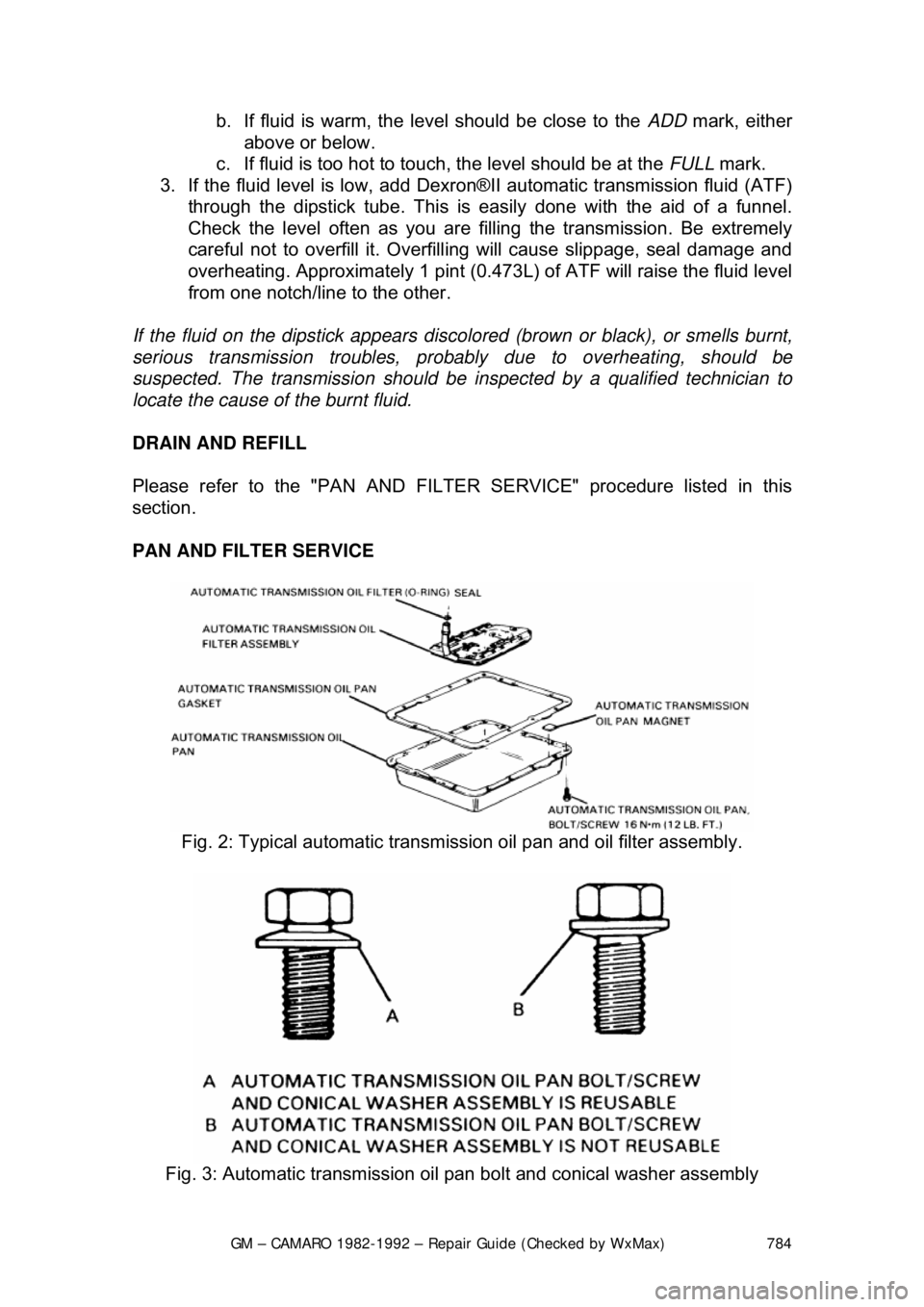
Fig. 2: Typical automatic transmiss ion oil pan and oil filter assembly.
Fig. 3: Automatic transmission oil pan bolt and conical washer assembly
Page 785 of 875

GM – CAMARO 1982-1992 – Repair Guide (Checked by WxMax) 785
The automatic transmission fluid and fi
lter should be changed every 15,000
miles (24,000km) if your Camaro is driven in heavy city traffic in hot weather, in
hilly or mountainous terrain, frequent trailer pulling, or uses such as found in
taxi, police car or delivery service. If your Camaro is driven under other than
listed above conditions, change the fl uid and filter every 30,000 miles
(48,300km).
1. Raise and support the car on jackst ands. Place an oil catch pan under
the transmission.
2. Remove the oil pan bolts fr om the front and sides only.
3. Loosen rear oil pan bolts approximately 4 turns.
WARNING - Do not damage the transmission case or oil pan sealing surfaces.
4. Lightly tap the oil pan with a rubber mallet or gently pry it downward to
allow fluid to drain.
5. Remove the remaining oil pan bolt s, then remove the oil pan and pan
gasket.
6. Remove the filter and seal.
7. Clean the transmission case and oi l pan gasket surfaces with suitable
solvent and air dry. Make sure to re move all traces of the old gasket.
To install: 8. Coat the seal with a sm all amount of Transjel®.
9. Install the new s eal onto the filter.
10. Install the new filter into the case.
11. Install the oil pan and new gasket.
On 1991 and later vehicles, inspect t he oil pan screws and washer assemblies.
The screws must not be used if the coni cal washer is reversed. Failure to
replace the screw and washer assembly may result in improper fastening of
system components.
12. Install the oil pan bolts and tighten them to 12 ft. lbs. (16 Nm).
13. Lower the car.
14. Fill the transmission to proper level with Dexron®II fluid.
15. Check cold fluid level reading fo r initial fill. Do not overfill the
transmission.
16. Follow the fluid level che ck procedure described before.
17. Check the oil pan gasket for leaks.