2020 VOLKSWAGEN T-ROC open
[x] Cancel search: openPage 368 of 502

Fig. 184 On the instrument cluster display: the bonnet is open or has not been closed properly.
A symbol in the instrument cluster display Fig. 184indicates if the bonnet is open or is not closed
properly.
Do not drive on! If necessary, lift the bonnet and then close it again.
This symbol is also visible when the ignition is switched off and will go out a few seconds after the
vehicle has been locked when all doors are closed.
WARNING
Failure to observe warnings can cause your vehicle to break down in traffic, which can lead to
accidents and serious injuries.
ver ignore any warnings.
The symbol can differ depending on the version of the instrument cluster.
Service fluids and consumables
All service fluids and consumables, e.g. tyres, coolant and vehicle batteries, are being constantly
developed. The same applies to toothed belts, engine oils and spark plugs for combustion engines,
for example. For this reason, service fluids and consumables should be replaced at a qualified
workshop. Volkswagen dealerships always have the latest information about any changes.
WARNING
Unsuitable service fluids and consumables, and the incorrect use of these fluids and consumables,
can cause accidents, serious injuries, burns or poisoning.
e kept in their original sealed container.
Page 370 of 502

peratures, add a special anti-freeze agent so that the fluid cannot freeze
The windscreen washer fluid reservoir has a capacity of about 3.0 litres, according to the vehicle
equipment.
WARNING
Never mix coolant additive or other unsuitable additives into the washer fluid. These may leave an
oily film on the screen, restricting the field of vision.
-freeze agent should be added to the washer fluid if necessary.
NOTICE
cause the ingredients to flocculate and block the washer jets.
rrect service fluids are filled through the
correct openings. The use of incorrect service fluids could result in serious malfunctions and engine
damage.
Engine oil
Introduction
This chapter contains information on the followingsubjects:
Engine oil standards
Changing engine oil
Engine oil consumption
Checking the engine oil level and refilling the engine oil
Troubleshooting
The engine oils are not only tailored to the requirements of engines and exhaust gas treatment
systems, but also to fuel quality. Due to the way in which a combustion engine works, engine oil
always comes into contact with combustion residues and fuel, which has corresponding effects on
the ageing process of the oil. The correct engine oil is important for the function and service life of
the engine. A special multigrade high-lubricity oil has been filled at the factory and this can normally
be used as an all-season oil.
Page 375 of 502

With the engine at operating temperature, park the vehicle on a level surface to ensure that the
engine oil reading is correct.
Switch off the engine and wait a few minutes for the engine oil to flow back into the sump.
Open the bonnet In the engine compartment.
Identify the engine oil filler cap and oil dipstick. The engine oil filler opening can be recognised by
the symbol on the cap and the oil dipstick has a coloured handle. If you cannot find the cap and
dipstick, please contact a qualified workshop.
Pull the dipstick out of the guide tube and wipe it off with a clean cloth.
Insert the oil dipstick into the guide tube again as far as it will go. If there is a marking on the upper
end of the oil dipstick, this marking must fit into the corresponding groove at the top end of the
guide tube upon insertion.
Engine oil
level too high. Observe any messages that are shown on the instrument cluster display or contact a
qualified workshop . Do not fill any engine oil . Continue with step 16. Engine oil level OK.
Engine oil can, e.g. in the case of high engine loads , be filled up to the upper limit of this range.
Continue with step 8 or 16. Engine oil level is too low. Engine oil must be filled. Continue with
step 8.
After reading off the oil level, push the oil dipstick back into the guide tube as far as it will go.
Unscrew the cap of the engine oil filler opening .
Using only the engine oil approved by Volkswagen expressly for this engine, fill oil gradually in small
amounts (no more than 0.5 l).
Page 376 of 502

engine oil to flow into the sump up to the marking on the engine oil dipstick.
Read the engine oil level from the dipstick again before refilling with a further small quantity of
engine oil. Never overfill engine oil .
After refilling, the engine oil level should be in the middle of area
area nd must not be in area .
If too much engine oil has been added unintentionally and the engine oil level is in area
start the engine. Inform a qualified workshop and seek expert assistance if necessary.
Close the engine oil filler opening with the cap after filling.
Insert the oil dipstick into the guide tube as far as it will go. If there is a marking on the upper end of
the oil dipstick, this marking must fit into the corresponding groove at the top end of the guide tube
upon insertion.
Close the bonnet In the engine compartment.
WARNING
Engine oil can ignite if it comes into contact with hot engine components. It can cause fires, burns
and other serious injuries.
up and ignite when the engine is running.
dipstick is properly inserted back into the guide tube. This will prevent the engine oil from draining
out on to hot engine components when the engine is running.
NOTICE
Fig. 186
necessary. The catalytic converter and the engine could otherwise be damaged.
Page 381 of 502

drive on. Seek professional assistance.
level remains stable.
Fig. 188
fill up above the top edge of the marked area
Coolant
specificationled water
only. Then add the correct proportion of the specified coolant additive as soon as possible
Coolant specification
WARNING
Hot steam and hot coolant can cause serious burns.
coolant coming out of the engine
compartment. Always wait until you can no longer see or hear escaping steam or coolant.
components can burn the skin.
wing points must be observed before opening the bonnet once it has cooled down:
P or move the gear
lever to the neutral position.
hicle key from the ignition lock.
unattended.
expansion tank when the engine is hot. Coolant may spray out and cause serious burns and other
injuries.
-clockwise while exerting gentle downward pressure on
the cap.
with a large, thick cloth.
spilt service fluids can start a fire. In certain circumstances, the ethylene glycol in the coolant can
catch fire.
NOTICE
Page 382 of 502
Refill only with distilled water. All other types of water can cause corrosion in the engine due to
the chemical components contained in the water. This can also lead to engine failure. If any other
type of water apart from distilled water has been refilled, the fluid in the cooling system should be
completely replaced immediately by a qualified workshop.
Fig. 188
be forced out of the cooling system when the engine is hot and could cause damage.
completely. Heavy coolant loss is an indication of leaks in the cooling system. The cooling system
should be checked by a qualified workshop as soon as possible. Failure to do so can result in engine
damage.
have entered the cooling system. Do not drive on! Seek expert assistance. Failure to do so can result
in engine damage.
correct openings. The use of incorrect service fluids could result in serious malfunctions and engine
damage.
Brake fluid
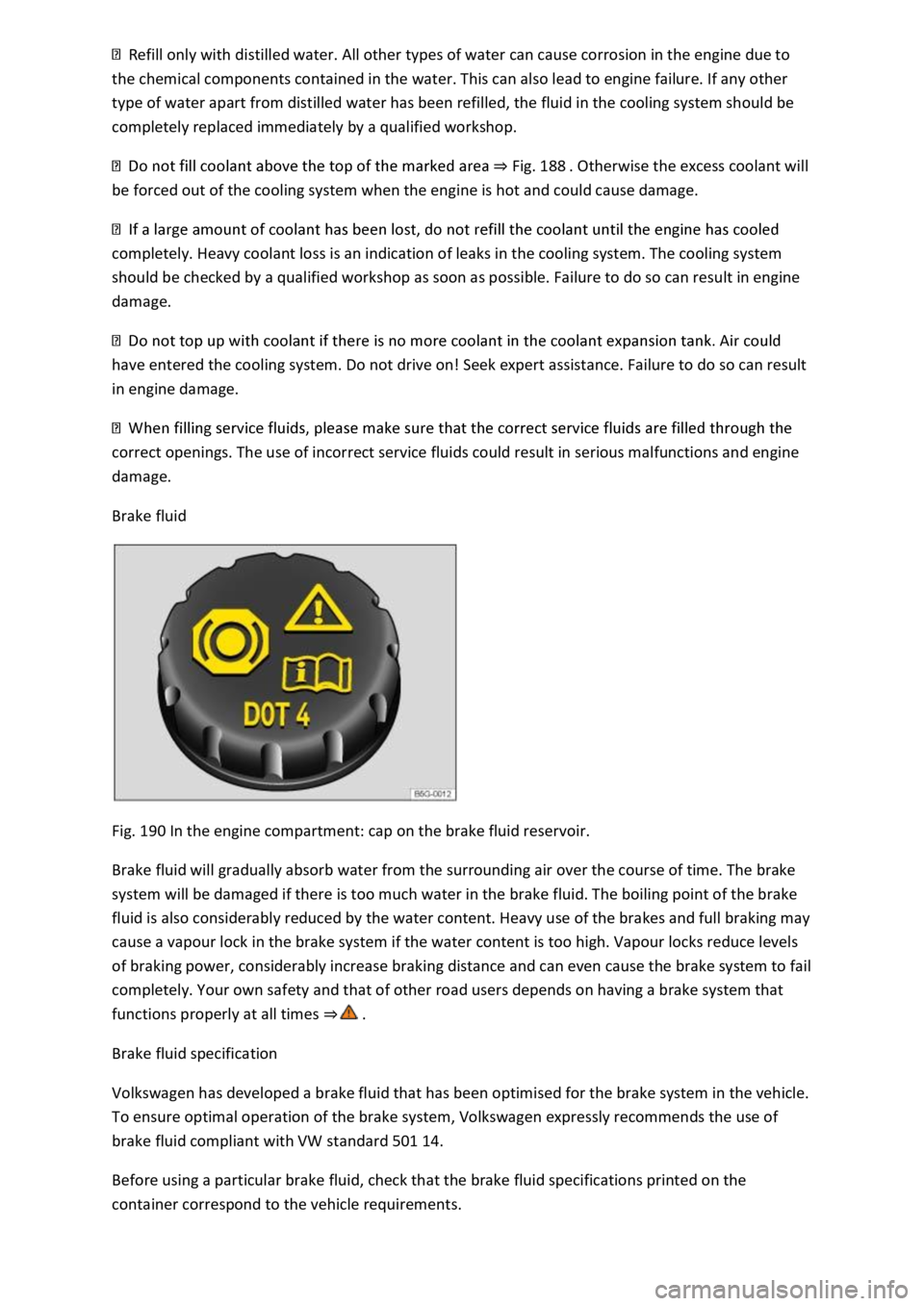
Fig. 190 In the engine compartment: cap on the brake fluid reservoir.
Brake fluid will gradually absorb water from the surrounding air over the course of time. The brake
system will be damaged if there is too much water in the brake fluid. The boiling point of the brake
fluid is also considerably reduced by the water content. Heavy use of the brakes and full braking may
cause a vapour lock in the brake system if the water content is too high. Vapour locks reduce levels
of braking power, considerably increase braking distance and can even cause the brake system to fail
completely. Your own safety and that of other road users depends on having a brake system that
functions properly at all times
Brake fluid specification
Volkswagen has developed a brake fluid that has been optimised for the brake system in the vehicle.
To ensure optimal operation of the brake system, Volkswagen expressly recommends the use of
brake fluid compliant with VW standard 501 14.
Before using a particular brake fluid, check that the brake fluid specifications printed on the
container correspond to the vehicle requirements.
Page 388 of 502

12-volt vehicle battery, ensure that your hands, arms and face in particular are protected from acid
spillages.
-volt vehicle battery. Electrolyte may spill out of the battery vents and cause
chemical burns.
-volt vehicle battery.
Then consult a doctor immediately.
lyte is swallowed, consult a doctor immediately.
Charging, replacing, disconnecting and connecting the 12-volt vehicle battery
First read and observe the introductoryinformation and safety warnings
If you suspect that the 12-volt vehicle battery is damaged or faulty, go to a qualified workshop and
have the 12-volt vehicle battery checked.
Charging the 12-volt vehicle battery
The 12-volt vehicle battery should be charged by a qualified workshop, as the technology used in
factory-fitted 12-volt vehicle batteries requires voltage-limited charging
recommends using a Volkswagen dealership for this purpose.
Replacing the 12-volt vehicle battery
The 12-volt vehicle battery has been developed to suit the conditions of its installation location and
has special safety features. If a 12-volt vehicle battery has to be replaced, find out about the
electromagnetic compatibility, size and necessary maintenance, power and safety requirements for
the new 12-volt vehicle battery at a Volkswagen dealership before purchase. The ventilation opening
of the vehicle battery must always be on the negative terminal side: the ventilation opening on the
positive terminal side must always be sealed.
Only maintenance-free vehicle batteries compliant with the standards TL 825 06 and VW 7 50 73
should be used. These standards must be dated October 2014 or later.
Always have the 12-volt vehicle battery replaced by a qualified workshop, as the vehicle electronics
must be adapted as part of the replacement process. Only qualified workshops have the technology
required to carry out this adjustment correctly. Volkswagen recommends that the 12-volt vehicle
battery is replaced by a Volkswagen dealership.
Disconnecting the 12-volt vehicle battery
Please observe the following if the 12-volt vehicle battery has to be disconnected from the electrical
system in the vehicle:
-theft
alarm.
Page 410 of 502

xamples:
78425 kg81462 kg83487 kg85515 kg87545 kg88560 kg91615 kg92630 kg93650 kg95690 kg97730
kg99775 kg100800 kg101825 kg102850 kg103875 kg104900 kg
Speed index
The speed index indicates the maximum permitted speed that may be driven with the tyres.
Pmax. 150 km/h (93 mph)Qmax. 160 km/h (99 mph)Rmax. 170 km/h (106 mph)Smax. 180 km/h
(112 mph)Tmax. 190 km/h (118 mph)Umax. 200 km/h (125 mph)Hmax. 210 km/h
(130 mph)Vmax. 240 km/h (149 mph)Wmax. 270 km/h (168 mph)Ymax. 300 km/h
(186 mph)Zover 240 km/h (149 mph)
Some tyre manufacturers use the code ZR for tyres with a maximum permitted speed of over
240 km/h (149 mph).
a) The TIN is the tyre serial number.
Maximum load and speed range for tyres
First read and observe the introductoryinformation and safety warnings
Vehicles in the EU and the so-called EU user states are issued an EC Certificate of Conformity. This
details the size, diameter, load rating and speed range of all tyres approved by Volkswagen for the
relevant vehicle type.
The type plate shows whether there is an EC certificate of conformity for this particular vehicle. The
type plate can be seen on the lower part of the door pillar when the driver door is open Technical
data
that the vehicle has an EC certificate of
conformity.
certificate of conformity.
Winter tyres
First read and observe the introductoryinformation and safety warnings
Winter or all-year tyres improve the handling and braking response in winter conditions. Volkswagen
recommends that winter tyres be fitted to the vehicle at temperatures below +7