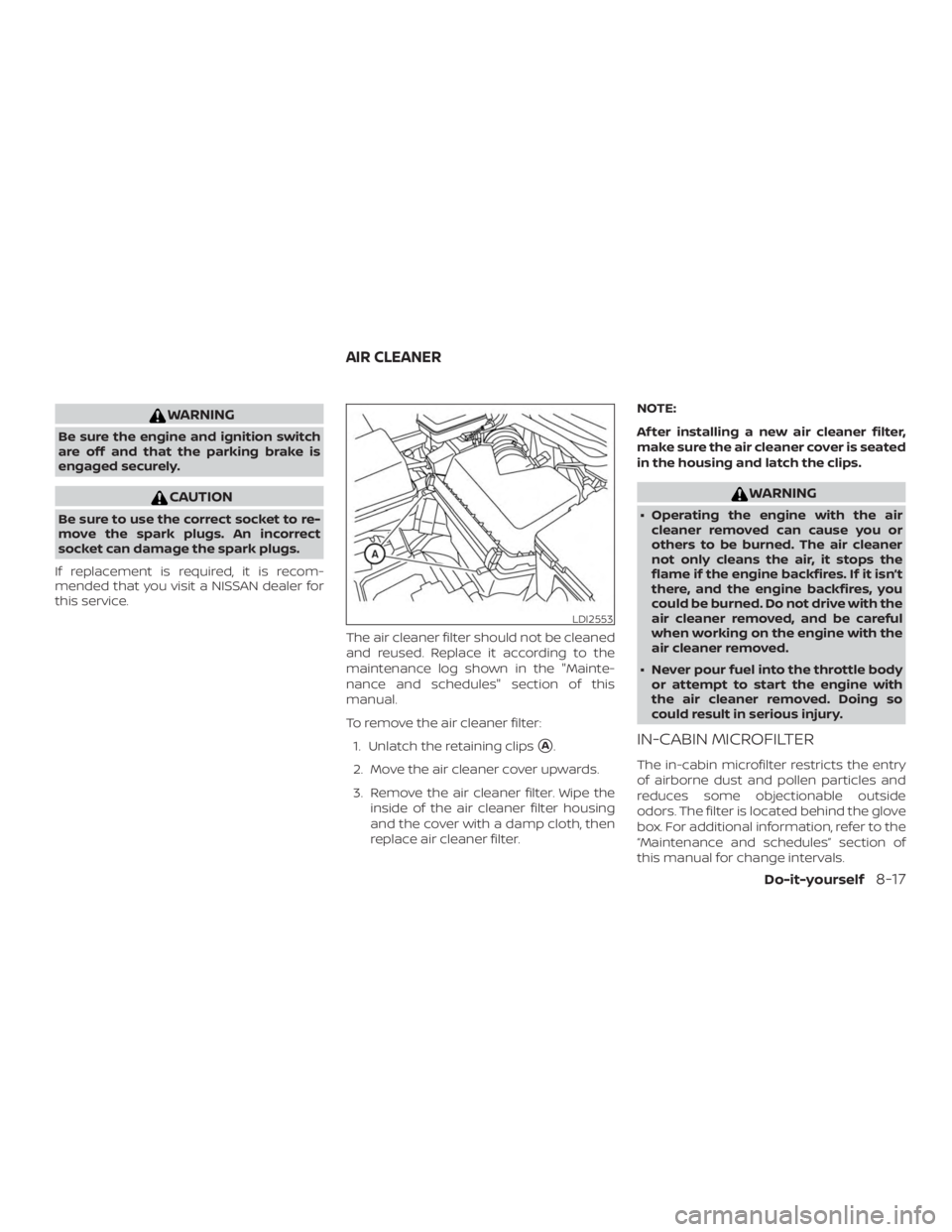
Ball mount
The hitch ball is attached to the ball mount
and the ball mount is inserted into the
hitch receiver. Choose a proper class ball
mount based on the trailer weight. Addi-
tionally, the ball mount should be chosen to
keep the trailer tongue level with the
ground.
Weight carrying hitches
A weight carrying or “dead weight” ball
mount is one that is designed to carry the
whole amount of tongue weight and gross
weight directly on the ball mount and on
the receiver.
Weight distribution hitch
This type of hitch is also called a “load-
leveling” or “equalizing” hitch. A set of bars
attach to the ball mount and to the trailer
to distribute the tongue weight (hitch
weight) of your trailer. Many vehicles can’t
carry the full tongue weight of a given
trailer, and need some of the tongue
weight transferred through the frame and
pushing down on the front wheels. This
gives stability to the tow vehicle.A weight-distributing hitch system (Class
IV) is recommended if you plan to tow trail-
ers with a maximum weight over 5,000 lbs.
(2,268 kg). Check with the trailer and towing
equipment manufacturers to determine if
they recommend the use of a weight-
distributing hitch system.
NOTE:
A weight-distributing hitch system may
affect the operation of trailer surge
brakes. If you are considering use of a
weight-distributing hitch system with a
surge brake-equipped trailer, check with
the surge brake, hitch or trailer manufac-
turer to determine if and how this can be
done.
Follow the instructions provided by the
manufacturer for installing and using the
weight-distributing hitch system.
General set-up instructions are as follows:
1. Park unloaded vehicle on a level sur- face. With the ignition on and the doors
closed, allow the vehicle to stand for
several minutes so that it can level.
2. Measure the height of a reference point on the front and rear bumpers at the
center of the vehicle. 3. Attach the trailer to the vehicle and ad-
just the hitch equalizers so that the
front bumper height is within 0 -
.5 inches (0 – 13 mm) of the reference
height measured in step 2. The rear
bumper should be no higher than the
reference height measured in step 2.
FuelCapacities and recommended
fuel/lubricants...............10-2
Fuel economy ...............5-82
Fuel-filler door and cap ..........3-31
Fuel-filler door lock opener lever ....3-31
Fuel gauge ..................2-7
Fueloctanerating.............10-5
Fuel recommendation ..........10-3
Loose fuel cap warning .........2-28
Fuelefficientdrivingtips...........5-81
Fuel-filler door .................3-31
Fuel gauge ....................2-7
Fuses ......................8-20
Fusiblelinks...................8-22
G
Garage door opener, HomeLink® Universal
Transceiver .........2-63,2-64,2-66,2-67
Gascap .....................3-31
Gauge Engine coolant temperature gauge . .2-6
Fuel gauge ..................2-7
Odometer ..................2-5
Speedometer ..............2-4,2-5
Tachometer .................2-6
Trip odometer .............2-4,2-5
General maintenance .............9-2
Glovebox....................2-52
H
Hazard warning flasher switch ........6-2Headlight and turn signal switch
......2-37
Headlightcontrolswitch...........2-37
Headlights ...................8-25
Headrestraints ................ .1-9
Heatedrearseats...............2-44
Heatedseats..................2-43
Heated steering wheel ............2-45
Heater Heater and air conditioner (automatic)
(if so equipped) ..............4-28
Heater and air conditioner controls . .4-29
Heater operation .............4-30
Heater and air conditioner (automatic) . .4-28
Hill start assist system ............5-92
HomeLink® Universal
Transceiver .........2-63,2-64,2-66,2-67
Hood .......................3-22
Hook Luggage hook ...............2-55
Horn .......................2-41
I
Ignition switch Push-button ignition switch .......5-13
Immobilizer system ...........2-32,5-16
Important vehicle information label . . . .10-11
In-cabinmicrofilter ..............8-17
Increasing fuel economy ..........5-82
Indicator NISSAN Intelligent Key® battery discharge
indicator...................5-16
Indicator lights and audible reminders
(See warning/indicator lights and audible
reminders) .................2-9,2-13 Inside automatic anti-glare mirror
.....3-37
Instrument brightness control .......2-40
Instrument panel .............0-6,2-2
Instrument panel dimmer switch .....2-40
Intelligent Around View Monitor .......4-11
Intelligent Cruise Control (ICC) .......5-44
Intelligent Drive Alertness (I-DA) ......5-78
Intelligent Forward Collision Warning
(I-FCW)......................5-66
Intelligent Key system Key operating range ............3-8
Key operation ................3-9
Mechanical key ...............3-3
Remote keyless entry operation ....3-12
T
roubleshooting guide ..........3-17
Warning signals ...............3-17
Interiorlight...................2-61
ISOFIX child restraints .............1-30
J
Jumpstarting..............6-10,8-15
K
Key........................ .3-2
Key fob battery replacement ........8-23
Keyless entry With Intelligent Key system
(See Intelligent Key system) .......3-12
Keys NISSAN Intelligent Key® ........3-2,3-7
NISSAN Vehicle Immobilizer System
keys......................3-4
11-3