2016 AUDI RS7 SPORTBACK cooling
[x] Cancel search: coolingPage 191 of 282

CD Note
-Vehicle components such as the engine,
transm ission, suspension or electrical sys
tem can be severely damaged by driving
through water.
- Determine the depth before driv ing through
water.
- Do not stop the vehicle, drive in reverse or
switch the eng ine off when dr iving through
water.
- Keep in mind that oncoming veh icles may
create waves that raise the water level and
make it too deep for your vehicle to drive
through safely .
- Avo id d riving through salt water (corrosion).
Warming up and cooling
down
By carefully warm ing up and cool ing down your
veh icle, you can he lp ensure that it is not over
stressed un necessa rily during sporty driving.
When warming up, the vehicle is dr iven at a max
i mum eng ine speed of 6000 RPM in order to raise
the eng ine oi l temperature to a min imum of
140 °F (60 °C). The tires a lso on ly reac h their f ull
road ho ld ing capability once they have warmed
up .
The cooling fan can continue to run in your vehi cle after the engine is swi tched off. Howeve r,
d riving the vehicle to cool it dow n is particularly
important. D uring sporty dr iv ing, the engine and
brakes, the exhaust system, and the transmission
a ll become extremely hot. Before you park the
ve hicle, you shou ld drive it for a few m iles/kilo
meters at light load in the low rpm range to al
low it to cool down.
Driving and the envir onment
Catalytic converter
Applies to: veh icles w ith gasoli ne e ngi ne
It is very important that your emission control
system (catalytic converter) is functioning prop
erly to ensure that your vehicle is running in an
environmentally sound manner .
.. Always use lead-free gasoline¢ page 198,
Fuel supply.
.. Never run the tank down all the way to empty.
.. Never put too much motor o il in yo ur engine
¢ page 20 7, Adding engine oil 9:::r. .
.,. Never try to pus h- or tow-start your veh icle.
The catalytic co nverter is an efficient "clean-up"
device built into the exhaust sys tem of t he ve hi
cle. The catalyt ic conv erter b urns ma ny of the
po llutants in the exhaust gas before they are re
leased into the atmosphere.
The exclusive use of un leaded fuel is cr itically im
po rtant fo r the life of the catalytic converte r and
prope r fu nct io ni ng of the eng ine.
_&. WARNING
The tempe ra tu re o f th e exh aus t sys tem is
hi gh, bot h when driv ing and a fter stopping
the engine.
- Never tou ch the e xhaus t tail pipes on ce they
have become hot. This cou ld res ult in burns.
- Do not p ark or operate the vehicle in ar eas
where the hot exhaus t sys tem may come in
contact w ith dry grass, b rush, fuel spill or
other mate rial which can ca use a fire.
- Do not app ly additiona l undercoating or
r u stp roofing on or near the exhaust mani
fold, exha ust pipes, cata lytic converter or
heat shields. D uring driving, the substance
used for undercoat ing could overheat and
cause a fire.
CD Note
- Be aware that just one tank fi lling with
leaded fuel w ill already seriously degrade
the performance of the catalytic converter.
- Do not exceed the correct engine oil leve l
¢page 207.
189
Page 211 of 282

Cooling system
Coolant
The engine coolant performs two functions: it
keeps the engine from overheating and it pro
tects the engine from freezing in the winter .
The cooling system is sealed and generally re
q ui res little atte ntion .
The cooling system has been filled at the factory
with a permanent coolant which does not need to
be changed . The coolant consists of a mixture of
specially condit ioned water and the ma nufactur
er's glycol-based coolant additive G13 an tifreeze
with ant icor rosion additives
(50% for USA mod
e ls;
60% fo r Canadia n models). This m ix tu re
bo th ass ures the necessa ry fros t prote ction and
protects metal componen ts in the engi ne's coo l
ing system from corrosion and scaling .
It also
raises the boiling point of the coolant.
D o not red uce the con cen trat ion of the coolant in
the summer by adding p lain wa ter.
The propor
tion of coolant additive mu st be at least 50 %
but not more than 60%
to maintain antifreeze
protection and cooling efficiency. If the coolant
frost protection is too low, the coolant could
freeze and damage the vehicle heating and en
g ine cooling system .
For year-round driving, antifreeze is added at the
factory for temperatures down to:
- -3 1 °F ( -3 5 °C) USA
- -4 0 °F ( - 40 °C) Canada.
If yo u m ust add coo lant, use a m ixt ure of water
and coolant addit ive. Mixing the cool ant additive
with d istilled w ater is recommended .
_& WARNING
Before you che ck anythi ng in t he eng ine com
pa rtment, a lways read and heed a ll WARN
INGS
~ .& in Working in the engine compart
ment on page 203 .
(D Note
-Before winter se ts in, have the coo lant
checked to see if the coolant additive in your
vehicle is sufficient to meet the c limate con -
Checking and Filling
ditions. This is especia lly important if you
live in a region whe re the winter is extreme
ly cold. If necessary, increase the propo rtion
of coolant addit ive to
60%.
- Whe n adding coolant additive to your cool
ing system, remember :
- We recommend us ing o nly coola nt addi
tive G 12++ or G13 (c hec k the label) for
y o ur vehi cle. Thi s coo lant ad ditive is av ail
abl e at a uth orized Au di dea le rs. Ot her
types o f ant ifreeze ca n sign ifican tly re
d uce corrosion protection. The resu lting
cor ros ion can cause a loss of coolant and
se rious engine damage.
- Do not add any type of radiator leak sealant
to your vehicle's engine coolant . Adding ra
diator repair fluid may adversely affect the
function and performance of your cooling system and could result in damage not cov
ered by your New Veh icle Limited War ra nty .
Checking the engine coolant level
The engine coolant level can be checked with a
quick glance .
Fig. 186 E ngine compar tmen t: cover on t he coo lant expan
s io n t ank
Befo re you check anything in the engine compart
me nt,
always read and heed all WARNINGS
~ .&. in Working in the engine compartment on
page 203.
" Park your veh icle on a leve l s u rface.
" Sw itch off the ig nit ion .
.. Read the eng ine coolant leve l from the coo lant
expansion tan k
r=;,fig. 186, r=;,page 205,
fig . 183.
W ith a cold eng ine, the coolant level ..,.
209
Page 212 of 282

Checking and Filling
should be between the "min " and "max" mark
ings. When the engine is warm, the level may
be slightly above the "max" marking.
The location of the coolant expansion tank can be
seen in the engine compartment illustration
<::> page 205.
To obtain an accurate reading, the engine must
be switched off.
The expansion tank in your vehicle is equipped
with an electric coolant level sensor.
When the coolant level is too low, the warning
light in the Auto-Check System <::>
page 15 will il
luminate until you add coolant and the level has
been restored to normal. Even though there is an
electric coolant level sensor, we still recommend
you check the coolant level from time to time.
Coolant loss
Coolant loss may indicate a leak in the cooling
system. In the event of coolant loss, the cooling
system should be inspected immediately by your
authorized Audi dealer. It is not enough merely
to add coolant.
In a
sealed system, losses can occur only if the
boiling point of the coolant is exceeded as a re
sult of overheating.
A WARNING
The cooling system is under pressure and can
get very hot. Reduce the risk of scalding from
hot coolant by following these steps.
-Turn off the engine and allow itto cool down.
- Protect your face, hands and arms from es caping fluid and steam by covering the cap
with a large, thick rag.
- Turn the cap slowly and very carefully in a counter-clockwise direction while applying
light, downward pressure on the top of the
cap.
- To avoid being burned, do not spill anti
freeze or coolant on the exhaust system or
hot engine parts . Under certain conditions,
the ethylene glycol in engine coolant can
catch fire .
210
(D Note
Do not add any type of radiator leak sealant
to your vehicle's engine coolant. Adding radia
tor repair fluid may adversely affect the func
tion and performance of your cooling system
and could result in damage not covered by
your New Vehicle Limited Warranty .
Adding coolant
Be very careful when adding engine coolant.
Before you check anything in the engine compart
ment,
always read and heed all WARNINGS
<::>.& in Working in the engine compartment on
page 203 .
.. Requirement: There must be a residual amount
of coolant in the expansion tank
i:::>Q) .
.. Turn off the engine .
.. Let the engine cool down .
.. Place a thick rag over the coolant expansion
tank <::>
page 209, fig. 186 and carefully twist
the cap counter-clockwise
c::> &,.
.. Add coolant mixed in the correct ratio
<::> page 209, Coolant up to the MAX marking.
.. Make sure that the fluid level remains stable.
Add more coolant if necessary.
.. Twist the cap on again
tightly.
Replacement engine coolant must conform to ex
act specifications <::>
page 209, Coolant.
We recommend using only coolant additive G12+
+, G13 or in an emergency G12+ . Do
not use a
different additive. In an emergency use plain wa
ter until you can get the correct additive and can
restore the correct ratio. This should be done as
soon as possible.
If you have lost a considerable amount of cool
ant, then you should add cold antifreeze and cold
water only when the engine is cold.
Always use
new engine coolant when refilling.
Do not fill coolant above the "MAX" mark . Excess
coolant will be forced out through the pressure
relief valve in the cap when the engine becomes
hot.
~
Page 213 of 282
,&_ WARNING
-The cooling system is under pressure and
can get very hot. Reduce the risk of scalding
from hot coolant by following these steps.
- Turn off the engine and allow it to cool
down.
- Protect your face, hands and arms from
escaping fluid and steam by covering the
cap with a large, thick rag.
- Turn the cap slowly and very carefully in a
counter-clockwise direction while applying light, downward pressure on the top of
the cap.
- To avoid being burned, do not spill ant i
freeze or coolant on the exhaust system or
hot engine parts. Under certa in condi
tions, the ethylene glycol in engine cool
ant can catch fire.
- Antifreeze is poisonous. Always store anti
freeze in its original container and well out
of the reach of children.
- If you drain the coolant, it must be caught
and safely stored in a proper container
clearly marked "poison" .
(D Note
-Do not add coolant if the expansion tank is
empty. Air could enter the cooling system
and damage the eng ine. If this is the case,
do not continue driving. Seek professional
assistance.
- Coolant pollutes the environment and could
cause an engine fire. Excess coolant will be
forced out through the pressure relief valve
i n the cap when the engine becomes hot .
- If, in an emergency, only water can be add ed, the correct ratio between water and an
tifreeze
¢ page 209 must be restored as
soon as possible.
@ For the sake of the environment
Drained coolant should not be reused. Always
dispose of used coolant while observing all
environmental regulat ions.
-
Checking and Filling
Radiator fan
The radiator fan switches on automatically by it
self .
An auxiliary electric radiator fan switches on and
off depending on coolant temperature and other
vehicle operating conditions.
After you switch the engine off, the auxiliary fan
can continue running for up to 10 minutes -even
with the ignition off. It can even switch on again later by itself ¢&. , if
- the temperature of the engine coolant rises due
to the heat build-up from the engine in the en gine compartment, or
- the engine compartment heats up because the
vehicle is parked in intense sunlight.
A WARNING
--
- To reduce the risk of personal injury never
touch the radiator fan .
- The auxiliary electric fan is temperature
controlled and can switch on suddenly even
when the engine is not running .
- The auxiliary radiator fan switches on auto
matically when the engine coolant reaches a
certa in temperature and will continue to run
until the coolant temperature drops.
Brake fluid
Checking brake fluid level
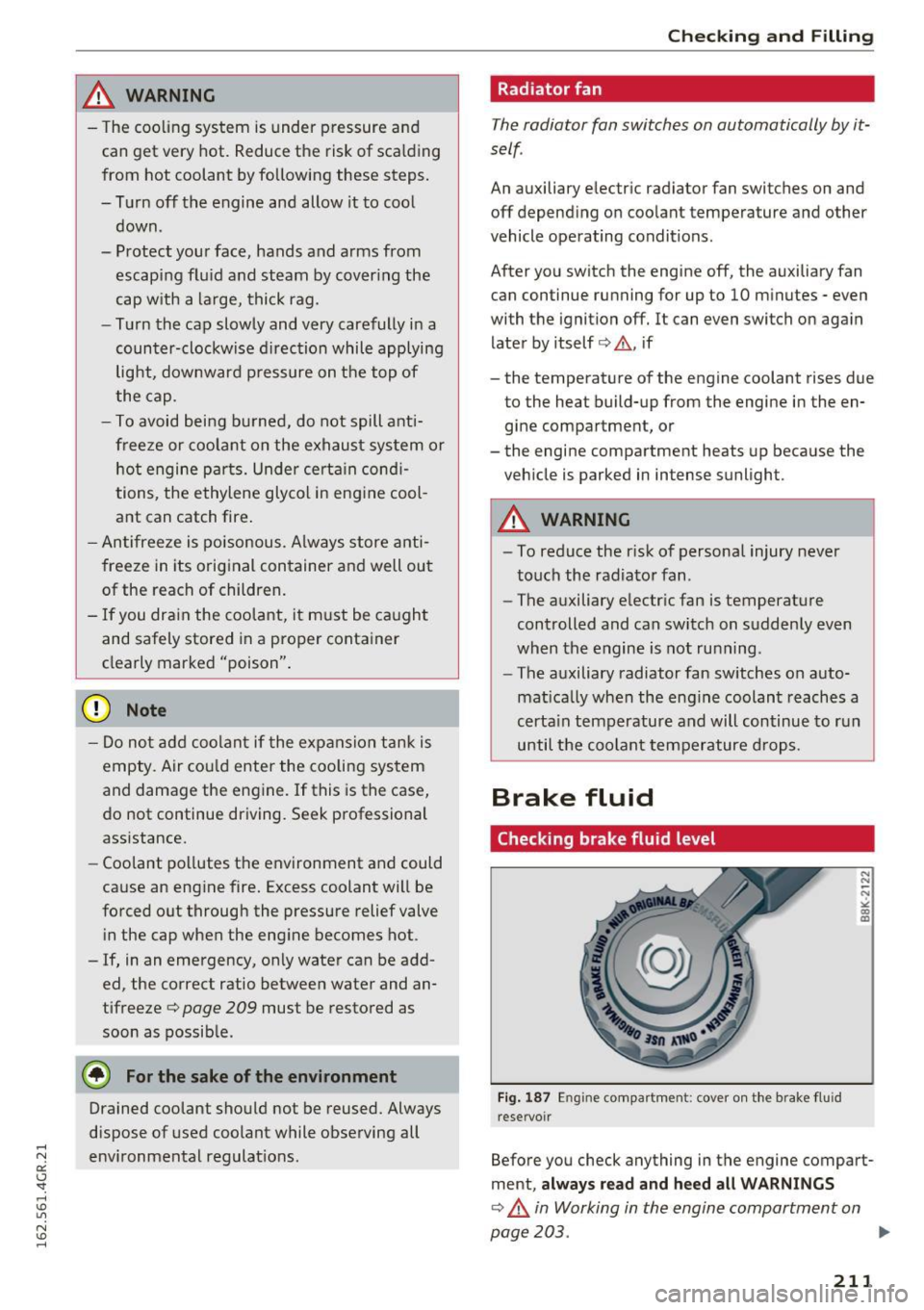
Fig. 187 En g in e compar tment: cover on the b rake fluid
rese rvoir
Before you check anything in the engine compart
ment,
always read and heed all WARNINGS
¢ & in Working in the engine compartment on
page 203 . .,.
211
Page 270 of 282

Index
Certification . . . . . . . . . . . . . . . . . . . . . . . . . 265
Changing eng ine o il . . . . . . . . . . . . . . . . . . . 208
Checking Eng ine coolant level. . . . . . . . . . . . . . . . . . 209
C hil d rest raints
D anger of using ch ild restraints in the front
seat . . . . . . . . . . . . . . . . . . . . . . . . . . . . . . . 136
Where can I get additional informat ion
about child restraints and their use? . . . . 176
Ch ild rest raint system anchors . . . . . . . . . . 172
C hi ld safety . . . . . . . . . . . . . . . . . . . . . . . . . . 15 9
I mportant safety inst ructions for using chi ld
safety sea ts . . . . . . . . . . . . . . . . . . . . . . . . 162
I mportant things to know w hen driv ing wi th
children . . . . . . . . . . . . . . . . . . . . . . . . . . . 159
Tether anchors . . . . . . . . . . . . . . . . . . . . . . 17 5
Tether straps . . . . . . . . . . . . . . . . . . . . . . . 175
C hil d safety lock
Rea r doo rs , windows in the rea r . . . . . . . . . 39
Ch ild safety seats
Booster seats . . . . . . . . . . . . . . . . . . . . . . . 168
Conve rt ible ch ild seats . . . . . . . . . . . . . . . 166
Conve rt ible locking retra ctor . . . . . . . . . . 17 1
H ow do I proper ly install a child safe ty seat
in my ve hicle? . . . . . . . . . . . . . . . . . . . . . . . 162
I nfant seats . . . . . . . . . . . . . . . . . . . . . . . . 165
Insta lling a child restraint using the LA TCH
system . . . . . . . . . . . . . . . . . . . . . . . . . . . . 17 4
LATCH system . . . . . . . . . . . . . . . . . . . . . . 174
Lower anchorages . . . . . . . . . . . . . . . . . . . 173
Mounting and releasing the anchorage
hook . . . . . . . . . . . . . . . . . . . . . . . . . . . . . . 174
Safety inst ructions . . . . . . . . . . . . . . . . . . . 162
Unused safety bel ts on t he rear seat . . . . 164
Ch ild seats . . . . . . . . . . . . . . . . . . . . . . . . . . 165
Secur ing . . . . . . . . . . . . . . . . . . . . . . . . . . . 169
Cigarette lighter . . . . . . . . . . . . . . . . . . . . . . . 58
Clean ing . . . . . . . . . . . . . . . . . . . . . . . . . . . . 193
Clean ing/remov ing ice from windows . . . . . 195
Clean ing Alcant ara . . . . . . . . . . . . . . . . . . . . 196
Clea ning artificial leather............... 196
Clean ing carbon parts . . . . . . . . . . . . . 195, 196
Clea ning contro ls . . . . . . . . . . . . . . . . . . . . . 195
Clea ning decorative parts and trim . . . . . . . 195
Clea ning displays . . . . . . . . . . . . . . . . . . . . . 195
Clea ning exha ust ta il pipes . . . . . . . . . . . . . 194
Clean ing plast ic parts . . . . . . . . . . . . . . . . . . 195
268
Cleaning r ims . . . . . . . . . . . . . . . . . . . . . . . . 194
Cleaning textiles . . . . . . . . . . . . . . . . . . . . . . 196
Closing Su nroof. . . . . . . . . . . . . . . . . . . . . . . . . . . . . 40
Windows ........................... 39
Coming home . . . . . . . . . . . . . . . . . . . . . . . . . 45
Compartments . . . . . . . . . . . . . . . . . . . . . . . . 59
Compliance . . . . . . . . . . . . . . . . . . . . . . . . . . 265
Cons umer in fo rma tion . . . . . . . . . . . . . . . . . 262
Cons umer Information . . . . . . . . . . . . . . . . . 125
Cons umption (fuel) . . . . . . . . . . . . . . . . . . . . 23
Contacting NHTSA . . . . . . . . . . . . . . . . . . . . 125
Convenience key . . . . . . . . . . . . . . . . . . . . . . . 34
Start ing the engine (START ENGINE STOP
button) . . . . . . . . . . . . . . . . . . . . . . . . . . . . . 72
Stopp ing the eng ine (START ENGINE S TO P
button) . . . . . . . . . . . . . . . . . . . . . . . . . . . . . 73
Swi tc hin g the igni tion on . . . . . . . . . . . . . . 72
U nlocking and locking vehi cle . . . . . . . . . . . 3 4
Convenience open ing . . . . . . . . . . . . . . . . . . . 40
Convertible child safety seats . . . . . . . . . . . 166
Convertible locking ret rac to r
Activ ati ng . . . . . . . . . . . . . . . . . . . . . . . . . . 171
Deact ivating . . . . . . . . . . . . . . . . . . . . . . . . 172
U sing to secure a chi ld safety seat . . . . . . 171
Coo lant
refer to E ng ine coolant . . . . . . . . . . . . . . . 209
Cooling mode (4-zone deluxe automatic cli-
mate contro l) . . . . . . . . . . . . . . . . . . . . . . . . . 68
Cooling system Ind icator light . . . . . . . . . . . . . . . . . . . . . . . 15
C rossing water . . . . . . . . . . . . . . . . . . . . . . . 188
Cruise control
Swi tching off . . . . . . . . . . . . . . . . . . . . . . . . 78
War ning/ indica to r li ghts . . . . . . . . . . . . . . . 22
Cruise contro l system
Changi ng speed . . . . . . . . . . . . . . . . . . . . . . 77
Preselecting speed . . . . . . . . . . . . . . . . . . . . 77
switching on . . . . . . . . . . . . . . . . . . . . . . . . . 77
(upholder . . . . . . . . . . . . . . . . . . . . . . . . . . . . 59
Curren t consumpt io n . . . . . . . . . . . . . . . . . . . 23
Curve light . . . . . . . . . . . . . . . . . . . . . . . . . . . . 95
Cylinder management
refer to Cyli nder on demand system . . . . . . 23
Cyl inder on demand system . . . . . . . . . . . . . . 23
Page 279 of 282

Generator . . . . . . . . . . . . . . . . . . . . . . . . . . . 15
Malfunction Indicator Lamp (MIL) . . . . . . . 19
Safety belt . . . . . . . . . . . . . . . . . . . . . . . . . . 16
Turn signals . . . . . . . . . . . . . . . . . . . . . . . . . 21
Warning/Indicator lights
Airbag system . . . . . . . . . . . . . . . . . . 146, 147
PASSENGER AIR BAG OFF . . . . . . . . . . . . . 147
Warning tr iangle . . . . . . . . . . . . . . . . . . . . . 239
Warranty coverages . . . . . . . . . . . . . . . . . . . 262
Washer fluid level (indicator light) . . . . . . . . 20
Washing matte finish paint . . . . . . . . . . . . . 193
Weights . . . . . . . . . . . . . . . . . . . . . . . . . . . . . 259
What happens if you wear your safety belt too
l oose? . . . . . . . . . . . . . . . . . . . . . . . . . . . . . . 131
What happens to unbelted occupants? . . . . 128
What impairs driving safety? . . . . . . . . . . . . 119
Wheel bolts . . . . . . . . . . . . . . . . . . . . . . . . . 232
Wheels . . . . . . . . . . . . . . . . . . . . . . . . . . . . . 218
Cleaning . . . . . . . . . . . . . . . . . . . . . . . . . . . 194
Glossary of tire and loading terminology . 220
Replacing . . . . . . . . . . . . . . . . . . . . . . . . . . 243
Tires and vehicle load limits . . . . . . . . . . . 230
Wheel wrench . . . . . . . . . . . . . . . . . . . . . . . . 239
When must a safety belt be replaced? . . . . 129
When must the airbag system be inspected? l46
Where are lower anchorages located? . . . . 173
W ild animal recognition . . . . . . . . . . . . . . . . . 98
Window regulators . . . . . . . . . . . . . . . . . . . . . 39
Windows Cleaning/removing ice . . . . . . . . . . . . . . . . 195
Defrosting (4-zone deluxe automatic cli-
mate control) . . . . . . . . . . . . . . . . . . . . . . . . 69
Windshield cleaning . . . . . . . . . . . . . . . . . . . . . . . . . . . . 49
Defrosting (4-zone deluxe automatic cli-
mate control) . . . . . . . . . . . . . . . . . . . . . . . . 69
also refer to Windshield . . . . . . . . . . . . . . . 49
Windshield washer system . . . . . . . . . . 49, 216
Windshield wipers Cleaning wiper blades . . . . . . . . . . . . . . . . . SO
Folding up . . . . . . . . . . . . . . . . . . . . . . . . . . SO
I ndicator light . . . . . . . . . . . . . . . . . . . . . . . 20
Replacing windshield wiper blades . . . . . . . 50
Switching on and
off . . . . . . . . . . . . . . . . . . 49
Index
Winter driving
Snow chains . . . . . . . . . . . . . . . . . . . . . . . . 233
Tires . . . . . . . . . . . . . . . . . . . . . . . . . . . . . . 233
Winter operation
Battery . . . . . . . . . . . . . . . . . . . . . . . . . . . . 212
Cooling system . . . . . . . . . . . . . . . . . . . . . . 209
Defrosting windows (4-zone deluxe auto-
matic climate control) . . . . . . . . . . . . . . . . . 69
Seat heating (4-zone deluxe automatic cli- mate control) . . . . . . . . . . . . . . . . . . . . . . . . 69
Steering wheel heating . . . . . . . . . . . . . . . . 70
Windsh ield washer system . . . . . . . . . . . . 216
Winter tires . . . . . . . . . . . . . . . . . . . . . . . . . . 233
Winter use Car washes . . . . . . . . . . . . . . . . . . . . . . . . . 193
Removing ice from windows . . . . . . . . . . . 195
277