2015 AUDI Q5 warning light
[x] Cancel search: warning lightPage 137 of 302

M N
co
a:
co
Driving safety
Basics
Safe driving habits
Please remember -safety first!
This chapter contains important information,
tips, instructions and warnings that you need to
read and observe for your own safety, the safety
of your passengers and others . We have summar
ized here what you need to know about safety
belts, airbags , chi ld restraints as well as child
safety. Your safety is for us
priority number 1. Al
ways observe the informat ion and warn ings in
this section - for your own safety as well as that
of your passengers .
The information in this section app lies to all
model ve rsions of your vehicle . Some of the fea
tures described in this sections may be standard
equipment on some models, or may be optional
eq uipment on others .
If you are not sure, ask
your authorized Audi dealer.
A WARNING
- Always make sure that you follow the in
struct ions and heed the WARNINGS in this
Manual. It is in your interest and in the in
terest of your passengers.
- Always keep the complete Owne r's Litera
ture in your Aud i when you lend or sell your
vehicle so that this important info rmation
will always be ava ilable to the driver and
passenge rs.
-
- Always keep the Owner's literature handy so
that you can find it easily if you have ques
tions.
Safety equipment
The safety features are part of the occupant re
straint system and work together to help reduce the risk of injury in a wide variety of accident sit
uations.
Your safety and the safety of your passenge rs
should not be left to chance. Advances in tec h-
; nology have made a var iety of fea tures available
~ to help reduce the r isk o f injury in an accident. ,....,
Dr ivin g sa fet y
The following is a list of just a few of the sa fety
features in your A udi:
- sophisticated s afety be lts fo r drive r and a ll pas-
senger seat ing pos itions,
- be lt fo rce limi ters for the front seats,
- belt pretensioners for the seats,
- be lt he ight adjustment for the front seats,
- head restra ints for each seating posit ion,
- front airbags,
- side airbags in the front seats and outer rear
seats *,
- side curtain airbags,
- specia l LATCH anchorages for child rest raints,
- adjustab le steering colum n.
These ind iv idual safety features, can work to
gether as a system to help protect you and your
passengers in a w ide range of accidents . T hese
features cannot work as a system if they are not always cor rect ly adjusted and co rrectly used.
S afet y is ev erybod y's re sponsibil it y !
Important things to do before driving
Safety is everybody 's job! Vehicle and occupant
safety always depends on the informed and care
ful driver .
For your safety and the safety of your passen
gers,
before driv ing alway s:
.,. Make s ure that all lights and signals are operat
ing correctly .
.,. Make sure that the tire pressure is correct .
.,. Make sure that all windows are clean and afford
good vis ibility to the outs ide .
.,. Secure all luggage and other items carefully
Q page 77 .
.,. Ma ke s ure that nothing can inte rfere wi th the
peda ls .
.,. Adjust front seat, head restraint and mirrors
correctly for your height.
.,. Instruct passengers to adjust the head re
straints according to the ir height.
.,. Make sure to use the r ight child restraint cor
rectly to protect ch ildren
Q page 172, Child
safety.
1 3 5
Page 138 of 302

Driving safet y
• Sit properly in your seat and make sure that
your passengers do the same
c:> poge 63,
General information .
• Fasten your safety belt and wear it properly. Al
so instruct your passengers to fasten their safe
ty be lts properly
c:> page 144 .
What impairs driving safety?
Safe driving is directly related to the condition of
the vehicle, the driver os well as the driver 's abili
ty to concentrate on the rood without being dis
tracted .
The driver is responsible for the safety of the ve
hicle and all of its occupants . If your ab ility to
drive is impaired, safety r isks for everybody in the
veh icle increase and you also become a hazard to
eve ryone else on the road
c:> .& . Therefo re:
• Do not let yourself be distracted by passengers
or by us ing a cellular te lephone .
• NEVER drive when your driv ing ability is im
paired (by medicat ions, alcohol, drugs, etc.).
• Observe all traffic laws, ru les of the road and
speed limits and pla in common sense.
• ALWAYS adjust your speed to road, traffic and
weather cond itions.
• Take frequent breaks on long trips. Do not drive
for more than two hours at a stretch .
• Do NOT drive when you are t ired, under pres
sure or when you are stressed.
A WARNING
Impaired d riving safety increases the risk of
ser ious personal inju ry and death whenever a
vehicle is being used.
136
Correct passenger
seating positions
Proper seating position for the drive r
The proper driver seating position is important
for safe, relaxed driving.
Fig. 151 Co rrect seat ing posit ion
For your own safety and to reduce the risk of in
jury in the event of an accident, we recommend
that you adjust the driver's seat to the following pos ition:
• Adjust the driver 's seat so that you can easily
push the pedals all the way to the floor while
keeping your knee(s) slightly bent
c:> & -
• Adjust the angle of the seatback so that it is in
an upright position so that your back comes in
full contact with it when you dr ive.
• Ad just the steering wheel so th at t here is a dis
tance of at least 10 inches (25 cm) between the
steer ing whee l and your breast bone
c:> fig. 151.
If not possible, see your authorized A udi dealer
about adaptive equipment.
• Adjust the steering wheel so that the steering
wheel and airbag cover points at your chest and
not at your face.
• Grasp the top of the steer ing wheel with your
elbow(s) slightly bent.
• Ad just the head rest rain t so the upper edge is
as even as possib le w ith the top of you r head .
If
that is not possib le, try to adjust the head re
straint so that it is as close to this position as
possible.
• Fasten and wear safety belts correctly
<=>page 147.
• Always keep both feet in the footwell so that
you are in control of the vehicle at all times .
Page 146 of 302
Safety belt s
Safety belts
General information
Always wear safety belts!
Wearing safety belts correctly saves lives!
This chapter explain s why safety be lts are neces
sary, how they work and how to adjust and wear
them correctly.
.. Read all the information that fo llows and heed
all of the instructions and WARNINGS.
&_ WARNING
Not wearing safety belts or wearing them im
properly increases the risk of serious personal
injury and death.
- Safety belts are the single most effective
means available to reduce the risk of serious
injury and death in automobile accidents.
For your protection and that of your passen
gers, always correct ly wear safety belts
when the vehicle is moving.
- Pregnant women, injured, or physically im
paired persons must also use safety belts.
L ik e all veh icle occupants, they are more
likely to be seriously injured if they do not
wear safety be lts . The best way to protect a
fetus is to protect the mother - throughout
the ent ire pregnancy.
Number of seats
Your Audi has a total of five seating positions:
two in the front and three in the rear. Each seat
ing position has a safety belt .
&_ WARNING
Not wearing safety belts or wearing them im
properly increases the risk of serious personal
injury and death.
- Never strap more than one person, includ
ing small ch ildren, into any belt. It is espe
cially dangerous to place a safety belt over a
child sitting on your lap.
- Never let more people ride in the vehicle
than there are safety belts available.
144
-Be sure everyone riding in the vehicle is
properly restrained with a separate safety
belt or child restraint.
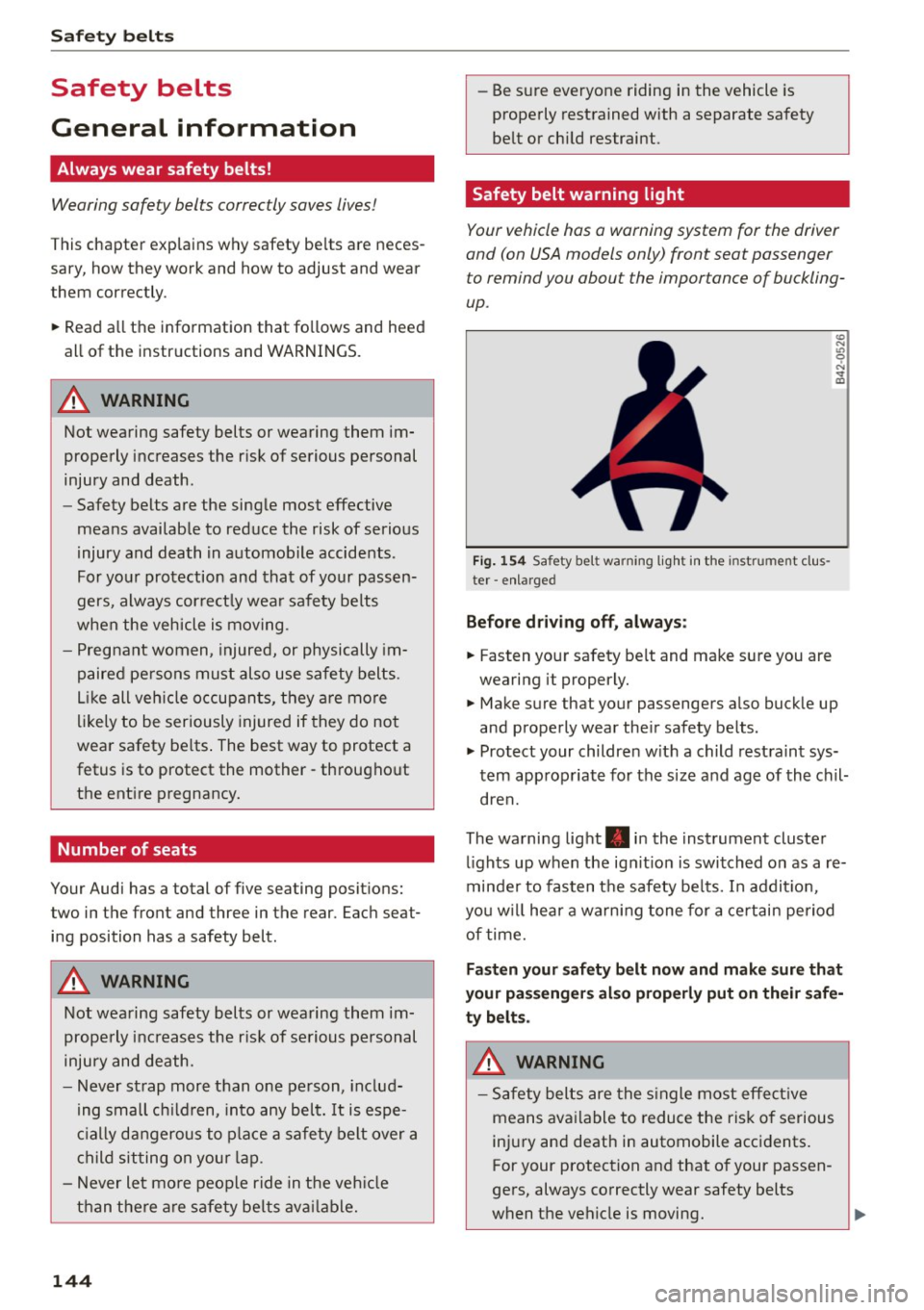
Safety belt warning light
Your vehicle has a warning system for the driver
and (on USA models only) front seat passenger
to remind you about the importance of buckling
up .
Fig. 154 Safety belt warning light in the instrument cl us
ter -enlarged
Before driving off, always:
.. Fas ten your safety belt and make sure you are
wearing it properly .
(0
"'
"' 0 N
and properly wear the ir safety belts .
.. Protect your children w ith a child restraint sys
tem appropriate for the siz e and age of the chil
dren.
The warning light . in the instrument cluster
lights up when the ign it ion is switched on as a re
minder to fasten the safety be lts. In addit io n,
you w ill hear a warning tone for a certain period
of time.
Fasten your safety belt now and make sure that
your passengers also properly put on their safe
ty belts.
&_ WARNING
-Safety belts are the single most effective
means ava ilable to reduce the risk of serious
injury and death in automobile accidents.
For your protection and that of your passen
gers, always correctly wear safety belts
when the vehicle is moving.
-
Page 147 of 302
M N
co ~ co
rl I.O
"' N
"' rl
- Failure to pay attention to the warning light
that come on, could lead to personal injury.
Why use safety belts?
Frontal collisions and the law of physics
Frontal crashes create very strong forces for peo
ple riding in vehicles .
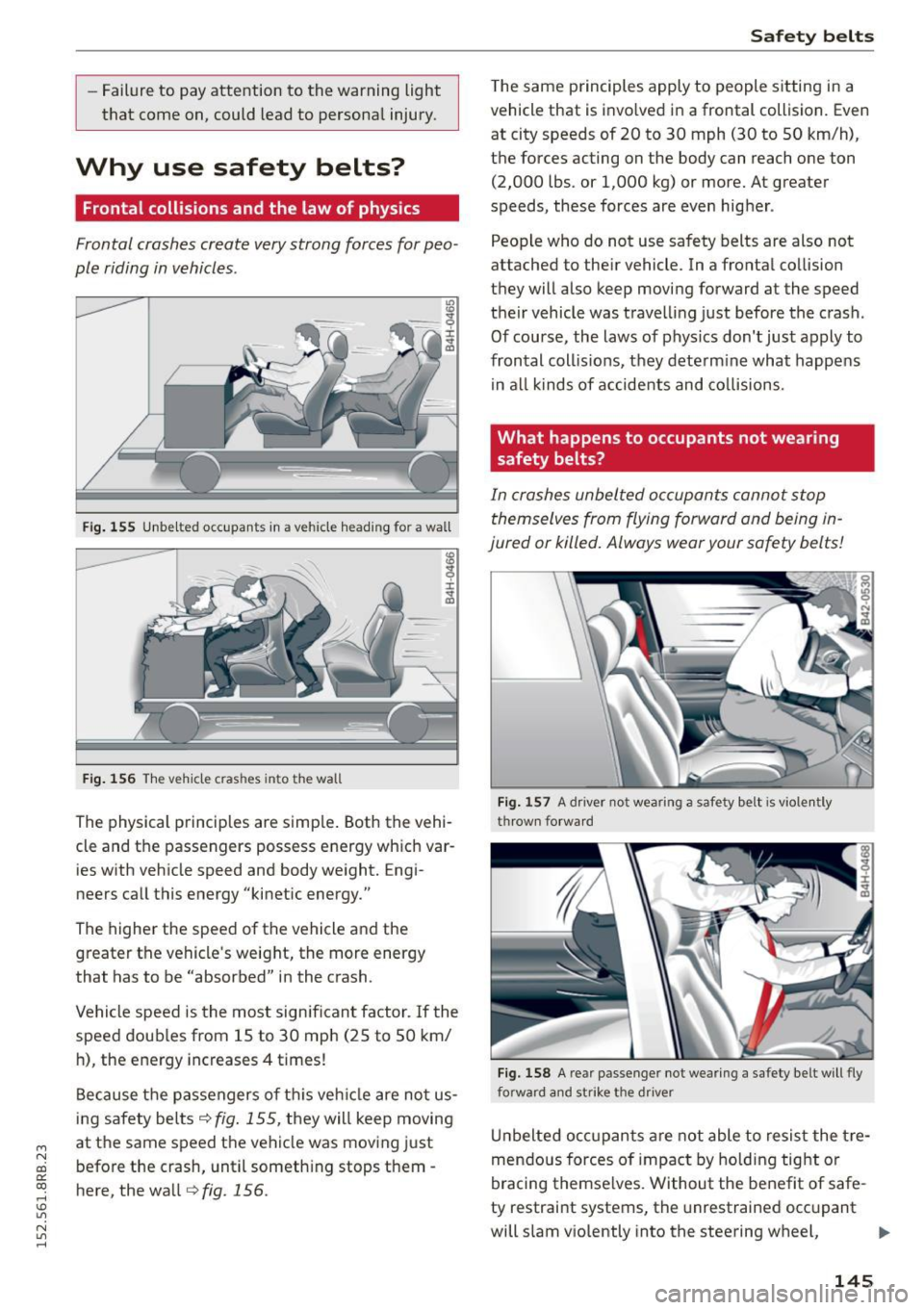
Fig. 155 Unbelted occupants in a vehicle heading for a wall
Fig. 156 The vehicle crashes into the wall
The physical principles are simp le. Both the vehi
cle and the passengers possess energy wh ich var
ies with vehicle speed and body weight. Engi
neers call this energy "kinetic energy."
The higher the speed of the vehicle and the
greater the vehicle's weight, the more energy
that has to be "absorbed" in the crash.
Vehicle speed is the most signif icant factor. If the
speed doubles from 15 to 30 mph (25 to SO km/
h), the energy increases 4 times!
Because the passengers of this vehicle are not us
ing safety belts¢
fig. 155, they will keep moving
at the same speed the vehicle was moving just
before the crash, until something stops them -
here, the wall¢
fig. 156.
Safety belts
The same principles apply to people sitting in a
vehicle that is invo lved in a frontal collision. Even
at city speeds of 20 to 30 mph (30 to 50 km/h),
the forces acting on the body can reach one ton
(2,000 lbs. or 1,000 kg) or more. At greater
speeds, these forces are even higher .
People who do not use safety belts are also not
attached to their vehicle. In a frontal collision
they will also keep moving forward at the speed
their vehicle was travelling just before the crash .
Of course, the laws of physics don't just apply to
frontal collisions, they determine what happens
in all kinds of accidents and co llisions.
What happens to occupants not wea ring
safety belts?
In crashes unbelted occupants cannot stop
themselves from flying forward and being in
jured or killed. Always wear your safety belts!
Fig. 157 A driver no t wearing a safety belt is violen tly
thrown forward
Fig. 158 A rear passenger not wearing a safety belt will fly
forward and strike the dr iver
Unbelted occupants are not able to resist the tre
mendous forces of impact by holding tight or
bracing themselves. Without the benefit of safe
ty restraint systems, the unrestrained occupant
will slam violently into the steering wheel, ..,_
145
Page 150 of 302

Safety belts
Autom atic safet y belt retractors
Every safety belt is eq uipped w ith an automatic
be lt retractor on the shou lder belt. This feature
locks the belt when the be lt is pulled o ut fast,
during hard brak ing and in an accident . The belt
may also lock when you drive up or down a steep
hill or through a sharp curve. During normal driv
ing the belt lets you move freely.
S afety belt pre te n sioners
The safety be lts are equipped with a belt preten
sioner that helps to t ighten the safety belt and
remove s lack when the pretensioner is activated .
The function of the pretensioner is monitored by
a warning light
r:::') page 16.
Swi tchable lo cking feature
Every safety belt except the one on the driver
seat is equipped w ith a switchable locking fea
ture that
must be used when the safety belt is
used to attach a child safety seat. Be sure to read
the important informat ion about th is feature
r=;, page 181 .
.&_ WARNING
Improperly positioned safety belts can cause
ser ious injury in an accident¢
page 148,
Safe ty belt position.
- Safety belts offer optimum protection only
when the seatback is upright and belts are
properly positioned on the body.
- Always make sure that the rea r seat back
rest to which t he center rear safety belt is
attached is securely latched whenever the
rear center safety belt is being used . If the
backrest is not securely latched, the passen
ger will move forward with the backrest dur
ing sudden braking, in a sudden maneuver
and especially in a crash.
- Never attach the safety belt to the buck le
for another seat. Attaching the belt to the
wrong buckle will reduce safety be lt effec
t iveness and can cause serious persona l in
jury .
- A passenger who is not properly restrained
can be se riously in ju red by the safety belt it
self when it moves from the stronger parts
148
of the body into critical areas like the abdo
men.
- Always lock the convertible locking retractor
when you are secur ing a child safety seat in
the vehicle
r=;, page 183.
Safety belt position
Correct belt position is the key to getting maxi
mum protection from safety belts .
Fig. 161 Safety belt posit ion
-"' .... 9 I ... a,
Standard features o n your veh icle help you adjust
the position of the safety belt to match your body
s ize .
- belt he ight adjustment fo r the front seats,
- height-adjustable front seats.
.&_ WARNING
Imp roperly posit ioned safety be lts can cause
serious pe rsonal injury i n an accident.
- The shou lder belt should lie as close to the
center of the collar bone as possib le and
should fit well on the body . Ho ld the belt
above the latch to ngue and pull it evenly
across the chest so that it sit s as low as pos
sib le on the pe lvis and there is no pressure
on the abdomen . The belt should always fit
snug ly ¢
fig. 161. Pull on the belt to tighten
if necessary.
- The lap be lt po rtion of the safety belt must
be positioned as low as possi ble across pel
vis and never over the abdomen. Make sure
the belt lies flat and snug
¢fig. 161. Pull on
the belt to tighten if necessary.
- A loose-fitting safety belt can ca use serious
in juries by sh ifting its position on your body
~
Page 157 of 302

M N
co
a:
co
,...., \!) 1.1'1
N 1.1'1 ,....,
A WARNING ,~
A child in a rearward-facing child safety seat
installed on the front passenger seat will be
seriously injured and can be killed if the front
airbag inflates - even with an Advanced Airbag
System.
- The inflating airbag will hit the child safety
seat or infant carrier with great force and
will smash the child safety seat and child
against the backrest, center armrest, door
or roof.
- Always install rear-facing child safety seats
on the rear seat.
- If you must install a rearward facing child
safety seat on the front passenger seat be
cause of exceptional circumstances and the
PASSENGER AIR BAG OFF light does not
come on and stay on, immediately install
the rear-facing child safety seat in a rear
seating position and have the airbag system inspected by your authorized Audi dealer.
- Forward-facing child safety seats installed
on the front passenger's seat may interfere
with the deployment of the airbag and cause serious personal injury to the child .
A WARNING
If, in exceptional circumstances, you must in
stall a forward-facing child restraint on the
front passenger's seat:
-Always make sure the forward-facing seat
has been designed and certified by its man
ufacturer for use on a front seat with a pas
senger front and side airbag.
- Never put the forward-facing child restraint
up against or very near the instrument pan
el.
- Always move the passenger seat into its
rearmost position in the seat's fore and aft
adjustment range, as far away from the air
bag as possible before installing the for
ward-facing child restraint. The backrest must be adjusted to an upright position.
- Make sure that the
PASSENGER AIR BAG
OFF
light comes on and stays on all the time
whenever the ignition is switched on.
Airbag system
A WARNING
To reduce the risk of serious injury, make sure
that the
PASSENGER AIR BAG OFF light will
be displayed whenever a child restraint is in
stalled on the front passenger seat and the ignition is switched on .
- If the
PASSENGER AIR BAG OFF light does
not stay on, perform the checks described
~ page 162, Monitoring the Advanced Air
bag System.
- Take the child restraint off the front passen
ger seat and install it properly at one of the
rear seat positions if the
PASSENGER AIR
BAG OFF
light does not stay on.
- Have the airbag system inspected by your
authorized Audi dealer immediately.
-Always carefully follow instructions from
child restraint manufacturers when instal
ling child restraints.
A WARNING
If, in exceptional circumstances, you must in
stall a forward or rearward-facing child re
straint on the front passenger's seat:
- Improper installation of child restraints can
reduce their effectiveness or even prevent
them from providing any protection.
- An improperly installed child restraint can
interfere with the airbag as it deploys and
seriously injure or even kill the child -even
with an Advanced Airbag System.
-Always carefully follow the manufacturer's
instructions provided with the child safety
seat or carrier.
- Never place additional items on the seat that can increase the total weight registered by the weight-sensing mat and can cause in
jury in a crash.
155
Page 160 of 302
Airbag syste m
-a small adu lt or teenager is on the front pas
senger seat
- a passenger who is not sitting upright with
their back against a non -reclined backrest with
their feet on the vehicle floor in front of the
seat is on the front passenger seat.
I f the front passenger airbag deploys, the Federal
Standard req uires the airbag to meet the " low
risk" deployment criteria to help reduce the risk
of injury through interaction with the airbag .
"Low risk" deployment occurs in those crashes
that take place at lower decelerations as defined in the electron ic control unit . ¢ page
162
Alw ays re member: Even though your vehicle is
equ ipped w ith Advanced Airbags, the safest place
for children is properly restrained on the back
seat . Please be sure to read the important infor
mat ion in the sections that follow and be sure to
heed a ll of the WARNINGS.
_& WARNING
To reduce the ris k of injury when an airbag in
fla tes, always wear safety belts proper ly.
- If you are unrestrained, leaning fo rward, s it
t ing s ideways or out of position in any way,
your risk of injury is much higher .
- You w ill also receive serious inju ries and
could even be killed if you are up against the
airbag or too close to it when it inflates -
even with an Advanced Airbag ¢page
152.
_& WARNING
A child in a rearward-facing child safety seat
installed on the front passenger seat will be
ser iously injured and can be killed if the front
airbag inflates - even w ith an Advanced Airbag
System.
- Although the Advanced Airbag System in
your vehicle is designed to turn off the front
airbag when a rearward -facing child re
straint has been installed on the front pas
senger seat, nobody can absolutely guaran
tee that deployment is impossible in al l con
ceivable s ituations that may happen dur ing
the usef ul life o f your vehicle .
- The inflating a irbag w il l hit the child safety
seat or infant carrier wi th great force and
158
w ill smash the child safety seat and child
aga inst the backrest, center armrest, door,
or roof.
- Always install rearward-facing chi ld re
straints in the back seat.
- If you must insta ll a rearward fac ing ch ild
safety seat on the front passenger seat be
cause of exceptional circumstances and the
PAS SENGER AIR BAG OFF light does not
come on and stay on, immediately install
the rear-facing child safety seat in a rear
seating position and have the airbag system
inspected by your au thorized Aud i dealer .
_& WARNING
If, in exceptiona l circumstances, you must in
stall a forwa rd-facing child restra int on the
front passenger's seat:
- Always ma ke sure the forward-facing sea t
has been des igned and certif ied by its man
ufacturer for use on a front seat with a pas
senger front and s ide a irbag .
- Never p ut the fo rward-facing child restraint
up against or very near the instrument pan
el.
-Always move the passenger seat into its
rearmost position in the seat's fore and aft
ad justment range, as far away from the a ir
bag as poss ible, before insta lling the for
ward-facing child restraint. The backrest
must be adjusted to an upr ight position .
- Make sure that the
PASSENGER AIR BAG
OFF
li ght comes on and stays on all the time
whenever the ign it ion is switched on.
Advanced Airbag System components
The front passenger seat in your vehicle has a lot
of ve ry impo rtant parts of the Advanced A irbag
System in it. These pa rts include the we ight
sensing mat, senso rs, w iring, bracke ts, and more.
The function of the system in the front passenge r
seat is checked by the e lectronic control unit
when the ignition is on. The control unit mon itors
the Advanced Airbag System and turns the airbag i ndicator light on when a malfunct io n in the sys
tem components is detected. The function of the
a irbag indicator light is described in greate r
Page 161 of 302

M N
co
a:
co
,...., \!) 1.1'1
N 1.1'1 ,....,
detail below . Because the front passenger seat
contains important parts of the Advanced Airbag
System, yo u must take care to prevent it from be
ing damaged. Damage to the seat may prevent
the Advanced Airbag for the front passenger seat
from do ing its job in a crash .
The front Ad vanced Airb ag S ystem con sis ts
of the following :
-Crash sensors in the front of the veh icle that
measure veh icle acceleration/deceleration to
provide information to the Advanced Airbag
System about the severity of the crash .
- An electronic control unit, with integrated
crash sensors for front and side impacts . The
control unit "decides" whether to fire the front
airbags based on the information received from
the crash sensors . T he control un it also "de
cides" whether the safety be lt pretensioners
sho uld be activated.
- An Advanced Airbag with gas generator and
control valve for the driver inside the steering
whee l hub.
- An Advanced Airbag with gas generator and
control valve inside the instrument panel for
t h e front passenger.
- A weig ht-sensing mat under the upholstery
padding of the front passenger seat cushion
that meas ures the tota l weight on the seat. The
information registered is sent cont in uous ly to
the e lectronic control unit to regulate dep loy
ment of the front Advanced Airbag on the pas
senger side.
- An airbag monitoring system and indicator
light in the instrument cluster
¢ page 162.
-A sensor in each front seat registers the dis
tance between the respect ive seat and the
steering wheel or instrument panel. The infor
mation registered is sent cont inuously to the
elect ron ic cont ro l unit to regulate deployment
of the front Advanced Airbags.
- T he
PASSENGER AIR BAG OFF light comes on
and stays on in the center of the i nstrument
pane l¢
page 162, fig . 168 and tells you when
the front Advanced Ai rbag on the passenger
side has been turned
off .
-A sensor below the safety belt la tch fo r the
front seat passenge r to measure the tension on
Airbag syste m
the sa fe ty belt. The tens ion on the safety be lt
and the weight registe red by the weight -sens
ing mat help the control unit "decide" whether
the front a irbag for the front passenger seat
should be turned
off or not¢ page 153, Child
restraints on the front seat- some important things to know.
- A sensor in the safety belt latch for the driver
and for the front seat passenger that senses
whether that safety belt is latched or not and
transm its this informat ion to the elect ro nic
cont ro l unit.
A WARNING
D amage to the fron t passenger seat can pre
vent the fron t air bag from working prope rly.
- Imp roper repai r or d isassembly of the front
passenger and driver sea t will prevent the
Advanced Airbag System from functioning properly .
- Repairs to the front passenge r seat must be
performed by qualified and p roperly trained
workshop personne l.
- Never remove the front passenger or driver seat from the vehicle .
- Never remove the upho lstery from the front
passenger seat.
- Never d isassemble o r remove par ts from the
seat or disconnect w ires from it.
- Never carry sh arp objects in yo ur po ckets or
p la ce them on t he seat.
If the weight-sens
ing mat in the passenger seat is punctu red
it cannot work properly .
- Never carry things on yo ur lap or carry ob
jects on the passenger seat. S uch items can
increase the we ight registe red by the
weight-sensing mat and send the wrong in
formation to the a irbag control unit.
- Never store items under the front passenger
seat . Parts of the Advanced Airbag System
under the passenger seat could be dam
aged, p reventing them and the airbag sys
tem from wo rking prope rly.
- Never p lace seat covers or rep lacement up
holstery that have not been specifically ap
p roved by Aud i on the front seats.
- Seat covers can prevent the Advanced Air bag System from recognizing child
159